Lucy Mushita, Chinongwa (#BookReview)

Where to start with this complex, unusual and gorgeously written novel that manages to convey the horrors of child marriage, of colonialism, and of patriarchal cultures, without eulogising or demonising the characters involved? It’s quite a feat, and it made this book a deeply involving read.
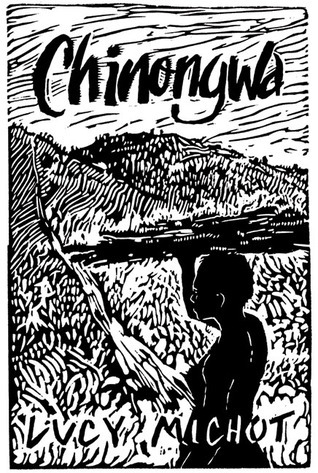
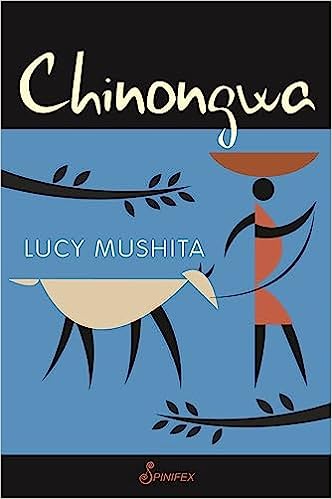
The place to start, I suppose, is the beginning, which is that Chinongwa is the debut novel of Zimbabwean author Lucy Mushita. Published most recently by Australia’s Spinifex Press in 2023, it was originally published in 2008 in South Africa, under the author name of Lucy Michot (which I discovered when searching for the book cover in GoodReads.) Its eponymous protagonist, Chinongwa, is 9 years old when the novel opens:

Chinongwa Murehwa was nine, but her age was not vital. Just her virginity. Though she was not yet washing, her fruits were already protruding. That was a relief for her family. Anyway, she was the only one they could use.
And there you have it. For a reason that soon becomes obvious, Chinongwa is to be “used”, that is, married off to save the rest of her family from starvation. The root cause of this starvation is colonialism – the arrival of the “kneeless” or vasinamabvi and the fact that Chinongwa’s family ended up with the poorest quality land in the village because her paternal grandfather had stood up to the vasinamabvi and arrived late at the place their community settled.

So, in Book 1 of the novel, 9-year-old Chinongwa is “hawked” around neighbouring villages by her father and aunt, with little success. Can you imagine it? She is starved and thin, not one of those “juicy” nubile young women men desire and are happy to pay for with cows and grain. At last, however, a childless woman, Amai Chitsva, for reasons of her own, offers to take Chinongwa as a second wife to her own husband. Not only is this husband, Baba Chitsva, thirty nine years her elder, but he does not want a second wife. Regardless, Book 1 ends with Chinongwa about to start her new life with her new family.

Now, before I get to Book 2, I should explain that this book is a novel, but one based on the life of a real person. I say this because a Chronology is provided at the beginning of the book. It tells us that Baba Chitsva was born in 1871, and Chinongwa in 1910, that Baba Chitsva died in 1935, and, finally, that “Chinongwa is telling all” in 1940. There are other dates, but these are the most relevant in terms of grounding the book.

So, Book 2. Unlike Book 1, which is told from the third person voice (albeit mostly through Chinongwa’s eyes), Book 2 is told in the first person voices of Amaiguru (Amai Chitsva) and Chinongwa, with one chapter in Baba Chitsva’s voice. This shift works because in Book 1 Chinongwa is a child, so not fully aware of the ways of the adult world, whereas in Book 2 she grows up – very rapidly. It’s a heart-breaking story of a young woman who is essentially groomed to seduce a man who doesn’t want her, a young woman who subsequently has her first baby at the age of 11.

For the first few years she and Amaiguru make it work well enough, as we hear through their individual voices. Chinongwa has no other real option, while Amaiguru tries to make work what she had started. But things turn sour when, upon her mother’s death, Chinongwa finally realises she is on her own, and that it’s time to be more independent:

I now had to take my destiny into my own hands: I would have to return to my jail and fight for my freedom from within.

And so she does with disastrous results.

What makes the novel such good reading is that Mushita is able to convey the culture, how and why it tolerates the practice of child marriage and polygamy, including the economics of it all – how cows are passed back and forth between families, for example – while simultaneously recognising the humanity of those involved. These men and women – the mothers and fathers, the child-brides, the first wives and second wives, the husbands, the aunts, the villagers – are human beings with the full range of social and emotional behaviours. Some are kind and some cruel, some are envious, some are sensible, some are weak, some are manipulative, some are scared, some are wise, and so on. Chinongwa eventually recognises this truth:

At first I refused to accept what life had dealt me. I said that my load was too heavy. But, with time, and as I look around me, I decided that one will never know the weight of one’s neighbour’s load. Maybe if I were to carry it, I might ask for mine back. Only that one who carries it knows its weight.

In other words, people will be people. They are rarely to blame for the system in which they find themselves. Some will survive and some won’t, but that’s not the point. The point is the system, and its complex historical and cultural interconnections. The point, too, is that child marriage still happens, and that patriarchies still govern much of women’s lives. In Chinongwa, Mushita conveys the economic, social and cultural imperatives that underpin these practices while also showing the personal costs. It makes compelling reading.

A little contribution to Bill’s Africa Project. Lisa also enjoyed this novel.

Lucy Mushita
Chinongwa
Little River, Vic/Mission Beach, Qld: Spinifex Press, 2023 (orig. pub. 2008)
235pp.
ISBN: 9781925950816

(Review copy courtesy Spinifex Press)
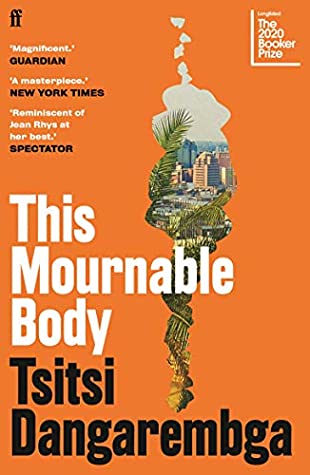
Tsitsi Dangarembga, This mournable body (#BookReview)

Zimbabwean author Tsitsi Dangarembga’s This mournable body was my reading group’s February book. Shortlisted for the Booker Prize, it is Dangarembga’s third novel, and is a sequel to Nervous conditions (1988) and The book of not (2006), neither of which I’ve read. These novels are written in English, the language of Dangarembga’s schooling, though she also speaks Shona.

It is a remarkable book, for its subject matter, vivid writing and the complexity of its protagonist, Tambu (Tambudzai). Wikipedia’s article on Nervous conditions describes Tambu’s character, saying “her desire for an education and to improve herself seem strong enough to overcome just about anything. She is very hard on herself, and always strives to do her best and make the correct decisions”. This perfectly describes the character I met in This mournable body, except that by now Tambu is around 40 years old and disappointed that life has not worked out as she had hoped. Indeed, she is out of work and living in a boarding house, eking out her savings from her previous copy-writing job in order to survive. A sense of failure and an air of desperation surrounds her.

Interestingly, Dangarembga chose a second person voice to tell Tambu’s story. There are various reasons for choosing this voice. Madeleine Dickie chose it for her novel Red can origami (my review) to involve if not implicate the reader in the world she was describing. I don’t know why Dangarembga chose it, but my guess is to convey Tambu’s apparent dissociation from her self. Second person avoids both the objective insight that an omniscient third person voice can provide and the confessional immersion in a life that first person offers. Tambu is struggling; she is caught between her Western-education with its Western-style aspirations and her Zimbabwean family and culture. We see her pain, but second person keeps her and us a little remote from it, as if she and we are watching it, not fully comprehending what is happening.

The novel is set in troubled late 1990s Harare, on the cusp of the millennium. It has a three-part structure – Ebbing, Suspended, and Arriving – which chronicles the trajectory of this period in Tambu’s life. In Ebbing, we see Tambu’s hopes for a successful, secure life, ebb:

Fear, your recurrent dread that you have not made enough progress toward security and a decent living, prickles like pins and needles at the mention of “village.” You have dodged this fear for too long—all your conscious life.

We also learn some of the reasons for the state she’s in, despite having been plucked from her village by her uncle and given a good “white” education. These reasons include the fact that although having gained Independence, Zimbabwe remains a racist place where black Zimbabweans still suffer under the colonialism they “thought” they’d thrown off. Tambu had had a good job as a copywriter in an advertising agency:

you have no one but yourself to blame for leaving your copywriting position. You should have endured the white men who put their names to your taglines and rhyming couplets. You spend much time regretting digging your own grave over a matter of mere principle.

Late in Ebbing, Tambu manages to obtain a decent job as a teacher, but it doesn’t last long, largely because her insecurity – her jealousies and fears – result in her self-destructing.

Suspended starts with her having been suspended from this job and admitted to a psychiatric hospital where her life is effectively “suspended” as she struggles to regain her mental health and equanimity. This she does, with the help of her family, including cousin Nyasha who takes her in. Incomprehensibly to Western-focused Tambu, Nyasha had returned, with her German husband and two children, from an apparently successful life in Europe, to work for the community, and specifically to improve things for Zimbabwean youth.

In the final part, Arriving, Tambu finds herself working for Tracey, her white Zimbabwean nemesis who had been a schoolmate at the prestigious Young Ladies’ College of the Sacred Heart and then her boss at the copywriting agency. Tracey is setting up an eco-tourism business, Green Jacaranda, and sees potential in Tambu – and indeed, Tambu seems to start to find herself, both personally and professionally, but I will leave the plot here …

This mournable body, however, is more than just a story about Tambu. Dangarembga weaves Zimbabwean social and political history into her narrative. While Tambu hadn’t been involved in pre- and post-Independence violence, many in her family had. The impact of war – particularly on women – provides one of the running commentaries throughout the novel. One refrain concerns her sister Netsai’s loss of a leg, which works as a visible reminder of personal and national losses:

Sometimes I ask if people forgot that many people went to war. Because if they have not forgotten, these people in this country, what is going on with them? Why are they so foolish? Do they think we went for this? … This is not what we went for and stayed for without food and blankets, even clothes, without our parents or relatives. Some of us without legs. Yet now we are helpless and there is nothing we can do to remove the things we see that we didn’t go to fight for.

Independence, in other words, is not working out the way they expected. The interplay of race, gender and colonialism continues to impede the country’s growth. Through her characters, Dangarembga powerfully conveys that old mantra “the personal is the political” – even though Tambu, ironically, tries to avoid talking politics with Tracey. “I don’t believe in politics”, she naively tells Tracey.

This mournable body is a serious and often heartbreaking novel, but there is also humour, much of it in the form of irony and satire. Here’s Tracey on her new business, echoing, for different reasons, Tambu’s dislike of “village”:

Everything’s Green Jacaranda eco! And you can’t say village. … That kind of promise doesn’t work these days either. It’s got to sound like fun, not under-development, soil erosion and microfinance.”

Tracey is either oblivious to – or chooses to ignore – the truths of Zimbabwean culture, preferring to exoticise a generalised notion of “Africa” for her business. In one excruciating scene she asks Tambu to organise village women to dance bare-breasted for their tourists.

At the other end of the spectrum is Tambu’s landlady’s now late husband, a black Zimbabwean who had profited from Independence. He had experienced an horrific accident, but

His biggest blow was what happened to his BMW and his temporary relegation to a lowly Datsun Sunny. People admired the stoicism with which Manyanga put up with this.

Dangarembga’s Zimbabwe is a complex society that has been riven by internal and external conflicts over decades, conflicts that are, in part, personified in Tambu’s difficulty in separating out her own goals from the “white” ones she had been educated into. While Dangarembga provides no easy answers, she suggests there are paths of hope, paths that rest with individual people who have a firm grip on what they want for themselves and for their country. This mournable body is an excruciating read at times, but the insights and perspectives it offers, particularly to Westerners whose assumptions it questions, are worth the pain and challenge.

Lisa (ANZLitLovers) was also impressed by this book.

Tsitsi Dangarembga
This mournable body
London: Faber & Faber, 2020 (orig. ed. 2018)
288pp.
ISBN: 9780571355532 (Kindle ed.)