Yesterday’s post on young writer Ben Smith Noble’s prize-winning short story, “The sands of time” inspired today’s post. I’ve written about several prizes over the years – the big ones, and the more targeted ones – but not prizes for Young Writers. It’s a tricky topic to write about. There’s the definition of “young” and there’s the fact that there are many “small” prizes offered (that is offered within small spheres like a school or other contained group). My focus here is to pick out some of the bigger – more encompassing – prizes, and also to show some of the variety in the prizes being offered.
These prizes range from those offered for a piece of work submitted for competition to awards for published writing. The more adult young writers prizes (if that makes sense) define young writers as those under 35 or 30 years of age, while other prizes can be offered for age ranges. I’ll list a selection of awards, in alphabetical order.
Per Capita Young Writers’ Prize
I nearly didn’t include this prize because their website is so minimal. It says, for example, to “Click below to see winning entries from this year and previous years” but I could see nothing “below” to click on. However, it’s an intriguing award that’s been going for a few years, it seems, so I decided to include it. It is for Australians aged 25 years and under, and is “designed to encourage young people to think about the major public policy challenges facing Australia.” Weighty matter! The judging criteria includes, as well as the more usual ones of originality and writing quality, “the potential public benefit of the ideas put forward.” In 2014 the winner received $3,000 plus some sort of international travel. You can read a 2017 prize-winner on the writer Michael Dello-Iacovo’s website.
Scribe Nonfiction Prize for Young Writers (Nonfiction)
Established in 2013, this prize is seen as a development award aimed at fostering “talented writers aged 30 and under writing longform work.” Writer submit entries of between 5,000 and 10,000 words “across all nonfiction genres, including memoir, journalism, essay, and creative nonfiction.” The winner receives cash ($3000 in 2017), mentorship and some Scribe books. Shortlisted writers receive some Scribe books, but also feedback on their entry and the opportunity to attend a masterclass. Pretty good eh? The prize makes their aim of fostering talent real.
SLQ Young Writers Award (Short Story)
An annual short story award, around 20 years old, for Queensland writers aged between 15 and 25. Prizes are offered in two age categories: aged 18 – 25 (short stories up to 2,500 words); aged 15 – 17 (short stories up to 1,500 words). In each of these, there is one winner and one runner-up, and four highly commended entries. Past winners include Benjamin Law, Tara June Winch and Romy Ash. You can read all the past winning, runner-up and highly commended stories online.
Sydney Morning Herald Best Young Australian Novelists (Fiction)
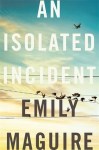 Established in 1997 by former literary editor Susan Wyndham, this award which aims to recognise “emerging talent” is made to writers who were 35 years or under when their book was published. It’s become a well-regarded award and is quite a feather in a writer’s cap to be called a Sydney Morning Herald Best Young Australian Novelist. More than one writer is named each year. An example is Emily Maguire who won the award in 2010 (Smoke in the room) and 2013 (Fishing for tigers). She went on in 2017 to be shortlisted for the Stella Prize, the Miles Franklin Literary Award and the Ned Kelly Award for An isolated incident (my review). You can see a list of the winners over the first 20 years, 1997 to 2016, online.
John Marsden & Hachette Australia Prize for Young Writers (Fiction, Nonfiction and Poetry)
Named for and supported by one of Australia’s most successful writers for youth, John Marsden, this prize is “an annual developmental award open exclusively to Australian secondary school students.” This award is made in three categories: fiction, nonfiction and poetry. Winners receive cash ($500 in 2017), a selection of Hachette YA books, publication of their work on the Express Media website and their names printed in the youth literary journal Voiceworks. You can read the winning 2017 works online.
Young Tasmanian Writers’ Prize
 Run jointly by Forty South Publishing and the Tasmanian Association for Teachers of English, this is a literary competition for Tasmanian high school students, in two age categories, Senior Section (Years 10 to 12) and Junior Section (Years 7 to 9). They do, it appears, provide a theme/themes, as this entry form for 2018 shows. The winners in the two sections receive $300 and their story published in Tasmania 40° South, and the runners-up receive a $30 bookshop voucher. This is the one, as you’ve probably realised, won by Ben Noble Smith.
Young Writers’ Award (Picture Book and Short Story)
As far as I can tell this is a brand new award which started in 2017 and for which the first winner will be announced this week. It’s been established by the Redgum Book Club and is geared to children aged between 9 and 13 years of age, to “develop their writing skills and find their unique voice through storytelling.” They want it to be an accessible activity that can be incorporated into a school’s writing program, so they provide a Teacher’s Toolbox on their site. There are two categories: picture book (up to 250 words plus illustrations) and short story (800 to 1000 words). Winners will receive a $250 Redgum book voucher, and the shortlisted writers a $150 voucher.
And there are many more awards – including other state-based awards and at least one for indigenous youth. For information about these and others, please visit a wonderful post by teacher and writer Melinda Tognini on her blog Treefall Writing.
I had no idea there was this variety around. I’d love to know if you have had any experience of young writers’ awards or know of any not listed here? (If you are not Australian please share any you know of from your country.)


 Whispering Gums