Elizabeth Jolley, Hilda’s wedding (#Review, #1976 Club )

One of Elizabeth Jolley’s biggest fans is Helen Garner, as I have said before. Garner often mentions Jolley, and my current read, the second volume of her diaries, One day I’ll remember this, is no exception. She writes:

Elizabeth Jolley’s new novel, My father’s moon [my review]. She re-uses and reworks images from her earlier work, brings forth experiences that she’s often hinted at but never fully expressed. I can learn from this. I used to think that if I said something once I could never say it again, but in her book I see how rich a simple thing can be when you turn it this way and that and show it again and again in different contexts.

This is not the only reason Garner admires Jolley, but the reasons are not my topic for today! I will add, though, because it is relevant to my topic, that another thing Garner appreciates about Jolley is that both draw closely from their own lives in their writing.
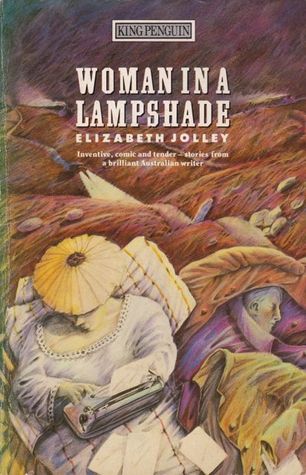
So now, “Hilda’s wedding”, which I read for the 1976 Club, hosted by Kaggsy’s Bookish Ramblings and Stuck in a Book. It’s not the short story I had planned to read, but I couldn’t find that one – also a Jolley – in my collection or online. Fortunately, during my hunting, I found this one from the same year, and it exemplifies the two points I made at the beginning. Firstly, it features a character, Night Sister Bean, who appears in other Jolley works, including the first of hers I read, the short story “Night runner”. And, being a hospital-set story, it draws on (let’s not say “from”) her own experience of nursing.

“Hilda’s wedding” is a rather bizarre or absurd story – which, again, is not a surprise from Jolley. In it, the narrator, who is a relieving night nurse – so somewhat of an outsider – organises an on-the-spot wedding for the very pregnant, apparently unmarried, kitchen maid Hilda. The various roles – husband, celebrant, parents of the bride, pages – are played by night staff including the cook, cleaners and porters. The bride is dressed, with a veil made of surgical gauze and a draw sheet as her train (which contains a hint of the Gothic that we can also find in Jolley’s writing). Immediately after the ceremony, Hilda goes into labor and gives birth in the elevator.

What does it mean? I’m not sure, but this little story about an impromptu wedding sounds like children’s play-acting. It’s a game which uses imagination and creativity, which provides a sense of fun in a grim place, and which brings a little joy to Hilda, whose “melon-coloured face shone with a big smile”. Melons, as you may know, are often associated with pregnancy and fertility. However, injected into the story at various points is the real world, one characterised by rules and impersonality. There’s also the unresolved mystery about Sister Bean and rumours about her negative impact on transfusions/drips. Is she a witch, they wonder?

Sister Bean opens and closes the story, but otherwise appears only occasionally. There are various ways we could read her. One could be people’s need to find a reason or explanation or scapegoat for the bad things that happen in a world where you have little control. In the third last paragraph, our narrator comments on the early morning, and the city waking up:

A thin trickle of tired sad people left the hospital. They were relatives unknown and unthought about. They had spent an anonymous night in various corners of the hospital waiting to be called to a bedside. They were leaving in search of that life in the shabby world which has to go on in spite of the knowledge that someone who had been there for them was not there any more.

It is against this backdrop of sadness that our nurse narrator was there for Hilda. In the next and penultimate paragraph, the narrator is standing outside, taking “deep breaths of this cool air which seemed just now to contain nothing of the weariness and the contamination and the madness of suffering”.

In this story, as is typical of Jolley, there is humour alongside sadness, comedy next to tragedy, unreality bumping up against reality, and, appropriately, no resolution at the end.

In Central mischief – a collection of Jolley articles, talks and essays compiled by her agent Carolyn Lurie – is a talk Jolley gave to graduating nurses in 1987. Before I get to my concluding point from it, I’ll just share something else she says, which is that “for me fiction is not a form of autobiography”. This is an important distinction, which I think Garner would also make. Writers like Jolley and Garner may draw on their own experiences, but what they write is something else altogether.

But now, I want to conclude on this that she tells them:

There is a connection between nursing and writing. Both require a gaze which is searching and undisturbedly compassionate and yet detached.

What a clear-eyed view – and how hard to achieve. What do you think about this?
Challenge logo

Elizabeth Jolley
“Hilda’s wedding” (first pub. 1976, in Looselicks)
in Woman in a lampshade
Ringwood, Vic: Penguin Books, 1983
pp. 139-46
ISBN: 0140084185
Arthur Gask, The passion years (#Review, #1936Club)

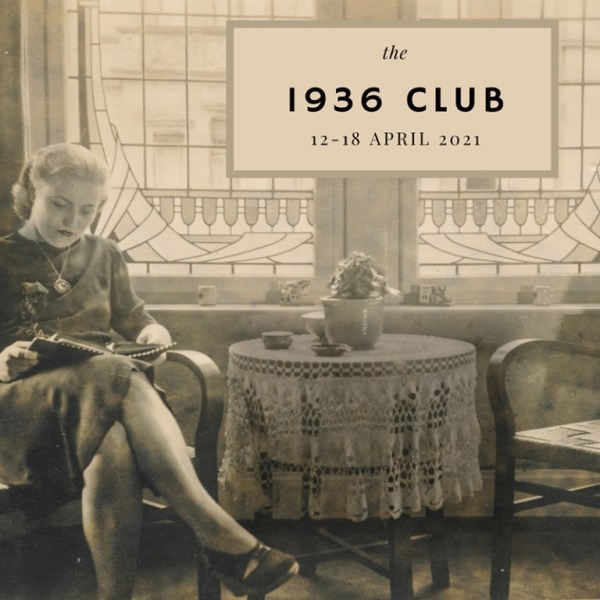
A couple of weeks ago, I posted a Monday Musings in support of Karen (Kaggsy’s Bookish Rambling) and Simon (Stuck in a Book) #1936 Club, which involves participants reading, posting and sharing books from the chosen year.The #1936 Club has been running, 12-18 April, which means it is about to finish.

In my post I listed a number of potential books for me – or others – to read (and noted those from the year that I’ve read in the past.) Unfortunately, I did not find the ones I wanted to read, so I decided to do something different, read a short story! The first short story I considered was Ernest Hemingway’s The snows of Kilimanjaro, which was first published in Esquire in 1936, but, I really wanted to do an Australian story – so, back to the drawing board. And, at Project Gutenberg Australia I found a short story published on Boxing Day (26 December) 1936 in, wait for it, The Australian Women’s Weekly! Nothing ventured, nothing gained I thought so in I dived. It’s called of course, “The passion years”.

Published in a women’s magazine on Boxing Day, it is, as you would guess, a romance. It’s past midnight and two women – “all pink and white in their robes-de-nuit” and looking “pretty enough to eat” – are chatting, one of them telling the other about her brother’s romance:

It seems just like a tale one reads and, of course, it’s a very sentimental one, too. Oh, no dear, you take it from me sentiment is not all sickly, and only those say it is who are getting old and sickly themselves. Sentiment’s the most beautiful thing in all the world, and when you’re first in love, well, the sentiment there is just too holy and too sacred to understand.

As the story goes, her brother had lost all his money in a horse race and at the same time a wealthy young woman falls for him, but, being a proud and responsible man, he withdraws when he realises she is showing interest in him because he doesn’t want to be a fortune hunter. You can guess how it works out, but what adds to the story is the perspective and world view offered by the narrator. Our teller asserts that “a baby’s only what every girl who’s really in love looks forward to”. The story is very much of its time and place, highly gendered, but it is nicely written.

However, of more interest is the writer, Arthur Gask. The Australian dictionary of biography (ADB) describes him as a dentist and novelist. Born in England in 1869, he came to Adelaide, Australia, with his second wife, in 1920. He was particularly a crime writer, and was prolific as Wikipedia and the Project Gutenberg Australia show. His first novel, The secret of the sandhills, was published to immediate success in 1921, partly he believes due to the reviews by S. Talbot Smith. Wikipedia says he wrote it while waiting for his patients!

Gask went on to write over thirty books, as well as countless short stories. He gave up dentistry in 1933, and bought a farming property, which he names Gilrose, after his detective, Gilbert Larose. However, apparently most of his stories were set in England. ADB’s Michael Tolley described his writing as pacy and sometimes titillating, and says that his works were translated into several European languages, were serialised in newspapers, and broadcast on radio.

For interest, I tracked down a local review of his posthumously published novel, Crime upon crime. The review was written by AR McElwain in Adelaide’s The Mail on 4 October 1952. I was interested in his comment on the writing

Prolific Mr. Arthur Gask of Adelaide (SA) has a remarkable facility for blending sordid crime with old world charm So much so that I am usually more fascinated by his prose style than by the actual cases …

He also provides insight into Gask’s detective:

Our old friend, Gilbert Larose introduces some unorthodox sleuthing. But there’s a Gaskian explanation for it all, never fear. Larose is simply “acting up to his reputation as a man who always places justice above law.”

McElwain’s comment on Gask’s writing points to why he most drew my attention. His writing was also admired by novelist, HG Wells, who called Gask’s 1939 novel, The vengeance of Larose as his “best piece of story-telling…It kept me up till half-past one.” In addition, philosopher Bertrand Russell also loved his books. Russell corresponded with Gask, and visited him in Adelaide in 1950, when Gask was 81 and Russell 78.

According to Wikipedia, Gask was still writing two 80,000-word novels a year when he was nearly 80. Prolific indeed.

So, my contribution to the #1936club is small, but I’m thrilled to have finally taken part and to have discovered another Aussie writer.

Did you take part in the 1936 Club?

Monday musings on Australian literature: 1936 in fiction

As some of you will know Karen (Kaggsy’s Bookish Rambling) and Simon (Stuck in a Book) have been running for some time “reading weeks, which involves their choosing, somewhat randomly, a year from which “everyone reads, enjoys, posts and shares wonderful books and discoveries from the year in question”. The next one is 1936, and happens from 12-18 April.

Despite my best intentions, I’ve not yet managed to take part, though I know several of my blogging friends have. I might this time – we’ll see – but, regardless, I’ve decided to focus on that year in my Monday Musings, a week in advance, to provide some inspiration perhaps?

1936 was a pretty tumultuous time in Europe with, for example, the Spanish Civil War, the 1936 Summer Olympics and Hitler’s aggressive display, not to mention the Nazis amping up their power and control. Things were generally quieter in Australia, with Joseph Lyons our Prime Minister.

Dymphna Cusack, Jungfrau

However, it was a busy time in literature, with several writers we know publishing novels (and other works but my focus here is novels). Here is a selection – links on names go to my posts on that writer:

There weren’t so many literary prizes then, as now, but Miles Franklin’s All that swagger won the 1936 SH Prior Memorial Prize for Australian Literature, and Eleanor Dark’s Return to Coolami won the ALS Gold Medal.

Several authors were born this year, including Marian Eldridge (one of the Canberra Seven), Robin Klein, Kate Llewellyn and Alex Miller.

The state of the art

Of course, I checked Trove to see what newspapers of the time were saying about Australian literature, and it’s pretty much as I’ve written in my other Monday Musings posts on the era – the ongoing concern about lack of recognition of Australian writing, of Australian writers having to go overseas to make a living, of most publishing of Australian authors happening overseas.

Perth’s Western Mail, announcing the publication of the Australian writers annual, starts with:

Too long have the Australian public been kept in ignorance of the wealth of literary work that is and has been done by Australian writers, the ranks of whom are increasing every year. Perhaps the fault lies with the reader, perhaps the reason can be found in a lack of publicity. 

Rockhampton’s Morning Bulletin focuses on the the quality of what is being produced, arguing that Australian literature, while naturally looking to England, “is gradually tending towards a measure of independence”. Indeed, citing Henry Lawson and CJ Dennis (admitting “he may not touch greatness”), this writer says that “brief as is our history, it has developed its own romanticism”.

The Hebrew Standard of Australasia also argues that things are improving, but names women writers. It says:

It is not so many years ago since the prefix ‘Australian’ when applied to anything literary, artistic, or cultural, provoked the ire of editors and the sneers at would-be highbrows. Yet, even then, much, had been done by writers here in our midst to put Australia into a very appreciable place on the literary map. 

It then names Ethel Turner (whose writing for children avoided “the stilted and moral” stories common at the time). It continues to say that, what Turner did for children’s literature, others are “endeavouring to do for literature in general”. Unfortunately, though, confirming my opening paragraph, it says that “many of our best have had to go abroad to achieve fame, such as Henry Handel Richardson and Helen Simpson”. However, confirming Western Mail’s supposition, it suggests that “we still have many people with us whose work, given proper publicity [my stress], would make the term ‘Australian’ respected in any part of the world”. One of these is Eleanor Dark.

Apparently, someone was listening to all these woes, and it was a politician! Many newspapers around the country wrote about the Budget statement made in Parliament by then ex-PM, James Scullin. Melbourne’s The Herald starts its report with:

It is doubtful whether “the life austere that waits upon the man of letters here” can be given more than a suggestion of comfort by the helping hand of Government. Yet the generous speech for which Mr Scullin caught the Federal Speaker’s eye yesterday will be approved and possibly have influence. 

It describes Scullin as a “book-lover … who earnestly desires the advancement of his country in things of the mind and spirit.” Scullin identified the minimal support the government had given to literature, and then, as Melbourne’s The Age and Hobart’s Mercury outline, he named various ways in which the government could help, such as:

  • increased payments to struggling authors (rather than the minimal pension currently offered);
  • the establishment of a literary prize for the best Australian works;
  • supporting/undertaking/providing grants for the publication of nationally significant books now out of print, of works of national value, and of new works struggling to find a publisher.

Interestingly, the Mercury reports that he suggested that “wealthy people in Australia might follow if a lead were given by the national Parliament”, while The Age shared that Scullin believed that with more time for leisure available “in the machine age”,

Literature offered the best scope to utilise this added leisure with profit to Australian culture. 

The Sydney Morning Herald’s report is also worth reading.

I’m not sure that much happened immediately, but Wikipedia (linked on his name above) says that, with the Fellowship of Australian Writers, Scullin was responsible for a dramatic boost to the Commonwealth Literary Fund‘s budget in 1939. A start!

And, of course, it was another Labor politician, Kevin Rudd, who created the Prime Minister’s Literary Awards, in 2007.

Additional sources:

Meanwhile, do you plan to take part in the 1936 Club?

Monday musings on Australian literature: 1965 in fiction

1965 as a topic? What the?! Those familiar with the lit-blogosphere will probably guess what inspired this post, but for everyone else, I’ll explain. Over the last week of April, bloggers Kaggsy (Kaggsy’s Book Ramblings) and Simon (Stuck in a Book) ran a 1965 Reading Week, the latest in their series of reading weeks focusing on books published in a particular year. Needless to say, I didn’t manage to take part – if I had, you would have known about it before now! (For a list of the books read and who read them, check Simon’s 1965 Club Page.)

However, I thought I could play along, in my own way, by writing a – yes, I admit – belated post on 1965 in Australian literature. If it works, I might try it again for their next “year”, whatever and whenever that may be.

My main sources for this post were:

Australian literature and 1965

Kaggsy and Simon’s focus is books published in the year, but I’m going to do a sort of literary snapshot.

Writers born in 1965

An interesting group containing, not surprisingly, many writers in their prime now:

  • Michael Farrell: poet, who has had several books published, mainly by independent publisher Giramondo
  • Gideon Haigh: journalist and author, best known for sports and business writing
  • Fiona McGregor: novelist, whose third novel, Indelible ink, won The Age Book of the Year award
  • Melina Marchetta: novelist, primarily of Young Adult literature, whose award-winning YA novel, Looking for Alibrandi (1992), is an Australian classic
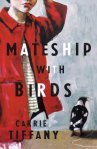
  • Mateship with Birds (Courtesy: Pan MacMillan)
    Carrie Tiffany
    : novelist, whose first two novels, Everyman’s rules for scientific living and Mateship with birds (my review), both won awards, and whose third book, Exploded view, was published this year. Mateship with birds won the inaugural Stella Prize.
  • Christos Tsiolkas: novelist who has written eight novels, including The slap (my review) and Barracuda (my review), as well as plays and screenplays.
  • Charlotte Wood: novelist who has written both novels and non-fiction, and whose dystopian The natural way of things (my review) also won a Stella Prize

Writers died in 1965

Hooton and Heseltine list a small number of deaths for the year (and I’ve added them to Wikipedia), but none are particularly significant in terms of my blog’s interests. However, one of those who died was a significant Australian personage, HV (aka Doc) Evatt. Among other roles, he was President of the UN General Assembly, and helped draft the UN’s Universal Declaration of Human Rights.

Novels published in 1965

By 1965, a goodly number of books were being published in Australia, so I can’t list them all. Hence, I’m focusing on those that interest me! You can check my sources for more.

  • Thea Astley, The slow natives: if I’d taken part in the 1965 Club, this is the book I would have chosen. I love Astley and have written about, or reviewed, her here a few times.
  • Clive Barry, Crumb borne: included because Barry was the inaugural winner of the Guardian Fiction Prize, and was described by the Oxford Companion to Australian Literature as a “vivid stylist with a capacity for dry humour”; his experiences as a POW in Italy in WW2 inform this novel.
  • Nancy Cato, North west by south: well-known for her historical fiction (of which I reviewed All the rivers run) but also wrote biographies and poetry, and was an environmentalist and conservationist; this book is about Lady Jane Franklin.
  • Don Charlwood, All the green year: this would have been my second choice for the club, because I have the Text Classics copy that I gave my late aunt.
  • Catherine Gaskin, The file on Devlinbest-selling romance novelist, whose book Sara Dane, based on the convict Mary Reibey, sold more than 2 million copies.
  • Donald Horne, The permit: one of Australia’s best known public intellectuals in his time, famous for coining the phrase “the lucky country”. Novels were not his main form of writing.
  • George Johnston, The far face of the moon: best-known for his My brother Jack, which won the Miles Franklin in 1964.
  • Thomas Keneally, The fear: prolific novelist who has won both the Booker Prize and the Miles Franklin Award (twice).
  • Christopher Koch, Across the sea wall: best-known for The year of living dangerously, and twice-winner of the Miles Franklin Award.
  • Eric Lambert, The long white night: one of the many left-wing/communist writers who were published in the 1950s and 1960s.
  • D’Arcy Niland, The apprentices: husband of Ruth Park (haha, just had to describe him in relationship to his wife!), and best known for his novel The shiralee.
  • Lesley Rowlands, A bird in the hand: also published two humorous travel books, and short stories.
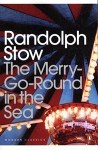
  • Randolph Stow, The merry-go-round in the sea
    Randolph Stow, The merry-go-round in the sea (my review): woo hoo, one I’ve read!
  • George Turner, A waste of shame: best-known for the SF novels he wrote later in his career, but in 1962, he won a Miles Franklin Award with his novel The cupboard under the stairs (reviewed by Lisa)
  • Morris West, The ambassador: a best-selling author in my youth, West is on my list of topics for Monday Musings one day

Selected other publications from 1965

So many well-known writers well-known published poetry, plays, short stories and other works in 1965, but I can only share a few (links on their names are to posts on my blog which feature them, though most have been mentioned in some way, in fact):

  • Rosemary Dobson, Cock crow (Poetry)
  • Frank Hardy, The yarns of Billy Borker (Short stories)
  • AD Hope, The cave and the spring (Criticism)
  • Geoffrey Lehmann & Les Murray, The Ilex Tree (Poetry)
  • Hal Porter, The cats of Venice (Short stories)
  • Kenneth Slessor, Life at the cross (Poetry)
  • Ivan Southall, Ash Road (Children’s novel)
  • Kylie Tennant, Trailblazers of the air (Children’s novel)
  • Colin Thiele, February dragon (Children’s novel)
  • Russel Ward, Australia (History)
  • Patrick White, Four plays (Drama)
  • Judith Wright, Preoccupations in Australian poetry (Criticism)

Literary Awards in 1965

Most literary awards we now know, started in the 1970s or later:

  • ALS Gold Medal: Patrick White’s The burnt ones (this book of short stories was my second Patrick White, the first being Voss)
  • Encyclopaedia Britannica Awards for Literature: Shared between two poets, AD Hope and Robert D Fitzgerald. The chair of the awards committee said: “As a critic [Hope] he is lively and controversial and he has earned the respect of his fellow teachers and intelligent readers, for his determined efforts to reevaluate accepted literary convention.”
  • Miles Franklin Award: Thea Astley’s The slow natives 

In conclusion

The interesting thing, not necessarily obvious from these lists, is the number of left, if not Communist, writers who were active at this time, beautifully reflecting the political activism and idealism of the 1960s.

Oh, and I found some fascinating articles in Trove about Australian literature in 1965. They deserve their own post – watch this space.