I did have another plan for today’s Monday Musings, but it seemed wrong to ignore the elephant in the room, that is, the dire situation facing the Adelaide Festival’s Writers Week. Australians will not need me to explain what has happened, but for those of you not across the events, I’ll briefly explain.
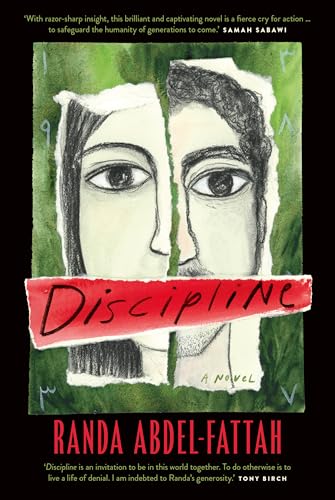
The Adelaide Writers Week is one part of the wide-ranging Adelaide Festival, which is a significant Australian cultural event and which attracts visitors from around Australia and the world. This year’s Writers Week is (was) due to begin on 28 February, but is now in complete disarray because over 100 writers have withdrawn their participation after the Board removed Palestinian Australian author and academic Randa Abdel-Fattah from the line-up on the grounds of “cultural sensitivity” in the wake of December’s Bondi Massacre. (She was to speak on her debut adult novel, Discipline, which appeared in my report on favourite reads of 2025.) The Board stated that:
Whilst we do not suggest in any way that Dr Randa Abdel-Fattah’s [sic] or her writings have any connection with the tragedy at Bondi, given her past statements we have formed the view that it would not be culturally sensitive to continue to program her at this unprecedented time so soon after Bondi. (from Adelaide Festival website)
Hmmm … This follows the furore that occurred last August when multiple authors, including Randa Abdel-Fatteh, withdrew from the Bendigo Writers Festival after the festival adopted a code of conduct which, among other things, required participants to “avoid language or topics that could be considered inflammatory, divisive or disrespectful.” The withdrawing writers rejected this stifling of their freedom of expression. (See the excellent The Conversation piece linked below.)
I am not going to discuss this issue in detail because you can read about it at The Conversation, and other online sites that are covering the situation as it unfolds. I don’t need to add my voice to the chorus, except to say that I am a librarian by training, and freedom of expression is one of the tenets of our profession. I want to see respectful – thoughtful – discussion on the big issues we are facing.
So instead, I’m going to share a few Australian articles and posts on writers festivals and their value.
For writers, festivals are not, as readers might expect, a source of stellar sales. Apparently, only the top name writers tend to sell well at festivals*. But, according to writer and authorpreneur (!) Anna Featherstone, festivals offer writers a whole bunch of benefits. And she lists many of them, from the practical opportunities that come from networking to the stimulation and inspiration that can come from being with other writes and readers. She’s a big advocate, and points to festivals like the Byron Bay Writers Festival and the Romance Writers Australia Conference. In fact, early writers festivals were primarily for and attended mainly by writers.
The writers festival as a wider community phenomenon is a relatively recent development. However, my sense is that no matter how different festivals are, or how big or small, this networking aspect with its many-pronged possibilities, is still of value to many writers. In 2024, Kill Your Darlings asked “publishing industry folk” to share “some of the unexpected and useful things they’ve learned along the way about writers’ festivals”. Most of these people were writers, and while they offer a wide variety of advice, the one that appeared most frequently was to encourage writers to take the opportunity to talk to other writers.
But, it is the cultural value of writers festivals that has seen their stunning rise in popularity over the last couple of decades, a rise that has resulted in regional town after regional town establishing their own festival. Some have gone on to become well established events.
There are many articles and posts on this aspect of festivals, but Queensland’s Storyfest has a lovely succinct piece on “The role of writers festivals in shaping our communities”. And, in particular, they say this:
As an arena of intellectual debate, a platform to express opinions – literary, political, and otherwise – and a place where an increasingly varied group of people congregate, it is only natural that literary festivals have a role in politics too. As political platforms, writers’ festivals give attendees the opportunity to engage with thoughtful, mediated conversations and to learn new ideas from fresh, often authentic sources.
[…]
As such, writers’ festivals have grown to be events that contribute to the wider public’s engagement in issues and ideas of broader interest to society. Their role is no longer merely to connect readers and writers … While writers still use these events to meet other writers, readers, and to network, these festivals have grown in function and duties over the last couple of decades. This has expanded the purpose of literature festivals, making them play a significant role in local and international politics too.
This gels with what I look for in a festival. I mostly avoid the “big author” sessions and go for those where I think I’ll be confronted by some different ideas or ways of seeing, where I might be made to feel uncomfortable (in a respectful way!) These sessions are not always easy to find but at the recent Canberra Writers Festival I did find some.
And now, let’s return to the Adelaide Writers Week. I found a blog post written in 2024 by author and blogger Anne Green (of Eating My Words). Her post is titled “Literary Festivals: The good, the bad and the ugly”. It covers all the issues I had dot-pointed for including here (including the tourist potential for small towns, and the “elitism” critique of festivals). It also has a significant focus on Adelaide Writers Week, and its history. It’s a well-researched, comprehensive post that made me realise I didn’t need to reinvent the wheel here!
So, instead, I will close on a quote from another site, writes4women, which struck me – forcefully:
Writing festivals are a reflection of where our country is at any given moment.
That’s a worry!
* See Melanie Joosten at the Kill Your Darlings link.
 Whispering Gums