Monday musings on Australian literature: Factory novels

“I love a factory novel”! So wrote Buried-In-Print blogger Marcie on my post earlier this year on the Australasian Book Society. I do too, I replied, and noted to myself that this could be a topic for Monday Musings. I have not done as much research as I would have liked, but I figured I never will, so why not just provide an intro and then call in all of you, the brains trust, for your contributions.
Factory novels are, essentially, a subset of working class literature. They emerged in the 19th century as a result of the Industrial Revolution. They critiqued the exploitation of workers, and identified the poverty and social problems that accompanied industrialisation. Some also explored attempts to improve the situation. Dickens was a major exponent of writing about social problems, but one that made a big impression on me was Elizabeth Gaskell in North and south (read before blogging). Her Mary Barton (on my TBR) also falls within this group.

I love factory novels because the best are written with such heart and passion, with such desire to bring about change. As I’ve said before, I don’t believe literature (or any art) has to do this, but I enjoy art that does.

Selection of Australian factory novels

This small selection includes novels in which factory work and factory workers are the prime focus of the story. There are many other novels which incorporate factory themes or storylines, that I haven’t included. I was so tempted to expand my definition and include other sorts of labourers, such as wharf labourers, for example, but decided to keep it to my original goal.

The books are listed in alphabetical order by author, though I did consider ordering them by date of publication (from 1926 to 2024).
  • Mena Calthorpe, The dyehouse (1961) (my review): set in a Sydney dyehouse, this novel is about the impact on workers of capitalism-at-all-costs
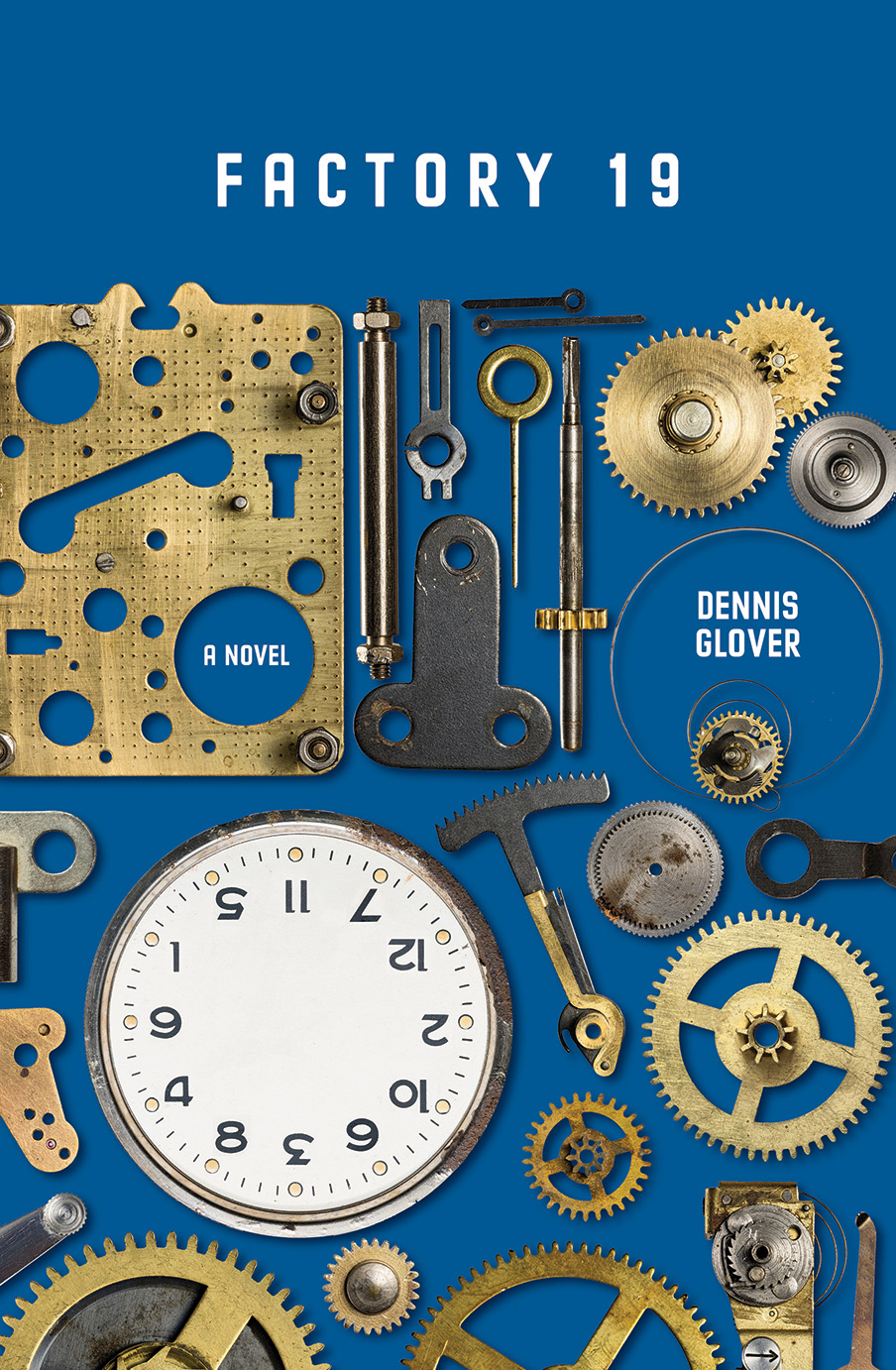
  • Dennis Glover, Factory 19 (2020): set in the very near future, 2022, it depicts Hobart, devastated by economic recession, being recreated as a new industrial colony titled Factory 19 which is fixed in the pre-digital past of the 1940s. What can go wrong!
  • Rosalie Ham, Molly (2024) (Lisa’s review): prequel to Ham’s The dressmaker (read before blogging); starts with Molly helping to support her struggling family from her backbreaking work in a corset factory (when she’s not demonstrating for women’s rights)
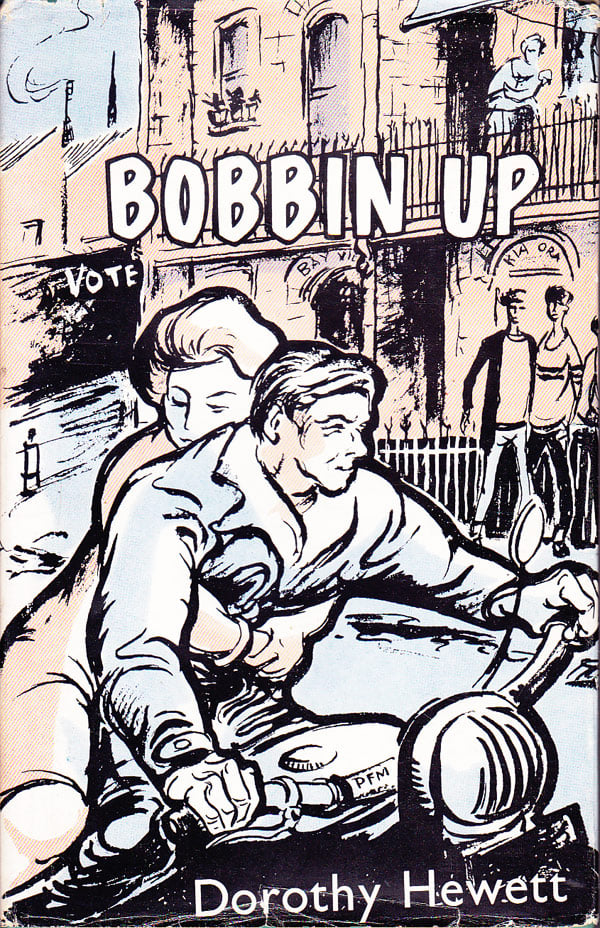
  • Dorothy Hewitt, Bobbin up (1959) (kimbofo’s review): set in inner-city Sydney and about, says, kimbofo, “a bunch of hard-working women whose lives are dominated by their long shifts in the [woollen mill] factory”, not to mention the restrictions on their lives imposed by their gender.
  • David Ireland, The unknown industrial prisoner (1971) (Bill’s review): set in an oil refinery, a winner of the Miles Franklin Literary Award. Text classics describes it as “a fiercely brilliant comic portrait of Australia in the grip of a dehumanising labour system.”
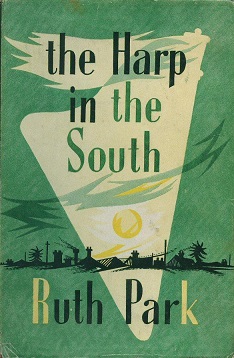
  • Ruth Park, The harp in the south (1948) (read before blogging): several of the Darcie family work in factories; a warm-hearted novel in which Park documents the lives of people living on factory salaries and trying to lead a good life.
  • Katharine Susannah Prichard, Working bullocks (1926): includes depictions of a timber mill, and the broader issue of working conditions and industrial accidents.
Book cover

Not surprisingly, most factory novels tell their stories from the point of view of the workers. They chronicle the precarity of life when salary is low, rights are few, and there is little time or energy left for finding ways out. In some of the stories, the workers organise in the hope of forcing change and improving their lot, but our authors are under no illusion that this is easy. Most of the novels are contemporary – that is written around the time they are set – but Ham’s is historical fiction, and Glover’s is, technically, technically futuristic.

So now, my question to you is: Do you like factory novels, and would you like to share your favourites (from any nationality of writer)?

Enza Gandolfo, The bridge (#Bookreview)

Book coverIf there are people I admire more than any others, it’s those who are able to empathise with, and forgive, someone who has done them great wrong. This complex question of forgiveness – of self and of others – is one of the issues explored in Enza Gandolfo’s Stella Prize short-listed novel, The bridge. However, it’s only one aspect of this intelligent, moving book.

Melburnians, and Australians of a certain age, will remember the West Gate Bridge disaster in 1970. The bridge collapsed during construction, killing 35 and injuring 18 of the 60 workers there at the time. It was, and still is I believe, Australia’s worst industrial accident, and it frames Gandolfo’s book. The novel starts in 1970, introducing us to 22-year-old Italian-born Antonello and his workmates, another Italian Sam, and Slav (whose nickname conveys his origins). Gandolfo quickly sets up the scene – the bonding between these men, and something of their lives and aspirations – before describing the collapse in the next chapter. She captures the horror of those hours in clear, descriptive, but not overblown language that perfectly captures the shock, panic and emotion of the event for all who experienced it – the workers, their families and those in the vicinity.

Antonello survives, but some of his friends don’t, and nor does his boss, Bob, who’d been “like a father” to him. Antonello, along with Bob and his mates, had started to realise that things weren’t right, but, as a rigger, he had no formal responsibility for what happened. However, guilt and trauma attach to him. His lovely relationship with his young wife Paolina survives, but is never quite the same. Gandolfo conveys so well how devastating to a life – to lives – a traumatic event can be, how life can change in a moment. You understand why, these days, counsellors are immediately sent in when tragedies occur.

The book then jumps, in Chapter 4, to 2009, and we meet 19-year-old Jo. Like Antonello she belongs to the working class. She lives in a rather dilapidated weatherboard house near the bridge, with her single supermarket worker mother, Mandy. She is in her last year of school, and has a best friend, Ashleigh, who comes from a comfortable middle-class family where the mother is a high school principal. Jo is the needier of the two, Ashleigh being more clever, more confident, and increasingly more involved with her boyfriend. Jo feels she’s losing her.

And now, here’s the challenge reviewers face. How much to give away of the story. What happens next, happens before a third of the novel is over, and you see it coming, but nonetheless it’s a shock, so I won’t give it away. (I note that some reviewers have, and some haven’t.) Let’s just say that a tragedy ensues and Jo is responsible – and, as it turns out, her friend Ashleigh is Antonello’s grand-daughter.

So, given I’ve decided not to spoil the plot, how best to discuss the rest of the novel, which still has over 250 pages to go?

Well, I could talk about the writing and characterisation. The novel is told chronologically, in third person, from multiple perspectives – from Antonello and Jo of course, but also Mandy, a legal aid lawyer Sarah, and a few others later in the novel. Gandolfo captures their feelings with such sensitivity and realism that by the time the novel is over we feel we know them. We experience their emotions, and go through their thought processes with them as they ponder what’s happened and whether they can possibly keep living in the face of their respective tragedies. It feels so true – and because of that, it breaks our hearts, more than once.

Then there’s the bridge. Its prime meaning here is literal, of course, but it is a gift to a writer because bridges can represent so many things – positive or negative, or, paradoxically both – that are reflected in this novel. They can symbolise progress, for example, but West Gate, which would bring two worlds closer together, was not seen positively by all:

“We don’t want those rich bastards coming over to the west”, was the general sentiment.

Bridges can also suggest connection and transition. In this novel, transition encompasses the idea of social mobility, which West Gate exposes, but it can also mean the transitions individuals make psychologically. It is this latter, often aided by the good connections that can occur between people, that ultimately brings some redemption in the novel.

This brings me to Gandolfo’s themes. Antonello, who has suffered from PTSD since the accident, realises late in the novel that his friend Sam, who had become a union activist, had made the more positive choice. It takes him a long time but finally he learns the lesson:

For years, the most persistent impulse was towards death; a desire to stop living … But life didn’t stop. It went on whether you lived it or not. You have to choose life. This is what he needed to tell them – if you stop living, you may as well die. If you stop living, you aren’t going to be able to love again, and everyone you know will pay for that, everyone.

Empathetic Paolina has always known this, but it’s a lesson that comes hard to the other characters. Anger, revenge, guilt – depending on their role in the events that occur – overwhelm them. And it is Antonello who is the lynchpin. He is able to help Jo, telling her that the best thing she can do is forgive herself and allow herself to live. Similarly, he encourages his own family not to succumb to the sadness, anger and bitterness which brought him such waste and pain.

Enza Gandolfo’s achievement is impressive. She presents us with a bunch of flawed – as in ordinary – characters, and she puts them in terrible but not unrealistic situations. She then has them experience all the emotions that you would expect. And she doesn’t judge. Instead, she makes us feel, confronting us to think about how we would react, and hoping that we will come to the same conclusion that Antonello does.

A character I’ve only briefly mentioned is Sarah, Jo’s legal aid lawyer. She talks about the storytelling aspect of trials:

That was the danger of a good story: you could elicit pity and empathy for even the worst sociopath … Sarah believed telling good stories, the ones people listened to and were swayed by, was a responsibility. It worried her that some people did not take it seriously enough.

It’s not a big leap, I’d say, to suggest that Gandolfo would extend this responsibility to novelists – and in The bridge, she shows what a responsible story can look like. Such a novel.

Lisa (ANZLitLovers) was also moved by this book.

AWW Challenge 2019 BadgeEnza Gandolfo
The bridge
Brunswick: Scribe, 2018
375pp.
ISBN: 9781925713015