William Trevor, The hill bachelors (#Review)

Well, Kim (Reading Matters) and Cathy’s (746 Books) “A year with William Trevor” project is all but over, and I’ve only done one post – on the titular story in the little The dressmaker’s child collection. The second story, “The hill bachelors” (as in bachelors living in the hills), was first published in his collection titled The hill bachelors.

William Trevor (1928-2016), as most of you will know, is an Irish writer of novels and novellas, short stories and plays. He is particularly good at writing about marginalised people, or those who are loners or outsiders, and writes authentically about them, regardless of their age or gender. “The hill bachelors” is another of these, though perhaps more a variation on the theme. Is the protagonist Paulie marginalised? In a sense perhaps? Is he a loner or outsider? Again, it depends on how you see him, and the choices he makes.

Trevor is one of those writers who lets the reader work out who’s who, what’s what, as we go. The first two paragraphs of this story describe a 68-year-old woman, wearing mourning clothes, waiting for “them” who will decide her future. Very little is overtly explained, but by the end of the second paragraph, we know that she has worked hard and got on with whatever life has thrown at her – and, it seems, she will continue to do so with a calm resignation.

Then, we are introduced to a man we come to realise is her 29-year-old son, Paulie. He is coming for his father’s funeral/wake. He is the youngest of five children, and had not had a good relationship with his “hard” father. It soon becomes apparent that the mother expects the children to work out what will happen to her now – and what will happen to her now, as soon becomes apparent, is that Paulie will return to the family farm. After all, “he was the bachelor of the family”, and his job as a lorry driver “wasn’t much”. However, to do this he will have to give up the woman he loved as she is not interested in a farm life.

While he is working out his notice back in town, his mother is helped by neighbours, the bachelor Hartigan and his sister. It is this sister who introduces the idea of the hill bachelors. She suggests that Paulie would not want to come back because

“It’s bachelors that’s in the hills now. Like himself,” Miss Hartigan added, jerking her bony hand in the direction of the yard, where her brother was up on a ladder, fixing a gutter support.
“Paulie’s not married either, though.”
“That’s what I’m saying to you. What I’m saying is would he want to stop that way?”

Seeing bewilderment in Paulie’s mother’s face, she goes on to explain that “the bachelors of the hills found it difficult to attract a wife to the modest farms they inherited”.

And so Paulie comes back. He “harboured no resentment … it was not the end of the world”. What was “the end of the world”, however, was hearing the woman he loved say that life on a farm did not attract her. He works hard, and he starts dating local women, but Miss Hartigan seems to have known whereof she spoke.

The story is told third person, through the alternating perspectives of the mother and Paulie. We hear what the the rest of the family thinks, or has done, mostly through Paulie’s and his mother’s thoughts and assumptions, through their deep knowledge of how their family works and of the rural traditions within which they live. There is a little dialogue, but not much. Paulie and his mother are both “types” and yet quietly individualised too.

There’s no big drama in this story, just ordinary people making the decisions that seem right at the time. Paulie’s mother is not unkind or demanding. Indeed, she offers to move in with a married daughter, and, in a little revelatory moment, Trevor lets on that she’d shed some private tears in her early days on the farm. She would do her best to make it easy for a new wife, unlike her own experience. However, marriage to a man from the hills has taught her passivity, to do what she’s told, so she resigns herself – as we are led, from the opening paragraphs, to expect she’d do – to see out her lot. Paulie, too, seems resigned, like his mother, to play out the role set for him, even if it means joining the titular hill bachelors.

All this makes it a far more complex story than it might seem on the surface. It means that, as much as we’d like to, it’s hard to see Paulie as a victim, because he does have a choice, difficult though it may be. But the pull of tradition and responsibility is strong, and while Paulie is aware of what is happening to him, he is resigned to it. Ultimately, as he himself realises, “guilt” and “goodness” have nothing to do with it, it just is what it is, “enduring, unchanging” – and he is not going to buck it.

Trevor thus leaves it for us to think about – to think what the different choices might mean for his mother, for Paulie, and, more widely, for the rural way of life that, regardless of their decisions or their own thoughts about it, does seem to be on its way out. It is up to us readers to ponder the bigger picture, to wonder where that will get him, them or the farm. After all, if he doesn’t marry, what will happen? In continuing their rural traditions, will anything be ultimately achieved, or will this be another sad little life?

Cathy (746 Books) has reviewed the collection.
William Trevor
“The hill bachelors”
in William Trevor, The dressmaker’s child
London: Penguin Books, 2005
pp. 21-39
ISBN: 9780141022536
(First published in The hill bachelors, 2000)

William Trevor, The dressmaker’s child (#Review)

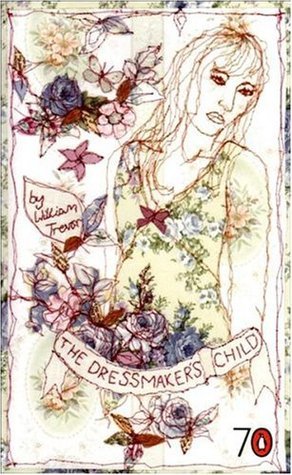
I knew, when Kim (Reading Matters) and Cathy (746 Books) announced their “A year with William Trevor” project, that I had a little book containing some William Trevor short stories but, could I find it? Nope. It was a little book after all. And then, voilà, just the other day while I was doing my book decluttering and packing, I came across it. It’s Pocket Penguin 22 from Penguin’s 70 Years celebration, and is called The dressmaker’s child, but it contains three short stories, so these will be my (very willing) contribution to the project. Two of the stories were chosen by the author from previous collections, but for the titular story this is its first appearance in book form.

Most of you will know of Trevor (1928-2016) but, in a nutshell, he’s an Irish writer of novels and novellas, short stories and plays. He won many literary awards in his life, and was particularly well regarded as a short story writer – making him right up my alley. In fact I have read one of his short stories before, early in this blog.

In her most recent Trevor review (of a novel titled The children of Dynmouth) kimbofo writes that it didn’t take her long to feel that she was in “familiar William Trevor turf in which he takes a seemingly ordinary character with eccentric traits and lets them loose in a confined setting”. This could apply to the short story, “The dressmaker’s child”, as it is about a young nineteen-year-old motor mechanic, Cahal, working for his father in a small town. He’s the only son in a family of girls – all of whom have left – and he is “scrawny” with a “long face usually unsmiling”. The story opens on him applying WD-40 “to the only bolt his spanner wouldn’t shift”, which sets a tone that perhaps other things are, or might be, locked up for our protagonist.

As he continues to work on the car, a young Spanish couple appears, wanting to be driven out to see the Sacred Virgin (Our Lady of Tears) who they believed – that is, they had been told so by a barman – would bless their marriage. Now Cahal knows the statue’s special spiritual status had been disproved and thus rejected by the church, but with a 50-euros job in the offing, he doesn’t actively dissuade them from their mission.

Trevor describes the trip, complete with hints of self-delusions, until on the way home Cahal’s car hits a child – the dressmaker’s child – who is known to run at cars and who, up till then at least, had never been hurt. With the Spanish couple kissing in the back of the car, and choosing avoidance over action, Cahal continues driving despite being aware of “something white lying” on the road behind him. Back in town, nothing is said about the dressmaker’s daughter for a few days, but Cahal remains uncertain. It affects his relationship with his young woman, and when the dressmaker herself starts to appear in town at his side, hinting that she knows what had happened, but is not reporting him, his fears and uncertainty increase.

This is not a thriller, but there is a plot and an ending (of course) so I will leave the story here. It’s nightmarish stuff, but very real too.

Trevor’s writing, his unfolding of story and character, is a pleasure to read. Take Cahal’s character, for example. From the stuck bolt (albeit does start to loosen, hinting at possibilities), he is depicted as rather gormless, bowling along, taking opportunities as they come without a lot of consideration – and somewhat different to his father who, during a conversation about the Swedish couple, shakes his head “as if he doubted his son, which he often did and usually with reason.”

This brings me to the point of the story which, as we are slowly brought to see, is the impact on Cahal of what he did or didn’t do – and the almost catatonic fear it engenders:

Continuing his familiar daily routine of repairs and servicing and answering the petrol bell, Cahal found himself unable to dismiss the connection between them that the dressmaker had made him aware of when she’d walked behind him in the night, and knew that the roots it came from spread and gathered strength and were nurtured, in himself, by fear. Cahal was afraid without knowing what he was afraid of, and when he tried to work this out he was bewildered. 

It changes his life – not in the way we might expect but in a way that shows with absolute clarity how avoidance and inaction can be as potent as anything else. Trevor, like my favourite short story writers, is less about drama and more about the complex realities of human interaction in which accommodations rather than simple resolutions are more often the go. I look forward to the next story.

William Trevor
“The dressmaker’s child”
in William Trevor, The dressmaker’s child
London: Penguin Books, 2005
pp. 1-20
ISBN: 9780141022536
(First published in The New Yorker magazine, October 4, 2004: available online)

William Trevor, The woman of the house

[WARNING: SPOILERS, if you think it matters]

According to Wikipedia,William Trevor’s characters “are usually marginalised members of society: children, old people, single middle-aged men and women, or the unhappily married.” This is certainly the case with Trevor’s short story, The woman of the house, which was published last year in The New Yorker. All four characters in the story are marginalised, two are middle-aged to old, and two are young, but all live on the edge of society struggling to survive in one way or another. In fact it is said of the two young men that:

Survival as they were was their immediate purpose, their hope that there might somewhere be a life that was more than they yet knew.

Pretty grim stuff. The plot is simple. Two young men of “stateless” origin  are employed to paint the house of an old disabled man whose carer/companion is his nearing 50-year-old cousin, Martina. By the end of the story the old man has disappeared from view … we have a pretty good idea of what has happened to him and it ain’t pretty.

The story is perfectly set up. The two strange men who appear to know little about painting – and who we are told are somewhat like “gypsies” – have clearly been shown where the money of the house is kept. The woman, Martina, is (to be euphemistic) taken advantage of by the local butcher and in return receives some special meats. Aha, we think, here is a case of two con-men facing some easy pickings…but, this would clearly be too cliched for Trevor. They don’t steal the money and she is not so down-trodden as it seems. Trevor makes no judgement – just tells it like it is when life is hard and people make pragmatic decisions in order to survive.

And that’s all I’m going to say about this tight little story…except of course that it has inspired me more than ever to read a Trevor novel.