Pierre Lemaitre, The great swindle (Review)

Pierre Lemaitre, The great swindleAs I was reading Pierre Lemaitre’s literary page-turner, The great swindle, I started to wonder about the endings of books, what I look for, what I most appreciate. What I don’t look for is neat, happy conclusions. There are exceptions to this of course. Jane Austen, for example, but she was writing at a different time when the novel was in an earlier stage of development. In contemporary novels, I look for something a little challenging, something that suggests that life isn’t neatly wrapped up. Fiction isn’t life, I know, but its role, for me anyhow, is to reflect on, and thus make me think about, life. So, Lemaitre’s The great swindle? How does it end? I’m not going to tell you – it’s not the done thing in reviews – but I will say that it’s satisfying, even though it does have one of those many-years-later wrap-ups that I’m not convinced is needed.

There, that’s an unusual opening for me, isn’t it, to start with the end? Where do I go now? Back to the beginning I think. The novel is divided into sections: 1918, November 1919, March 1920, and Epilogue. It starts in the trenches on 2 November 1918, just days before the First World War ends. One of our two main characters Albert Maillard is there, wanting a quiet, safe time until the war ends, but his commanding officer, Lieutenant Henri d’Aulnay-Pradelle, has other ideas, setting off a series of events that reverberates through all their years.

This is, in fact, quite a plot-driven novel, despite having many strings to its bow. And you all probably know how much I hate describing plots, so I’m going to keep it simple. After a devastating opening which leaves soldier Édouard Péricourt with a severely damaged face and Albert, for good reasons, taking responsibility for his care, the novel focuses on life in Paris in the immediate aftermath of war. While our two soldiers struggle to survive, Pradelle has been demobbed a Captain, as he’d orchestrated, married a wealthy young woman, Madeleine, who happens to be Édouard’s sister, and is engaged in the business of providing coffins and burying soldiers in cemeteries around France – focusing more on the money he can make than on whether, say, the right soldier ends up in the right coffin. You getting the picture of this Pradelle by now?

There are several other characters – this is a big story that owes much to the 19th century novel – but I’ll just mention a couple more: Monsieur Péricourt, Madeleine and Édouard’s father, a tough businessman who had never had time for his artisitic, effeminate son, and Merlin, the dogged, bottom-rung, about-to-retire civil servant who is given the job of reporting on the cemetery project.

Finally, just two more things you should know before I leave the plot. One is that Édouard did not want to return home after the war, so in the military hospital Albert manages to swap his identity – in a swindle, you might say – with a dead soldier, resulting in Édouard Péricourt becoming Eugene Lariviere. His father and sister, therefore, do not know he is alive. The other is the war memorial swindle concocted by Édouard (Eugene), which he finally manages to convince the “even when well-intentioned, lying was not in his nature” Albert to support.

The novel, then, has a complex plot with a rather large cast of characters, but Lemaitre, who is apparently known for his crime novels, handles it all very well so you never feel lost. One of the ways he does this is through vivid characterisation. Every character, from the main “cast” (it’s to be filmed I hear) to the supporting characters, is so strikingly portrayed that you feel you are there in postwar France – there in the streets where poor, injured returned soldiers struggle to make a living, there in the houses of the well-to-do where money is king, there in the cemeteries where Pradelle’s exploited Arab, Chinese and Senegalese workers do what they can to survive.

Another is through the clever set pieces which illuminate the characters, such as Edouard/Eugene’s increasingly bizarre masks – from horse-head to budgerigar – which he creates and wears to cover his horrendously disfigured face. Or the more gruesome scenes in which the taciturn, not very agreeable, but diligent public servant Merlin tramps around cemeteries investigating coffins. Using these set pieces, many of which border on farce, alongside controlled doses of satire and irony, Lemaitre creates a tragicomic tone – but to what end?

“will this war never be over?”

Early postwar, concerning Pradelle’s cemetery plans, the (mostly omniscient) narrator says:

To an entrepreneur, war represents significant business opportunities, even after it is over.

War, then, is the over-riding theme – but war is a big canvas. Lemaitre’s focus is war’s aftermath. What does it mean for those who went and those who stayed, and for the new world they must forge, preferably together. At one point Albert, worn down by his cares and responsibilities, and facing yet another hurdle, wonders, “will this war never be over”. But, as ordinary citizens get back to life, the needs of the returned are forgotten:

ex-soldiers were all the same, forever banging about their war, forever giving little homilies, people had had just about enough of heroes. The true heroes were dead!

A ripe environment, in other words, for cemetery and war memorial scandals, for profiteering – particularly when you add that it was a time of great social change in France, one where the nouveau riche (represented by M. Péricourt) were getting the upper hand over the often money-short aristocracy (represented by Pradelle).

Opposing this almost obsessive focus on money is a sense of resignation. It can be seen in Madeleine who marries the execrable Pradelle. “We each settle down as best we can”, comments our narrator. For many, there is a sense of “emptiness”, this word appearing several times in the novel. They were tough times – the time of “the lost generation” or what the French called “the génération au feu” – for which society was not equipped to cope. So, in the end, what Lemaitre has painted is a picture of a society under stress, a picture which is conveyed most directly through our “everyman”, our struggling returned solider Albert who just wants to make a life for himself but who is also loyal to those who need him:

War had been a lonely business, but it was nothing compared to the period since demobilisation that was beginning to seem a veritable descent into hell …

The novel, as you will have gathered, is replete with swindles, but the greatest of all, Lemaitre is saying, was the abominable treatment, upon their return, of the ordinary soldier.

This is one of those novels which uses a light touch to tell a heavy story. No wonder it won France’s main literary prize, the Prix Goncourt.

Lisa at ANZLitLovers also enjoyed this book.

Pierre Lemaitre
The great swindle
(trans. by Frank Wynne)
London: MacLehose Press, 2015
ISBN (eBook): 9781848665804
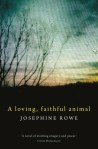
Josephine Rowe, A loving, faithful animal (Review)

Josephine Rowe, A loving faithful animal

How many novels have you read featuring the Vietnam War? I’ve not read many I must say, but last year I did review Charles Hall’s Summer’s gone, and now this year I’ve read Josephine Rowe’s A loving, faithful animal. It’s a debut novel but, from its form, you can tell that Rowe is an accomplished short story writer. I have in fact read one of her short stories – from her collection, Tarcutta Wake. Unusually for me, I didn’t review it at the time. I think this is because I planned to read the whole collection, but that hasn’t happened (yet, anyhow), which is clearly my loss.

So, before I discuss the content of this novel, I should explain what I mean by my comment regarding short stories and its form. For a start, it’s a multi-voice novel. On its own, this is not unusual, but here the voices are also in different persons, which is not unheard of either, really. However, added to this is the fact that the chapters (or “stories”), particularly “Breakwall”, could be read as stand-alone pieces. To make the novel out of these pieces, they are linked via character, and there’s an overall chronological narrative arc to them, but they also remain little jewels in themselves. There’s real skill here, in the way Rowe juggles her voices, perspectives, stories to create a very satisfying whole.

Now, to discuss the novel itself. It comprises six stories, starting in second person with Ruby, whom we come to realise is the younger daughter of the book’s central family. It then progresses through four stories told from different third person limited perspectives – Ruby’s mother Evelyn, her father Jack, her uncle and father’s brother Les or Tetch, and her sister Lani – before returning to Ruby’s second person voice to conclude. The story is one of a family broken by the father’s ongoing trauma (PTSD) following his Vietnam War experience. It’s a devastating story showing how such trauma can play out, resulting in domestic violence, dividing loyalties and causing splits in families.

… she did not drive away …

The novel opens on New Year’s Eve, around 1990. The family has struggled on for some time. Jack has been unable to retain good employment, going in and out of rehab, with Evelyn always drawing him back, wanting their relationship and the family to work. But, every time she takes him back, she loses something too, particularly in terms of the respect of her elder daughter. As the novel opens, it’s New Year’s Eve, and Jack has gone, for good this time it seems, after something unspeakably brutal – the full details are never, fortunately, given – has happened to the family’s pet dog, Belle, the titular “loving faithful animal”. Except, as you’d expect, there’s more to the title than this. Evelyn, too, is “a loving faithful animal”, as in her way is Ruby and, perhaps we could also argue, Jack’s half-brother, Les/Tetch. He had escaped the war by “getting rid of his own fingers” and now hovers on the edge of the family, wanting to keep an eye on them, wanting his brother to be okay, but wanting too some family for himself.

What I enjoyed most about this book, besides its tackling this important subject, is its empathetic but unsentimental portrayal of its characters. Evelyn’s loyalty (her faithfulness) is shown to be both admirable and stupid. We see the catch-22, damned-if-you-do-damned-if-you-don’t nature of her situation, with the added element of a young girl having made her bed, that is, having married against her parents’ advice, and now having to lie in it:

But she could never quite bring herself to. Run out on him like that. And it was never as simple as money. It was never as simple as pride, because she’s not sure she’s never had much of that either. Or if she does, it hasn’t turned out to be worth much, not when it comes right down to it. (II “The Coastal Years”)

Life is cruel, particularly when stubbornness and lack of forgiveness face off against each other. Anyhow, we also ache for Jack who can’t escape his past, and nor “get a handle on” the future, so leaves rather than inflict more cruelty. We see and understand Lani’s decision to reject it all and escape into a future on her own, while Ruby stays determinedly loyal. Every decision though comes at a cost.

It’s not an easy book to read, and not just because of the subject matter. Rowe is not the sort of writer who wants to tell a simple narrative. She wants to convey emotions, psychology, motivations, not just actions, because these are the stuff of life. And this requires a particular sort of writing which, for Rowe here, is a sort of minimalist, sometimes disjointed, sometimes lyrical style:

This is Exhibit A in the Museum of Possible Futures, the life that might have rolled out smooth as a bolt of satin, if she had just swung her slender legs up into that beautiful car and driven as fast as she could in the opposite direction, leaving the man with the camera far behind. Your father, he could keep the photograph.

But she did not drive away. Instead she sold the car and spent every night of her life trying to lead your father out of the jungle, out of the mud, away from the cracks of invisible rifles, strange lights through the trees. (I “A Loving, Faithful Animal”)

There’s more of course – isn’t there always? – including little running motifs involving cicadas and panthers, and Tetch whom I’ve barely mentioned, but I’ll close here. This is the sort of book that I’d love to see in next year’s awards shortlists, for its writing and for its fierce, authentic evocation of the lasting effects of war. I wonder if I will.

Lisa (ANZLitLovers) was also impressed by the book.

AWW Logo 2016

Josephine Rowe
A loving, faithful animal
St Lucia: UQP, 2016
200pp.
ISBN: 9780702253966

Anthony Doerr, All the light we cannot see (Review)

Anthony Doerr, All the light we cannot seeJust when you thought that there couldn’t possibly be another angle to writing about World War 2, up comes another book that does just that, like, for example, Anthony Doerr’s Pulitzer prize-winning All the light we cannot see. I had, of course, heard of it, but it wasn’t high on my reading agenda until it was chosen as my reading group’s September book. I wasn’t sorry we chose it, because I do, in fact, like World War 2 stories, and Doerr’s turned out to be an engaging one – warm, generous but not sentimental, and highly readable despite its alternating time-frames, locations and characters.

I’ve read several and reviewed some World War 2 novels and memoirs. Many have been about Jews and the Holocaust, such as Imre Kertesz’s Fateless, Hans Bergner’s Between sea and sky, Marcus Zusak’s The book thief, and two memoirs, Halina Rubin’s  Journeys with my mother and Anna Rosner Blay’s Sister, sister. A couple have been about the fighters, such as Alan Gould’s The lakewoman and Richard Flanagan’s The narrow road to the deep north. Some have drawn on the perspectives of children and young people – Zusak’s The book thief, Ursula Hegi’s Stones from the river and, of course, Anne Frank’s The diary of a young girl. Doerr’s book fits into this last group, but is different again. Zusak’s and Hegi’s girls are non-Jewish Germans, and Anne Frank is of course a Jewish girl in Amsterdam. These books focus on the Holocaust. Doerr’s does not. His interest is the personal experience of his young people – a blind French girl, Marie-Laure, born around 1928, and an orphan German boy, Werner, born around 1927. Their stories – Marie-Laure’s birth in Paris and flight with her father to Saint-Malo after Paris is occupied, and Werner’s childhood and youth in Germany followed by his war experience in Russia, Central Europe and France – are told in parallel until they inevitably meet.

Marie-Laure and Werner are nicely realised characters. They are ordinary young people trying to make a life for themselves in terrible times, but are extraordinary too. Marie-Laure’s childhood-onset blindness makes her initially helpless but she becomes a resourceful and imaginative young girl. Werner, the orphan, is a clever boy who develops a fascination with radios and things electrical. This leads him to a particular role in the war – tracking down partisan-resistance transmitters – that is different from most “soldier” stories.

All the light we cannot see is a big book. It has a wide, but not unwieldy, cast of characters, and a complex structure comprising two chronological sequences, within each of which the stories of our two young people alternate. This might sound difficult or confusing to read, but Doerr handles it well.

I’m not going to write a thorough review of this. Being a top-selling prize-winner, it has been reviewed widely. Instead, I’d like to share some of its themes, or ideas, because these are what interests me most. Before that though, I want to raise one issue. One review I read and some in my reading group expressed irritation at Doerr’s use of American idiom (such as people going “to the bathroom in their pants”). For some reason this sort of issue rarely worries me. Does that make me a bad reader? Perhaps. But it’s difficult, I think, to write in the language of another place and time, and when writers try to do it, it can feel forced. Some manage it (like Peter Carey’s True history of the Kelly Gang) and some compromise by relying on some well-placed words from an era. Generally, I’m happy for the author to use contemporary-to-them expression.

What you could be (Volkheimer to Werner)

What interests me most as a reader is not whether authors get these sorts of details right but questions like why is the author writing this, why has the author structured the story this way, what does the imagery mean, and so on. It is to the first of these that I’ll turn now. The novel’s overall subject matter is the obvious one – the tragedy of war, the way war destroys people’s lives – but within this are some interesting ideas.

One relates to logic and reason. Early in the novel, Marie-Laure’s locksmith father believes (or, perhaps, wants to believe) in logic:

Walk the paths of logic. Every outcome has its cause, and every predicament has its solution. Every lock its key.

This idea is reiterated in the book Marie-Laure is given by her father, Verne’s Twenty thousand leagues under the sea:

Logic, reason, pure science: these, Aronnax insists, are the proper ways to pursue a mystery. Not fables and fairy tales.

The opposing view, however, is put by Werner late in the war when he is tracking resistance transmitters:

Everybody, he is learning, likes to hear themselves talk. Hubris, like the oldest stories. They raise the antenna too high, broadcast for too many minutes, assume the world offers safety and rationality when of course it does not.

Logic and reason may work well enough in “normal” life, but during war they can stand for very little.

Somewhat related to this are the discussions about curses and luck. A major plot line concerns an ancient gem, the Sea of Flames diamond, which is said to carry a curse. It’s surely not by chance (ha-ha) that Doerr hides this stone behind the 13th door in the museum, and that his novel has 13 sections! Anyhow, here is Marie-Laure’s father on curses and luck. There are, he says:

no such things as curses. There is luck, maybe, bad or good. A slight inclination of each day toward success or failure. But no curses.

AND

Stones are just stones and rain is just rain and misfortune is just bad luck.

Later though, when her father has been arrested and Marie-Laure is scared and alone, she conducts an imaginary conversation with him:

You will survive, ma chérie.
How can you know?
Because of the diamond in your coat pocket. Because I left it here to protect you.
All it has done is put me in more danger.
Then why hasn’t the house been hit? Why hasn’t it caught fire?
It’s a rock, Papa. A pebble. There is only luck, bad or good. Chance and physics. Remember?
You are alive.

In almost every story I’ve read about war – fiction and non-fiction – luck has played a significant role. It’s one of the things that makes war so scary. You cannot expect reason to prevail.

Finally, related to these two ideas is that of choice:

Frederick [Werner’s friend at Schulpforta, the Nazi training school] said we don’t have choices, don’t own our lives, but in the end it was Werner who pretended there were no choices …

Frederick, in fact, chose to exercise his choice by refusing to follow orders and he suffered the consequences, while Werner did as he was told – at school and later in the field (“they do as they’re told”) and suffered the consequences in a different way. Late in the novel, Werner meets Marie-Laure:

He says, “You are very brave.”
She lowers the bucket. “What is your name?”
He tells her. She says, “When I lost my sight, Werner, people said I was brave. When my father left, people said I was brave. But it is not bravery; I have no choice. I wake up and live my life. Don’t you do the same?” 

These and similar discussions thread through the book. They remind us that in war survival is largely a matter of “luck”, that reason and logic will only get you so far when you confront the chaos of war, and that, perhaps paradoxically, you do have choices even if they are between two unappealing alternatives. The ultimate tragedy is that war destroys “what you could be” – all those talents, all those dreams, are subsumed into the business of survival.

This is not a perfect book. It’s a bit sprawling, trying to do a lot with imagery that I haven’t been able to completely untangle. And I wonder about the necessity of the final decades-later chapters. However, it is a page-turning read and produced a lively discussion in my bookgroup. I’m glad I read it.

Anthony Doerr
All the light we cannot see
London: Fourth Estate, 2014
531pp.
ISBN: 9780007548682 (eBook)

Edith Wharton, Writing a war story (Review)

According to Keirsey, Edith Wharton may have b...

Edith Wharton (Presumed Public Domain via Wikipedia)

“Writing a war story” is quite different to the Edith Whartons I’ve read to date, and it was clear from the opening sentence – “Miss Ivy Spang of Cornwall-on-Hudson had published a little volume of verse before the war”. It was the comic tone that did it. All the previous works of hers I’ve read, several novels and novellas, plus a couple of short stories, have been serious, if not downright tragic. However, Wharton was a prolific writer, so I wasn’t completely surprised. In fact, I was rather thrilled to have come across this story via the Library of America (a few months ago now).

I haven’t yet read the highly recommended biography of Wharton by Hermione Lee, but I’ve heard enough about her life to know that she lived in France during the First World War, and that she contributed significantly to the war effort. As LOA’s notes tell us, she stayed in France when the war started while others fled. She raised money, visited the front, established refugee hostels and homes for children. She was admired widely but she, herself, apparently underplayed her role, believing, writes LOA, “that nothing she did could compare with the agonies suffered by the soldiers and their families”. Her story, “Writing a war story” satirises both this role and the idea of writing stories for soldiers, for the war effort.

The plot is simple. Ivy Spang, who had published, to minimal recognition, a book of verse, is asked to contribute a short story to a new magazine, The Man-at-Arms, aimed at convalescent soldiers. Flattered, she accepts, and, due for leave from her volunteer work of “pouring tea once a week” for soldiers in a hospital, she sets off “to a quiet corner of Brittany”, because

devoted though she was to her patients, the tea she poured for them might have suffered from her absorption in her new task.

But, the task proves harder than she’d imagined. She struggles to find “Inspiration”, her mind being full of the one serious but unfortunately pretentious and condescending review, by the editor of Zig-Zag, of her published verse collection. She tells her companion, Madsy, that “people don’t bother with plots nowadays” and that “subject’s nothing”. Eventually, in desperation, she accepts Madsy’s offer to use/collaborate on one of the “stories” Madsy had jotted down from her hospital volunteer work. They agreed that Ivy would take the basic story but add her literary “treatment”. You can probably guess the outcome, but you should read the story to see just how it comes out. There’s a photo and a famous novelist involved too. In addition to the satire on “literature” and war volunteer work, there’s also a gender dig.

One of the things I most enjoyed about the story was its satire of literary pretensions, and how easy it is for an unconfident writer to be derailed by the wrong sort of praise, as Ivy is by Mr Zig-Zag!

In the story’s conclusion, a novelist laughs at her story, before he realises she’s the author. When he realises, and she asks for feedback:

He shook his head. “No; but it’s queer—it’s puzzling. You’ve got hold of a wonderfully good subject; and that’s the main thing, of course—”
Ivy interrupted him eagerly. “The subject is the main thing?”
“Why, naturally; it’s only the people without invention who tell you it isn’t.”
“Oh,” she gasped, trying to readjust her carefully acquired theory of esthetics.

Poor Ivy! I liked the fact that Wharton’s satire is subtle, not over the top. We readers can see what’s coming but Ivy isn’t ridiculed. We feel for her aspirations but we can see that her lack of confidence has laid her open to influence. And there’s irony here because that very influence, that editor of Zig-Zag, had warned her of “not allowing one’s self to be ‘influenced'”, of the importance of “jealously guarding” her “originality”.

There’s more to this story, particularly for people interested in Edith Wharton’s biography. My point is that whatever your interest – literature, war literature, Edith Wharton herself – this story has something to offer, as well as being a good read (with a subject, or two!)

Edith Wharton
“Writing a war story”
The Library of America
Originally published in Woman’s Home Companion, 1919
Available: Online

Halina Rubin, Journeys with my mother (Review)

Halina Rubin, Journeys with my motherI’ve read a lot of World War 2 literature over the years, but very little from the Polish point of view, so I was more than willing to read Halina Rubin’s Journeys with my mother when it was offered to me a few months ago. Rubin was born in Warsaw on 27 August 1939. Note the date: her mother, Ola, was still recovering in hospital when Germany invaded Poland a few days later. Within two months, her parents, secular Jews, had fled to the Soviet Union, and this is where the young Halinka and her mother saw out the war. It’s a fascinating story – and it’s told in a thoughtful way.

Rubin divides her story into two parts. Part 1 is mainly background. It provide some family history about her parents, Ola and Władek, and their parents before she was born, but it also describes the depth of anti-Semitism with which they lived, long before the war started. It tells how her parents were radicalised early, how for them “the ideals of communism offered a way to solve the twin problems of unemployment and poverty, and put an end to racial hatred”. Oh, such idealism … but her parents, despite experiencing political betrayal, never fully lost their values and commitment to social causes.

Anyhow, part 2, which conveniently aligns with the start of the war, tells the story of her nuclear family after she was born. “I try to imagine” she writes of those opening days of the war, “how abruptly, how without mercy, their world changed”. She describes how, with their faith in the Soviet Union, her parents fled to Białystok, once a Polish town but now under Soviet control, while other members of the family made different decisions or timed their flight decisions differently, with, in most cases, tragic consequences.

Halina and her family lived there for nearly two years, Ola working as a nurse, until Germany betrayed the Soviet, invaded – and the atrocities began. So, they fled again, heading further east for Russia itself. Władek was taken to join the Red Army, but Ola and Halina made it to Oryol where Ola worked again as a nurse. Later, mother and daughter, who were evacuated under German orders from Oryol, went to Lida in Belarus, and from there they escaped into the forests where they joined the partisans – because, remember, Ola was a committed communist. It’s astonishing, really, that Ola and her oh-so-young daughter survived the threats and privations of such a life, but survive they did:

Around us was a forest so dense that even wild animals – boars, deer and wolves – chose to follow the same known tracks. The myriad of lakes made the terrain marshy.

Only the locals knew how to get their bearings, how to keep away from the swamps ready to swallow you up; how to keep the wolves away. It was a perfect place to hide, but tough to survive.

They were wet, cold, and desperately hungry. A truly amazing story of survival against a backdrop of egregious political treachery.

Journeys with my mother doesn’t end with the war, however, but follows her parents as they return to Poland, then move to Israel, and finally, after her father’s death, her mother’s move to join her in Australia. Rubin describes the early days of peace – the adjustments that had to be made as people separated from war-time friends and connections, and reunited, if they were lucky, with family members; the impact of political decisions being made about governance and borders; and, shockingly, the continuing anti-Semitism. She asks:

Who could have predicted that peacetime would be so difficult?

Although a very different book about a different war, this reminded me of Olivera Simić’s book Surviving peace which I reviewed a year or so ago.

But I’ll leave the story here – to move onto the telling.

I’ve categorised this as an autobiography or memoir but it could also be described as biography, since Rubin’s prime focus is the life of her parents. And that required research, as she didn’t manage to capture all she could before they died. This is partly because she didn’t start thinking about (aka wasn’t very interested in) documenting her parents’ lives until after her father had died, by which time her mother was old, but also because the story was so stressful that her mother found it hard to tell. Rubin writes:

As always, whenever remembering her parents or sisters or the years of the war, eventually her voice would turn into a whisper and tears would well up her eyes. In the very last tape, I hear her say, ‘That’s enough, I cannot go on.’ The tape is still recording when I say, ‘Let’s have tea.’ The conversation was never resumed. I did not have the heart to put her through that ordeal again.

Rubin had done this taping before her mother’s death in 2001, but it was not until some years later, with the encouragement of her daughter, that she delved into “two boxes filled with papers, photographs, letters, notebooks and correspondence”. These plus her mother’s stories got her going, but there were gaps, so she travelled back to the places they’d lived, talked to old friends and a surviving cousin, trying to complete the story. She reports this directly and consciously in the book, switching between describing her fact-finding trips (revisiting places, meeting people) and recounting her and her parents’ lives in the places she visits. In other words, she takes us on her research journey – and I like that. It does give the story a disjointedness that might irritate some readers, but for me it adds to the interest and, yes, authenticity.

Like all such research, there are serendipitous finds and wonderful coincidences. One such occurs during a meeting with Valerii Slivkin from a museum in Lida. He shows her a document written by partisans after the war. They mention “the presence of ‘a four-year-old-girl'”. That girl of course was her! Earlier in the book, during one of her discussions of her mother’s stories, she says:

My mother was my first, albeit sketchy, narrator. When talking about the past she would get distressed so her storytelling could be convoluted, meandering around events, places, people. And I had not been a good listener. Perturbed, intent on not missing as much as my mother’s sigh, I could hardly concentrate. Later, however, I would discover how clearly she, in fact, remembered the events of the past.

Slivkin is one of those whose information confirms “how accurate she was”.

However, Rubin is also realistic about the limits of what you can know or discover. Looking at photo of her aunt who died early in the war, she wonders about the story behind the photo:

Ewa looks pregnant. I wonder if this is another family secret or simply a never told story. And if the complexities of our lives are at times impossible to unravel, how much more impossible are the events of the past. Nothing is certain.

It sure isn’t. But that doesn’t mean you shouldn’t look for the certainties – and Rubin, in this book, has given it a red hot go.

Lisa (ANZLitLovers) also enjoyed the book.

awwchallenge2016Halina Rubin
Journeys with my mother
Melbourne: Hybrid Publishers, 2015
251pp.
ISBN: 9781925272093

(Review copy courtesy Hybrid Publishers)

Aminatta Forna, The hired man (Review)

Aminatta Forna, The hired manEarly in Aminatta Forna’s The hired man, the narrator Duro is told by his old, ex-best friend Krešimir, “People have moved on, Duro. Maybe you should too”. At this point we are not sure exactly what they have moved on from but we guess it might have something to do with war – and as the story progresses we discover we are right.

The hired man is Forna’s third novel, but my first to read. All of them, together with her memoir The devil that danced on water, deal with the prelude and aftermath of war. In The hired man it’s the Croatian War of Independence which occurred in the early 1990s. Forna, though, never names the war, and while there is some description of war-time action, she doesn’t provide any real historic details about who, what or where.

The novel is set in the fictional town of Gost, and commences in 2007 with Duro, our first person narrator, telling us that “at the time of writing I am forty-six years old”. Later we realise he is writing for a future reader, after he dies. He writes

… I have to tell this story and I must tell it to somebody, so it may as well be you, come to sort through my belongings.

The trapdoor is opened …

So, what is the story he has to tell – and why is he suddenly compelled to tell it now? Well, towards the end of the novel he says this:

Laura arrived in Gost and opened a trapdoor. Beneath the trapdoor was an infinite tunnel and that tunnel led to the past.

You don’t know who Laura is, though, do you, so it’s time I introduced the plot. The novel spans Duro’s life from his childhood to his mid-forties. He tells of his family, and his boyhood friends, particularly the aforementioned Krešimir and his younger sister Anka, with whom Duro fell in love. He tells how his relationship with Krešimir crumbled as Krešimir’s true, cruel, nature became apparent, and why he left Gost for a few years, returning just before the war started. And he tells us about the “chaos” that ensued during the war, “when men turned to hunting each other”. I don’t want to give too much away here, but let’s just say that by the time the war starts his relationship with Anka had moved, necessarily, from that of lover to good friend.

We jump then sixteen years to 2007 – when Duro is living alone and friendless – though the novel is not told in this linear way. It’s told more organically as the changes resulting from the opening of the “trapdoor” stimulate memories and bring the past back to Duro. This trapdoor is opened because Krešimir sells the “blue” house, the home he’d shared with Anka and their parents, to Laura and her husband who plan to renovate it, sell it, and move on. Duro, we discover, is a handyman, and he becomes Laura’s “hired man” for this renovation, and in the process becomes the family’s friend.

There is an underlying theme here of the British moving into Europe, oblivious of history and inherent dangers:

The way the English saw it, the past was always better. But in this country our love of the past is a great deal less, unless it is a very distant past indeed, the kind nobody alive can remember, a past transformed into a song or a poem. We tolerate the present, but what we love is the future, which is about as far away from the past as it is possible to be.

These English do not understand, for example, that the “fields that used to be ploughed … are now full of wild flowers because nobody dares to walk in them in case they put their foot on a mine and are blown to pieces.”

“I imagine myself with the body of a bird, a raven. Outstretched wings and neck, rigid beak and shining eye, I swoop over the ravine and hover over the town.”

So, here is Duro, standing “guard over the past” like a predatory bird. And here is Laura, reminding him of Anka who, though we don’t know why, is no longer in Gost. And here is “the chill of unfinished business”. The stage is set … but here I’ll leave the plot.

What is beautiful about this novel is that, despite its depiction of brutality and betrayal, and despite a sense of menace, it is restrained – and it’s restrained because Forna’s focus is not violence and revenge, though there are elements of these in the novel. Her interest is how people live with each other after war, and particularly after Civil War when traitors, collaborators, opportunists and victims, depending  on your point of view of course, must all live together. The novel made me think of Olivera Simić’s Surviving peace which I reviewed last year. It’s a memoir, and Simić does not still live in her Serbian home, but she makes very clear that surviving a war, particularly ethnically-driven civil war, is just the beginning.

What is also beautiful about this novel is Forna’s writing – her use of imagery, symbolism, irony and parallels to convey her meaning. Birds and colours have multiple connotations, some positive, natural, others menacing. The “ravine” on the edge of town bears witness to beauty and horror. Hunting suggests violence and predation, but is also a source of sustenance and defence. The title, itself, “the hired man”, has both benign and malignant meaning …

As does the idea of masculinity, “with its undercurrent of aggression”. For Duro, it encompasses loyalty, protectiveness, and reliability alongside strength and control, while for men like Krešimir and Fabjan, the town bully, it means power and competitiveness, and is attended by a sense of menace.

Nothing, in other words, is simple in Forna’s world, and the language conveys this subtly but emphatically.

‘Well this is one of the most beautiful places I’ve ever been. You don’t notice it any more, but you don’t know how lucky you are.’

Laura, new to the town, is oblivious to the irony of her utterance, and so are we as the novel starts – but, we soon learn differently. It is not a pretty town but by the end some rapprochement, uneasy though it still may be, has been achieved. This is a moving but realistic book about just how difficult it is to survive peace.

Aminatta Forna
The hired man
London: Bloomsbury Publishing, 2013
ISBN (Kindle ed): 9781408818770

Monday musings on Australian literature: World War 1 in Australian Literary Culture

A couple of weeks ago, while I was having coffee with Australian Women Writers’ Challenge team member, Yvonne (of Stumbling Through the Past), she mentioned a project at the AustLit website, World War 1 in Australian Literary Culture. Given this year is the centenary – have you heard?! – of the start of the First World War, and given I’ve done nothing to date to recognise this, I thought I could salve my conscience by telling you about this project.

Coincidentally, author Annabel Smith (whose book, The ark, I reviewed recently), wrote a post just last week on war novels. War, she wrote, is one of the topics she tends to avoid reading, though she names a few war novels she does admire. My response was that I don’t avoid war books. Indeed, I’m often drawn to them – not to war genre adventure stories but to, I suppose, “literary war”. My reason is that in wars we can see the very best and very worst of people, and everything in between. Good writers can do so much with this. Then, on the weekend, I read a beautiful essay by Tim Winton in The Guardian about hospitals. I related to his comment that:

Wars and hospitals*; it’s a surprise we write about anything else. Hospitals make rich fictional settings because from the inside they are such chillingly plausible worlds unto themselves …

I like his reasoning, and would argue that wars too represent “chillingly plausible worlds unto themselves”.

So, back to AustLit. They introduce this part of their site by saying that it is

an AustLit research project expanding our coverage of the way the 1914-1918 war has appeared in literature, film, and other forms of storytelling from the conflict’s beginning to the present.

They have been working on it since 2012, and now have 5,000 records in the project encompassing a wide range of forms including “poetry, short stories, novels, plays, films, popular songs, children’s literature, biographies and personal accounts …” The main way they present these is through “curated exhibitions”, which are located in the sidebar as a randomly organised rather eclectic list of topics for exploration, such as Anzac Field Theatres, Sumner Locke: War Romances, Indigenous Diggers, Soldier and Nurse Writers, and Women Writing Women’s Roles. These pages provide links to further pages related to that topic. The site says that more of these “curated collections of data” will be added.

Through these “curated exhibitions” I discovered Sumner Locke, mother of well-known Australian writer, Sumner Locke Elliott, and unbeknownst to me, a prolific writer herself. She wrote plays, short stories and novels – with most of her output being “contemporary romance”, including war romances. AustLit tells us that:

When World War I broke out, Locke’s stories changed sharply.

She still wrote bright, fashionable romances and stories of selection life–but from November 1914, they were war stories and they were, more often than not, about women: wives coercing their husbands to enlist, wives convincing their husbands not to enlist, mothers struggling with the enlistments of their sons, women keeping rural communities running in the absence of men, sweethearts convincing their wounded lovers to marry them even in the absence of limbs or sight.

In all of them, Locke’s ironic tone shines through.

Sounds intriguing! And worth checking out methinks. Some stories can be found in Trove, either via the AustLit page or a search in Trove itself.

Now if, like me, you want to find a list of war novels, the way to do it is not apparently obvious, but I got there by clicking on another link in the sidebar titled Search and Explore the Data. This page provides a link to three “lists” (generated via pre-set search parameters so presumably the results list will grow as records are added to the database):

  • Women Writers and the War
  • Gallipoli Poetry
  • Novels of World War 1

Clicking on links in the above pages should take you to a list of relevant works, but unfortunately there’s a bug which I’d hoped would be fixed by now**. Parts of the AustLit site is only accessible by subscribers. However, I believe this project is supposed to be accessible to all, so, if you are interested and can’t access it via a subscribing organisation, just keep trying.

If (or when) you can click the Novels link you will find a list of over 200 novels. You can sort it by various parameters, including date, reverse date, author. I was surprised to find that David Malouf’s Fly away Peter does not appear in the Novels of World War 1 because it is a novella. The novella is a unique form – and I love the fact that they specifically index that – but I think that most people looking at a list of novels about the First World War would expect to find Malouf there.

However, it is an excellent resource, providing a comprehensive survey of a centenary of First World War literature. If you hover your mouse over a title, an abstract may pop up, though this is not universal. On the admittedly rare occasion where AustLit has located an online version of a novel – such as in Trove or Project Gutenberg – they provide a link. One example is Scottish writer RW Campbell’s The Kangaroo Marines, published in 1915. Here is the first paragraph of Chapter 2:

Sam Killem, Commanding Officer of the Kangaroo Marines, sat in his Recruiting Office chewing a cigar in the usual Australian style. Now and again he looked at his recruiting figures and smiled. “Five hundred men in three days,” he mused. “Not bad for you, Sam; and good stuff at that”–for Sam was a judge of men. He was a squatter and as rich as Croesus. His big, bony frame spoke of strength, while his eye and face told the tale of shrewdness and resource. He was forty, and successful. Three hundred miles of land was chartered as his own. His sheep were counted in thousands, and his brand as familiar as a postage stamp. Yet, in all his struggles for success, Sam had found time to be a patriot. He had served as a Tommy in the African War, and since then had commanded a corps of mounted men in the back of beyond. He was the fairest yet fiercest, the most faithful and fearless man in the force. A man who disobeyed his orders always received a knock-out blow, for Sam boxed like a pro, and hit like a hammer.

Hmm … “the fairest yet fiercest, the most faithful and fearless man in the force”. There’s some alliteration run amok! Campbell says in his preface that he wanted “to write deep in the annals of our literature and military history this supreme devotion, this noble heroism” of the ANZACS. It’s not an official history, but his attempt to picture the war. “The cloak of fiction”, he says, “has here and there been wound round temperamental things as well as around some glorious facts.”

Even if I don’t read more of this book, I love that AustLit has enabled me to dip into it. I do hope they keep producing projects like this and BlackWords (on which I’ve posted before).

* You never know, but you may see a post in the future on Australian hospital literature!
** I notified “the bug” over a week ago.

Richard Flanagan: The narrow road to the deep north (Review)

Courtesy: Random House Australia

Courtesy: Random House Australia

I love generosity of spirit, the ability to rise above terrible things to see the humanity that lies beneath. Richard Flanagan’s Booker Prize shortlisted The narrow road to the deep north is, without being sentimental or glossing over the horror, a generous book – and this is why I expect it will be one of those books I’ll remember long into the future.

I know I’m late reading it – but this is because I’ve been saving it until my reading group did it, which was earlier this week. Consequently, I spent the last few days of September engrossed in the life of Dorrigo Evans, war-hero, lover of poetry (and of too many women), and, most significantly, POW from the Thai-Burma Railway. It’s one hell of a tale … and not exactly what I expected.

On the surface, Dorrigo had a successful life. He survived the POW camp for one thing, was highly regarded in his career, became a war-hero celebrity due to a documentary (loved this!), and had a long-lasting marriage with three children. But, this is not the full story. Chapter 2 of Book 1, commences:

A happy man has no past, while an unhappy man has nothing else. Dorrigo Evans never knew if he had read this or made it up. Made up, mixed up and broken down. Relentlessly broken down.

This sounds like it could be PTSD, but it’s not. PTSD is important, of course, but Flanagan is interested in broader issues. In many ways the book feels like a big 19th century novel – it has lots of characters, spans a long time-frame, doesn’t shy from coincidences, and explores big themes – but in style, it’s very contemporary, with frequent shifts in time and place, and multiple third-person subjective points of view. It requires concentration to get all the connections, and would benefit from a second reading. Just the sort of book I enjoy getting my teeth into.

I said in my opening paragraph that the book wasn’t exactly what I expected. That’s because I was expecting more war, and perhaps more anger, than I found. There is war, of course, much of it gruesome, as fits the “truth” of that situation, but the main thread is a love story, accompanied by meditations on ideas like truth, goodness and manhood. I can’t possibly discuss all these or we’ll be here forever, so I’m just going to focus on a couple.

“to somehow be more truthful as a human being” (Nakamura)

One of the novel’s strengths is the balance Flanagan strikes between brutality and humanity. He does this partly by paralleling the life of Dorrigo, the commanding officer of the POWs, with Nakamura, the commanding Japanese officer. Nakamura is the enemy but isn’t vilified as you’d expect. Flanagan shows Nakamura to be brutal towards prisoners but we also get inside his head. We learn that he is not comfortable in his own skin – he is, in fact, addicted to shabu (speed) – and that he needs his superiors’ arguments to convince himself of the right of what he is doing. That he is able to do so – that is, to buy completely into the notion of the “Japanese spirit”, into the Emperor’s goals of “The World Under One Roof” – is believable. What soldiers don’t buy into their nation’s “mythology” (whatever it is based on)?

Flanagan follows Nakamura post-war until his death, as he endeavours to rebuild his life – firstly under a false identity to escape being tried as a war-criminal, and later as himself, married and a father. He struggles to define himself – and is surprised to feel himself transformed into “a good man”. A decade or so after the war, his memory of his brutality fades:

time … allowed his memory instead to nurture stories of goodness and extenuating circumstance.

However, when he is dying, he finds it increasingly difficult to hold onto “his idea of his own goodness”. Comparing this goodness with that of his wife, it comes “close to collapsing altogether”. He searches for the “good things in his life — separate of the Emperor’s will, of orders and authority” but finds they are few when compared with his memory of “skeletal creatures crawling through the mud”. His death poem, concluding with “clear is my heart”, is tinged with irony, but reflects his desire “to conceive of his life’s work as that of a good man”.

By contrast, Dorrigo believes himself not to be a good man, to be “entirely bogus”. He marries a woman he doesn’t love, believing his true love to be dead:

For the rest of his life he would yield to circumstance and expectation, coming to call these strange weights duty. The guiltier he felt about his failure first as a husband and later as a father, the more desperately he tried to do only what was good in his public life. And what was good, what was duty, what was ever that most convenient escape that was conveniently inescapable, was what other people expected.

And yet, he’s a “war hero” and validly so. At one point on the Railway, when they are all starving, he refuses to eat some steak. Rather, he sends it back to the men, having “found himself the leader of a thousand men* who were strangely leading him to be all the many things he was not”. This is not false modesty – the men did bring out his best – and yet this modesty is not completely valid either because Dorrigo did have good in him. He was a man prepared to take action for others, at risk to himself. In his last comatose days, he feels that his life had “only ever been shame and loss”, but his final words are words of action, alluding, self-deprecatingly perhaps, to Don Quixote’s windmill but also reminding us of the last line of the poem that defined him, Tennyson’s “Ulysses” – “to strive, to seek, to find, and not to yield”.

 “a poem is not a law” (Bonox Baker)

Two other notions run through the novel – and I’ve already alluded to them both – the love of literature, particularly poetry, and the workings of memory. One scene in particular brings these ideas together. It concerns the funeral pyre for some cholera victims, who include the artist Rabbit Hendricks. When cholera victims are burnt, their personal belongings must also be burnt, but Bonox Baker wants to save Rabbit’s sketchbook because:

it’s a record … So people in the future would, well, know. Remember, that’s what Rabbit wanted. That people will remember what happened here. To us.

Dorrigo quotes from Kipling’s poem, “Recessional”, arguing that everything is forgotten in the end, that it’s better to just live. Bonox disagrees, telling Dorrigo that

A poem is not a law. It’s not fate Sir.
No, Dorrigo Evans said, though for him, he realised with a shock, it more or less was.

For Dorrigo, for Nakamura and for his commanding officer, Colonel Kota, poetry is essential in some way to their lives. Dorrigo, who lived at a time “when a life could be conceived and lived in the image of poetry” eventually finds himself “living in the shadow of a single poem”, while for Nakamura poetry emulates “the Japanese spirit” by which he tries to justify or explain his actions.

Bonox, though, is interested in something else. He continues to argue with Dorrigo about the sketchbook:

Memory is the true justice, sir.
Or, the creator of new horrors. Memory’s only like justice, Bonox, because it’s another wrong idea that makes people feel right.

And so we come to one of the paradoxes that Flanagan exposes in the book – individual memory versus the memory industry. Dorrigo is outed as a war hero through a documentary, which makes him uncomfortable, and yet “to deny the reverence seemed to insult the memory of those who had died”. The memory industry, however, too often ignores the “truth” of the experience in preference for the facts, as bugle-player Jimmy Bigelow discovers:

His sons corrected his memories more and more. What the hell did they know? Apparently a lot more than him. Historians, journalists, documentary makers, even his own bloody family pointing out errors, inconsistencies, lapses and straight out contradictions in his varying accounts. Who was he meant to be? The Encyclopaedia bloody Britannica? … His words and memories were nothing. Everything was in him. Could they not see that? Could they not just let him be?

Paradoxically, Flanagan is questioning the memory industry while at the same time contributing to it. And it is a powerful contribution. Just goes to show the power of literature!

This is a big messy novel, about the two messiest things humanity confronts – love and war. I love its messiness, its lack of answers, but it sure made it hard to write about. Fortunately, Lisa at ANZLitLovers and John at Musings of a Literary Dilettante have also given it a go.

Richard Flanagan
The narrow road to the deep north
North Sydney: Vintage Books, 2013
ISBN: 9781741666700
466p.

* Aussie readers will recognise Flanagan’s reference here to Weary Dunlop.

Olivera Simić, Surviving peace: A political memoir (Review)

Olivera Simic, Surviving peace

Courtesy: Spinifex Press

I hadn’t heard of Olivera Simić when Spinifex Press offered me her book, Surviving peace: a political memoir, to review, but her subject matter – the Bosnian war, to put it broadly – was of particular interest to me, so I said yes. You see, I worked for several years with a woman who, like Simić, was also “survivor” of that war, and while she’d talked a little about it, I was hoping this book would fill in some of the gaps. It sure did – and then some.

Simić was born in the former Yugoslavia, and lived through the Yugoslav Wars (1991-1999). She was nineteen years old and living in Banja Luka in Bosnia and Herzegovina (BiH) when the Bosnian War (1992-1995) broke out. To keep her safe, her parents sent her to friends in Serbia for the duration of the war. She was living in Serbia* in 1999 when NATO bombed it –  Operation Merciful Angel** (really!) – as part of the Kosovo War (1998-1999). These aren’t her only traumatic experiences, but I won’t give her whole biography here.

According to her Spinifex author page, Simić is now “a feminist, human rights activist and academic at the Griffith Law School, Australia”. She teaches international law and transitional justice, suggesting that her personal experience of war and peace is underpinned by thorough academic grounding. The book has an extensive bibliography, which not only substantiates her arguments, but provides an excellent resource, both fiction and non-fiction works, for further reading on the subject.

So, how does an academic, working in an area in which she has been personally involved, write and teach about it? Surviving peace is described as a memoir so, as she says in her Preface, “the personal ‘insider’ perspective assumes the lead” in this book, but she also wants to increase understanding of war trauma and its impact on people’s lives. She’s a feminist, and brings a feminist sensibility to her academic work, one which accepts that personal experiences provide legitimate evidence in research. She believes, as I do, that there is no such thing as “objective knowledge”. Consequently, this “memoir” can also work as a scholarly study of the consequences of war, of the challenge of living post-conflict, of, as she describes it, surviving peace.

One of the features that makes this book more than “just” a memoir, is that it’s not told in a simple linear chronology. She does start with the beginning of the war in 1992, and end pretty much with the present, but in between she structures the book more thematically, so I’ll do that too, roughly aligned with her themes.

Where are you from?

In Chapter One Simić describes how within a decade of Tito’s death, Yugoslavia had changed from a place of “collective identity” in which ethnicity was not an issue to being an ethnically divided society that descended into war and genocide. She now “identifies”, reluctantly, as a Serb (Bosnian Serb/Orthodox Christian), formally separated from her old compatriots, Bosniaks (Muslims) and Croats (Roman Catholics). “The war”, she says,”erased my country, my language, my youth”. Her discussion of how language has played out in this breakdown of society is fascinating – but her description of the impact of having an identity “forcibly attached” to her, is painful:

The ethnic identity that I have been reduced to in peacetime has become a chain around my neck that threatens to choke me. It determines everything I do, say and write … Every time someone starts to enquire about my ‘ethnic identity’ I find myself walking a minefield of people’s judgements and closed-mindedness.

Of course, she’s not the only one caught in this trap – and she supports her discussion of the issue with academic writings and the personal experiences of others. Later in the book she describes how her father changed from communist to “ultra-right nationalist”. He now mixes only with Serbs, and has “nothing to discuss” with Bosniaks and Croats, among whom he’d had close friends pre-war. It’s impossible not to generalise, and draw truths, from the “stories” she tells, truths about constructing ethnicity which extend far beyond Bosnia and the Balkans.

Speaking the truth – and moral responsibility

In Chapter Two, titled “Traitor or truthseeker”, Simić discusses why she is driven to write about atrocities – particularly the Srebrenica massacre – committed in “my name” by her people. It has brought her into direct conflict with her father. “Truth” she shows is a relative thing – if we didn’t know it before. Each ethnic group has its own truths about what happened, making it “almost impossible to have respectful conversations about politics and war in today’s BiH”.

I found this section particularly interesting, because its generalities extended, for me anyhow, beyond the Bosnian War to indigenous relations in Australia. She discusses her feelings of “moral responsibility” for acts committed in her name, and argues

Of course, I cannot be held accountable for atrocities perpetrated by members of my ethnic group; that is their burden. However, I can and do feel a responsibility to demand justice and examine crimes committed by ‘my clan’.

That makes perfect sense to me. Simić quotes Hannah Arendt as saying that every government should assume “political responsibility for the deeds and misdeeds of its predecessors, and every nation, for the deeds and misdeeds of the past”. She also quotes Bernard Schlink (of The reader) who wrote that the past can “cast a long shadow over the present, infecting later generations with a sense of guilt, responsibility and self-questioning”. Oh yes! I do hope we here in Australia are finally recognising this … (Interestingly, she also raises the issue of survivors feeling they have sole ownership of their experience and that only they have the right to talk about it. This reminded me of our discussion on this blog earlier this year about whether white writers can write indigenous characters.)

Simić talks of “dirty peace”, which she defines as a time when killings have stopped but ‘war’ is still being fought. In BiH, for example, those who speak uncomfortable truths – and she gives examples – are ostracised and threatened. She talks about forgiveness (which I discussed earlier this year in another post) and argues that real peace is unlikely to be achieved until once-warring parties can sympathise with each other. Reconciliation, she says, means something more than simple co-existence.

“The answer to violence can never be more violence”

Simić is a pacifist and abhors violence. She details in the memoir her own painful experience of post-traumatic stress syndrome (PTSD). It is the most personal, intimate part of the book. Her PTSD primarily stemmed from her experience, as a civilian, of the NATO bombing. She is particularly bitter about NATO’s actions. She discusses it at some length, including both her personal experience, and the “facts”. She doesn’t excuse what the Serbs did in Kosovo, but argues “there must be other ways”. What those other ways might be, however, is not the subject of this book.

Her discussion of modern warfare, in fact, is chilling – and reminded me of Andrew Croome’s inspiration for his novel Midnight empire. The more remotely war is conducted, the easier it is for those conducting it to not see the real people, real lives, being affected. In this new warfare, the number of “ungrievable lives”*** multiplies.

The ramifications of war, then, are enormous, besides the loss of life and destruction that occur during the violence, besides the PTSD suffered by combatants and civilians afterwards. She writes of her own life as a refugee, of dislocation in the lives of others, of a “peace” that for many is no life at all. Some of this she conveys in Chapter Four through letters between three women, including herself, which bear direct witness to violence and its aftermath.

Incorporating truth into history

You’ve probably gathered by now that I found this a deeply engrossing book. It is unapologetically written from the point of view of a survivor. Quoting academic Elizabeth Porter, Simić believes that stories provide the basis for incorporating truth into history. I like this because for me history is more than facts and events, more than great men and their actions. It comprises the truths drawn out of – generalised from – people’s lived experiences. Nonetheless, there were times when I wondered if Simić were pushing her personal barrow a little too far, but then remembered that this is, first, a memoir.

I’m never one to say you must read a book. However, if the subject interests you, then Surviving peace would be well worth adding to your pile!

awwchallenge2014Olivera Simić
Surviving peace: A political memoir
North Melbourne: Spinifex Press, 2014
188pp.
ISBN: 9781742198941

(Review copy courtesy Spinifex Press)

* I mistakenly wrote Sarajevo in my original version of this post.
** The name reported to Simic by a pilot, but this name, used briefly in Yugoslavia, was a misnomer.
*** Janet Butler’s term for whole populations “barely considered as human” by those conducting or reporting on war.

Elia Kazan, Audience tomorrow: Preview in New Guinea (Review)

Photo portrait

Publicity still, c 1960, from the Elia Kazan Collection of the Cinema Archives at Wesleyan University (Photo credit: Wikipedia)

In my previous life I worked in a film library and film archive, so I was drawn to this week’s Library of America offering, “Audience tomorrow: Preview in New Guinea” by film director Elia Kazan*. My interest was strengthened by two more facts. Firstly, the title mentions New Guinea, which I visited twice in the late 1970s. Secondly, it was published in 1945 suggesting it might be about the war, and I am interested in reading about the two world wars. All up, it looked like an article for me.

Kazan, who made some great films including A Tree Grows in Brooklyn, A Streetcar Named Desire, On the Waterfront, and East of Eden, wrote “Audience tomorrow” about his visit to New Guinea during the war as an advisor to the military. “Our mission” he said, as quoted in LOA’s introductory notes, “was to set up self-entertainment units for the soldiers, to keep men from going nuts before they were shipped to other theatres of action or home. The soldiers didn’t think much of the USO shows”. Apparently, they liked the big name acts, but most shows were by “third-rate cabaret entertainers”.

Kazan’s visit to New Guinea was part of a wider Pacific tour. LOA’s notes state that while he was in the Philippines, his most recent film, A Tree Grows in Brooklyn, was screening. He was pleased that his film was being shown and that the soldiers seemed to enjoy it, but he wrote later in his autobiography that he was bothered by the “contrast between the terrible intensity and cost of what was happening around me and the sentimental fairytale I’d made”.

“Audience tomorrow” is a fascinating article, mainly for the insight it provides into Kazan. There’s very little of the horror of war here and it almost sounds like propaganda at times. The young soldiers are idealised:

The boys … were kids from around the block. You kept feeling that you recognised someone. They did not seem like soldiers. Their stance was easy and casual, their smiles shy and fresh, never arrogant or domineering. They were the citizen soldiers of a democracy: tow heads, red heads, Italians, Negroes, Greeks, Irish. The mood was congenial, the night soft, all about was harmony.

Also, “our army is beautifully organised, beautifully equipped”, and, after briefly mentioning the “ambulatory cases” and “the shell-shocked”, he praises the “New Medicine”:

I remembered with a start of joy that 97% of the wounded in our army recover. All thanks to the New Medicine.

He was there, after all, in the employ of the military.

It’s interestingly written. Its opening made me think I was about to read a short story – or a film script perhaps?:

Eddie Moran wasn’t going with us. He had a bad headache, and his bones ached. Someone suggested Eddie might have a touch of dengue fever …

But this is not a story about Eddie Moran, or any other character, in fact. The Eddie Moran reference enabled him to set the context: “the talk about dengue furnished a striking contrast to our ‘cocktails and dinner downtown’ before going to the theatre back in New York”. In other words, they were off to the theatre but one of a very different ilk to his usual experience. It was a “Soldier Show program”, that is, one produced by the GIs themselves. He was surprised about “the degree of hunger with which the men craved entertainment, the eagerness with which they offered to participate in programs”, both in front of and behind the scenes.

He describes the theatre (called “The Medicine Bowl” as it is at a hospital), the attendees (including the WACS who, my horrified feminist brain read, had curfews), and some of the acts in the show. Rain eventually forces the show to end – “there is hell in the bowels of the weather here” – but his article goes on to describe the post-show action in the Officers’ Club. Again he is positive about the quality of the young men whose:

language was highly technical, their faces new to a razor … these kids made me feel out of it. Something had passed me by. Folks, there’s a new generation.

Did I tell you that Kazan was 35 at the time? Anyhow, this “new generation” is the point of the article. He recognises that these men “are citizens, not soldiers” who want to go home. He suggests they have idealised the “States” but fears that the States “can’t hope to live up to the picture these boys have in their mind’s eye”. Interestingly, he argues that:

These twelve million men are potentially the greatest unified body of Public Opinion our country has ever known. They could, if brought together, insist that an organisation be found and made to function that would never permit a repetition and intensification of this nightmare.

This is an aside, though. His main argument is that these “fellows who come back will be demanding” of the entertainment industry. “We’ll have to be good to survive,” he says. “If we’re not, we’ll feel our failure where it really hurts: at the box office”. He concludes the article, which was published in Theatre Arts, with a plea to the industry

to make what is in the theatres a live experience for the people, not merely a kill-time. All the people of the nation have grown some during the war. Twelve million men have grown a lot. Some of us may not know it, but we are being challenged!

Kazan, Tennessee Williams and Arthur Miller went on to give it their best shot.

Elia Kazan
“Audience tomorrow: Preview in New Guinea”
First published: Theatre Arts, October 1945
Available: Online at the Library of America

*Kazan had a stellar but rather controversial film and theatre career. Wikipedia is a good place to start if you’d like to read more.