As I have written before, World Poetry Day was declared by UNESCO in 1999, with the goal of honouring “poets, revive oral traditions of poetry recitals, promote the reading, writing and teaching of poetry, foster the convergence between poetry and other arts such as theatre, dance, music and painting, and raise the visibility of poetry in the media”. Again, as I have said before, in Australia, like some other places, we also have National Poetry Month, but in August.
Last year, I commemorated the day by sharing two recent poetry books on my TBR – Helen Swain’s Calibrating home and Vanessa Proctor’s On wonder. I thought I would do the same this year. And, I’ll start with two other books by Swain and Proctor.
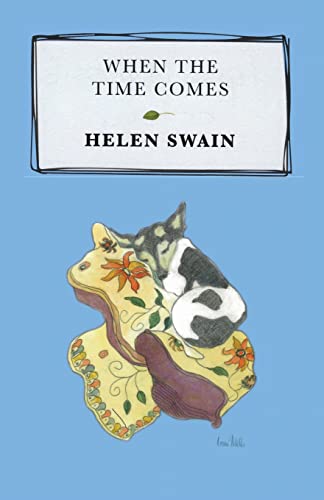
I briefly mentioned Helen Swain’s last year, as my lutruwita/Tasmanian-based brother had given me both of her books. It is a verse novel published in 2022, titled When the time comes, and is about an ageing mother and her daughter who wants to care for her. The third poem explains the title. It starts:
When Dad got sick
Mum had a sudden thoughtI don’t want to be a burden
she told me
When the time comes
just put me out of my misery(“My Mother”)
I really must read it, given it speaks to issues currently confronting my generation.
Similarly, Vanessa Proctor’s book was given to me by my old schoolfriend, who had given me Proctor’s On wonder. It is an anthology which was edited with two others, Lyn Reeves and Rob Scott. Published in 2023, it is titled under the same moon: Fourth Australian haiku anthology. Haiku has a strong following in Australia, and this anthology contains many that speak directly to Australian experience and landscape:
the blurred outline
of the southern cross
bushfire moon– Louise Hopewell
while others have a more universal feel, like this one speaking to women
biannual breast check –
the artist places the model
in a hard-to-hold pose– Alice Wanderer
The other books I want to mention are Paris Rosemont’s Barefoot poetess which joined my TBR in May last year, and two that I have already mentioned on my blog, Evelyn Araluen’s The rot, which has just been longlisted for the Stella Prize, and Maxine Beneba Clarke’s Beautiful changelings, which my reading group will be doing in a few months. I saw and heard both poets read from their books at last year’s Canberra Writers Festival, so I won’t say more now. I will add, however, that another poetry collection, one I don’t have, Eunice Andrada’s Kontra, was also longlisted for this year’s Stella Prize.
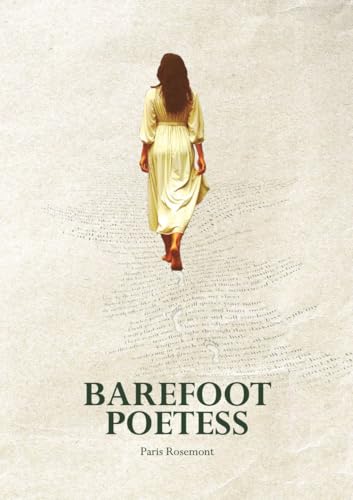
Paris Rosemont’s Barefoot poetess is her second collection. Her first, Banana girl, was well received, and was listed for a few awards. The promo for Barefoot poetess says that Banana girl “exploded onto the poetry scene – a hybrid of experimental styles and a fresh, edgy voice” but that Barefoot poetess represents a shift in tone. Her voice is “more distilled, her craft more finely controlled”. It’s “about journeys: through love, disenchantment, and change”. Poet Tim Loveday, who wrote the introduction, calls it “confessional poetry in all its glorious exhibitionism”.
And confessional it surely seems to be. The opening, heart-breaking poem, “Mama’s flown away with the mockingbirds”, is told in a first person voice and tells of a mother, the poet, who has left her children, whether mentally, emotionally, spiritually, it’s hard to tell at this point but it’s clear she’s there in name only:
The children know I died weeks ago. This corpse
masquerading as their mother is an imposter.
Noone else has cottoned on yet. But I raised
savvy kids. They know.
The poem ends with
… their mother has brokered a fool’s-
gold escape. She has mortgaged her heart.
The cost of her wings – two tiny souls.
This feels raw, is certainly powerful, is honest but also witty – and makes me want to read more.
I’ve not researched this year’s World Poetry Day plans, but I did receive an email from the Bellingen Readers and Writers Festival which references World Poetry Day, and includes a Poetry Slam Q&A, but I’ll just share a quote from Khalil Gibran which they open with:
“Poetry is a deal of joy and pain and wonder, with a dash of the dictionary.”
– Khalil Gibran
The “dash of the dictionary” makes me smile. Happy World Poetry Day.
This is my seventh World Poetry Day post.
Have you read any poetry this year? And if so, care to share any that grabbed you?

 Whispering Gums