Monday musings on Australian literature: Quiet achievers 2, Barry Scott of Transit Lounge

Back in August, I wrote the first post in my Monday Musings sub-series on Quiet Achievers in Australia’s literary landscapes, meaning people like publishers, for example. My first post was on Terri-ann White from Upswell Publishing.

Of course, most of these people aren’t really Quiet Achievers. Those in the industry will know them, often well. However, for the general reading public, people in the industry are not necessarily well-known, hence this new little sub-series.

Barry Scott (Transit Lounge)

I have read and reviewed many books published by Transit Lounge over the years because they publish the sorts of books and authors I like. According to Wikipedia, Transit Lounge was founded in Melbourne in 2005 – 20 twenty years ago – by two librarians Barry Scott and Tess Rice. It is an independent Australian literary small press, which publishes literary fiction, narrative and trade non-fiction. Its focus is to “show the diversity of Australian culture”. Their website says they are

dedicated to the publication of exciting new fiction and non-fiction.  Our tastes are broad and encompass literary fiction and upmarket genre writing such as  psychological thrillers.  We have a particular interest in creative literary publishing that explores the relationships between East and West and entertains and promotes insights into diverse cultures.

As far as I can tell, Scott works full-time on the press, while artist and photographer Rice works part-time. In 2018, Scott was interviewed by Books+Publishing, and said their books:

go in search of the outsider, the marginalised, the immigrant, the different or the disappearing. We are always searching for what seems beautiful, unique, true, and isn’t afraid to push beyond the current zeitgeist in terms of themes or genre tweaking.

AS Patric, Black rock white city

And, they have been successful in doing so. AS Patrić won the Miles Franklin Award in 2016 for his immigrant story, Black rock white city (my review), and Jane Rawson’s “genre-tweaking” From the wreck (Bill’s review), won the 2017 Aurealis Award for best science fiction novel, with its blend of historical and science fiction. Many other Transit Lounge books have been listed or won significant awards, including, recently, Lisa Kenway winning the Ned Kelly Award for Debut Crime Fiction with All you took from me (my post).  We often wonder about the impact of awards on sales, so I was interested to see a comment by Scott, in the Sydney Morning Herald (SMH) after Patrić’s win, that the company overall “will be more visible” and that he had “already noticed more people following the company on Twitter and wanting to see its books”.

In 2023, Scott was interviewed by ABR (the Australian Book Review), and here we hear his motivation for getting into publishing:

I was involved with administering the Victorian Premier’s Literary Awards in 2003 when the Unpublished Manuscript Prize was conceived. … I became acutely aware that there were many talented writers unable to achieve publication. Transit Lounge always has been and always will be about giving some of those new writers a voice, as well as publishing more established authors.

A bit like Terri-ann White! That said, Transit Lounge’s focus in terms of what they publish has changed a little over the years. In the above-mentioned SMH article, Scott said that he initially ‘wanted to publish Australian authors writing about other cultures and people writing from overseas about here. “We have moved away from that a bit; we were a bit more travel based than we are now”.’

Once in the publishing game, it seems that Barry Scott was fully invested, that is, he became involved in the industry. He was a director of the Board of the now-unfortunately-defunct Small Press Network. In 2009, he visited the US for several weeks, under a Copyright Agency Limited grant to find out about small independent publishers there, including the state of the industry. You can read his report at Overland.

Meanwhile, I’ll return to the ABR interview. Over the years, it has run several interviews with publishers, and I will refer to those – if or when I focus on those people. It’s illuminating to see their different reactions to the questions. For example, when asked about the significance of book reviews, Scott replied:

They are gold, even when negative. As Oscar Wilde said, ‘There’s only one thing in the world worse than being talked about, and that is not being talked about.’

Not all publishers responded so positively to this question, although most recognised that reviews mean something to authors. I recently listened to the interview with Graeme Simsion and Anne Buist on the Secrets from the Green Room podcast, and Simsion, a “data person” who has researched bookselling at some length, said that the main impact on sales comes from “word of mouth”. He didn’t talk about how you get that word-of-mouth started, but surely reviews, as Scott implies, are a contributing factor? I wonder whether the current fragmentation of book “reviewing” across traditional media, websites, blogs and social media, is, in fact, resulting in increased “word of mouth” exposure?
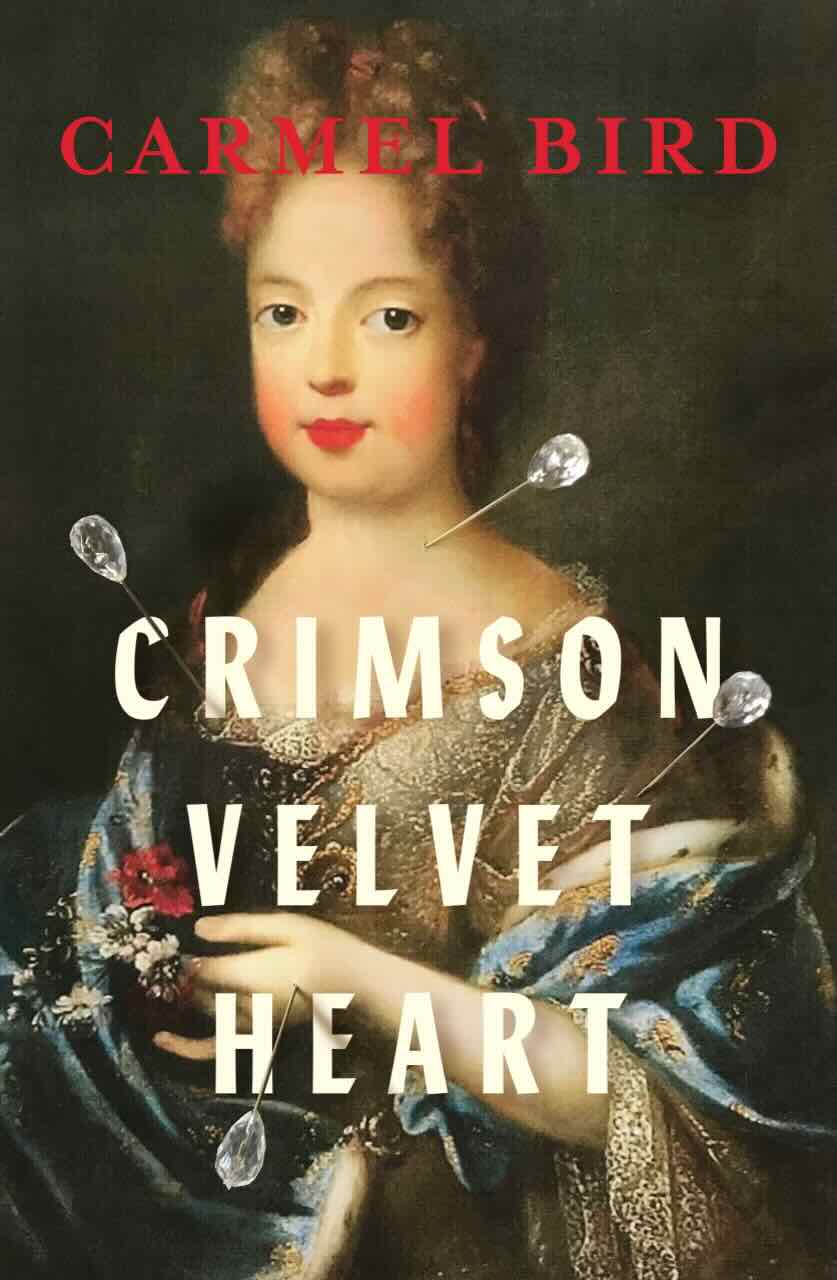
I have a few Transit Lounge books on my TBR, as I write, including Carmel Bird’s latest novel – a foray into historical fiction with Crimson velvet heart, set in Versailles at the end of the 17th century.

I’ll conclude, however, with a comment made by another author. In the blog, In Their Own Write, Mandy Sayer says

Barry Scott at Transit Lounge is a truly collaborative publisher, and I’m grateful for the opportunity to work with him.

This was August 2025, just before the publication of her memoir, No dancing in the lift. It seems that the fire is still burning in Scott.

AS Patrić, Black rock white city (Review)

AS Patric, Black rock white cityWith that extended conflict known as the Yugoslav Wars (1991-2001) now over for more than a decade, we are starting to see books written about them. I’ve reviewed two on this blog to date, Aminatta Forna’s novel The hired man (2013) (my review) on the Croatian War of Independence, and Olivera Simić’s memoir Surviving peace (2014) (my review) on the Bosnian War. AS Patrić’s Miles Franklin Award winning novel, Black rock white city, (2016), which also draws from the Bosnian War, now makes three.

Like The hired man, Black rock white city explores the aftermath of war, but unlike Forna’s book, which is set within the war-torn country, Patrić’s book is set in Australia, and tells of refugees, Jovan and his wife Suzana. The novel starts about four years after their arrival and, although both were academics in Sarajevo, they, like so many refugees, work in their new country as cleaners and carers. It soon becomes clear that they have not recovered from their war experience. Gradually, over the course of the book, Patrić reveals the horrors of their experience. We learn that, like so many who suddenly find their country at war, they had to face that awful question, “should I stay or should I go”. As it turned out, they stayed too long, and Jovan feels he failed his wife by not going early. When we meet them, their relationship is stressed, and they seem unable to provide each other the love and emotional support they so badly need. It’s excruciating to read, because it’s so real, so believable.

I found this book particularly enlightening because I worked with a woman who was damaged by this war. Like Patrić’s two protagonists, she was Bosnian Serb, but unlike them she left early. However, the impact on her of this forced loss of her country, her culture, was immense.

But, I digress … back to the book. It opens with hospital cleaner Jovan cleaning graffiti in an examination room. We soon discover that the hospital is experiencing a bout of graffiti-writing, and that Jovan is the graffiti cleaning expert. No-one knows who is creating the graffiti, which becomes increasingly bizarre. It appears on all sorts of surfaces (such as a corpse’s back, a menu blackboard, the optometrists’ charts) and comprises a variety of seemingly random, though often pointed, words and phrases (such as “The/Trojan/Flea”, “Obliteration”, “Dog Eat Dog” and “Masters of Destiny Victims of Fate”), which Jovan starts to read as messages to him. The graffiti artist is dubbed Dr Graffito. This storyline gives the book the patina of a mystery or even, perhaps, a thriller.

However, while the graffiti provides a plot-line for the novel, the main narrative concerns Jovan and Suzana, their relationship with each other and with other people, including a lover (for Jovan, because Suzana, in her pain, has withdrawn sex), work colleagues, friends and neighbours. Underpinning this narrative is the ongoing trauma of war. Jovan, for example, is frequently dogged by “the black crow”. He “feels as though he uses a rail for a pillow – always listening to the vague rumblings of oncoming annihilation”. Once, Suzana remembers, he could

turn almost anything over to a new perspective, see something deeper, redeeming, more beautiful even if painful. It was what made him such a superb poet back in Yugoslavia … He doesn’t write anymore and it’s as though he never did.

There is poetry in his head though – including a mantra that gets him through his days: “Maroochydore and Mooloolaba, Noosa and Coolum”. Language – the loss of his own, his inability (or is it refusal?) to speak proper English, not to mention the disturbing graffiti – functions as a metaphor for his sense of displacement.

Meanwhile, Suzana, notes Jovan,

is spending more of her time scribbling into her notebooks. The only place safe for her in the time since Bosnia, was somewhere buried underground. Coming to the surface isn’t going to be easy.

Patrić crafts the story skilfully. It’s a debut novel, but Patrić has published two short story collections and is a teacher of creative writing. It shows. The story is told third person, initially from Jovan’s perspective, but later Suzana’s is alternated with his, which fleshes out our understanding of Suzana, while keeping the perspective tightly focused on their experience. The plot unfolds stealthily, as we shift between two questions: will the graffiti artist be discovered, and can Jovan and Suzana pull through? By the end, the strands come together – so cleverly, so shockingly. And then there’s the sure, controlled writing. The pacing, the wordplay and touches of humour, the imagery, the dialogue, and the changing rhythms, make it delicious to read, even while the content confronts and distresses.

Late in the novel, Suzana suggests to Jovan that Dr Graffito is “putting his pain into someone else”, and that seeing his “madness in someone else might make it feel more bearable”. I don’t want to spoil the novel, but Suzana seems to be right, until the end where Dr Graffito’s actions force a confrontation that bring it all to a head.

What is Patrić’s motive for writing this? Early in the novel, Jovan finds one of the many notes Suzana loves to leave around, a quote from her favourite author, Nobel-prize winner, Ivo Andrić:

You should not be afraid of human beings. I am not, only of what is inhuman in them.

Jovan, on the other hand, says that “so much of what happens, shouldn’t happen”. These two ideas form the crux of the book. We have a cast of human beings, who are all real, all flawed in some way. They muddle on, some better than others, some needing a bit of “moral flossing”, some a bit of “ethical cleansing” (and what a clever wordplay that is, keeping war’s horrors close to our minds.) We see what happens, during and after war, when people let hate get the better of themselves and release the “inhuman” within, thereby wreaking what “shouldn’t happen” on others. This is a big book, for all its mere 250 pages, because it tackles the fundamental question of how are we imperfect humans to live alongside each other.

Fiction, Suzana says, is writing for the soul. If that is so, Black rock white city is one soul-full book – and a worthy winner of the Miles Franklin.

Lisa (ANZLitLovers) was also impressed by this book, as was Bill (the Australian Legend).

AS Patrić,
Black rock white city
Melbourne: Transit Lounge, 2015
248pp.
ISBN: 9781921924835