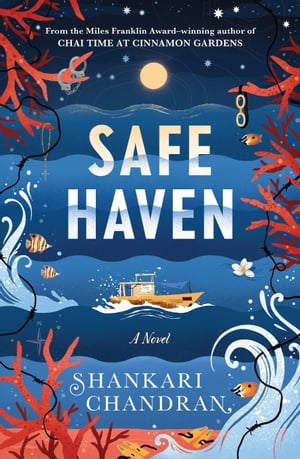
Shankari Chandran’s conversation with Karen Viggers is the second Meet the Author event I’ve managed to attend this year, and it reminded me how much I wish I could get to more of these sessions. This one featured Shankari Chandran, author of the Miles Franklin winning novel, Chai time at Cinnamon Gardens (my review), in conversation with Karen Viggers, who was on the other side of the table at the last session I attended. Karen has appeared several times on my blog, most recently for her novel Sidelines. And Shankari was appearing at this session for her latest novel, Safe haven.
This was a wonderful session, which featured intelligent questions and thoughtful answers from two writers who care deeply about justice and how we find and express our humanity. Their backgrounds might be different, but their hearts not so.
The conversation
MC Colin Steele opened proceedings by acknowledging country and introducing the speakers. He then introduced the conversation, describing Safe haven as appearing to be about displacement and seeking refuge, but in the end, he said, it’s about finding home.
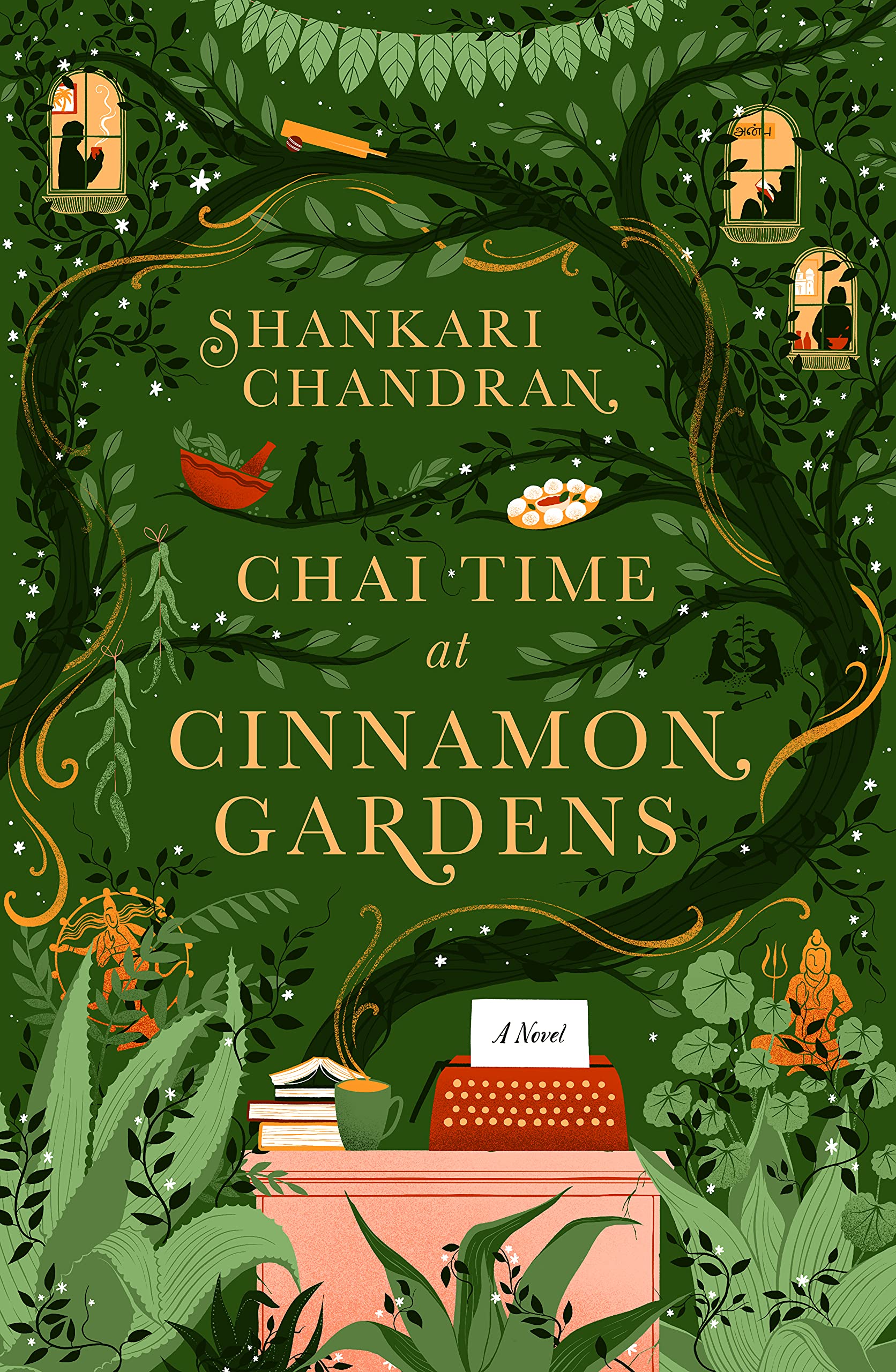
Karen started by congratulating Shankari on winning the Miles Franklin award last year. She wanted to know how Shankari felt the moment she heard she’d won, and its impact on her life and career. Shankari told a funny story about not answering the phone at first – because it came from an unknown number – and then not believing it when she finally answered and got the news! However, of course she was thrilled, and it has been extraordinary for her career. It has affected sales, and it created a spotlight on all her works, not just the winning book, and on her ongoing themes of injustice and dispossession. She also hopes that her win has helped and encouraged other writers of colour.
Shankari also made the point that it was great to win such a prize for a diasporic migrant story, one that is not only set partly elsewhere, but that interrogates who gets to define identity to the inclusion of some and the exclusion of others.
Sticking with the getting-to-know-you theme a little longer, Karen wanted to know how Shankari manages her busy life with four children, a law career, and writing. “Very badly” was the response, accompanied by some self-deprecating humour, followed by a recognition that she has a great team in all aspects of her life.
Karen then moved onto Safe haven, using descriptors like “moving”, “confronting”, “shines a shaming light” on detention, and creating “humans we come to care about”, and noting that the book contributes to an ongoing discussion about racism and exclusion in this country. Shankari talked about the approach she’d chosen, which was to write a romance and murder-mystery set in an off-shore detention centre. Her two main characters are the nun, Sister Fina, who seeks asylum, and special investigator Lucky, sent to investigate the death of a detention guard. Was it suicide, or was it not? Shankari described her book as being about the lengths people will go to to find safety and home.
Wanting to explore the romance-and-mystery approach a bit more, Karen commented that it was a surprising decision. And here a major theme of the discussion came to the fore, Shankari’s belief in storytelling. She wanted to elevate the lived experience of marginalised people, and likes to use fiction/storytelling to take readers into a place of discomfort but one where they can feel safe to reflect and think about the ideas. She wanted a storytelling mode that is compelling, entertaining, interesting. John Le Carre used the literary thriller model to explore macro themes of injustice, so she “wanted to give it a go”.
This led to continued discussion about using fiction to draw people and explore themes, and to the specific question of what Shankari wanted readers to take away from the book. She wants people to not forget the detention centres and what is happening to people in them. Politicians – and the media – too easily appeal to our baser instincts and encourage moral panic. But, she says, there are Australians who see the situation differently – like the people of Biloela for example, people who understand why others get on a boat, risking everything, to seek safety in another country. She wanted to elevate that aspect of what it means to be Australian. (Shankari used the word “elevate” several time during the conversation, and I like it. It’s powerful, and conveys something active and positive, active.)
Shankari talked about her two main characters, and what inspired them. Sister Fina stemmed from her admiration of people whose faith calls them to the sort of bravery seen in religious people during the terrible last days of the Sri Lankan Civil War. Special Investigator Lucky, on the other hand, was fun to write, because she could have Lucky do the sorts of investigation she’d like to do. Of the friendship that develops between these two, Shankari wanted characters who help each other, not one being saviour and the other the saved.
The conversation then moved onto the book’s tougher sections, and how Shankari researched and handled writing them – the scenes at the detention centre, for example. Here, we got a clear sense of Shankari’s ethical and compassionate approach to her work. She set herself some parameters. For example, she would not try to go to a Detention Centre, because she dislikes the voyeurism involved. For this same reason, she did not want to speak to the Biloela family whose story had provided inspiration for the book. At the time of writing they were still in a difficult place. It was not her place to draw fiction from their specific experience. So, she used research undertaken by civil organisations and activists; she read memoirs; and she used her experience of working in justice. If she had a superpower, she said, it would be that through her life people have given her their stories. These recorded truths, she’s been privileged to hear.
But, obtaining these stories, including those she needed for the brutal Civil War flashbacks, requires sensitivity. Interviewing people about their trauma can re-trigger that trauma. When people do want to tell her their story, she is careful about process because they don’t aways know how telling the story will affect them. She is careful, also, to ask whether they want their “lived experience to be conveyed in fiction”. Most respond that there are few safe places in our culture for the truth except in fiction! That feels like an awful indictment on our nation, but a powerful argument for the role of fiction/storytelling in our lives.
Indeed, a strong message I took away from the conversation was absolute belief in fiction being a way to tell important truths, but awareness that those whose truths are being told may not like them fictionalised.
The novel is not all grim, however. Karen turned to the scenes in Hastings (which were inspired by Biloela). What did Shankari want people to glean from them? That strangers can become family, she said, and that we should celebrate that capacity in us. Rural communities are often remote. They only have each other, and can develop an incredible ethos. Hastings offers a moral counterpoint to the other parts of the novel, but also offers readers a place of fun and joy.
Karen raised Australia’s policy regarding asylum seekers, and our use of privatised services to manage detention centres, particularly given these companies can employ people who “have done terrible things”. And why do we not have compassion for asylum seekers? The government’s arms-length management of asylum seekers, said Shankari, erodes accountability and transparency. Her novel asks the questions. It doesn’t provide answers.
As for our lack of compassion, Shankari said she struggled to understand the high level of xenophobia she found in Australia regarding migrants. She was horrified when she returned to Australia with her children – telling them it was “home” – only to find strong racial profiling of “friend” and “foe”. It’s disturbingly easy for politicians and media to trigger xenophobia – and not just in Australia. But she believes we are capable of integrity and intellectualism. This experience, and talking with Aboriginal activists, led her to think about the creation of nation, about the mythology of a nation’s founding and how we construct identity from this, one that involves the inclusion of some and the exclusion of others. She saw a link here with Sri Lanka’s founding mythologies. Does our concept of being Australian really need us to create “other” to maintain it?
Shankari believes that we have a choice in how we want to be – to face the future with fear, or with compassion!
Finally, Karen asked Shankari about how, with such a serious subject, she manages to achieve her light touch. It’s not conscious, but she’s a funny person, said Shankari – and life is tragic and funny. There’s irony too, including in the title. As to whether humour helps keep her sane, Shankari said that a lot of her work deals with trauma. She relies on humour to enable her to keep writing and her readers to keep reading. Writing trauma is traumatic, but she’s writing about the experience of people who have suffered but have survived, who are resilient. Their lives need to be elevated and remembered.
Q & A
On how children of disaporic migrants can broach their background with colleagues and friends. Books and stories, said Shankari, offer a good way in. Also, curiosity and questioning, and trying to meet people where they are. She shared advice she once received from a First Nations Australian, which was to “listen in order to listen, not to react and respond”. (What great advice.)
On how she, not Sri-Lankan born, knew all the details she used in her book, and how she decided on the Cook issue in Chai time in Cinnamon Gardens. For the first, Shankari laughingly credited the talkativeness of her extended family, but regarding the second, she reiterated her point about the creation mythologies in Australia and Sri Lanka and the role they play in forming national identity.
Vote of thanks
Sally Prior, literary editor of The Canberra Times offered a brief but heartfelt vote of thanks. She commented on the lack of curiosity in Australians regarding asylum seekers – who they are and why they want to come – and said she was inspired by Shankari’s persistence. She thanked all involved for an excellent conversation, to which all the audience could say was, hear, hear.
ANU/The Canberra Times Meet the Author
MC: Colin Steele
Australian National University
13 May 2024
 Whispering Gums