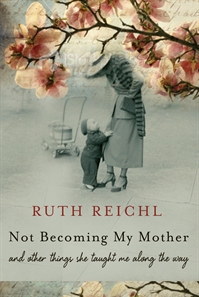
Ruth Reichl and Kate Jennings were both born in 1948, the former in the USA and the latter in Australia. Both had problematic relationships with their mothers and have written about those relationships, Reichl in memoirs and Jennings in her autobiographical novel, Snake. In her first memoir, Tender at the bone (1998), Reichl tells a few (many of them funny) stories against her mother, and describes her urgent need to escape home. Some 20 years later in Not becoming my mother, she revisits her mother – but with the wisdom that time brings. Similarly, in Snake, Jennings’ major focus is “Girlie” and her mother, and particularly Girlie’s desperation to be loved by a woman who was fundamentally unhappy and unable to provide that love.
The thing is that these mothers* were born in the first two or three decades of the twentieth century. They experienced war, depression and, worse still, the awful restrictions imposed on women of that era. Not only were education and work not encouraged, but they were told that marriage was the only life for them. This is the story Reichl tells in Not becoming my mother, and in doing so explores who her mother really was and finally recognises (and appreciates) why her mother behaved the way she did. Here she is on her mother and her mother’s friends:
I have never seen so many unhappy people. They were smart, they were educated and they were bored. Some of them did charitable work, but it wasn’t fulfilling. Their misery was an ugly thing, and it was hard on their families. It was a terrible waste of talent and energy, and watching them I knew that I was never going to be like them.
The mother in Jennings’ novel tells her daughter:
‘She’ll be married at eighteen, a hag by the time she’s thirty’, continues Irene. ‘Don’t let it happen to you’.
Ruth’s mother, on hearing of Ruth’s engagement:
‘Isn’t this very old-fashioned?’ she asked, coolly … ‘I thought that these days people your age just lived together.’
I was certain that Mom would eventually warm to the idea. She did not …
She had introduced me to her friends, shown me the drawbacks of a traditional marriage and offered me what she herself had wanted – permission not to marry.
Both mothers – Ruth’s real one and Kate’s (semi)fictional one – seek meaningful things to do with their lives and to them this primarily meant (preferably paid) work. Both manage it in fits and starts but society was not enamoured of working women and did not make it easy for them. Both mothers experienced some degree of mental illness – which reflects that well documented fact that married women were (and still are, I believe) the highest risk group for mental illness.
These are not pretty stories but they need to be told. Interestingly, Reichl’s story has a positive ending. Late in her life, her mother does find meaning and spends her last years actively involved in her community. Jennings’ fictional story, on the other hand, ends far more equivocally. Despite these differences, both books are powerful reminders of what life was like for a whole generation of women. And they remind us why we need to keep working to ensure self-actualisation for everyone, regardless of gender or other socially imposed limitations.
By the time she wrote Not becoming my mother, Reichl had made her peace with her mother’s memory, had finally realised that much of her mother’s seemingly bizarre or erratic behaviour was borne of the frustration in her life and her desire that her daughter not follow her footsteps. Luckily for me, my mother, also born in the first third of the century, managed to convey similar messages about education, work and marriage, while also providing the love and support that all children need and deserve.
Ruth Reichl
Not becoming my mother, and other things she taught me along the way
Crows Nest: Allen & Unwin, 2009
112pp
ISBN: 9781741757538
* These are just two examples of sad, difficult mothers from those decades. There are many more, such as Jill Ker Conway‘s mother in The road from Coorain.
 Whispering Gums