Charles W. Chestnutt, Uncle Wellington’s wives (#Review)

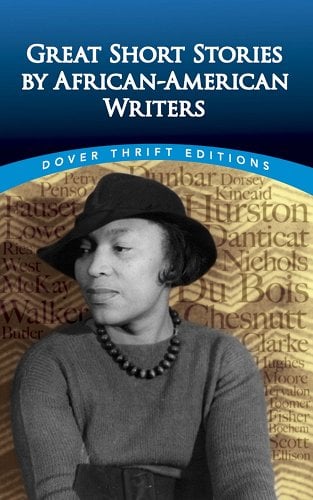
Charles W. Chestnutt’s long short story is the second in the anthology Great short stories by African-American writers sent to me by my American friend Carolyn. I have come across Chestnutt before, in the Library of America’s Story of the Week program, but they haven’t published this one and I haven’t written about him before.

Charles W. Chestnutt

The biographical notes at the end of the anthology provide a brief introduction to Charles Waddell Chestnutt (1858–1932), whom they describe as the “first commercially successful African-American writer of fiction”. Born in Cleveland, Ohio, and growing up in North Carolina, he “became a teacher, married, and moved to New York City, before returning to Cleveland, where he studied law”.

Wikipedia, of course, provides more. They describe him as “an American author, essayist, political activist, and lawyer, best known for his novels and short stories exploring complex issues of racial and social identity in the post-Civil War South”. His racial background is interesting, and I will quote Wikipedia here (without the references/links which cite sources for descriptors we no longer use):

His paternal grandfather was known to be a white slaveholder. He identified as African-American but noted that he was seven-eighths white. Given his majority-European ancestry, Chesnutt could “pass” as a white man, but he never chose to do so. In many southern states at the time of his birth, Chesnutt would have been considered legally white if he had chosen to identify so. By contrast, under the one drop rule later adopted into law by the 1920s in most of the South, he would have been classified as legally black because of some known African ancestry, even in spite of only being one-eighths black.

The anthology says that some of his best-known – and popular-at-the-time – stories, reproduced the dialect of uneducated storytellers, and Uncle Wellington is one such. Like this anthology’s first author Alice Ruth Moore, Chestnutt wrote about the color line, oppression, and themes of racism.

“Uncle Wellington’s wives”
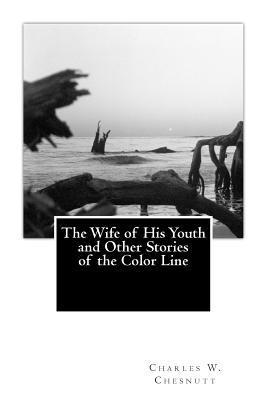
I was rather tickled when I started reading “Uncle Wellington’s wives” because it delightfully pairs with the novel I had just read, Percival Everett’s James (my review). It is set post Civil War and satirically deals with the lure of the freedom of the North. The anthology describes it as ‘one of his fine and wry stories about “the Color Line”, a line that had consequential legal and social repercussions’. It tells of Uncle Wellington who, “living in a small town in North Carolina … yearns for something beyond his comfortable home with his impatient, hard-working wife”.

According to Wikipedia, the collection from which this story has been taken, includes many themes explored by 20th-century black writers. One of these, “the pitfalls of urban life and intermarriage in the North”, underpins “Uncle Wellington’s wives”. The story is built around the trope of a disgruntled, and somewhat lazy, husband – the titular uncle Wellington – of a hardworking, practical woman who keeps the show on the road. It opens with uncle Wellington Braboy returning home from a lecture at a meeting of the Union League (see Wikipedia) on the topic of “The Mental, Moral, Physical, Political, Social and Financial Improvement of the Negro Race in America”. It’s a topic, says the narrator, that is common in “colored orators” because “to this struggling people, then as now, the problem of their uncertain present and their doubtful future was the chief concern of life”. But, there was hope, and this speaker had “pictured in eloquent language the state of ideal equality and happiness enjoyed by coloured people at the North”. Indeed, the “mulatto” speaker had “espoused a white woman”.

Chestnutt tells of how the now inspired uncle Wellington goes about getting to the North to experience this land of milk and honey, this seemingly “ideal state of social equality”. He goes to a local lawyer to find out whether his wife’s money is his to control. It is, and it isn’t, he learns in a wonderful discussion of the finer points of law. Later, this issue of law’s finer points comes into play again when, now up North, he wants to get out of a marriage. The satire on the law is delicious.

Indeed, the satire throughout this story is delicious as uncle Wellington comes to appreciate the truth of that adage that “life is not always greener”. There might be more legal equality in the North, but that doesn’t mean people are equal. People don’t change overnight. White people don’t suddenly all treat coloured people as “equal”, regardless of what the law says. Coloured people can’t immediately achieve “equal” jobs, because they don’t have the skills and/or the education and/or the contacts. This is not all spelt out in the story, but it’s apparent nonetheless through what happens to uncle Wellington.

I mentioned at the start that an underlying trope for this story is the disgruntled, lazy, husband of a hardworking, practical woman. However, there are other tropes, including the prodigal son story. There are also other themes, besides racial equality, including that of the problems of illiteracy and poor education. Uncle Wellington’s not being able to read, for example, lays him open to not understanding his rights, or the law, and so on. It doesn’t play out badly here but we see the pitfalls and the risks he faces.

In the end, this story – without spoiling it too much – is not a tragedy. Chestnutt is generous to his protagonist, and so uncle Wellington learns a lesson without suffering too much. We see the truth in his wife aunt Milly’s response to him early on

“I dunno nuffin’ ’bout de Norf,” replied aunt Milly. “It’s hard ’nuff ter git erlong heah, whar we knows all erbout it.”

For aunt Milly, life with the people you know in the place you know is hard enough. This truth is repeated, in a different way, by the coloured Northern lawyer:

“Well, Mr. Braboy, it’s what you might have expected when you turned your back on your own people and married a white woman. You weren’t content with being a slave to the white folks once, but you must try it again. Some people never know when they’ve got enough. I don’t see there’s any help for you; unless,” he added suggestively, “you had a good deal of money.”

For Chestnutt, I understand, there’s the issue of loyalty to your race or people, or, to look at it the opposite way, of racial treason. The point is that there are no simple answers. Life and living are complex. Equality is the goal, but it doesn’t come easily, and it doesn’t come by denying your own. It comes with mutual respect and equal opportunity. These don’t change overnight. The Chestnutt Archive writes that:

As a young educator in Fayetteville, Chesnutt had remarked on the “subtle feeling of repulsion toward the Negro common to most Americans”; and yet he concluded that “the Negro’s part is to prepare himself for recognition and equality.” 

These ideas quietly, without didacticism, underpin “Uncle Wellington’s lives”.
Charles W. Chestnutt
“Uncle Wellington’s wives” (first published in The Atlantic Monthly, 1898)
in Christine Rudisel and Bob Blaisdell (ed.), Great short stories by African-American writers
Garden City: Dover Publications, 2015
pp. 5-35
ISBN: 9780486471396
Available online at ClevelandStateUniversityPressbooks

Percival Everett, James (#BookReview)

Well, let’s see how I go with this post on Percival Everett’s Pulitzer Prize winning novel James. I read all but 30 pages of this novel before my reading group’s meeting on 27 May. I was not at the meeting as I was in Far North Queensland, but I wanted to send in some notes, which I did. The next day, our tour proper started and I did not read one page of any novel from then until the tour ended. So, it was some 15 days later before I was able to pick it up to finish it. I found it surprisingly easy to pick up and continue on but, whether it will be easy to remember all my thoughts to write about it, is another thing. However, I’ll give it a go.

I greatly enjoyed the read. The facts of slavery depicted here are not new, but Everett offers a clever, engaging and witty perspective through which to think about it, while also being serious and moving. In terms of form, it’s a genre-bender that combines historical and adventure fiction, but I would say these are overlaid with the road novel, a picaresque or journey narrative, those ones about freedom, escape and survival rather than adventure.

Now, I’m always nervous about reading books that rewrite or riff on other books, particularly if I’ve not read the book or not read it recently. I’m not even sure which is true for Huckleberry Finn, given I came across that book SO long ago. Did I read it all in my youth? I’m not sure I did, but I don’t think it mattered here, because the perspective is Jim’s, not Huck’s. More interesting to me is the fact that at times James reminded me of Toni Morrison’s Beloved, such as when James says “we are slaves. What really can be worse in this world” (pt 2, ch 1) and his comment on the death of an escaping slave, “she’s just now died again, but this time she died free” (pt 2 ch 6).

Before I say more, however, I should give a brief synopsis. It is set in 1861 around the Mississippi River. When the titular slave, James, hears he is about to be sold to a new owner some distance away and be separated from his wife and daughter, he goes into hiding to give himself time to work out what to do. At the same time, the young Huck Finn fakes his own death to escape his violent father, and finds himself in the same hiding place as James. They set off down the river on a raft, without a firm plan in mind. The journey changes as events confront them, and as they hear news of a war coming that might change things for slaves. Along the way they meet various people, ranging from the cruel and brutal through the kind and helpful to the downright brave. They face challenges, of course, and revelations are shared. The ending is satisfying without being simplistic.

“It always pays to give white folks what they want” (James)

All this makes for a good story, but what lifts it into something more is the character and first-person voice of James. Most of you will know by now that Everett portrays James as speaking in educated English amongst his own people but in “slave diction” to white people and strangers. On occasion, he slips up which can result in white people not understanding him (seriously!) or being confused, if not shocked, that a black man can not only speak educated English but can read and write. Given the role language plays as a signifier of class and culture, it’s an inspired trope that exemplifies the way slavery demeans, humiliates and brutalises human beings.

James – the book and the character – has much to say about human beings. There’s a wisdom here about human nature. Not all slaves, for example, see things the same way. Some are comfortable in their situation (or, at least, fear change), while some will betray others to ingratiate (or save) themselves. But others recognise that there is no life without freedom and will put themselves on the line to save another. We meet all of these in the novel. And, of course, we meet white people of various ilks too. Some of the most telling parts of the novel are James’ insights into the assumptions, values and attitudes of white people and into how slaves, and presumably coloured people still today, work around these. It would be funny if it weren’t so deadly serious:

“White folks expect us to sound a certain way and it can only help if we don’t disappoint them … The only ones who suffer when they are made to feel inferior is us. Perhaps I should say ‘when they don’t feel superior’ …” (pt 1 ch 2)

AND

It always made life easier when white folks could laugh at a poor slave now and again. (pt 1 ch 12)

Everett piles irony upon irony, daring us to go with him, such as when James is “hired” (or is he “bought”, he’s not quite sure) to perform with some black-and-white minstrels, and has to be “painted black in such a way as to appear like a white man trying to pass for black”:

Never had a situation felt so absurd, surreal and ridiculous. And I had spent my life as a slave. (pt 1 ch 30)

There are other “adventures” along the way of course – including one involving a religious revival meeting. James is not too fond of religion, differentiating him, perhaps, from many of his peers.

Is James typical of slaves of the time? I’m not sure he is, but I don’t think that’s the point. This is not a realist novel but a novel intending to convey the reality of slavery and what it did to people. James jolts us into seeing a slave’s story with different eyes. We are forced to see his humanity – and perhaps the joke is on “us” white people. Making him sound like “us” forces us to see him as “us”. We cannot pretend he is other or different. This is seriously, subversively witty, I think.

And this brings me to my concluding point which is that the novel interrogates the idea of what is a “good” white person. No matter how “good” or “decent” we are, we cannot escape the fact that we are white and privileged. No matter what we say or do, how empathetic we try to be, it doesn’t change the fundamental issue. James makes this point several times, such as “there were those slaves who claimed a distinction between good masters and cruel masters. Most of us considered such to be a distinction without difference” (pt 1 ch 15). I suppose this is “white guilt”, but I don’t really know how to resolve it. Talking about it feels like virtue signalling, but not talking about it feels like a denial of the truth. There were times when the book felt a little anachronistic, but that’s not a deal-breaker for me because historical fiction is, fundamentally, the past viewed through modern eyes. And how are we really to know how people felt back then?

I’d love to know what you think if you’ve read the novel (as for example Brona has!) 

Percival Everett
James
London: Mantle, 2024
303pp.
ISBN: 9781035031245

    Gwendolyn Brooks, Maud Martha (#BookReview)

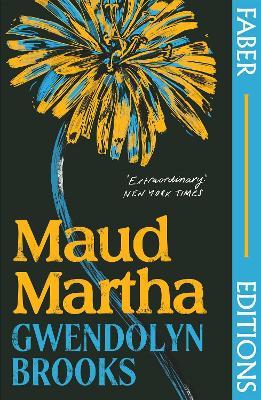
    I came across Gwendolyn Brooks’ 1953-published novella, Maud Martha, on JacquiWine’s blog last year, and was confident it was a book for me – so I bought the e-Book version and read it slowly on my phone and iPad whenever I was out and about. This sort of reading doesn’t work for all books, but it did for Maud Martha because it is told in short vignettes (or “tiny stories” as Brooks’ called them) which cover the protagonist’s life from her childhood to motherhood. Her voice is so fresh, so honest, so real that I was completely captivated.

    Gwendolyn Brooks (1917-2000) is a new author for me, perhaps because she was primarily a poet. In fact, Maud Martha is her only novel. She was the first African American to win the Pulitzer Prize (1950) and the first African American woman to be inducted into the American Academy of Arts and Letters (1976), but these are just two from an honours-filled career.

    My edition of Maud Martha has an excellent introduction by the American critic and academic, Margo Jefferson. She ponders the novel’s disappearance from view, and posits that “it sank beneath the weighty canonical force of first novels by two of Brooks’s Black male peers”. Ralph Ellison’s Invisible man appeared in 1952, and James Baldwin’s Go tell it on the mountain in 1953, the same year as Maud Martha. By comparison, Maud Martha “looks” slim but, in real weight, it is anything but. Jefferson quotes from Brooks’ memoir in which she discusses the autobiographical element of the novel: ‘It is true that much in the “story” was taken out of my own life, and twisted, highlighted, or dulled, dressed up or down.’ I read this as meaning that what she describes is “true” though not necessarily factual. It’s “a novel”, says Jefferson, “by a Black woman about working-class Black life in the twenties, thirties and forties”.

    “But dandelions were what she chiefly saw”

    The book opens with an exquisite description of seven-year-old Maud Martha. It introduces us to a young girl who has dreams but also has her feet on the ground:

    She would have liked a lotus, or China asters or the Japanese Iris, or meadow lilies—yes, she would have liked meadow lilies, because the very word meadow made her breathe more deeply, and either fling her arms or want to fling her arms, depending on who was by, rapturously up to whatever was watching in the sky. But dandelions were what she chiefly saw.

    And, she was happy with them, those “yellow jewels for everyday”:

    She liked their demure prettiness second to their everydayness; for in that latter quality she thought she saw a picture of herself, and it was comforting to find that what was common could also be a flower. And could be cherished! 

    These opening paragraphs are telling: we learn a lot about Maud Martha – as you can see – and we are introduced to Brooks spare, poetic style. It is because of language like this that Brooks can tell Maud’s story from the early 1920s to the 1940s in barely 100 pages. Jefferson describes Brooks’ style as “like a sonnet sequence, each story delights in sensory and emotional details and each reveals another aspect of Maud Martha. Poets take liberties with prose notions of a story arc”.

    So, through the stories Maud Martha grows up, questioning the real world while dreaming of New York, which is “a symbol” for her of “what she felt life ought to be. Jeweled. Polished. Smiling. Poised. Calmly rushing! Straight up and down, yet graceful enough”. She knows it’s a dream, but she stands by her right to dream. And, anyhow, “who could safely swear that she would never be able to make her dream come true for herself? Not altogether, then!—but slightly?—in some part?” This is a young woman, in other words, still with her feet on the ground but with imagination as well. 

    Meanwhile, life goes on. She marries Paul who is fairer than she, enabling him to “pass” among whites or, at least, be more easily accepted by them. She knows her darkness pulls him back, “makes him mad”, but she’s not cowed. She knows who she is and what she can offer.

    What she wanted was to donate to the world a good Maud Martha. That was the offering, the bit of art, that could not come from any other. She would polish and hone that.

    And so she soldiers on through the bright moments and the disappointments, like settling for a kitchenette with a shared toilet when she marries Paul. Moments like these are universal. Other moments, though, are less so, because, of course, she faces racism – again and again – at the movies, while shopping for a hat, at a beauty parlour. A particularly painful occasion occurs when Santa Claus treats her little daughter Paulette differently from the white girls – and Paulette notices.

    Another occasion concerns Maud Martha’s taking work as household help, because Paul is out of work. However, the way her employer and employer’s mother-in-law assume her inferiority causes her to understand “for the first time … what Paul endured daily … as his boss looked at Paul, so these people looked at her. As though she were a child, a ridiculous one, and one that ought to be given a little shaking …”. She decides to leave the job. Her employer won’t understand, but that doesn’t matter. What matters is that she’s “a human being” too, and she will not be treated otherwise if she can help it.

    What makes Maud Martha special then is her – to use a cliche – resilience. No, it’s more than that, it’s her level-headed sense of self and a willingness to call what she sees. What’s remarkable in Brooks’ telling is the humanity and, often humour, with which she does it. Take, for example, Maud Martha’s description of her first beau:

    He was decorated inside and out. He did things, said things, with a flourish. That was what he was. He was a flourish.

    She was desperate to have a boyfriend, but not that desperate.

    Maud Martha is just delicious to read. It is deeply, distressingly insightful about Black American experience in all the horrific ordinariness of ingrained, oblivious, white superiority, but the combination of intelligence, dignity and humour with which Brooks tells her story takes your breath away.

    Gwendolyn Brooks
    Maud Martha
    London: Faber & Faber, 2022 (orig. pub. 1953)
    126pp.
    ISBN: 9780571373260 (e-Book)

    W.E.B. Du Bois, “Strivings of the Negro People” (#Review)

    W.E.B. Du Bois by James E. Purdy, 1907, gelatin silver print, National Portrait Gallery, which has released this digital image under the CC0 license

    While I knew of W.E.B. Du Bois (1868-1963), it wasn’t until I read Nella Larsen’s Passing earlier this year that I was inspired to read something by him. Americans will probably know him well, but Wikipedia (linked on his name) describes him as a “sociologist, socialist, historian and Pan-Africanist civil rights activist”.

    He grew up, continues Wikipedia, in “a relatively tolerant and integrated community” in Massachusetts, and from quite early on was involved in the equal rights movement for African Americans. In 1909, he was one of the founders of the National Association for the Advancement of Colored People (NAACP). Wikipedia writes that:

    Du Bois insisted on full civil rights and increased political representation, which he believed would be brought about by the African-American intellectual elite. He referred to this group as the Talented Tenth, a concept under the umbrella of racial uplift, and believed that African Americans needed the chances for advanced education to develop its leadership.

    Du Bois and Larsen were both involved in the Harlem Renaissance of the 1920s. Du Bois, says Wikipedia, wrote that “a black artist is first of all a black artist.” While I love art with meaning, I don’t necessarily like prescription in the arts. However, when a group is so powerless, I completely understand the desire to expect all who can to put their shoulder to the wheel. We are certainly seeing a lot of it here in First Nations writing, and I’m loving (and learning from) the truths being told.

    I am still in Melbourne so don’t have my copy of Passing, with its excellent introduction, but the idea of “racial uplift” underpins much of the novel. It is supported by its main female protagonist Irene who belongs to the new Black bourgeoisie and is committed to the “uplifting the brother” project. But Larsen also explores through this novel, Du Bois’ theory concerning “double consciousness”, which, originally, says Wikipedia, referred to the

    psychological challenge African Americans experienced of “always looking at one’s self through the eyes” of a racist white society and “measuring oneself by the means of a nation that looked back in contempt”. The term also referred to Du Bois’s experiences of reconciling his African heritage with an upbringing in a European-dominated society.

    In other words, he’s saying that African-Americans have this two-ness or split whereby they are always conscious of how they view themselves and of how others view them. I don’t think things have changed much for people of colour. It must be exhausting, this being conscious, whether you like it or not, of how others view you (and then worrying about what behaviour that might bring).

    Strivings of the Negro People

    So, now Du Bois’ piece. The Atlantic published “Strivings of the Negro People” in August 1897. It is still available via their site. They introduce the article with a quote from within it:

    “It dawned upon me with a certain suddenness that I was different from the others; or like, mayhap, in heart and life and longing, but shut out from their world by a vast veil.”

    This refers to the moment when, still a young boy, Du Bois realises that although he is just like everyone else (“like … in heart and life and longing”), he is excluded from the white world by “a vast veil”. The piece explores what this means. It’s a plea and a treatise on the treatment of African-Americans, a reasoned argument on the value to both “races” of recognising and appreciating each other. It’s also an analysis of the failure of the hope and promise of emancipation over the three decades between 1865 and the writing of the article in 1897.

    I found the analysis telling. He explores the trajectory of hope and action decade by decade, pinpointing the failures. But, he starts with the observation that no matter how hard a black person might study and work, might even do better than their white peers, “he” always faced a wall that was “relentlessly narrow, tall and unscalable to sons of night”.

    Then, comes the plea:

    He does not wish to Africanize America, for America has too much to teach the world and Africa; he does not wish to bleach his Negro blood in a flood of white Americanism, for he believes—foolishly, perhaps, but fervently—that Negro blood has yet a message for the world. He simply wishes to make it possible for a man to be both a Negro and an American without being cursed and spit upon by his fellows, without losing the opportunity of self-development.

    Then he turns to emancipation which had taken place thirty years before, and observes that “the freedman has not yet found freedom in his promised land”. In the first decade there was “merely a prolongation of the vain search for freedom”, but as the second decade dawned there was an awareness of another possibility, the ballot. With enthusiasm, black men “started with renewed zeal to vote themselves into the kingdom” but “the decade fled away” bringing nothing but “suppressed votes, stuffed ballot-boxes, and election outrages that nullified his vaunted right of suffrage”. (You get the gist, I’m sure, given recent history.)

    However, another idea also raised its head in this second decade, ‘the ideal of “book-learning”’ (education). Again, he resorts to biblical language (though apparently he was agnostic, if not atheist):

    Here at last seemed to have been discovered the mountain path to Canaan; longer than the highway of emancipation and law, steep and rugged, but straight, leading to heights high enough to overlook life.

    It might take longer, but … and so, he writes,

    Up the new path the advance guard toiled, slowly, heavily, doggedly; only those who have watched and guided the faltering feet, the misty minds, the dull understandings, of the dark pupils of these schools know how faithfully, how piteously, this people strove to learn. It was weary work.

    It didn’t achieve the desired goal, but it did something, “it changed the child of emancipation to the youth with dawning self-consciousness, self-realization, self-respect”. People started to understand and analyse their burden. And what did they find? Poverty, yes – “to be a poor man is hard, but to be a poor race in a land of dollars is the very bottom of hardships”. And ignorance. But also “the red stain of bastardy, which two centuries of systematic legal defilement of Negro women had stamped upon his race”. This meant, he writes, “not only the loss of ancient African chastity, but also the hereditary weight of a mass of filth from white whoremongers and adulterers, threatening almost the obliteration of the Negro home”. A social and moral degradation.

    At this point, Du Bois turns to discuss the “shadow of a vast despair”, the shadow being “prejudice”. It’s interesting, because he suggests that prejudice is ‘the natural defense of culture against barbarism, learning against ignorance, purity against crime, the “higher” against the “lower” races’. “The Negro” would support, he continues, “this strange prejudice as is founded on just homage to civilization, culture, righteousness, and progress”. BUT, the black man is

    helpless, dismayed, and well-nigh speechless; before that personal disrespect and mockery, the ridicule and systematic humiliation, the distortion of fact and wanton license of fancy … the all-pervading desire to inculcated disdain for everything black.

    Still, they press on with hope – not for “nauseating patronage” but for ‘a higher synthesis of civilization and humanity, a true progress, with … the chorus “Peace, good will to men.”’

    So, he gets to the third decade suggesting the attempts and strivings of the first two were of “a credulous race childhood”. The ballot, education and freedom (“of life and limb”… “to work and think”) are still needed, but through “work, culture and liberty” must be fostered the “traits and talents of the Negro, not in opposition to, but in conformity with, the greater ideals of the American republic, in order that some day, on American soil, two world races may give each to each those characteristics which both so sadly lack”. His arguments become somewhat idealised but his point is valid – that African Americans had much to offer the nation.

    Interestingly, his Wikipedia article tells how his 1935 history of Reconstruction which argued for the active and constructive role played by black people in this period ran counter to the “orthodox interpretation” of white historians (surprised?). It was virtually ignored until the late 1960s when it ‘ignited a “revisionist” trend’ in Reconstruction historiography. By the 21st century, his book had become a foundational text in these studies!

    A very interesting man, whose legacy continues for his forward, clear thinking about the social and psychological mechanisms of race.

    Nella Larsen, Passing (#BookReview)

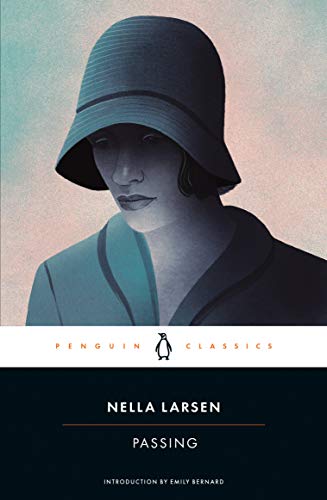
    For last year’s Novellas in November, Arti (of Ripple Effects) posted on a book and author I’d never heard of, Nella Larsen’s Passing. She also discussed its 2021 film adaptation. Quite coincidentally, that same month, my Californian friend Carolyn wrote positively about the film in a letter to me. It sounded right up my alley, so how grateful was I when, this month, Carolyn sent me the book. I decided to squeeze it in …

    According to Wikipedia, Nella Larsen (nee Walker) was born in a poor part of Chicago to a Danish immigrant mother, and a father “believed to be a mixed-race Afro-Caribbean immigrant from the Danish West Indies”. He disappeared early in Nella’s life, and her mother married another Danish immigrant. Because of Nella they were seen as a “mixed” family and were not welcome in the mostly white neighbourhood where they’d moved. Nella grew up in that difficult limbo of being neither white nor black.

    Eventually, she married a Black-American* physicist and they moved to Harlem where they became involved with “important figures in the Negro Awakening”, later known as the Harlem Renaissance. I share all this because it is relevant to Passing, which was her second novel.

    Passing, set mostly in 1927, tells the story of two Black women, Irene and Clare. Both can pass as white, but Irene lives in Harlem with her darker doctor husband, while Clare lives in white society, as a White, with her Black-hating banker husband. At the start of the novel, Irene receives a letter from Clare, referring to an accidental meeting they’d had in a swish hotel in Chicago where both had been “passing” as white. This meeting had been 12 years after they’d last seen each other as teens in Chicago, at which time Clare had been whisked away by her White aunts after the death of her drunken janitor father.

    Two years had passed since that uncomfortable Chicago meeting, two years during which Irene had done her best to forget an occasion “in which even now, after two years, humiliation, resentment, and rage were mingled”. But now, Clare was wanting to see Irene again …

    “they always come back” (Brian)

    Much has been written about this book, which speaks directly to the challenges and conflicts faced by African Americans at the time. There was a new Black bourgeoisie – a professional middle class – to which Irene belongs, and in which she feels comfortable. She’s committed to the whole “uplifting the brother” project and does good works to that end. Clare, on the other hand, has turned her back on her race. The scene is set, we think, for conflict.

    And there is, but if you think it’s going to encompass a simple dichotomy, you would be wrong. From the start, Larson keeps us on our toes, forcing us to see two very different ways of living as a black woman in that place and time. The story is told third person, but through the perspective of Irene. She is the conservative rule-follower who is sure of her path, while Clare, who is probably closer to Larsen herself, is more adventurous, a risk-taker. She’s lively, sensual, a breath of fresh air, but how are we to read her – and, for that matter, Irene?

    As the novel progresses, we (and our allegiances) are tossed between the two, just as tensions between the two ebb and flow. Are we to approve Irene’s conscientious approach to life, or should we empathise with the “lonely” Clare who wants to reconnect with the black community? Both are flawed characters. Irene’s choice involves buying into the whole aspirational, consumerist, success-focused values of the bourgeoisie, so much so that she rides rough-shod over the wishes and needs of her husband and sons. Clare, on the other hand, might be lively but she can also be “selfish” and “wilful”, with her risk-taking being potentially dangerous or damaging to others, including her neglected young daughter. It’s clear that if her husband discovered she’d been touched by “the tar brush”, she’d be in deep trouble. It’s to Larsen’s credit that we do not see these characters as black and white (hmm!).

    Irene and Clare are not the only characters in this tight novella, but the most interesting of the others is Irene’s husband, Brian, who finds himself caught between the two women after Clare inveigles herself into their lives. At the end of Part 1, just after the meeting in Chicago, Irene is preparing to return home to New York and Brian whose “old, queer, unhappy restlessness had begun again within him, that craving for some place strange and different, which at the beginning of her marriage she had had to make such strenuous efforts to repress.”

    “caught between two allegiances” (Irene)

    Passing is told in three parts – Encounter, Re-encounter, and Finale. In Re-encounter we learn more about these characters through their interactions, and we discover the source of Brian’s restlessness. He is, potentially, another adventurer, though different to Clare.

    Early in this final part, Irene and Brian discuss Clare, “passing” and race. Brian has a more nuanced understanding of “race”, it seems. Answering Irene’s question about why those who pass “always come back”, he says, “if I knew that, I’d know what race is”. Much later, we learn that race is at the core of Brian’s restlessness. When Irene upbraids him for honestly answering their son’s question about lynching, he lashes out:

    …I’d feel I hadn’t done my duty by them if I didn’t give them some inkling of what’s before them. It’s the least I can do. I wanted to get them out of this hellish place years ago. You wouldn’t let me. I gave up the idea because you objected. Don’t expect me to give up everything.

    Passing is about many things, only some of which I’ve discussed. It’s about convention and security versus risk and adventure, about gender and marriage, about class and money, and about self-definition. There is much here that is universal about human nature, but, of course, race is a driving factor. As the novel draws to its conclusion, Irene finds herself

    caught between two allegiances, different, yet the same. Herself. Her race. Race? The thing that bound and suffocated her.

    But, there is another layer to this novel, a foreshadowing of something darker. Half-way through the novel, Irene says to Clare that “as we’ve said before, everything must be paid for”, while a little further on, Clare says to Irene

    “Can’t you realize that I’m not like you a bit? Why, to get the things I want badly enough, I’d do anything, hurt anybody, throw anything away. Really, ‘Rene, I’m not safe.”

    It’s chilling, but I’ll leave it there. I was engrossed by this novel from its opening sentence to its clever, unsettling ending.

    * I’m uncertain about nomenclature, given the language used in this 1920s novel is not what we use now. I hope I’ve made a fair call.

    Nella Larsen
    Passing
    New York: Penguin Books, 2018 (orig. pub. 1929)
    128pp.
    ISBN: 9780142437278

    James Weldon Johnson, Stranger than fiction (#Review)

    Several months ago, I bookmarked a Library of America (LOA) Story of the Week offering – as I often do for later use – but, despite its being a very brief offering, I’ve only got to it now. It’s on James Weldon Johnson (1871–1938), and was timed, 17 June 2021, to synchronise with the 150th anniversary of his birth.

    American readers here may know Johnson, but many of the rest of us probably don’t. Wikipedia describes him as an American writer and civil rights activist, but that hides a wealth of accomplishments. LOA, lists his achievements in a news item. He

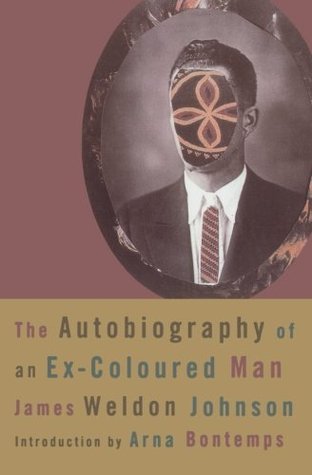
    • wrote one novel, The autobiography of an ex-colored man, “which is considered by many critics to be the first modern African American novel and a major inspiration for Harlem Renaissance writers”.
    • was a lawyer, the first African American from his county, or perhaps state, to pass the Florida bar exam.
    • was an educator, and president of the Florida State Teachers Association (for Black teachers).
    • was a songwriter who, with brother Rosamond and friend Bob Cole, wrote dozens of popular songs. Many ended up in Broadway musicals of the early 1900s. They also wrote two songs used for Theodore Roosevelt’s 1904 campaign. One of these, “Under the bamboo tree,” was a big national hit in 1902 and was later performed by Judy Garland and Margaret O’Brien in Meet Me in St. Louis). He and his brother wrote and composed the hymn “Lift every voice and sing,” also known as the “Black national anthem”.
    • was a diplomat, U. S. Consul in Venezuela (1906–1909) and in war-torn Nicaragua (1909–1912).
    • was a journalist at The New York Age, supervising its editorial page and writing a daily column for over ten years.
    • was an activist with the NAACP, who, in his role as field secretary, significantly increased the number of branches and the size of the membership.

    LOA’s Story of the Week includes some biographical information that inspired his novel, and the text of his 1915 New York Age editorial which discussed the critical reaction to the novel.

    “Stranger than fiction”

    When I saw the title of this offering, I expected an essay, perhaps an entertaining one, on that old adage that “truth is stranger than fiction”, but I didn’t know the author then. What I got was something far more interesting.

    LOA prefaces the essay, as usual, with some explanatory material. In this case, they start with two “dramatic experiences that would inform his writing and activism for the remainder of his life”. One occurred in 1895, when, as an enterprising new teacher (a black man, remember) he asked to visit a white school to see and compare practices. He did so, but apparently a few days later he learnt that his visit “had raised a hullabaloo”. Parents had objected to the presence of a “Black man” in their children’s classrooms. Johnson wrote that “The affair was fomented to such an extent that the board of education felt it necessary to hold a meeting to inquire into the matter and fix the responsibility for my action.” To their credit, the superintendent and the school’s principal stood their ground, and it all blew over.

    The second involved his meeting a journalist in a park in 1901, at her request. She wanted to fact-check an article she was writing on the disproportionate damage done to Jacksonville’s Black neighbourhoods by the Great Fire. She and Johnson were confronted by “eight or ten militiamen in khaki with rifles and bayonets” who had “rushed to the city with a maddening tale of a Negro and a white woman meeting in the woods”. Again, it was resolved, but the ordeal left its mark.

    Johnson’s novel, The autobiography of an ex-colored man (1912), which was inspired by experiences like these, has been described as the first fictional memoir by a black person. Set in late nineteenth to early twentieth century America, its protagonist is a young biracial man, known only as the “Ex-Colored Man”. Because of such experiences as witnessing a lynching, he decides to “pass” as white for safety and advancement reasons. The book chronicles his experiences and ambivalent feelings about his decision.

    The book did not sell well initially, but sold very well three years later, after, says LOA, Johnson revealed himself as the author and “distributed several thousand copies of a glowing review that had appeared in Munsey’s Magazine“. This brings us, finally, to the essay, “Stranger than fiction”, which was published in 1915 in his daily column in The New York Age, where he was editor.

    His aim was to give “a brief overview of the novel’s critical reception” but it was partly inspired, says LOA, by rumours that the estate of a wealthy woman publisher, Miriam (Frank) Leslie, was being contested by her late husband’s relatives on the grounds that she was the daughter of an enslaved women and therefore ‘her relatives had “no heritable blood”‘.

    Johnson states at the beginning of his essay, that his book (novel)

    produced a wide difference of critical opinion between reviewers on Northern and Southern publications.

    Northern reviewers generally accepted the book as a human document, while Southern reviewers pronounced the theme of the story utterly impossible. A few of the Northern reviewers were in doubt as to whether the book was fact or fiction.

    For many Northern reviewers, in other words, the work was so “real” they could barely believe it was fiction. (It doesn’t sound that, like Helen Garner’s critics, this bothered them.) Southern critics, on the other hand, asserted that the work was unbelievable because, writes Johnson,

    the slightest tinge of African blood is discernible, if not in the complexion, then in some trait or characteristic betraying inferiority. This is, of course, laughable. Seven-tenths of those who read these lines know of one or more persons of colored blood who are “passing.”

    As it turned out the Miriam Leslie rumours were unfounded, but Johnson at the time, believed it could have been true, and, if so, was “stranger than any fiction”. Which, ironically, just goes to prove the adage, whether the story was true or not!

    Meanwhile, I was interested, though not surprised given how things are still playing out, in the disparity between Northern and Southern critical responses some 50 years or so after Abolition. Not strange at all, unfortunately.

    James Weldon Johnson
    “Stranger than fiction”
    First published: New York Age, 1915
    Available: Online at the Library of America

    Bill curates: Mary Church Terrell’s What it means to be coloured …

    Bill Curates is an occasional series where I delve into Sue’s vast archive, stretching back to May 2009, and choose a post for us to revisit. In 2011, when today’s post was first published, Barack Obama was in his first term as President and then Senate Majority Leader, Republican Mitch McConnell, was pursuing a scorched earth policy of refusing to even allow Democrat legislation to be debated, with the stated aim of making Obama a one-termer. Obama got a second term, but then there was Trump, and racism in America seemed to take a giant step back into the light, giving new relevance to this talk from 1907.

    This is the last Bill Curates post he sent me a few months ago. I intended to publish it then, but life, reading and blogging got busy, and I tucked this away in my drafts folder for another time. I think now is the time to post it and to thank Bill for the wonderful support he gave my blog through my dark year. It was so appreciated. Thank you Bill, you helped save my sanity.

    ______________________________

    My original post titled: Mary Church Terrell, What it means to be colored in the capital of the United States

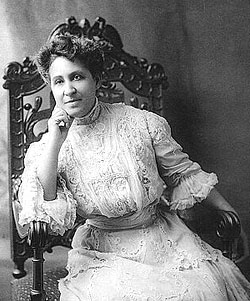
    Mary Church Terrell. Public Domain, National Parks Service, via Wikipedia

    I heard a radio interview this week with Jane Elliott of the brown-eye-blue-eye experiment fame, and she suggested that racism is still an issue  in the USA (through the efforts of a vocal minority) and is best demonstrated by the determination in certain quarters that Barack Obama will not win a second term*. It’s therefore apposite (perhaps) that my first Library of America post this year be on last week’s offering, “What it means to be colored in the capital of the United States” by Mary Church Terrell (1863-1954). This essay originated, according to LOA’s introductory notes, in a talk Terrell gave at a Washington women’s club in 1906. It was then published anonymously, LOA says, in The Independent, in 1907.

    Now, I’d never heard of Terrell, but she sounds like one amazing woman. Not only did she live an impressive-for-the-times long life, but she had significant achievements, including being, it is believed, the first black woman to be appointed to a Board of Education (in 1895). She also helped found the National Association of Colored Women. On a slightly different tack, she was a long-time friend of H.G. Wells. Interesting woman, eh?

    I have a few reasons for being interested in this essay, besides Jane Elliott’s comment. I lived in the DC area – in Northern Virginia – for two years in the early-mid 1980s and was surprised by some of my own experiences regarding race there. And, as a teen in the 1960s and early 1970s, I was aware of and fascinated by the Civil Rights movement in the USA. I was surprised but thrilled to hear, late last year, an audio version of John Howard Griffin‘s book, Black like me, that I read and loved back in those days.

    But enough background. To the essay… I’ll start by saying that I’m not surprised that it began as a talk, because it seemed to ramble a bit. However, as I read on, some structure did start to appear. She starts by listing the various areas in which she, as a black woman, was (or would have been if she’d tried) discriminated against in the national capital. These include finding a boarding house and a place to eat, being able to use public transport, finding non-menial employment, being able to attend the theatre or a white church, and gaining an education. She introduces her section on transport as follows:

    As a colored woman I cannot visit the tomb of the Father of this country, which owns its very existence to the love of freedom in the human heart and which stands for equal opportunity for all, without being forced to sit in the Jim Crow section of an electric car …

    The irony here is not subtle – but she’s in the business of education where subtlety would not get her far!

    She then returns to many of these issues – and this is where I started to wonder about her structure – but what she does is move from introducing the issues by using herself as an example to exploring each one using real examples of people she knows or has heard of. She describes, for example, how employers might be willing to employ a skilled black person, but are lobbied by other staff and threatened with boycotts by clients and so take the easy path of firing (or not hiring) the black person in favour of a white person. In one case the employer is  a Jew,

    … and I felt that it was particularly cruel, unnatural and cold-blooded for the representative of one oppressed and persecuted race to deal so harshly and unjustly with a member of another.

    You can guess why, in 1907, this was published anonymously!

    Anyhow, I won’t repeat all the examples she provides to demonstrate the extent of prejudice at play, because you can read the essay yourself. I will simply end with her conclusion:

    … surely nowhere in the world do oppression and persecution based solely on the color of the skin appear more hateful and hideous than in the capital of the United States, because the chasm between the principles upon which this Government was founded, in which it still professes to believe, and those which are daily practiced under the protection of the flag, yawns so wide and deep.

    Some 100 or so years later, the US sees itself as the leader of the free world and yet it seems that this chasm is still rather wide. What are the chances that it will completely close one day?

    * Please note that this is not a holier-than-thou post. We Aussies have our own problems with racism and prejudice, and so I am not about to throw stones at anyone else.

    ___________________________

    I love that Bill decided to choose a non-Australian post for this BC. It’s so depressing to think that no improvements seem to have been made in the decade since I wrote this – there, or I fear in most countries. Certainly, statistics coming out here in Australia are showing no improvement in important measures, like life expectancy and incarceration. Indeed there’s been some sliding. This is not good enough.

    Thoughts?

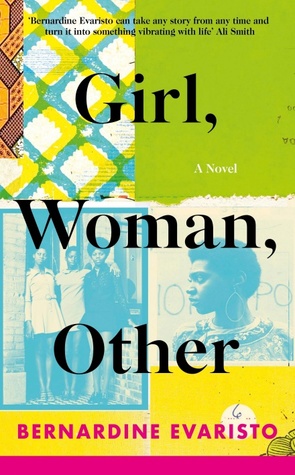
    Bernadine Evaristo, Girl, woman, other (#BookReview)

    If ever there was a “zeitgeist” book, Bernadine Evaristo’s 2019 Booker Prize winning novel, Girl, woman, other is it. It might be an English-set novel about black British women, “the embodiment of Otherness”, but its concerns, ranging from ingrained inequality, racism and sexism to newer issues such as globalisation, are contemporary – and relevant far beyond its setting.

    Take, for example, sexual violence. One young woman, after being raped, is not sure exactly what happened:

        wondering if he’d done anything wrong or was it her fault
        she should have stayed and talked to him about it
        he might have said he hadn’t heard her saying no

    (Chapter 2: LaTisha)

    This could have been set in Australia, given discussions happening here right now. It is truly troubling how many young women apparently feel uncertain about what they’ve experienced, and turn it back on themselves. But now, having leapt in to make my “zeitgeist” point, I’ll start again, properly!

    Girl, woman, other is an astonishing book, as most of my reading group agreed. It’s fresh and exuberant, but oh so biting too. As much poetry as prose, it has minimal punctuation and yet it just flows. It’s a risky book – what great art isn’t? – because, in addition to its idiosyncratic style, it comprises multiple points-of-view that move back-and-forth in time. There are four main chapters, each divided into three parts with each part in the voice of a different character. This makes 12 voices in all! The voices within each chapter are closely related in some way – mothers, daughters, friends – but the links between the four chapters are more subtle. This demands much of the reader.

    Fortunately, the voices are captivating. Spanning over a century, they range from the ultra-confident 19-year-old Yazz, daughter of a lesbian mother, to 93-year-old Hattie, a strong-minded farmer and great-grandmother. All are women, and all have some genetic links with African or Caribbean cultures, some from a few generations back, others being themselves migrants. Through them, Evaristo interrogates a diversity of experiences and responses to colour, in particular, in contemporary England. Hattie’s mother, for example, had an Abyssinian father, and she herself had married an African-American GI. However, with the colour fading amongst her descendants, the family is less than happy when it is reintroduced by Julie who “saw not the darkness of his skin but the lightness of his spirit”. Hattie reflects

        none of them identifies as black and she suspects they pass as white, which would sadden Slim if he was still around 
        she doesn’t mind, whatever works for them and if they can get away with it, good luck to them, why wear the burden of colour to hold you back?
        the only thing she objects to is when they objected to Chimango when he arrived on the scene, a fellow nurse at the hospital where Julie worked, from Malawi
        Hattie was sickened by their behaviour, they should’ve been more enlightened 
        but the family was becoming whiter with every generation 
        and they didn’t want any backsliding

    (Chapter 4: Hattie)

    You can see how well the language flows, and how accessible it is. It’s experimental but unforced. You can also see the author’s approach to her subject matter, which is to show, through her characters, different behaviours, values and attitudes. With 12 characters telling of their interactions with even more people, the breadth of humanity Evaristo encompasses is breathtaking – and it is all done without judgement. Some characters might, and do, judge each other, but Evaristo doesn’t. She lets them speak for themselves, which requires us to read attentively.

    So, when Dominique’s female lover increasingly restricts her life, we see abusive control long before she does. And, when 93-year-old Hattie’s mother, Grace, experiences postpartum depression in the early 20th century, it is not named. Who talked about that then? But we recognise it immediately.

    Issues come and go in this novel, whether they are up-to-the-minute topics, such as Brexit or transgender rights, or ongoing issues in women’s lives such as violence or ageing. Underpinning it all, however, is race and inequality. Being “othered” is common to Evaristo’s characters, and they all deal with it differently, but we see very clearly its debilitating, devastating impact.

        oh to be one of the privileged of this world who take it for granted that it’s their right to surf the globe unhindered, unsuspected, respected

    (Chapter 2: Carole)

    By now you might be thinking a few things – that the novel is heavy-going, perhaps, or that it’s chaotic. But nothing doing. For all its seriousness – and there are definitely grim moments – the novel has a light touch, frequently bitingly satiric, sometimes simply funny, always human. Nineteen-year-old Yazz, for example, is a hoot with her teenage know-it-all confidence. Many recognise their failings, as they grow older, such as Amma appreciating her father too late or Carole realising her supportive teacher had feelings. Transgender Morgan, the epitome of the modern activist, speaks many truths:

        Megan was part Ethiopian, part African-American, part Malawian, and part English
        which felt weird when you broke it down like that because essentially she was just a complete human being

    Chapter 4: Megan/Morgan

    And, although the novel may sound chaotic, it does have an overarching structure. It starts hours before Amma’s play – the one she hopes will finally make her name – is to premiere at the National Theatre, and it ends with the After Party and an Epilogue, which, combined, bring most of the characters together. The ending, in fact, is clever. The After Party is political, drawing together the threads and reminding us that there’s a long way to go before black people in white societies are not defined by their colour. The Epilogue, on the other hand, is personal, showing us that there’s always human connection and that that, really, is the stuff of life – if only we could all see it.

    Girl, woman, other is such a read. Uncompromising in its politics, but also warm and cheeky, it offers heart and intelligence in equal measure.

    Bernadine Evaristo
    Girl, woman, other
    Hamish Hamilton, 2019
    453pp.
    ISBN: 9780241985007 (ebook)

    Karen Jennings, Upturned earth (#BookReview)

    Book coverIntroducing my review of South African writer Karen Jennings’ debut novel, Finding Soutbek, I noted that I don’t normally accept review copies from non-Australian publishers but that I will, very occasionally, make an exception if the writer or subject matter interests me. Upturned earth, Jenning’s fifth book, is set in a nineteenth century mining town. Given some general similarities between colonial South Africa and Australia, and my own, albeit youthful, experience of living in a mining town, I was intrigued to read it.

    Upturned earth is set in 1886 in Namaqualand, the copper mining district of what was then Cape Colony. It’s an arid region crossing the South African-Nambian border, with its largest town being Springbok (Springbokfontein at the time of the novel). The novel commences with the arrival by boat from Cape Town of 28-year-old William Hull, who is due to take over as magistrate. On first appearances, Hull seems almost like an antihero:

    Weak-willed, forgetful, Hull was a poor employee. He did as he was told, yet somehow was never able to fulfil the chores of the position with the same success as his colleagues did. He confused cases, misfiled documents, knocked over inkwells.

    In fact, it seems that he is more interested in nature, than work. “He carried,” we’re told, “the droppings of animals folded in handkerchiefs, kept pink newborns warm in his hat”. However, on realising he had been given the job “because no other man would take it”, he resolves to “be firm. Punishments would be meted out. The law would be laid down.”

    Unfortunately, life as Okiep’s Magistrate is not as he expects. Slowly, he learns that no-one in Okiep is independent, not even the Magistrate, because the town is unofficially run by the Cape Copper Mining Company. Its head is the Super, Mr Townsend, whose widowed daughter, Iris McBride, returns to Namaqualand on the same boat as Hull. Initially, despite hints to the contrary, he doesn’t realise the true situation, so settles down to a life of work and following his naturalist’s heart, which sees him going out in every spare moment to collect plant and animal specimens. He’s keen to contribute to scientific knowledge. But, the irony is that in “trying to understand the dead things around him”, he is overlooking the live ones.

    The narrative is told through two parallel stories. Hull’s is one, the other is Noki’s. He’s a Xhosa mining labourer, one of many who come into Okiep to work and send money home to families in the surrounding regions. Noki, though, has an added concern. While he is away visiting family, his 17-year-old brother Anele is arrested for drunken and disruptive behaviour, and is imprisoned in the gaol attached to Hull’s Residence. This gaol is managed by gaoler-cum-Hull’s-manservant, Genricks. He dissuades Hull from inspecting the gaol. After all, he has it all in hand, and weak Hull, though making an attempt to do the right thing, lets himself be put off.

    Given the novel is set in a colonial society, and one involving mines with white and indigenous workers overseen by an arrogant brutal man, you’ll have a picture of what this novel is about. Gradually, things come to a head and people’s true colours are exposed. It’s to his credit that Hull comes to his senses and finds a strength he didn’t know he had – but the calamity can’t all the righted, and the ending is an appropriate one. This is literary historical fiction, so it doesn’t all play out to form, opting for something a little more realistic. I’ll leave the plot at that.

    The perfectly titled Upturned earth is Jennings’ third novel. Her writing is tight and expressive. She talks about indigenous workers being “broken down into acceptance”, and here is Hull’s perspective of the place after he suffers a disappointment:

    … and he saw as though with new eyes what he had lived in and grown accustomed to these past months. The dull sky, the wearying streets and stained homes, the disgrace of the prison building.

    Plain language, but it is all that’s needed.

    Why?

    The important question to ask about historical fiction is – why? The obvious answer is that there are many stories worth telling, stories that the majority of us have never heard, like, for example, Eleanor Limprecht’s Long Bay (my review) about abortionist Rebecca Sinclair who was gaoled in Long Bay in 1909, and Emma Ashmere’s The floating garden (my review) about the demolition of homes in the 1920s to make way for the Sydney Harbour Bridge.

    Jennings explains her reason for writing this book in her Author’s Note and Acknowledgements. She was inspired John M. Smalberger’s book, Aspects of the history of copper mining in Namaqualand (1846-1931), in which she found magistrate William Charles Scully. From there she went to various other books, including Scully’s own reminiscences. This is fiction, however, so, says Jennings, her character Hull’s “weaknesses are all his own”. However, the brutality (and name) of gaoler Genricks are fact, though the events relating to him, the Super and others have been fictionalised. Then comes her main point: she sees her novel as being “a comment on the history of commercial mining in South Africa – the exploitation, conditions and corruption that began in the 1850s and continue to the present”.

    The novel, then, is a plea for humanity, for kindness. Here is Hull, halfway through the novel, talking with Cornish miner Tregowning whom he has just met. Tregowning describes the mistreatment of the miners, and particularly the indigenous ones, but Hull can’t quite believe or accept what he is saying:

    Tregowning turned to face the magistrate. ‘Are we not taught to vindicate the weak and fatherless, to help the afflicted and destitute, to rescue the feeble and needy? To deliver them out of the hands of the wicked?’

    Hull looked around uneasily. His tongue felt thick as he spoke. ‘Some would call those revolutionary words.’

    ‘I thought they were biblical.’

    Which way will our weak Mr Hull go is the question we confront as we read. But, the theme is clear from the start – man’s inhumanity to man (especially in these colonial environments) and what can be done about it. Pondering what has changed and what hasn’t is why we read historical fiction. I enjoyed this book.

    Karen Jennings
    Upturned earth
    London: Holland Park Press, 2019
    202pp.
    ISBN: 9781907320910

    (Review copy courtesy Holland Park Press)

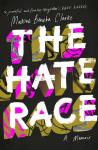
    Maxine Beneba Clarke, The hate race: A memoir (Review)

    This is how it changes us. This is how we are altered.

    Maxine Beneba Clarke, The hate raceMaxine Beneba Clarke’s Stella Prize short-listed memoir, The hate race, is one powerful book. I’ve been reading about racism since my teens during the Civil Rights years, and have read many moving novels and memoirs. Clarke’s book holds its own in this company.

    The book chronicles Clarke’s life from early childhood through to the end of high school, but she bookends this chronological story with a prologue and epilogue which are set later, during her son’s first year of school. This approach to structuring her story is effective, because it enables her to reflect on what’s changed a generation later. And the answer is, not much, which is such an indictment on Australian society.

    Before saying more, though, I need to back-pedal a bit, and make sure you know who Clarke is – besides being the writer of a well-reviewed collection of short stories, Foreign soil. She’s the Australian-born daughter of West Indian-born parents who migrated to Australia from England in 1976. As a young girl she was mystified by people asking her where she was from, and confounded when these same questioners became angry when she responded, honestly, Australia. This is, I know, a common story, but is not, I think, well-documented in our literature. However, as Clarke would say, what’s a story for, if not to tell how it went.

    And that’s what she does, tells us how it went – and went, and went. The bulk of the story is, as I’ve said, told chronologically but Clarke hangs each chapter, each step in her chronology, around a specific topic, such as her involvement in sport or debating, or that transition period between primary school and high school. She captures beautifully the trajectory of thirteen years of schooling from the early 1980s to the mid 1990s. Although everyone’s experience is different, much of what she describes is universal: the first day of school, the yearning for a specific toy (like a Cabbage Patch Kid), parties, first love, getting braces, and so on. What isn’t universal, though, is her experience of being a child of colour.

    This is how …

    Reading her story is gut-wrenching. She faces racism – direct and indirect, intended and unintended – from her first day of pre-school to the end of high school. One high school class-mate, who ranks the girls in the class (as if that’s an acceptable thing to do anyhow), doesn’t rank her at all “because animals didn’t count. Greg Adams said that would be bestiality”. She’s called every name you could possibly think of – and more you probably couldn’t. She’s spat at and threatened. Luckily, she has friends too – otherwise it’s hard to imagine how she could have survived.

    The disappointing thing is the inept handling by the schools, because it’s clear that for all the work ostensibly being done in schools to promote tolerance and harmony, only some of it is getting through*. There’s only so much schools can do, of course, given students’ main role models are their parents, but the least teachers can do is take the racist behaviour seriously and respond in a meaningful and supportive way. This, however, is not always the case: “He’s trying to wind you up. It’s just a little bit of nonsense. Don’t give him the satisfaction, Maxine”, says one high school principal, for example. That’s not good enough. Writing about her early primary school years, Clarke says this:

    I knew before I started big school that, for me, the playground would always be a battlefield: a world divided into allies and enemies. At five and a half, racism had already changed me.

    After a while, you start to breathe it. Another kid’s parents stare over at our family on the first day of school with that look on their faces. You make a mental note to stay away from that kid … You tell a teacher someone is calling you names. Blackie. Monkey girl. Golliwog. The teacher stares at you, exasperated, as if to say: Do you really expect me to do something about it? The next time you have a grievance, you look for a different teacher. This is how it changes us. This is how we’re altered.

    Towards the end of the book, her boyfriend asks her to come to his place to swim in his family’s pool. She’s uncertain:

    I had no reason to believe Marcus’ family would have an issue with the two of us, based on what I knew of them, but I wasn’t sure I wanted to put myself through the stress of finding out.

    This is how we edit our lives.

    How we brace against the blows.

    The book isn’t unmitigated misery. Clarke mixes up the tone, sometimes using humour to make her point – it never hurts, after all, to see the absurd side of things – but the book is a memoir, not an autobiography. This means that it is not about the whole life but a part of it, and in Clarke’s case the part that she wants to share, to expose, is her experience of racism while growing up. Her goal was not vindictive. She writes in her Acknowledgements that she loves Australia, but she wanted to show “the extreme toll that casual, overt and institutionalised racism can take: the way it erodes us all”. That, she certainly does.

    There are things about the book that I could quibble about, but they are petty in the face of its overall power. I don’t like to describe books as “important” or to say that everyone must read them, but for a readable and devastating understanding of how racism, in all its guises, impacts on a personal, rather than a theoretical or historical level, The hate race is essential. It’s a story that needs, as indeed Clarke aimed, to be “written into Australian letters”. It deserves the accolades it has received.

    Kim (Reading Matters) also admired this book.

    aww2017 badge

    Maxine Beneba Clarke
    The hate race
    Sydney: Hachette Australia, 2016
    261pp.
    ISBN: 9780733632280

    * This is the 1980s and 1990s I know, but I use present tense here about schools because it’s pretty clear that not a lot has changed.