Monday musings on Australian literature: #8wordstory

Do you like writing challenges?

Last year I started a Monday Musings sub-series on Australia’s state writers centres. So far I’ve written on four, and I should be getting on with it. However, I can’t resist returning, today, to the Queensland Writers’ Centre (previous post) to share a wonderful campaign they ran late last year. Called #8wordstory, it asked participants to pen a story in 8 words. The response was astonishing.

#8wordstory ran, officially, from 30 October to 26 November last year, and, as they say on their About page, involved asking “everyone, young or old, writer and non-writer alike, to share a story …”. The project was a partnership with three companies, but most significantly with goa.com, a large Queensland billboard and signage company, who have a Community Partnership Program. Are you getting the picture? Because what happened was that each week 20 8-word-stories were selected by the judge – author Nick Earls – and displayed on digital billboards around Brisbane, and via QWC’s social media, such as Twitter (which is where I discovered it, and add it to my list of ideas for Monday Musings.)

In a Books + Publishing report on 27 November – the day after the campaign ended – the QWC is quoted as saying that it “surpassed all expectations with over 10,000 entries submitted”. This report goes on to say that the entrants included “the entrants were New York Times bestselling authors, Australian award-winning writers, Australian and international publishing houses, the Queensland Police Service and hundreds of school children.” Wow, eh?

So, why 8 words? QWC explains this on the above-mentioned About page. They say that “a billboard gives you a few seconds to read, register, and understand. And 8 words gives you just enough canvas to make an impact. It is the perfect number where storytelling and advertising meet.” They provided Tips for people to help them get started, tips which look generally useful as well as to the goal of writing a story in 8 words. The tips are (and they are further elaborated on their page):

  • Start with a simple idea: this and the next tip, in particular, make me think of haiku
  • One thing should happen
  • Don’t use too many characters: haha, sounds sensible to me, otherwise your story might be all people and no action.
  • Find an emotional tone
  • Use all your senses
  • Write long first, then take out unnecessary words: sounds like my blog post writing! Except I don’t take out enough words, I know.
  • Punctuate or perish: all I can say to this is Yes, Yes, Yes!
  • Make every word count: well, yes.

They also had a special page of advice and resources for schools.

And, of course, they have a page listing ALL the stories, though when I say page, I actually mean 83 of them, presented in reverse order of submission. The stories apparently had to be written to one of four themes – Home, Love, Change, Play. There is a search box at the bottom of each story page, though it doesn’t work as well as I’d like it to.

I’m not sure about copyright, but I’ll share just a few assuming that it’s OK as long as I don’t share them all!

Surrounded by complete idiots. Damn those mirrored walls. (Donny Hawthorne, Change)

I woke with wings, stolen in a dream. (Isobelle Carmody, Change)

Once upon a time there was the earth … (@julescdr, Home)

Holding her fractured cheek she said “I’m sorry”. (Rebecca Hafner, Home)

In the pages, another world is my home. (JWilliams, Home)

You shouldn’t confuse ‘Don’t! Stop!’ with ‘Don’t stop’. (Lynne Lumsden Green, Love)

Your letters in the compost. The roses blooming. (Nike Sulway, Love)

He complimented her smile and then erased it. (jessicalim, Love)

Words can inspire and words can destroy. Choose. (Byron, 12, Love)

Can we all fit in the band wagon? (Jane Meehan, Play)

All seven numbers! Panicked, she swallowed the form. (@KrissyKneen, Play)

With confidence he plays the cards he’s dealt. (@VacenTaylor, Play)

Some are by published authors known to me – Isobelle Carmody, Nike Sulway and Krissy Kneen  – but the others I chose because they attracted my attention in my random browse and offer some variety in terms of tone and intent.

Author Jessica White (whose Entitlement I’ve reviewed here) blogged about her #8wordstory, which was selected for a billboard. Check it out to see the inspiration and how it looked. And Queensland crime author, MT Ellis, also blogged her billboarded story.

If you’d like to make your comment an 8wordstory, I’d love it. But if, like me, you suffer from verbal diarrhoea, don’t let that stop you commenting. I’d love to hear your thoughts regardless …
Monday musings on Australian literature: Queensland Writers Centre

Today’s Monday Musings is the fourth in my little series on our writers centres, and it’s to Queensland I’m turning this time, partly because next month GenreCon will be held at the State Library of Queensland. But, more on that later in the post. First, I’ll introduce the Centre.

The Queensland Writers Centre was founded in 1990, as a membership organisation, with “the aim of nurturing Queensland literature and building a community of writers”. On its About page, they say:

… we love stories. We love the writers who tell the stories and the readers who give them life. We love the way they help us to understand and connect with those around us and gain a greater understanding of ourselves.

QWC … supports, celebrates and showcases Queensland writers and writing in all its forms. We work with our members and partners to promote a vibrant and diverse writing community across Queensland.

Like all writers centres they offer a wide range of programs, including workshops, seminars and online courses, magazine and newsletter, mentorship and manuscript assessment program (aka The Writer’s Surgery), and fellowships and prizes. Here though, as in previous posts, I’ll highlight a few programs that particularly caught my attention.

(I was going to start with their Regional Events, which seemed worth promoting, but when I clicked on the Regional Events link, I was taken to an Events page for July to December 2017, which seems to have only one event outside Brisbane, “Thriller Writing with James Phelan” in Townsville. That was a little disappointing, but I know these Centres run on minimal funding, and servicing a physically large state would be a challenge.)

Events

In fact, following from the paragraph above, the About page lists a number of activities under What we do which all link to the Events page. These activities are:

  • Regional Events
  • In Conversation Events
  • Salons and Reading Events

Over the second half of 2017, their events include, in addition to the above mentioned James Phelan on Thriller Writing:

  • a panel (“in conversation”) with Jane Harper (whose book The dry has been one of this year’s big publishing successes) and Matthew Condon;
  • a seminar on writing about music and musicians;
  • a four-part course for beginners on developing narratives;
  • workshops for intermediate and established writers, such as one on public speaking and another on editing (given by Melina Marchetta); and
  • workshops on other topics such as speechwriting, writing romance fiction, writing media releases.

A diverse program don’t you think?

if:book Australia (The Future of the Book)

This is a QWC initiative which:

explores new forms of digital literature and investigates the changing relationship between writer and reader.

It’s not, as you might think, about eBooks. The medium is not the point. Instead it’s about the interaction or relationships forged between writing and reading, and looks at such topics as “the purpose of the book”, “new forms” that can expand how stories “are discovered and shared”, interactions between old and new technologies, and “what changes when we change the book”. The program extends beyond Queensland, and links internationally with programs in the USA and UK.

If this sounds a bit mystifying, the following examples of their projects should help:

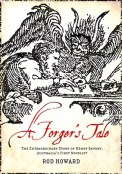
Rod Howard, A forger's tale

Rod Howard’s book on Henry Savery

  • the tweets of Henry Savery (probably Australia’s first novelist, about whom I wrote a couple of years ago) in the Rumours of Death project: a live Twitter feed by Christopher Currie, undertaken during the 2105 Brisbane Writers Festival. You can read the tweets at the link above. (Such as, “I will be most interested to see how the Australian literary landscape has changed since I founded it some 184 years ago. “)
  • lost in track changes: the title provides a hint. Five writers (Cate Kennedy, Ryan O’Neill, Krissy Kneen, Robert Hoge and Fiona Capp) were asked “to create a short piece of memoir, a vignette” each of which was then “passed onto another author within the group” who then had to transform the piece into something else, with if:book tracking the changes! You can download the ebook version from the link above.
  • Writing Black: new Indigenous writing from Australia: an interactive book using the iBooks platform, edited by Ellen van Neerven, and including writing, photography, audiovisual, and twitter fiction, from such creators as Bruce Pascoe, Tony Birch, Tara June Winch, Kerry Reed-Gilbert, Sylvia Nakachi, Siv Parker and Marie Munkara (several of whom I’ve reviewed here, in traditional formats!) You can download Writing Black from iBooks.
  • Memory makes us: ever thought of writing as performance? Well, this is it, but it’s “distinct from other performative aspects of literature: this isn’t a reading of a prepared work, nor is it freestyle poetry. It’s improvisation not with speech but with text and the tools of contemporary writing: keyboard and cut-and-paste.” This “event” has involved several North American and Australian writers, including Paddy O’Reilly, Marie Munkara, Angela Meyer and Maxine Beneba Clarke (all of whom you’ll find on my blog). if:books says that “For most readers, Memory Makes Us is a web site. For festival visitors, it’s a live event. We have also taken it to print. But none of these individual ‘formats’ capture the whole project.”

I love all this – I mean, I love the exploration. I can’t imagine these forms will replace traditional reading but, like most new media, some might stick around as an alternative form. In the meantime, the process must surely help both creators and readers/consumers break “normal” patterns, and that can only be good for literature.

GenreCon

I wrote about GenreCon in 2013. It’s actually called AWM GenreCon, AWM being the Australian Writer’s Marketplace which I understand is managed by the Queensland Writers Centre. GenreCon is a three-day biennial conference comprising panels, talks and workshops with Australian and international genre fiction writers, editors and agents – across all genres. It also offers one-on-one pitching sessions.

This year’s conference runs from 1oth to 12th November, at the State Library of Queensland. The “special guest” is Australian Garth Nix, and one of the international guests is Fiji-born New Zealand writer Nalini Singh. (I had to laugh because the brief bio names her books but not her genre, which apparently we should know. Unfortunately I don’t! Oh dear. Ah, Wikipedia tells me she writes paranormal romance.) Other Australian speakers include debut author and Noongar woman Claire Coleman, award-winning crime writer Emma Viskic, and award-winning fantasy author Angela Slatter, all of whose names I do know I’m happy to say.

… and that’s about it for another clearly active and inspiring Writers Centre.