Monday musings on Australian literature: Pitch days

When I was researching last Monday’s post on development programs for writers, I came across several references to publisher “pitch” days. As someone who isn’t writing a book, and who has no plans to, the concept of a “pitch” day was something that hadn’t made a big impact on me, though of course I knew what it meant.

If you are a writer who’s tried to get a book published, you know there are various ways of going about it. One is to find an agent who will tout/pitch your book to publishers. Another is to win a prize that involves publication – not that there are many of those! Yet another is to send your manuscript, unsolicited, to a publisher and hope they will read it. We’ve all heard stories about what happens then. They end up in a pile, and more often than not don’t get read. What authors want, of course, is some sort of guarantee their work will be read. This is where “pitch” days come in.

So what, exactly, is a pitch day? Most publishers have always accepted unsolicited donations, albeit with varying degrees of enthusiasm, but their pitch days offer two specific things: the publisher clearly identifies what they are looking for, what the writer needs to submit, and how; and they (mostly) offer some sort of guarantee that the work will be read and the time-frame within which this will happen. These pitch days are a fairly new thing, I believe, and stem partly from the possibilities offered by digital publishing.

Here are some of the programs I’ve come across, and that I believe are currently operating:

  • Allen & Unwin’s The Friday Pitch has been running for 6 years or more, and is open to writers for adults, young adults and children. They ask writers to “email a short synopsis or outline of your chapters and contents, and the first chapter of your work and related illustrations if relevant” on any Friday. They say that “if we like what we read … we will get back to you within a fortnight”. They don’t say, but I think imply, that they will read everything. They also say that Friday Pitch has discovered some bestselling authors, including Fleur McDonald, Helen Brown, and Mary Groves, though I must say that I don’t know these authors myself.
  • HarperCollins’ The Wednesday Post started in 2013. Writers can send fiction and nonfiction submissions each Wednesday, for print and digital publication, and digital-only publication. They say they will respond to authors within three weeks if they are interested. According to Writing WA, HarperCollins wants to find “new adult and YA titles and is particularly interested in ‘exceptional contemporary women’s fiction'” from new and established writers.
  • Pan Macmillan’s Manuscript Monday is a “new” initiative (though I don’t know when they wrote that statement). This process only occurs monthly on the first Monday of the month. They “accept submissions between 10am and 4pm that are sent electronically” and comply with the guidelines available via the link above. They say they will read every submission within three months of receipt, but won’t provide reasons for their decision nor give any feedback. And you can’t ring or contact them to chase up your submission. I think this includes pitches for Momentum, which is PanMacmillan’s “digital first imprint”.
  • Penguin’s Monthly Catch was created because Penguin “is keen and excited to read new work from Australian authors”! This program operates over the first 7 days (that is from the 1st to the 7th, regardless of days of the week) of every month. Only electronic submissions are accepted, and only works for adults. They say they’ll read every manuscript, and will get back to successful authors within three months. They do not provide feedback.

These are just a few of the programs out there. There are, for example, some genre-specific ones, such as for Romance writers. And some conferences run pitch-to-the-publisher programs, such as GenreCon and the Perth Writers Festival.

What these publishers won’t accept is fairly consistent. Poetry, plays, and educational works are frequently identified as not wanted. Some exclude works for children and young adults, while others will accept these. Authors need to check each publisher’s guidelines to make sure.

If you are interested in reading more about pitching, you might like to read the experience of two authors: Patrick Lenton who was published by Pan Macmillan’s digital arm, Momentum, and the above-mentioned Fleur McDonald who was published by Allen & Unwin. I also enjoyed reading this blog post on the “art of pitching to publishers”.

As always, I’d love to hear if any readers here have used “pitch days” … or have any stories about being published.

 

Monday musings on Australian literature: Unpublished manuscript awards

I’ve recently reviewed a couple of books which have won unpublished manuscript awards: Hannah Kent won the inaugural Writing Australia Unpublished Manuscript Award in 2011 for Burial rites (my review), and Margaret Merrilees won the Unpublished Manuscript Award at the Adelaide Writer’s Week in 2012 for The first week (my review).

Now, I’ve discussed awards a few times on this blog, and we’ve had some very interesting discussion in the comments about the value of awards. I’m not going to reiterate all that now because, being the original fence-sitter (!), I can see both sides of the argument. Awards in something so subjective as the arts are inherently problematic I think. I get that! However, I think a special argument can be made for unpublished manuscript awards. It’s hard, as we know, for writers to get published, particularly first-time writers. These awards – particularly those limited to (potential) debut authors – must make a big difference. In fact, in an interview last year, Hannah Kent said “these sorts of awards are so important. They help you get that foot in the door”.

Over the years, I’ve come across many of these awards – at least Australian ones – and they vary a great deal in terms of eligibility and what the award provides. I thought it would be interesting to list some of them here:

  • The Australian/Vogel Literary Award: Established in 1979 (first award 1980) in a collaboration between The Australian newspaper, the company which makes Vogel bread, and the publisher Allen & Unwin. Awarded to an unpublished manuscript by writers under the age of 35. Offers $20,000 and publication by Allen & Unwin.
  • CAL Scribe Fiction Prize: Established in 2009 by small publisher Scribe with the Copyright Agency Limited’s Cultural Fund. Awarded to an unpublished manuscript by an Australian writer aged 35 and over, regardless of publication history. It’s a Late Bloomer award! Offers $15,000 and a book contract. (My Internet search hasn’t found a winner for this award in 2013, so it may not still exist.)
  • Finch Memoir Prize: Established by Finch publishers, and sponsored by Copyright Agency Limited’s Cultural Fund. Awarded to an unpublished life story or memoir and open to previously published and unpublished writers as well as to agented writers. Offers $10,000 and publication.
  • Queensland Literary Awards David Unaipon Award of Unpublished Indigenous Writer: Initially established in 1989, and then brought under the Queensland Premier’s Literary Awards in 1999 and, since their cancellation, brought under the independently run Queensland Literary Awards. Open to all unpublished Aboriginal and/or Torres Strait Island writers. Offers $5,000 and guaranteed publication by the University of Queensland Press. The three runners-up are offered mentorships.
  • Queensland Literary Awards Emerging Queensland Author-Manuscript Award: Initially established under the Queensland Premier’s Literary Awards in 1999 and, since their cancellation, brought under the independently run Queensland Literary Awards. Open to all unpublished Queensland (resident at the time of the award for at least 3 years) authors. The prize is the same as that for the David Unaipon Award.
  • Victorian Premier’s Literary Award for an Unpublished Manuscript: Established by the State Library of Victoria in 2003. Open to any author from the state of Victoria who has not had a work of fiction published.
  • Writing Australia Unpublished Manuscript Award: Established in 2011. Award to adult fiction, and is not limited by genre, geographic location or age of author. Offers $10,000 cash and a mentorship worth $2,000 with a mentor of the winner’s choice. Kent chose novelist Geraldine Brooks, who, as I’m sure you know, has written several historical fiction novels.

Hannah Kent’s comment that these awards are important is borne out, rather, by the ongoing success of many winners. The Australian/Vogel Literary award claims, for example, to have launched the careers of Tim Winton, Kate Grenville, Brian Castro, Mandy Sayer and Andrew McGahan. Recent awards have gone to books that quickly became high-profile, namely Hannah Kent’s Burial rites and Graeme Simsion’s The Rosie project (which won the Victorian Premier’s Literary Award for Unpublished Manuscript) (my review). The inaugural winner of the Victorian award was Carrie Tiffany with her gorgeous book, Everyman’s rules for scientific living. (Coincidentally, she was the inaugural winner, last year, of the Stella Award, with her second novel, Mateship with birds.)

These sorts of awards vary, not only in terms of what they offer, but regarding who they aim to help. Many, though not all, are limited – to debut authors, indigenous authors, young authors, or authors from a particular state. Regardless of how they are framed though, I understand that, in many cases, they can and do result in publication not only for the winner but for some of the other well-judged entrants. And that, I think, is the best argument there is for the existence of these awards, don’t you?

POSTSCRIPT:
As I expected – and hoped – commenters on the post have named other awards. They include:
  • T. A. G. Hungerford Award: Established in 1998 by Fremantle Press. Awarded biennially to previously unpublished writers from Western Australia. Offers $12,000 cash and a publishing contract with Fremantle Press.


Monday musings on Australian literature: Qantas flight-length book deal

Some of you have probably sussed that Whispering Gums is not at her usual desk – and you’d be right. I’ve been travelling since mid-August, mostly in Europe, and will be back home in early October. I had hoped to read some books and write reviews while on the road, but somehow the reviews haven’t happened. One review is nearly ready though!

However, here’s something interesting I read just before I left Australia in AustLit news. It was about a Qantas initiative involving commissioning, from Hachette, a series of paperback books “timed to be read during 10 of Qantas’s main flying routes”. The series is called “A Story for Every Journey” and, AustLit reports, will be offered to Qantas’ platinum Frequent Flyers.

The books will cover popular fiction and non-fiction genres  –  the ones we often call “airport books”. The book lengths are based on average reading speeds, taking into consideration time for napping and eating – or so I read in an article at goodereader.com. It quoted Mr Nobay, spokesperson for Hachette’s partner Droga5, as saying that

According to our literary friends at Hachette, the average reader consumes between 200 and 300 words per minute, which equates to about a page per minute.

This spokesperson also said that

for the longer flights, we accommodated some napping time and meals … After a few hours with a fine Qantas in-flight meal with Australian Shiraz, most people need a break from reading.

(Don’t you love the marketing?!)

AustLit said that one of the ten books – sounds like the initial plan is for ten – will be Kimberley Freeman’s Wildflower Hill which “has been suggested as the perfect read for travellers on the Sydney to Dubai route”. What a shame I didn’t have it when I flew that route a few weeks ago! I’ve never heard of Kimberley Freeman, which is apparently the nom de plume of Brisbane writer and academic Dr Kim Wilkins. Other authors include popular actor and author William McInnes, popular non-fiction writer Peter FitzSimmons and novelist Lian Hearn.

Anyhow, as goodereader comments

If this concept in reading takes off (pun intended) and if lawmakers insist on holding to strict regulations on the use of mobile devices during air travel, there is potential for a surge in not only print-reading, but also a shift towards more books being written with an intentional audience already in mind.

On my first reading of the initiative, I thought it was about commissioning books to be written for the purpose, but it sounds like it’s about identifying existing books that suit the criteria and re-packaging them for a new market. It may, of course, lead to books being written specifically for the market, as goodereader wonders.

I’m not sure I need to have books specially targeted to a set reading period, but I love the creative thinking behind this initiative. What do you think? Have you heard of anything similar?

On the titling of books

Forget about judging books by their covers, what about titles? How important are they to you? Do you ever decide to read a book based on the title alone? Do you always (never, sometimes) consider the title when thinking about the meaning of a book?

Title Puzzle Clker M

Titles: They're a puzzlement (Courtesy: M, via clker.com)

It seems to be a fraught issue, this book titling business – and it makes me wonder just what import to ascribe to titles. Who decides on the title? Do authors always have the final say in the titling of their books? Well, no, they don’t … so, how much can/should we readers think about the title when discussing or thinking about the books we read. Is it worth wasting our time bothering about it as, for example, readers did with Wolf Hall. Why, many of us wondered, was Hilary Mantel‘s book called Wolf Hall? I had an answer, and so did others, but is it worth even bothering about if we don’t know whether the author created the title? This may be a bad example though. Hilary Mantel was an established author when Wolf Hall was published, so it’s likely she had more clout in the titling of her book than a first time author has. Hmm, then, how am I to know when an author has chosen the title and when he/she hasn’t – and therefore when it might be worth my while considering the title and when not?

And what about books which are published under different titles in different countries? Think Miss Smilla’s feeling for snow versus Smilla’s sense of snow. This is a tricky one though because, like The outsider versus The stranger, it is a translated book, so there’s a double whammy here. Not only has the title been translated, but it’s then been translated differently. Are these difference due to translation decisions or marketing ones? A better example might be Harry Potter and the philosopher’s stone versus Harry Potter and the sorcerer’s stone. What’s that about*? Marketing, of course. (And, I can’t help wondering whether the book might have met with less opposition in the USA if the title had not been changed to “sorcerer”?) Again, where does this title confusion, oops variation, leave we readers, particularly regarding our wish to understand and analyse what we are reading?

For an interesting discussion of book titling, read Caroline Baum’s article “What it takes to title a book” in the Sydney Morning Herald back in 2003. It answers some of the questions I raise above and gives some great examples, but it doesn’t really consider where the reader sits in all this (except as the target for marketing).

What say you on the book title issue?

* Rhetorical question. Reasons abound, some from Rowling herself, on the internet. My concern is the general issue, not this specific case.

Monday musings on Australian literature: eBook publishing in Australia

Sense and sensibility book covers

Printed and eBooks for Jane Austen's Sense and sensibility

First off, the disclaimer: I don’t know a lot about what is happening with eBook publishing in Australia, so my goal here is as much to find out more from readers of this post as it is to impart knowledge.

I thought a good place to start would be the Australian Publishers Association (APA) but didn’t find a lot to excite me. The Association has 11 committees, but a search on “electronic” on the page listing these committees brought up only two which include electronic publishing in the description of their goals/activities – the Tertiary and Professional Publishers, and the Scholarly and Journals Publishers! Oh dear that’s not looking very proactive. Maybe they just haven’t updated their info on the APA website?

Because trade publishers are producing electronic versions of their books. Text Publishing, for example, told us in their February newsletter about the eBooks service being offered by independent Melbourne bookseller, Readings. Text wrote that:

In collaboration with local software developer Inventive Labs and SPUNC (the Small Press Network about whom I’ve written previously), Readings is now able to offer Australian ebooks that are readable on any device, from phone to PC to dedicated ereader.

Readings was, apparently, the first independent bookshop in Australia to offer locally published eBooks to its readers. This means, for example, that works by such Text authors as Peter Temple, Kate Grenville, Kate HoldenToni Jordan, and Madeleine St John can now be bought from Readings in electronic format (using, as I understand it, the book.ish service. This is a bit of a problem for Kindle users who, I understand, can only access book.ish eBooks online).

Back to publishing though. A year ago, in July 2010, a report by Jenny Lee titled Digital Technologies in Australia’s Book Industry was published. It was prepared for the Book Industry Strategy Group and is 72 pages long. I have only skimmed it. It looks at the whole supply chain – Authors, Agents, Publishers, Printers, Distributors, Retailers, Libraries, and Readers – but my focus here is on publishers because, arguably, they are the critical point in the chain. What Lee found regarding publishers – a year ago so things may have changed – was that electronic publishing (and delivery) is strongest in the scholarly and higher education area. Well, that’s not surprising given what I found at the APA website is it? Regarding trade publishing she wrote:

Publishers of consumer/trade books have generally been hesitant about producing ebooks because of concerns about piracy and price, but many are now producing a selection of books in electronic form and in some cases making them available through their websites.

And so, it is starting, albeit slowly and moving from publisher websites to sellers like Readings.When the Kindle first appeared, we Australian readers complained about the lack of suitable content, particularly Australian content. More Aussie content is available now, but I’d love to know what readers here think. Is enough available? How do you know what is available? Is it available on the format you want and at a price you are happy to pay? I expect to return to this issue, but would love to know what people are finding now (here and in other countries).

Monday musings on Australian literature: SPUNC has spunk

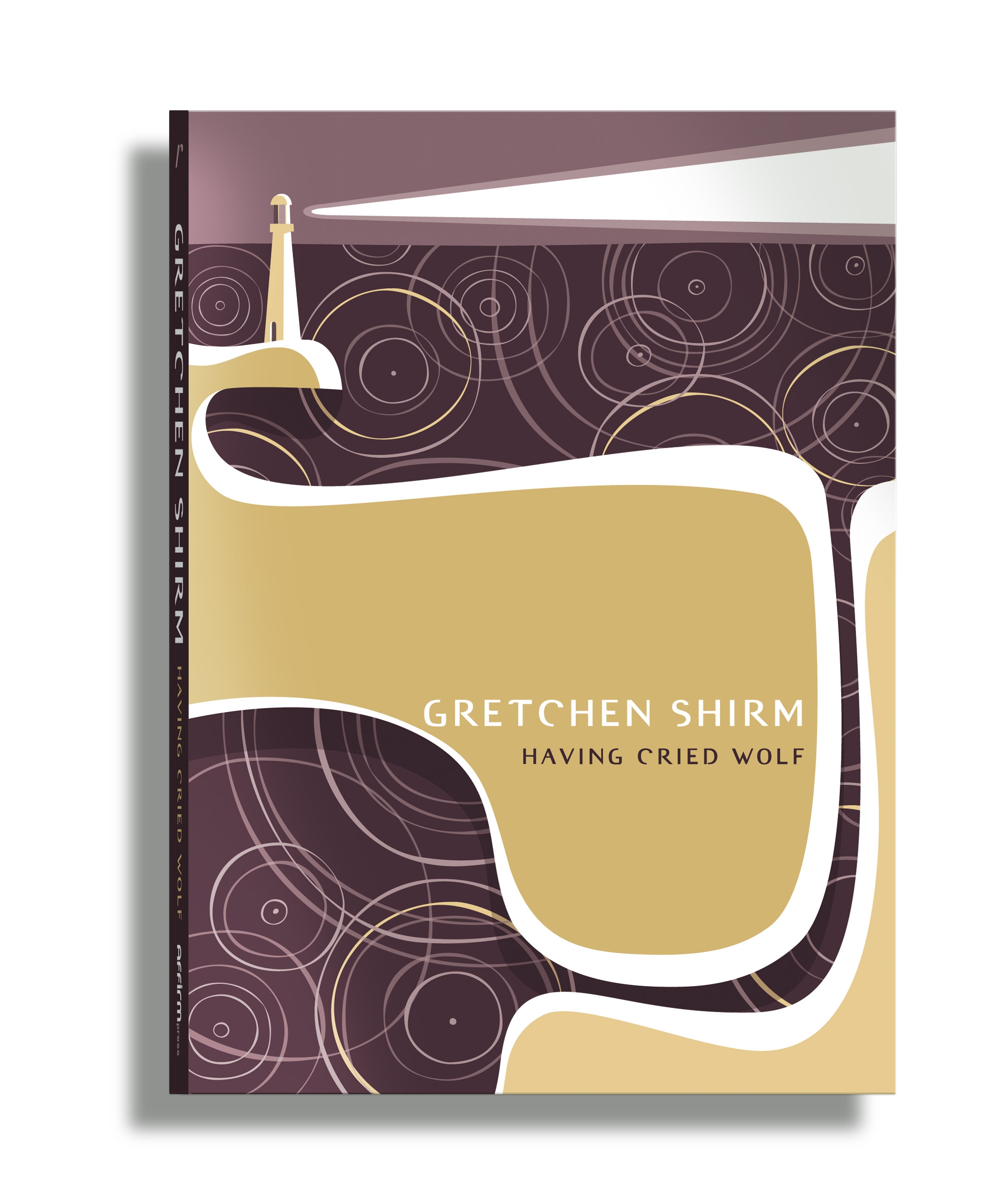
Having cried wolf, book cover

Isn’t this cover gorgeous? (Courtesy: Affirm Press)

Yes, come here for your wit. I bet I’m the first one to have thought of that line! SPUNC*, in case you haven’t heard of them and you probably haven’t, is the Small Press Network (in Australia). The acronym actually stands for Small Press Underground Networking Community. It was formed in Melbourne in 2006 and its aim – as you would have guessed – is, in its own words, “to promote independent publishing and support the principle of diversity within the publishing industry as a vital component of Australian literary culture”.

Its definition of small is, I think, pretty broad. I suspect the key word is “independent” more than “small” as its members range from what seems to me to be well-established companies, like Text Publishing, which publishes some high volume works, to smaller more boutique publishers like Ginninderra Press and, a new kid on the block, Affirm Press.

In 2007, SPUNC commissioned a report into independent publishing in Australia. It was titled A lovely kind of madness: Small and independent publishing in Australia. Aha, there it is “small” and “independent” and it seems that for the purposes of this report the focus was on the smaller end of the scale.

In fact, definition is one of the issues the report confronted and so, using the evidence they gathered from their survey and overseas research, they came up with one. Their suggested guidelines for ‘small press’ is that they are independent publishers who:

  • Have published at least one book title or journal issue (in hardcopy);
  • Have an annual turnover of $500 000 or less;
  • Have print runs of usually less than 2000;
  • Have published more than one author;
  • Publish fewer than 10 book titles per year; and
  • Usually do not charge authors fees for production, editing or distribution.
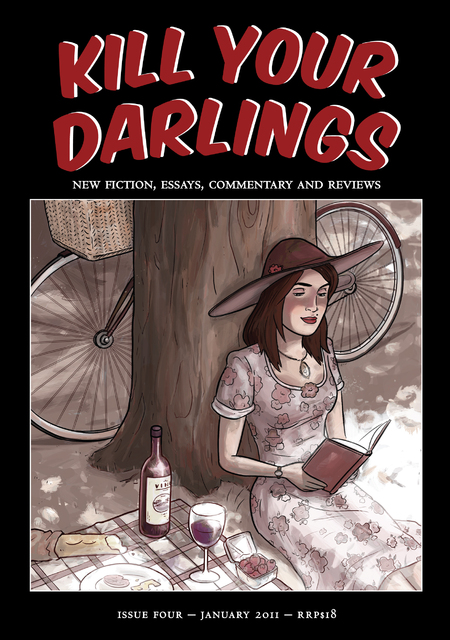
Kill Your Darlings Issue 4

Kill Your Darlings

Guess what the report found? Well, in case you can’t, I’ll tell you: it’s that the main problems faced by smaller presses are publicity and distribution. Who’da thought it?! They do admit though, that distribution in particular is a problem for all publishers, not just the small ones, due to “the combined effects of a crowded market, a geographically wide distribution area, low margins and relatively small print runs”. It’s hard running any business in “a wide brown land”.

Why am I writing this? Because I do read books from small presses, including Affirm Press, Black Inc, Ginninderra PressGiramondo Publishing, Griffith Review, and Kill Your Darlings to name just a few. And because I want them to survive: they pick up new upcoming writers; they publish poetry; they publish essays; they, in fact, make the major contribution to the diversity of publishing in Australia; they foster local talent; and they are often simply just beautiful to look at and hold.

Do you read small presses? Do they contribute to your literary scene? What do you think they could do to lift their visibility?

* POSTSCRIPT: SPUNC link removed due to Small Press Network changing its “name” from SPUNC to SPN (for obvious reasons), 20 Feb 2022.