Irma Gold, Shift (#BookReview)

If Australian writer Irma Gold suffered from Second Book Syndrome while writing her second novel, it certainly doesn’t show. Her debut novel, The breaking (my review), is well-written and a great read. However, in Shift, I sense a writer who has reached another level of confidence in fusing her writing, story-telling, and the ideals and beliefs the drive her. She is passionate about her subject matter, as she was in The breaking, but in Shift she ups the ante to encompass wider themes about art. The result is a strong read that offers much for its readers to think about.

Shift is not the first novel I’ve reviewed about post-apartheid South Africa, but it is my first by an Australian author. Published, says MidnightSun (linked below), in the 70th anniversary year of the Freedom Charter, which outlined the principles of democracy and freedom in South Africa, Shift is set in Kliptown, where this charter was signed. Protagonist, Arlie, is a thirty-something art photographer who has just sold his first work to a significant gallery. It’s potentially career-changing and he should be happy, but he can’t “get his shit together”. He can’t keep girlfriends and while he gets on well with his happily established brother, his relationship with his parents is fraught. He feels his successful architect father has expectations he can’t (or doesn’t want to) meet, and his mother refuses to talk about her South African upbringing. But, Arlie wants to know.

So, after yet another relationship break-up, Arlie decides to go to South Africa, and ends up in Kliptown, in Soweto. He becomes immersed in its life, mixing with visionary choirmaster Rufaro, singer Glory and her younger brother Samson, and other locals such as his favourite photographic subject, the 80-something, “sassy as hell” Queenie. Can he create an exhibition out of his experience? Rufaro would like that …

“sold a dream”

The bulk of the novel comprises Arlie’s experiences in Kliptown, where he is the only white person. Through his eyes, we see the dire situation the people find themselves in. Early in the novel, he goes on a date with Glory to a spoken word evening at Soweto Theatre, where he hears some truths:

The people here had been sold a dream and yet more than two decades on they found themselves still in the same relentless poverty. Mandela was the broker of broken freedom.

Which is not, necessarily, to say that Mandela achieved nothing, but that life is far more complex than a “god”, as Mandela was to Arlie’s mother, can ever be. What Arlie sees, then, is poverty, drug addiction, violence and hopelessness. He sees young people, like Samson, not believing there’s any point to school. He sees a settlement without proper sewerage, electricity, or running water to their homes, not to mention with “asbestos sheeting everywhere”. However, on the flip side, he also sees community, hard work and hope.

So, back to my opening claim about Gold and her second novel. Taking the writing and the storytelling first, the writing is tight. It has the confidence of an editor, which Gold is, but mostly of one who is passionate about her material. The descriptions are fresh and vivid. We can visualise the place, with, for example, its “ramshackle tapestry of shacks constructed from discarded materials, each one rippling into the next”. The characters – who are drawn from Gold’s travels to the region (see here) – feel authentic. They are not stereotypes, but breathe life into the story with their thoughts, worries, fears and hopes. Arlie questions his actions, are they that of “a white saviour”? The colourful Glory, with her orange hair and fake orange nails, doesn’t “try to please”. She has her own views, and “plays her own game … take it or leave it”. The visionary Rufaro is passionate about the power of singing. It shows everyone, he says, who they are, that “we will be more … we are more”. Samson is a boy on the cusp of manhood, exuding bravado one moment, begging to play soccer the next.

The novel, too, is well structured. It opens with a shocking event to which we return at the end, and then follows a chronological arc from Arlie’s personal crisis and his decision to go to South Africa, through his time there, to his ultimate return home. There is drama along the way. Arlie’s father Harris visits, and Gold perfectly captures the discomfort between them alongside their unspoken love for each other. There is no simple resolution, just, perhaps, another step along the way to understanding. There is also love, violence and tragedy, but I won’t spoil those.

“make the invisible visible”

Shift is a story about a forgotten, if not betrayed, community, but one that survives all the same. It’s about a man who cannot keep a girlfriend, who is at odds with his father and distanced from his troubled mother, but who wants better relationships. It is a multi-layered love story – to a community and its people, and between Arlie and the people he cares for. But, most of all, it is a story about the power of art – or, if not that, at least about hope for art’s power. From first meeting Arlie, Rufaro has a dream that he will create “an exhibition that will show the world the truth about Kliptown”. He tells his choristers that Arlie

is going to expose what the government is doing here. That they have forgotten us. The pressure must come from outside, because our government does not listen to us.

Arlie, Gold writes later in the novel, “had always believed that art could change minds, that if enough minds were changed then the world changed” but, when it comes to it, he wonders “what could his photos possible achieve?” Can he “make the invisible visible”?

This brings me back to my opening paragraph and Gold’s wider themes. Shift is a strong, moving novel about a struggling community that has been left behind, for all the promises of freedom. However, it is also a novel that believes art can expose truths and, through that, shift our thinking and thus nudge the world towards being a better place. Gold has written her heart out in this novel to “make the invisible visible” – and to make room for hope. The next move is ours.

Irma Gold
Shift
Rundle Mall, SA: MidnightSun, 2025
269pp.
ISBN: 9781922858566

(Review copy courtesy MidnightSun Publishing)
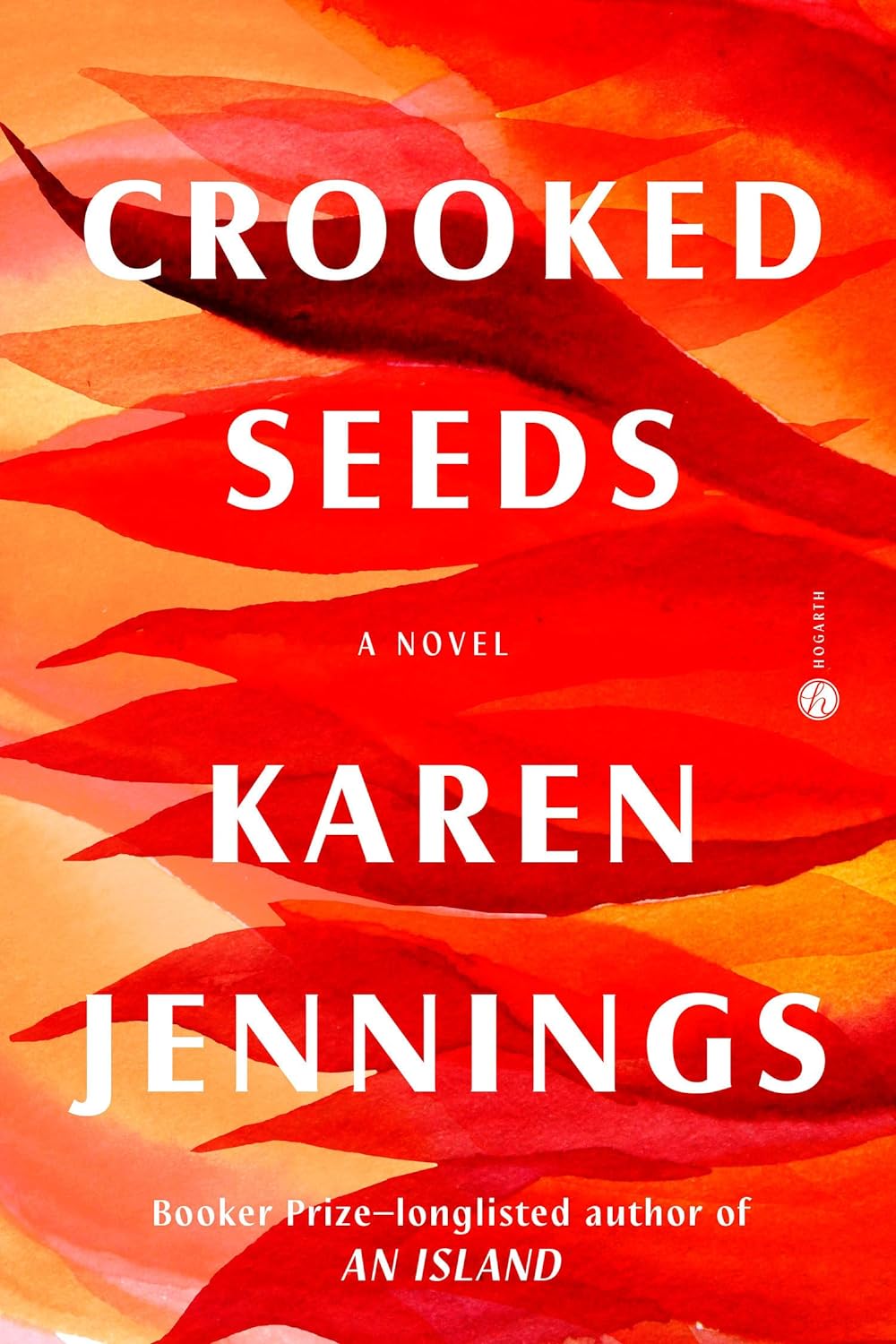
Karen Jennings, Crooked seeds (#BookReview)

Crooked seeds is the third novel I’ve read by South African writer Karen Jennings, and she continues to intrigue and impress me, because she seems to be quietly bubbling away in her little corner of the world writing books that grapple with the difficult questions. Unfortunately, I didn’t read her Booker-longlisted novel, An island (2020), but the two I have read, Finding Soutbek (my review) and Upturned earth (my review) are historical novels with strong political underpinnings. Crooked seeds has political import too, but is set in a somewhat dystopian near-future.

I say near future because my calculation from the information we are given has Crooked seeds set in Cape Town in the late 2020s, and it certainly feels dystopian with dire water shortages, fire on the surrounding mountains and ash falling. This setting is not, in fact, farfetched. Cape Town did experience a severe water shortage problem from 2015 to 2018, and climate change is an increasing problem in South Africa. Climate change, however, is not Jennings’ prime concern here. Rather, it provides a perfect, disturbing environment against which to explore the personal problems being faced by her protagonist, 53-year-old Deidre van Deventer, and the political problems threatening to undo post-Apartheid South Africa. The near-future timing enables Jennings to imagine a setting that is hard to question, but that is close enough to feel more than plausible.

The novel opens strongly. Deidre wakes up thirsty, dirty and smelly. Her personal grooming is almost non-existent and she doesn’t seem to care. By paragraph two, we learn she has false teeth and by paragraph three that she needs crutches. It’s 5.18am, and at 6am the water truck will arrive, so she sets out to join the queue. She speaks to people she knows, mostly to cadge cigarettes or other help from them, things she never pays back. Clearly though, the sympathy card works because, as demanding as she is, people continue to help her, often at some cost to themselves. She is, I should add, white.

This is the background. An unappealing woman fighting a world that is tough and difficult for all those at the less advantaged end of the spectrum. Into this setting comes the plot, when, early in the novel, Deidre is contacted by police officer Mabombo concerning some bodies – infants’ bodies – in the yard of her old home. This is the same yard where, at the age of 18, she had lost her leg in an explosion caused by her pro-Apartheid activist brother Ross. Deidre wants none of this investigation. It’s nothing to do with her, she says, directing them to find the family that had lived there before.

“I’m the one that needs help. Me. Look at me. I’m the one!” (Deidre)

From here we follow Deidre, as Jennings drips out more and more of her story, matching flashbacks to an unhappy past where Deidre came a poor second to her mother’s beloved Ross, with a present where a highly unlikable but clearly damaged Deidre tries to survive in a desolate world. Deidre is one of those characters who can frustrate some readers. She’s a taker not a giver. She is rude to those who help her, including her kind but long-suffering Coloured neighbour Miriam, not to mention those at the perfectly-named Nine Lives Club where she wastes spends her days. She refuses to consider any advice that might make her life easier. And she certainly doesn’t think for herself about how she might improve her situation.

Meanwhile, Deidre’s estranged mother, Trudy, lives across the road in a nursing home. Suffering from dementia, she is lost in the patriarchal past, yearning for her son, but it is she who holds the key to the mystery.

Halfway through the novel, Miriam’s frustrations with Deidre’s self-centredness boil over when Deidre admits that she has never voted, because the government doesn’t care for her. Miriam, remarking that this government provides her disability grant, continues:

“You know what, Deidre, you’re really something else. Every time I think I’ve seen the worst of you, you come out with something even more terrible. Every single time, no matter what. Are you trying to be unpleasant, tell me? Is that your plan, to be unpleasant and make everyone dislike you. I really want to know?”

Deidre looked down into her lap. “No, it’s just the way I am.”

So, frustrating, yes, but Jennings had me engaged from the start. For all her faults, I cared about Deidre and about that

invisible thing that came at her from all directions … this thing that was always watching her, that never took its eyes off her. That saw what she was and punished her for it.

Also, I wanted to see where Jennings was going with her story, because, as I’ve already intimated, there is a political layer – not only the water shortages and encroaching fires, but the forced removals from homes (which Deidre and Miriam had experienced) and an overall sense that the state isn’t working.

I don’t think I’m going too much out on a limb to suggest that we could read white, damaged Deidre as representing white, privileged South Africans who see themselves as victims in the post-Apartheid world. Like Deidre in terms of those infants’ bodies, they may not have been personally responsible for the worst that happened under the regime, but they need to face the truth of what happened under their noses. Towards the end, Deidre asks Mabombo about the point of chasing it all up now, decades later. He responds:

“Miss van Deventer, this is difficult for you, of course, but you must agree that the truth has to come out. To leave the thing alone would have been to deny it and cover it up. And we must consider the other people involved. Families lost their children, and have been living with questions and pain for all these years.”

Ultimately, what Jennings shows in Crooked seeds is a society at odds with itself, and I use the word “shows” intentionally because this is such a spare, tight book. There is no telling, just a powerful story about a woman from whom everything was taken, in her mind at least, when she was 18, and who has never been able to rise above it, seeing only her own pain and loss, never recognising others’ loss or that the possibility of change lies at least partly in her hands. A personal story with a political heart. This is a stylish, clever novel, with an ending that hits just the right note.

Karen Jennings
Crooked seeds
Melbourne: Text Publishing, 2024
219pp.
ISBN: 9781922790675

(Review copy courtesy Text Publishing)

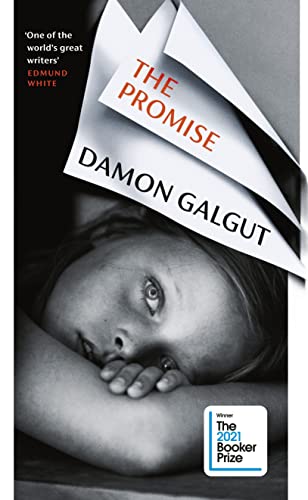
Damon Galgut, The promise (#BookReview)

Damon Galgut’s Booker Prize winning novel, The promise, is one of those novels that grabbed me intellectually and emotionally from its opening pages. The plot, itself, is straighforward. It concerns a White South African family’s promise to give a house on their property to their Black maid, whom their grandfather had acquired “along with the land”. The narrative tracks just how hard it is for the family to honour this promise. What makes the novel a Booker-Prize winner is the quality of the writing and how Galgut uses his story to create a potted history of South African life and politics in the post-Apartheid decades.

The novel is set between 1986 and 2018, and centres on the family, and their farm outside Pretoria. The family comprises Ma, Pa, and their three children, Astrid, Anton and Amor. In the opening pages, the youngest family member, Amor, overhears her dying Jewish mother extract the aforementioned promise from her Afrikaner father to give the house to Salome. Amor wants this promise honoured but achieving it turns out to be much harder than she expected.

The promise was my reading group’s May read and, somewhat unusually for us, it was universally enjoyed. Our ex-South African member used words like sharp, clever, funny, vicious, and said that Galgut nails the South Africa she knew and had experienced.

“something out of true at its centre”

There is so much to say about this book, that it’s hard to know where to start, but the writing is an excellent place, because it truly carries the novel. Particularly effective is the slippery voice (or point-of-view) which shifts perspective and person, sometimes mid-sentence. The effect, among other things, is to implicate us readers in the narrative. It prevents us distancing ourselves from the choices, decisions and behaviours we see. Here, for example, we shift from third to first in a paragraph:

For there is nothing unusual or remarkable about the Swart family  … We sound no different from the other voices, we sound the same and we tell the same stories, in an accent squashed underfoot, all the consonants decapitated and the vowels stove in. Something rusted and rain-stained and dented in the soul, and it comes through in the voice.

And here is a mid-sentence shift from third to second person:

But in truth he’s bored by this man, by his ordinary life and his ordinary wife, just as he’s bored by almost everything these days, all significance leaked away by now, and it doesn’t feel wrong to wait till he’s gone, then get up and wander out into the night, as if you’ve been drinking on your own. You probably have.

Alongside the voice is Galgut’s wordplay, his recognition of the power of words to clarify or obfuscate. Take the irony of the white family’s name, Swart, which means black. But it doesn’t stop there because it is also an archaic word for “baneful, malignant”. Take also the narrator’s frequent self-corrections that always nail home a point, like:

“So Salome has gone back to her own house instead, beg your pardon, to the Lombard place.” (Which reminds us that the promise has not been enacted.)

“He no longer calls himself dominee, he’s a pastoor these days, peddling a softer line in salvation to his customers, ahem, that is to say, his flock, so that everyone benefits.” (Which tells us something about this man of the church’s real motivations.)

Then there’s the idea of promise itself. What a loaded word that is. While this is the story of a family, The promise is ultimately a political novel, so Galgut deftly plays with the idea of “promise” in more ways than one. The novel opens and closes with false promises, related to the historical realities of 1986 and 2018, as well as to the family’s inaction. It also teases us with the idea that the end of Apartheid would bring the promise of a new South Africa, but it shows that ideal foundering. The failure of the country to live up to its promise is paralleled in the character of Anton who, at the beginning of the novel, is “full of promise”, as he describes himself in his unfinished autobiographical novel, but who, by the end, admits that he has not lived up to it:

He’s still stunned by the simple realisation that’s just struck. It’s true, I’ve wasted my life. Fifty years old, half a century, and he’s never going to do any of the things he was once certain he would do … Not ever going to do much of anything.

(Note the slip from third to first to third person, here!) There are many failed promises in the novel, including a minister’s failure to keep a confession.

Other motifs threading through the novel include the four funerals in four different religions/belief systems that shape the narrative’s four parts, and the fact that the Swart’s family business is a (failing) Reptile Park. How telling is that! Just think of all the allusions.

The characters are another compelling aspect of the novel. As an epigraph-lover, I can’t resist sharing Galgut’s from Frederico Fellini:

This morning I met a woman with a golden nose. She was riding in a Cadillac with a monkey in her arms. Her driver stopped and she asked me, ‘Are you Fellini?’ With this metallic voice she continued, ‘Why is it that in your movies, there is not even one normal person?’

What a hoot, and what a great epigraph choice. It immediately challenges us to consider what is “normal”, if such exists, and puts us on the alert about notions of normality. Galgut’s characters – even the minor ones like Lexington the driver (who “brings the Triumph to the front steps”), the homeless man (“as he keeps obsessively singing the first line to Blowin’ in the wind, let’s call him Bob”), and the various funeral workers – are carefully differentiated, and add depth to the picture being painted of a family and country in crisis. The irony is, I think, that each is disconcertingly normal – in their own way!

Early in the novel, the narrator describes the recently departed Ma’s spirit lingering around the house:

She looks real, which is to say, ordinary. How would you know she is a ghost? Many of the living are vague and adrift too, it’s not a failing unique to the departed.

“Vague and adrift” perfectly describes Astrid, Anton and Amor, none of whom have it together. The “quiet and attentive” Amor, however, is at least empathetic, and therefore the most sympathetic. She constantly shows heart, but, having little power in the family, her solution is to disappear at every opportunity, and live a spartan life, working as a nurse among the most needy. Could she have done more sooner?, is the question worth asking.

So, what is the takeaway from this novel? My reading group was unanimous in feeling that the novel is underpinned by the idea that when one group has an unhealthy position of power over another, both are diminished, if not destroyed. It is to Galgut’s credit, however, that he explores this without didacticism. We are never told what to think. Instead, he presents his characters’ thoughts, actions and decisions, and leaves us to consider what it all means.

We are also given this:

No truthful answers without cold questions. And no knowledge without truth.

The wonder of this book is that such a strong and serious story can be so exciting to read.

Lisa also loved it.

Damon Galgut
The promise
Vintage, 2021
295pp.
ISBN: 9781473584464 (Kindle ed.)

Nadine Gordimer, Harald, Claudia, and their son Duncan (#BookReview)

There are authors I read long before blogging whom I really want to document here, in some way. One of these is Nobel Laureate Nadine Gordimer who first came to my attention in 1983 with her memorable, confronting 1956 short story collection, Six feet of the country.

Nadine Gordimer, as I’m sure you know, had a lifelong concern for economic and racial inequality and injustice in South Africa, and this is evident in her short story, Harald, Claudia, and their son Duncan. The story is told third person through the perspectives of a mother and father, the titular Claudia and Harald. Early in the story, they are visited by Julian, their 30-year-old son Duncan’s friend. They assume there’s been an accident, but

This Julian draws the flaps of his lips in over his teeth and clamps his mouth before he speaks.

A kind of … Not Duncan, no, no! Someone’s been shot. Duncan, he’s been arrested.

This description of Julian is so typical of Gordimer in the way, in a few words, she conveys something grotesque, something that feels more than the bringing of bad news, even before we know why he is there.

Book coverHowever, this 1996 story is particularly intriguing because it seems to be related to her 1997 novel The house gun. As far as I can tell, the first third of the story I read is very close to the first chapter of that book, but after that I don’t know. I do know that the details of the crime seem a little different in “my” story (but it may just be that they are not fully revealed). Also the novel’s Duncan is 27, while the story’s Duncan is 30. So, did Gordimer write the short story and then decide to flesh it out into a novel? I don’t know, but here is what Wikipedia says about The house gun, which was her second post-apartheid novel:

It follows the story of a couple, Claudia and Harald Lingard, dealing with their son Duncan’s murder of one of his housemates. The novel treats the rising crime rate in South Africa and the guns that virtually all households have, as well as the legacy of South African apartheid and the couple’s concerns about their son’s lawyer, who is black.

While the short story doesn’t emphasise all this, there is a reference to people having guns for protection, and there’s the sense that we are dealing with the post-apartheid world.

Anyhow, back to the story. What I love, as I’ve already intimated, is how Gordimer creates tone. Here’s our couple on hearing that the crime for which Duncan has been arrested is murder:

He/she. He strides over and switches off the television. And expels a violent breath. So long as nobody moved, nobody uttered, the word and the act within the word could not enter here. Now with the touch of a switch and the gush of breath a new calendar is opened. The old Gregorian cannot register this day. It does not exist in that means of measure.

What a wonderfully fresh way of conveying the sense of discombobulation, of unreality, that results when the world seems to change in an instant.

From here – it’s a Friday – we follow Harald and Claudia through to their son’s arraignment on Monday, and into the hours immediately after, at which point the story ends, fairly suddenly.

One of the themes, in the story anyhow, concerns the idea that no matter how much you try to lock yourself away from the “outside”, you can’t keep it from coming in. This has a political as well as a personal reading. The story starts by telling us that Harald and Claudia had recently moved from a house to a “town-house complex with grounds maintained and security-monitored entrance”. Later in the story, Claudia, a doctor, does her shift at the clinic which services “areas of the city and once genteel suburbs of Johannesburg where now there was an influx, a rise in and variety of the population.” During this shift, she considers the pain that it is her job to assuage – the pain that comes from inside, like a tumour, and that which comes from the outside, like being burnt or, yes, hit by a bullet. She reflects:

The pain that is the by-product of the body itself, its malfunction, is part of the self; somewhere, a mystery medical science cannot explain, the self is responsible. But this – the bullet in the head: the pure assault of pain.

This is surely a metaphor for that fear of the “outside” by the well-to-dos who choose to live in security-monitored complexes. What’s inside, the implication is, cannot be necessarily controlled but it’s part of your own world; what’s outside is to be feared. In this section of the story, there are references to socioeconomic differences. Claudia gives out diet sheets, for example, to people, mostly black, who, she knows, are “too poor for the luxury of these remedies”.

It is, then, just the sort of story I like to read. The careful word choice, the slightly odd syntax, plus things like the references to class and race, combine to convey something that is more than a simple murder plot involving a son and his devastated parents. As the narrator slyly says:

This is not a detective story. Harald has to understand that the mode of events that genre represents is actuality, this is the sequence of circumstantial evidence and interpretation by which a charge of murder is arrived.

Circumstantial evidence and interpretation. The stuff of complex lives in complex times, eh? I’d like to read the novel now.

Nadine Gordimer
Harald, Claudia, and their son Duncan
London: Bloomsbury Publishing, 1996
(A Bloomsbury Quid)
41pp.
9780747528913

Karen Jennings, Finding Soutbek (Review)

Jennings Finding Soutbek
Finding Soutbek (Courtesy: Holland Park Press)

I don’t, as a rule, accept review copies of books by non-Australian authors, but when New Holland Press offered me Finding Soutbek by South African writer, Karen Jennings, I was intrigued. Intrigued because of connections in our countries’ respective histories, and because I’ve read several books set in South Africa (by, for example, JM Coetzee, Doris Lessing and Nadine Gordimer). This is Jennings’ first novel, but she has written and published poetry and short stories, winning both the Maskew Miller Longman Award in 2009 and the Commonwealth Short Story Competition‘s Africa Region prize in 2010.

I enjoyed Finding Soutbek. It’s an ambitious, layered novel that switches between the 17th century and the present in a small, remote community in South Africa, the fictitious Soutbek in an area called Namaqualand. The town comprises two groups of people, the upper-towners and the lower-towners. In a neat reversal of expectations, the upper-towners are the poor, the under-class, who at the novel’s opening, have just been hit by a fire for the second time in a reasonably short period. The novel tells the story of what happens in the town after this fire, interspersed with chapters from The History of Soutbek, written by the Mayor and a local Professor, about the community’s founding in the 17th century. This history presents the town as having utopian origins, based on “communal living, sharing and acceptance”.

The novel’s main characters are this Mayor and his wife Anna, the destitute teenage girl Sara who appears in the town at the beginning of the novel and is reluctantly taken in by the Mayor, and Willem who lives in the upper town but who also happens to be the Mayor’s nephew. Jennings explores the relationships between these (and other) characters as the Mayor, the town’s first coloured mayor in fact, struggles to achieve his personal goals in a climate that seems to stall him at every step. The potential benefits of The History are undermined by the post-fire chaos in the upper town. There is a dark side to this mayor, to the way he treats others in his quest for personal wealth and power. Anna sees this and recoils from it, and finds herself increasingly isolated until Sara’s arrival. Willem, attracted to Sara, joins these two in a companionship that sees them jointly reading The History.

The themes are pretty universal – power and oppression, the rich controlling the poor, social inequality – but there is also something that seems particularly South African. That is, the book reminded me of works I’ve read by Nadine Gordimer and Doris Lessing. I’m thinking particularly of Gordimer’s short story Six feet of the country and Lessing’s novella The grass is singing, which, like Finding Soutbek, describe marital tensions deriving from a life characterised by the exercise of power by one group over another. This sort of conflict is evident too in JM Coetzee’s Disgrace, though his occurs between father and daughter, rather than husband and wife. These works are more complex and hard-hitting than Jennings’ novel, but they all seem to reflect a pre- and post-Apartheid South African literary aesthetic.

What interested me most about the book though was The History which purports to be based on the previously unknown journals written by the leader of a previously unknown unofficial expedition in 1662. A few chapters into the history, we learn a little more of the Mayor’s co-author, the Professor. We learn he has fallen into disrepute because his previous histories had been pro-Apartheid, had in fact argued that Apartheid should have been “carried further”. Moreover, we are told,

he felt no remorse for his actions. He believed that what he had done was fair and just … He had moulded the past into a suitable present, giving people historical proof of what they already believed.

So, a little way into The History we readers are forewarned. It may not do to be taken in. Willem is intrigued, “attracted by the utopia it described … [and] … its answers for a better life”. But, the oldest man in the village makes him wonder and so he starts to read other histories. Late in the novel he says

History says that for centuries humans have been trying to rule other humans, taking the land and everything else for themselves. That’s all the history you need to know. There’s nothing else.

You might guess from this that the utopian vision presented in The History may not be quite as it looks – and you’d be right but I won’t give too much away of how it all plays out. I’ll simply say that I like the fact that Jennings has tackled the writing of history, and how easily it can be made to serve a purpose. As we in Australia know, “history”, whether knowingly fabricated or not, can completely miss the point. And this can have devastating consequences.

While I enjoyed the book, I had some reservations. The History chapters are longer than they need be for the point they are making and this slows the book down somewhat. And the characters are kept a little at a distance. This is partly due to the almost mythic tone and partly to the shifting point of view. It’s the sort of tone I like, but it fights a little here with the very real story going on, and the shifting point of view makes it hard for us to fully engage with the characters. We don’t get to know them quite well enough to fully empathise with them, and this lessens somewhat the book’s emotional impact.

Finding Soutbek is, nonetheless, a good read. The plot is logically developed, the writing is good and the subject matter is relevant. Jennings writes in her Acknowledgements:

At all times I have been careful to remember that though this is a piece of fiction, it is a tale nonetheless which represents a sore reality, and I have tried my utmost to relate it in a sympathetic and sensitive manner.

She has done exactly that and, despite my reservations, I’m glad I read it.

Karen Jennings
Finding Soutbek
London: Holland Park Press, 2009
273pp.
ISBN: 9781907320200

(Review copy supplied by Holland Park Press)

Disgrace-ful

Well, I finally got to see the film adaptation of J.M. Coetzee’s Disgrace today. Before seeing it, I was a little surprised that it only had an (Australian) M rating. From my memory of the book I was rather expecting an MA rating. I was slightly disappointed in the film: it’s not that I want to watch explicit “stuff” (in fact I often close – or half-close! – my eyes during realistic violent scenes on film) but I did feel that this adaptation somehow missed the full menace of the book. The book is hard to forget. The film, while engrossing, did not seem to have quite the same punch. I’m not quite sure why that is – it could simply be that having read the book, I was too prepared for what was to unfold for the shock value to work.

Interpretation of Disgrace, by Andre Pierre @ flickr.com, Creative Commons Licence 2.0

Interpretation of Disgrace, by Andre Pierre @ flickr.com, used under Creative Commons Licence 2.0

That said, I’m glad I saw it. But first, a brief synopsis. David Lurie, an English professor at a university in Cape Town, is forced to resign after some rather “improper” behaviour with a female student. He goes to stay with his daughter on her remote farm and while he is there they are brutally attacked. What then unfolds is how this impacts each of them – and in particular how he gradually sees the consequences of some of his own previous behaviours. Despite, though, some growth within Lurie, it is not a cheery film.

JohnMalkovich did a good job of portraying the complexity of David Lurie. Lurie is not an easy character to understand – after all, it seems he barely understands himself – but Malkovich goes a long way towards “explaining” him. Lurie is a man who, in his time, has “preyed” upon women taking advantage of the gender (and other) power imbalances between him and them, but who is forced to face (horrific) reality when he and his daughter become victims themselves of power imbalances. Ironically, rape (the ultimate expression of gender power imbalance) is used to usurp the racial power imbalance that is entrenched in South Africa.  The personal is clearly the political in this story. Newcomer Jessica Haines beautifully plays his daughter, conveying well the fragility that lies just below the surface of her strength. Her reaction to what happens to her and her decision regarding her future are hard for us to comprehend but, like her father, we do come to some understanding even if we’re not sure we’d do the same!

The cinematography is spare mirroring the spareness of the book. The landscape is beautifully rendered, but only to convey its harshness. The pace is measured – shots are unhurried, allowing the ramifications of the events to sink in slowly with us as they do with the characters. The score has a gravitas that adds force to the drama being played out. And yet, and yet … perhaps all this gives it an elegaic tone rather than the menace and despair I found in the book. Coetzee’s post-Apartheid South Africa is not a pretty place.

Early in the book – and the film – David uses the word “usurp” by which he means to intrude or encroach upon. This is the subject of the book: the fact that nations and people (black-white, male-female, teacher-student, parent-child, person-animal) usurp upon others/each other. While the film does not quite explore all of these with the richness of the book, it conveys enough for us the get the gist! I would imagine that Coetzee is not dissatisfied with the outcome.

(If you haven’t seen the film, see the trailer here.)