Louise Mack, The world is round (Review)

Louise Mack, The world is roundI’ve had Louise Mack’s debut novel, The world is round, on my TBR for about 20 years. Published in 1896, when she was 26 years old, it’s a fairly straightforward tragicomedy about a young well-to-do 21-year-old girl, Jean, who aspires to be a writer, and the two men who love her, the 30-plus-year-old self-confident, successful lawyer-and-writer Musgrave, and the around-25-year-old, shy and financially struggling Harrison. It’s a short work, a novella really, being just 93 pages in my edition.

Now, when I was searching Trove for information about Mack for this week’s Monday Musings, I found a couple of articles about her writing, amongst a myriad about her lecture tours. One was written in 1895, before this novel was published but after some of her verse and short prose pieces started appearing in journals like the Bulletin. The article quotes Mrs Bright, editor of Cosmos:

In these early days it is not possible to predict the place that Miss Mack is destined to fill in Australian literature. At present she shines chiefly in dialogue and a quaint, satirical style; peculiarly noticeable in sketches like “A study in Invitations.” In time she may develope [sic] a faculty for descriptive writing, which will supply the only quality now lacking to ensure her high rank among the popular novelists of the day.

The other was written in 1896, soon after the publication of her novel. The writer says:

Miss Mack has a particularly taking satirical style, but her descriptive writing is hardly up to her ability in the other department. Were she to but slightly improve in that qualification it would enhance the already strong position she has attained in the ranks of popular writers.

So, the praise is qualified. Her niece, the writer Nancy Phelan who wrote the introduction to my edition, discusses her not living up to this early potential. She notes that a common view is that she was “praised too soon, told she was good and encouraged to rush into print” when she needed time to sit back and think, and “be disappointed”. Phelan writes:

She wrote instinctively … but without proper guidance and criticism her work too often became facile. Facility, with a fertile imagination and love of inventing stories, made her a successful romantic novelist but it eroded her talent, and years of formula writing elbowed aside the poet. She never lost her poetic awareness but had little occasion to use it. Haste, lack of reflection, putting words on paper before they were ready robbed them of their true value; it was quicker and easier to write of trivial events than to try to address deep, difficult thoughts and emotions.

Yet in all Louise’s books there are glimpses of the writer she might have been. Even in her most idiotic novels there are occasional patches of true feeling or sensitive descriptions …

Why have I written all this? Well, partly because it might explain why this particular writer from the past has sunk from view. However, I’d argue that The world is round is worth reading – for a couple of reasons. One is that it is a good read, in which you can see why she received early praise. As our 1895 and 1896 writers above say, her dialogue is good and she has a lovely, light, satirical eye. (I’m going to share an excerpt which shows both of these in a Delicious Descriptions next week.) The other is that it is a good example of why “classics” (or older works) are worth reading. I’m going to focus my post on these two points.

a “brilliant little study”

The 1896 writer notes that “the reader’s report” for this novel described it as a “brilliant little study of two men and two women, sparkling and witty, and told in a graphic style”. It is a fun read, still today. It has a light touch, never wallowing in the issues it raises, and not weighed down with long explication or too many adjectives that you sometimes find in debut novelists. There are moments of sadness or pathos – obviously at least one of the would-be lovers is going to be disappointed, for a start – but Mack never becomes sentimental. (You can see this skill in those columns I referred to in my Monday Musings.)

The story is told third person, chronologically, in named chapters – “Musgrave”, “Jean”, “In which a friend is brutal” – and takes place in various interiors, such as James Musgrave’s chambers, Harrison’s classroom, and Jean’s home. Mack draws on the life she knows, presenting a picture of a small group of characters moving around each other in a small environment. This is very reminiscent of Jane Austen, to whom there is a tongue-in-cheek allusion in this conversation between Jean and Musgrave:

“I don’t suppose I will ever be a George Eliot, or a Thackeray, but perhaps I may be a–”
“Miss Austen.”
Miss Austen! oh, surely I’ll be something b–I mean surely I won’t be like her.”
“She did some good work.”

I mean to say! Anyhow, Mack’s descriptions of her small group of people and their interactions ring true, while also drawing on standard literary tropes, like the well-to-do heroine and her poor friend, the experienced confident suitor and the awkward poor one. The plot plays out, perhaps more through little vignettes than a flowing narrative, but it is enjoyable to read, largely because these vignettes are well-drawn, and confidently mix a light tone with the occasional darker one. I’ll leave the story there.

on reading “classics”

As I was reading this old book or forgotten “classic” (let’s not get into the definitions of “classic” here now), I started thinking about why we read such books. It’s easy to explain those classics that belong to the canon: they address the big universal themes or ideas, their writing is skilled and timeless, and, often, they have innovated or contributed something to literary culture. But, what about what we might call the second rung, books like Mack’s The world is round? Are they really worth reading over contemporary writers? I’d say yes, and one of the justifications is in the first line of Mack’s novel. It starts:

Sydney was revelling in the clear, cold weather of June, the most delicious month of the Australian seasons.

Now, that is not an attitude most Australians would have today, but is clearly how the colonials, those transplants from mild temperate Britain, felt about Australia’s climate. In other words, books written in a different time can provide a fascinating insight into the attitudes and values of that time. They might be fiction, but they can’t help also betraying their era. For students of colonial Australia, Mack’s novella offers some delightful insights into “the life and times”.

I don’t want to bore you with details, but will just share one more example. It concerns the poor friend who tells Jean that she “can’t write about Australia, it doesn’t appeal” to her. She admits she’s a “Colonial” but she knows nothing of bush life. She says, “I’ve never taken my country into my soul, and never will until I get away from it”. However, she’s poor, and is offered a job governessing in the bush on a cattle station. She learns to love the Bushies and to prefer them over “the posturing, pseudo-intellectual Sydney set”. She writes several pages to Jean on the subject. Now, this friend plays a role in the plot in terms of providing a counter assessment of Jean’s literary skills and there’s a plot reason for sending her away, but I can’t see much reason for this little outburst, except for Mack to make some point about colonial society and its values.

So, there you have it. This is less review, more wandering reflections, but I hope I’ve convinced you that Louise Mack is a worthy addition to the list of past writers who should be kept alive.

aww2017-badgeLouise Mack
The world is round
Pymble: Angus & Robertson, 1993 (orig. pub. 1896)
93pp.
ISBN: 9780207180163

My literary week (3), mid-winter 2016

Today pretty much marks the middle of winter for us downunder, and what an unusually cold and wet winter it’s been, at least in my city. We’ve had more rain than usual, and we’ve had snow, which is rare for us though not unheard of. Our average July maximum is around 12-13°C but this last Wednesday it barely made it to 7°C. No wonder, as I write this, I am en route to slightly warmer climes, on the New South Wales central coast, where we expect to experience temperatures of 18-22°C in the coming week. Whew. But, none of this relates much to my literary week, so on with the show …

Kibble Award Winners

The winners for the Kibble Literary Awards for life-writing by women were announced this week. I’m thrilled that Fiona Wright’s honest, moving collection of essays, Small acts of disappearance (my review) about her experience of an eating disorder, won the Nita B Kibble Literary Award, which recognises the work of an established Australian woman writer.

Lucy Treloar’s historical fiction novel, Salt Creek, won the Dobbie Award for a first published work by an Australian woman. I’m yet to read it, but as it’s been shortlisted for this year’s Miles Franklin Award I would like to try to fit it in. You can check out Lisa’s review at ANZLitLovers.

Both these books were shortlisted earlier this year for the Stella Prize. As happy as I am about Fiona Wright’s win – it’s an excellent book – I did have a secret little wish that Elizabeth Harrower’s A few days in the country, and other stories (my review) would win. She hasn’t been recognised nearly enough.

Helen Garner on mothers and daughters

Helen Garner, Everywhere I lookI am currently reading Helen Garner’s beautiful collection of essays, Everywhere I look. A review will follow soon-ish – that is, as soon as I finish the book instead of  soaking up some sun. In the meantime, I’ll share a quote from her essay about her complicated relationship with her mother. Helen, born in 1942, was the eldest of 6. She writes:

When, in the street, I see a mother walking with her grown-up daughter, I can hardly bear to witness the mother’s pride, the softening of her face, her incredulous joy at being granted her daughter’s company; and the iron discipline she imposes on herself to muffle and conceal this joy.

This brought tears to my eyes.

New ways of telling stories

Finally, I want to share some ideas I heard last Saturday from ABC Radio National’s Future Tense program. It explores change from all sorts of angles. In this particular session they interviewed three novelists about new forms of story telling. My comments below are based on some quick notes I made at the time, while I was doing some housework. I haven’t had time to listen to it again, but you can do so at the link I’ve provided if you’re interested.

First off, and the least “controversial”, was Australian author Nick Earls on his recent series of novellas. Wisdom Tree. (Lisa has reviewed the first two at ANZLitLovers.) Novellas aren’t new of course, but Earls sees them as meeting the needs of contemporary readers (though he believes that big books will never be completely replaced) and as having excellent podcast potential. The thing that interested me most about this interview, however, was his requirements for a good story: it must be authentic; readers must be able to connect with the characters (he didn’t say we must “like” or even “engage” with them); and there needs to be something at stake that will interest the readers and make them want to read on.

Next was Naomi Alderman, an author-cum-video game developer from London. She argued that video games are the new “story form”. I was fascinated by this, partly because of recent discussions I’ve had with Son Gums. He has always loved stories. In his primary school years, he got into comics, alongside his love of “chapter books”, but by his late teens, comics and graphic novels had become his main fare. He never, though, really got video games the way his friends did – until very recently! Now in his early-thirties, he’s come to them quite late. I was surprised, but the reason he gave was the new style of story-based games. If I hadn’t had these conversations with him, I may not have connected quite so quickly with Alderman. Anyhow, she also gave her story requirements: the characters must be real; the worlds created must be coherent, in that the players must be able to imagine humans in them; and there needs to be meaningful themes like justice, revenge, freedom. In conclusion, though, she said quite categorically that if you want to understand story culture today, you must understand games and the way they use storytelling.

Finally, we heard Sydney novelist Mike Jones on virtual reality. He has created a piece of crime fiction called VR Noir. It premiered at this year’s Vivid festival in Sydney. I was interested in his idea that we tend to choose what we read/see/experience on the basis of what “choose to feel”. In other words, when we look at a selection of movies at the local cinema, we choose what to see on the basis of what we want to “feel”. I think there’s a lot of truth in that, though I’ve never quite thought about it that way. VR feeds into this “experiential” need, he says –  the “reader” (“user”) is put into the story and experiences it from within. VR, he said, draws from both video games and interactive theatre, and is still very new.

Do you think our story-telling (story-reading) needs have changed in our modern digital, interactive, connected world?

Julie Proudfoot, The neighbour (Review)

Julie Proudfoot, The neighbourWhen Julie Proudfoot offered me her debut novel, The neighbour, for review I was more than happy to accept. After all, it had won Seizure magazine’s Viva La Novella Prize in 2014, and you all know how much I love a novella. I must say it’s a gorgeous looking book. I’m not one to judge books by their covers, but neither am I immune to a beautiful book, and The neighbour is that – from its rich, green and mysteriously intriguing cover to its crisp, clear internal design. It is such a pleasure to hold and read. No wonder I prefer print to electronic!

But of course, the most important thing is the content, and the book delivers here too. It’s an Ian McEwan style page-turner. By this I mean it starts with a dramatic event which sets in train actions and reactions as the characters struggle to come to grips with the event, with its impact on themselves and their relationships, and with the way it exposes secrets and past traumas. The event is the horrible but accidental death of a child due to a mistake made by a neighbour. The circle of characters is tight – Ryan, Angie, and the nearly-five Lily, who live next door to Luke, Laney, and their four-year-old son Sam. On the opening page, Luke acknowledges, internally, that a frisson of tension (“a nervous kind of energy”) exists between himself and Angie  – and then she asks him for a favour he does not want to do.

“His actions were wrong, but now he can right them”

The neighbour is a novel about psychological disintegration brought about by grief and guilt, and about the tension that ensues when one wants to forget, another wants to remember, while yet another wishes to atone. Grief, we see, is a personal, private thing, and particularly so when it is bound up in a secret that prevents its full expression. Luke has always been Mr Fix-it for Angie and Ryan, so of course he wants to keep on fixing. If he can just fix their house, the loose roof-tiles, for example, he can make amends. Actions, he tells Angie, are the only way he can “beat down” the guilt. But you can’t help or fix for others if you are falling apart yourself, and you certainly can’t if those others don’t want that help. This is something Luke has trouble recognising as his thinking becomes more and more disordered.

And Luke’s thinking becomes so disordered, in fact, that his behaviour moves into quite bizarre territory. His determination to fix things for Angie and Ryan, despite their refusal, edges him into stalker territory. But, stranger still, Lily’s death resurrects (I’ve chosen this word specifically but I’m not going to explain why!) memories of his older brother’s drowning when they were children. Luke’s response to these memories is, there’s no other word for it, sadistic, but we go with it because we know Luke is losing his hold on reality. He is not a sadist. He is a troubled man. We care about him – because Proudfoot makes sure we do.

She achieves this by telling most of the story through Luke’s perspective, though we also occasionally enter other perspectives, such as Angie’s, too. It’s in third person, but present tense, so we journey with Luke, and other characters, as they try to make sense of their situation. Here’s Luke after Ryan has vehemently rejected his attempt to fix their roof:

As he climbs back over the fence, he can feel Ryan watching him. It’s going to be tough. Ryan will fight it. He knows this, but they’ll thank him in the end. They don’t even know what they need right now. He’ll get them all back on track. Ryan and Angie need never be aware of it.

The language, as you can see, is clear and direct. Because we are in Luke’s head most of the time, description is kept to a minimum, but the writing is nonetheless evocative. Sentences are generally kept short, which keeps the story moving and develops tension. The short, choppy sentences also mimic the characters’ erratic, distressed mental states. Here is Angie through Luke’s eyes:

When she talks her face is in parts. Her eyes shine. Her mouth moves. Her cheeks square up when she speaks and droop when she stops. In doing what Ryan wants, she has become fractured and tense. The more Luke tries to help her, the worse she gets.

Then there’s the plotting. It’s delicious. As the novel progresses, we think we’ve guessed the back story, and we have, but not quite. As it builds to its conclusion, we think we know how it will end, and we are right, almost. The end, in fact, has a beautiful irony – and is perfect.

Despite its brevity, The neighbour tells a complex story of grief, guilt, culpability and responsibility. There are layers, here, as there often are in tragic accidents, but rather than labour them, Proudfoot trusts us to comprehend them while she gets on with the story. This is a powerful, thoughtful – and at times – shocking novel that gripped me from its opening sentence. I look forward to seeing what Proudfoot produces next.

Lisa (ANZLitLovers) read and enjoyed this when it first came out.

awwchallenge2016Julie Proudfoot
The neighbour
Sydney: Xoum Publishing, 2014
204pp.
ISBN: 9781922057983

(Review copy courtesy the author)

Chinua Achebe, Things fall apart (Review)

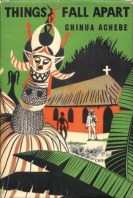
Chinua Achebe, Things fall apart

First edition, from Heinemann (via Wikipedia)

At last I’ve read that classic of African literature, China Achebe’s Things fall apart. It all came about because this year ABC RN’s classics book club is doing Africa. As I’ve been wanting to read this book for a long time, and as my reading group has been making a practice of choosing one ABC RN bookclub book a year, I recommended Things fall apart and – woohoo – they agreed. I am so happy! OK, so I’m easily pleased, but …

The funny thing is that as I started it, I did wonder what all the acclaim was about. Yes, I was finding the writing gorgeous, and yes, I found all the detail about life in the little Igbo village of Umuofia fascinating, but were these enough for its huge reputation? Then, I got to Part 2 – this is a classic three-part book – and the arrival of white man and the missionaries in southeastern Nigeria. The plot started to thicken – but, not just the plot. The whole gorgeous structure of the novel, its complexity and its sophisticated analysis of human society and the colonial imperative started to become clear.

Here, though, is my challenge – a challenge faced by all bloggers writing about much-analysed classics – what can I add? I haven’t actually read any of the analysis, except for my edition’s introduction, so I risk either going over the same old ground, or heading off on a completely irrelevant tangent, but I’m going to try. And how I’m going to try is to talk about a few of the aspects of the book that stood out to me, which, as is my wont, will focus more on how it is written than with the story itself.

However, I will start with a brief synopsis of the story, just in case there are others out there who haven’t read it. The plot is fairly simple: it tells the story of Okonkwo. Born to an “ill-fated”, “lazy and improvident” man, he decided early in life that he would not be like his father. He becomes a powerful and respected “warrior” in his community, one known to be hardworking but who could also be cruel to his family or to anyone who showed weakness. He is determined to be a “man”, to never show a “female” side. Male-female dichotomies are, in fact, an underlying thread in the novel. Whenever things go wrong for him, his response is always aggressive: if you aren’t confronting a situation head on, you are a “woman”. This inflexibility, his unwillingness to waver from his tough-minded course, results in his downfall. He could be seen I think as a classic tragic hero, as the man who could have been great but for a tragic flaw, an inability to be flexible, an unwillingness to marry his two sides.

This idea of two parts is fundamental to how the novel is structured and how the themes are developed – and Achebe conveys it through dichotomies and parallels. There’s the male-female one, which Okonkwo battles within himself. “When did you become a shivering old woman” he asks himself regarding the distress he feels after engaging in a violent act. Later, he is surprised to hear of a husband who consulted his wife before doing anything:

 ‘I thought he was a strong man in his youth.’ ‘He was indeed,’ said Ofoedu. Okonkwo shook his head doubtfully.

But there are other dichotomies, and two, in particular, that I found interesting. One is between  Okonkwo and his friend Obierika. Both are respected men in the village, and both adhere to their traditions and conventions, but Okonkwo, who is “not a man of thought but of action” is so fearful of appearing weak he follows the “laws” rigidly. Obierika on the other hand is more thoughtful:

Obierika was a man who thought about things. When the will of the goddess had been done, he sat down in his obi and mourned his friend’s calamity. Why should a man suffer so grievously for an offence he had committed inadvertently? But although he thought for a long time he found no answer. He was merely led into greater complexities. He remembered his wife’s twin children, whom he had thrown away. What crime had they committed?

A similar dichotomy is set up between two missionaries:

Mr Brown’s successor was the Reverend James Smith, and he was a different kind of man. He condemned openly Mr Brown’s policy of compromise and accommodation. He saw things as black and white. And black was evil. He saw the world as a battlefield in which the children of light were locked in mortal conflict with the sons of darkness.

So, we have dichotomies established within the two cultures he’s describing – the African and colonial/missionary – but these two sets of dichotomies also work as parallels for each other, reflecting the differences, the conflicts in fact, that can occur within both (all) cultures.

Now I get to more uncomfortable ideas. Okonkwo’s tragedy could be seen to mirror Africa’s, but this is a tricky thing to consider. Okonkwo’s flaw we know. Did Africa, likewise, have a flaw or weakness? We criticise colonialism – and surely it is a bad thing, the subjugation of one people by another, the taking of one people’s land by another – and yet … Achebe himself benefited from the education brought by the missionaries, and in Things fall apart he tells us that some Igbo villagers saw positives:

The white man had indeed brought a lunatic religion, but he had also built a trading store and for the first time palm-oil and kernel became things of great price, and much money flowed into Umuofia.

Some even saw positives in the religion.

So, Achebe is not uncritical of either side of the colonial equation – the colonisers and the colonised – but his final point in the novel makes clear his attitude to the colonial project. In the last paragraph we learn that District Commissioner plans to write a book. Its title, “The Pacification of the Primitive Tribes of the Lower Niger”, euphemistically describes the colonisers’ mostly violent/aggressive subjugation of African people as “pacification” and demonstrates an arrogant assumption that a society not like their own is “primitive”. For Achebe, then, the overriding point of Things fall apart is not so much to present the positives and negatives within the two opposing cultures, but to expose the disdain with which the colonisers treated African people, and the way they denigrated African culture.

This is such an honest and provocative book, one that would bear multiple re-readings – like all good classics. Have you read it?

Chinua Achebe
Things fall apart
London: Penguin Classics, 2001 (orig. pub. 1958)
ISBN (e-book): 9780141393964

Kate Jennings, Moral hazard (Review)

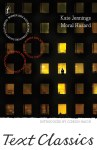
Kate Jennings, Moral HazardHow often do you read a book that connects in some ways with something you’ve recently read or thought about? Kate Jennings’ award-winning Moral hazard, my latest read, links pretty directly to our discussion about autobiographical fiction in my Monday Musings post on Robert Dessaix two weeks ago. Dessaix, you may remember, criticised Garner’s The spare room (and other works) arguing she was just writing her life, but defended his own autobiographical fiction because he changed things around. Garner, though, argues that in her novels she shapes and orders, plays with time, examines motives etc. What is all this about? Why does it matter? The reverse – calling something non-fiction that is in fact fiction – does matter, I think. You all know the cases, I’m sure. But, if a writer draws from his or her life and calls it fiction, does it matter? Really, does it matter? Well, in this case it does matter, because, while Jennings is another of those writers who draws closely from her life, there are parts of the story that could be very tricky, legally, if they were, in fact, “fact”.

I’ve reviewed two of her works here before – Snake, her first work of autobiographical fiction, and Trouble: The evolution of a radical, which she describes as her “fragmented autobiography”. Jennings, like Helen Garner, is a fearless writer, and I love her for it, so when Text Classics published Moral hazard, her second novel, I was ready and waiting.

Moral hazard is about a woman whose husband is diagnosed with Alzheimer’s and who, to obtain the money needed for his care in health-care expensive USA, gets a job as speechwriter for a mid-level investment bank on Wall Street. The wife’s name is Cath (not Kate) and the husband’s name is Bailey (not Bob Cato, the name of Jennings’ husband). Kate Jennings, though, did work as a speechwriter on Wall Street. Fictional Bailey and real Bob are both artists/designers, and both men were diagnosed with Alzheimer’s, but Bailey’s end has a particular drama to suit Jennings’ purpose.

From its very start, in fact, it’s clear that Moral hazard has been carefully written and structured, despite its closeness to Jennings’ life. Take the title, for example, and its pointed word play. Economically, “moral hazard occurs when one person [or organisation] takes more risks because someone else bears the cost of those risks”. Jennings, in the Wall Street component of her novel, explores this very condition with great – should I say scary – clarity. It is particularly interesting to read her description and analysis of escalating greed, because it is set nearly a decade pre-GFC. It’s all there, though, and the cracks were showing even then. For Cath the moral dilemmas are real. Not only does she need to rationalise her personal moral values as a lefty feminist against her financial district job, but she has to be the carer (also decision maker) for her increasingly ill husband. This is complicated care that encompasses not only economic and physical demands, but also emotional, mental and philosophical. And this care also has, not surprisingly, a moral dimension.

The novel (a novella, really) is told in short chapters that alternate, though not rigidly so, between Cath’s life with Bailey and her work life. It is told first person, and Cath tells us, on the first page:

I will tell my story straight as I can, as straight as anyone’s crooked recollections allow. I will tell it in my own voice, although treating myself as another, observed, appeals.

In other words, it’s from life, but there is artifice. The novel opens with this brief introductory chapter, which is followed by a chapter describing her first meeting Mike. He also works at Niedecker Benecke investment bank, and also, like her, is a square peg in a round hole, though he’s been doing it for longer! He becomes somewhat of a teacher to her, as well as a sounding board, and a welcome like-mind.

From this set up, we flash back to Cath, her husband Bailey and his diagnosis, and we don’t return to the bank until Chapter 6. The story continues chronologically following Cath. We watch her work out how to work within the company, and we feel her pain as she tries to manage Bailey as he becomes less and less stable and predictable. Cath chronicles the hedge-fund crisis – the increasing greed, the living on (the belief in) “zero capital and infinite leverage” – in parallel with Bailey’s decline. A true coincidence, perhaps, but a writing choice too.

I loved Jennings’ writing. It’s clear and direct, but has a poetic sensibility. She describes the bank as:

a firm whose ethic was borrowed in equal parts from the Marines, the CIA and Las Vegas. A firm where women were about as welcome as fleas in a sleeping bag.

She describes the financial district, New York’s skyscrapers:

I looked at them and didn’t see architecture. I saw infestations of middle managers, tortuous chains of command, stupor-inducing meetings, ever-widening gyres of e-mail. I saw people scratching up dust like chickens and calling it work. I saw the devil whooping it up.

She sees the New York Fed, after bailing out hedge-funds, behaving “as if afflicted with Alzheimers” sticking with deregulation, letting the industry police itself, despite evidence to the contrary.

Meanwhile, Bailey’s decline is inexorable, he moves from home to an institution. He has a “living will” but it is ignored, so, she writes:

Scar on my soul be damned. He’d asked me to take care of it when the time came. Now I would. Mrs Death.

But far be it from me to spoil Cath’s story – except to say that as well as tackling Wall Street, Jennings also quietly buys into the euthanasia debate.

The good thing about Text Classics, besides their existence and excellent price, is that each classic is accompanied by a commissioned introduction. For Moral hazard it is by sport and business journalist Gideon Haigh. He concludes his introduction, which focuses on the financial aspect of the novel, with the statement that “Modern working life is replete with unpalatable compromises and perverse incentives”. Cath would probably say that this is true of life too. Moral hazard is a rare book in the way it looks not just at our contemporary globalised financial world, but more widely at work, our relationship to it, and the moral choices we make in work and in life. Drawn from life, yes, but a very worthy winner of the 2003 Christina Stead Award for Fiction!

awwchallenge2016Kate Jennings
Moral Hazard
Melbourne: Text Classics, 2015 (orig. pub. 2002)
155pp.
ISBN: 9781922182159

(Review copy courtesy Text Publishing)

Vincenzo Cerami, A very normal man (Review)

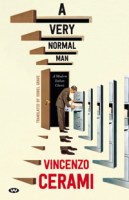
Vincenzo Cerami, A very normal manAnd now for something very different from my recent fare here, a modern Italian classic. Originally published in 1976, A very normal man was, the back cover blurb says, Vincenzo Cerami’s first novel – and it brought him instant acclaim. I can see why. At least, this is the sort of writing that gets me in, but more on that anon.

Now, you may have heard of Cerami (1940-2013). I know I should have, because he was the co-screenwriter on that wonderful 1998 film La Vita è Bella (Life is Beautiful). He was also a poet, commentator and a writer on writing. In other, words a very interesting man! (Couldn’t resist that.)

But now, the book. It is, as you might have realised, a translation, which is always a challenge from my point of view, because I know I’m reading a mediated work. And, as I started this book, I felt it must have represented a very particular challenge because this is a satirical, darkly humorous and deeply ironic work. That must be hard to translate across languages and cultures – and it apparently was, starting with the title. Wakefield Press says on its website that “the complex word play of the Italian title is untranslatable in English; it means literally a very little, very middle-class man”. Does this remind you of Camus’ L’Etranger, and its publication in English as both The stranger and The outsider?

So, who is this very little, very middle-class – or very normal – man? He is Giovanni Vivaldi, living in Rome during the Years of Lead. He’s married, happily enough it seems, with a  20-year-old account-trained son, Mario, of whom he is very proud. He’s been a public servant in the Ministry, the Office for Retirement Pensions, for 40 years, and at the start of the novel he is about to retire. First, however, he wants to get Mario a job in the Ministry. It’s the least he deserves, he believes. Italian novelist Italo Calvino, who apparently negotiated the novel’s publication, also wrote the preface to the original Italian edition. My Wakefield edition’s preface quotes from it:

You would expect a story about office workers to be drab, short on events — the inevitable caricature. Not this one. Extraordinary events abound: a ludicrous initiation ceremony into Freemasonry; an incursion into the savage world of the daily crime columns; revenge that is the stuff of nightmares […] What we see is reminiscent of the precision effects of a magnifying glass angled over the unredeemed ugliness at the heart of civilised society — and over the tenacious lust for living which clings on in a world emptied of meaning.

Hmmm, what more can I say? These excerpts convey a little of the story and the main theme, without giving away too much of the plot. I wouldn’t want to give away any more, but I can talk a little about the character, the style and tone.

“the common sense of an ordinary decent man”

About a quarter of the way through the novel, during his application to become a Freemason, Giovanni is described as having “the common sense of an ordinary decent man”. Sounds lovely doesn’t it? Except that we have already seen quite a bit of not-so-decent behaviour from him, including the very reason he is applying to become a Freemason, which is to obtain favour to help his son beat the civil service exam for the Ministry job. On the first page of the novel, he tells his son that “the sign of a really smart young man is a total focus on career and nothing else. Let the rest of the world go and hang themselves”. On page 2, Giovanni, out fishing with his son, kills a fish in a cruel, violent way. At the beginning of chapter 2, his normal drive to work is described: he’d “deal out vicious abuse to anyone he thought was trying to get in his way, rant and rave against everything and everyone”.  Pretty quickly then, we are clued in to the fact that he is not a very humane man – and yet, he is also presented as a “normal”, responsible family man. He’s (arguably) a good father, a decent husband and a diligent employee.

What happens in the novel is, in fact, shocking, and the way Giovanni responds is even more so, but it is all told in matter-of-fact prose, and this is what I like. I love writing that is integral to the meaning of a work, that is, that isn’t just there to carry the story and ideas. In this case, the calm tone of writing that conveys a grotesque story reinforces the themes of hypocrisy and corruption, of mismatch between the surface and the subterranean (if that makes sense).

The tone might be matter of fact, unemotional, but the imagery leaves us in no doubt as to Cerami’s view of life in 1970s Rome:

The city had all the signs of a Sunday: greasy roller blinds down on the shops; apartments with their entrances yawning open mockingly; parked cars lining the footpaths like the embalmed corpses of family pets; the slow, tentative caterpiller-weaving of empty trams. Against an unbroken infinity of apartment blocks that crossed the city from end to end, branching off in every direction, rows of bristles on a hairbrush for a scabby head.

Cerami mixes up descriptions of mundane detail (“he got his raincoat, grabbed his car keys … found himself a clean handkerchief from his sock drawer”) with descriptions that stop you in your tracks:

In person: young maybe Mario’s age, except that this one reminded you of rusted-out tools and coffee dregs.

At times there is a sense of the mock-heroic: Giovanni “sprang into the saddle of his charger”, that is, his Fiat 850. And there is plenty of humour (dark and otherwise), such as when Giovanni, in a police station, tries various Freemason secret signals, to no avail. Giovanni thinks he’s “mastered the art of living” but his view of living is not an appealing one.

For all this, there are moments when he seems human – he is a loving father and responsible husband – and can tug, albeit briefly, at our sympathy. Overall though, the novel is a devastating indictment of middle-class life that is superficial, self-centred and morally corrupt in a society which seems to be not much better. A fascinating read.

Vincenzo Cerami
A very normal man
Translated by Isobel Grave
Mile End: Wakefield Press, 2015
117pp.
ISBN: 9781743053713

(Review copy courtesy Wakefield Press)

Monday musings on Australian literature: Little books

Christmas is coming and those stockings are wanting inspiration. I know I’m jumping the gun a little in terms of the traditional round of Christmas book talk, but it’s never too early to think of book gifts, and I’ve been wanting to write about little book initiatives for a while now. I can’t wait any longer!

Do you remember those Penguin 60s, the little books that Penguin published twenty years ago, in 1995, to celebrate its 60th anniversary? The books were around 80 pages and, before the days of smart phones, they were handy little items to carry around for those reading moments that suddenly open up out of the blue. I loved them, and still own several. I particularly remember reading Edith Wharton’s Madame de Treymes and Jean Rhys’ Let them call it Jazz. They were so popular that they spawned – at least I think it was the Penguin initiative that came first – similar small books by other publishers like Bloomsbury. I have some of those too. Anyhow, for its 80th birthday this year, Penguin has published a Little Black Classics series – and again they have proved successful, according, at least to The Guardian, which concluded that, even in this era of the e-book, it “proves people like their reading matter cheap… and portable”.

I hope they’re right about this because a few Australian publishers are producing their own “little” books, and I thought I’d share them here, as I don’t think they have the same visibility as Penguin – funnily enough!

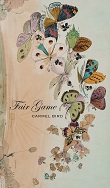
FL Smalls 7: Carmel Bird's Fair Game

FL Smalls 7: Carmel Bird’s Fair Game

FL Smalls  are published by a small independent publisher in Braidwood about an hour’s drive away from me, Finlay Lloyd. Finlay Lloyd describes the project as

an ongoing project where we give its authors sixty pages to create a book. Published together in groups, the first five Smalls came out in 2013, and now we have commissioned another five to be released in early September this year, shoulder to shoulder, as an offering of vital writing by Australian authors.

You might have picked up a difference here between these and Penguin’s little books. FL Smalls are not classics, and are not reissues of works published elsewhere. They are commissioned, meaning of course that they provide a publishing opportunity for living writers. I love that. They include fiction, non-fiction, poetry, graphic works. I have the recent set, kindly sent to me by Finlay Lloyd. They are priced at $10 each. Reviews will start appearing here, soon. Meanwhile, you can check out Lisa at ANZLitLovers’ discussion of them.

Short Blacks – isn’t that a great name – are published by another Australian independent publisher, Black Inc. They describe the project as being

gems of recent Australian writing – brisk reads that quicken the pulse and stimulate the mind.

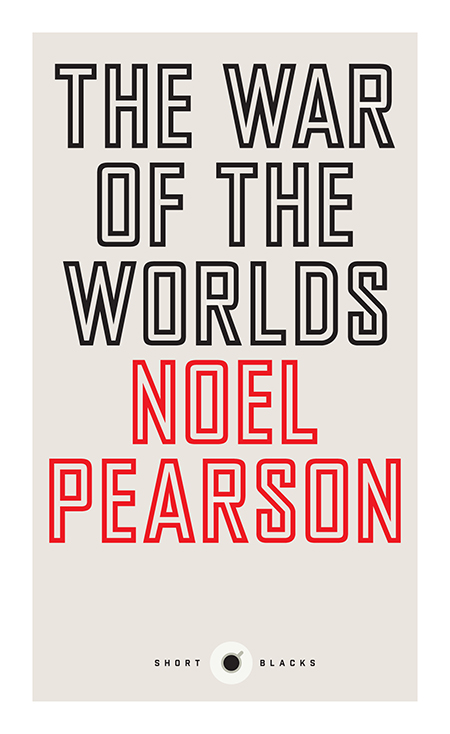
Noel Pearson in Short Blacks

Noel Pearson in Short Blacks

These then have been published before – but they are not classics. They are recent works, and seem to be non-fiction. They include Robyn Davidson’s No fixed address which was originally published by Black Inc as a Quarterly Essay, David Malouf’s One day about ANZAC Day, and Noel Pearson’s cleverly titled The war of the worlds about the “colonial project” and genocide in Australia. I bought a couple of these from the wonderful, independent Hobart Bookshop on my recent visit to Tasmania. Twelve have been published and it’s not clear from the website whether it’s an ongoing project. Like FL Smalls they are appealingly, if more simply, designed, and cost only $6.99 each. What a bargain.

Viva La Novella is a slightly different project. An initiative of the online publisher Seizure Inc, it is a prize that was established in 2012

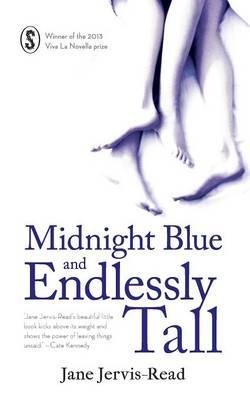
Jane Jervis-Read, Midnight blue and endlesslly tall

First Viva La Novella Winner

to celebrate and promote short novels – because we like them and believe some of the greatest works in the English language are actually novellas.

I wouldn’t argue with that! Since 2012, Seizure has, with the support of the Copyright Agency Cultural Fund, expanded the award to produce more than one “winner” each year. Like FL Smalls, these are new works, but unlike the Smalls, they are all fiction. Also, unlike the previous two initiatives they are not a standard size, due to the wide the definition of a novella. For Seizure, the range is 20–50,000 words, which means that some books some books are 100 or so pages while others might be 190.  I’ve included them here, however, because they are priced at the cheaper end of the Australian paperback market, $14.95 each, and it is a project dedicated to the shorter book. I have bought one of the 2015 winners, so you will see a review of that too in the coming weeks or months.

Do you like little books? I’d love to hear if you have any favourites – and of any initiatives, in Australia or elsewhere, that you’ve come across.

Morris Lurie, Hergesheimer in the present tense (Review)

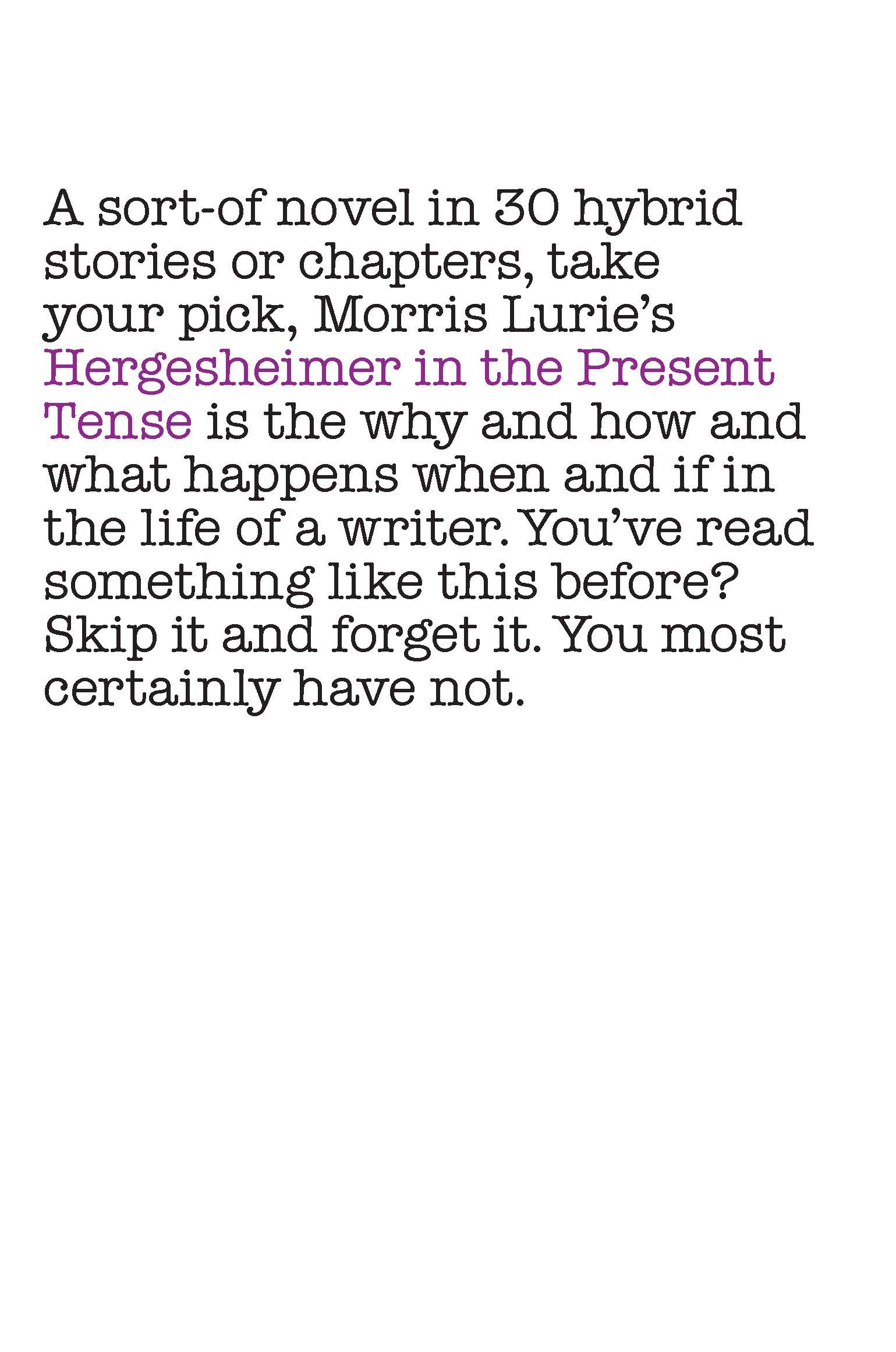
Morris Lurie, Hergesheimer in the present tense Book cover

Courtesy: Hybrid Publishers

Well, well, well, I got to the end of Morris Lurie’s quirky last novel (if that’s what it is), Hergesheimer in the present tense, and laughed. The final paragraph, which seemed to come out of left field, concerns Dostoyevsky’s contract with a “scurrilous publisher” to deliver a novel – The gambler – on an impossible schedule. It resulted in his hiring the stenographer Anna Snitkina, whom he later married. I laughed because my reading group’s next book is Dostoyevsky’s Crime and punishment (the book published immediately prior to The gambler) and because this little anecdote about Dostoevsky manages to bring together in one paragraph the main themes of the book – the writer’s life, relationships with publishers, and finding love.

Where to start? Perhaps with my little aside in that first sentence regarding the form of this “novel”. This book has a very plain cover. In fact, it simply comprises some text on plain white, as you can see from the book cover image. And this text is right: I don’t think I have ever read anything quite like this before. But, I did enjoy it, because this sort of challenge to my reading brain appeals to me, particularly when the challenge involves a writer writing about the writer’s life. Delicious. When I say, though, that the book is about “the writer’s life”, I mean that in its broadest sense. It’s about life lived by the writer – his growing up, his women, his children, as well as the specific challenges of being a writer. This brings me back to the main challenge, its form: 30 little vignettes that criss-cross time within and between each other. There is probably an over-riding chronological arc to the narrative, though this is not particularly obvious, partly due to flashbacks within the chapters and partly because there’s not really a plot. The voice is third person, with the occasional lapse (is it a lapse?) into first or even second person.

This is not Lurie’s first book about Hergesheimer. The first was Hergesheimer hangs in, which comprises 26 chapters and was published in 2011. My curiosity sparked, I found a review of it in the Australian Book Review and discovered that there was a “real” Hergesheimer, who, Lurie writes, was

an American writer of great popularity who fell from favour, couldn’t understand it, didn’t know why, bellyached about it endlessly to his pal Mencken, refused to go gently, if you like, into that good night, is quite forgotten now. I appropriated his name to pass unnoticed, as it were, among you. (Hergesheimer hangs in)

Even Wikipedia knows about him! Him, the “real” Hergesheimer, I mean. We don’t need to know this allusion, of course, to understand the book, but it adds a playful layer to understanding our Hergesheimer, because he too is a writer who has had his successes but who is now struggling to be appreciated, to be recognised in the long-term.

As soon as I finished the book, I checked Lurie’s bibliography and discovered what I was expecting: his twenty or so books were published by around ten different publishers. No wonder Hergesheimer, the fictional one I mean, is generally unhappy with publishers*. It starts in the first story, “Hergesheimer slaps leather”, in which he and another writer discuss publishers – publishers not entering their books for prizes, publishers not promoting their books, and so on. This story, told in Lurie’s linguistically playful and rhythmic style, got me right in. Here is the opening paragraph:

Hergesheimer, found suddenly footloose in the city this sunny midmorning, hears called out from nowhere his name. To stop. To turn. To scan. To see. To spot, waving and weaving in rapid approach through the intervening traffic, McCall, an acquaintance at best, if even exactly that, certainly not bosomy, nothing buddyish, warmth to warmth, heart to heart, nevertheless, as Hergesheimer also, similarly in or of the writing trade.

‘Tom’, greets him Hergesheimer, the safety of pavement by McCall now achieved.

I love such writing – active, compelling, demanding the reader’s full attention. And I found it particularly interesting to read so soon after Eimear McBride’s A girl is a half-formed thing with her broken syntax and run-along sentences. Very different writers, very different concerns, but both subverting the “rules” to create honest, unforgettable characters.

Anyhow, the stories/chapters continue. We see Hergesheimer giving writer’s talks in schools, attending conferences, being interviewed, winning a prize, finding a new publisher, and so on. Life is never simple, and rarely are his experiences unequivocally triumphant. His dreams of great success (accompanied by wealth and acclaim) don’t come to fruition. In “Hergesheimer prompts the essential question” a schoolchild doesn’t believe he’s a real writer because “Stories are supposed to have love in them … Where’s the love in yours?” And in the title story, he discovers that prizes don’t always mean what you think they do. Some stories are laugh-out-loud funny, such as his battle to save his typewriter in an increasingly electronic world (“Hergesheimer embraces the new technology”). But mostly the levity has a self-deprecating, often sardonic edge, because, as we know, concerns about publishing, editing, prizes, promotion, plagiarism, are real. Lurie gives them flesh in the form of an experienced but now mostly defeated writer, “a lumbering dinosaur, defeated, out of step with the modern world”, a world where, for example, plagiarism can be explained away as “collage”, “montage”, or “homage”!

Hergesheimer, though, is not only a writer. He’s a son, father, failed husband, lover and friend, so we see him, for example, facing the death of his daughter (“The gift of strength”), being sick, dealing with a landlord, and trying to maintain a shaky relationship with a new woman, the indefatigable Valerie. There’s pathos here, like in his writing life, as he shambles from experience to experience.

Because of its disjointed (though not disconnected) form, you can read this book quickly or slowly. With most chapters running to around five pages, it’s a perfect book for busy times, like now, when reading opportunities have to be snatched amongst the Christmas madness. Lurie, sadly, died within weeks of its publication. Reading it now would be the perfect way to honour his memory – but reading it only for that reason would be selling it short. Far better to read it for its verbal gymnastics, self-deprecating humour and, most of all, for its awareness of the absurdity of life’s endeavours.

Lisa at ANZLitLovers also read and enjoyed this book.

Morris Lurie
Hergesheimer in the present tense
Melbourne: Hybrid Publishers, 2014
190pp.
ISBN: 9781925000337

(Review copy supplied by Hybrid Publishers)

* It reminded me of poet-novelist Alan Gould, who came to my book group and spoke specifically about the difficulty of finding publishers.

Nigel Featherstone, The beach volcano (Review)

Courtesy: Blemish Books

Courtesy: Blemish Books

Back in 2010, Featherstone spent a month, on a writer’s retreat, at Kingsbridge Gatekeeper’s in Cataract Gorge, Launceston. He writes on his blog that he left Launceston with sketches for three novellas. The beach volcano is the last of these, the other two being Fall on me (my review) and I’m ready now (my review). Before I talk about the novella, though, I must compliment Blemish Books on the production of these three books. They are gorgeous – they have appealing, stylish cover designs; they are a perfect size, fall open easily and have lovely, clear print; and together they look like a set. Well done Blemish, I say.

Now, to the book itself. Featherstone has appeared a few times on this blog, via my reviews of the first two novellas, a guest post in 2012, and a five-part interview that I ran over the summer of 2012-2013 when the magazine it was destined for, Wet Ink, folded. Through all of these, one particular idea or theme has been consistent – and it is, as he formally stated in his guest post, that “family is the guts of the contemporary Australian story”. He mentioned several writers, such as Kate Grenville, Craig Silvey and Gillian Mears, for whom this is clearly true, and then turned to his own work:

My main characters are usually men and women (always a good start!) who have children, who want to be parents, who struggle to cope, who feel the pressure of internal and external expectation, who fail and fall into a heap but pat themselves down and have another crack at it.

And so, Fall on me centres on father and teenage son, Lou and Luke, while I’m ready now is about a fifty-something mother and thirty-year old son. In The beach volcano, we’ve moved on again in age. The father here is 80 years old, and the son 44. I’m not sure whether this age progression drove the order in which the books have been published, but it does have a certain neatness. Luke, the teenager in the first book, is pretty wise for his age but he is still a young man sorting out his identity and his separation from his father. Thirty-year-old Gordon, on the other hand, is confronting turning 30 and, not comfortable with what this implies, embarks on a risky “Year of living ridiculously”. This brings us to 44-year-old Canning (aka successful rock musician Mick Dark) who has returned home for the first time since he was 17 to celebrate his father’s 80th birthday. He has come primarily because he wants to discover the “full” truth about a story told to him by his aunt, the estranged sister of his father. I should add here, in case I’ve given the wrong impression, that the first two books don’t focus solely on the son, whereas The beach volcano is very definitely Canning’s story.

The thing about Featherstone’s books – at least these three – is that there’s potential in each for high drama, or, to put it more crudely, for violence and/or death. But, Featherstone is not a writer of crime or thrillers. He’s interested in family and human relationships, and so, while dramatic things happen, the drama never takes over the story. In The beach volcano, terrible things involving abuse of boys by men have happened before the novel starts. They resulted in family secrets to do with a false alibi – and who knows what else, we wonder as we read. This is what Canning has come home to discover.

The story is told, first person, through a traditional linear narrative, with flashbacks to fill us in on relevant background. It starts with Canning’s arrival on Friday, late, for the pre-birthday dinner for the immediate family, and continues to the end of the weekend when all has been revealed, to Canning at least, and he is able to make some decisions about where to from here. Throughout the weekend, Canning has one-on-one conversations with different members of his family, his parents, his two older sisters, a brother-in-law, and a nephew. We to-and-fro between love and hate, welcome and aggression, as this family tries to keep conflict at bay, while threatened by a secret that they refuse to openly confront. Family secrets, gotta love them! But, Canning wants truthful relationships with his family now:

I’d come to Sydney to tell the truth, but it was important to be selective about the truth, and to have good timing in the telling, to be cautious. Because the truth, I thought, was a disturbance. The truth took things apart and put them back together in a different but better shape. But what exactly was a better shape?

This is the question Canning needs to answer, and is why he bides his time. He needs (and wants) the truth to be a positive force, not a destructive or simply life-sustaining one.

Featherstone’s language is clear and evocative, with lovely descriptions of coastal Sydney and realistic dialogue. Canning’s voice feels genuine, if a little inclined at times to over-explain. The “beach volcano” of the title works on both the literal level as an activity that Canning and his father share, and that he then wants to pass onto to his newly-met nephew, and as a metaphor for simmering tensions that threaten to erupt. You’ll have to read the book though if you want to know what erupts and how. It is, in its measured way, quite the page-turner.

In a sense, this is a reworking of the prodigal son story, except that in this version the son returns as a success and is, perhaps, the one who extends the greatest generosity. Like the original, it is about love and acceptance, but has the added theme – one that Featherstone explores in the three novellas – of the need to face the past before you can truly progress into your future.

The beach volcano makes a fitting conclusion to Featherstone’s novella set. I have enjoyed the time I’ve spent with his unique but real families and look forward to seeing what he comes up with next.

Nigel Featherstone
The beach volcano
Canberra: Blemish Books, 2014
140pp
ISBN: 9780980755695

(Review copy courtesy Blemish Books)

Tara June Winch, Swallow the air (Review for Indigenous Literature Week)

Tara June Winch

Tara June Winch (Courtesy: Friend of subject, via Wikipedia, using CC-BY-SA 3.0)

Tara June Winch’s Swallow the air is another book that has been languishing too long on my TBR pile, though not as long as Sara Dowse’s Schemetime. For Swallow the air, it was a case of third time lucky, because this was the third year I planned to read it for ANZLitLovers Indigenous Literature Week. Like the proverbial boomerang, it kept coming back, saying “pick me!” Finally, I did.

Winner of the 2004 David Unaipon Award for unpublished indigenous writers, Swallow the air made quite a splash when it was published in 2006, winning or being shortlisted for many of Australia’s major literary awards. (See Tara June Winch’s Wikipedia entry). I believe Winch is working on another novel, but it hasn’t appeared yet.

Now, though, to the book. The first thing to confront the reader is its form. It looks and even reads a little like a collection of short stories*, but it can be read as a novella. There is a narrative trajectory that takes us from the devastating death of narrator May Gibson’s mother, when May was around 9 years old, to when she’s around 15 years old and has made some sense of her self, her past, her people. May’s mother is Wiradjuri, her father English. At the novel’s opening, she is living in coastal Wollongong, which is not her mother’s country, in a single-parent household with her mother and her brother, Billy, who has a different and indigenous father. Absent fathers are, I should say, disproportionately common in indigenous families.

In fact, one of the impressive things about this debut novel is how subtly, but clearly, Winch weaves through it many of the issues facing indigenous people and communities. Poverty, loss of connection to country, the stolen generations, mining and land rights, alcoholism, drug addiction, racism, rape, child abuse by the church, imprisonment and the tent embassy are among the concerns she touches on during May’s journey. Listing them here makes it sound like a political “ideas” novel but, while Swallow the air is “political” in the way that most indigenous writing can’t help but be, its centre is a searching heart, for May has been cast adrift by the suicide of her mother. Life, which was tenuous anyhow, becomes impossible to hold together as her brother and aunt, both loving, struggle with their own pain.

This is where I become a little uncomfortable as a non-indigenous person making a generalisation about indigenous literature, but I’m going to do it anyhow, because I think I’m on firm ground. I’m talking about story-telling and what I understand to be its intrinsic role in indigenous culture. It imparts – or can do – a different flavour to the writing. Marie Munkara’s David Unaipon Award winning Every secret thing (my review) has some similarities in form to Swallow the air, and covers some similar thematic territory, but is very different in tone. Munkara’s novel also presents as a bunch of stories, with a uniting narrative thread. Swallow the air is more subtle, but nonetheless it’s the idea of stories that underpins the narrative.

What particularly impressed me about Winch’s writing is the way she manages tone and structures her story. She understands the Shakespearean imperative to offer some light after dark. For example, there’s a lovely little chapter/story called “Wantok” about family closeness which occurs after a story about a difficult work experience. In another situation, with just one word at the end of a story (“Mission”) – “Seemed [my emphasis] all so perfect, so right” – she prepares us for the opposite in the next (“Country”).

This flow – with shifts in tone that are sometimes subtle, sometimes dramatic, and with a narrative that is mostly linear but with the occasional flashback – kept me reading and engaged until the end. As did the writing itself. It’s deliciously poetic. Sometimes it is tight and spare, as in:

I do not cry, my eyes are hardened, like honey-comb, like toffee. Brittle, crumbling sugar. He puts his hand out toward me; we shake hands, a pact that I won’t be here digging up his past when he gets back.

And I’m not.

And in this description of life in the city: “Suits and handbags begin to fill the emptiness of the morning”. Other times it is gorgeously lyrical (a review buzz word, I know, but sometimes there’s no other word):

The river sleeps, nascent of limpid green, tree bones of spirit people, arms stretched out and screaming. And at their fingertips claws of blue bonnets, sulphur-crested cockatoos and the erratic dips and weaves of wild galahs, grapefruit pink and ghost grey splash the sky.

But back now to the story. As May makes her journey, we meet many characters – her brother, aunt, women like Joyce who care for her but also know when to push her on, men with whom she hitchhikes, to name a few. None of these characters are developed to any degree, but we learn what we need to know about them by how they relate to May. Most are kind, generous, nurturing. May’s journey, in other words, is not challenged so much by human barriers, but by emotional, social, political and historical ones. It is a generous thing that when she starts to understand her place, it’s an inclusive understanding, one that encompasses all of us who occupy this land:

And it all makes sense to me now. Issy’s drawing in the sand, boundaries between the land and the water, us, we come from the sky and the earth and we go back to the sky and the earth. This land is belonging, all of it for all of us.

However, while May comes to a better understanding of the land and her relationship to it, there is no easy resolution to the ongoing struggle of living in a place in which there is still “a big missing hole” created by the loss of connection to culture. It will take a long time to refill that hole, if indeed it can be done, but books like this will help communicate just what it means, and how it feels, to be so disconnected.

awwchallenge2014Tara June Winch
Swallow the air
St Lucia: UQP, 2006
198pp.
ISBN: 9780702235214

* One chapter/story, “Cloud busting” was published in Best Australian Stories 2005.