Monday musings on Australian literature: Author blogs on the publishing journey

Most readers, not to mention aspiring authors, love hearing about the writing and publishing process authors go through. What inspired their book? How did they go about writing it and were there any hiccoughs along the way? How hard was it to get an agent and/or publisher? What role did the publisher/editor have in shaping the final product? And, once the book is out, how did the marketing/promotion journey go? How did they feel about reviews, positive and negative? These sorts of issues are often covered in book launches, and on panels and “in conversation” events at writers’ festivals, but some writers go a step further and share them via their personal blogs.

So, today, I’ve decided to share a select few of these, given I can’t possibly capture them all (even if I knew them all, or could remember all those I’ve come across!) All these authors have had books published, and all have written more posts on writing than the posts I’m featuring here. In other words, I’m brazenly inviting you to explore their blogs beyond the posts I’m highlighting below.

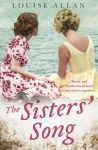
Book coverLouise Allan

Louise, whose debut novel The sisters’ song was published in 2018, has a series on her blog called Writers in the Attic. Here she publishes guest posts from Australian authors on what it’s like to be an author. Her guests include authors well-known to me like Heather Rose (A few thoughts about writing), Favel Parrett (When fiction becomes truth), and Robyn Cadwallader (The angel among the chaos). Introducing Robyn’s post, Louise writes:

I’m always deeply grateful to the writers who contribute to Writers in the Attic. Their words never fail to give me something to think about, or bestow a nugget of wisdom or just make me feel less lonely on this torturous journey to a novel.

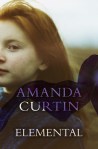
Book coverAmanda Curtin

Amanda, like Louise (above) and Annabel (below), is a Western Australian writer, and has published a few books, including novels Elemental and The sinkings. She has a couple of special series of posts about writing on her blog, looking up/looking down. One is called Writers ask writers (with topics like early inspirations and tools of the trade), and the other is 2, 2 and 2 (writers + new books) in which writers discuss two things about each of three aspects or ideas relevant to their new book. Two of these aspects are set – things that inspired their book and places connected with it – while the third is chosen by the author. So, for example, Brooke Davis, writing about her novel Lost and found (my review) chose 2 of her favourite secondary characters in her book, while Jenny Ackland talking about The secret son (my review) chose 2 favourite things connect with her book.

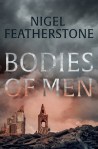
Nigel Featherstone, Bodies of menNigel Featherstone

Local author Nigel has been documenting his writing life on and off since 2009 in his creatively named blog, Under the Counter or a Flutter in the Dovecote. However, he has written a special series documenting the course of his latest novel, Bodies of men (my review). The series, called Diary of bodies, takes us from its original inspiration to his feelings about reviews and, woo hoo, being shortlisted for an award. Nigel, like many of the authors in this post, shares not only the practical, factual things about writing and publishing his book, but also his emotional journey. Nigel, a local author, has appeared several times on my blog.

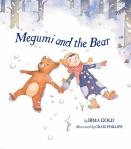
Irma Gold Craig Phillips Megumi and the bear book coverIrma Gold

Irma is also local author who has appeared several times on my blog. She is a professional freelance editor who also teaches editing. She has edited an anthology, and has had a collection of short stories and children’s picture books published. She discusses all this, and many other topics related to the writer’s life on her blog. Like some of the other writers listed here, she has included in some of these posts input from other writers, such as this post on rejections, in which Anna Spargo-Ryan, Sheryl Gwyther and Ben Hobson discuss their feelings about rejections. Hobson, author of To become a whale, writes:

It sucks. But I’m saying to you: you can persevere. You’re a writer, damn it. Get off the floor and clench your fists and edit and send it out once more. You can endure. You are being refined. Collect rejections like UFC fighters collect scars; each one of those things is a mark that has created this warrior you’re becoming. Be proud. And send it out again.

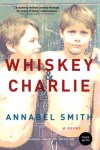
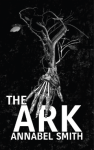
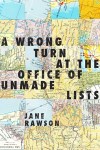
Annabel Smith and Jane Rawson

Annabel Smith (from Perth) and Jane Rawson (from Melbourne) have both appeared on this blog before (see Annabel and Jane). Together, they created in 2017 a series of posts they titled What to expect, which they ran on both their blogs, Annabel and Jane. Their aim was to “dish the dirt on what happens just before, during and after your book is released”. In these posts, Annabel and Jane give their opinion – on, say, prizes or book launches – and then, mostly, also invite another author or two to contribute.

Annabel is a member of the Writers Ask Writers series of posts that Amanda also posts. She also has an Author Q&A series in which she asks writers “to answer some questions about writing and publication” and a series on How Writers Earn Money.

Book coverMichelle Scott Tucker

Michelle, like Nigel, has maintained a general litblog for many years. However, also like Nigel, she has a specific series of posts focused on her biography, Elizabeth Macarthur: A life at the edge of the world (my review). In this series, she shares both her writing and publishing journey and her post-publication experiences and events, including being shortlisted for awards.

How generous and open-hearted are these writers to share their knowledge, and to go to so much trouble to do so. I dips me lid to them. But, they are just a start. Many other authors have blogs too, offering us all sorts of delights. I plan to share more of them during 2020.

Have you read any of the blogs, or blogs like them? If so, do you enjoy them and why?

Michelle Scott Tucker, Elizabeth Macarthur: A life at the edge of the world (#BookReview)

Michelle Scott Tucker, Elizabeth MacarthurThere’s something special about reading a good, engaging history – and this is how I’d describe debut author Michelle Scott Tucker’s biography Elizabeth Macarthur: A life at the edge of the world. There are, in fact, three prongs to my statement, namely, it is history, it is good history, and it is engaging history. I plan to tease out each of these in my post.

First though, a bit about Elizabeth Macarthur, particularly for non-Australians who may never have heard of her. She arrived in Australia on the Second Fleet in 1790, at the age of 23, with her husband John Macarthur who had an army commission with the New South Wales Corps. Their aim was for John to gain a promotion, and then return to England. However, they soon started making their mark in the new colony as farmers – including pioneering the Australian wool industry – and Elizabeth never did return to England, though John did twice. The first time (1801 to 1805) was to stand trial over a duel with Colonel Paterson, and the second (1809 to 1817) to stand trial again, this time for his role in the rebellion against Governor Bligh. Now, have you noticed those dates? Four years away and then eight years. So, who ran the famous pioneer farming enterprise? Yes, Elizabeth of course. It was partly to correct the longstanding image of Elizabeth as helpmeet to her husband that inspired Tucker to write this biography.

Now, my three prongs, starting with that it is history. This is easy to explain. In form this is a biography, but like most biographies of historical figures it also operates as history, because the reason it has been written, the reason we are interested, is the subject’s role in an historical period. This is somewhat different from literary biographies which don’t necessarily engage with wider historical issues relating to the subject, though you could argue, I suppose, that all biographies are history. I’m good, you’ve probably learnt by now, at this on-the-one-hand-but-then-again-on-the-other sort of argument! Still, the story of Elizabeth Macarthur is ingrained in the history of the early British settlement of Australia.

Next, that it is good history. Now, I readily admit that I’m not a trained historian. I did a little history at university – in fact just one subject on historiography – but I’m interested in history and like to read it when I can. So, what do I mean by “good history”? I mean that the history is, or at least appears to my lay eye, to be trustworthy. For it to appear this way, it needs to be well-researched, well-documented and well-presented. And this, Elizabeth Macarthur is. That it is well-researched is evidenced by the extensive bibliography containing significant primary and secondary sources, many of which I am aware and know to be authoritative. That it is well-documented is evidenced not only by this bibliography, but by the comprehensive, but unobtrusive end-noting. Very few facts that I wanted to check were not supported by a source. I read this book with a bookmark at the end-notes so I could easily check sources (or additional explanatory notes), which I did fairly frequently, not because I didn’t trust Tucker but because I was interested to know where she’d got her information. As for the presentation, this is also excellent with evocatively titled chapters, each headed with a quote, usually from Elizabeth or John’s own writings; the detailed index and the use of end-notes rather than foot-notes; and the sensibly selected and ordered pics.

These aren’t all that make it good history, though, because of course the “story” needs to be well-argued, and it is. Tucker marshalls the facts together clearly and logically to prove Elizabeth’s significant role in the family’s farming, but what I particularly liked was the way she handles her sources, and, in particular, the gaps, because of course there are gaps. There are, for example, letters not kept, information not documented in private journals, personal conversations not, of course, recorded. Tucker is careful to flag these, with words like “probably” and “maybe”, making it clear when she is presenting her own assessment of the situation. On one occasion when the frequently disputatious John Macarthur sends off a messenger with an inflammatory letter, that messenger is waylaid by his son Edward. Who sent the son, Tucker asks before exploring the possibilities, deciding in the end:

No. The most likely source is Elizabeth Macarthur, once more trying to mitigate her husband’s wilder misjudgements. But we have to imagine it: a hushed yet heated conversation with Edward to send him flying out after Oakes and then a vain attempt to placate and soothe John …

And finally, the last prong – that it is engaging history. It’s engaging partly because of the subject. Elizabeth Macarthur is an interesting woman, who lived long, achieved much, and left enough documentation for a story about her to be told. She was a woman of her times, as Tucker makes clear. She was aware of her social status, and wasn’t much into “good works” like some of the other leading women of the colony, but she and John were known to treat employees well. She was well-respected in the colony, and many times played conciliatory roles, but she and John were always driven, in the end, by money. And, of course, she was an excellent farm manager.

It’s also engaging history because of the writing. This story has a large cast. Elizabeth had seven children, for a start, but also, she lived in the colony for 60 years, so knew a large number of the often-revolving movers and shakers of colonial society. Tucker manages to keep the story moving despite all this, using some of the techniques more often found in fiction, including foreshadowing, clear character development, and succinct but evocative turns of phrase:

Yet for all their emphasis on the rewards of heaven, the gentlefolk of Georgian England maintained a steely gaze on the rewards of this earthly life.

AND

When the court sat at 10am the scene was more circus than circumspect.

Why, though, should we read this now? Well, there are several reasons, the main one being to re-balance the historical record to properly recognise women’s roles. There’s also the discussion about indigenous relationships in the colony, with Tucker chronicling the Macarthurs’ early good relations with local people followed by their changing attitudes as “their” land and livelihood began to be threatened. There’s John Macarthur’s mental health and the role it played in his behaviour (and thus history.) Did he suffer, for example, from bipolar disorder as Tucker and others suggest? And then, there’s the insight Tucker provides into the daily life of the early colony – the relationships in such a close community, the economic ups and downs, the communication challenges caused by distance from England, and so on. If you like social history, there’s much here for you.

I did laugh at Tucker’s concluding comments that Elizabeth Macarthur, born 9 years before Jane Austen, is “a real-life Elizabeth Bennet who married a Wickham, instead of a Darcy – albeit one who loved her as much as he was able.” I’m not sure I agree, but I applaud her for taking on the Austen fans of the world this way!

Meanwhile, for other bloggers’ reviews of this book, do check out Lisa’s (ANZLitLovers) and Bill’s (The Australian Legend).

AWW Badge 2018Michelle Scott Tucker
Elizabeth Macarthur: A life at the edge of the world
Melbourne: Text Publishing, 2018
xxxpp.
ISBN:

(Review copy courtesy Text Publishing)