In its original guise, I would not have been able to attend Writing war: A panel discussion featuring Nigel Featherstone, Melanie Myers and Simon Cleary because it was going to be held in Brisbane’s Avid Readers bookstore. However, in one of those lucky COVID-19 silver linings, the discussion was transformed into an online ZOOM discussion and, hey presto, I could attend for the princely sum of $5. Having read Featherstone’s Bodies of men (my review) and Myers’ Meet me at Lennon’s (my review), and being interested in Cleary’s The war artist, it was an opportunity too good to miss.
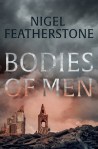
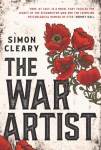
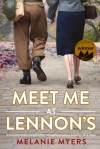
Convenor, and author herself, Cass Moriarty, started by introducing the authors and asking them to talk about their novels, particularly in terms of their inspiration or intention:
- Nigel Featherstone talked about wanting to explore different expressions of masculinity, particularly as expressed under extreme military pressure. He wanted to look beyond the ANZAC mantra that all men are brave, all do remarkable things, and so on. Can being a deserter, he wondered, be an act of bravery?
- Simon Cleary described his Afghanistan War novel as a homecoming story, as being about soldiers finding a place in their home countries, as looking at the cost to the community of sending people to war.
- Melanie Myers introduced a new genre (or sub-genre) to me, the “ensemble home-front novel”, which, she said, was coined by writer and educator, William Hatherell. It encompasses books like Come in spinner. Her novel is primarily about women’s experience of WW2.
On the challenge of writing about past wars with nuance
Featherstone immediately turned to the ANZAC idea, asking how do we talk about ANZAC without being kicked out of the country, and how is it that we have created a day that we can’t critique. He referred to Peter Stanley’s history Bad characters, which is about soldiers who were labelled as “bad”. Stanley’s book counterbalances the traditional ANZAC mantra, and taught him that bravery and cowardice can have many meanings.
Cleary liked the word coined by Featherstone for ANZAC, its “uncriticability”! He spoke of something he returned to a few times during the evening, the idea that sending people to war is political act. It means, he said, that writing about war is also a political act. Too many war novels focus on glory, resulting in the more human facets, including genuine human trauma, often being missing.
On that tricky question of the authority to write about war, when you haven’t personally experienced it
Myers talked about the challenge of being true to the times and values you are writing about, while being sensitive to those of your own era. Writing about African-Americans in Brisbane during World War 2, for example, she had to deal with the “N-word”.
Featherstone confronted the question more head on, asking “who gets to tell what story?” He did question his ability to write about war but, essentially, he believes “writers can do whatever they want”, with the proviso that they be prepared to talk about it. However, he also, a little anxiously but generously, shared his experience of inherited trauma (epigenetics), through his grandfather’s experience of World War 1.
Cleary noted that authority can come from various sources – personal experience, the novelist’s imagination and creative experience, and, returning to that idea of war being “a deeply political act”, he argued that “every citizen has a right to an opinion” about war.
Regular readers here will know that I agree, philosophically, with Featherstone, including that authors need to be prepared to discuss their choices. I also liked Cleary’s argument.
On the de rigueur question of research
Myers explained some of her research process, saying that she starts with secondary sources, before looking at primary ones, and that in the case of this novel, she also walked the city imagining how it was, how it looked.
Cleary said that it was important to know the details – even those not actually needed in the work – to help avoid clangers. He also said – and I loved this – that writing novels is an excuse for learning stuff!
There was discussion about the impact of war on the social and economic opportunities for women, on values and prejudices, on the bonds forged during war, and on the burdens of war. Featherstone spoke of the physical and emotional scars of war. He pointed to a book titled We were there which reports on a survey of 3,700 World War 2 soldiers. A significant lesson from this book was that there can be multiple perspectives. He exemplified this by sharing a returned soldier’s view of his life versus the wife’s rather different view!
On should you write about war and love
Featherstone reiterated his position that there are no “shoulds” and that, anyhow, he wanted to write about love as a force of liberation. Love, he said, is what gets us through. Cleary noted that being in the proximity of death can make people feel vulnerable and therefore open to new things, and that these are the stuff of writing about war. However, he also said that war and gore can be depressing, and that art and love can provide useful “leavening”.
On whether war fiction is a genre
Myers answered that she specifically wrote in the “ensemble home-front genre” while Cleary didn’t see his book as being in the war novel tradition, but as simply being a story about humans dealing with an issue.
And on whether there are any parallels re society’s response to war and to the current pandemic, Cleary suggested that in war, as in the pandemic, humanity is fragmented, that borders are closed and self-interest reins, but, in both situations, he said, you can also “flip it around” to see a spirit of solidarity.
On the importance of documenting war
Featherstone responded that the work of artists is to ask difficult, dangerous, blasphemous questions, that we need artists to ask questions politicians won’t, that artists can “dream their way into answers”. Getting into trickier territory – though it wasn’t further explored – he also said that artists can explore different versions of history, the “what ifs”. (Kate Grenville would agree!)
Myers suggested that the volume of books still being written about World War 2 implies we still can’t make sense of it, that it is still unintelligible, while Cleary believed that it’s easy to forget the past, and that the role of fiction is to explore “the costs and consequences of the past”.
Ending the session
At this point the evening’s co-ordinator, Krissy Kneen, brought the event to a conclusion with some general questions:
- Their advice to young writers: “if it feels dangerous, it’s worth doing”, “trust your instincts” and “be brave”.
- War-related books they’d recommend: Dymphna Cusack and Florence James’ Come in spinner (Myers); Pat Barker’s Regeneration trilogy (Cleary) and The honest history book (Featherstone).
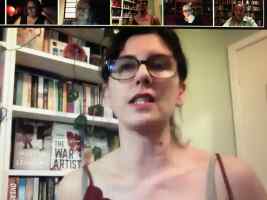
Melanie Myers (with the three novels faced out behind her)
Given the opportunity to plug their new work, only Myers was brave enough to name her project. I was thrilled to hear it as she’s research pioneering Australian filmmakers, the McDonagh Sisters. I look forward to that. Featherstone simply said he was not going near war for a long time, while Cleary said that he had a project but it was early days!
The hour whizzed by. Moriarty’s questions were focused and intelligent, the panelists’ responses were respectful and thoughtful, and the technology held up! It wasn’t the same as being in the room, but then, I wouldn’t have been, would I, so I’m grateful to have had the opportunity to hear these three writers speak.
Writing War: A panel discussion
20 April 2020, 6:30 PM – 7:30 PM
ZOOM Online, organised by Avid Reader (bookshop)
 I was keen to read Melanie Myers’ debut novel, Meet me at Lennon’s, because it is set during the Brisbane of my mother’s early teens, that is, wartime Brisbane when her school,
  Melanie Myers
 Whispering Gums