Sydney Writers Festival 2019, Live and Local (Session 2)

I returned to the National Library of Australia today for two more live-streamed events from the Sydney Writers Festival (#SWFLiveAndLocal). As I did last year, I’ll write each event up in separate posts, so here is the first of my Sunday events.

Andrew Sean Greer: Less (Conversation), Sunday 5 May, 3.00pm

Conversation: Andrew Sean Greer with David Marr (Convenor)

Andrew Sean Greer, Less, book coverWhat an absolute joy this session was. Australians will know David Marr as a politically engaged author and commentator, not to mention Patrick White’s biographer, and most readers will know Andrew Sean Greer as the author of the Pulitzer prize-winning novel Less (which also won, last week, the International Book of the Year category in the ABIA Awards.) These two men, one in his early seventies and the other nearing fifty, entertained us with a conversation that was light-hearted and yet managed to convey substance too. What made it particularly enjoyable was that Marr and Greer seemed well attuned to each other resulting in quite a bit of repartee, and no awkward spots.

So, the session felt very much like a conversation between friends rather than an interview, but we still got some nitty gritty, including:

  • the challenges of writing comedy, and how Less starts off quite flatly, which Marr felt was daring. Greer explained that he wanted to strip everything away form the protagonist Arthur Less at the start so he could then “reward him”. The narrator ridicules Arthur, but with warmth. Marr talked about some of his favourite bits, including that Arthur turns out to be a “miraculous kisser”. Are there any literary antecedents for this, he asked, to which Greer responded immediately, vampire novels! Haha!
  • the theme of the book being about joy and discovering joy, but also ageing. Greer said that he wanted it to be about age, but not be autumnal. He wanted it to be more about the idea that “given you are not getting any younger, you should enjoy it”. When Marr asked Greer about his own ageing, he commented on the things he can’t do any more – like drinking – but followed up by saying that John Irving was right, it’s important to have a “clear head in the morning”! Later in the conversation, Greer returned to the idea of age, saying it’s about the narrowing of pleasures, but that since writing is a pleasure, he was going ok.
  • the rules of comedy, being that you find the scariest thing you can, and it is this that releases the comedy. Readers need to be able to identify with the pain, but comedy only works, said Greer, if you know everything is going to be alright.
  • the writing process, including how he went about writing the foreign languages he uses in the book, and how he chose his names. Marr loved the names in the book, but advised that in future a good source for names is war memorials. However, it seemed that Greer had already discovered the value of cemeteries for this purpose!
  • winning the Pulitzer Prize, meant that he’d “won the time to write”, so he left his job. But he also needed some time to bask, he joked! Marr responded that Patrick White would ask “why aren’t you at your desk?” to which Greer replied that Peter Carey had already told him that! (Marr muttered that Carey has had his times of basking!)
  • Joe Keenan, Blue heaven, book coverbeing a gay writer, and finding gay stories. The first gay writer Greer remembers admiring is Edmund White, albeit some of his writing was too sophisticated for him at the time. He also named Blue heaven by Joe Keenan who went on to write the Frasier TV series. He had even turned Blue heaven into a musical, and had invited Keenan to it, but Keenan didn’t like it! Greer also named Armistead Maupin as an influence on his writing.
  • whether only minorities can write about minorities, to which Greer had an open mind, saying that he remembered a time when there were no gay characters in the books he read. Silence or invisibility is death, he said. He is therefore happy for non-gay people to write gay characters, but they must think about them as humans, not present stereotypes. He wouldn’t want “straight” books not to have gay characters. I like this response – that invisibility is a worse problem, and that the important thing is for writers to think about their characters as “humans” not types – but recognise different minorities, different writers may feel differently.

There was a Q&A, which included:

  • Did he feel a pressure to represent gay people? Greer said that there is always a tension for writers between representing “your people” (whoever they are) and telling the truth, the tension between the “legend” and the “reality”.
  • He’d spoken elsewhere about reading books relating to his writing, so what books had he read while writing Less? Nabokov’s Pnin, Updike’s Bech stories, Muriel Spark, and Proust (who finds that desired balance between sentimentality and cynical detail.)
  • Had he been to all the places he writes about in the book? Yes. He had two rules writing this book: everything had to come from his notebooks where he’d written his experiences, as he didn’t want to write fantasy about another country; and the joke always had to be on Arthur because he’s the outsider in the various countries.

All this sound may sound dry, but the repartee really was something. It was a joy seeing Marr in this different, lighter, but as astute as ever, mode. All in all, thoroughly entertaining, and informative.
Sydney Writers Festival 2019, Live and Local (Session 1)

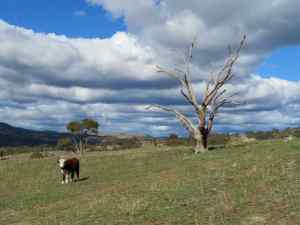
Pic of farm at Williamsdale

A day in the country at Williamsdale

As in 2018, selected Sydney Writers Festival events were live-streamed this year to 35 sites, including Canberra’s National Library of Australia (#SWFLiveAndLocal). I had planned to attend most of Saturday’s events, but then our annual day-trip to our friends’ place in the country came up, and that’s unmissable, so I only attended the last event of the day.

This year’s theme is Lie to Me, which means participants “will discuss the white lies and deceptions that are necessary for survival, as well as malicious lies that are spun with darker intent. They’ll explore the ways that writing can be used to deceive others in an increasingly post-truth world, and look at the lies that we tell ourselves, each other, and those we collectively tell as a country.” A perfect theme, don’t you think?

Boys to Men: The masculinity crisis, Saturday 4 May, 4.30pm

Panel: Clementine Ford, Adam Liaw, Janice Petersen (Convenor)

Book cover of Clementine Ford's Boys will be boysClementine Ford is the feminist author of Fight like a girl, and, more recently, Boys will be boys. An obvious choice, then, for the panel.

Adam Liaw is a lawyer who came to fame as a winner of Australia’s Masterchef. The festival program describes him this way: “As the author of six cookbooks and host of the award-winning SBS television series Destination Flavour, his approachable and family-friendly recipes are influenced by his global travels, but remain focussed on the casual simplicity of contemporary Australian home cooking. In 2016 the Japanese government appointed Adam as an official Goodwill Ambassador for Japanese Cuisine.” Not such an obvious choice, eh? However, he has been appearing recently on some ABC-TV current affairs programs and has impressed us with his sensible, thoughtful, comments. He didn’t disappoint in this panel.

Janice Petersen, the convenor, is an SBS journalist and news presenter.

Firstly, although the panelists didn’t say this specifically, the topic was a natural for the Lie-to-me theme, since so much of gender is constructed on lies – on assumptions, beliefs and attitudes about what makes a man or a woman. This session focused on these, and how they impact, particularly, contemporary ideas about masculinity. Convenor Petersen did an excellent job, asking such questions as:

  • Why is masculinity in crisis?
  • Why does the mentioning word “masculinity” seem “to set off a bomb”, engendering negative responses?
  • What does it mean to have a son (as both panelists do) and do the panellists fear the influence of peers?
  • Are men and women different?

Clementine Ford spoke, naturally, from a feminist perspective. She argued that masculinity is in crisis, defining toxic masculinity as men being unable to have platonic relationships with each other, being unable to express their feelings. She argued that boys bond over negative attitudes to women because they can’t relate to each over other things. Men, she said, are hostile to discussions about feminism because they don’t see that it works for all, that its aims are to free all people to be themselves. The problem is that although many men hate much about their lives, they don’t want to “see what patriarchy inflicts on them” (at work, say) because they fear losing the benefits of being “men” (such as being the boss at home!)

However, Ford also said that she doesn’t see “masculinity” as negative. She is invested in “healthy masculinity” and has faith in men, but sees the issue being masculinity and power propping each other up.

Adam Liaw spoke, he said, from a non-scholarly perspective, but I must say that I really liked the way he thought. He talked about how every society defines its own understanding of masculinity, and that in our society today, we don’t have a clear idea of what that is. He sees this lack of clarity as a structural problem, one that creates a high level of insecurity in many men. He talked about various male “role models”, like James Bond and Batman. James Bond doesn’t have close friends which is something men can relate to, while Batman is rife with problems, which men can also relate to. Modern men, on the other hand, can’t relate to Superman as they once did. In other words, men are now defined more by their insecurities than by positive ideas or values.

Liaw returned repeatedly to this insecurity issue, and it made sense. When Petersen asked whether men and women are different, Ford was initially a little flummoxed and referred to Liaw, who without hesitation said yes we are different. We are, for a start, physically different, but, he said, we should not weaponise gender. Our biological differences don’t, for example, translate into meaning that men are better CEOs than women. Liaw’s most important point was, for me, that the issue is not things like men spending more time with children – which men have always liked to do – it’s about overcoming their insecurity, meaning, for example, being comfortable with their partners earning more money than they.

I found the conversation about raising children interesting. Ford expressed a more ideological approach, one I related to because of my own child-rearing days. Indeed, it was hard not to feel a bit of “been there, done that”, since we second-wave feminists had tried exactly what she was talking about. In fact, when I look around at our sons, I think we did a pretty good job! They aren’t the men evincing the toxic masculinity that was being discussed, which begs the question in my mind about whether a few enlightened parents raising their children to be free (free to be … you and me, and all that) will effect the change we need.

Both Ford and Liaw, albeit they expressed it slightly differently, eschewed imposing gender expectations on their children – on what they wear, play with, etc. Liaw spoke of wanting his son to be a “good person”, a “good man”. He is not in favour of forcing “reverse” gender activities on children, but on encouraging all children to be able to do all things. (This was in response to a clip Petersen showed from an SBS Dateline film of an Icelandic school.)

Ford spoke of structural oppression (much as Liaw had earlier referred to structural problems). This results in such things as her being trolled if she speaks of boys doing anything “feminine”, like pushing a doll in a pram. It’s seen as her forcing a boy to be a girl, rather than as letting him explore life. We need to “dismantle gender” but Australians, she feels, can’t get their heads away from narrow definitions of what “men” and “women” are. Worse, they don’t actively condemn men for treating women badly. Much trolling comes from packs of teenage boys. (This reminded me of a recent interview I heard with a female Uber driver who said that one drunk young man was manageable, but in a pack they can become abusive to women, showing off in front of their mates.) Toxic masculinity!

If Liaw’s most important point, for me, was about overcoming male insecurity, Ford’s concerned the malleability of humans. If we have learnt, she said, not to smoke, and not to drink and drive, we can also learn not to be racist or sexist, but these latter mean giving up power – and we resist that.

The session ended with a brief Q&A, from which I’ll just share the last question. It concerned overcoming the sense of entitlement (which I understood as encompassing more than male entitlement.) Liaw said it starts with understanding our own weaknesses and biases, while Ford said it’s about listening to others, and checking our responses to what they say. Which is to say, I suppose, that we need to look past the lies we so easily tell ourselves in order to forge more truthful relationships with each other!

PostscriptJonathan Shaw (Me fail? I fly!) has reported on some Friday sessions, which you may like to check out.