I was sorry to hear a few days ago that the Australian writer Kerry Greenwood (1954-2025) had died on 26 March, at the too-young age of 70. Her death was only publicly announced week ago, which is fair enough. Families have a right to grieve their loved person in private if they so desire. It appears she had been seriously ill for some years, but was still writing to the end. Once a writer …
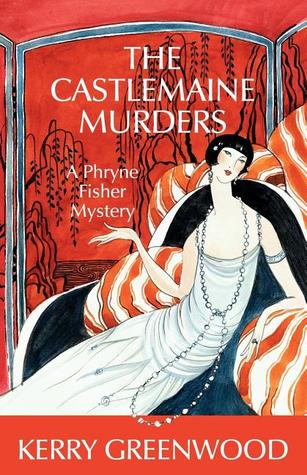
Greenwood has appeared a few times on my blog, but more in passing – such as being the inaugural winner of the Davitt Lifetime Achievement Award in 2013 – than as a featured author. This is because she mostly wrote in a genre I don’t tend to read, crime fiction. She is best known for her Phryne Fisher historical crime detective series, which was turned into a very successful television series, and a movie. I saw both the series and the film, which is how I consume most of my crime, rather than through reading.
She was, however, a prolific writer, as you can tell from her Wikipedia page. She wrote across many forms and genres including mysteries, science fiction, historical fiction, children’s stories, and plays. She won many awards for her books, including Australia’s various crime awards, and a few children’s book awards. She was, from what I’ve read, as colourful, brave and inventive as her heroine.
Allen & Unwin, Greenwood’s publisher since 1997, wrote on Facebook that:
Kerry was a gifted writer, a generous spirit, and a fierce advocate for creativity, joy and justice. She brought us the iconic Phryne Fisher and Corinna Chapman—two unforgettable heroines who continue to inspire readers around the world.
Since 1997, we’ve had the honour of publishing her work, with over 1.4 million copies sold globally. A new Phryne Fisher novel, Murder in the Cathedral, will be published later this year.
The Guardian’s obituary shares more from Allen & Unwin, including that she’d said she “had two burning ambitions in life: to be a legal aid solicitor and defend the poor and voiceless; and to be a famous author”. She certainly achieved the latter, and I understand that as a lawyer she did her best to achieve the former. Melbourne’s Her Place Museum shared this little video on Facebook, in which she talks about her decision to become a lawyer. The beautiful obituary on her website, by her partner, the “Duty Wombat” (aka David Greagg), tells more about her legal work.
But, I’ll end with some words from Sue Turnbull’s obituary in The Conversation. Many of her books, she writes
sit within what has often been characterised as the “cosy” genre: a subgenre of crime fiction to which Kerry’s crime fiction certainly belongs. Until recently, cosy crime has tended to be underrated, compared to the kind of “gritty” crime fiction that wins accolades.
This has obscured the achievement of crime fiction such as Kerry’s, in which historical and contemporary social issues are reflected back to us in ways that give us pause, even as they are presented in a form designed to entertain.
This is Kerry’s legacy: a wealth of entertainment with a heart. Her novels are provocations to care about social justice.
Many tributes are being planned, such as a screening of the outrageously flamboyant movie, Miss Fisher and the Crypt of Tears, at Yarraville’s Sun Theatre, on 16 April.
Vale Kerry Greenwood.
 Whispering Gums