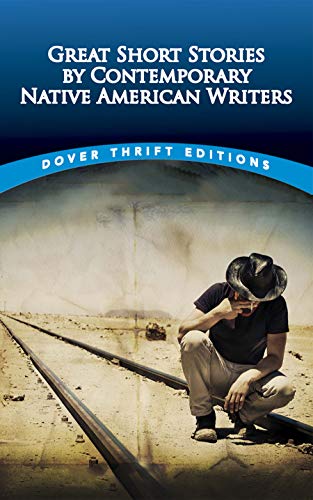
The title of the next story in Great short stories by contemporary Native American writers is almost as long as the story itself. Well, not quite, but, occupying just two pages in the anthology, it is a short short story. It was first published the same year, 1983, as the previous story, “Turtle meat” by Jospeh Bruchac III, but is very different in tone.
(I apologise to those of you who were expecting my next post to be on Chris Flynn’s Here be Leviathans. It is coming, soon, but I had to put it aside for my end-of-July reading group book, and I do want to do it justice.)
Jack D. Forbes
Again, I’m using anthology editor Bob Blaisdell’s intro and, mostly, Wikipedia to introduce the author. Forbes (1934-2011), says Wikipedia, was an historian, writer, scholar and activist who “identified as being of Powhatan-Renapé and Lenape descent”. He is best known for his role in establishing one of the first Native American studies programs at the University of California Davis. He also cofounded D-Q University, “a prominently Native American college in Davis, California”. His activist career started in the early 1960s, when he became involved in the Native American movement, which, Wikipedia explains, “asserted the rights to sovereignty and resisting assimilation into the majority culture”.
Blaisdell introduces his story with this: ‘”Only approved Indians can play made in USA” is almost too sad to be funny, but funny it is’. Or, is it?
“Only approved Indians can play made in USA”
I enjoyed this story because of the way it addresses that issue that can dog First Nations peoples in colonial settings, that of proving indigeneity, which feeds into ideas about identity. It’s an issue I’ve discussed here before, including in First Nations writer Anita Heiss’ Am I black enough for you (my review), and in the essay “Channelling Mannalargenna” (my review) by the non-Indigenous journalist Kathy Marks.
In her book, which is a few years old now, Heiss shares the working definition of an Aboriginal or Torres Strait Islander person used by Australia’s Federal Government:
An Aboriginal or Torres Strait Islander is a person of Aboriginal or Torres Strait Islander descent who identifies as an Aboriginal or Torres Strait Islander and is accepted as such by the community in which he “or she” lives.
I share this purely for background purposes to this story. I am not going to get into the Australian situation because it’s not an issue I have followed recently. It was particularly problematical in Tasmania in recent decades, but I believe that much of that has now been resolved, to the extent that self-identifcation and community recognition are the accepted criteria.
Meanwhile, though, Heiss’s comment is relevant to Forbes’ story which concerns an All-Indian Basketball Tournament, and the two teams that are about to play, one from Tucson and one from the Great Lakes. Many people had come to watch, “mostly Indians” we are told, with many being relatives or friends of the players. There was betting, and “tension was pretty great”. The issue is that the Tucson players are, in general, much darker. Many also have long hair, and some have goatees or moustaches. A rumour starts from the Great Lakes camp that they are Chicanos, not Indians. (If you know your American geography, you will know that Tucson is in southern Arizona, so not far from Mexico, while the Great Lakes are up there near Canada.)
Anyhow, this is a serious point because, as the story goes, the Indian Sports League’s rule is that “all players had to be one-quarter or more Indian blood and that they had to have their BIA [Bureau of Indian Affairs] roll numbers available if challenged”. The Great Lakes players, coming from a big Midwestern city, are all over this:
they all had their BIA identification cards, encased in plastic. This proved that they were all real Indians – even a blonde haired guy. He was really only about one-sixteenth but the BIA rolls had been changed for his tribe so legally he was one-fourth.
You can feel the tongue firmly planted in the cheek – the satirical tone – here can’t you! They challenge the Tucson players, many of whom, as it turns out, can speak their language. None of the urbanised Great Lakes players could, but they claim this proved nothing. Only the BIA card did! The story is short and you can read it at the link below.
“Only approved Indians can play made in USA” is a clever, and oh-so succinct story that draws on recognisable conventions of competitive sport to produce a satire that explores the role of regulation and law in people’s lives, the way power can be wielded, and its potential for destabilising cultural heritage and disrupting solidarity. The ending is particularly biting because after the Great Lakes team has had its way, the last word is given to a white BIA official. That tells you all you need to know about this story.
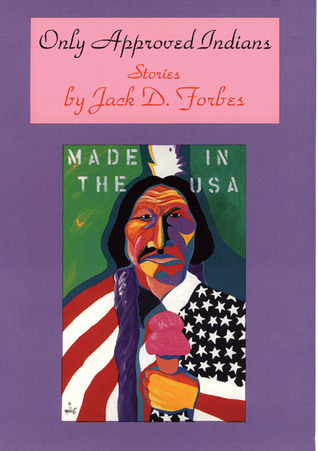
Jack D. Forbes
“Only approved Indians can play made in USA” (orig. pub. 1983; also published in Forbes’ collection, Only approved Indians: Stories, 1995)
in Bob Blaisdell (ed.), Great short stories by contemporary Native American writers
Garden City: Dover Publications, 2014
pp. 57-58
ISBN: 9780486490953
Available online at genius.com
 Whispering Gums