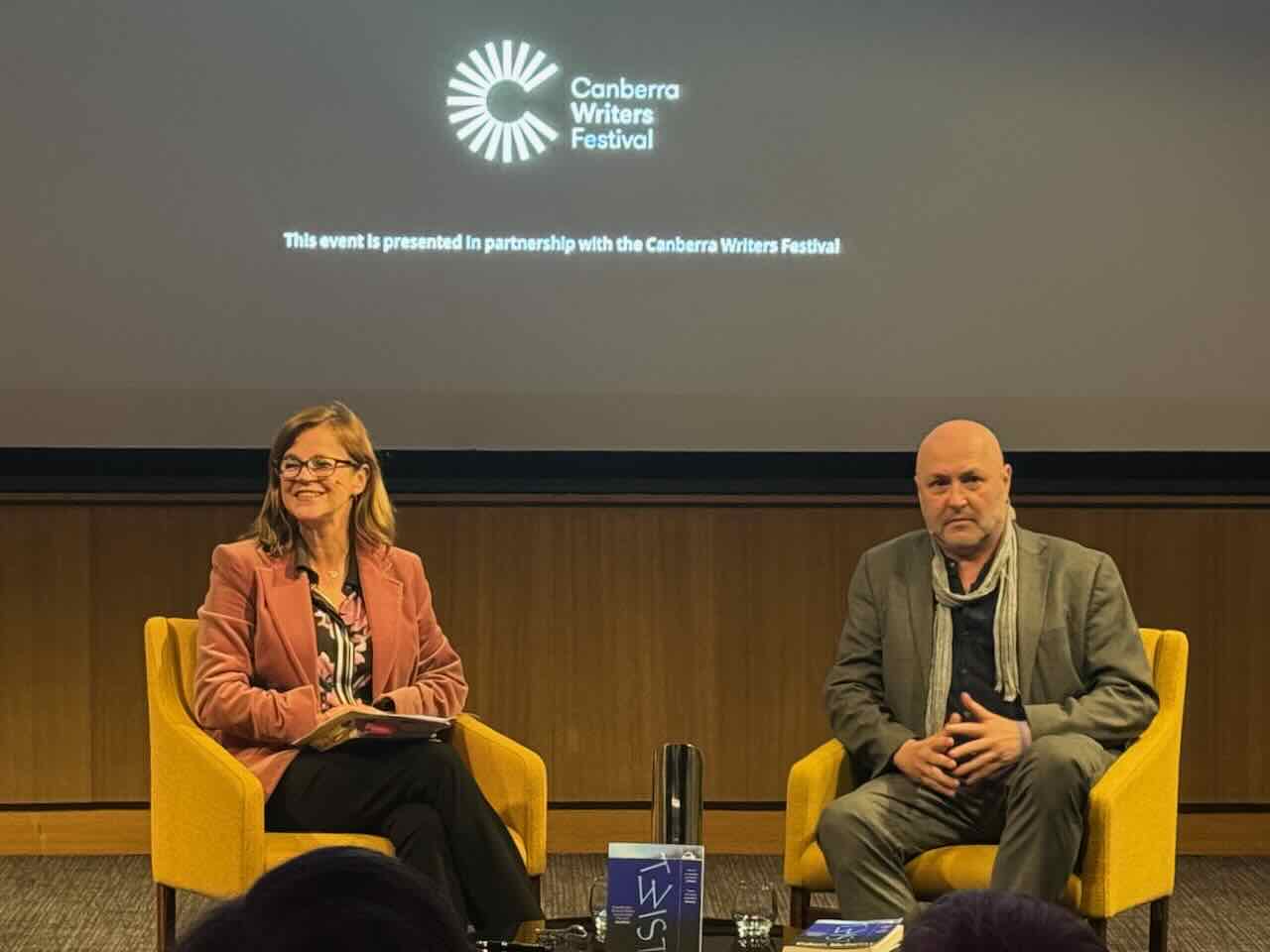
Colum McCann said during the conversation I attended back in May that books are never completed until they are in the hands of readers who tell back what a book is about. This is essentially reception theory, which, referencing Wikipedia, says that readers interpret the meaning of what they read based on their individual cultural backgrounds and life experiences. In other words, “the meaning of a text is not inherent within the text itself, but is created within the relationship between the text and the reader”.
Although I don’t adhere to any theory absolutely, this makes some sense to me – as does my extrapolation from this that the reader’s background and life experiences contribute not only to the meaning they obtain from a work, but their assessment of it.
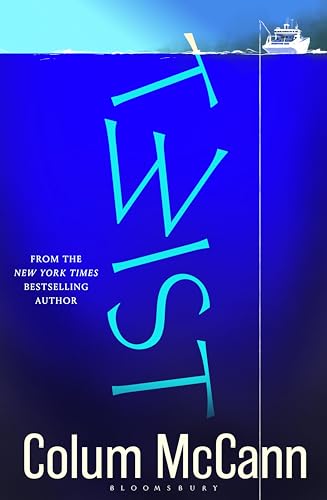
Colum McCann’s latest novel Twist was my reading group’s last book of the year. All of us were fascinated by its underlying story about the data – our data – travelling around the world via undersea cables, and the fragility or vulnerability of this data. But, when it came to assessing how much we liked the book, other things came into play, things that say as much about who we are as readers, what we look for in books, as they say about the book itself. For example, readers who look to empathise with appealing, rounded, human characters might assess Twist quite differently from those for whom ideas play a significant role in their preferences.
I’ll return to this, but first more on the novel. Twist is narrated by 50-something Irish novelist, Anthony Fennell, whose career had stalled. It “felt stagnant”, and he was feeling disconnected from life, “the world did not beckon, nor did it greatly reward”. He was, in fact, “unsure what fiction or drama could do anymore”. He needed, he tells us, “a story about connection, about grace, about repair”. Fortuitously, into his lap falls an assignment to write a long feature about a cable repair vessel, which is led by a man called John Conway (whose name, we soon realise, contains allusions to Joseph Conrad and also perhaps to that other well-known JC).
So, in the first few pages of the novel, we know we are being told a story from after the event by a writer who was there as it happened. We know this event relates to Conway because Fennell tells us on the opening page that something had happened to him, and that he is going to tell his version of what happened as best he can, which might take some “liberties with the gaps”. Conway, then, is central to the narrative arc, but we also know that the subject matter is data and the internet, and that the theme will concern ideas like connection and disconnection, brokenness and repair, fact, fiction and the limits of storytelling. It’s impressive, in fact, just how much of the rest of the book is set up in the first couple of pages.
The narrative proper then starts. It’s January 2019, and Fennell meets Conway, and his partner Zanele, in Cape Town, before joining the Georges Lacointe on its journey up the western African coast to the site of a cable break. It takes some time to get there, so we get to know Conway a bit more. He is a good leader, and his multicultural crew of men respect him. The first and main cable break is repaired at the end of Part One, and then things go seriously awry. Zanele, who was performing in her unauthorised climate-change-focused version of Waiting for Godot in rural England, suffers an acid attack. Life starts to “unravel” for Conway who cannot get away to help her. Indeed, as the back cover says, Conway disappears.
I will leave the plot there. It does get more complicated, so I’ve not spoiled it I believe. I will return instead to my opening point about readers and their assessments. Most of those in my group who had reservations focused on the characters. Conway and Zanele were too shadowy; they were not well-rounded; we didn’t know them well. And, why choose a hard-to-identify-with man like Fennell as a narrator? I understand these questions but they don’t concern me, because I read the book differently – so let’s look at that.
Twist draws from, or was inspired by, two classic novels, F. Scott Fitzgerald’s The great Gatsby, with its story of a man’s obsessive love for an unattainable woman, and Joseph Conrad’s Heart of darkness and its story about the darkness at the centre of colonialism. While the narrative arc clearly owes much to Fitzgerald, McCann said during the aforementioned conversation that Conrad’s novel provides the more obvious literary parallel. Those tubes along the seabed, he said, follow old colonial routes, and suggest corporate or digital colonialism.
“There is no logic. The world is messy.” (Fennell)
Looking at the novel through this perspective provides a way of understanding why McCann has written it the way he has. It is not about Conway and Zanele. We only see them through the eyes of Fennell. They are established enough to draw us in but their prime role is to support the ideas – disconnection, connection, turbulence, repair – rather than to be the subjects of the story. We know Fennell somewhat better, as we need to. He is a flawed man, stalled in life and feeling disconnected from it. It is his journey through the narrative that carries our hopes for repair.
If I had any criticism, it would more likely concern the writing. McCann’s is an exuberant, epigrammatic style. It’s not hard to see what he is doing, the games he is playing with meaning and metaphor. However, I can enjoy this sort of writing. It keeps ideas to the fore. And they were ideas that interest me – zeitgeist issues about the fragility of our data; the line between doubt/certainty, connection/disconnection (emotionally, spiritually, technologically), and break/repair; and the messiness of life. It’s not hard to find quotable quotes, like “opinion, the obscene certainty of our days” (p. 218) and “the disease of our days is that we spend so much time on the surface” (p. 25). I enjoy these too!
Part Two opens with:
It is, I suppose, the job of the teller to rearrange the scattered pieces of a story so that they conform to some sort of coherence. Between fact and fiction lie memory and imagination. Within memory and imagination lies our desire to capture at least some essence of the truth, which is, at best, messy.
By the end, McCann has told a story which illuminates the messiness of our time. The truth is that there is no real coherence. There is – and probably always has been – just all of us trying to muddle through the best way we can. This is not earth-shattering news, but McCann exposes some of the issues, many driven by technology, that affect our trying today. The light he throws on these – and the personal progress Fennell makes – are why I enjoyed reading this novel.
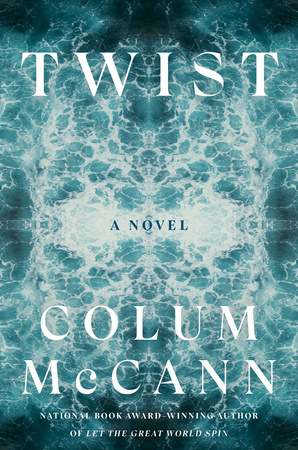
Colum McCann
Twist
London: Bloomsbury, 2025
239pp.
ISBN: 9781526656957


 Whispering Gums