Ian Terry, Uninnocent landscapes (#BookReview)

This is my third post on my brother’s beautiful book, Uninnocent landscapes: Following George Augustus Robinson’s Big River Mission. My first post announced its publication, and my second was on the book’s launch and the opening of the accompanying exhibition. Finally, I come to my review post. Yes, you could call me biased, but this project has had so many accolades that I don’t feel my bias contradicts the general run of opinion. However, you must decide for yourselves.

Uninnocent landscapes, as I wrote in those previous posts, is the culmination of an idea Ian started thinking about around a decade ago, but that he actively worked on over the last two to three years. It involved his following the journey taken by George Augustus Robinson on his 1831/32 Big River Mission (brief description), which was a poorly conceived attempt to conciliate between settler and Aboriginal Tasmanians. As those versed in Tasmanian history know, it was a disaster, and effectively ended First People’s resistance in lutruwita/Tasmania (back then, anyhow!) For Ian, who has come to call lutruwita home, there is discomfort in reconciling his privileged life as a middle-class white man with the devastating impact of colonialism on Tasmania’s First Peoples. This is his truth-telling project – his questioning, as he describes it, of how non-Indigenous Tasmanians (and, by extension, all non-indigenous Australians) “come to terms with our privilege and its Janus face, the violent and continuing dispossession of palawa” (and, by extension, all First Nations people). And he found a unique way to do it, by combining the three big passions of his life (besides family) – history, photography and the bush – to produce this book. 

Uninnocent landscapes, then, contains a selection of Ian’s photographs accompanied by excerpts from Robinson’s text. It also contains an introduction by Tasmanian art historian, curator, essayist and commentator on identity and place, Greg Lehman (a descendant of the Trawulwuy people of north-east Tasmania), and five essays, the first and last by Ian, and three he commissioned from:

  • Rebecca Digney (manager, Aboriginal Land Council of Tasmania and proud pakana woman)
  • Nunami Sculthorpe-Green (activist/artist and proud palawa and Warlpiri woman)  
  • Roderic O’Connor (sixth-generation woolgrower and Connorville custodian)

These essays provide different perspectives on country and on colonialism’s impact on it. Together they work as a dialogue which encourages us to test our own thinking about what has happened in the past and how we might progress into the future.

“battered but still recognisable” (Nunami Sculthorpe-Green)

Ian explains in his first essay that the photographs were taken in a sprit of enquiry:

What memories do the landscapes of lutruwita/Tasmania hold? What stories are embedded in the rocks, the trees and grasses, the waters of rivers and lagoons? What could the landscape tell us about invasion, colonisation and the destruction of First People’s life and culture? What could it tell me about my own life here on this island?

The juxtaposition of Robinson’s text to Ian’s images offers literal, historical, symbolic and/or emotional readings of the photographs. They confront us with a colonial way of thinking about country that we haven’t fully shaken. Robinson’s reflection that “the whole of this country is peculiarly adapted for natives” is jolting, when you think about what this is really saying. Some excerpts reveal a man tired of his mission, while others show a sincere wish to be humane, but most of course are also overlaid with the arrogant confidence of the colonist. There is, though, also some humour, such as this:

I cautioned my natives and said if the whites saw them they would shoot them. They replied that they could see the whites first, and that they could not always shoot straight.

The image accompanying this text depicts a road passing through a fence on which is appended a security notice advising the area is under surveillance. It returns us to the reality that despite their knowledge, skills and confidence, the “natives” lost.

I’d love to share other examples of text and image, not to mention the thoughts of all the essayists, but instead, I’ll just say that this book provides a reading experience that is enlightening, provoking, and sobering.

When Ian first told me the title of the book, I thought it was inspired. He explains its origins in his opening essay. It comes from a conversation between two nature/landscape writers, the British Robert Macfarlane and the American Barry Lopez. Referencing the impact on the Slovenian landscape of war and atrocity, Macfarlane spoke of “a sense of the uninnocence of landscapes”. Nunami Sculthorpe-Green, however, expresses a different idea in her essay. She writes that “it is not the landscape that is uninnocent. It was not a party to the atrocities committed here, but a witness to them, and truly a victim itself”. Just reading these two opposing but sincerely felt ideas shows how important open and honest dialogue is if we are to understand each other. In some ways, the actual words are less important than the conversations they generate and what we learn through them.
It’s a big call, perhaps, to say Ian found a unique way to truth-tell, but I’m not the only one to see this project as original. One of those is Sculthorpe-Green who writes in her essay:

I do see this project as something different from the norm, in that it finally takes this story off the paper and re-centres our land as the storyteller and story keeper.

So yes, I’m hugely proud of what Ian has done. It’s a beautiful book that works aesthetically, intellectually and emotionally – and, more importantly, that moves the conversation forward. It’s a book that explores the depredations of the past, but that also contains hope. As Digney says at the end of her essay, “History resonates. We continue.”

Ian Terry
Uninnocent landscapes
Mt Nelson: OUTSIDE THE BOX / Earth Arts Rights, 2023
136pp.
ISBN: 9780646881058
Price $65, with all proceeds going to the Aboriginal Land Council of Tasmania’s Giving Land Back fund. You can order here (but supplies are dwindling).

 

Monday musings on Australian literature: Uninnocent Landscapes opened and launched

Those of you who know me on other social media will already have seen some of this, but I am keen to spread the message wherever I can about my brother’s wonderful, and significant, project. I introduced it back in September – and later in Nonfiction November I will review the book. That, however, will be after the exhibition has closed, and I want to encourage anyone who is in Tasmania to see it.

Uninnocent Landscapes – the exhibition and book – is the culmination of an idea Ian started thinking about a decade ago, but that he actively worked on over the last two to three years. It involved his following the journey taken by George Augustus Robinson on his 1831/32 Big River Mission, which was a poorly conceived attempt to conciliate between settler and Aboriginal Tasmanians. Needless to say it was a disaster, that effectively ended First People’s resistance in lutruwita/Tasmania (at the time anyhow!) For Ian, who has come to call lutruwita home, there is discomfort in reconciling his privileged life as a middle-class white man with the devastating impact of colonialism on Tasmania’s First Peoples. This is his truthtelling project, and he found a unique way to do it by combining the three big passions of his life (besides family) – history, photography and the bush.

I will write more about this when I review the book because what Ian has done feels original and exciting. Essentially, though, the book and the exhibition comprise photographs accompanied by excerpts from Robinson’s journal, resulting in an experience that is enlightening, engrossing, and sobering. The exhibition contains a selection of 11 from the book’s over 50 photographs.

The venue, Sidespace Gallery, is in a heritage building that dates back to the mid-1800s. This means two things – there are some restrictions on how items can be affixed, and the walls and floors are not what you would call square. However, Ian and his “crack instal team” did the research and, by the time I got there, were ready to go. The photographs – large-scale archival prints – were “hung” through a clever system of special Japanese tape (that doesn’t mark walls), double-sided tape, and magnets. I enjoyed being a little part of it all on the first day of installation, and loved meeting Ian’s delightful, hardworking team, Erica and Nikki, who made me feel so very welcome.

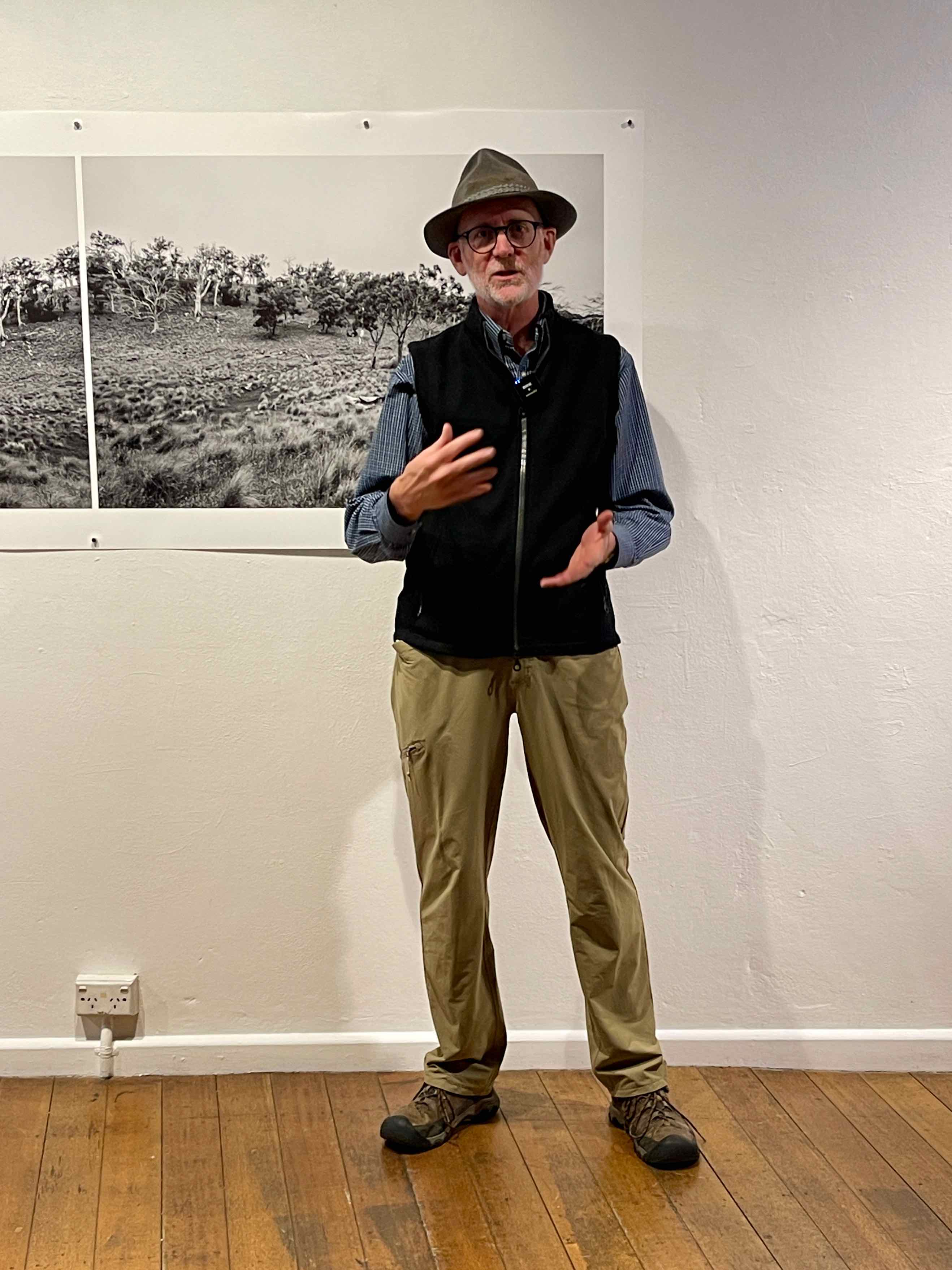
The opening (and book launch) went very well, with 50 or 60 in attendance. The MC was writer and researcher Steph Cahalan, and the exhibition was formally opened by Tony Brown, a First Nations man and museum colleague of my now-retired brother. Ian of course then spoke to his project, explaining, among other things, that he had discussed his project with many in the local Aboriginal community, and had made clear that he was not trying to tell their story, but his own. His good relationships with the community suggest that they accept this.

It was a warm-hearted event attended by historians, artists, museum professionals, bushies, activists, not to mention family and friends. I met and talked with so many interesting, thoughtful people who support Ian’s project and believe in what he is doing. I can’t name them all, but before it all started I had a great chat with the two women who designed and published the book. Our conversation ranged from technical issues like fonts to more personal ones like downsizing and philanthropy. It was truly a privilege to be there.

Ian calls Uninnocent Landscapes a photographic conversation. By this he means, I think – though I didn’t ask him while we were together – that he is using photography to reflect on (to interrogate, in fact) his relationship with the Tasmanian landscape he loves so much but which has been indelibly affected by over two centuries of colonialism. The idea of conversation, however, also encompasses something ongoing and inclusive, something inviting us all to join in as we engage with his photos and, for those of us living in colonised places, as we engage with “our” places. I will discuss this more, and talk about the title, in my review!

Uninnocent landscapes, the book, is published and distributed by OUTSIDE THE BOX / Earth Arts Rights under their imprint An Artist’s Own Book. It costs $65, and all proceeds are going to the Aboriginal Land Council of Tasmania’s Giving Land Back fund. You can order it here.

Ian Terry
Uninnocent Landscapes
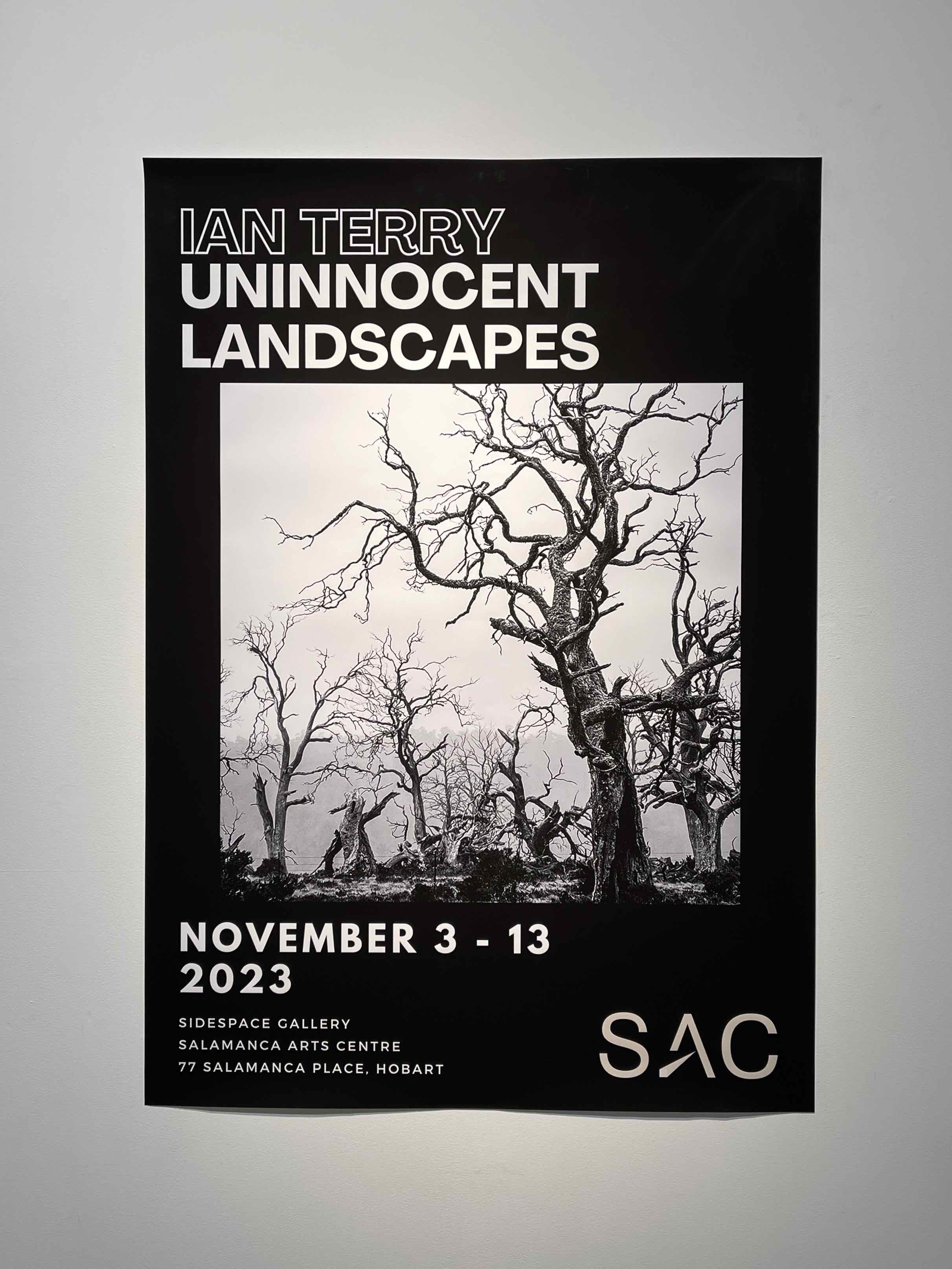
Sidespace Galley, Salamanca Arts Centre
3 – 13 November, 2023
Admission is free


Monday musings on Australian literature: Introducing Uninnocent landscapes

You heard it here first – or, first(ish) anyhow, as the webpage is up and orders are already coming in for a new, beautiful book, Uninnocent landscapes: Following George Augustus Robinson’s Big River Mission. Yes, I admit it isn’t out yet so I haven’t actually seen it, but I know it is beautiful because I’ve seen some of the content over the years, and I’ve seen the cover on the website. It looks stunning.

Of course, I’m biased because the creator is my brother, Ian Terry. However, it goes without saying that I wouldn’t be writing this if I didn’t feel his project was worthwhile.

So, the project … Ian introduces his motivation on the publisher’s website:

Without invasion, colonisation and the near destruction of lutruwita’s First People, without Robinson’s ‘Friendly Mission’, I would not have had the opportunity to feel so much at home on this island. This is a reality that, as much as we might try to ignore it, non-Indigenous Tasmanians cannot escape. How do we come to terms with our privilege and its Janus face, the violent and continuing dispossession of palawa/pakana?

Now, Ian’s last job before retirement was a senior curator of history at the Tasmanian Museum and Art Gallery, during which time, among other things, he mounted exhibitions on First Nations history. He has, for nearly three decades, been an active and contributing member of THRA, the Tasmanian Historical Research Association. History was his undergraduate major, and in the early 1990s he complemented these studies with a Graduate Diploma in Cultural Heritage Management, after which he began working as a freelance history consultant – in lutruwita/Tasmania. History, you could say, is in his blood – and was not going to stop flowing after he retired. Enter the project …

But first, I need to add that in addition to his love of history, Ian has been a photographer since early adulthood. Way back in the the fall of 1983, he joined Mr Gums and me on a road trip through New England and Eastern Canada. We all took photos, but Ian was the one who would climb the hill behind the gorgeous white-spired church, or run across the bridge to the other side of a pretty river, to get the best shot. That interest has never waned and he has honed his skills to the point that he is now achieving recognition in photographic competitions.

This project, which involved his following the steps of George Augustus Robinson’s 1831 Big River Mission (brief description), combines these two passions. It has required historical research to identify Robinson’s movements and actions. It also called on Ian’s negotiating skills when, for example, he needed to enter private property to take the desired photos. It used his well-developed bush skills when he needed to explore more difficult landscapes. And, it depended on his photographic skills because photographs form the core of the book.

Of course, Ian’s tracing of Robinson’s path was not aimless. As the above-linked publisher’s website says, he had various questions in his head as he worked through his project, questions like

What memories do the landscapes of lutruwita/Tasmania hold? What stories are embedded in the rocks, the trees and grasses, the waters of rivers and lagoons? What could the landscape tell us about invasion, colonisation and the destruction of First People’s life and culture? What could it tell us about our own lives here on this island?

Uninnocent landscapes, the book, comprises a selection of Ian’s photographs documenting the landscape in a way that also expresses his ideas about it. It also contains an introduction by Tasmanian art historian, curator, essayist and commentator on identity and place Greg Lehman (a descendant of the Trawulwuy people of north-east Tasmania), and four essays, one by him and three he commissioned from:

  • Rebecca Digney (manager, Aboriginal Land Council of Tasmania)
  • Roderic O’Connor (woolgrower and Connorville custodian)
  • Nunami Sculthorpe-Green (activist/artist and proud palawa and Warlpiri woman)  

I can’t wait to see and read it – and, isn’t it a great title?

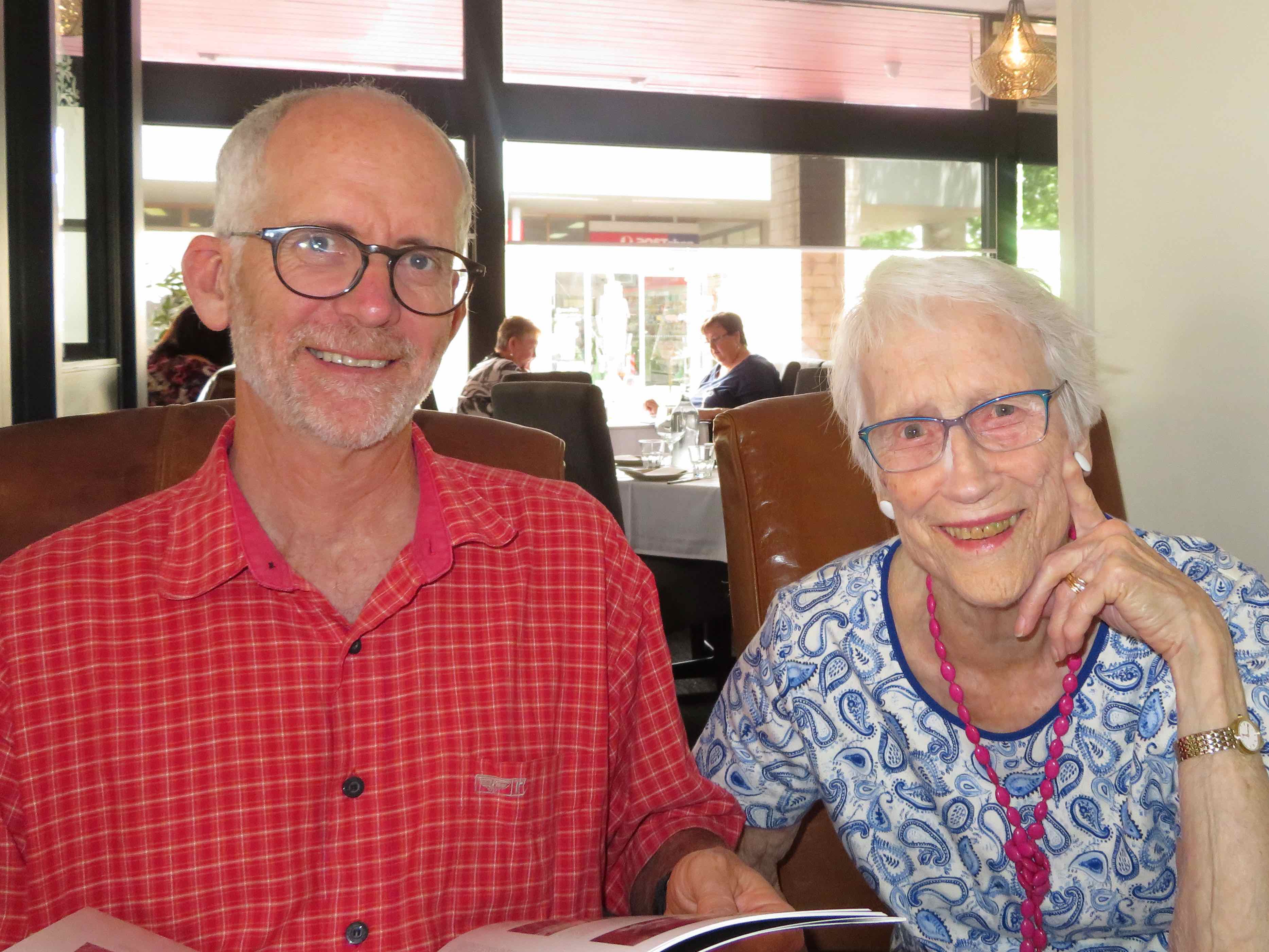
Ian with our mother, 2017

But wait, there’s more … there is also Uninnocent landscapes, the exhibition. It will feature large-scale archival prints from the book, and will be held in the Sidespace Gallery at Salamanca Arts Centre in nipaluna/Hobart from 2–14 November 2023. I will be there at the opening.

Uninnocent landscapes is published and distributed by OUTSIDE THE BOX / Earth Arts Rights under their imprint An Artist’s Own Book, and will be available from early November. It costs $65, and all proceeds will go to the Aboriginal Land Council of Tasmania’s Giving Land Back fund. You can preorder here.

To fully disclose: Ian did not pay (or even ask) for this announcement, but he is accommodating me (I hope) on my trip to lutruwita to attend the exhibition opening!