Ian Terry, Uninnocent landscapes (#BookReview)

This is my third post on my brother’s beautiful book, Uninnocent landscapes: Following George Augustus Robinson’s Big River Mission. My first post announced its publication, and my second was on the book’s launch and the opening of the accompanying exhibition. Finally, I come to my review post. Yes, you could call me biased, but this project has had so many accolades that I don’t feel my bias contradicts the general run of opinion. However, you must decide for yourselves.

Uninnocent landscapes, as I wrote in those previous posts, is the culmination of an idea Ian started thinking about around a decade ago, but that he actively worked on over the last two to three years. It involved his following the journey taken by George Augustus Robinson on his 1831/32 Big River Mission (brief description), which was a poorly conceived attempt to conciliate between settler and Aboriginal Tasmanians. As those versed in Tasmanian history know, it was a disaster, and effectively ended First People’s resistance in lutruwita/Tasmania (back then, anyhow!) For Ian, who has come to call lutruwita home, there is discomfort in reconciling his privileged life as a middle-class white man with the devastating impact of colonialism on Tasmania’s First Peoples. This is his truth-telling project – his questioning, as he describes it, of how non-Indigenous Tasmanians (and, by extension, all non-indigenous Australians) “come to terms with our privilege and its Janus face, the violent and continuing dispossession of palawa” (and, by extension, all First Nations people). And he found a unique way to do it, by combining the three big passions of his life (besides family) – history, photography and the bush – to produce this book. 

Uninnocent landscapes, then, contains a selection of Ian’s photographs accompanied by excerpts from Robinson’s text. It also contains an introduction by Tasmanian art historian, curator, essayist and commentator on identity and place, Greg Lehman (a descendant of the Trawulwuy people of north-east Tasmania), and five essays, the first and last by Ian, and three he commissioned from:

  • Rebecca Digney (manager, Aboriginal Land Council of Tasmania and proud pakana woman)
  • Nunami Sculthorpe-Green (activist/artist and proud palawa and Warlpiri woman)  
  • Roderic O’Connor (sixth-generation woolgrower and Connorville custodian)

These essays provide different perspectives on country and on colonialism’s impact on it. Together they work as a dialogue which encourages us to test our own thinking about what has happened in the past and how we might progress into the future.

“battered but still recognisable” (Nunami Sculthorpe-Green)

Ian explains in his first essay that the photographs were taken in a sprit of enquiry:

What memories do the landscapes of lutruwita/Tasmania hold? What stories are embedded in the rocks, the trees and grasses, the waters of rivers and lagoons? What could the landscape tell us about invasion, colonisation and the destruction of First People’s life and culture? What could it tell me about my own life here on this island?

The juxtaposition of Robinson’s text to Ian’s images offers literal, historical, symbolic and/or emotional readings of the photographs. They confront us with a colonial way of thinking about country that we haven’t fully shaken. Robinson’s reflection that “the whole of this country is peculiarly adapted for natives” is jolting, when you think about what this is really saying. Some excerpts reveal a man tired of his mission, while others show a sincere wish to be humane, but most of course are also overlaid with the arrogant confidence of the colonist. There is, though, also some humour, such as this:

I cautioned my natives and said if the whites saw them they would shoot them. They replied that they could see the whites first, and that they could not always shoot straight.

The image accompanying this text depicts a road passing through a fence on which is appended a security notice advising the area is under surveillance. It returns us to the reality that despite their knowledge, skills and confidence, the “natives” lost.

I’d love to share other examples of text and image, not to mention the thoughts of all the essayists, but instead, I’ll just say that this book provides a reading experience that is enlightening, provoking, and sobering.

When Ian first told me the title of the book, I thought it was inspired. He explains its origins in his opening essay. It comes from a conversation between two nature/landscape writers, the British Robert Macfarlane and the American Barry Lopez. Referencing the impact on the Slovenian landscape of war and atrocity, Macfarlane spoke of “a sense of the uninnocence of landscapes”. Nunami Sculthorpe-Green, however, expresses a different idea in her essay. She writes that “it is not the landscape that is uninnocent. It was not a party to the atrocities committed here, but a witness to them, and truly a victim itself”. Just reading these two opposing but sincerely felt ideas shows how important open and honest dialogue is if we are to understand each other. In some ways, the actual words are less important than the conversations they generate and what we learn through them.

It’s a big call, perhaps, to say Ian found a unique way to truth-tell, but I’m not the only one to see this project as original. One of those is Sculthorpe-Green who writes in her essay:

I do see this project as something different from the norm, in that it finally takes this story off the paper and re-centres our land as the storyteller and story keeper.

So yes, I’m hugely proud of what Ian has done. It’s a beautiful book that works aesthetically, intellectually and emotionally – and, more importantly, that moves the conversation forward. It’s a book that explores the depredations of the past, but that also contains hope. As Digney says at the end of her essay, “History resonates. We continue.”

Ian Terry
Uninnocent landscapes
Mt Nelson: OUTSIDE THE BOX / Earth Arts Rights, 2023
136pp.
ISBN: 9780646881058
Price $65, with all proceeds going to the Aboriginal Land Council of Tasmania’s Giving Land Back fund. You can order here (but supplies are dwindling).


Monday musings on Australian literature: Uninnocent Landscapes opened and launched

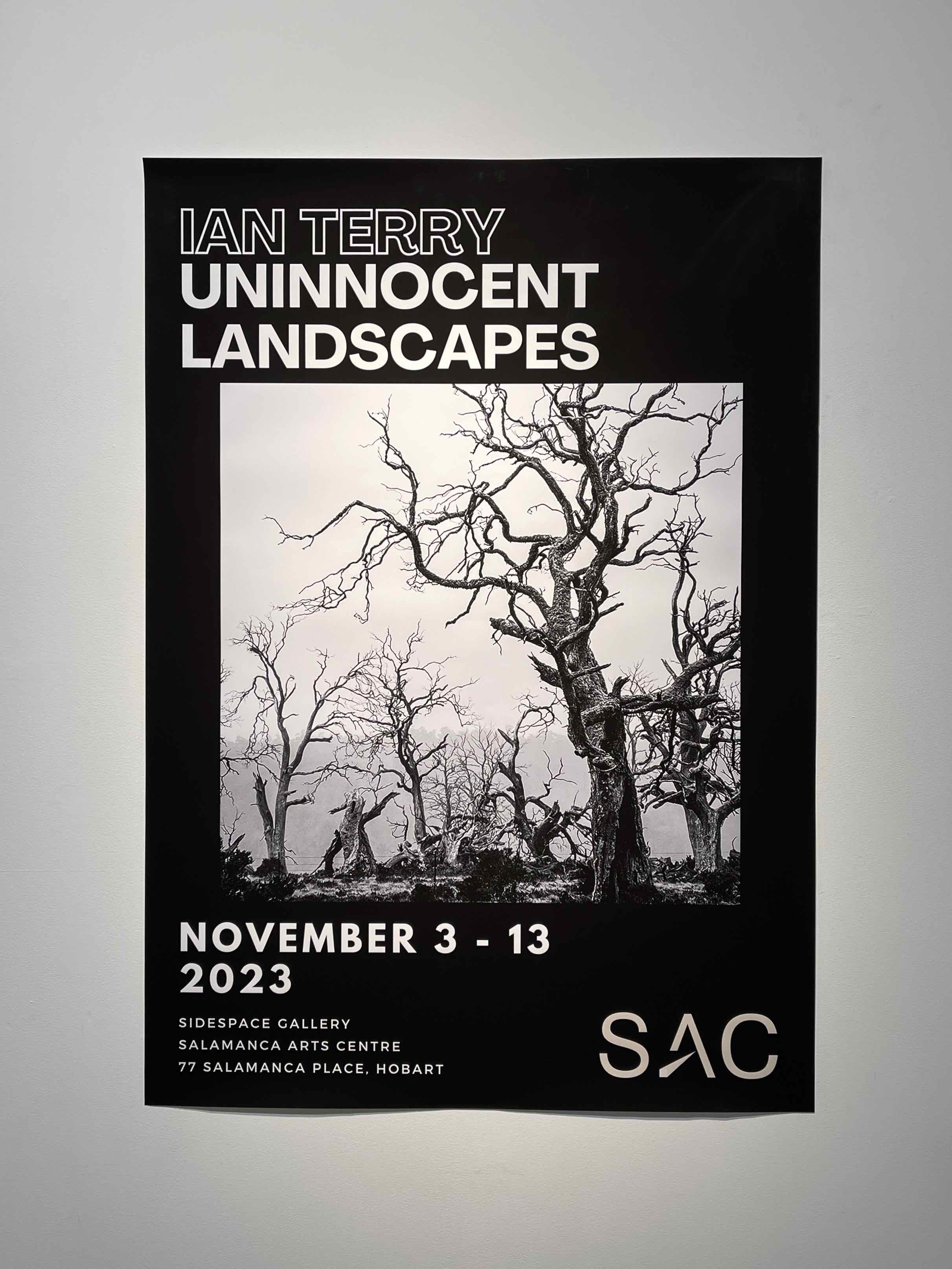
Those of you who know me on other social media will already have seen some of this, but I am keen to spread the message wherever I can about my brother’s wonderful, and significant, project. I introduced it back in September – and later in Nonfiction November I will review the book. That, however, will be after the exhibition has closed, and I want to encourage anyone who is in Tasmania to see it.

Uninnocent Landscapes – the exhibition and book – is the culmination of an idea Ian started thinking about a decade ago, but that he actively worked on over the last two to three years. It involved his following the journey taken by George Augustus Robinson on his 1831/32 Big River Mission, which was a poorly conceived attempt to conciliate between settler and Aboriginal Tasmanians. Needless to say it was a disaster, that effectively ended First People’s resistance in lutruwita/Tasmania (at the time anyhow!) For Ian, who has come to call lutruwita home, there is discomfort in reconciling his privileged life as a middle-class white man with the devastating impact of colonialism on Tasmania’s First Peoples. This is his truthtelling project, and he found a unique way to do it by combining the three big passions of his life (besides family) – history, photography and the bush.

I will write more about this when I review the book because what Ian has done feels original and exciting. Essentially, though, the book and the exhibition comprise photographs accompanied by excerpts from Robinson’s journal, resulting in an experience that is enlightening, engrossing, and sobering. The exhibition contains a selection of 11 from the book’s over 50 photographs.

The venue, Sidespace Gallery, is in a heritage building that dates back to the mid-1800s. This means two things – there are some restrictions on how items can be affixed, and the walls and floors are not what you would call square. However, Ian and his “crack instal team” did the research and, by the time I got there, were ready to go. The photographs – large-scale archival prints – were “hung” through a clever system of special Japanese tape (that doesn’t mark walls), double-sided tape, and magnets. I enjoyed being a little part of it all on the first day of installation, and loved meeting Ian’s delightful, hardworking team, Erica and Nikki, who made me feel so very welcome.

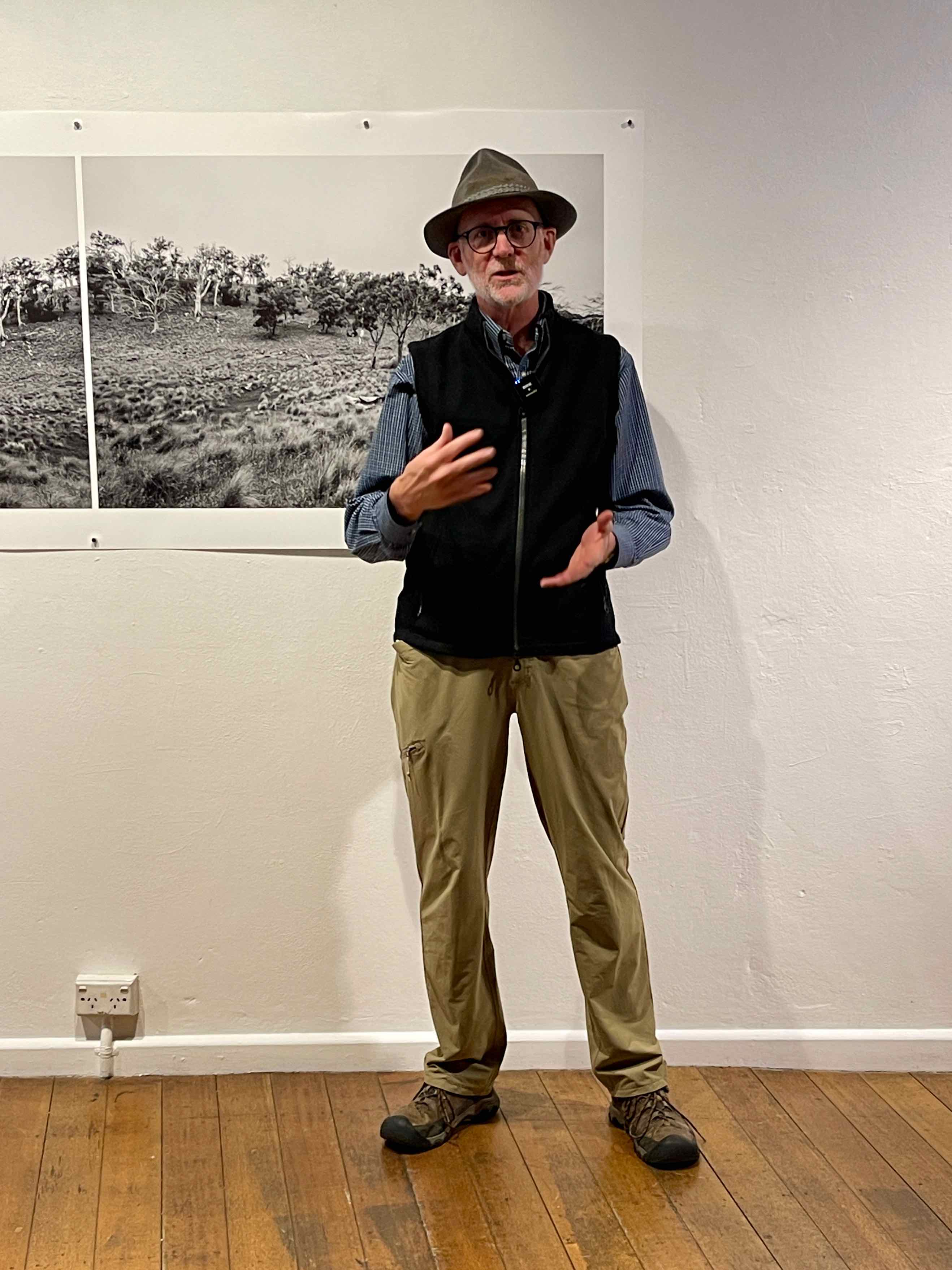
The opening (and book launch) went very well, with 50 or 60 in attendance. The MC was writer and researcher Steph Cahalan, and the exhibition was formally opened by Tony Brown, a First Nations man and museum colleague of my now-retired brother. Ian of course then spoke to his project, explaining, among other things, that he had discussed his project with many in the local Aboriginal community, and had made clear that he was not trying to tell their story, but his own. His good relationships with the community suggest that they accept this.

It was a warm-hearted event attended by historians, artists, museum professionals, bushies, activists, not to mention family and friends. I met and talked with so many interesting, thoughtful people who support Ian’s project and believe in what he is doing. I can’t name them all, but before it all started I had a great chat with the two women who designed and published the book. Our conversation ranged from technical issues like fonts to more personal ones like downsizing and philanthropy. It was truly a privilege to be there.

Ian calls Uninnocent Landscapes a photographic conversation. By this he means, I think – though I didn’t ask him while we were together – that he is using photography to reflect on (to interrogate, in fact) his relationship with the Tasmanian landscape he loves so much but which has been indelibly affected by over two centuries of colonialism. The idea of conversation, however, also encompasses something ongoing and inclusive, something inviting us all to join in as we engage with his photos and, for those of us living in colonised places, as we engage with “our” places. I will discuss this more, and talk about the title, in my review!

Uninnocent landscapes, the book, is published and distributed by OUTSIDE THE BOX / Earth Arts Rights under their imprint An Artist’s Own Book. It costs $65, and all proceeds are going to the Aboriginal Land Council of Tasmania’s Giving Land Back fund. You can order it here.

Ian Terry
Uninnocent Landscapes
Sidespace Galley, Salamanca Arts Centre
3 – 13 November, 2023
Admission is free


Monday musings on Australian literature: Introducing Uninnocent landscapes

You heard it here first – or, first(ish) anyhow, as the webpage is up and orders are already coming in for a new, beautiful book, Uninnocent landscapes: Following George Augustus Robinson’s Big River Mission. Yes, I admit it isn’t out yet so I haven’t actually seen it, but I know it is beautiful because I’ve seen some of the content over the years, and I’ve seen the cover on the website. It looks stunning.

Of course, I’m biased because the creator is my brother, Ian Terry. However, it goes without saying that I wouldn’t be writing this if I didn’t feel his project was worthwhile.

So, the project … Ian introduces his motivation on the publisher’s website:

Without invasion, colonisation and the near destruction of lutruwita’s First People, without Robinson’s ‘Friendly Mission’, I would not have had the opportunity to feel so much at home on this island. This is a reality that, as much as we might try to ignore it, non-Indigenous Tasmanians cannot escape. How do we come to terms with our privilege and its Janus face, the violent and continuing dispossession of palawa/pakana?

Now, Ian’s last job before retirement was a senior curator of history at the Tasmanian Museum and Art Gallery, during which time, among other things, he mounted exhibitions on First Nations history. He has, for nearly three decades, been an active and contributing member of THRA, the Tasmanian Historical Research Association. History was his undergraduate major, and in the early 1990s he complemented these studies with a Graduate Diploma in Cultural Heritage Management, after which he began working as a freelance history consultant – in lutruwita/Tasmania. History, you could say, is in his blood – and was not going to stop flowing after he retired. Enter the project …

But first, I need to add that in addition to his love of history, Ian has been a photographer since early adulthood. Way back in the the fall of 1983, he joined Mr Gums and me on a road trip through New England and Eastern Canada. We all took photos, but Ian was the one who would climb the hill behind the gorgeous white-spired church, or run across the bridge to the other side of a pretty river, to get the best shot. That interest has never waned and he has honed his skills to the point that he is now achieving recognition in photographic competitions.

This project, which involved his following the steps of George Augustus Robinson’s 1831 Big River Mission (brief description), combines these two passions. It has required historical research to identify Robinson’s movements and actions. It also called on Ian’s negotiating skills when, for example, he needed to enter private property to take the desired photos. It used his well-developed bush skills when he needed to explore more difficult landscapes. And, it depended on his photographic skills because photographs form the core of the book.

Of course, Ian’s tracing of Robinson’s path was not aimless. As the above-linked publisher’s website says, he had various questions in his head as he worked through his project, questions like

What memories do the landscapes of lutruwita/Tasmania hold? What stories are embedded in the rocks, the trees and grasses, the waters of rivers and lagoons? What could the landscape tell us about invasion, colonisation and the destruction of First People’s life and culture? What could it tell us about our own lives here on this island?

Uninnocent landscapes, the book, comprises a selection of Ian’s photographs documenting the landscape in a way that also expresses his ideas about it. It also contains an introduction by Tasmanian art historian, curator, essayist and commentator on identity and place Greg Lehman (a descendant of the Trawulwuy people of north-east Tasmania), and four essays, one by him and three he commissioned from:

  • Rebecca Digney (manager, Aboriginal Land Council of Tasmania)
  • Roderic O’Connor (woolgrower and Connorville custodian)
  • Nunami Sculthorpe-Green (activist/artist and proud palawa and Warlpiri woman)  

I can’t wait to see and read it – and, isn’t it a great title?

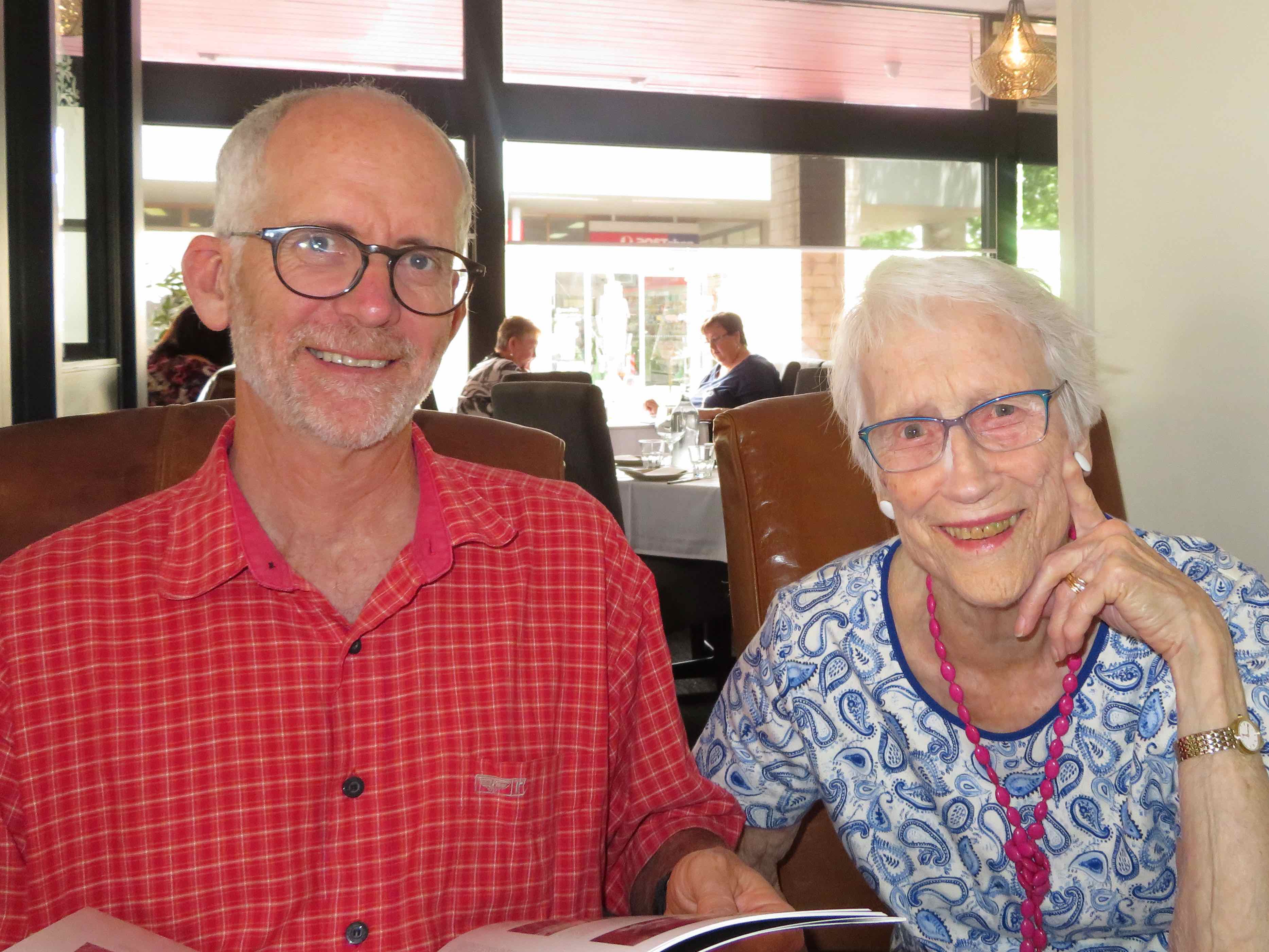
Ian with our mother, 2017

But wait, there’s more … there is also Uninnocent landscapes, the exhibition. It will feature large-scale archival prints from the book, and will be held in the Sidespace Gallery at Salamanca Arts Centre in nipaluna/Hobart from 2–14 November 2023. I will be there at the opening.

Uninnocent landscapes is published and distributed by OUTSIDE THE BOX / Earth Arts Rights under their imprint An Artist’s Own Book, and will be available from early November. It costs $65, and all proceeds will go to the Aboriginal Land Council of Tasmania’s Giving Land Back fund. You can preorder here.

To fully disclose: Ian did not pay (or even ask) for this announcement, but he is accommodating me (I hope) on my trip to lutruwita to attend the exhibition opening!


Robert Drewe, Nimblefoot (#BookReview)

Nimblefoot is Robert Drewe’s eight novel, but is the first of his that my reading group has done. Drewe is a prolific and versatile writer, having written memoir and other nonfiction, as well as short stories and novels, both. contemporary-set and historical. In other words, he is not easy to compartmentalise. He has appeared before in my blog, with his 2015 Seymour Biography Lecture and in a Monday Musings Spotlight post in 2019, and now, finally, he comes in a review.

Nimblefoot is historical fiction. It was inspired by the story of Johnny Day (1856-1885), who is described by the book’s promotion as Australia’s first international sports hero. He was a “pedestrian” (the fore-runner of racewalking) and, as a 9- and 10-year-old, he won several races, becoming World Champion. But this wasn’t Johnny’s only sporting claim to fame. In 1870, at the age of 14 and by then an apprentice jockey, he won the Melbourne Cup on a horse named Nimblefoot (which was surely a “give” of a title for Drewe, considering Day’s speed-walking career as well!)

Anyhow, here was another situation where I was keen for an author’s Afterword. Drewe explains his inspiration, saying that “several years ago Nat Williams, Treasures curator at the National Library of Australia, and Dr Sarah Engledow, senior historian at the National Portrait Gallery, showed me a portrait of a small boy named Johnny Day”. They clearly knew the reason for this portrait, but continues Drewe, “research into his life after his Melbourne Cup victory proved fruitless”. He thought it strange “that the famous walker and rider had left no cultural footprint”. Hence, his decision to imagine what might have become of him. A member of my reading group pointed out that Wikipedia does complete Johnny Day’s story. However, that page was written in late 2022, after the publication of this novel. Information on Johnny Day is now findable through Trove, but this letter to the editor of Sportsman after his death suggests that there really wasn’t much written about him. Further, Drewe took many years to write this novel so it’s likely that, when he started at least, Trove did not have the content it does now.

So now, that out of the way, on with the post … except that I will say one more thing about Trove. It looks like Robert Drewe loves Trove as much as I do, because Nimblefoot is full of delicious anecdotes from the period – mid-1860s to around 1880 – in which the novel is set. They were so delicious that I checked a couple – including one about the explorer John Horrocks being shot by his camel. Sure enough, there they were. Indeed, if I have a criticism of the novel, it’s that at times it felt like Drewe let his research – let these delicious little stories – get in the way of his own story, resulting in not so quite as tight a novel as, say, Eleanor Limprecht’s The Coast.

However, I did thoroughly enjoy the novel. Nimblefoot, like much of Drewe’s work, is an evocative read about “colourful” (euphemistically-speaking) time in Australian history. Drewe mixes real personages of the time, like Prince Alfred and the Chief Commissioner of Police Frederick Standish, with fictional characters, and takes our hero, Johnny Day, from his home in Ballarat and Melbourne to Perth and southwest Western Australia where he goes on the run after some seedy happenings involving the aforesaid Prince Alfred and Standish put him in danger. Along the way, we glean much social history, particularly about life on the land and in small town Australia, where Johnny takes on many jobs, including yardman, ostler and swamper. It was in some of these sections that I felt Drewe digressed somewhat from his centre, but the picture he built engaged me, nonetheless.

It engaged me not just because of the character of Johnny, whom you can’t help liking and wanting to keep safe, and not just because of his depiction of the times, but also because of his writing (laced, I must say, with wry humour). From his earliest books, Drewe has been able to capture the essence of a place beautifully. Here is a Pedestrian race-day:

It’s a cloudless February afternoon, so still the air’s vibrating. One of those windless country afternoons with cicadas buzzing and crows gagging and whiffs of dead things in the bushes. (“This hot, humming afternoon”)

How can you not “feel” that? In this chapter, Drewe also makes all sorts of social commentary, but subtly, so that you are just aware of it as you pass through:

And around they go. Past the first billboard. Pears Soap. A black kid sitting in a tin bath, while a white boy in a sailor suit, all blond and curls and dimples, scrubs the blackness off him.

What were they thinking? We know, don’t we?

Anyhow, moving on. In the first third of the novel, the scene is set, with Drewe setting us up for Johnny’s life after winning the Melbourne Cup. It’s a story of exploitation (at best) and corruption (at worst) with Johnny being used and abused for the benefit of others, including his father who makes money on his races, Nimblefoot’s owner who manages to not pay him his jockey winner’s fee, and Prince Albert (and his cronies, including Standish) who take him like a trophy to Melbourne’s seamy and seed sites, the bars and brothels frequented by the powerful. It is after this night, when Johnny witnesses violence and murder, that he goes on the run, ending up in Western Australia.

Nimblefoot is many novels in one. It’s an adventure story with a picaresque element, which we takes to many locations and introduces many characters. It’s a man-hunt thriller. It’s a coming-of-age story in which Johnny experiences love and gains wisdom: “Never seen my father looking helpless and weak before. It’s him in another different light. The older I get, the more different lights there are”. And it’s a social history …

But why, besides the inspiration to imagine Johnny Day’s life, did Drewe write this novel? In my Monday Musings Spotlight on him, I refer to a 2009 interview with Drewe which discusses his interest in writing both novels and short stories. He essentially said that in novels he’s “interested in ideas” while short stories are easier for “relationships … and conflicts between people”. So, what are the ideas Drewe explores here? My sense is that it has something to do with exposing Australian society of the period. Larrkinism would be a generous way of putting it, but Drewe delves deeper, showing the way power, masculine power, to be precise, so easily bends to exploitation, corruption and lawlessness. Along the way, references are made to the roles played by women (in brothels, hospitals, and on properties), to Nyoongar history and culture, and to “better” men. It’s a realistic picture and one that feels authentic to the milieu in which the novel is set.

Nimblefoot is not the most perfect novel I’ve read. Besides the many historical digressions, there is also a curious switching between third and first person voices throughout the novel. They surprised at times, but they did give freshness and reality to Johnny’s experience. Overall, Nimblefoot proved to be a good read that managed to keep me engaged from its opening words to its end, despite the moving stress I was under. Not all books would have achieved that.

Lisa has also reviewed this novel.

Robert Drewe
Nimblefoot
Hamish Hamilton, 2022
315pp.
ISBN: 9781760143749 (eBook)

Mark McKenna, Return to Uluru (#BookReview)

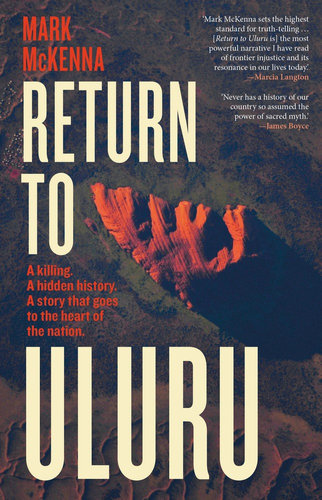
Mark McKenna’s engrossing history, Return to Uluru, takes as its starting point the arrival in Central Australia, in 1931, of 29-year-old police officer, Bill McKinnon. Of course, Uluru’s true history reaches back into the almost-incomprehensible mists of geological time, and its human history back to the arrival of Indigenous Australians tens of thousands of years ago. But, a historian has to start somewhere, and McKenna’s choice of McKinnon’s arrival speaks to the particular story he wants to tell.

Uluru

Before I get to that, though, I would like to share my own little story. Mr Gums and I have visited Uluru three times (so far), in 2000, 2009, and 2015. Each visit, we walked around “the rock” rather than climb it, because that was the expressed preference of its traditional owners, the Anangu. In 2019, the climb was finally closed. Interestingly, each of our circumnavigations was a bit longer than the previous one, stretching from around 9kms the first time to around 11kms the last. This is because the Anangu have gradually moved the route away from particularly sacred sections of Uluru. It’s been a very slow process for the Anangu to claw back ownership of their own country and it is to this, really, that McKenna’s book ultimately speaks.

But, that’s not immediately obvious at the book’s opening. It’s divided onto four parts, with Part one, “Looking for the centre”, introducing the reader to Central Australia. It teases out the role of “the centre” in Australian life and culture, pitting its Indigenous history and significance against the early settlers/explorers’ “awe, terror and incomprehension” at what they found. McKenna writes that for the settler “to find the centre was to confront the metaphysical dilemma of being a white man in an Aboriginal country”:

What they saw as empty was layered with story … Where European explorers saw arid desolation, Aboriginal people knew a larder teeming with sources of animal protein and fat and a wide variety of plants that provided nutrition, medicine, tools and shelter.

McKenna then shifts from traditional history-writing to the personal, placing himself in the story by sharing his own experience of the Centre but continuing to reveal its history as well. This approach enables McKenna to reflect philosophically, as well as historically, on what he was doing. He conveys how confronting, and how paradoxical, the Centre can be. “It laid everything bare at the same time as it pushed all language and emotion within.” But, most significantly, he writes how actually visiting the centre “unsettled the history” that he had intended to write. So, let’s get to that.

Part two, “Lawman”, returns to a more traditional history – or biography, now – style. It tells the story of Bill McKinnon, who he was, how he ended up in the Centre, and what he did there. The focus, though, is a particular expedition in 1934 whose goal was to capture some Aboriginal men accused of killing, under Tribal Law, another Aboriginal man. One of these men, Yokununna, was shot and killed by McKinnon. This incident was to be just part of McKenna’s history but, as he wrote in Part one, it became the centre of the book when he recognised that the “biography of one moment in one man’s life encompassed the entire history of the centre and went straight to the heart of the nation’s long struggle to come to terms with its past”.

“Lawman” is the longest part of the book. Bill McKinnon was a complex man. He unquestioningly bought into the settler project and saw “discipline” as the key to maintaining control, a discipline that, of course, frequently involved brutality. But he wanted “to be both the centre’s law enforcer and its storyteller”. He was keenly interested in the centre’s history, and, writes McKinnon, had “moments of contemplation … when he became faintly aware of the depth and complexity of Aboriginal culture”. He was also a meticulous recordkeeper, and retained his records because “his desire to be present in history was insatiable”.

Part three, “Uluru”, the second longest part, returns, obviously, to focus on Uluru. Here, McKinnon comes back in the frame. He delves more deeply into the settler-era history of Uluru, interweaving it with Indigenous culture and stories. He traces the dispossession of the Anangu, as the settlers moved in, and their gradual return in the second half of the twentieth century. He identifies McKinnon’s shooting of Yokununna at the rock’s Mutitjulu Waterhole as “the foundational moment in a long history of injustice”. It is here that McKenna shows his historian’s eye for the symbolic that makes a point:

Uluru’s creation story and the frontier murder which defined the killing times for the Anangu more than any other event in the twentieth century took place at the same sacred site.

It is also in this part that we see the historian’s drive for the clue that nails the truth, and the challenge that can result. It occurs when he visits McKinnon’s daughter, and is given access to McKinnon’s archives. Remember what a recordkeeper he was? What McKenna finds transforms the story he was telling.

In the final part, “Desert Oak No. 1”, McKenna remains in the frame, as he shares more of his research journey. The focus is Yokununna (“Desert Oak No. 1”) and we start at the South Australian Museum where Yokununna’s skull had been identified. Till this point, I felt McKenna had managed well the tricky business of being a non-Indigenous historian writing an Indigenous-focused history, but I did feel he made a false step when describing the centre as a “region where darkness stalked the landscape”. The word “darkness” seems unfortunate in the context. This, however, is a small miss in a work that recovers a significant story and carefully places it within the context of the return of Uluru to the Anangu in 1983, and the 2017 Uluru Statement from the Heart. Returnng Uluru to its rightful owners is a win for all Australians because Uluru is the spiritual heart of our nation, and it’s critical that our heart be in the right place – if you know what I mean!

Return to Uluru is a beautiful book in every way. It is gorgeously produced. Those of us in my reading group who read the physical version loved the paper and the extensive images. We felt sorry for the Kindle readers who missed this experience. But more importantly, Return to Uluru is sophisticated, conceptually, in the structured way McKenna elicits the symbolism from the facts to make very clear not only what happened but why it matters.

For an historian’s perspective, check out Janine’s review.

Mark McKenna
Return to Uluru
Carlton, Vic: Black Inc, 2019
256pp.
ISBN: 9781760642556

Monday musings on Australian literature: Thinking about historiography

Last week I wrote a post on Cindy Solonec’s hybrid biography-memoir, Debesa: The story of Frank and Katie Rodriguez. This book, as I explained in my post, is a rewriting of her 2016 PhD thesis which “explored a social history in the West Kimberley based on the way her parents and extended family lived during the mid-1900s.” Immediately, perhaps, you can see what inspired this post.

It has been accepted for some time now that social history, particularly that involving the stories of ordinary people, is a valid and important part of history, of the historical record. But, ordinary people’s lives aren’t well documented, history normally being, as we know, the province of the victors.

Solonec did have significant documentary sources to draw on, as the Kimberley has fascinated people for a long time. She also had her Spanish-born father’s diaries, which were not particularly detailed but they did provide the book’s “chronological framework”. Diaries are a common source for historians, so there’s nothing new about that. But, what about the First Nations side of her family? For that she had to rely on the stories her mother and extended family passed on through oral tradition. She writes that, fortunately,

Aboriginal peoples still uphold past events through oral histories … I was excited to find that their stories were not that hard to cross reference with the literature. Their memory vaults with stories that have been handed down served them well, confirming the reliability of Indigenous intelligence.

This comment reminded me of an essay “On listening to new national storytellers” in The Conversation. Written five years ago by academic Anna Clark, it considers Australian historiography and the historical record, and covers some issues that are discussed in longer tomes like Tom Griffiths’ The art of time travel. But her focus is specific.

Clark refers briefly to the “history wars” before moving on to say that

Debates over Australian history aren’t simply ideological, but also disciplinary, and reflect the historical challenges wrought by changing approaches to the past. 

She makes the point that history isn’t a simple matter of what happened and why, but is affected by “persuasions, politics and prejudices” of the historians writing it. So, a history of the “first settlement” written in, say, the 1930s, is very different to one written today, though the actual events are the same.

Clark goes on to say that Australia’s history has been viewed, at least until the 1960s, in terms of “progress” or advancement. It “privileged the written record” which is “located in archives, libraries and universities (themselves imperial institutions)”. Where did that leave the story of First Nations’ people? Clark writes that:

Dispossessed from their country, Indigenous people were in turn dispossessed from Australian historiography. It was, in the words of the anthropologist, W.E.H. Stanner, our “Great Australian Silence”, and his phrase has come to characterise the nation’s own historiographical “dark ages”.

Gradually, historians, inspired by the likes of Henry Reynolds, started to write histories that looked through lenses different to the “simple story of progress and advancement”. To do this, they used “Indigenous testimony and oral history sources”. This challenged traditional “historical research methods, which depended on written primary sources”.

Contributing to this shift have been Indigenous historians – such as Steve Kinnane, Noel Pearson and Larissa Behrendt – who have promoted “the inclusion of new historical lenses to read between the lines of colonial sources”.

Other storytellers?

That’s a good thing, but Clark has more questions, such as: while historians were “erasing the impact of settler-colonial society on Indigenous people in Australia”, were other “national storytellers” doing the same? And here is where it becomes interesting in terms of what we call “history”.

Take poetry, for example. Clark writes that

the sound of colonial violence and Aboriginal dispossession was ringing loud and clear in Judith Wright’s poem Nigger’s Leap, New England. Published in 1945, it’s based on the story of an Aboriginal massacre told to Wright by her father, and is a powerful antidote to Australian historiography of the time.

Or novels, like Eleanor Dark’s The timeless land (1941). In it “Dark tries to capture the cultural clash between the Eora people and the British colonisers in early Sydney”. This might be historical fiction, but Tom Griffiths, she says, argued in his book that “Dark deserves recognition as a historian for the work she did, and her impact on Australians’ historical consciousness”.

This doesn’t mean, she continues, that historians should ignore

the conventions of truth-seeking and critical inquiry. But as Griffiths intimates in his recent book, the relationship between history and fiction is surely more a dance than a clash, despite the heated debate over Kate Grenville’s historical novel, The Secret River. And historians who ignore the potential of fiction to imagine their way into some of those undocumented encounters diminish their own historical imaginations, he concludes.

Regular readers here will know that this accords with my – admittedly non-expert – views on the matter.

Anyhow, she goes on … mentions Mudrooroo’s Doctor Wooreddy’s Prescription for Enduring the Ending of the World, and other potential sources of history …

I think you get the gist. The point she is making is that there is increasing recognition of “the need to broaden our conception of historiography to reflect the many ways we make history, and consume it”. Aboriginal rock art is an obvious example, and other forms of “material culture”. Clark argues, and here we loop back to Cindy Solonec, that there is a need:

in Australia to expand and reconceptualise our understanding of historiography in order to recognise that history is frequently captured and made outside the academy ­– in fiction, poetry, art and even beyond the public domain altogether, such as local and family histories.

Clark has more to say, but concludes that she’s interested in how less traditional records or stories, these “vernacular epistemologies”, “can add both to our understanding of the past and the discipline itself”. I’ve been fascinated by historiography since I read EH Carr’s What is history at university, and so I loved this article.

Any thoughts?

Michelle Arrow in conversation with Frank Bongiorno

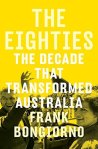
A few days ago, Mr Gums and I attended another ANU/The Canberra Times Meet the Author event, this one featuring Australian historian Michelle Arrow in conversation with Australian historian Frank Bongiorno. It was an especially interesting pairing because Arrow’s book, which she is currently touring, is titled The seventies: The personal, the political and the making of modern Australia, while Frank Bongiorno wrote, just 4 years ago, The eighties: The decade that transformed Australia. So, it was a case of the Seventies facing off against the Eighties! Fortunately no blood was shed…

The conversation was introduced, as usual, by MC Colin Steele, who does a marvellous job of organising and mc-ing these events. In his intro, he told us that one of the main threads in Arrow’s book is the now well-known idea that the personal is political. This theme also ran through the conversation.

The Seventies was a big decade for me. It’s the decade in which I graduated, established my professional career, and married. It’s also the decade in which I read Germaine Greer’s The female eunuch, and when the great reformer, Gough Whitlam, came to power – and showed what a government with vision and heart could do. I must say that it is rather disconcerting to think that an era in which we were fully adult is now the subject of serious history! Such is life!

Now, the conversation …

The conversation

Michelle Arrow, The SeventiesBongiorno commenced by asking Arrow how she defined her decade. Before I share her answer, I should explain that Arrow later told us that, while Bongiorno had taken a comprehensive look at the Eighties, she had narrowed her decade’s focus to gender and sexuality. This affected how she defined the decade. So, her answer was that she took the formation of the Homosexual Law Reform Society in the ACT in 1969 as her start, and the Women Against Rape in War protests (which also originated in Canberra) of the early 1980s as her end. She noted that soon after these protests, the ANZAC narrative began to dominate our national mythology.

Bongiorno asked Arrow to describe the discourse characterising the Seventies. Arrow talked about its being a time of rapid social and economic change and, consequently, of some disarray. Feminism and Gay Rights were big issues.

The conversation then turned to the theme mentioned by Colin Steele that the personal is the political. The main example of this, Arrow explained, is feminism. Women began to realise that their personal experiences and concerns (economic and social, for example) were structurally and politically based. Formal and informal consciousness-raising groups began exploring the underlying issues. This theme also played out in the gay and lesbian rights movement: being gay was also seen as having a political component. She mentioned here the work of the early-1970s-formed group, CAMP (Campaign Against Moral Persecution).

After this rather long introduction, we got to the core of Arrow’s book, the Royal Commission on Human Relationships. This Commission grew out of the Whitlam government’s failed attempt to reform abortion law. It was reading the fascinating personal submissions to this Commission that inspired Arrow’s book. While the Dismissal and Fraser’s election resulted in funding cuts to the Commission, bringing the Report forward and affecting the end result, the submissions themselves remain valuable.

Bongiorno noted that this Commission initiated a new role and purpose for these sorts of enquiries. Arrow agreed, explaining that it legitimated people’s stories and played a therapeutic role, both of which we still see today. (The recent Royal Commission into Institutional Responses to Child Sexual Abuse is a good example)

Another issue discussed was that of violence – and its appearance in the submissions. Violence also reflects “the personal is the political” theme. Corporal punishment for children, violence against women and girls, and gay bashing were all issues that played out politically. Bongiorno referred to Pierre Trudeau’s famous statement that “there’s no place for the state in the bedrooms of the nation”. Arrow explored the paradoxical nature of this argument: homosexual people sought freedom and privacy for the expression of their sexuality, while women were seeking protection for theirs!

There was of course a discussion about the Pill and its role. I was interested, given contemporary politics, in Arrow’s comment that the liberation of the 1960s, afforded by developments like the Pill, transformed in the 1970s to concerns with identity.

Bongiorno, though, pushed on to ask about the relationship between women’s liberation and the sexual revolution. Arrow talked about researching 1970s popular culture. She read magazines like Cleo and Forum, and suggested that Cleo had a more feminist aspect underpinning its exploration of sexuality and bodily knowledge, than did Forum. She commented that “letters to the editor” were particularly informative. She shared her shock on reading a response to a letter about father-daughter incest that said it was caused by wives not satisfying their husbands. How far we have (hopefully) come!

She also looked at movies – such as Alvin Purple and Petersen – for their evocation of sex, class and gender.

The conversation concluded by discussing Whitlam, the Seventies, and whether it matters. Arrow argued that there was a particular convergence in Australia of the height of the women’s liberation movement and the election of the Whitlam government. This resulted in things like Elizabeth Reid becoming the first women’s adviser to a leader anywhere in the world, to a big government commitment to International Women’s year, to attempts to reform abortion law (still an issue today), and the Royal Commission on Human Relationships. Fraser, coming into power at the end of 1975, had to face this new infrastructure. She traces in her book what happened to women’s issues as time passed – for example, to Women’s Refuge funding made by Whitlam in 1975.

Q & A

The Q&A, though brief, demonstrated the audience’s knowledge of the Seventies! Topics included:

  •  No-fault divorce laws (the Family Law Act of 1975): Arrow agreed this was crucial social change, and it is covered in the book
  • Multiculturalism: This is mentioned in the book, but given her focus, it’s mostly in relation to migrant and indigenous women in the women’s movement, and how the movement accommodated difference.
  • Indigenous issues (Tent Embassy, Land rights, etc): Again, because of her focus, her coverage mostly relates to women. She noted that because of Indigenous people’s specific concerns, Indigenous women did not particularly feel part of the women’s movement.
  • Education: Arrow agreed that Whitlam’s opening up access to tertiary education was transformative, and that it was particularly so for middle-class women (rather than for its main intention, working class people.) This led to the rise of women’s studies in universities, and to women (as teachers) then taking their learning out to schools – proving, again, that “the personal is political”.
  • Backlash against feminism: Arrow noted PM Malcolm Fraser’s (1975-1983) “more fractious” relationship with the women’s movement, and the rise of anti-feminist groups. However, the women’s movement, she said, “opened up spaces for protest”.

Another questioner cheekily asked which decade – the 70s or 80s – was most influential, to which the replies were mutually respectful!

The final question I’ll share concerned whether “the personal is political” theme played out in other parts of the world. Arrow responded “yes, mostly in women’s movements”, but that in Australia the convergence of Whitlam with women’s movement gave it a particular flavour. She noted the significance of the Royal Commission on Human Relationships being not just about work but private life as well, and that this influenced the flavour of action in Australia.

Vote of thanks

Frank Bongiorno, The eightiesSociologist/social commentator Hugh Mackay gave an inspired vote of thanks. With a cheeky glint, he compared the subtitle of Arrow’s 70s book – “the making of modern Australia” – with that of Bongiorno’s 80s book – “the decade that transformed Australia”.

He discussed the major “revolutions” Arrow explores – women’s and gay rights. He noted that histories like Arrow’s show how rocky these were, and how far we have come. It is because of these revolutions, he suggested, that we now better understand Gender and Equality. He then talked a bit about gender and its place today – and why young women seem to feel that it, as a concept, is less relevant to the inclusive, gender-blind, world we want. However, he said, those wanting to eschew the “feminist” tag might want to read Arrow’s book to see just how rocky and difficult it’s been to get where we are today.

It was a lively and engaged encounter, and one which I’ve got even more out of by writing up!

ANU/The Canberra Times Meet the Author
MC: Colin Steele
Australian National University
7 March 2019

Clare Wright, You daughters of freedom (#BookReview)

Clare Wright, You daughters of freedomWell, that was a tome and a half! And in saying this I’m referring less to the length of Clare Wright’s new history, You daughters of freedom: The Australians who won the vote and inspired the world, than to its depth and richness. There are, in fact, two main stories going on here – the story of women’s suffrage in Australia and England, and that of Australia’s leadership in the world, at the time, in terms of progressive politics, of forward-thinking social legislation. They were heady, optimistic times, and the suffragists (being those men and women who advocated for women’s enfranchisement) were part of it all.

Clare Wright frames her history of this period in Australia’s nationhood through the story of five suffragists – Vida Goldstein (1869-1949), Dora Montefiore (1851-1933), Nellie Martel (1855-1940), Dora Meeson Coates (1869-1955), and Muriel Matters (1877-1969). These women should – like that famous suffragette Emmeline Pankhurst is – be household words. Indeed Pankhurst knew and used most of them in her long battle for women’s suffrage in England. Why are they not? Why, for example, asked Clare Wright at the lecture I attended, is there no statue to Vida Goldstein in Victoria? (There is, she tells us in her Epilogue, a memorial park bench in her hometown of Portland, Vic! A park bench!!)

Well, lest we think they are not well-known because achieving suffrage was oh-so easy in Australia, Vida told otherwise to a US Senate Select Committee on US Suffrage during her 1902 USA tour:

Vida wished the senators to know, too, that this was the result of years of hard fighting–in case they also subscribe to the ‘one fine day if just happened’ school of political progress.

In other words, our five women (and all the other Australian fighters for the cause) may not have had to chain themselves to a grille like Muriel Matters did in England in the Suffragette cause, nor refuse to pay taxes as Dora Montefiore also did in England for the same cause, but they had lobbied their case hard. Indeed, while South Australia granted suffrage to its women in 1894, and the new federal government to women in 1902, it took until 1908 for the last state in Australia, Victoria, to do so.

I should clarify here that, although Australia was a leader in women’s suffrage by being the first nation to legislate suffrage for all white adult Australian women, without property qualifications, and to enable those women to stand for parliament, it was just for white women. As Wright says, “it was now race, not gender, that defined the limits of Australian citizenship.”

Writing history

You daughters of freedom is, then, a good read, because the story it tells is fascinating. The five significant women are all wonderful subjects in their own right:

  • Vida Goldstein, the private school girl who “developed a passionate commitment to the underprivileged” and a “zeal for social reform”, and stood for parliament several times to pave the way for others;
  • Dora Montefiore, the committed socialist whose practice of non-violent civil disobedience was observed by a young Gandhi;
  • Nellie Martel, the elocutionist whose militant activism resulted in her being arrested in England and spurned by papers at home;
  • Dora Meeson Coates, the artist whose “Trust the women” banner is now on permanent display in Parliament House; and
  • Muriel Matters, the actor who led the grille protest in the House of Commons, flew in a “Votes for Women” labelled airship over London, and undertook a popular, successful lecture tour on English suffrage in Australia.

I’m not going to share their stories, because you can find them in reviews (like Lisa’s, in the link below), in the Australian Dictionary of Biography (on which their names above are linked), and most importantly in Clare Wright’s book. Each of these women played critical roles in the suffrage fight both home and in England where limited women’s suffrage wasn’t achieved until 1918.

No, what I want to write about is the style, because no matter how interesting or important history is, few (besides the academics and die-hards) will read it if it it’s not written in a way that engages. And this is where Wright shines. It’s a hefty tome, at nearly 500 pages. It’s a complex one which juggles the stories of five quite disparate women, from the late nineteenth century to the second decade of the twentieth. And it is extensively researched, with each page containing not one but several quotes from mostly primary sources (such as newspapers, speeches, and documents from personal papers.) A daunting work for researcher and reader alike.

In my admittedly limited knowledge of historical writing – so I might be barking up the wrong tree – Clare Wright’s approach reminded me somewhat of Thomas Carlyle’s in his three-volume The French Revolution. It’s a few decades since I read Carlyle, but that history could be written with such verve and colour made a big impression on me. Like Carlyle, though perhaps not quite so flamboyantly, Wright is not afraid to use bold rhetorical tools to tell her story. Explaining why 1911 didn’t turn out to be the golden year England’s suffragettes hoped, Wright writes:

Truth be told, the writing was on the wall well before that. The summer of 1911 continued in a national pantomime of over-the-top pageantry and under-the-surface tension with the King and his court centre stage. But the audience should have been shouting, ‘Over there! Look over there!’

Over there  … to Bermondesy […]

Over there … to Ireland […]

And further over there–to Germany […]

The glorious late summer of Edwardian England was about to shatter like a cheap vase.

There is nothing inaccurate in what she says – to my knowledge, anyhow – but the way she says it is fresh, compelling, and devoid of dry or, worse, obfuscating academese. I could pull out example after example of writing that captures our attention, but I think I’ve made my point.

Wright is also careful to make clear where the historical record is lacking. Why did Nellie, for example, suddenly disappear from public life? Wright explains that there are no clear answers, but follows up to discuss the “few clues”.

And, then, almost best of all, there’s the extensive use of contemporary newspaper reportage – surely made so much easier for modern researchers by the wonderful Trove. Wright draws on conservative and progressive newspapers from around Australia to reflect what people – as represented by editors and journalists – were thinking at the time. When Nellie, say, or Vida, were active in England, the Australian papers were watching closely and reporting. Not only does this flesh out our understanding of the suffrage question, but it fleshes out the wider social history.

The book is chronologically told, with evocatively titled chapters, such as, for example, Chapter 28’s “Homecoming Queen, Australia, winter 1910”, which chronicles Muriel Matters’ return home for her lecture tour. However, despite this signposting, readers do have to be on their mettle to keep track of our five suffragettes, to know where they are at any one time, and which of the many political organisations, if any, they’re aligned with. It’s a complicated story that Wright aims to tell – and following it requires attention.

They were heady days …

So, You daughters of freedom, is an engrossing read – but, I have to admit that, as I read it, I became sadder and sadder. This was mainly because of that thread that I mentioned in my opening paragraph, the one to do with Australia’s leadership in terms of progressive politics. What happened to us – us Australians I mean? There we were, at the turn of the century, leading the world, not only in women’s suffrage but in a whole raft of social reform measures, relating to working conditions, conditions for women and children, and, even, Maternity Allowance. We were also the first nation to elect a socialist or Labor government, when Andrew Fisher was swept into power in 1910.

Well, what happened, says Wright, was World War 1, which completely changed the nation’s narrative. But that is another story. Meanwhile, I highly recommend You daughters of freedom, and look forward to Wright’s third book in her planned trilogy on Australian democracy.

Lisa (ANZLitLovers) has also reviewed this book. She liked it too.

AWW Badge 2018Clare Wright
You daughters of freedom: The Australians who won the vote and inspired the world
Melbourne: Text Publishing, 2018
553pp.
ISBN: 9781925603934

Rebecca Skloot, The immortal life of Henrietta Lacks (#BookReview)

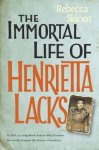
Rebecca Skloot, The immortal life of Henrietta LacksIn her extensive acknowledgements at the end of her book, The immortal life of Henrietta Lacks, Rebecca Skloot thanks “Heather at The Book Store, who tracked down every good novel she could find with a disjointed structure, all of which I devoured while trying to figure out the structure of this book.” Interesting that she looked at novels, particularly given our recent discussion regarding non-fiction that reads like fiction, but more on that later …

Many of you will have heard of the book, or, if not, of Henrietta Lacks, or of her HeLa cells? It’s a sort of hybrid biography-cum-science book about an African-American woman named Henrietta Lacks who died in 1951, and the immortal HeLa cell line that was and continues to be cultured from her cervical cancer cells. As Skloot writes, “these cells have transformed modern medicine.” The book was published in the USA in 2010. It won multiple awards, including, says Wikipedia, the National Academies Communication Award for “best creative work that helps the public understanding of topics in science, engineering or medicine”. In addition, the paperback edition was on the New York Times Bestseller List for 75 weeks.

I’ve described the book as hybrid, because the story (or biography) of Henrietta Lacks is just one of its threads. It also interrogates the complex intersection between race, class and ethics in medical research as well as broader ethical ramifications of issues like “informed consent” and the commercialisation of human tissue. Skloot, herself, says early in the book,

The Lackses challenged everything I thought I knew about faith, science, journalism, and race. Ultimately, this book is the result. It’s not only the story of HeLa cells and Henrietta Lacks, but of Henrietta’s family—particularly Deborah—and their lifelong struggle to make peace with the existence of those cells, and the science that made them possible.

If you haven’t guessed it by now, then, this book is another example of those non-fiction books that I like so much in which authors author takes us on their journey of discovery, in this case to understand the people and the science, the ethics and the law, behind this astonishing story. Skloot wasn’t the first so tell it, however – something she makes clear during our journey. Earlier stories include Michael Rogers’ 1976 article in Rolling Stone, and the 1997 BBC documentary, The way of all flesh, which you can watch on YouTube. I’m not going to spend a lot of time on the story of the cells, so if you want to know about them – read the book and/or watch this video.

Skloot explains her own fascination with Henrietta, from being introduced to her cells in high school, through those HeLa cells being “omnipresent” throughout her biology degree, to when she was in graduate school studying writing “and became fixated on the idea of someday telling Henrietta’s story”. It’s not surprising then that this book has been extensively researched – as evidenced by the Notes and Acknowledgements. (These two chapters make great reading in themselves.) It took around 10 years to write, not just because of this extensive research. A major issue which Skloot had to confront was the understandable suspicion and anger of the Lacks’ family, whose help she needed if she were to tell this story properly and with integrity. Their story is bound up in a long invidious history of research carried out on African-Americans, which is also detailed in the book.

“What do you mean, ‘everybody else’?!”

So, the structure. The book is divided into three parts – Life, Death, Immortality. In the first two parts, the story is told in two roughly alternating, chronological threads – one telling the story of Henrietta Lacks, her cells, and her family, from 1920 to 1973; the other tracking the early days of Skloot’s research from 1999 to 2000. In the third part, the two tracks coalesce into one chronological thread, starting from 1973 when the late Henrietta’s daughter-in-law, Bobbette, discovers quite accidentally via a friend’s brother-in-law, that Henrietta’s cells were being used in scientific research and had been since 1951. Until that point, no-one in the family had known that Henrietta’s cells were still “alive” and being used in research all over the world:

“What?!” Bobbette yelled, jumping up from her chair. “What you mean you got her cells in your lab?”

He held his hands up, like Whoa, wait a minute. “I ordered them from a supplier just like everybody else.”

“What do you mean, ‘everybody else’?!” Bobbette snapped. “What supplier? Who’s got cells from my mother-in-law?”

She is, to put it mildly, horrified – and rushes to tell her husband and thence the family.

Here, though, I’m going to return to the issue of writing non-fiction like fiction. There’s the use of narrative structure, of plot lines, to create some sort of tension for the reader – in this case it largely revolves around the lives and reactions of the family, particularly Deborah – while we are also learning drier “stuff” about the history and ethics of cell culture and medical research. The dialogue I’ve just shared is part of the main plot line concerning the family’s discovery of what had been happening to Henrietta’s cells.

Then there’s the use of evocative, descriptive language. Skloot doesn’t overdo this, staying, in the main, direct and focused – but there are enough little flourishes to keep the writing interesting, like “HeLa grew like crabgrass” or “tufts of hair like overgrown cotton sprouted from his head”. The imagery draws from the area in which it is set. And, there’s the use of dialogue. Skloot did carry out a lot of interviews over her decade-long research and often makes clear when she’s quoting from those – but not all dialogue comes from that research. Some is imagined – or what critics call “representative”. No-one, for example, would have recorded Henrietta’s exact words when she visited her gynecologist, but Skloot writes:

“I got a knot on my womb,” she told the receptionist. “The doctor need to have a look”.

How much more interesting that is to read than, say, “Henrietta visited her gynaecologist, telling the receptionist that she had pain in her womb that needed to be investigated.” I know what I’d rather read. Not only is dialogue more engaging, but if the writer gets the voice right it enhances our understanding of the character. One of the delights of this book, in fact, is our getting to “know” members of Henrietta’s family, and the dialogue plays a significant role in this. Not non-fiction readers, however, approve of this approach.

As I’ve already said, I’m not going to write a lot about the content of this book, fascinating though it is. It has been written about extensively; there are interviews with Skloot on the web; and for background there’s that BBC documentary. The book is now nearly a decade old. Cell research has moved on, but the story of the intersection of race and class with science and ethics is still relevant. Moreover, this is a book of history – the history of medicine. Close to home for me, for example, was learning that HeLa cells were involved in identifying the connection between the HPV virus and cervical cancer, and thence the development of the vaccine with which my reading group’s daughters were among the first in the world to be vaccinated.

All this makes the book well worth reading. There were, admittedly, times when the cell science got the better of me (and other non-scientific members of my reading group) but not enough to turn us off. Skloot’s courage, warmth and empathy with people out of her ken, the trust those initially fearful, angry people came to place in her, and her ability to tread the fine line between judgement and analysis when discussing actions of the past make this a special read. No-one in my reading group regretted this choice for our schedule. A fine way to end the year.

Rebecca Skloot
The immortal life of Henrietta Lacks
Sydney: Picador, 2010
ISBN: 9781742626260 (ePub)

Dymphna Clark Lecture: Clare Wright and You daughters of freedom

According to the University of Melbourne website, the Dymphna Clark Lecture “is delivered annually by a lecturer who exemplifies the deep commitment Dymphna Clark showed to Australia’s intellectual and cultural life.” Strangely, I can’t find a description of the lecture series on the Manning Clark House site which, I believe, is behind the lecture series. I can, however, find a list of the Manning Clark Lectures up to and including 2019 on their About Us page. Poor form I think, particularly given it was Dymphna, I understand, “who bequeathed the family home to the intellectual and cultural community with the wish that it be used to support artists and public intellectuals and provide a safe haven for the entire community.”

On Facebook I discovered that Drusilla Modjeska gave the 2016 lecture; on the above-linked University of Melbourne site that Anna Funder gave 2013’s; and on Virginia Haussegger’s site that David Headon was 2009. Drilling down to page 3 of my Google search, I found at honestyhistory that Bill Gammage was it for 2014 and on safecom that Eva Sallis was 2007. But, why can’t I easily find a list of all the Dymphna Clark lectures, as I can of the Manning Clark lectures? We could take exception to this, seeing it as, once again, sexism in action, but I’m inclined to think the reason is more mundane, and that it’s a sin of omission, not of commission. So, I now respectfully suggest that they create a new page for the two lecture series and maintain a list, with relevant links, of both series, because they are serious lectures. Clare Wright’s 2018 talk, for example, was being recorded for ABC RN’s Big Ideas program. But now, having made my point, I’ll move on to the lecture.

You daughters of freedom

Technological troubles

It was held in a lecture theatre at the ANU. Unfortunately, despite many people trying for over half an hour to get the technology working, the lecture went ahead without Wright’s accompanying slideshow. A real shame but, luckily, Wright is an excellent, engaging speaker, and easily kept our attention for the 50 minutes or so that she spoke. The lecture was, of course, inspired by Wright’s latest book, You daughters of freedom, the second in her Democracy Trilogy, she told us. Manning Clark House’s promotion for the lecture said the book:

brings to life a time when Australian democracy was the envy of the world—and the standard bearer for progress in a shining new century. For the ten years from 1902, when Australia’s feminist activists won the vote for white women, the world looked to this trailblazing young democracy for inspiration.

This epic new history tells the story of that victory—and of Australia’s role in the subsequent international struggle—through the eyes of five remarkable players: the redoubtable Vida Goldstein, the flamboyant Nellie Martel, indomitable Dora Montefiore, daring Muriel Matters, and the artist Dora Meeson Coates, who painted the controversial Australian banner carried in the British feminist activist marches of 1908 and 1911.   

I’ve started reading the book, and while I’ve only read some 40 of its 500 or so pages, I’m finding it wonderfully readable.

Anyhow, now, really, the lecture! Wright was briefly introduced by Sebastian Clark, President of the Manning Clark House and son of Dymphna and Manning Clark, and then we were off. She started by describing that famous restaurant scene in When Harry met Sally – you all know the one – which concludes with the woman at the next table saying to the server, “I’ll have what she’s having.” Wright teased out some meanings and implications of that scene in terms of women’s freedom, the #metoo movement, and, of course, her lecture’s subject, the granting of the vote to women in Australia in 1902.

“In the noonday glare”
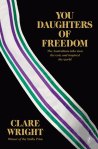
Clare Wright, You daughters of freedomWhen Wright stated that this legislation made Australian women the most franchised women in the world, there were mutterings in the audience about, for example, New Zealand – and was followed up in the Q&A. But, I had already read Wright’s Author’s Note that opens her book, where she explains her claim. Australia was the first nation to give (white) adult women full suffrage – meaning not only could they vote on equal par with men (that is, without property qualifications, and with the same age and residency requirements) but they could also sit in parliament. New Zealand granted women the vote in 1893, but New Zealand was not a nation until 1947, and women could not sit in parliament until 1919. Finland was, in fact, the next nation to grant full suffrage to women – in 1906. I loved that she refers in this Note to something that we’d discovered on our US travels back in the 1990s, which was that women were granted the vote in Wyoming in 1869! But, Wyoming is a state, not a nation. Similarly the colony of South Australia enacted universal suffrage in 1895, including allowing women to stand for the colonial parliament, but again, it was not a nation. It was the fact that a nation had granted suffrage that apparently became a beacon for the world. Of course, proclaiming “firsts” is always risky, but Wright’s definition seems perfectly valid to me in terms of her book’s thesis.

Wright explained in her lecture that this same Act disenfranchised indigenous people. Some parliamentarians did apparently demur on this point, but those who demurred gave way to ensure that at least women got the rights. Consequently, race not gender became the dividing line. As Wright said, “white” Australia was very much the game from Federation, and, while later, some women started fighting for their “black sisters”, their first priority, after gaining suffrage for themselves, was to go to England to support the mother country’s sisters. Such were the times. Later in her lecture, Wright said that it may not be pleasing to know this about our “heroines” but it’s historically accurate!

I should confess at this point, that I’m not reporting on this lecture exactly in the order that Wright gave it but in an order suiting my main takings from it.

Anyhow, back to the granting of suffrage. Wright quoted American-born Australian suffragist Jessie Ackermann who said that this act of the new Australian nation put it/us “in the noonday glare.” Suffrage was, she said, the biggest news in the early years of the twentieth century and was simply known as “the Cause”. Australia’s actions made it/us a test site for universal suffrage and the other socially progressive laws Australia enacted in those days. Could it work? Everyone was watching – particularly of course men who feared loss of power. As Wright said near the end of the lecture:

Power never concedes anything without a fight.

Wright briefly introduced the five main women she features in her book, Vida Goldstein, Nellie Martel, Dora Montefiore, Muriel Matters, and Dora Meeson Coates, and characterised their approach to activism by giving them a canine archetype! Goldstein, the “born activist”, she described as a kelpie, for example, while Meeson Coates is a “reluctant activist” and a Weimaraner! (As past owners of Weimaraner, Mr Gums and I chuckled here.) Again, near the end of the lecture, Wright explained that she did this canine breakdown to show that these women were not all one type, and that difference is critical to the movement’s internal gatekeeping.

Wright also spoke about the challenge she faced in making suffrage, citizenship and federation exciting, particularly at this time when democracy is under attack. She quoted the recently reported Lowy Institute poll showing the surprising level of ambivalence in Australia about democracy. It’s hard to imagine in this environment, she said, that democracy and all that it involves was the hottest topic on the planet in the late 19th century. Why did Aussie women travel to England to fight for the rights for others?

Well, they were different times, of course, as Wright made clear. The turn of the century was a time of optimism. In Australia it was a trinity – new year, new nation, new century. People believed the past was being left behind; they had new Utopian visions. Women’s suffrage encapsulated all this – the ideas of rebellion, emancipation, restructuring society. Suffrage was seen as the key to unlocking repression. If women could vote, and if women could sit in parliament, women’s needs might be better cared for. As Jessie Ackermann said, the freest girls were in Australia.

The women’s suffrage banner

As she does in her book’s Introduction, Wright walked us through (our current) Parliament House to a narrow corridor past the Members’ Hall where, if you get there, you find a large banner. It was created by that Weimaraner Dora Meeson Coates in 1908 and was carried in the 1911 suffragette-organised Women’s Coronation Procession. Wright took us through its iconography/symbolism, through the implications of its depiction of Mother Britannia with Daughter Minerva. It shows, she said, the daughter Australia speaking to the mother England, the banner headline reading “Trust the Women Mother As I Have Done.” This was, she said, “allegorical effrontery.” Why had she not known about this banner, she wondered, given she calls herself a feminist historian?

Now, I could go on, but I’ve probably lost half of you by now and will soon lose the rest, so I’m going to try to become even briefer. Wright explained that one-third of her book is about how Australian women won the vote, and two-thirds about how Australian women inspired the world, In this context, she told a wonderful story about Bulldog Dora Montefiore, another Aussie woman who went to England, and her “Siege of Hammersmith”, a 6-weeks long passive resistance protest again paying taxes without representation. (She was, says Wright, seen by a young Indian man, Mahatma Gandhi!) A wonderful story. It was part of something called the Women’s Tax Resistance League. Wright also described the passive resistance campaigns against the 1911 Census: Women argued that if they don’t count, they shouldn’t be counted.

The irony of history

And so, Australian women were leaders in the suffrage movement and yet, today, British suffragettes are icons of rebellion and bravado but our Australian activists are relegated to the footnotes of academic history. BUT, she argued, Dora Meeson Coates’ banner challenges the view that this history of women’s activism is niche. The big picture is, she said, that Federation and Feminism went hand-in-glove: the banner is about colonialism, about old and new, the enfranchised and disenfranchised, about men in Australia who championed women’s suffrage and those in England who didn’t, and more …

Why then are women not sufficiently accounted for in Australian history? Because, she said, of the First World War. Federation’s optimism, she argues, was soon overshadowed by the War, which, as we all know now, precipitated a “new narrative.” So, whilst before the War, our role in the world was being seen in terms of our achievements in terms of democratic idealism, suddenly it was being seen in military terms. It was our bravery, our contribution to the war effort, that now defined us as a nation – and the rest, as they say, is history! (Particularly given, I’d add, that, as Jane Austen said one hundred years ago, “Men have had every advantage of us in telling their own story … the pen has been in their hands.”) From Wright’s point of view, the War represented not the birth of a nation, but the death of the nation we were becoming. Something to think about, eh?

Clare WrightThere was still more, but even I’m running out of puff now. Wright concluded by talking about the importance of stories. The stories we choose to tell are the ones that define who (we think) we are. Why, for example, she asked, is there no statue in Melbourne memorialising that significant suffragist and social reformer, Vida Goldstein? Why, too, is Prime Minister Fisher remembered more for his statements about war (about our defending the mother country “to the last man, and the last shilling”) but not his argument about “true democracy” requiring the inclusion of “women as well as men in the electorate of the country”?

Wright said she’s wary of “learning lessons” from history, preferring to think about legacies. The legacy of the suffragists is that resistance, that grass-roots movements, can create real and lasting change. Her mantra, she said, is Dora Montefiore’s exhortion: #trustthewomen. And with that, her true colours, already advertised in the borrowed suffragette scarf she was wearing, were shown!

An intelligent Q&A lasting nearly half an hour followed, but eventually we had to finish. It was a wonderful lecture. I love that not only is Wright such an accessible, engaging historian, but that she linked the past to the present, because that is the main reason I like to read history. The past is interesting, but its true value lies in how it can enlighten the present.

And now, if you made it to the end – I thank and salute you!

Dymphna Clark Lecture
RN Robertson Theatre, ANU
17 October 2018