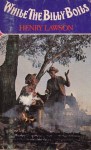
Monday musings on Australian literature: Lothian Book Publishing Company

As I research for my 1924 Monday Musings series, I am coming across articles that don’t neatly fit into 1924-dedicated posts but that I want to document. The most recent one concerned the Lothian Book Publishing Company. It was about a specific initiative, which I will discuss at the end of this post, but I was intrigued to find out more about the publisher itself.
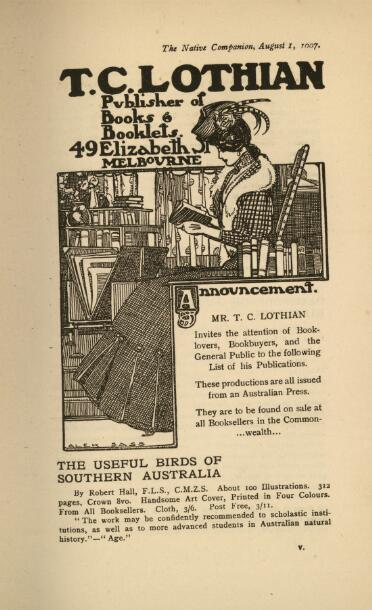
AustLit tells us that, while now an imprint of Hachette Australia, Lothian has a long history, starting well over a century ago, in 1888 in fact, when it was founded by John Inglis Lothian. Then it was a Melbourne-based book distribution company, but it started publishing in December 1905 under John’s son, Thomas Carlyle Lothian. During its first three years, it produced 40 books and four periodicals. AustLit then jumps to the interwar years (the 1920s and 30s) and says that it “was particularly notable” for publishing Australian poets, such as Bernard O’Dowd and John Shaw Neilson. Lothian also represented Penguin Books in Australia until the end of the Second World War. Cecily Close, in her article on Thomas Carlyle in the ADB, provides more information, and adds other authors to their list, like Miles Franklin and Ida Outhwaite.

The company was active, and by 1945, it had offices around Australia and in Auckland, and had literary agents in London and New York. It remained a family-run affair, with Thomas Carlyle Lothian being followed by his son Louis Lothian, and then Louis’ son Peter Lothian.

Austlit says that the company moved into children’s publishing in 1982, which has remained a big part of its activity since. Then the take-overs started. In December 2005, the Time Warner Book Group acquired Lothian and formed the Time Warner Book Group (Australia), with Lothian Books becoming an imprint of Time Warner. Very soon after, in February 2006, Hachette Livre acquired the global Time Warner business, with Lothian Books now becaming an imprint of Hachette Livre Australia. Lothian Books’ CEO Peter Lothian retired in July 2006.

The focus on children’s books has continued with Hachette Australia expanding its children’s publishing, and branding its children’s books with the Lothian imprint. AustLit says that as part of the new arrangement, some adult publishing would continue, as a ’boutique’ list of Australiana titles, both already published and to be commissioned, but I’m not sure that this eventuated, or, if it did, that it lasted. Hachette Australia’s website does not clearly differentiate its imprints.

Lothian stories

It was a story about Lothian that inspired this post, but while researching it, I found another intriguing story, so I’m closing with two little anecdotes about Lothian.

Lothian and Henry Lawson

The State Library of Victoria’s La Trobe Journal carries an article by John Arnold about the relationship between Lothian founder, Thomas, and Henry Lawson. You can read the article yourself as the story is not a short one but, essentially, it started in 1907 when, on a business trip to Sydney, Thomas Lothian signed a contract with Henry Lawson to publish two collections of his writing, one of prose and one poetry. The contract was signed in James Tyrrell’s bookshop in Castlereagh Street, Sydney.

I won’t go into the details but it was a standard Lothian printed contract. The author would receive a 10% royalty for each title. Lawson was to deliver the completed manuscript of both titles to the publisher, two weeks after the signing of the contract, and Lothian was to publish the two books no later than three months from receipt of manuscript. The contract “declared that the author was the proprietor of the copyright of the material proposed to be published and it gave the publisher the world serial, translation and dramatic rights to the material in question”.

This is not what happened, and Arnold writes that “this commercial agreement … was in a short time revised, revised again, then broken, leading to false promises, abuse of copyright, and a falling out between author and publisher. The proposed books were not to appear for six and a half years”.
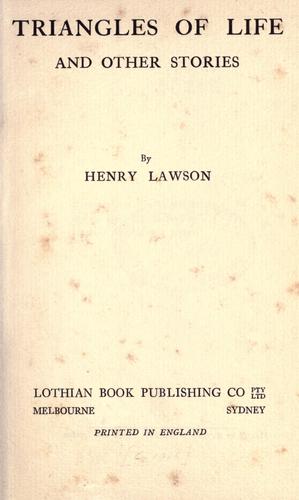
It was a tortuous process, due largely to Lawson’s “erratic behaviour” but also affected by Lothian’s busy and ambitious workload. Arnold concludes his article with:

Despite his unrewarding and frustrating dealings with Henry Lawson, Lothian was still willing to chip in when the Lawson hat was sent round after the author’s death. In 1928 he became a Life Member of the Footscray-based Henry Lawson Memorial Society, and in 1931, as one of Lawson’s publishers, wrote a one-page testimonial to be read at the society’s annual meeting.

The handsome certificate with which Lothian was presented by the Henry Lawson Society in 1938 stated that Life Membership was awarded for ‘Unselfish and Generous Services rendered to this Society and Australian Literature generally’ …

Lothian and Nettie Palmer
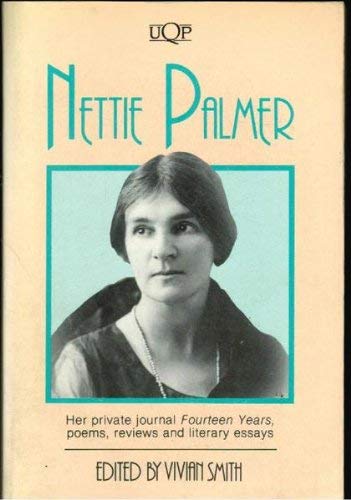
Finally we get to the article that inspired this post, the announcement in The Argus of 8 May 1924 that Nettie Palmer had won a “prize of £25 offered by the Lothian Book Publishing Company for the best critical essay dealing with Australian literature since 1900”. Her essay was titled “Australian literature in the Twentieth Century” and was to be published in June. On 18 July, The Albury Banner and Wodonga Express, reports on this work, now titled Modern Australian literature, describing it as ‘an interesting “measuring up” of Australian literary work from 1900 to 1923’. Vivian Smith, editor of UQP’s Nettie Palmer anthology, which includes this work, says the piece “is significant for what it reveals of the expectations and hopes of the time”, and also that

Nettie, like Vance, was concerned for the relationship between a national literature and the national experience behind it, but both explored this relationship in a tentative and programmatic way and had no readymade formula to account for it.

Nettie has appeared here several times, and will again, but I’ll leave her here for now. (Except, I’ll share that the Goulburn Evening Penny Post (23 October 1924) reported that she gave her prize money to the “Blinded Soldiers”.)

My initial idea was to write a post about this Lothian Prize, but I’m not sure it continued. However, I’ve written posts about publishers before, and Lothian seemed perfect for another.
Talking with my Dad: Wattles and Jimmy Woodsers

As many of you know, my father turned 100 this year, and three weeks later, my mother died. Life is sad, but Dad and I are soldiering along – with support of course from Mr Gums, not to mention family elsewhere in Australia. What is amazing, though, is how often new little pieces of information, or insights into Dad’s life, are still cropping up! I’m sharing a couple here, to document them for myself and because they might interest readers here too.

Wattle Day

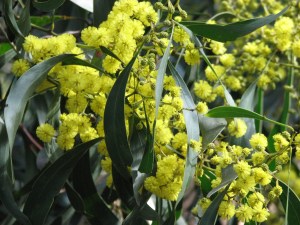
Image of Golden Wattle

Acacia pycnantha or Golden Wattle, by Melburnian (CC BY-SA 3.0).

Wattle Day, as most Australians now know, occurs on 1 September, celebrating the first day of spring here downunder. The golden wattle (acacia pycnantha), which was included in Australia’s coat of arms in 1912, is just one of many wattle species found around Australia, but most tend to blossom in late winter to early spring. Wikipedia provides the complicated origins of Wattle Day, but by the 1910s it seems, most states in Australia were celebrating it, though it wasn’t a nationally gazetted day until 1992.

So, on this year’s Wattle Day, as I was visiting my Dad, he burst into song, with these opening verses:

The bush was grey
A week to-day
(Olive-green and brown and grey);
But now the spring has come this way,
With blossoms for the wattle.

It seems to be
A fairy tree;
It dances to a melody,
And sings a little song to me
(The graceful, swaying wattle)

– by Veronica Mason

I was astonished. I’d never heard this song. Indeed, I had only become aware of Wattle Day relatively recently. However, on discussing the Day with my patchwork-now-coffee group, I discovered that all present, except one other, were very familiar with Wattle Day. What? Then the penny dropped. My father was born in 1920, and most of this group were born in the late 1930s to 1940. The “one other” was, like me, born in the 1950s. So, on thinking about it, I realised that they were born during times of pro-Australian nationalism, whilst that other and I grew up during a period of cultural cringe, a time when we turned away from things Australian.

Wikipedia helped confirmed this. Referencing Libby Robin, Wikipedia advises that “the day was originally intended to promote patriotism for the new nation of Australia”. I sussed out Libby Robin’s article, “Nationalising Australia: Wattle Days in Australia”, in which she talks about the linking of nature with nationalism. After discussing some of the various nature days that were created, she writes that

Wattle Day was the most aesthetic and human-centred of the three ‘days of nature’, and its influence waned as the century wore on. In the 1930s and later the Gould League went from strength to strength. Arbor Day had a steady and strong following, reinventing itself in the 1990s as ‘Arbor Week’. But Wattle Day changed in the early 1930s, eventually fading away altogether. A Wattle Day League limped on in Victoria until the mid-1960s, but the other states were no longer interested.

So, those born in the first half of the twentieth century were well familiar with the day – and its various songs and poems – while those of us born mid-century have only discovered it in recent years, with its revival and 1992 gazetting. Thanks Dad for the song – and the inspiration to suss out Wattle Day a little more.

A Jimmy Woodser

And then, just this week, Dad mentioned a “Jimmy Woodser”! I looked blank! Do you know what a Jimmy Woodser is, because I sure didn’t!

Barcroft Boake portrait

Barcroft Boake, by George Lambert, pre 1913, Public Domain.

So, back to Google I went. I found several references, but this one on Time Gents (Australian Pub Project) blog is particularly good. The post starts by saying:

Jimmy Woodser is a name given to a man who drinks alone, or a drink consumed alone. The name is thought to come from a poem by Barcroft Boake, published in The Bulletin on May 7 1892, about a fictional Jimmy Wood from Britian [sic] who is determined to end the practice of ‘shouting’ (buying rounds of drinks for a group of mates), by drinking alone.

“One man one liquor! though I have to die
A martyr to my faith, that′s Jimmy Wood, sir.”

“Jimmy Wood, sir” to “Jimmy Woodser”!

Barcroft Boake (1866-1892) was an Australian poet best known for his poem “Where the dead men lie”. (In a little digression, I have posted on, and reviewed works by, his niece Capel Boake.)

Back, though, to Jimmy Woodser. There is an alternative anecdotal version of the term’s origin provided in The Brisbane Courier (May 11, 1926), which dates it to the 1860s and a story about two rival publicans. There’s another one in the Dungog Chronicle (July 14, 1942), while this one in Adelaide’s The Mail (7 July, 1945) provides a rundown of several theories. Without doing more research I can’t confirm which is right, but the meaning doesn’t change. (In a fun little aside, the Glen Innes Examiner and General Advertiser (11 May, 1906) has an article titled ‘A “Jimmy Woodser” Club’ about the creation of the Non Shouting Club, in Araluen, near where I live. Its aim was to reduce the drunkenness that they believed shouting encouraged!)

Meanwhile, Time Gents go on to share a poem by Henry Lawson, titled “The old Jimmy Woodser” (c. 1899). They suggest it could be about a Wollongong character, Billy Fitzpatrick. Its first verse is:

The old Jimmy Woodser comes into the bar
Unwelcomed, unnoticed, unknown,
Too old and too odd to be drunk with, by far;
So he glides to the end where the lunch baskets are
And they say that he tipples alone.

“Too old and too odd to be drunk with, by far”. Well, my Dad is pretty old, but I’ll have a drink with him any day – and look out for more little treasures like this to research and share.

Monday musings on Australian literature: Australian literary dynasties

Some years ago I wrote a Monday Musings post on Australia’s literary couples. However, it recently occurred to me that we also have some literary dynasties, which could be fun to explore. This post, like many of its ilk, is a bit of a fishing exercise. I will share a few that came to me, and would love you to share ones that come to you.

By dynasty, I mean two or more generations of one family (that is, in the same line of descent.) My focus is fiction but I’m allowing some deviations from this where writing reputations are strong. So, here’s my list – in chronological order by birthyear of the oldest family member.

Charlotte Barton (1796-1867) and Louisa Atkinson (1834-1872)

Charlotte Barton and daughter Louisa Atkinson are probably the least well-known of the writers I list here, even though Charlotte is credited as having written Australia’s earliest known children’s book, A mother’s offering to her children, and Louisa as the first Australian-born woman to publish a novel in Australia, Gertrude the emigrant.

However, Atkinson had a bigger bow to her name, botany. As I wrote in Wikipedia and here, she was well-known for her fiction during her life-time, but her long-term significance rests on her botanical work. She’s regarded as a ground-breaker for Australian women in journalism and natural science, and is significant in her time for her sympathetic references to Australian Aborigines in her writings and for her encouragement of conservation.

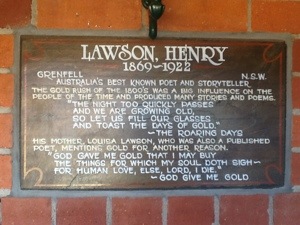
Louisa (1848-1920) and Henry Lawson (1867-1922)

Book coverBy all accounts, Louisa Lawson was quite a force. A poet, writer and publisher, as well as a suffragist and feminist, she was fully engaged in the country’s literary and political life, but is most remembered now for the latter, particularly her feminist causes.
Louisa’s relationship with her poet-short story writer son, Henry, was fraught. However, together they edited the radical pro-federation newspaper The Republican, and, later she published his poems and stories in her own newspaper, The Dawn. She used this press to publish his first book, Short stories in prose and verse. It is Henry, then, who is most remembered for his writing. His most famous story is “The drover’s wife”, which many Aussies do (or did) at school, and his best-known collection is While the billy boils. Lawson is probably still Australia’s best known short story writer.

Bill (The Australian Legend) quotes Bertha, Henry Lawson’s wife, as saying

“If there is anything in heredity, Harry’s literary talents undoubtedly came from his mother …”

Ruth Park (1917-2010), D’Arcy Niland (1917-1967), and Deborah (b. 1950) and Kilmeny Niland (1950-2009)

Novelists (and writers of all forms) Ruth Park and D’Arcy Niland created quite a literary family, with two of their five children, twin daughters Deborah and Kilmeny, becoming successful children’s book writers and (primarily) illustrators. I have written about Ruth Park before, and need to review Niland on my blog, but when I was the mother of young children, I became very aware of Deborah and Kilmeny who collaborated on thirteen children’s books. Their best known book is an illustrated version of Banjo Paterson’s poem, Mulga Bill’s Bicycle. First published in 1973, it has never been out of print. Unfortunately, Kilmeny died in 2009.

Olga (1919-1986) and Chris  (b. 1948) Masters

Book coverBoth Olga and her son Chris Masters were journralists. Chris still is. Olga commenced work as a journalist when she was only 15 years old, but through her relatively short career, she also wrote novels, short stories and drama. Her career as a published writer of fiction was very brief, with The home girls short story collection being published in 1982 and Loving daughters, her wonderful first novel, published in 1984. It is Australian literature’s loss that she died just as her fiction career was taking off.
Son Chris is, primarily, a journalist, but he is at the top of his profession with multiple Walkley Awards to his name, and his controversial biography of a controversial radio personality, Jonestown: The power and the myth of Alan Jones, won a Queensland Premier’s Literary Award. I wonder if he’s ever thought of writing a novel?

Dorothy Hewett (1923-2002), Merv Lilley (1919-2016), Kate (b. 1960) and Rozanna Lilley (b. 1960)

Multi-awarded poet, novelist and playwright Hewett led a colourful and controversial life – some of which has come out posthumously in poet daughter Kate’s collection Tilt and daughter Rozanna’s memoir, Do oysters get bored? I don’t really want to explore that here because it’s a whole other subject, but you can read a little about it on the ABC and in my post on a Canberra Writers Festival conversation with Rozanna.

Meanwhile, and regardless, they do comprise another dynasty of writers, with, between them, a significant oeuvre.

Ann Deveson (1930-2016) and Georgia Blain (1964-2016)

Ann Deveson was well-known to Australians of my generation, because of her high profile as a social commentator and filmmaker, not to mention her role as the “Omo” lady in a famous serious of television commercials for Omo laundry detergent! She was, you’d have to say, versatile, also having been chair of the South Australian Film Corporation and Executive Director of the Australian Film, Television and Radio School. Her most famous book is, probably, her memoir-biography about her son’s schizophrenia, Tell me I’m here.

Deveson’s daughter, Georgia Blain, was also a writer, but, unlike her mother she had a substantial body of fiction to her name, as well as non-fiction. Blain won or was short or longlisted for many of Australia’s literary awards, with her most successful novel being her 8th and last, Between a wolf and a dog. Deveson and Blain tragically died within days of each other, which I wrote about at the time.

Thomas (b. 1935) and Meg Keneally (b. ca 1967)

Book coverMulti-award-winning author Thomas (Tom) Keneally has published over 40 novels, from his 1964 debut novel, The place at Whitton, to his most recent 2020 novel, The Dickens boy. He is best known for his Booker prize-winning novel, Schindler’s ark, which was adapted to the Academy Award winning film, Schindler’s list.
Amongst his 40 or so novels are four in The Monsarrat Series, which he co-wrote with his daughter Meg. Meg has gone on to publish a novel on her own, Fled, with another due out this year. Both Tom and Meg write primarily historical fiction.

In a “Two of us” article in 2016 in The Sydney Morning Herald, Tom writes

Temperamentally I could see she was very like me. I think that’s why we’re able to work together now. I find it hard to batter out 1500 words of a new draft of a novel in a day, and I was always impressed by the speed and fluency with which she could write. I thought, “Wouldn’t it be good to get her out of the maw of the corporate world and turn her into something really self-destructive, like a novelist?”

Haha, love it!

There are other dynasties, most notably families of historians, but I’ll finish here and wait for your suggestions. 

Postscript: No, I haven’t forgotten those 10th anniversary literary requests. They will be done, but they require more time than I have now, hence this post that was already in the offing!

Monday musings on Australian literature: City, bush and outback

If today weren’t Monday, this would probably be a literary road post but it is Monday which means of course that it’s a Monday Musings instead! See how flexible I am?

20130513-213226.jpg

I know I talk a lot here about the bush and the outback but they are topics that keep cropping up in my reading and thinking. They cropped up again yesterday during a performance we attended at the Ballarat Heritage Festival. It was Bernard Caleo of the Museum of Melbourne reciting Banjo Paterson‘s “Mulga Bill’s Bicycle” and “The Man from Ironbark“. He performed them beautifully, but even better he provided some background to Paterson and his times. He spoke of the rivalry between Paterson and Henry Lawson. They were, he said, friends but they saw the bush in opposing ways: Lawson thought Paterson was too “romantic” while Paterson thought Lawson was all “doom and gloom”.

Caleo didn’t buy into the argument. That wasn’t, after all, his reason for being at the festival, but he did say that through publishing their poems and stories in The Bulletin they debated and defined our understanding of the city and the bush or outback. And he was right. Whether we read Paterson’s comedy or Lawson’s gloom or, even, Barbara Baynton‘s gothic, what we get is not only a sense of a divide between the city and the outback, but a rather schizophrenic view of the bush and/or outback. However, I don’t think these opposing views are irreconcilable: Paterson’s view of bushmen as heroic, free, and unsophisticated, and Lawson’s recognition of the harshness of outback life and the despairing resilience of the people are mutually exclusive. The way I see it, Lawson’s drover’s wife is heroic and Paterson’s Clancy works hard for his living. It’s more a matter of perspective than of there being a single truth … Don’t you think?

And yet, it’s not quite that simple either, because there is the issue of intention, or, at least, of impact. Paterson’s main goal seems to have been for city people to respect not ridicule bush people whereas Lawson, with his socialist leanings, may very well have hoped his writings would lead to practical improvements in the lot of the people he wrote about. On the other hand, maybe both just wanted to make a buck! Regardless, these two views of bush people are still relevant today ….  That’s what interests me the most when I read, or hear, their writing, the way those views persist. I’m sure to write more on’t.