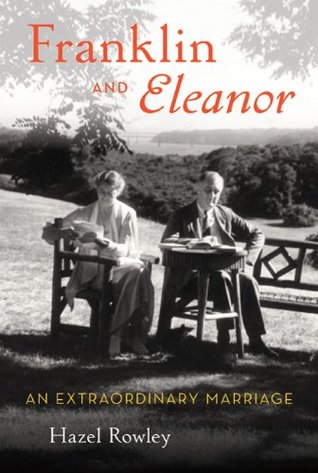
Back in 2013, I wrote about the Hazel Rowley Literary Fund which was set up in 2011 by Rowley’s sister and friends, in association with Writers Victoria. Hazel Rowley was, as many of you will know, one of Australia’s most respected biographers. Her subjects were diverse, and not exclusively Australian. Indeed, most were not Australian, as besides the Australian writer Christine Stead who spent much of her writing life overseas, she wrote on the African American writer Richard Wright, the French writers Simone de Beauvoir and Jean-Paul Sartre, and the American power couple, Franklin and Eleanor Roosevelt (my review). Unfortunately, Rowley, born in 1951, died too young – of a cerebral haemorrhage in New York in 2011.
The aim of the fund was “to commemorate Hazel’s life and her writing legacy through activities that support biography and writing in general”. Its main vehicle was the Hazel Rowley Literary Fellowship which provided money to support a writer researching a biography, or some aspect of cultural or social history compatible with Rowley’s interests. It was offered annually, with the initial award of $10,000 gradually increased to the $20,000 this year’s winner received.
Now, those of you with eagle eyes may have noticed that I wrote “was”. As Wikipedia reports, which I confirmed on the official website, the Fellowship ends with this year’s award. The website summarises its achievements in this paragraph:
The Fellowship has been running for the past 14 years since Hazel died in March 2011. It was created to honour Hazel as a skilled biographer and to encourage others to write with the same care and enthusiasm in this time-consuming and exacting genre. Based on Hazel’s own experience we recognised the need to support a work in progress by providing money for research and travel. Over the past 14 years the Fellowship has supported more than 20 writers to progress and finish their projects.
They do not say why it is ending, but presumably the money has run out. Bequests, even well managed ones, do not last forever. I am guessing, but perhaps it was a case of either offering decent prize money – as in a useful amount – until it runs out, or award small amounts that risk not being enough to make a real difference to the winning project.
So now, the final award … $20,000 is going to Jennifer Martin for her proposed biography of Austrian-born Eva Sommer. She was the inaugural Walkley award winner in 1956 when she was a cadet on the Sydney Sun. She died in 2019 at the age of 84. The fellowship also gave $10,000 to each of three commended writers: Monique Rooney, Theodore Ell and Ashleigh Wilson, who are writing on Ruth Park, Les Murray and Barry Humphries respectively. All good subjects, but I’d love to see Ruth Park done.
You can see the complete list of awards made, including which ones have – to date – resulted in publication, as well as the shortlisted authors and their projects, at the above-listed Wikipedia page.
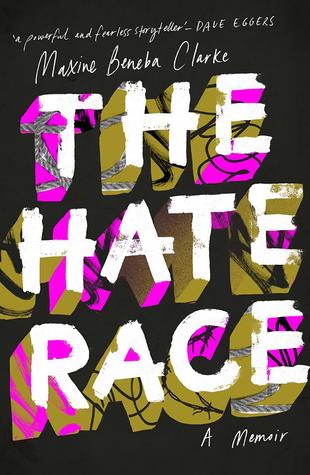
Of the 15 winners to date (including this year’s which, by definition, is presumably still in project stage), 9 have been published, and I have reviewed one of them, Maxine Beneba Clarke’s The hate race. I’d like to read several others, but if I had to choose one, it would be Mandy Sayer’s on Australia’s movie-making sisters, The McDonagh Sisters.
However, there are some on the shortlist that I would also love to see come to fruition, including those on Louisa Lawson (Michelle Scott Tucker), David Malouf (Patrick Allington), Gerald Murnane (Shannon Burns) and Amy Witting (Sylvia Martin). Hmm … given Sylvia Martin was later shortlisted for a different subject, which has now been published – Double act: Eirene Mort and Nora Kate Weston – I fear for my Amy Witting wish.
This brings me to the fact that, of course, several on the shortlist have been published, including those on Shirley Hazzard (Brigitta Olubas, on my TBR), Elizabeth Harrower (Helen Trinca, my review), Elizabeth Harrower (Susan Wyndham, on my TBR).
What these lists show is that biography is alive in Australia. How well it is, is another question. Writing a biography is no simple task. It can take years (and years) of research during which authors receive no money – unless they win or obtain fellowships like this one. It’s a shame it has ended, for whatever reason, but we should be grateful for the 15 years of support it did give.
I’d love to hear your thoughts on biographies. Do you like them? Do you have favourites? What do – or don’t you – like in them?
 Whispering Gums