Last week’s Monday Musings about the Les Murray Award for Refugee Recognition reminded me of the assumptions we make when engrossed in our own little world. When I first heard of this award being made to the slam poet Huda the Goddess, I assumed it was in the name of the Australian poet, Les Murray, only to find it was named for Les Murray the sports commentator. Various commenters weighed in with which Les Murray they first thought of when they heard the name.
Well, this ambiguity raised its head again this week’s post. It was inspired by Western Port Writes first literary event for 2025, held back in February. It was a panel discussion themed “The Family Lode” and featured Australian writers Tony Birch, Melanie Cheng, and Kylie Ladd in conversation with literary/arts editor Jason Steger. I heard about it through Steger’s weekly emailed newsletter:
‘Grandparents underpin each family and story,’ says Steger. ‘They are a hugely important anchor to family. We should have a category called Grandparent-Lit.’
Grandparent-Lit? My ears perked up, and I thought that would make a fun Monday Musings in the future, one of those posts where I could introduce the idea and then let you all fly with your suggestions from your neck of the reading world.
However, first I did a quick internet search to see if there’s anything out there on the topic. And, faster than you can say grandparent-lit, up popped an article from The Guardian published in late 2020. It was by Imogen Dewey and was titled “Jolly, artificial and extremely satisfying: the simple joy of ‘Grandma lit'”. Great, I thought, but my pleasure was short-lived, because her idea of “grandma [not grandparent] lit” was something very different. It was in a series framed “How I fell in love with …” which, in Dewey’s case, was – wait for it – crime fiction! For Dewey “grandma-lit” is not books about grandmas (or grandparents) but about ‘the sort of books grandmothers love … The sort some people refer to as “comforting” or “cosy”, in that Certain Tone reserved also for “comfort eating”, “comfy clothes”, “comfortable relationships” – the insinuation being that it is slovenly to crave to be comfortable’. Oh well, back to the drawing board I went.
AI – that little summary at the top of most internet searches these days – knew what I was talking about. It said this:
“Grandparent lit” is a literary genre that often explores the relationships between grandparents and their grandchildren, focusing on themes of intergenerational connections, family history, and the unique perspectives of different generations. It can include various forms of literature, from picture books for children to novels for adults, with some works specifically targeting grandparents or exploring the grandparenting experience.
AI suggests common themes in these books: Intergenerational connections which explore the relationships between grandparents and grandchildren; family history and cultural heritage meaning stories, traditions and values are shared with younger generations; the grandparenting experience which examines the challenges and rewards of being a grandparent; and memory and nostalgia which encompasses reflecting on past events and relationships.
And I found a 2024 post in Substack, titled “Where are grandparents in literature“, by novelist and journalist Penny Hancock. She writes that “she’d been told by publishers that people don’t want to read about older people’s lives because no one wants to think about getting old”. She argues that this presupposes that grandparents are old (whatever that means) and that readers are narrow-minded. Whatever the reason, she found that, with the exception of children’s books, it is unusual to get a grandparent’s point of view in novels. She asks whether we are still marginalising and generalising a group that has always been subject to prejudice. Anyhow she names a few great books, which most of you will know (but check out the post!) Meanwhile …
Select list of (mostly recent) grandparent-lit books
Now, here is where the fun starts. I will share a few books (mostly novels but with some exceptions) in which grandparents feature significantly – and then hand it over to you. I am not including children’s books because they are too numerous and geared to a different audience to my readers, albeit some of us are grandparents and might like to promote ourselves! (If you are interested, Readings has produced a list of picturebooks for grandparents.)
My books will, of course, be Australian, but you can share anything you like (even if you’re Australian. I’m generous like that!)
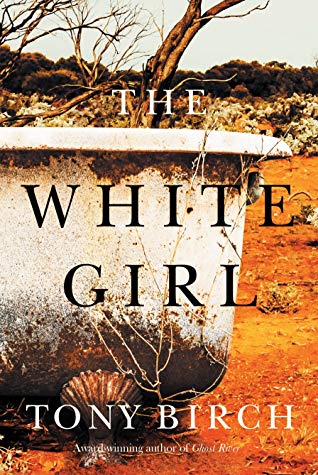
- Tony Birch, The white girl (my review): a novel about Odette, a First Nations grandmother, who is determined to save her grand-daughter from falling under the control of white authorities.
- Melanie Cheng, The burrow (my review): a novel about grief, and the role played by a rabbit and the grandmother in restoring some sort of balance.
- Helen Garner, The season (my review): nonfiction/memoir about Garner’s spending a football season with her teenage grandson, and the insights she gains into boys and men (among other things).
- Elizabeth Jolley, The orchard thieves (my review): a meditative novel in which a grandmother ponders the meaning of family and children, and quietly uses her wisdom and humanity to rebalance some family tensions.
- Jeanine Leane, Purple threads (my review): a First Nations multigenerational story told by two girls, their matriarch grandmother Nan, and two aunts, all working together to forge an authentic and sincere way to live when you are “not the ideal colour”.
- Eleanor Limprecht, The passengers (my review): dual narrative journey story of an American war-bride returning to her home after 68 years, with her 20-something Australian granddaughter.
- Favell Parrett, There was still love (my review): a novel about two Czech sisters, one who ends up in Melbourne while the other remains in Prague, told mainly through the eyes of their grandchildren who learn that love can survive, that home is wherever you make it, and the importance of keeping on going.
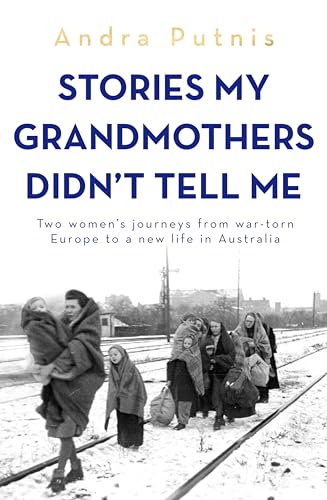
- Andra Putnis, Stories my grandmothers never told me (my review): dual biography-memoir of the author’s two Latvian grandmothers, with reflections on her relationship with them.
Various themes recur here, including the offering of protection and support, showing resilience, and passing on traditions. While some of these stories are warm-hearted, none are sentimental. These grandparents tend to be real and flawed, with their own demons, but they also tend to offer, either directly or indirectly, some wisdom about how to keep on going, even when times are hard.
Now, do you have any favourite grandparent stories?
 Whispering Gums
