Gertrude H. Dorsey’s short story is the third in the anthology Great short stories by African-American writers, which my American friend Carolyn sent me. It presented an unexpected challenge.
Gertrude H. Dorsey (Browne)
The biographical note at the end of the anthology is one of the shortest provided by the editors. It goes:
Who was Gertrude H. Dorsey Browne? By the evidence of her published work between 1902 and 1907 in Colored American Magazine she was a clever writer of literary short fiction at the turn of the twentieth century; the little romance “An equation” is possibly her first published short story.
She does not appear in Wikipedia, and an internet search found very little, but it did find something, an article published in 2021 by two journalism students, Sarah Barney and Smelanda Jean-Baptiste. They write how an interest in Dorsey was sparked in a Newark reading group in 2017, when they met to discuss ‘a story, a witty romance titled “An Equation”’. Intrigued by the author’s apparent Newark connection, they decided to research her life. They discovered that she was born on 1 August, 1876/77, in Coshocton, Ohio, to Clement Dorsey and Martha Johnson Lucas, and that she died in April 1963 and was buried in an unmarked plot in Cedar Hill Cemetery.
Dorsey graduated from Coshocton High School in 1896, the only African-American student in a class of 11. She maintained honor roll throughout her years and was a member of the school’s Literary Society. While in high school, she had been a sales representative for the Black-owned Cleveland Gazette newspaper, and did this same work when she moved to Newark as a representative for the Colored American Magazine.
Further, the book club found that while Brown (as they spell her name) worked as a sales representative, she also wrote some stories for the magazine. Some was nonfiction but most was fiction, and her writing “often engaged with pertinent issues such as racism and Jim Crow through wry story plots”. They say her stories
transcend, but do not dismiss, class, race, and gender. They often speak to the hidden truths of what makes us human and the pride involved in shielding those commonalities.
Not much else is known about her life, but the book club women recognised that “Brown had literary talent in a time when graduating from high school was a feat for women, especially Black women, and writing for a leading national magazine was an even greater accomplishment”.
“An equation”
“An equation” was, it seems, her first story. According to Barney and Jean-Baptiste, another story, titled “A case of Measure for Measure,” is about a group of white women who blacken their faces to attend a “blackface ball.” Afterwards, they discover that the paint won’t come off, forcing them to ride in the segregated car on the train, and thus “learn firsthand some hard lessons about racism and class”.
“An equation” is not so overtly political – perhaps because it was her first – but, whatever the reason, it is a witty romance that slots into that idea of “the hidden truths of what makes us human”. The anthology’s editors say in their Introduction:
All of the stories in part or in whole are necessarily about the human condition, such as Gertrude H. Dorsey Browne’s “An equation”, in which the narrator declares that “the power of loving is not variable”.
It tells of a young 19-year-old woman, Grace, who obtains a job as an assistant to the Principal of her college and as a result meets 26-year-old school inspector, Raymond Turner, to whom she finds herself attracted. The story is told from her point-of-view and progresses through a series of mathematical jokes which start with her describing Turner as an “Unknown Quantity”. Unlike typical romance stories, this romance doesn’t really get off the ground before it seems to be over. In fact, it nearly doesn’t happen at all due to missed communications, hurt feelings and too much attention paid to mathematical theories and concepts like certainties and uncertainties. But, our lovers are brought together at the end and the story concludes with yet another mathematical joke.
Race is not an issue here, and class differences, while evident, are a background factor rather than a major player in the story. It does have interest, however, beyond being an enjoyable story. This relates to the fact that it was published in the Colored American Magazine, which was, according to an article I found, “a Black-owned, -published, and -operated magazine catering to a Black audience”. Tanya Clark, the article’s author, talks about CAM editor Hopkins’ pedagogical intentions for the magazine, which encompassed “challenging the status quo and elevating the race”. However, she also wanted “to provide African Americans with narratives that simply bring them gratification”. This is, I think, where Dorsey’s story comes in. It’s an entertaining and intelligently written story that could be about a romance between any young educated couple. That, of course, is a political point, but it’s subtly made by just being the story it is.
Clark also makes the point that under Hopkins, “CAM was a publishing forum for women writing poetry, fiction, and nonfiction articles”. These women included “seasoned and budding writers, … race leaders who wanted to try their hand at creative writing, … and friends and subscription agents of the magazine” who included Gertrude Dorsey Browne. Clark says “their woman-centered stories honored sisterhood among Black women, showcased Black women’s intellectual capacities, and praised Black women’s desires to work, organize, and fulfill hopes for domesticity”.
“An equation” is one of these “women-centred stories”. The love interest (the “Unknown Quantity”), the romance’s trajectory calling into play questions of probability, and the resolution, draw on mathematical concepts which assume an intelligent, educated readership. It did feel a little clumsy in its exposition, due perhaps to the inexperience of the author, but it has much to offer as an example of African-American writing of the time, besides its being a clever story. I mean, talking of love in such mathematical terms. Who would have thought!
Sources
Tanya N. Clark, “Hagar Revisited: Afrofuturism, Pauline Hopkins, and Reclamation in the Colored American Magazine and Beyond” in CLA Journal, 65 (1): 141-162 (March 2022)
Sarah Barney and Smelanda Jean-Baptiste, “Uncovering a Literary Treasure: Local Book Club Re-discovers Newark’s Gertrude Dorsey Brown”, in The Reporting Project, 20 February 2021
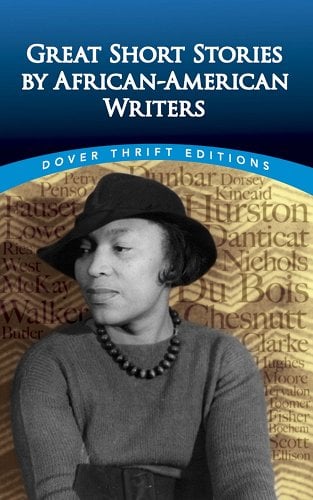
Gertrude H. Dorsey (Browne)
“An equation” (first published in Colored American Magazine, August 1902)
in Christine Rudisel and Bob Blaisdell (ed.), Great short stories by African-American writers
Garden City: Dover Publications, 2015
pp. 36-44
ISBN: 9780486471396
Available online in the digital version: scroll to page 278
 Whispering Gums