Monday musings on Australian literature: Australian literary dynasties

Some years ago I wrote a Monday Musings post on Australia’s literary couples. However, it recently occurred to me that we also have some literary dynasties, which could be fun to explore. This post, like many of its ilk, is a bit of a fishing exercise. I will share a few that came to me, and would love you to share ones that come to you.

By dynasty, I mean two or more generations of one family (that is, in the same line of descent.) My focus is fiction but I’m allowing some deviations from this where writing reputations are strong. So, here’s my list – in chronological order by birthyear of the oldest family member.

Charlotte Barton (1796-1867) and Louisa Atkinson (1834-1872)

Charlotte Barton and daughter Louisa Atkinson are probably the least well-known of the writers I list here, even though Charlotte is credited as having written Australia’s earliest known children’s book, A mother’s offering to her children, and Louisa as the first Australian-born woman to publish a novel in Australia, Gertrude the emigrant.

However, Atkinson had a bigger bow to her name, botany. As I wrote in Wikipedia and here, she was well-known for her fiction during her life-time, but her long-term significance rests on her botanical work. She’s regarded as a ground-breaker for Australian women in journalism and natural science, and is significant in her time for her sympathetic references to Australian Aborigines in her writings and for her encouragement of conservation.

Louisa (1848-1920) and Henry Lawson (1867-1922)
Book coverBy all accounts, Louisa Lawson was quite a force. A poet, writer and publisher, as well as a suffragist and feminist, she was fully engaged in the country’s literary and political life, but is most remembered now for the latter, particularly her feminist causes.

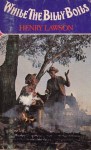
Louisa’s relationship with her poet-short story writer son, Henry, was fraught. However, together they edited the radical pro-federation newspaper The Republican, and, later she published his poems and stories in her own newspaper, The Dawn. She used this press to publish his first book, Short stories in prose and verse. It is Henry, then, who is most remembered for his writing. His most famous story is “The drover’s wife”, which many Aussies do (or did) at school, and his best-known collection is While the billy boils. Lawson is probably still Australia’s best known short story writer.

Bill (The Australian Legend) quotes Bertha, Henry Lawson’s wife, as saying

“If there is anything in heredity, Harry’s literary talents undoubtedly came from his mother …”

Ruth Park (1917-2010), D’Arcy Niland (1917-1967), and Deborah (b. 1950) and Kilmeny Niland (1950-2009)

Novelists (and writers of all forms) Ruth Park and D’Arcy Niland created quite a literary family, with two of their five children, twin daughters Deborah and Kilmeny, becoming successful children’s book writers and (primarily) illustrators. I have written about Ruth Park before, and need to review Niland on my blog, but when I was the mother of young children, I became very aware of Deborah and Kilmeny who collaborated on thirteen children’s books. Their best known book is an illustrated version of Banjo Paterson’s poem, Mulga Bill’s Bicycle. First published in 1973, it has never been out of print. Unfortunately, Kilmeny died in 2009.

Olga (1919-1986) and Chris  (b. 1948) Masters
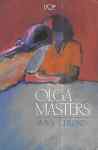
Book coverBoth Olga and her son Chris Masters were journralists. Chris still is. Olga commenced work as a journalist when she was only 15 years old, but through her relatively short career, she also wrote novels, short stories and drama. Her career as a published writer of fiction was very brief, with The home girls short story collection being published in 1982 and Loving daughters, her wonderful first novel, published in 1984. It is Australian literature’s loss that she died just as her fiction career was taking off.

Son Chris is, primarily, a journalist, but he is at the top of his profession with multiple Walkley Awards to his name, and his controversial biography of a controversial radio personality, Jonestown: The power and the myth of Alan Jones, won a Queensland Premier’s Literary Award. I wonder if he’s ever thought of writing a novel?

Dorothy Hewett (1923-2002), Merv Lilley (1919-2016), Kate (b. 1960) and Rozanna Lilley (b. 1960)

Multi-awarded poet, novelist and playwright Hewett led a colourful and controversial life – some of which has come out posthumously in poet daughter Kate’s collection Tilt and daughter Rozanna’s memoir, Do oysters get bored? I don’t really want to explore that here because it’s a whole other subject, but you can read a little about it on the ABC and in my post on a Canberra Writers Festival conversation with Rozanna.

Meanwhile, and regardless, they do comprise another dynasty of writers, with, between them, a significant oeuvre.

Ann Deveson (1930-2016) and Georgia Blain (1964-2016)

Ann Deveson was well-known to Australians of my generation, because of her high profile as a social commentator and filmmaker, not to mention her role as the “Omo” lady in a famous serious of television commercials for Omo laundry detergent! She was, you’d have to say, versatile, also having been chair of the South Australian Film Corporation and Executive Director of the Australian Film, Television and Radio School. Her most famous book is, probably, her memoir-biography about her son’s schizophrenia, Tell me I’m here.

Deveson’s daughter, Georgia Blain, was also a writer, but, unlike her mother she had a substantial body of fiction to her name, as well as non-fiction. Blain won or was short or longlisted for many of Australia’s literary awards, with her most successful novel being her 8th and last, Between a wolf and a dog. Deveson and Blain tragically died within days of each other, which I wrote about at the time.

Thomas (b. 1935) and Meg Keneally (b. ca 1967)

Book coverMulti-award-winning author Thomas (Tom) Keneally has published over 40 novels, from his 1964 debut novel, The place at Whitton, to his most recent 2020 novel, The Dickens boy. He is best known for his Booker prize-winning novel, Schindler’s ark, which was adapted to the Academy Award winning film, Schindler’s list.

Amongst his 40 or so novels are four in The Monsarrat Series, which he co-wrote with his daughter Meg. Meg has gone on to publish a novel on her own, Fled, with another due out this year. Both Tom and Meg write primarily historical fiction.

In a “Two of us” article in 2016 in The Sydney Morning Herald, Tom writes

Temperamentally I could see she was very like me. I think that’s why we’re able to work together now. I find it hard to batter out 1500 words of a new draft of a novel in a day, and I was always impressed by the speed and fluency with which she could write. I thought, “Wouldn’t it be good to get her out of the maw of the corporate world and turn her into something really self-destructive, like a novelist?”

Haha, love it!

There are other dynasties, most notably families of historians, but I’ll finish here and wait for your suggestions. 

Postscript: No, I haven’t forgotten those 10th anniversary literary requests. They will be done, but they require more time than I have now, hence this post that was already in the offing!

Georgia Blain: Births deaths marriages: True tales (Review)

Georgia Blain, Births deaths marriagesPoignant is a word I actively avoid in my review posts, as it’s such a review cliché, but sometimes a book really does call for it, and the late Georgia Blain’s essay-collection-cum-memoir, Births deaths marriages, is such a book. In the last essay, she talks of her mother, broadcaster, activist and non-fiction writer, Anne Deveson, trying her hand at fiction just as she, Blain, was trying non-fiction. She writes:

We had switched places, my mother and I. And we looked at each other. Both mothers. Both writers. Both trying on each other’s shoes, taking a few steps back, eyes on our feet, before we glanced across once again, curious as to how this had happened (“A room of one’s own (2)”)

The poignant thing, of course, is that these two who were so closely entwined in life, not just as mother-and-daughter but as writers, died within a few days of each other – with the sadly ironic twist that the daughter died first. It makes my heart break a little, something I wouldn’t have felt had I read it before these deaths. Such is the impact of context on our reading, eh?

Anyhow, onto the book. Births deaths marriages (the title has no separating commas) is the second memoir-in-essay-form that I’ve read this year, the first being Fiona Wright’s Small acts of disappearance. Both books follow a general chronological arc but the essay form makes it easy for this not to be strict, allowing the writers to follow tangential yet relevant threads. From here, though, the two “memoirs” depart, because the respective writers’ lives are very different. Wright, the younger writer, was writing primarily about her twenties and focused particularly on her experience of an eating disorder, while Blain was in her mid forties when writing hers. She was a published novelist and, significantly, had experienced a much more public life, not only because both her parents were public figures but also because of her mother’s own memoir, Tell me I’m here, about life with her schizophrenic son.

This book – with its intensely personal subject matter and its unusual form – offers rich opportunity for discussion. To do it justice, I’m going to have to narrow it, so I’m going to focus on form and style, but some content will push through along the way. The way I see it, there are two broad types of memoir, those which tell about lives most of us know little or nothing about (such as Frank McCourt’s Angela’s ashes, or, more obviously, celebrity memoirs) and those which are about lives much like ours. Georgia Blain’s falls into this latter category. For these ones to engage readers, they need to offer something illuminating about the lives we lead.

“the truth was a little more complex” (from “Getting in the boat”)

The first essay in Blain’s memoir is titled “A room of one’s own”. In it she reflects on her childhood, on how her mother would write about their family for newspaper columns and how reading these columns later, with their bland pictures that “did not accurately reflect who we were”, brought back the child she was, the child who wanted her family to be like the one in the columns, who thought all other families were like that and not like the messy reality she was experiencing. These bland columns are the antithesis of what Blain shares in her essays (and indeed of what Deveson herself shared in her memoir). It’s all about purpose I suppose. Newspaper columns tend to be more about entertainment – with perhaps some subtle messages about life – whilst memoirs, good ones anyhow, are about “truth”. If we don’t feel the memoirist is sharing the “truth” of her (or his) experience we are going to lose interest pretty quickly.

Blain convinces me that she is sharing her truths when, for example, she describes, in “The story my mother tells me” and “The outside country”, her fears about childbirth and her struggle to cope with the demands of motherhood. She exposes herself with soul-baring honesty when she shares her sense of disconnect, of being alone, of being “shattered” when her baby is born. She writes that she wanted to give her daughter “the place in my life that she needed and deserved, one that was without my terror and anxiety about loss of self” but it took several months for this to happen. She writes with similar honesty about her relationship with her husband Andrew. It takes some guts to write what she does.

In “Close to the bone”, Blain addresses more directly her writing life, and the difference between writing fiction, which she’d done until this book, and writing about herself, which she was now doing. Reflecting on her brother’s death, she says:

The complexity and rawness of an immediate response to pain is not easy to understand and recognise, let alone pin down in writing, in a photograph or in a film. The very act of capturing distorts. Once neatly contained, all that we felt is no longer unruly, unreasoned, immediate and wild. Perhaps this is why we hold these moments as truth. They cannot be replicated. Each time we try, we dilute their intensity, we confuse, holding up false images of this so-called truth that leave us reeling as we try to reconcile what we see encapsulated with what we have experienced.

Even her “truth”, the one she is writing, she sees, is not easy to grasp. She goes on:

I believed, and still do, that if I wrote about my own life and the lives of those I love, I had to tell the truth. But foolishly, I believed the truth lay only in the immediate…

These two excerpts reminded me of that David Hockney comment about happiness being a retrospective thing I wrote about recently, because I read them as her recognition that there are different truths – those immediate reactions and feelings, and those that come later. It’s this sort of reflection on “how” we live and interpret our lives which makes Births deaths marriages such a meaningful read.

I said that this memoir exemplifies the second type of my two simple categories, but I meant it when I defined them as being about “lives much like ours” because no life is the same. And so, Blain, like all of us, had her own set of challenges, including her control-freak, sometimes-violent father, and the tragic loss of her schizophrenic brother. One of the joys of her book lies in watching her explore and expose her own development, her learning not only to come to terms with these experiences in her life, but to use them to come to a more open, flexible way of understanding. She writes of “chasing absolutes”, of believing that “there was one truthful answer to every question” which she had to pin down, when in fact, as she learns, the truth lies in the “layers”.

In the end, there are no resolutions, she realises, but there are momentary happy endings along the way. She also realises that “writing about oneself” can “amount to more than a purely personal exercise”. It sure can, as she has proven here. This memoir is special – and not just because of the context in which I am reading it – but because it’s honest, because it doesn’t pretend to have it all sorted, because, in fact, it’s true – to her life and experience, and also to ours.

AWW Logo 2016Georgia Blain
Births deaths marriages: True tales
North Sydney: Vintage Books, 2008
ISBN: 9781742743981 (eBook)

Monday musings on Australian literature: Spotlight on Georgia Blain

Courtesy: Annette Marfording

Courtesy: Annette Marfording

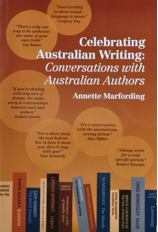
This is the fifth in my occasional series of Spotlight posts inspired by Annette Marfording’s Celebrating Australian Writing: Conversations with Australian Authors, and this time I’m featuring Georgia Blain who died just over a week ago, three days before her mother Anne Deveson also died. In a comment on my Vale post, Annette Marfording reminded me that she’d interviewed Georgia Blain for her book and so, with her support, I decided to make Blain the subject of this week’s Monday Musings.

Marfording’s interview took place in 2010, at which time Blain had published 4 novels, one of which had been shortlisted for the NSW Premier’s Literary Award; plus a memoir, which was shortlisted for the Nita B Kibble Life Writing Award, and a young adult novel. She had also been named in 1998 as one of the Sydney Morning Herald’s Best Young Novelists. At the time of her death, her eighth novel, Between a wolf and a dog had won the Queensland Literary Award for Fiction and been shortlisted for the Victorian Premier’s Literary Award. In addition, her first novel, Closed for winter, had been made into a film, and her second novel, Candelo, had been optioned for a film. Not a bad record for a writer who wasn’t, really, on everyone’s lips!

Marfording asked her, as she asked many writers, what awards meant to her. Blain simply said it “was incredibly pleasing” to be shortlisted and also to have one’s work made into a film, although on the latter she commented on the work required from others and that she “applauded” them more than herself for that. Sounds pretty humble to me. Later in the interview, when asked about her role as a judge, she comments on the degree of serendipity involved.

Anyhow, Marfording then moved on to talk about her most recent book, the young adult novel Darkwater which was published in 2010. She asked the question that I often want to ask writers who set novels in the recent past, which is why she’d set her novel in the 1970s rather than the present. This question is particularly pertinent when you are talking about a young adult novel because, as Marfording commented, “the young adults for whom the book is written weren’t alive then”. The simple – and probably obvious – answer which Blain gave is that it was the time of her own youth. She was writing what she knew, in other words. However, she also said she wanted the challenge of writing about a time when there was no technological communications – no mobile phones or texting or emailing, etc. And it was also a fascinating time she said that encompassed both “great conservatism and great liberation”.

Marfording then notes that her adult novels were also set in this period, and wondered, given Blain was only a child then, how she’d managed to evoke the mood so well. Blain replied that, being the period she grew up in, it “soaked” into her.

Moving onto subject matter, Marfording asked Blain about her focus on darkness, on pain and the loss of a major character. Blain responds not only that loss and pain are part of life but that they can lead to positive things.  I wonder whether she remembered this when six years later she wrote in The Saturday Paper about her initial hope that there’d been a mistake, followed by attempts to rationalise and intellectualise her prognosis, and finally her realisation that she needed to try

to live alongside this unwelcome guest, a guest whose presence cannot be ignored, and must be accommodated in the best way I am able.

Can we see this realisation – and her later understanding of what it means “to truly love” – as some of those positive things? It’s a hard – tragic – way to learn these lessons, isn’t it?

Interestingly, particularly given their deaths, Marfording comments on what she saw as “the autobiographical base” to Blain’s novels and whether there was “an element” of her trying to understand her mother and their relationship. Blain said that she didn’t see it this way, and that she didn’t believe in writing for catharsis. In fact, she said, that this can be self-indulgent and that she writes when she has some measure of resolution. But she followed this up with

of course I constantly draw on my life when I write and I think any writer who says to you that they don’t is lying to you.

I like her calm reason, I must say. Later in the interview, Marfording returns to her relationship with her mother, from a different angle, that of being the child of writers. Blain’s response is interesting, and perhaps a little guarded, when she says she “thought Why bother hiding it? It’s part of who I am and it doesn’t bother me that much”. My understanding, I should add here, is that Blain had a good relationship with her mother but that the family did suffer under a physically violent father, Ellis Blain.

Here is an excerpt from her autobiographical essays, Births, deaths, marriages:

Detailing his extreme physical outbursts was also an easy way of making people understand why I had so little love for him. But there was so much I could not describe in neat episodes. His presence alone created tension; it was the threat of what he might do that kept us tiptoeing, scared, around him. Each night we ate dinner in silence, knowing that the wrong word, a dropped piece of cutlery, even the scrape of a chair could set him off. He would slam his fist down…

I’m not going to summarise the whole interview, of course, but I do want to share a few more things. One of these is in relation to researching her various settings. Blain responded that

I’m quite a lazy researcher [laughs] but I write about places that have had a strong impact on me, and I work from memory … “Candelo” was set in a town where we had holidays when we were young, and again, I did not go back and research there. I actually got the geography of the town completely wrong – I did a reading in Candelo once and readers almost chased me out of town – but that actually doesn’t matter to me because what I’m doing is drawing on the impact that the place had on me.

I hear you, Georgia! I am one of those readers who doesn’t care about this sort of factual detail in a novel. I care about emotional truths, about whether they make sense to and move me, not about whether that hill is really here or over there. But, I often feel I’m in the minority. Anyhow, I wouldn’t have driven her out of town!

Marfording asked her about the impact of bad reviews, commenting on her reference to self-doubts, but once again Blain responds with a calm reason. She admits they can “knock you for a six” but then says that her main concerns are commercial. Will the bad review affect sales and/or the ability to find a publisher for the next book?

Finally, Marfording asked her about her favourite writers. Like Annette, like me, I’m guessing you’re interested in the answer? Well, they are Alice Munro and Richard Ford (his short stories specifically). In a 2008 article in The Australian, she also mentions Alice Munro, but this time alongside WG Sebald. Interesting choices don’t you think?

It’s an interesting interview. Blain says at one stage that maths was her best subject at school. I think you can see the clear, logical, mathematical brain at work here, a brain that, given what we know of the challenges she faced in her life, probably stood her in good stead – or, am I generalising too much?

Previous Spotlight posts:

Annette Marfording
Celebrating Australian Writing: Conversations with Australian Authors
Self published, 2015
273pp.
ISBN: 9781329142473

Note: All profits from the sale go to the Indigenous Literacy Foundation. To find out where you can purchase this book, please check Marfording’s website.


Vale Anne Deveson (1930-2016) and Georgia Blain (1964-2016)

Anne Deveson 2013

Anne Deveson, 2013 (Photo: Courtesy Mosman Library, using CC BY 2.0, via Wikimedia Commons)

If you are a person of a certain age in Australia you will know Anne Deveson. She was a radio broadcaster first, then filmmaker, activist and writer. Her death this week after suffering for some years with Alzheimer’s Disease is the saddest thing. She was 86, but sadder still is that just three days before she died, her daughter, novelist Georgia Blain, died of brain cancer, aged 52. We knew it was coming, she’d written about it, but she ended up with less time than the general prognosis she’d been given. These are big losses.

I’m going to focus here on Anne Deveson, partly because Lisa (ANZLitLovers) has written on Georgia Blain and partly because I so admired Deveson. She was one of those people you could rely on to be honest but warm, to fight for the people who needed fighting for – though her own life was not an easy one.

She popped up in the most interesting places, including, controversially, advertisements for Omo laundry powder in the 1970s!

http://www.youtube.com/watch?v=PyuVbed5E9E

We all knew her face from these ads – I wonder why she did them? Money, I suppose, but we soon came to realise that social justice and the well-being of humans were her real passions. She was a member of the inspiringly conceived (by one of our most visionary prime ministers, Gough Whitlam) Royal Commission on Human Relationships, from 1974 to 1977. This Commission was charged with gathering “a wide range of information about the private lives of Australians in order to better inform public and social policy”. An obituary for Deveson in the Sydney Morning Herald described the Commission as being instrumental in areas like “the legalisation of homosexuality, the decriminalisation of abortion and the establishment of women’s refuges”.

I became aware of her, though, through other means, such as discovering her work in film when I was working as a film librarian. The main films I remember were Who Killed Jenny Langby? , a 1974 docudrama about a woman/mother/wife who commits suicide; Do I Have to Kill My Child?, a 1976 documentary about child abuse and desperate mothers who need help; and then  Spinning Out, her 1991 documentary about schizophrenia. You are probably getting a sense now of where her heart was.

Anne Deveson, Tell me I'm hereAnd then there were her books. Her memoir, Tell Me I’m Here (1991), about life with her schizophrenic son, was the first book I read with my reading group upon my return from a posting in the USA. It is imprinted on my mind – and not just because it was so lovely to be back with my reading group! It’s, dare I be clichéd, a raw book. We need people like Deveson who are prepared to not sugarcoat the darker sides of human experience. She speaks of the love, the desperation to find a solution, but also of the shame, the violence and the fear. Best, I think, if I share an excerpt with you, from the first page I randomly opened today:

10 November. Georgia [Blain, of course] was to have her first exam, English, the following day. English was her best subject and she was expected to do extremely well; she had studied hard against big odds. Poor child, I thought as I looked at her taut face.

We went to bed early. At about ten thirty I heard a banging sound downstairs. Jonathan had forced himself in through the cellar door and was climbing the stairs. I sat bolt upright. At all costs he must not wake Georgia. I put on a dressing gown and ran downstairs. Keep calm. Make some tea. ‘No thank you,’ he said, he didn’t want any tea. His eyes followed me as I moved around the room, and even now as I write this I feel you might be thinking I am being melodramatic. But madness is sometimes the stuff of melodrama, and if you don’t take it seriously it can become tragedy. Jonathan had one of the kitchen knives in his hands and he waved it at me and ordered me to sit down …

And so she continues to describe the horror – his terrible appearance “three safety pins dangling from one ear” and wearing jeans that were “dirty, tattered and at half mast”,  as he continued to wave the knife and threatening “I’m going to get you before you get me”. She manages to give him tea and cake, and says she’s going to let the dog out. She goes to the GP who lives up the road, but whom she doesn’t know, to ask his help to get Jonathan to hospital. The GP clearly doesn’t want to get involved, but does come back with her. Deveson continues:

I introduced him to Jonathan and told Jonathan I thought he needed to go to hospital.

‘No sir, no sir, I am not sick,’ Jonathan said in a whining voice. He continued to spin the knife. ‘My mother only thinks I am sick and she’s got the army trained against me.’

Dr W said he couldn’t see any army and suggested that Jonathan might feel safer in hospital.

Jonathan disagreed, ‘I’ve got the PLO on my side.’

At this point the doctor draws Deveson into the hallway and tells her, confidentially, tgat she has a “dangerous young man there”! Deveson, relieved, assumes this means he’ll help get Jonathan to hospital. What does Dr W say but “He doesn’t want to go.” Helpful, huh? After further discussion, the doctor decides to call the police:

Dr W looked relieved and rang the police. He said that I seemed to be an educated sort of woman, even though he didn’t know me. What was the implication from this? Ignore all women if they don’t have an education?

Ckear-eyed about the bigger picture, while describing an intensely personal experience. The book won the Human Rights Non-fiction Award in 1991, just one of several awards Deveson won over the years for services to media and the community. She wrote other books too, including Coming of age: Twenty-one interviews about growing older (1994) and Resilience (2003). Both of these, as was her wont, blended the personal with the political, with the social implications. She was a tenacious and influential Australian about whom we can truly say she left the world a better place.

The tributes have started appearing, including one from Wendy McCarthy, ten years Deveson’s junior and for whom Deveson had been an early role model. There will be many more over the coming days, so I’m going to leave it here, having paid my little tribute to a woman I admired. Vale Anne Deveson – and vale, too, Georgia Blain. Brave women both.