Monday musings on Australian literature: Series or standalone?

I started my recent post on Shelley Burr’s crime novel Ripper with a statement that crime novels are often written in series and that I am not a big series fan. Ripper looked at the start to be a standalone novel, but a few chapters in the protagonist from her first novel Wake appears. From then on, his voice is irregularly alternated with the novel’s main voice. But, more on that anon.

When I started reading Ripper, then, and thought it was going to be a standalone novel, I considered starting my post with singing the praises of standalones, but then, finding it wasn’t as it seemed, I shelved that issue for another day – like today. I did a little browser searching on the topic and found some useful discussions. They included ideas I’d considered, but some new ones too.

This topic is not specifically Australian, but there are many Australian crime novelists, and most of the ones I know, which is a smidgeon of what’s out there, write series. Crime is not the only genre in which series are common, of course, but it’s the one I’m using to exemplify the issue.

Here is a small selection of Australian crime, mostly authors I have reviewed or would like to read:

I have also read some Australian stand-alone crime – Emily O’Grady’s The yellow house and Emily Maguire’s An isolated incident, being examples. These are more likely to be promoted as “literary crime” as against “genre crime”, though the distinction is loose and not necessarily helpful.

Anyhow, here are some ideas on the subject…

On series
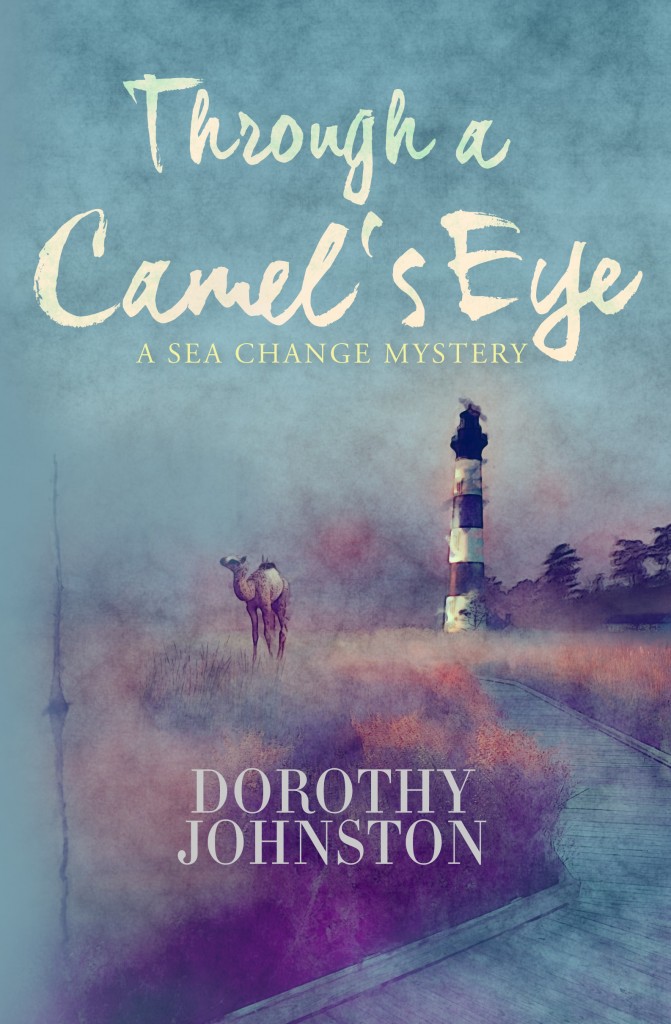
Dorothy Johnston, Through a camel's eye

My non-preference for series is based on a few things, the main one being that I read to hear different voices in different settings about different people, places and ideas. Series novels tend to be set in the same place and milieu, with some continuing characters. Another reason is that I like to be challenged by different approaches to story-telling a story, but series novels tend to follow a formula. It might be a good formula, the writing and characterisation might be great, but it risks becoming familiar rather than challenging or exciting.

These reasons relate in fact to what the Kill Zone named as the single biggest advantage to a series, for both writer and reader. Series, they say, provide “comfort food for the imagination”. However, they also recognise the risk that series can become formulaic.

Another issue for me is the amount of backstory that novels in series tend to include. I guess that’s for readers who start a series in the middle, but if you have read the previous novels, it can be irritating. The Kill Zone suggests that this backstory aspect is a challenge for writers too: “How much backstory does the author include in subsequent books without boring the dedicated series fan or confusing the mid-series pick-up reader?” Good question. The Career Authors site looks at it this way: “You want to make sure,” it says, “that each series title is a potential standalone, so that you can tell readers you don’t have to read my books in order!”

British crime writer Carol Wyer writes about the work involved in writing a series. She says:

You’ll need to know your characters inside out, especially those who will appear in each book, and you must continue their personal stories, weaving them in between each storyline and… you need a theme, one that permeates each book and links them all. It must be something that hooks your readers, so they will want to read the next book, maybe another overriding storyline or simply reader investment in each of your main characters.

She has “notebooks and manilla files” for every character, recording their likes and dislikes, how they pronounce things, and so on. The Career Authors site also describes in some detail what writing a series involves for an author. You can’t kill the main character off, for example!

Still, says Wyer, “the rewards are huge” because authors are usually bereft when they end a book and have to “say goodbye to the characters”. With a series they don’t have to!

On standalone
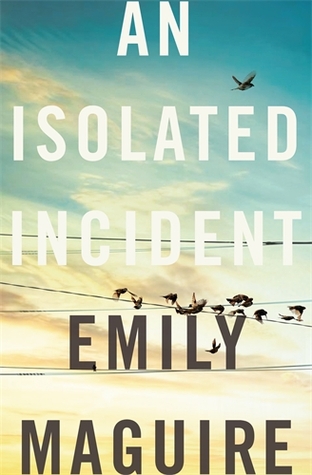
Emily Maguire, An isolated incident

I’ve already implied why I like standalone novels. The Kill Zone, looking at it particularly from the series author’s point of view, says that “the advantage of writing a standalone … is it can bring on a breath of fresh air for you and the reader”. A standalone, that is, lets a writer explore or experiment with new approaches, techniques, subjects, and it lets the reader see new talents in a loved writer. However, the Kill Zone warns writers to not stray so far from their norm that their fans won’t recognise them.

On a Kindle discussion board, I found the warning that “standalone genre novels can be harder to sell”.

Happy mediums

Series vs Standalone looks like an either-or situation, but, is there a happy medium? Well, yes, there is. One is the approach that Shelley Burr took in Ripper. It is set in a different location, and has a different main protagonist, but the protagonist from her first novel plays a subsidiary investigating role from another location. The Kill Zone, in fact, suggests something like this when it recommends that authors could “touch on something” in their new book that had “appeared in a previous series”.
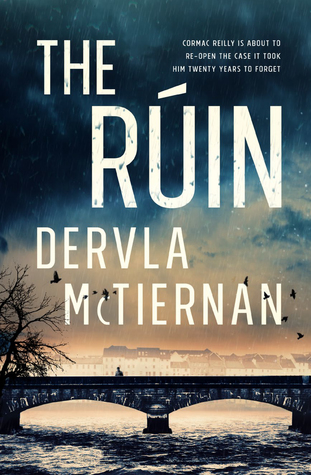
Dervla McTiernan, The ruin, book cover

The other idea, one that has a foot firmly planted in both camps is the “trilogy”. While she didn’t frame it in terms of this debate, Dervla McTiernan, in the meet-the-author event I attended, said about writing her Cormac Reilly trilogy, that she didn’t want to write a long procedural series, because they tend to be episodic without overall narrative arcs. She wanted to challenge her character Cormac; she wanted him to have a narrative arc which would see him changed by the end. That said, she did admit that Cormac might re-appear some time in the future!

Some sources

I found a few discussions on the internet that made some good points regarding the series vs stand-alone debate. The main ones were the Kill Zone blog (a joint blog), Carol Wyer, and Career Authors.

I’d love to hear your thoughts, whether you are author or reader. Do you prefer one or the other, or don’t you care? Over to you …
Monday musings on Australian literature: Genre Worlds

While reading the GenreCon 2017 twitter feed, which resulted in last week’s Monday Musings, I came across the twitter handle @PopFicDoctors. Intrigued, I checked them out and discovered they are behind a research project and manage the website Genre Worlds: Australian Popular Fiction in the Twenty-first Century. The project is being funded by an ARC (Australian Research Council) Discovery Project Grant, for three years from 2016 to 2018. It involves four academics (the Doctors!) from universities in Queensland, Melbourne and Tasmania. You can read more about them on the site’s Research Team page.

Popular fiction is, they say, “the most significant growth area in Australian trade publishing since the turn of the century” and so their project has been framed “to systematically examine 21st-century Australian popular fiction”. Fascinating. On one level it seems a bit weird to me, with the second decade of the century not even over, to be studying trends in the 21st Century. However, having learnt a lot about Australian popular fiction through my involvement in the Australian Writers Challenge, I can see that the chosen topic – Australian popular fiction – is worth researching. I’ll be intrigued to see what the PopFic Doctors come up with.

They identify their areas of investigation as:

  • the publishing of Australian popular fiction;
  • the interrelationships between Australian popular fiction and Australian genre communities; and
  • the textual distinctiveness of Australian popular novels in relation to genre.

To do this, they will focus on thirty novels in three genres (fantasy, romance and crime) in order to produce “a comprehensive picture of the practices and processes of Australian popular fiction”. (I’d love to see their list but I don’t see it on the website.) The research process involves “detailed examination of trade data, close reading of texts, and interviews with industry figures.” That sounds comprehensive – and, to me, interesting. They have produced a flyer documenting what they achieved in the first year of the project.

GenreWorlds Conference

Now, back to Twitter, I was initially confused about some of their #GCoz tweets because they said they were at “GenreWorlds”. Well, the website explains it. Genre Worlds was a one-day academic conference that was run in association with GenreCon. Its specific areas of interest were: Genre Fiction and New Media, Genre Elements in Play, Industry Developments, Travelling through Time and Space, Genres and Society, and Shaping Genre Fiction.

And so, as I did last week, I’m going to share some of the info I gleaned from that conference’s tweets (#genreworlds17) with the tweeter’s username given in brackets, where not otherwise identified.

Romance fiction

One of the presentations that was popular with tweeters was Dr Sandra Barletta’s on “women of a certain age” in Romance fiction. Claire Parnell tweeted Barletta as saying ‘Romance as a genre for everyone consistently depicts older women as Other’. Other tweets on her paper were:

  • Romance fiction has been at the forefront of acknowledging the importance of diverse representation, but still largely fails to include older women as part of this. (PopFic Doctors)
  • Older women face a double standard in media in regards to fuckability that does not apply to men aka the silver foxes. (Claire Parnell)
  • Romance publishers are starting to seek mature women protagonists … but define mature as 35-45. (Claire Parnell)

So older women are “other” and just 35 to 45 years old! There’s a way to go yet … and Barletta apparently threw out the challenge:

Sandra Barletta’a advice to publishers, writers: Flatter us. Give us something to aspire to be instead of old. Reshape what we see, because what we see matters. Come to the forefront of social change–and make money! (PopFic Doctors)

Other tweets on Romance fiction told me that “Self-published romance has grown substantially from 2010-11 to 2015-16″ (Claire Parnell) and that “Romance far outstrips other genres” (Kate Cuthbert).

And then there was this interesting one about Romance heroes in Harelquin novels versus self-published ones: “@cparnell_c research found Harlequin novels feat. heroes w/ ‘masculine’ jobs – cowboys, officers – and self-pub novels feat heroes w/ wealth-based jobs” (Kate Cuthbert).

Other genres

There were tweets about other genres and sub-genres too. Did you know, for example, that there’s such a thing as Football Fiction? I didn’t, but this tweet informed me: “Representation of female protagonists in YA football fiction is fairly equal. Lee McGowan suggests this is because fiction offers women a place to see themselves in sport when streaming on tv is limited” (Claire Parnell). I think something has been lost in the translation to twitter here, but I’m intrigued that this sub-genre exists.

Jane Rawson, A wrong turn at the office of unmade lists

Disguised Speculative Fiction perhaps?

There was also interest in something called interstitial fiction. Laurie Ormond tweeted “Interstitial fiction (blending literary and genre tropes) has been increasingly visible in the last few years” and Angela Hannah tweeted “Are you reading speculative fiction disguised as literary fiction? Interesting discussion of interstitial fiction”. I’m a bit uncertain about the point being made here regarding “disguise”, but Laurie Ormond, probably reporting on the same presentation, tweeted “Literary works are deploying techniques and tropes of genre fiction to explore climate change”.

And here’s another tweet about the relationship between genre, literary fiction and classification: “Australian noir is closely linked to literary fiction and is not always categorized as noir – Leigh Redhead” (Claire Parnell). Is this implying that Australian noir is/can be disguised as literary fiction?

Oh, and there was also talk of New Adult Fiction, but I don’t have many tweets for that – a topic for another day.

On readers, book clubs and literary fiction

Of course, as a reader, I was particularly interested in tweets about the reading end of the spectrum, and there were a few of these.

It’s so fantastic hearing other academics talking about the significance of book clubs and reader experience. (Caitlin Francis)

A couple of other tweets referred to book clubs and their focus on literary fiction:

  • Vassiliki Veros – ‘literary fiction’ dominates library & online clubs. Q&A: lack of ‘gf book club guides.’ (Lynette Haines)
  • Librarians are cultural gatekeepers, especially when selecting books for book clubs @VaVeros(Beth Driscoll)

I’d love to have heard this presentation by librarian-academic, Veros. My reading group rarely uses book club/reading group guides because we have rarely found the questions relevant to how we discuss books, so it’s interesting to see Haines’ tweet suggesting that the lack of such guides for genre fiction may be one reason for such fiction being less commonly read by reading groups. However, being a librarian, albeit a retired one who didn’t work in this area, I take the point about the gatekeeper role played by librarians. They should be alert to the needs of their readers – that’s their job – but selection is always a juggle.

If there’s one overall thing I’ve gleaned from the tweets, it’s that more will be said about the relationship between genre and literary fiction!

Anyhow, there were other intriguing tweets, including one about genre-tagging by GoodReads’ members, but I think this is enough. I was pleased to read that papers from this Conference will be published in a special edition of Australian Literary Studies. I’ll be looking out for it. You may hear more as a result!

Meanwhile, if you haven’t had enough of genre, I’d love to know if anything here has caught your attention.

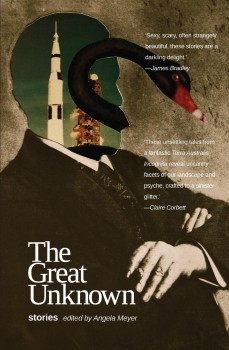
Angela Meyer (ed), The great unknown (Review)

Angela Meyer, The great unknown

Courtesy: Spineless Wonders

The great unknown is a mind-bending collection of short stories which explores, as editor Angela Meyer says, “the unknown, the mysterious, or even just the slightly off.” I was, in fact, expecting more horror, thriller even, which are genres that don’t really interest me, but this collection is not that. There are some truly scary scenes – so if that’s your bag then you’ll appreciate this collection – but many are more subtly mysterious, giving the collection a broader appeal.

There are nineteen stories, most of which are the result of Meyer’s direct invitation to some favourite authors. Six, though, come from the shortlist for the Carmel Bird Short Fiction Award, 2013, of which Meyer was the judge. The invited authors were given the same brief as that for the competition, which was to write a story inspired by the “fifth dimension”, that is, the world found in shows like The Twilight Zone and The X-Files where inexplicable things happen. The result is a collection of stories that vary greatly in setting, voice, subject matter – and even tone. Some are funny, some sad, most are disconcerting and some, of course, are scary.

The collection starts in a suitably creepy way with Krissy Kneen’s “Sleepwalk” in which the protagonist, Brendan, wakes up in the middle of the night to find his partner, Emily – the sleepwalker of the title – missing from their bed. This doesn’t sound particularly unusual, except that upon investigation Brendan discovers Emily intently taking photos – and not with a modern digital camera, but one requiring “real” film. When developing the photos, they see a blurry grey figure. Who is it? What does it mean? To find out you’ll have to read the story – but I can say that it provides a perfect opener to a collection of stories in which the relationship between a couple is a common springboard. After all, where better to explore the inexplicable but in that closest of human relationships, the one in which love and hate, trust and fear, so often collide.

Several of the stories confront contemporary dilemmas. One of my favourites, and winner of the Carmel Bird Award, is Alexander Cothren’s “A Cure”, a truly disturbing Twlight-Zone-like story about a treatment, the appropriately named MindFi, for compassion fatigue. Another TZ-like story I enjoyed is Guy Salvidge’s “A Void”, which is also futuristic and drops us into a world of “Seekers” and experimental drugs. I’m not sure why I enjoyed these TZ-like stories because it was a Twilight Zone episode that set off the most distressing period of my childhood. I’m sure it was that show that turned me off horror for life – quite the opposite reaction to Angela Meyer’s it seems!

Another clever story, and one with an unexpected narrative point of view, is Mark O’Flynn’s “Bluey and Myrtle” about a caged bird and his old mistress. Both have lost their loves and are lonely, but it’s the self-aware bird who takes things into his own hands. Growing older is also the theme of Susan Yardley’s “Significance” in which a woman’s sense of invisibility and irrelevance manifests itself physically. As a woman of a certain age, I can relate to that (though fortunately not within my own family). This story reminded me of Anne Tyler’s novel Ladder of years, except that Tyler explores her theme without resorting to the “fifth dimension”.

Before I stop picking out favourite stories, of which there are several more, I’ll just mention PM Newton’s “The Local” which perfectly captures life in a remote country town and the dangers that lie within. There are of course stories that I didn’t like as much. For me, the writing in Chris Flynn’s “Sealer’s Cove” was too self-conscious and the time-travel story didn’t grab. And Ali Alizadeh’s satire on the Oprah Winfrey-Lance Armstrong interview in “Truth and reconciliation” was a good idea and funny to a point but a little too heavy-handed for my tastes. Satire is like that, I suppose.

An important part of editing a collection is ordering the contents. Meyer has done a neat job of placing the stories in an order that seems natural and thereby enhances our reading. For example, two outback stories featuring missing people, PM Newton’s “The Local” and Rhys Tate’s “The Koala Motel”, one set in a pub and the other a motel, are placed together. And Paddy O’Reilly’s “Reality TV” is followed by the TV-set show, Alizadeh’s “Truth and reconciliation”. It, in turn, is followed by Guy Salvidge’s “A Void” in which drugs feature. Three stories in a row – by Marion Halligan, Susan Yardley and AS Patrìc – feature missing or disappearing women. Put this way, it sounds a little mechanistic but in fact it provides a subtle underlying coherence to what is a highly varied collection.

Meyer concludes the collection with Ryan O’Neill’s “Sticks and Stones” in which a reader, who smugly comments that “characters in ghost stories behaved as if they’d never read ghost stories”, becomes haunted, hounded even, by words. They move, follow and curse him … words, indeed, are dangerous. Be afraid, be very afraid – but don’t let that put you off reading this book! It’s well worth the odd heart palpitation.

awwchallenge2014Angela Meyer (ed)
The great unknown
Strawberry Hills: Spineless Wonders, 2013
177pp.
ISBN: 9780987447937

(Review copy supplied by Spineless Wonders, via Angela Meyer)

Monday musings on Australian literature: GenreCon

I returned from seven weeks of gallivanting abroad to several emails* about something called GenreCon, which will take place next week from October 11 to 13 at the State Library of Queensland. I hadn’t heard of this before, which is probably not surprising as it seems to be a new event. As you’ve probably guessed from the title, GenreCon is, as the website puts it:

… a three-day convention for Australian fans and professionals working within the fields of romance, mystery, science fiction, crime, fantasy, horror, thrillers, and more. One part party, one part celebration, one part professional development: GenreCon is the place to be if you’re an aspiring or established writer with a penchant for the types of fiction that get relegated to their own corner of the bookstore.

Readers here know that genre fiction is not my speciality, but that doesn’t mean I never read it, or that I’m not interested in keeping an eye on what’s happening to it, particularly in Australia. In fact, I’ve become far more aware and (generally) knowledgeable about genre fiction since my involvement with the Australian Women Writers’ Challenge – and that, I think, is a good thing. I have read and reviewed a few books this year that would fall under the genre hat, such as Anita Heiss‘s Paris dreaming (my review), Krissy Kneen‘s Steeplechase (my review), and Courtney Collins’ The burial (my review), and I’ve enjoyed each one, for different reasons.

As is usual at these sorts of events, there will be a number of international and national guests, some “author” and some “industry” as they put it. Australian author guests include she-who-needs-no-introduction-here Anita Heiss (my, she’s a hard-working woman), thriller writer Kathryn Fox, jack-of-all-trades writer John Birmingham, and romance writer Anne Gracie. Industry guests include reviewers, editors, and publishers. And again, like many conferences, there will be program streams: “the craft of genre writing, business and industry awareness, and researching for fiction”.

In the run-up to the conference, AustLit (about which I wrote a few months ago) has been sending out regular emails suggesting how its scholarly database reflects, or can be used to research, Australian genre fiction. For example:

  • AustLit has developed, since 2009, the Australian Popular Medievalism dataset, which lists Australian-written works (published between 1995-2010) featuring medieval ideas/settings. It’s currently a research project, but let’s hope the time-period is extended to cover all-time so that it can become a useful resource.
  • you can search on such topics as fairytales appearing in Australian genre fiction, or norse and germanic myths, or, presumably, a wide range of other topics, but these are the examples AustLit gives because they relate to conference topics.
  • media tie-in fiction (that is, fiction inspired by other media such as films, television, games) is an active segment of the genre world, but has attracted somewhat uneven scholarly attention to date.

In other words, while genre fiction may be at the lighter more fun end of the reading spectrum, it is nonetheless worthy of serious analysis and research. After all, if you want to know how people lived, what they thought, what influenced them, in a particular time, popular culture is a critical place to start. It’s important therefore that data be collected now … and so I’ve enjoyed AustLit’s taking up the gauntlet and demonstrating its contribution to the genre discussion.

I hope the convention goes well, and look forward to reading some reports of it after the event.

* Yes, I know I can read emails while I’m away but life was pretty busy on the road, and so I limited my reading to emails from family and friends. Consequently, I returned to a gazillion emails in my inbox waiting my rapt attention. Ha!

What is literary fiction? A personal manifesto!

I was pottering around the Internet last night, as you do, and found myself on a State Library of Victoria page titled Novels: Finding Literary Reviews and Criticism and there I saw this definition of Literary Novel:

Literary fiction focuses on the subjects of the narrative to create introspective, in-depth studies of complex characters. The tone of literary fiction is usually serious, it has layered meanings and the pace is slower than lighter fiction. Much of this literature remains relevant for generations, even centuries.

There’s no source for this definition – though it may have been partly drawn from Wikipedia. This definition is followed by one for Popular or Genre Novel:

Usually the plot is important in the popular novel, the pace is faster and the characterisation is uncomplicated. Action is more important than reflection. Murder/mysteries, thrillers and romances fall into this category.

Help Books Clker.com

(Courtesy OCAL, via clker.com)

Now, I’m particularly interested in this topic at the moment because I’m coordinating the “Literary” category for the Australian Women Writers’ Challenge. Each month I write a round-up of the previous month’s reviews for literary fiction (and literary non-fiction, but that’s not my topic here). The first thing I do is review the reviews (ha!) to see what has been categorised as “literary” – and each month I change a few, mostly by adding “literary” to some titles that haven’t been so classified.

My challenge is to have some basis for making these decisions. Fortunately, it’s not brain surgery so, while feelings may be hurt at times – though I really hope that doesn’t happen – no-one is going to die if I do or don’t label a book as “literary”. Phew!

I don’t fully agree with the State Library of Victoria’s definition, though it has some validity. Being multi-layered, particularly in terms of meaning, and being universal or likely to have longevity are valid criteria – and they certainly play a role in my categorisation. Characterisation is a bit trickier. Genre fiction can have complex characters, though perhaps not quite so much complex characterisation, if that makes sense.

Risky business …

But, the defining characteristics for me have to do with language and with innovation. Fiction I classify as “literary” uses language that challenges its readers. This isn’t to suggest that “genre” fiction is badly written, but that the focus of “genre” fiction is something else, usually plot or character. It also doesn’t suggest that genre fiction writers can’t have a message or serious intent. They can, but they want to convey that primarily through the story, rather than through linguistic devices.

Fiction I classify as “literary” also tends to be innovative. That is, it may play with voice, narrative structure, grammar and syntax, with imagery, form, tone, and/or expectations. This doesn’t mean that “genre” fiction can’t also be literary. It can, but I would call it literary when the writer manipulates or diverges in some way from the expectations of the genre.

Literary fiction, in other words, tends to take risks. Take some (mostly Australian) examples:

  • Courtney Collins’ The burial (my review) is historical fiction, perhaps even historical crime, but I’d label it literary for a number of reasons, one being its voice. It is told in the voice of a dead baby, who operates mostly as an omniscient narrator but who, occasionally, injects her own feelings.
  • Carrie Tiffany‘s Mateship with birds (my review) could also be labelled historical fiction but I’d label it literary on multiple fronts, one being form. Interspersed with the main narrative are a log book documenting the life cycle of a kookaburra family, a nature journal, various lists, a bit of a diary, to name a few departures from straight story-telling. These are not just there for the sake of it; they enhance the meaning.
  • Martin AmisTime’s arrow (read before blogging) is a Holocaust novel that plays big-time with narrative structure. It’s graphically told in rewind – and, in doing so, manages to increase the horror.
  • Markus Zusak‘s The book thief (my review) is another Holocaust novel. It plays with tone (and related to that, voice). It’s humorous – a Holocaust novel humorous? – and is narrated by Death. Shocking! And therein lies its impact.
  • Peter Carey’s True history of the Kelly Gang (read before blogging) and Louis Nowra’s Into that forest (my review) disobey the rules of grammar and syntax to create unique voices for their protagonists, the uneducated Ned Kelly for Carey, and a feral child for Nowra. Doing this risks alienating readers but, on the other hand, increases the realism.

But, do we want to classify “literary fiction” …

I think we do, mainly because many readers do have reading preferences. If we don’t have a “literary” category, how would readers like me find the sorts of books we like to read? And, where would those books that don’t seem to fit any “genre” go? Bookshops differ of course. Some categorise the main genres – crime, fantasy, etc – and lump the rest as general fiction. Others don’t categorise at all and simply shelve alphabetically, while others do have a literary fiction section. They may not always get it right – by my definition – but I appreciate that they try.

The point is, this is not about snobbery. It’s not about good-versus-bad. That’s a completely different judgement, one that can occur as much within as between genres/categories – and is why there are genre-based awards, as well as literary awards. No, it’s simply about making it easy for readers to find the sort of books they like – and surely, that’s a good thing?

Do you have thoughts on the subject?