Given I am currently in Fremantle, I felt it appropriate to give a little shout out to one of the first independent presses I became aware of, back in the 1980s, the Fremantle Press. Then it was called the Fremantle Arts Centre Press, and it published one of my favourite authors at the time, Elizabeth Jolley.
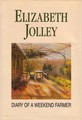
I must admit that felt sorry for them – and a little cross with Jolley – when she left them for Penguin, but I understood too. Writing is a tough business, and being in the stable of a company with the reputation and clout of Penguin must certainly help your visibility and thus your sales and income. Nonetheless, these small presses, which tend to be the ones to take a risk on new writers, are so important to Australia’s literary culture, so we need to support them.
A little history
Fremantle Arts Centre Press was established in 1976, and publishes a wide range of works – fiction and nonfiction, adult’s and children’s. The write that their
core purpose is to identify talented new and emerging Western Australian writers and artists, and to publish and distribute their work to the widest possible audience.
How did they start, though, and when did their name change? This sort of information is hard to find when organisations don’t document it on their site – and Fremantle doesn’t on their About Us page. My Internet search retrieved, of course, lots of hits on specific books they’ve published or the occasional news item about an award. However, I persevered and found an article written in the University of Western Australia’s Mots Pluriels (no. 5, 1998) by academic Phillip Winn. The issue is devoted to a study of the Press, and containsinterviews with authors and staff of the Press, as well as Winn’s article.
Winn’s article is titled “The Fremantle Arts Centre Press: a case study of a smaller publishing house”, and he explains the case study’s aims and hints at its findings:
Armed with a barrage of questions designed to expose the ‘how to’ of getting published in Western Australia, it soon became apparent that the search for a general response was the least fruitful. How do lesser-known authors get published? Is it easy? What help does a publisher give a budding writer? What is a good book in the eyes of the reading committee? In this study of FACP, such questions have been more meaningfully answered on the individual rather than the corporate level; for the dominant theme to emerge from this series of interviews is the importance of the personal touch. Public questions of universal interest have, it seems, very private and personal answers.
Winn documents a bit more of the Press’ history, saying that it is part of the cultural heritage of Fremantle itself. He says that by the mid 1970s, the Fremantle Arts Centre “had established a highly successful, community based, creative writing program” and that on the basis of this, the Centre’s then dire actor, Ian Templeman, “saw the possibility of establishing a press to gain wider recognition for Western Australian authors”. Winn says that the creation of the Press (FACP) in 1975 (not 1976 as the website says), “is now considered a watershed in Western Australian history”. He argues that part of the Press’s significance was that it was able to reduce ‘the so-called “brain-drain phenomenon”‘, that common problem in Australia’s artistic scene, whereby “those with talent in search of recognition are first seduced eastwards to Sydney and Melbourne, and then overseas”.
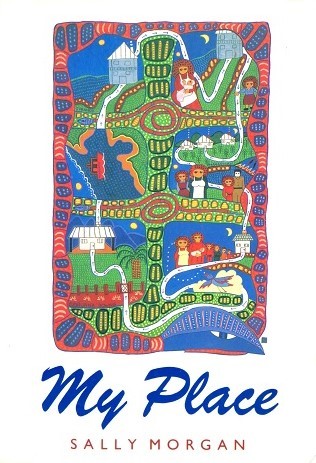
From the beginning, FACP’s focus was Western Australian artists and writers, and its early writers from the 1970s and 80s, like Elizabeth Jolley, Albert Facey (My fortunate life) and Sally Morgan (My place), are still internationally renowned.
This early success continued in the 1990s, with authors like Kim Scott, whose Benang won the 1999 Miles Franklin Award. Winn notes that in this decade FACP diversified, with their catalogue at the time of his writing, including “a wide variety of texts in the fields of art, history, education, biography and autobiography, cultural studies, and children’s books as well as their traditional lines of literary prose and poetry.”

And this has continued. Fremantle books I have reviewed in recent years include Margaret Rose Stringer’s memoir, And then like my dreams (2013), and Madelaine Dickie’s novels Troppo (2016) and Red can origami (2019). Fremantle has also started republishing classics, in a series they call Treasures. Books in this series include a collection of stories by T.A.G. Hungerford, Stories from Suburban Road.
As for when it became “just” the Fremantle Press, that I found in Wikipedia – and it was 2007. Wikipedia doesn’t explain why, though.
In April 2022, the Fremantle Library unveiled “its extensive new collection” of Fremantle Press books. Local author David Whish-Wilson is quoted as saying:
“I applaud the step taken by Fremantle Library to gather Fremantle Press’ entire list and back-list in one place, and I, for one, will be eagerly perusing the shelves.”
Any initiative which aims to ensure continued availability of backlists (like the Untapped project I wrote about earlier this year) must be commended. Of course, you would expect libraries to be at the forefront of such endeavours, but in these days of reduced resources, even they cannot always provide the depth of collection that we would expect of them.
As well as publishing books, Fremantle sponsors two writers’ awards:
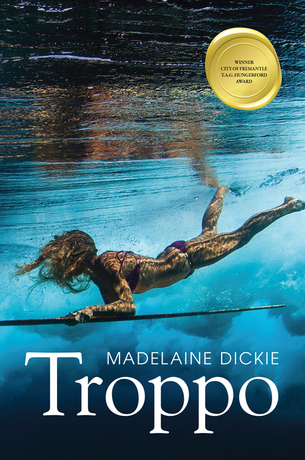
- the City of Fremantle Hungerford Award, co-sponsored by the City of Fremantle and Fremantle Press, is “Western Australia’s most prestigious award for an unpublished work of adult fiction, narrative non-fiction or young adult fiction by an unpublished writer”. The prize is $15,000 cash and a publishing contract with Fremantle Press.
- The Fogarty Literary Award, co-sponsored by the Fogarty Foundation and Fremantle Press, is a biennial award for an unpublished manuscript (of adult fiction, narrative non-fiction or young adult fiction) by a Western Australian author aged between 18 and 35. The prize is $20,000 cash and a publishing contract with Fremantle Press.
Fremantle Press is a non-profit publisher.
 Whispering Gums