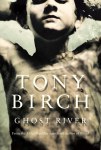
Tony Birch, Ghost River (Review)

Tony Birch, Ghost river“Some people believe in religion. Well, I believe in stories.” So says Ren to his friend Sonny late in Tony Birch’s third novel Ghost River. Ren and Sonny are two young adolescent boys who live in Melbourne’s old inner-city suburb of Collingwood. It is the late 1960s, when Collingwood was a largely blue-collar neighbourhood. Ghost River is a novel about the power of stories – it’s also about the power of friendship, and the importance of community.

Last year I reviewed a short story by Tony BirchSpirit in the night – but this is my first novel by him. While I can’t, therefore, speak authoritatively on his fiction, I’ve noticed some recurring themes or ideas in these two works. Both have young men as their protagonists, both deal with disadvantage, and both set fundamentalist style Christianity against a more humanist view of the world. Interesting. Relevant here too is that Birch is an indigenous Australian writer*. Indigeneity is an overt issue in Spirit in the night, but in Ghost River it’s present, underpinning the respect for place in particular, but is by no means in your face. It is important, sometimes, to put indigenous issues front and centre, but it is equally important for it to be a given, rather than always identified, teased out, featured.

Now, the plot, because this is a book with a strong plot, a story in other words! The novel starts with Sonny moving into Ren’s neighbourhood, Sonny being around 13 years old and Ren a year younger. Sonny lives with a drunken, abusive father. He’s tough, and wiser than Ren in the ways of the street. Ren lives in a stable, loving home with his mother and stepfather. He’s a dreamer, draws birds in particular, and soaks up stories. Early in the book, Sonny rescues Ren from a bully attack at school and from then on “it became the two of them, for better and worse”. The novel chronicles their friendship, as they explore their world and face its challenges – of which, you won’t be surprised to hear, there are many more for Sonny.

Their world is dominated by the river, a place Ren loves and knows “as good as anyone and better than most”, and to which he soon introduces Sonny. The river becomes their playground – a place to which they escape and where they test their skills. It also introduces them to another community, “the river men”, a small group of homeless men led by Tex. Through these colourfully named men – Tex, Tallboy, Big Tiny, Cold Can, and of course the Doc (there’s always a Doc isn’t there!) – Ren and Sonny learn much. They learn practical survival skills, but mostly they learn about loyalty, leadership and the value of mutual support. And they hear stories,

prison stories, drinking stories, lost dog stories, and tales of their years on the road. … Other stories were sacred, recited in hushed tones and observed in silence, except for the crack and groan of the fire.

Partway through the book, a fundamentalist Christian family moves next door to Ren, comprising Reverend Beck, his wife and their daughter Della. We soon realise that Father Beck’s relationship with his daughter has a dark side (if you take my meaning).

Meanwhile, Sonny struggles at school and is eventually pushed too far by a vindictive, cruel teacher. He leaves and gets a job at the local newsagent. Brixey, the newsagent, is one of those men who can look beneath the surface to see potential and, rightly, sees potential in Sonny. It’s not long before Sonny is working hard – using his nous to work some deals, and subcontracting Ren to help out before and after school. Ren, you see, is saving for a camera so he can photograph, as well as draw, his beloved birds.

And then, completing this cast of characters, are the bad guys. There’s Foy the corrupt policeman, gangster Vincent and his henchman, and Chris the illegal SP bookmaker. Through no fault of his own, Sonny, with Ren tagging along as support, gets caught in Vincent’s net, and things become seriously nasty.

Have you noticed how much I’ve focused on the story in my discussion? It’s rare for me to spend so much time in a review on what happens, but it is hard not to here, given the importance of plot. However, there are other aspects worth talking about, particularly the river. It is the main motif – physical but also spiritual and metaphorical – that runs through the book. Unfortunately the river is threatened by plans to build a freeway. For the boys and the river men this spells disaster, the river being important to their wellbeing:

Walking home from their excursions upriver Ren would feel a little different. He couldn’t make sense of it. He knew it was a feeling he craved, but one in danger of slipping away from him. Even Sonny would be calmer. He would look up at the sky as if he was trying to unravel a mystery.

Tallboy tells the boys stories of the river, of how it had changed over time and of the “ghost river” beneath the existing one. He draws “a swirling snake” in the dirt and says:

‘This is her. And when a body dies on the river, it goes on down, down, to the ghost river. Waiting. If the spirit of the dead one is true, the ghost river, she holds the body to her heart. If the spirit is no good, or weak, she spews it back. Body come up. Simple as that.

And so it comes to pass – but you’ll have to read the book to find out more. Tallboy tells the boys, after hearing the freeway plans, “The river. Now, she needs you most of all.”

This is, essentially, a coming-of-age story. There is humour here, particularly in some of the early descriptions of the characters; the pacing is good; the dialogue believable; and the main characters are well drawn. But does it all work? It might just be me, because I’m more interested in character and ideas than plot, but I did find the plot a bit loose, primarily due to having multiple storylines. I’m not sure whether we really needed the Reverend Beck story, and I didn’t love the gangster-bookmaker-corrupt policemen story either though I suppose (says she, the comfortable middle-class white female reader) young boys can get caught up in nasty business. These seemed to me to get in the way of, dilute even, the save-the-river story. However, these plotlines certainly reinforce the idea that life is tough, and that it often requires difficult decisions. Tough, but not impossible. It’s not a spoiler, I think, to say that the novel’s resolution is cautiously hopeful.

“Books”, Ren’s stepfather Archie tells him, “can take you places”. While Ghost River didn’t work for me on all levels, it did take me to a very interesting place and time. I’m not at all sorry that I went there.

Lisa also reviewed this book, from the perspective of someone who knows Melbourne, the river and the freeway (which was, in the end, built. Of course)!

Tony Birch
Ghost river
St Lucia: UQP, 2015
294pp.
ISBN: 9780702253775

(Review copy courtesy UQP)

* As for many people, his origins are mixed, Irish Catholic on his mother’s side, and Jamaican-Indigenous Australian on his father’s.

Monday musings on Australian literature: Blak and Bright

I should have written about the Blak and Bright last Monday, as the Festival was held last weekend, but unfortunately I only heard about it – my inattention, I’m sure – a few days ago, via an ABC RN program (which you can listen to online). However, although the actual Festival is now over, I think it’s still a worthwhile topic – and, anyhow, most of you who read my blog wouldn’t have been able to attend, given it was held in Melbourne.

So, what is (was) Blak and Bright? From the website, link above, it is described as the debut event of the Victorian Indigenous Literary Festival. Their “about” page lists sponsors and supporters, and says:

We believe Indigenous writing is relevant and exciting to literature lovers and readers everywhere.

What a simple, straightforward “mission statement”! Unfortunately, there is no program online. However, there is a list of artists, and from that you can locate the sessions they were involved in. Via this method, I found a fascinating variety. Here are a few:

  • 6 Plays in 60 Minutes: six short play readings from Australia’s longest running Indigenous theatre company, Ilbijerri.
  • Blak Book Club: an opportunity to discuss two Indigenous books, Gayle Kennedy’s Me, Antman & Fleabag and Tony Birch’s Ghost River.
  • Borrow a Rare (Living) Book: opportunity for attendees to have one-on-one sessions with Indigenous storytellers/Elders (Aunty Di Kerr, Uncle Larry Walsh, Aunty Kerry Reed-Gilbert and Aunty Judith ‘Jacko’ Jackson).
  • Cross Continental Conversations: explored the international Indigenous writing scene, by discussing the experiences of a contingent of Aboriginal writers who travelled to the Native American literary organisation, Woodcraft Circle, and the Literary Commons exchange in India. Participants were Lee Francis IV, Bruce Pascoe and Ali Cobby Eckermann.
  • Fresh Blak Writers: Maurial Spearim (playwriting), Hannah Donnelly (speculative fiction), and Elijah Louttit (screenwriting) talking about how they got started with their writing.
  • Ellen van Neerven, Heat and light, book coverPublishing and Editing Blak: about the challenges faced by Blak writers working with white editors and publishers, and the challenges faced by Blak editors and publishers. Posed the question: Is there a need to make Aboriginal language or depiction of culture easy for a white readership? It involved Rachel Bin Salleh, Ellen van Neerven (whom I’ve reviewed) and Sandra Phillips.
  • Sistas are Doing It: Tammy Anderson, Anita Heiss, and Kate Howarth share how to “build and sustain a career as a Blak writer”.
  • Yung, Blak and Bold: involved young writers presenting new ways of presenting the world. “Listen”, the program advised, “as we bust stereotypes and discuss how words in new contexts can activate change”. Featured Benson Saulo, Amelia Telford and Nayuka Gorrie. (All new to me, but that’s the point I guess!)

It looks wonderfully varied, catering for all sorts of interests. It involved several writers I don’t know; and some, like Bruce Pascoe, Ally Cobby Eckerman, Gayle Kennedy, who are on my radar to read. Sessions were supported (sponsored I presume) by some wonderful literary “players” like the Small Press Network and the Stella Prize. I would be interested to see an assessment of how it went, recognising that these sorts of events can take a few years to build.

There is a blog on the site. I’m not sure if it will continue post-festival, but in addition to posts about events, it has a series on the topic “Why I read Blak?”:

  • Associate Professor at the Graduate School of Language and Culture at Osaka University, Sei Kosugi: on the global reach of Australia’s Indigenous storytellers, naming a couple of the writers she teaches and why.
  • Writer and crossword-maker, David Astle: on “an important lesson he’s learnt from reading Blak”.
  • Writer Drusilla Modjeska: on the various ways reading Blak has enriched her reading and writing life. She looks more widely, starting with African writer China Achebe’s Things fall apart (which I will be reading and reviewing in a few months – at last!)
  • Our very own Auslit blogger Lisa Hill: on the value to her of reading books by Indigenous Australians. She writes that “I feel as if I am being invited to get to know my country better. I’m being welcomed in to share in an ancient story”.

Finally, in the RN program I heard (link in the opening paragraph), Anita Heiss spoke on why people should read Blak. She has fleshed it out on her blog. It not only gives excellent reasons – such as “we write human rights” and “we write the search for self” – but it provides a useful but by no means complete list of works and authors well worth checking out.

Tony Birch and Ellen van Neerven in Review of Australian Fiction 10 (4)


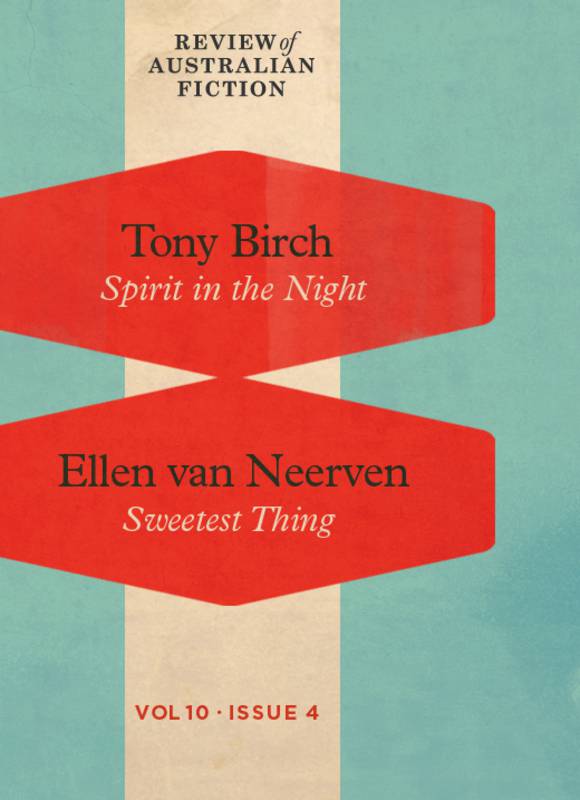
Review of Australian FictionI have been wanting to write about the oddly titled Review of Australian Fiction for some time. I say oddly titled because, contrary to what it might sound like, this does not contain reviews but short fiction. Established in 2012, it is published, electronically (or digitally), every two weeks. Each issue contains two stories by Australian authors: one by an established author, and the other by an emerging author, chosen by the established author. Funnily, in the issue I’m reviewing here, it’s the emerging author, Ellen van Neerven, whom I’ve read before, not the established one, Tony Birch. But, I’m so glad that Lisa’s Indigenous Literature Week has given me the opportunity to a) finally read something by Birch, and b) finally read Review of Australian Fiction issue.

Tony Birch, “Spirit in the night”

Birch’s story is told first person by a young indigenous boy, the 11-year-old Noah Sexton. He’s dirty, smelly, poorly dressed, and no-one wants to know him – except the new girl, Heather, who invites him to sit next to her. She’s “the cleanest person I’d ever seen” with “no pox rashes, bites or scars like I had”. At lunchtime, Heather offers the hungry Noah a sandwich and engages him in conversation. She asks him why he sits alone, and he gives the classic reply:

‘I sit here because I’m a Sexton.’

She doesn’t know what that means of course. When he discovers that her father is the policeman “in charge of the station”, he assumes:

Our mob was well known to the police, and I knew straightaway that as soon as her father got the story on the family name, she wouldn’t be sitting under any tree offering me a vegemite sandwich.

But, it doesn’t quite work out the way he expected. When he explains to the friendly Heather that he’s from “the only abo family left in town”, she tells him that “abo” is “a dirty word” and that “people like you, we call them half-castes. It’s more proper”. Noah disagrees, telling her that “an abo’s an abo, no matter how black or white he is … Far as whitefella is interested, the shit smells just the same.” Heather shows discomfort at this language, but Noah doesn’t care. He’s “beginning to think she was only another do-gooder”. He tells her about how his people have been treated in town, but Heather tells him her father will be different, that “he’s always fair, to both sides”. Not surprisingly, Noah is (silently) sceptical. Nonetheless, this little bit of kindness from Heather brings out a new sense of self in Noah – he doesn’t wolf down the sandwich, pretending he has a few manners, and when he gets up to go into school after that first lunch he dusts his pants off “for maybe the first time in my life”.

And so Heather spends most lunchtimes with Noah, because she’s a Christian and it’s “a sin to turn away from those in need”. Noah doesn’t like being seen as a “charity case” but is so enamoured of Heather that he’ll “put up with anything”. Understandable, given his treatment at school before.

I won’t describe any more. This is a clever story about do-gooders. Birch has astutely chosen for his protagonist a young boy on the cusp of puberty. Noah, straddling that line between childhood and adulthood, has a sense of his agency, and yet not quite the experience, nor the resources, to insist on enacting it. It’s a story about confused emotions, and about smugness and self-satisfaction. It’s about the right to dignity, and, of course, about power.

Ellen van Neerven, “Sweetest thing”

awwchallenge2015Unique, original, fresh are words I avoid when writing reviews, not only because they feel cliched but because they can be contested by anyone whose reading experience is wider than mine. So, instead, I’ll just comment on Ellen van Neerven’s capacity to surprise. I found it in her Heat and light which I reviewed earlier this year, and in “Sweetest thing”.

“Sweetest thing” is a third-person story about Serene, the child of an indigenous mother and the town’s Dutch baker. She is addicted to having her breasts suckled. It all started in puberty (“that pertinent time of a woman’s life”) with her first experience of having a man suckle her breast occuring with a male tutor when she’s nearly fourteen. He lifts up her shirt:

Beautifully out of herself, she was open and messy and dislocated like a bouquet being readied for a vase, flowers, stems, spores spread everywhere.

Nothing else happens besides this suckling, but Serene feels “bliss” and “knew then that this was what she had been programmed to need”. Slowly, as Serene schemes and positions herself to have her need met, we learn about loss. We learn, for example, about the Kedron pub, which “had refused Serene’s grandparents entry” but which is now

a haunt for women of her mother’s ilk: divorced, discarded, with loose threads of long silent and secret relationships carried under their shirts.

Under their shirts. A reference to their breasts? We learn about the gradual withdrawal of her father as he starts to focus on his “real daughter”. Serene feels anger at “the silence in her life, at his hypocrisy”.

Born into this in-between world – not quite rejected as her grandparents were, but not fully accepted either – Serene believes she deserves “comfort, worship, devotion. Trust and understanding”, but fears “hollowness”.

And so, her life progresses through school and early womanhood into mature adulthood. She has friends, she experiences casual sex, she becomes a masseuse – but still there’s the need for suckling, to have “the most basic of her needs met”. Again, I’ll leave the story here. It’s longer than Birch’s and spans a few decades of Serene’s life, which includes a meaningful relationship and a successful career.

“Sweetest thing” is an edgy story. Serene’s unusual addiction works as a rather confronting metaphor for what all humans need – love and acceptance. What I like about Van Neerven, here and in Heat and light, is that her indigenous characters are not “types”. Their indigeneity is part of who they are, and is fundamental to the challenges they confront, but her characters are also “universal” – that is, they are needy, flawed characters who muddle along, just as the rest of us do, in the lives they find themselves in. It’s powerful stuff.

ANZ_ILW2015Read for ANZLitLovers’ Indigenous Literature Week.

Tony Birch, “Spirit in the night”
and
Ellen van Neerven, “Sweetest thing”
in: Review of Australian Fiction 10 (4), May 2014

Monday musings on Australian literature: David Unaipon Award

David Unaipon (Courtesy State Library of NSW, via Wikipedia. Public Domain)

David Unaipon (Courtesy State Library of NSW, via Wikipedia. Public Domain)

I’ve mentioned the David Unaipon Award several times in passing but have never devoted a post specifically to it. Today seemed to be a good time to do it, as it would mean I’ve bookended this year’s NAIDOC week with Monday Musings posts devoted to indigenous literature.

Just to recap, David Unaipon is credited as the first indigenous author to be published, with a commissioned book on Aboriginal Legends in the early 1920s. He is featured on Australia’s $50 note. To commemorate him, the David Unaipon Award for unpublished Aboriginal and Torres Strait Islanders was established in 1988, and has had a rather chequered career. In 1999, it became part of the Queensland Premier’s Literary Awards. When those awards were abolished in 2012 by new Premier Campbell Newman, it was carried over to the new Queensland Literary Awards.

I have read and reviewed several past winners on this blog: Ellen van Neerven’s Heat and Light (2013), Jeanine Leane’s Purple Threads (2010), Marie Munkara’s Every Secret Thing (2008), and Tara June Winch’s Swallow the Air  (2004, originally titled Dust on Waterglass). 

But this is only a start. The list of winners, from the first award made in 1989, represents a useful list for anyone looking for works by indigenous authors to read. Here are a few writers that I’m keen to follow up:

  • Samuel Wagan Watson, a poet, who won in 1999 with Of Muse, Meandering and Midnight. According to the New South Wales Writers’ Centre this work is “a collection of moments: snatches of life in urban Brisbane, glimpses into childhood recollections”. Watson is a well-known raconteur, and during NAIDOC Week last week, I heard him recite a very entertaining, gently subversive poem “A message to my publisher”. It reminded me that I need to keep him high in my TBR list, either this book or one of his later ones.
  • Larissa Berendt, a writer, lawyer and academic, who won in 2002 with her novel Home. This novel also won the Commonwealth Writers Prize for Best First Novel in the south-east Asian/South Pacific region. It explores the complex notion of “home” for people for whom home has become a fraught notion: they’ve been dispossessed, stolen, or separated for a variety of reasons from their roots and significant connections. Her second novel, Legacy, won the Victorian Premier’s Literary Award for Prize for Indigenous Writing in 2010. She is frequently recommended to me, and so is also high on my TBR list.
  • Gayle Kennedy, a writer who won in 2006 with her “road trip” novel Me, Antman and Fleabag. It was also shortlisted for the Victorian Premier’s Literary Award and Deadly Award. She was featured in a Guest Post on the Australian Women Writers Challenge last week so, rather than add my own words here, I’ll just point you to there! Fair enough? (There’s an added incentive for visiting that post. If you read and review a work by an indigenous Australian in July you can go in the draw to win a copy of Me, Antman and Fleabag.)
  • Dylan Coleman, a more recent winner of the award, winning in 2011 with Mazin’ Grace. It was also shortlisted for the Commonwealth Book Prize and longlisted for the 2013 Stella Prize. Like Marie Munkara’s Every secret thing, its subject is mission life, a significant part of indigenous Australian experience and a story that needs to be told.

These are just four from a much longer list. I have no idea how many of these books are still in print, but hopefully most if not all are available in libraries. I wonder?

Monday musings on Australian literature: NAIDOC Week 2015

Australians will be aware that this week, July 5 to 12, is NAIDOC Week. NAIDOC originally stood for National Aborigines and Islanders Day Observance Committee, the committee that was once responsible for organising national activities during NAIDOC Week. However, this acronym has now become the name of the week, which suggests just how significant, and well-accepted, this week is now on Australia’s calendar.

The Week aims, as you would expect, “to celebrate the history, culture and achievements of Aboriginal and Torres Strait Islander peoples”, and in doing so, to encourage all Australians to recognise and better understand indigenous Australians. Each year the week has a theme, and this year it is We all Stand on Sacred Ground: Learn, Respect and Celebrate.

This theme, according to the NAIDOC website

highlights Aboriginal and Torres Strait Islander peoples’ strong spiritual and cultural connection to land and sea. The theme is an opportunity to pay respects to country; honour those who work tirelessly on preserving land, sea and culture and to share the stories of many sites of significance or sacred places with the nation.

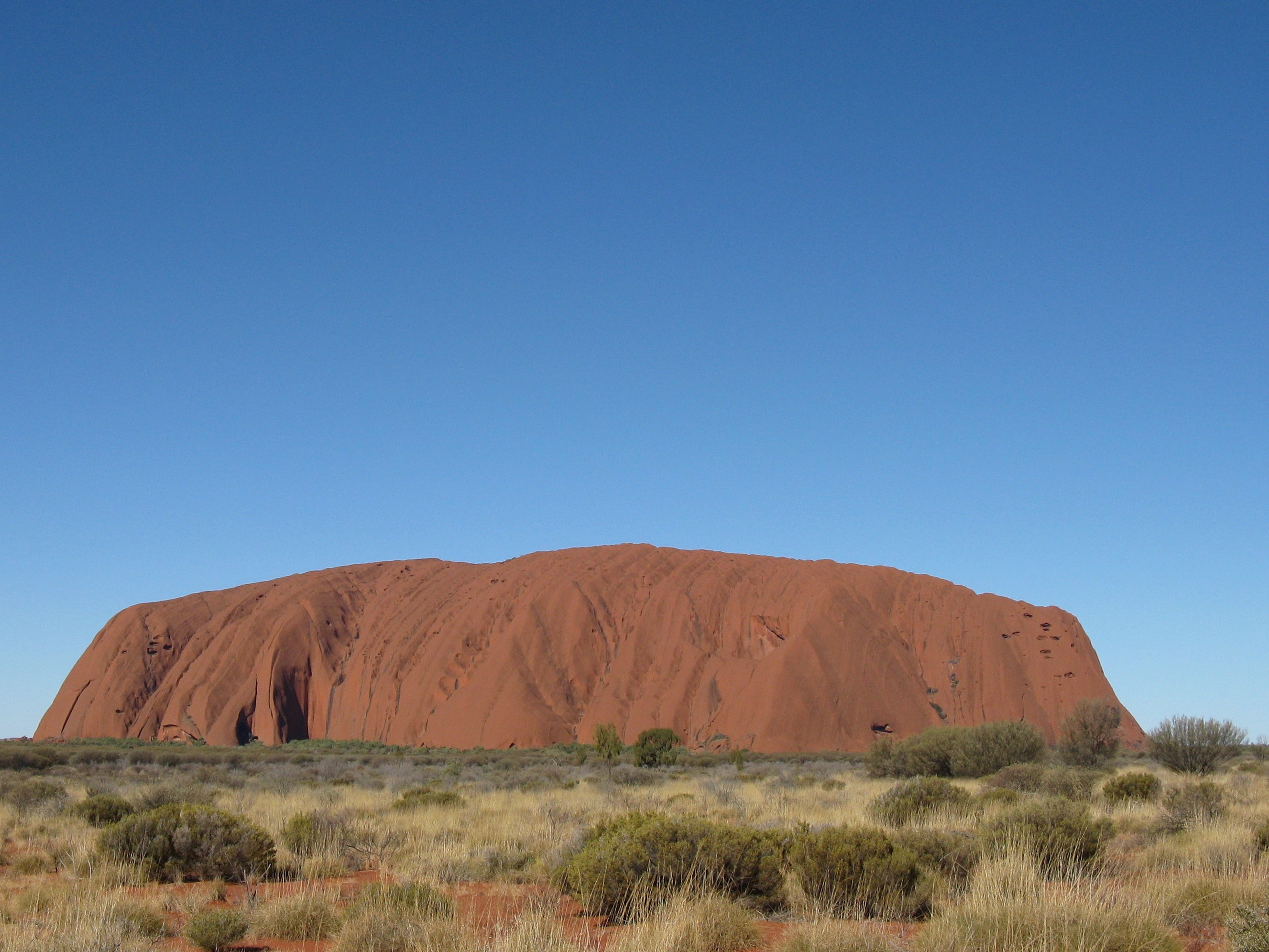
Uluru

Uluru, taken August 2009

The site also tells us that this theme was particularly chosen this year “to highlight and celebrate the  anniversary of the ‘Handback’ of Uluru, one of these sacred sites, to its traditional owners on 26 October 30 years ago”. To that I say, wonderful, as I am visiting Uluru for my third time later this month.

I know my ways of celebrating and supporting indigenous Australian culture are pretty tokenistic in the scheme of things, but in the spirit of this week I thought I’d share with you some of the rather eclectic things I do throughout the year as the opportunities arise:

  • engage with local indigenous culture when I travel, mostly through tours led by indigenous Australians;
  • attend exhibitions featuring indigenous Australian art and culture, ancient, traditional and contemporary;
  • donate to the Indigenous Literacy Foundation;
  • attend performances by the Bangarra Dance Theatre; and,
  • read Indigenous Australian literature (though I don’t seem to read anywhere near as much as I’d like to).

It’s this last way, of course, that is most appropriate to my blog, so to mark this NAIDOC Week, I’m sharing links to posts written by me, and, with her permission, Lisa Hill (ANZLitLovers), on Indigenous Australian literature:

Some of you will know that Lisa has for the last few years run an Indigenous Literature Week during NAIDOC week but, as she wrote recently, this year she plans to run it to coincide with the First Nations Australia Writers’ Network Workshop which will be held in Melbourne next month. Watch out for that.

Meanwhile, Lisa and I hope our links help you discover more about Indigenous Australian culture through literature.

Ellen van Neerven, Heat and light (Review)

Ellen van Neerven, Heat and light, book cover

It’s silly I know, but I had a little thrill at the end of Ellen van Neerven’s Heat and light, because not only was the last story set in a place where I spent six of the formative years of my childhood – Sandgate on the northern edge of Brisbane – but one of the characters learnt to swim in the same pool there that I did, and her brother has a beagle, just as we did. Ah, childhood. Enough, though, of readerly nostalgia. Time to properly discuss the book.

Heat and light won the David Unaipon Award for Unpublished Indigenous Writer in 2013, and has been on my TBR for several months. I hadn’t prioritised it for reading, but its longlisting for the Stella Prize last week convinced me to squeeze it in before two works I had to complete by 21 and 24 February. I hope I won’t regret it. No, let me rephrase that: I know I won’t regret having read it, but I hope I don’t regret my decision to read it right now!

The first thing to say is that Heat and light isn’t a novel. It has, in fact, an intriguing form, something that’s not unusual with writers from an Indigenous background. Simplistically speaking, it comprises short stories organised into three sections titled Heat, Water and Light. However, each of these sections is quite different. Heat comprises interconnected short stories (5) about three generations of the Kresinger family, while Water is longform short fiction (54 pages in my edition) in the speculative fiction genre. Light, on the other hand, is more like a “traditional” collection of short stories (10). Together, the three sections, including the future-set Water, create a rich picture of contemporary indigenous life and concerns.

And here I confront again the challenge of being a non-Indigenous Australian reviewing a work by an Indigenous Australian featuring Indigenous people. It always makes me a little anxious: I fear sounding earnest or, worse, patronising; I fear making what’s different sound exotic; and, I fear missing the point. And yet I love reading Indigenous writers, because their perspective is different and because they (see, I’m generalising, aren’t I?) tend to be adventurous in their story-telling, often taking risks with voice, form, chronology, genre, and more. Van Neerven, as I’ve already implied, is such a writer.

The titles of the three sections – Heat, Water, Light – make me think of the elements. They are not quite the classical elements (fire, air, water, earth) but they convey, it seems to me, the essence of what’s needed for life. The focal character in Heat, though we don’t see a lot of her, is Pearl, the grandmother of the narrator of the first story which is titled, in fact, “Pearl”. Pearl is a bit of a free spirit – earthy, hot (in its sexual meaning, with “her siren eyes”), and likely to appear or disappear with the wind. Over the five stories in this section we learn about Pearl, her sister Marie, and the two succeeding generations. Van Neerven’s writing is confident, moving comfortably between first and third person narrators, all of whom are members of a complex extended family. Loyalties – to their indigenous background and to their blood relationships – are tested. As the narrator of “Pearl” says:

So much is in what we make of things. The stories we construct about our place in our families are essential to our lives.

And this is true, whether or not the stories so constructed are “true”. The implication is you need to know what you are doing. Colin, for example, finding himself, through his own actions, disconnected from his Indigenous heritage, wants to return, but

she told me if I was going to make my way home I’d better do it soon before the dust had covered my tracks.

The third section, Light, explores similar issues to those in Heat, but through ten separate stories, ranging from 2 pages to 30. The characters in both sections both move between city and country, but, while Heat is set in southeastern Queensland, the stories in Light are set in Sydney, Western Australia and Queensland. The protagonists tend to be young, and female. They also tend to be in formative stages of their lives, or at crossroads; they are sorting out their relationships, their sexuality, their identity. They confront racism and face conflict, but they also experience and give love. There’s humour, some of it wry, such as the young girl noticing that the tag on her pants states that “this colour will continue to fade”.

Water, the longform story that occupies the middle of the book, is very different. For a start, it’s set in the near future, the 2020s, when Australia is a republic with a female president. There’s a new flag and Jessica Mauboy’s song “Gotcha” is the national anthem. There’s also a social media ban! I reckon Van Neerven enjoyed imagining this. However, life isn’t perfect. Our narrator Kaden has a new job as a Cultural Liaison Officer and was initially pleased because she thought she’d be working with “other Aboriginal people” which would provide a “way of finding out about my culture and what I missed out on growing up”. But, she discovers she’ll be working with “plantpeople” who are sort of mutant plants with human features created during “islandising” experiments. Kaden’s job is to evacuate them in preparation for the Australia2 project.

I don’t want to give any more of it away, but you’ve probably guessed that it’s a story about how we treat other, about segregation, discrimination and dirty politics. It’s also about connection to country and about the importance of controlling one’s own art. Artist Hugh Ngo says:

I don’t make art for galleries. Or for money. I make art that speaks the truth.

This is a clever (and true!) book. The bookending sections Heat and Light present stories of Australian people going about their lives, and most of them happen to be indigenous. Their indigeneity is evident, and it affects the issues they confront, but there’s no specific advocacy. The middle section, on the other hand, is more overtly political. It picks up issues that appear in the shorter stories and provides a coherent, ideological context for the whole.

Heat and light is one of those really satisfying reads: it combines engaging writing with stories that make you feel you’ve got to the things that matter. So no, regardless of whether I meet my other deadlines, I’m not sorry I bumped this book up in my reading priorities.

awwchallenge2015

Ellen van Neerven
Heat and light
St Lucia: UQP, 2014
226pp.
ISBN: 9780702253218

Note: One of the stories in Light, “The Falls”, is available on-line at Kill Your Darlings

Monday musings on Australian literature: Indigenous writers recommend …

Last week, to commemorate the beginning of NAIDOC Week, I devoted Monday Musings to Anita Heiss’s series of interviews with indigenous Australian writers, In conversation with BlackWords. I said then that this week’s post would also draw from the series – and so here it is.

I’m not 100% sure of Heiss’s process, but I think she sent the same set of questions to all writers, and they answered some or all of questions as they desired. I am focusing, in this post, on one of the questions. Seventeen of the twenty writers responded to it. The question is:

What book do you think every Australian should read?

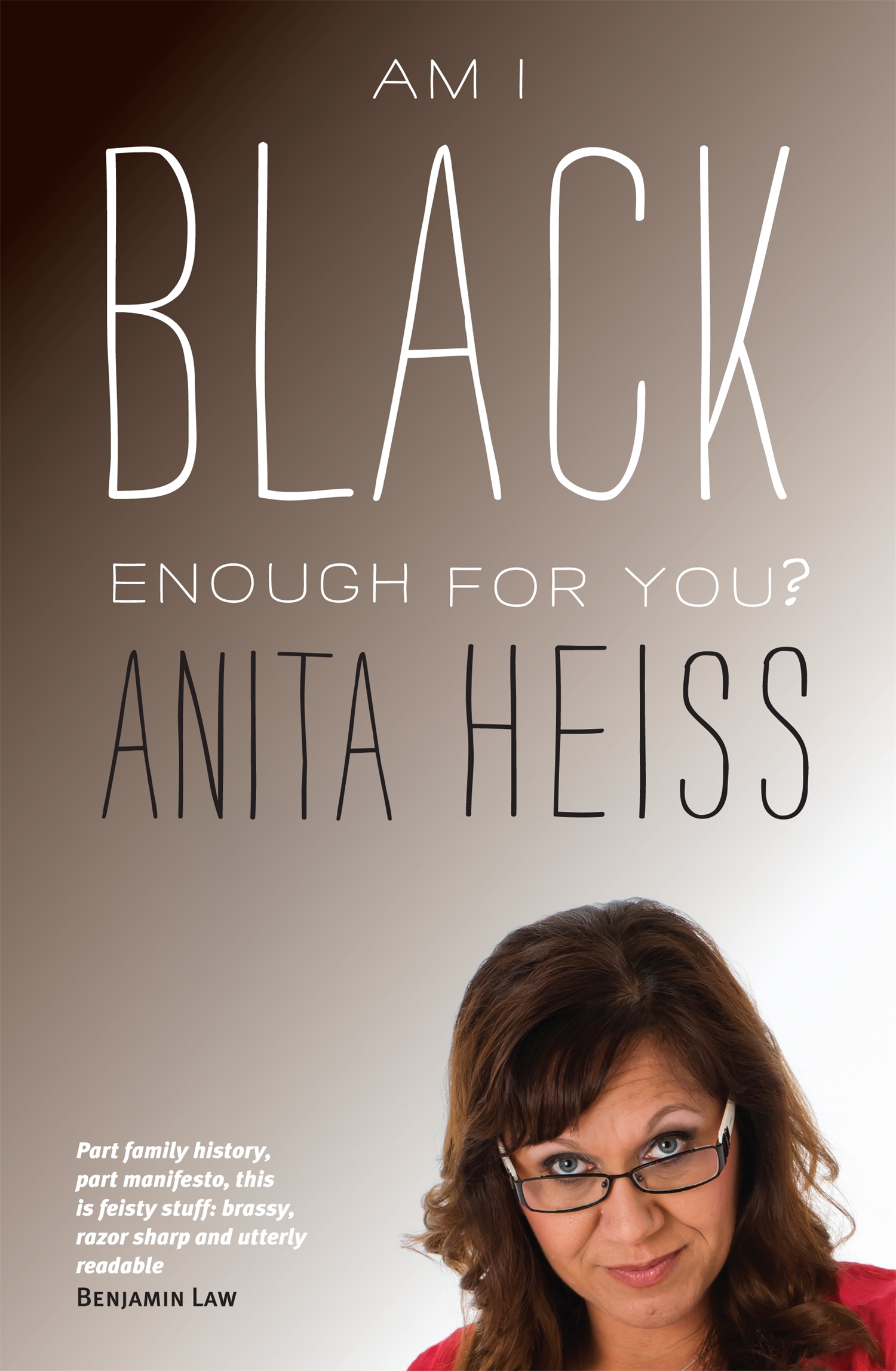
Anita Heiss, Am I black enough for you?

Courtesy: Random House

The answers are fascinating. Most, as you would expect, recommend books that would help all Australians learn and understand more about indigenous culture and history, and the books they recommend are mostly by indigenous Australians. But, the interesting thing is that there’s a lot less duplication than I expected. I like this. It suggests the existence of an active indigenous literary culture. No simple, easily defined cannon here! It provides a great list for us all to go to – both now, and when we are planning for ANZLitLovers’ 2015 Indigenous Literature Week.

Anyhow, I thought, when I decided to do this post, that I could tally up the recommendations and list them in popularity order. But, given what I actually found, I have decided instead to simply list them in alphabetical order by author/editor, with the name of the recommender/s and comments where appropriate.

  • Berendt, Larissa: HomeEllen van Neerven called this “A very important book.”
  • Carey, Peter*: True history of the Kelly GangJared Thomas said it “alerted me to class struggle – the fact that it is not only Aboriginal people who have endured persecution in this country.”
  • Chi, Jimmy: Bran Nue Dae (script). Kim Scott.
  • Eckermann, Ali Cobby and Fogarty, Lionel (eds): Southerly, Vol 71, No. 2, 2011, “A Handful of Sand: Words to the Frontline”. Lorraine McGee-Sippel described this as “An invaluable resource of Australia’s First Nations writers … Across all genres, ages and life experiences”. She believes is should be “compulsory reading … in all high schools and universities”.
  • Eckermann, Ali Cobby: Ruby MoonlightBruce Pascoe.
  • Gammage, Bill*: The biggest estate on earthKim Scott simply said “an important book”.
  • Gilbert, Kevin: Because a white man’ll never do itKerry Reed-Gilbert, his daughter.
  • Green, Evan*: Adam’s empireSue McPherson described it as “a good Aussie story. It should be made into a film.”
  • Haebich, Anna*: For Their Own GoodKim Scott said that it “focuses on south-west Western Australia, but the power relationship it articulates applies across the continent”.
  • Heiss, Anita: any book. Lionel Fogarty gave Heiss as an example in recommending “Indigenous-authored books such as those by Anita Heiss.
  • Heiss, Anita: Am I black enough for you? Jared Thomas, Bruce Pascoe (my review)
  • Heiss, Anita and Minter, Peter (eds): The Macquarie PEN Anthology of Aboriginal LiteratureKerry Reed-Gilbert.
  • Leane, Jeanine: Purple threadsMelissa Lucashenko (my review).
  • McMullen, Jeff*: any writing. Samuel Wagan Watson.
  • Maynard, John: Fight for liberty and freedom. Recommended by himself.
  • Munkara, Marie: Every secret thingBruce Pascoe (my review).
  • Papunya School with Nadia Wheatley and Ken Searle: The Papunya School Book of Country and HistoryAnita Heiss likes this because it is “accessible to all”.
  • Pascoe, Bruce: works by him. Recommended by himself.
  • Pascoe, Bruce: EarthMelissa Lucashenko.
  • Pilger, John*: A secret countryKate Howarth.
  • Reynolds, Henry*: any book. Kerry Reed-Gilbert argued that “it’s time for people to know the truth of this country”; Samuel Wagan Watson.
  • Reynolds, Henry*: Forgotten WarLorraine McGee-Sippel said that it “addresses Australia’s selective amnesia in relation to the wars fought between Traditional Owners and the Invaders. Where are our memorials?”
  • Reynolds, Henry*: This whispering in our heartsJackie Huggins.
  • Scott, Kim: Benang: From the heart. Bruce Pascoe.
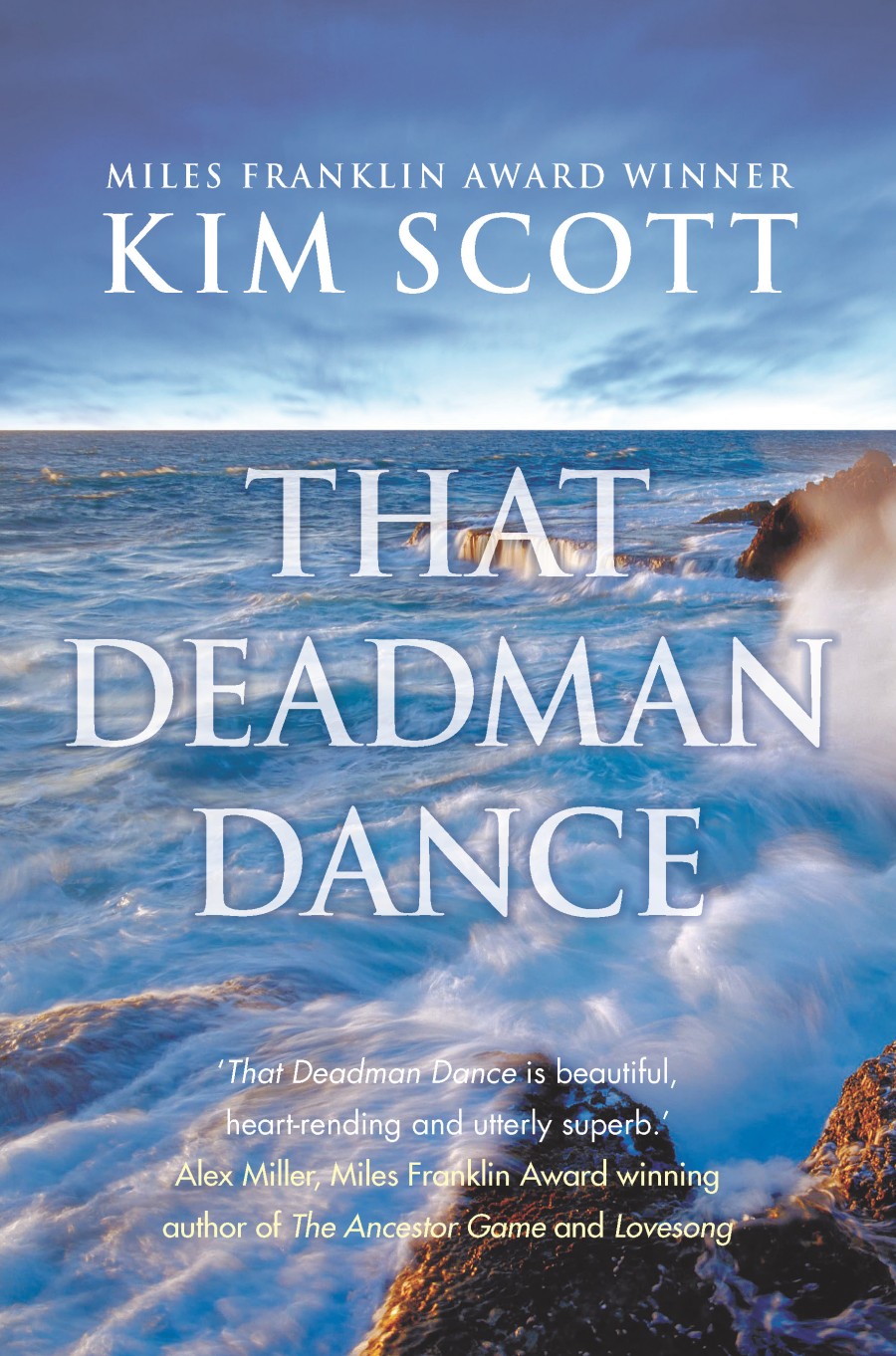
  • Scott, Kim: That deadman danceKerry Reed-Gilbert; Bruce Pascoe (my review).
  • Scott, Kim: True countryMelissa Lucashenko.
  • Thiele, Colin*: Labourers in the vineyardBruce Pascoe.
  • Weller, Archie: stories by him. Bruce Pascoe.
  • Willmot, Eric: Pemulwuy: The rainbow warriorDub Leffler.
  • Wright, Alexis: CarpentariaBruce Pascoe (my review).
  • Wright, Judith*: stories and poems by her. Bruce Pascoe.
Kim Scott also recommended that people read an anthology of writing from the region in which they live, such as Those Who Remain Will Always Remember: an Anthology of Aboriginal Writing, edited by Rosemary van den Berg, Anne Brewster and Angeline O’Neill.

Tegan Chillcott and Samuel Wagan Watson were a little wary of being prescriptive. Chillcott said, simply, ““whatever book seems most interesting to them”.  Watson, though was a little more explanatory. He said:

Every Australian?’ Hmmm … It’s hard to say, and I know mature Australians who have admitted to having never finished reading a book because literature bores them. I can’t answer that question? I’ve never watched a cricket match in my 41 years either … So I must seem weird to people who don’t pick up a book. If I was on a ‘soapbox’, I’d say any writing by Uncle Henry Reynolds or Uncle Jeff McMullen.

But some people can be turned off literature – altogether – by books that are too confronting. And that’s the delicate balance that needs to be dealt by a writer when you’re thinking about audiences. I do believe some writers have no idea that they are either not engaging with an audience or they don’t care? As a writer, on the journey of composing your work or novel or music, you need to consider your audience at every turning point. If you don’t think about the needs of your reader, you are simply writing in a very tight vacuum.

Another respondent who didn’t seem keen to name specific titles or authors was Samantha Faulkner.

Papunya School Book

(Courtesy: Allen & Unwin)

I’d like to conclude with her lovely, generous statement. She wrote:

Any book by an Aboriginal and/or Torres Strait Islander writer. Reading a book by a First Nations Australian writer will identify similarities that connect us, and bring us together, rather than divide us. After all, we live on this beautiful country together.

* Non-indigenous author

Tara June Winch, Swallow the air (Review for Indigenous Literature Week)

Tara June Winch

Tara June Winch (Courtesy: Friend of subject, via Wikipedia, using CC-BY-SA 3.0)

Tara June Winch’s Swallow the air is another book that has been languishing too long on my TBR pile, though not as long as Sara Dowse’s Schemetime. For Swallow the air, it was a case of third time lucky, because this was the third year I planned to read it for ANZLitLovers Indigenous Literature Week. Like the proverbial boomerang, it kept coming back, saying “pick me!” Finally, I did.

Winner of the 2004 David Unaipon Award for unpublished indigenous writers, Swallow the air made quite a splash when it was published in 2006, winning or being shortlisted for many of Australia’s major literary awards. (See Tara June Winch’s Wikipedia entry). I believe Winch is working on another novel, but it hasn’t appeared yet.

Now, though, to the book. The first thing to confront the reader is its form. It looks and even reads a little like a collection of short stories*, but it can be read as a novella. There is a narrative trajectory that takes us from the devastating death of narrator May Gibson’s mother, when May was around 9 years old, to when she’s around 15 years old and has made some sense of her self, her past, her people. May’s mother is Wiradjuri, her father English. At the novel’s opening, she is living in coastal Wollongong, which is not her mother’s country, in a single-parent household with her mother and her brother, Billy, who has a different and indigenous father. Absent fathers are, I should say, disproportionately common in indigenous families.

In fact, one of the impressive things about this debut novel is how subtly, but clearly, Winch weaves through it many of the issues facing indigenous people and communities. Poverty, loss of connection to country, the stolen generations, mining and land rights, alcoholism, drug addiction, racism, rape, child abuse by the church, imprisonment and the tent embassy are among the concerns she touches on during May’s journey. Listing them here makes it sound like a political “ideas” novel but, while Swallow the air is “political” in the way that most indigenous writing can’t help but be, its centre is a searching heart, for May has been cast adrift by the suicide of her mother. Life, which was tenuous anyhow, becomes impossible to hold together as her brother and aunt, both loving, struggle with their own pain.

This is where I become a little uncomfortable as a non-indigenous person making a generalisation about indigenous literature, but I’m going to do it anyhow, because I think I’m on firm ground. I’m talking about story-telling and what I understand to be its intrinsic role in indigenous culture. It imparts – or can do – a different flavour to the writing. Marie Munkara’s David Unaipon Award winning Every secret thing (my review) has some similarities in form to Swallow the air, and covers some similar thematic territory, but is very different in tone. Munkara’s novel also presents as a bunch of stories, with a uniting narrative thread. Swallow the air is more subtle, but nonetheless it’s the idea of stories that underpins the narrative.

What particularly impressed me about Winch’s writing is the way she manages tone and structures her story. She understands the Shakespearean imperative to offer some light after dark. For example, there’s a lovely little chapter/story called “Wantok” about family closeness which occurs after a story about a difficult work experience. In another situation, with just one word at the end of a story (“Mission”) – “Seemed [my emphasis] all so perfect, so right” – she prepares us for the opposite in the next (“Country”).

This flow – with shifts in tone that are sometimes subtle, sometimes dramatic, and with a narrative that is mostly linear but with the occasional flashback – kept me reading and engaged until the end. As did the writing itself. It’s deliciously poetic. Sometimes it is tight and spare, as in:

I do not cry, my eyes are hardened, like honey-comb, like toffee. Brittle, crumbling sugar. He puts his hand out toward me; we shake hands, a pact that I won’t be here digging up his past when he gets back.

And I’m not.

And in this description of life in the city: “Suits and handbags begin to fill the emptiness of the morning”. Other times it is gorgeously lyrical (a review buzz word, I know, but sometimes there’s no other word):

The river sleeps, nascent of limpid green, tree bones of spirit people, arms stretched out and screaming. And at their fingertips claws of blue bonnets, sulphur-crested cockatoos and the erratic dips and weaves of wild galahs, grapefruit pink and ghost grey splash the sky.

But back now to the story. As May makes her journey, we meet many characters – her brother, aunt, women like Joyce who care for her but also know when to push her on, men with whom she hitchhikes, to name a few. None of these characters are developed to any degree, but we learn what we need to know about them by how they relate to May. Most are kind, generous, nurturing. May’s journey, in other words, is not challenged so much by human barriers, but by emotional, social, political and historical ones. It is a generous thing that when she starts to understand her place, it’s an inclusive understanding, one that encompasses all of us who occupy this land:

And it all makes sense to me now. Issy’s drawing in the sand, boundaries between the land and the water, us, we come from the sky and the earth and we go back to the sky and the earth. This land is belonging, all of it for all of us.

However, while May comes to a better understanding of the land and her relationship to it, there is no easy resolution to the ongoing struggle of living in a place in which there is still “a big missing hole” created by the loss of connection to culture. It will take a long time to refill that hole, if indeed it can be done, but books like this will help communicate just what it means, and how it feels, to be so disconnected.

awwchallenge2014Tara June Winch
Swallow the air
St Lucia: UQP, 2006
198pp.
ISBN: 9780702235214

* One chapter/story, “Cloud busting” was published in Best Australian Stories 2005.

Monday musings on Australian literature: In conversation with Black Words

Today* marks the first day of NAIDOC Week 2014, which will run through to July 13. In honour of this, and of Lisa’s Indigenous Literature Week at ANZLitLovers, I thought I’d devote this week’s Monday Musings to indigenous Australian writers – and specifically to Anita Heiss’s “In conversation with Blackwords” series.

This series is described on the AustLit website as follows:

In late 2013 Dr Anita Heiss sent a series of questions to contemporary Aboriginal and Torres Strait Islander writers. The responses she received are at times funny, sad, moving, and always deeply insightful. Universally an important piece of advice was to ‘Read, read, read’ if you want to write. As an ambassador for the Indigenous Literacy Foundation, Anita was very happy to see that advice coming from some of Australia’s most admired and read authors.

As far as I can understand from the website, some 20 interviews were gathered, and posted on the site between November 2013 and May 2014. The last interview (to date anyhow) is with Heiss herself. The writers interviewed include some well-known to me like Melissa Lucashenko, Kim Scott, and Bruce Pascoe, and some I’m not at all familiar with like Dub Leffler and Sue McPherson. Heiss starts by asking them about their mob and where they are from, and then asks them about their writing and their reading – about, in other words, all those things other readers and writers love to know.

I haven’t read all the interviews, as they are pretty extensive, but have at least dipped into most, and will read more in the coming days. Here, in no particular order, are some of the things they say:

Samuel Wagan Watson (internationally recognised poet and storyteller) said this in response to “what makes a good writer”:

As far as what makes a ‘good writer’ … I don’t know? I’m an ‘established writer’ yet I wouldn’t consider myself a ‘good’ writer. Should we define a ‘good writer’ as someone who publishes a novel every year or an artist who simply falls in love with language and is a skilled technician who writes a sentence now and then that simply smokes with pearly-wings of an epiphany in the midst of your mind’s eye?

Anyone who can write “smokes with pearly-wings of an epiphany in the midst of your mind’s eye” must surely make some claim to being a good writer?

Kim Scott That Deadman Dance

(Courtesy Picador Australia)

Kim Scott (author of That deadman dance, among other things) said this about his aims as a writer:

To reach and connect. To provoke, sometimes. To transform, if only a little. As Elizabeth Jolley said, to provide ‘places where people may meet’.

To touch on greater truths. Language and stories shape the world; I sometimes want to flex and remake it again.

He’s won me over, first, by referring to one of my favourite writers, Elizabeth Jolley. But, I also like his desire to “touch on greater truths”. It’s not surprising that an indigenous writer might also want to “flex and remake” the world.

Ali Cobby Eckermann (poet, and author of Ruby Moonlight) offered this advice to writers:

My advice is to be creative! Turn the telly off and be creative. A half an hour each day has the capacity to achieve remarkable results. Be relentless, and find happiness in honouring your story, the legacy of your cultural knowledge.

Being creative, I think, is easier said than done, but I do love her suggestion to “find happiness in honouring your story”.

Ellen van Neerven (winner of David Unaipon Award in 2013) is a writer I hadn’t heard of before. She said in answer to “who do you write for?”:

Sometimes I could be writing for my younger self. I want people to feel less alone. I want people to feel less confused.

Now, that’s an answer from the heart.

Bruce Pascoe (writer of fiction, non-fiction and YA fiction). I had to finish with Pascoe’s response to the question about his writing process:

Get up, go into room and work arse off. Break for lunch, tour of vegetable garden, back into room. In good weather I write down by the river, especially if it’s a job I’m writing longhand. In my room I’ve got a growing gallery of dead Black friends to watch over me and all the birds who come to the door and want to know if it’s ok if they tell me a story. The Willy Wagtail is good but the Scrubwren is profound, the Powerful Owl haunting, the pelican a bit superior on occasions and the cormorants are always good for a laugh. I get a hell of a lot of story from birds and animals.

With such an imagination, you can sure see why he’s a prolific writer.

I plan a follow-up post on this series of conversations for next week’s Monday Musings to conclude NAIDOC Week.

* Hmm … just realised today is 7 July! NAIDOC Week started officially on 6 July!

Melissa Lucashenko, Sinking below sight (Review)

In this week’s Monday Musings about the Walkley Awards, I noted that Melissa Lucashenko had won the award for Long Feature Writing for her essay “Sinking below sight: Down and out in Brisbane and Logan” in the Griffith Review. I’ve now read the essay, and thought I’d share it with you. I’ve reviewed Lucashenko before, an essay and a short story. I really must get to one of her novels one day!

With her mixed European and indigenous Australian heritage, Lucashenko is well placed to tackle significant contemporary issues and see them from multiple perspectives. The last essay of hers that I reviewed, “How green is my valley”, dealt with stewardship of the land and the threat imposed by climate change. In “Sinking below sight” her subject is poverty. Lucashenko’s essays make engaging reading. Instead of dry reportage, she starts from the personal, and from that draws conclusions that make sense. And so, while “How green is my valley” drew from her experience on a farm in northern New South Wales, this essay draws from her return, after losing her farm through divorce, to the town of Logan, one of Australia’s ten poorest urban areas.

You’ve probably noticed that her subtitle alludes to Orwell’s autobiographical work Down and out in Paris and London which chronicles his experience of poverty. Similarly, Lucashenko writes that she’s been poor before, so “I had the skill set”. But, this essay is not about her. She starts by setting the scene, describing this “Black Belt” region as one in which

Welfare recipients and the working poor … don’t necessarily realise they are hard up. More accurately, many don’t realise just how poor they are, since everyone in their lives is battling.

She then moves on to the main topic of her essay, which is to find out “How do my Black Belt peers manage? How do single mums, in particular, get by on current levels of welfare? And what dreams are possible for the Brisbane underclass in 2013?” To answer this interviews three women currently living in poverty – Selma (27), Marie (38) and Charmaine (49) – and discusses their situations.

Selma, a Yugoslavian of Serbian and Croatian parents, has four children under ten and a partner who is in and out of jail. Having been a refugee and then involved with an abusive Aboriginal man, Selma has some clear views on her situation:

What I don’t like in society … is the judgments put on Indigenous and refugee and domestic violence people. I was in that situation for nine years. They say you make a choice, but I don’t ever remember choosing to be beaten up! From the age of seventeen ’til about two years ago, domestic violence was part of my everyday life.

She blames poverty for violence, saying that “poverty breeds hate”. Lucashenko suggests that the abuse she experienced “had roots also in the trauma and racism of the refugee experience.”

Marie is also a mother of four, with an “on-again, off-again partner”. She is a member of the “working poor” so not quite as poor as Selma. She grew up in a troubled home, had been sexually molested as a child, and was living independently by the time she was 14 years old. She, like Selma, had a history of “severe emotional and physical abuse from her previous partners, who were all, bar one, Anglo-Australian men”. Lucashenko writes:

Marie spoke to me of feeling enormous rage about the past abuses in her life, rage which sits constantly just beneath the surface.

The third woman is Charmaine, “blond, slim and still able to laugh despite a life that would crush most of us [and] the white Australian mother of four Aboriginal kids”. She too was raped and molested as a child, and ended up in a violent relationship in which she stayed too long.

Australian Women Writers Challenge

While recognising that her examples are more anecdotal than statistical, Lucashenko nonetheless draws some conclusions. They include:

  • Underclass expectations, which see people who grow up with nothing, expecting little
  • The importance of public housing in providing some “minimal prospect of safety”
  • Loneliness and isolation, which drive single mums back to “untenable situations”
  • Violence and mental illness in parents and partners, which entrench poverty for women
  • Childhood molestation and/or rape, which all three women had experienced
  • Women seeking relief in drugs, which of course can initiate new downward trajectories

Her three women, Lucashenko finds, have hopes for the future. Selma and Charmaine are studying, because, as Lucashenko writes

Realising that poverty is a creation of society and its choices, these two women also know that their lives might shift through higher education.

Pragmatic Marie has a saving plan. Their situations though are tenuous. To achieve their goals, they’ll need strength. Better still, though, would be if they got effective financial and other practical support.

Lucashenko opens the essay with the epigraph that “the opposite of poverty isn’t wealth. It’s justice”. Her essay may not be statistically significant from an academic perspective, but anyone who reads contemporary social commentary knows that what she writes rings true – and this, clearly, is why she won the Walkley.

Melissa Lucashenko
“Sinking below sight”
Published in the Griffith Review, Edition 41, 2013
Available: Online at the Griffith Review