There’s been a little discussion going on during this Novella November month concerning nonfiction novellas. I contend – yes, I’m putting myself out there – that a “novella” is fiction, and that you can no more have a nonfiction novella than, well, fly. However, I am not going to get into this debate now, because, fundamentally, it doesn’t really matter, does it? What matters is that we read good writing, regardless of what it is, what we call it, or how we categorise it.
Instead, I’m going to do a quick post sharing some short Australian nonfiction. I have written Monday Musings posts about short books before – on little books and on small books. This post covers a bit of the same ground, but it also extends and so complements those two.
In some ways, nonfiction is ideal content for short or little books. Essays are a prime example. They can be commissioned and published in small form or can be extracted from previous publications (books, journals, websites) and published separately in short form. There are many examples of both, and some I have discussed before. Short Blacks, published by Black Inc, epitomises the latter, with some having originally been published in Black Inc’s journal, Quarterly Essays. And here I should say that the Quarterly Essays themselves are another example of short nonfiction, given each issue primarily comprises one essay of up to 25,000 words, plus correspondence relating to the previous essay.
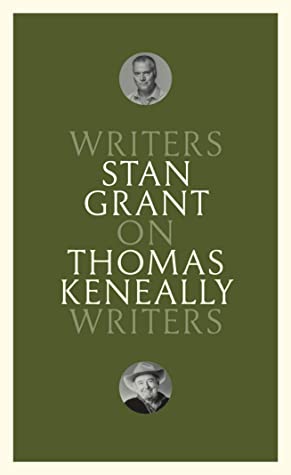
However, Black Inc has also got into commissioning short nonfiction to publish in book form, with its recent Writers on Writers series. I have read two, and have more on my TBR. They are great reads for those of us interested in hearing what one writer has to say about another writer’s work. The next one I have up is Nam Le on David Malouf.

Then there’s the On series … Little Books on Big Ideas. You can find them most easily at Booktopia online bookseller, because the publisher, Hachette, does not seem to list them separately as a series on their website, which is a shame. I have reviewed Dorothy Porter’s On passion and Stan Grant’s On identity. They were published by Melbourne University Press, but it seems that the series has been taken over by Hachette Australia. These are commissioned (I believe) essays by some of Australia’s best-known fiction and nonfiction writers on issues they wanted (or were happy to?) to explore.
All these little books make great reading, if you enjoy essays like I do. Most are under 100 pages.
But are there other examples of short nonfiction published in Australia? Any histories, or memoirs, for example? Finlay Lloyd‘s FL Smalls, which I’ve discussed before, is an example. as this series includes memoirs (like Philip Stamatellis’ Growing up café: A short memoir) and creative nonfiction (like Carmel Bird’s Fair game). Great reads, but they are still little books. What about books that are a bit bigger, but still short, books between 100 and 200 pages?
There are, apparently, some short memoirs, but I don’t know many. Vicki Laveau-Harvie’s Stella Prize winning The erratics (my review) is close, at 217 pages.

But, what I’m really wondering about are the books we are looking for that will increase our understanding of contemporary issues. Some of these could benefit by being short. Many of us want to read something a bit more longform about the issues important to us, but not that long! Tim Flannery’s The climate cure, which I mentioned in my Ask the expert post, is described as 224 pages, but the actual text ends at around page 190.
First Nations rights is another area where brevity might attract more readers. It’s hard to find, but My tidda, my sister, which was published in 2020, comes in under 200 pages. It shares the experiences of Indigenous women and girls, and was compiled by podcaster Marlee Silva. Readings Bookshop describes this book as “a celebration of the Indigenous female experience through truth-telling”.
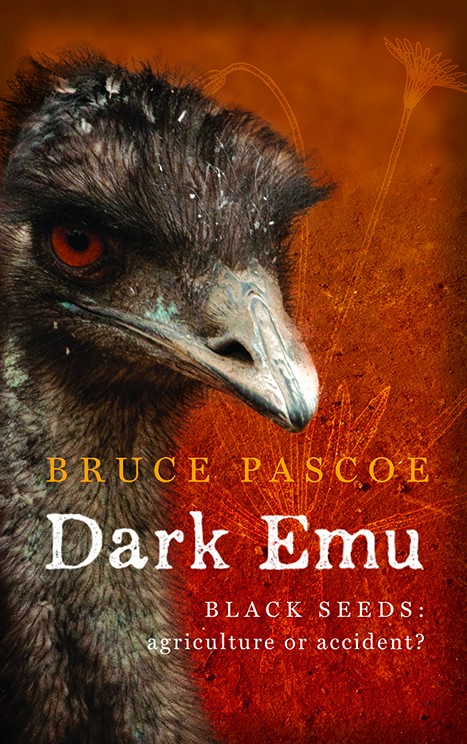
A slightly older book raising awareness about First Nations cultures, but now surely a “classic”, is Bruce Pascoe’s 2014 book, Dark emu (my review). It’s around 175 pages.
On another subject, Annabel Crabb’s 2020 book, Men at work: Australia’s parenthood trap, is 160 pages. It apparently argues that true gender equity “cannot be achieved until men are as free to leave the workplace (when their lives demand it) as women are to enter it”. Hmmm … This is not the only thing needed, I’d say, but it is part of the picture.

Finally, I thought I’d share something pandemic-related. It comes from prolific, award-winning journalist-author, Gideon Haigh. He has tackled the impact of the pandemic on the workplace, in The momentous, uneventful day: A requiem for the office. Published in December 2020, it’s just 144 pages. Readings says “Enlivened by copious citations from literature, film, memoir, and corporate history, and interspersed with relevant images, The momentous, uneventful day is the ideal companion for a lively current debate about the post-pandemic office”. The pandemic is surely going spawn books for decades to come!
I have no idea whether this post will interest anyone, whether any of you care about the idea of short nonfiction, but I’ve enjoyed thinking about it. That said it’s been a challenge to research because, well, there is no equivalent word to fiction’s novella for short nonfiction!
Now, over to you. Do you like short nonfiction? Or is length irrelevant to you? Why or why not? And do you have any favourites?

 Whispering Gums