Kathy Marks, Channelling Mannalargenna (Review)

A few weeks ago I wrote a Monday Musings about the Walkley Awards, noting some of the winners that particularly interested me. They included two awards for essays in the Griffith Review, one by Melissa Lucashenko, whose essay “Sinking below sight” I subsequently reviewed, and the other by Kathy Marks whose essay, “Channelling Mannalargenna” is the subject of this post. Both essays deal with indigenous topics but while Lucashenko, who won the award for Long Feature, has Aboriginal heritage, Marks, whose award was for Indigenous Affairs, is English. This adds an intriguing layer to her piece which is about the troubled issue of identity in indigenous Tasmania. Marks has, however, been writing about the Asia-Pacific region since 1999.

Like most Australians of my generation, I grew up believing that genocide had resulted in the elimination of indigenous people from Tasmania. Truganini, we were told, was the last “full-blood” Tasmanian Aboriginal person. She died in 1876. In 1978, the documentary, The last Tasmanian, made by filmmaker Tom Haydon and archaeologist Rhys Jones, popularised this idea. It is, however, not quite as simple as we’d been led to believe – and Marks’ essay chronicles the identification legacy left by a history of being discounted. The Walkley judges described the essay as follows:

An elegantly written essay about a community still wrestling daily with the act of colonisation. Adding poignancy is the hovering myth of extinction, Kathy Marks deftly draws the reader into the everyday of establishing Tasmanian Aboriginal identity, teasing out the tensions, but without seeking catharsis.

It’s a brave essay, I think, something that Marks herself recognises when she said on her win that “I was thrilled to receive the award, not least because of the challenging and sensitive nature of the subject matter.” Being brave, though, is surely the hallmark of a good journalist. And so, Marks tackles the thorny issue regarding the definition of indigeneity in Tasmania.

As I read the essay, I was reminded of remarks made by Anita Heiss in Am I black enough for you? on conflict within the indigenous community regarding Aboriginality. Heiss discusses the different ways people come by their Aboriginality and says:

What age and experience  moving around the country has given me is a better understanding of the complexities around individual and collective Aboriginal identity. One shouldn’t be too quick to judge others, especially when some of us have been fortunate to know who we are all our lives, and others haven’t.

And herein lies the rub in Tasmania. Because of the particular history of indigenous Tasmanians, family lines and connections have been broken, and so the way Tasmanians discover their Aboriginal background is highly varied. In her essay, Marks talks to many of the groups and factions existing in contemporary Tasmania, and describes the bitter lines that have been drawn between some of them. Some of these lines are so strongly defended that one group, the Tasmanian Aboriginal Centre (TAC) in particular, has taken legal action against people who have claimed indigenous heritage. Officially, the definition of Aboriginality in Tasmania is the same as that established by the Federal government – the three-pronged factors of ancestry, self-identification and being accepted by the indigenous community. The TAC, however, demands a family tree as part of this. Marks quotes Michael Mansell who argues that to be accepted as indigenous Tasmanian, people need to:

show that…their families, from every generation back to tribal, have always maintained their connection with being Aboriginal. So that excludes people who undoubtedly have Aboriginal descent but who have been brought up as white people… If there’s been a break in the generations, where someone lost contact, the Aboriginal community’s view is…you can’t revive it.

Not all can provide this unbroken connection. For example, indigenous Tasmanian academic, Greg Lehman, told Marks that people were not keen to admit to indigenous forbears in the 194os and 1950s. And then there’s the devastation – dislocation –  that occurred one hundred years earlier through George Arthur’s infamous Black Line and then George Augustus Robinson’s corralling of indigenous people at the so-called “friendly mission” Wybalenna on Flinders Island in the 1830s.

awwchallenge2014Looking from the outside, I find this conflict all very sad. It’s hard enough when indigenous people suffer rejection and discrimination from the white majority culture, but when it also comes from inside the community it must be devastating. Patsy Cameron, an indigenous Tasmanian whose bona-fide is accepted, would like to see a more inclusive approach. Marks quotes Cameron:

‘Even someone who hasn’t been active in their culture or in the politics of the day,’ she says, ‘it doesn’t make them any less Aboriginal. Anyone who can show their lineage, and their extended family acknowledges them as part of that family, we should be embracing them. We should be embracing people who have been lost, rather than chasing them away and doing to them the exact thing that non-Aboriginal people have done to us in the past: denying us our rights, our identity.’

I’ve only touched the surface of Marks’ essay. It’s an excellent read that starts with a brief history of indigenous relations in Tasmania, including some distressing anecdotes regarding discrimination, before exploring in some depth the essay’s central issue regarding Aboriginal identity. Fortunately, the essay is freely available online via the link below. If you have any specific or general interest in the topic I commend it to you.

Kathy Marks
“Channelling Mannalargenna: Surviving, belonging, challenging, enduring”
Published in the Griffith Review, Edition 39, 2013
Available: Online at the Griffith Review
Delicious descriptions from Down under: Jane Austen on politics

I was going to label this post “Jane Austen and plus ça change” but then decided to be provocative, because Austen is regularly criticised for not discussing politics, what was happening in her time, in her novels. Of course, I disagree that novelists have to specifically write about the political background to their stories. Those living in her time would have known, for example, about the Napoleonic Wars and their impact on society, about ongoing discussions regarding slavery, parliamentary power, free trade, and so on. Austen didn’t need to explain that background, and those issues weren’t the matters that she wanted to write about. She had something bigger in mind – human nature.

Nonetheless, I was tickled when reading one of her juvenilia pieces, Catharine, or the bower*, the other day, to come across the following**:

the Conversation turning on the state of Affairs in the political World, Mrs Percival, who was firmly of opinion that the whole race of Mankind were degenerating, said that for her part, Everything she believed was going to rack and ruin, all order was destroyed over the face of the World, the house of Commons she heard did not break up sometimes till five in the Morning, and Depravity was never so general before; concluding with a wish that she might live to see the Manners of the People in Queen Elizabeth’s reign, restored again. “Well, Ma’am,” said her Neice [Catharine aka Kitty], “but I hope you do not mean with the times to restore Queen Elizabeth herself.”

“Queen Elizabeth,” said Mrs Stanley, who never hazarded a remark on History that was not well founded, “lived to a good old age, and was a very Clever Woman.” “True, Ma’am,” said Kitty; “but I do not consider either of those Circumstances as meritorious in herself, and they are very far from making me wish her return, for if she were to come again with the same Abilities and the same good Constitution She might do as much Mischeif and last as long as she did before-.”

Of course, this doesn’t address specific political events or situations, but it suggests (to me anyhow) that politics and history were topics of conversation in Austen’s neighbourhood, and that she was well able to satirise the quality of that discussion. It also demonstrates Austen’s ability to describe and satirise her characters through their own mouths!

Oh, and despite – or in addition to – my comments above, I would argue that Austen’s novels can have a political reading, can show how political debate and events were shaping her world, but that’s a topic for a different post.

*Written in 1792, her 17th year
**This rather idiosyncratic-looking text is based on the original manuscript in the British Library from the Oxford World’s Classics edition published by Oxford University Press (on my Kindle)

Ella Berthoud and Susan Elderkin, The novel cure: An A-Z of literary remedies (Review)

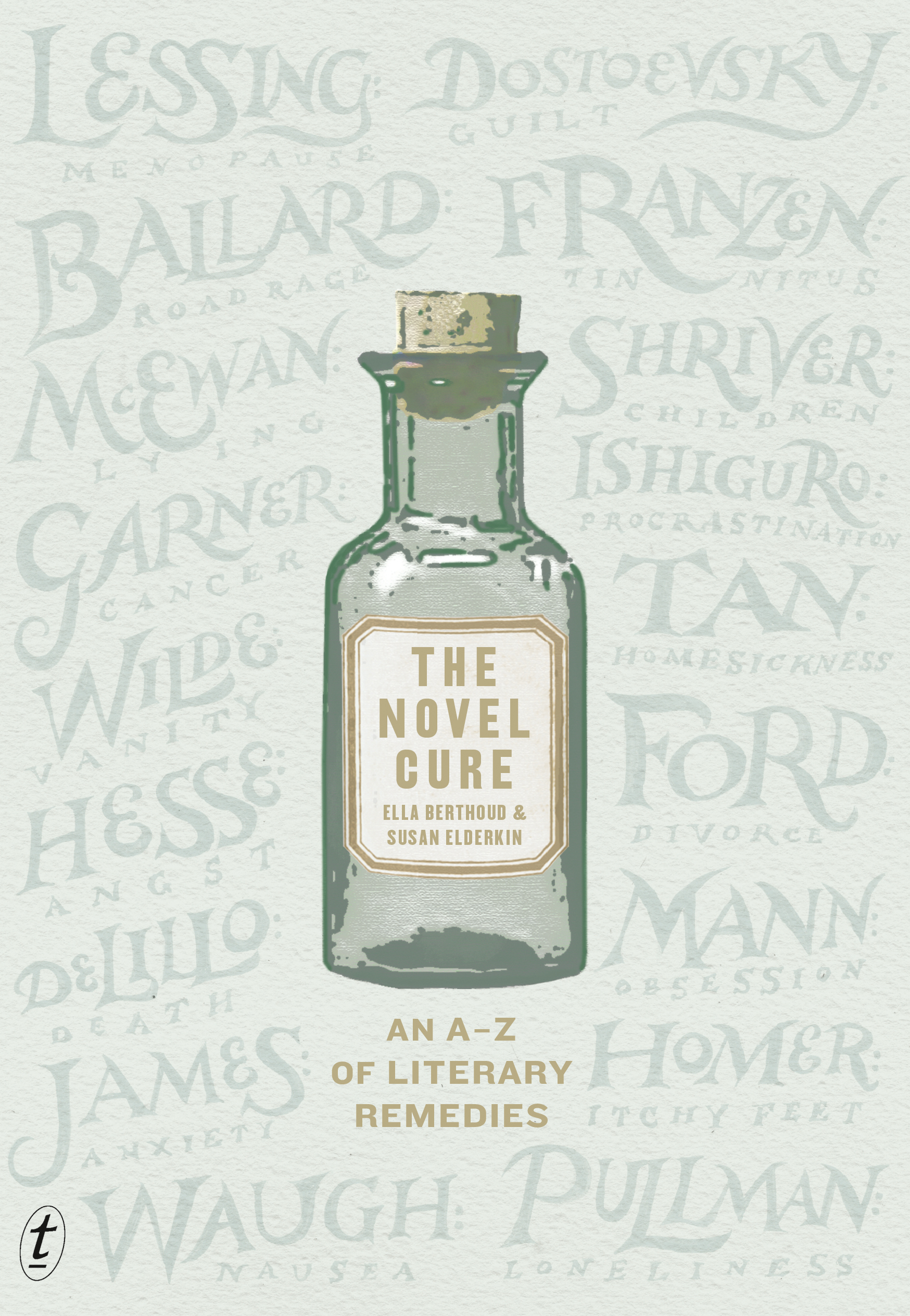
Novel Cure bookcover

Novel Cure (Courtesy: Text Publishing)

I don’t usually blog about books before I’ve read them cover to cover, but I’m making an exception for Ella Berthoud and Susan Elderkin‘s The novel cure because it’s one of those books that’s best read in small doses (no pun intended). You see, it is a book of bibliotherapy, a book that recommends novels to read to cure almost any ailment you can think of.

Bibliotherapy is described in Wikipedia, but I’ll give you Berthoud and Elderkin’s definition:

the prescribing of fiction for life’s ailments.

I don’t want to give away too many treatments. After all, the authors need to eat. But, to give you a taste, here is a sample of ailments and their prescribed treatments:

  • Daddy’s girl, being a: Can you guess the treatment? It’s Jane Austen’s Emma! You didn’t expect me not to start with Jane Austen did you? Emma, Berthoud and Elderkin say, “has been sent out into the world with an overly high opinion of herself and a self-centredness that can only bring her grief”. They suggest Emma should be seen as a cautionary tale and that girls at risk need to “stop playing the game and show him [their father] what a bad girl you can be”. “See: rails, going off the, for inspiration.” Are you getting the idea?
  • Control freak, being a: The authors suggest two Australian books. Is there something these two Englishwomen are trying to tell we colonials? Both are books I’ve reviewed here, Elizabeth Harrower’s dark The watch tower (my review) and Graeme Simsion‘s comic The Rosie project (my review).
  • Nose, hating your: What else could they suggest for this but Patrick Süskind‘s chilling Perfume. That’s a novel that’s not easy to forget. For all the horror of this novel, the authors manage to turn it to a positive purpose, one determined to help the self-esteem of those self-conscious about their noses!

As lighthearted as all this might sound, the authors do believe in the efficacy of literature to help ease (if not cure) both emotional and physical pain. They apparently hold highly successful bibliotherapy sessions and retreats in the UK. Among the ailments in the book is “Eating Disorder” and the two recommended books, Deborah Hautzig‘s Second star to the right and Jenefer Shute’s Life-size, are serious offerings for sufferers and their carers.

Like the good reference book it is, The novel cure includes see references (such as “Control, out of: See adolescence, alcoholism …”) and see also references (such as “Old age, horror of: See also amnesia, reading associated ….”). These helpful pointers warmed the cockles of my little librarian heart.

Scattered through the book are “Ten Best” lists, for which there is an index at the back so you can find them easily. One that made me laugh is “The Ten Best Novels For When You’ve Got A Cold”. As all Australians know, the best remedy for a cold is eucalyptus. It’s fitting then that Murray Bail‘s gorgeous novel Eucalyptus is top of the list.

There are two other indexes at the back of the book. One is the Index of Reading Ailments (for such life-threatening conditions as “Holiday, not knowing what novels to take on” and “Household chores, distracted by”). And the other is, of course, the Index of Novels and Authors. This makes the book useful for those of you who don’t have any ailments needing cure. You can  see if your favourite novels are cures for others.

You will also see, if you look at this index, the breadth and depth of authors and their works covered in this book. I was thrilled to see many Australian authors represented, covering more than a century of Australian literature. As far as I can tell, every continent is covered. The authors include, for example, South African Lauren Beukes, Indian Rahul Bhattacharya, French Albert Camus, Mexican Laura Esquivel, Japanese Haruki Murakami, Russian Leo Tolstoy, and so on. This index comprises eight two-column pages.

To conclude, I’ll offer my own ailment and cure: Reading slump, being in a: Read The novel cure. You’re sure to find a book or two to cure you and, if you don’t, well, you’ll be reading anyhow!

Ella Berthoud and Susan Elderkin
The novel cure: An A-Z of literary remedies
Melbourne: Text Publishing, 2013
Cover design: WH Chong
456pp.
ISBN: 9781922079350

(Review copy courtesy Text Publishing)

Hilary Mantel, Bring up the bodies (Review)

Hilary Mantel, Bring up the bodies

Courtesy: HarperCollins Australia

In her author’s note at the end of her second Thomas Cromwell novel, Bring up the bodies, Hilary Mantel writes that:

In this book I try to show how a few crucial weeks might have looked from Thomas Cromwell’s point of view. I am not claiming authority for my version; I am making the reader a proposal, an offer.

And what an offer it is! In my review of the first novel, Wolf Hall, I quote Cromwell’s statement that “…homo homini lupus, man is wolf to man”. This was related to the theme of the book – the machinations behind the scenes that change the world, something that we Australians are more familiar with right now than we’d like to be. (This is, in fact, a very modern book.) Anyhow, Bring up the bodies continues this theme but with a difference …

That difference is Thomas Cromwell’s motivations, but more on that anon. The plot concerns Henry’s desire to replace Anne Boleyn with Jane Seymour as his wife – and we all know where that led! It’s a much tighter plot – and a somewhat shorter book – than Wolf Hall. It takes place over about 9 months, from September 1535 to Summer 1536, and while the political climate is still evident – the continuing struggle to entrench the Church of England over the Roman Catholic Church and attempts at social welfare reform – politics and political change are not so much to the forefront in this second novel. Why? Well, because ….

Mantel wants to propose a motivation for Master Secretary Cromwell’s engineering of Anne’s downfall: revenge. Now, the word “revenge” is not, at least I don’t recollect it, actually used in the novel, though the softer word “grudge” appears a couple of times. But this is the motivation that Mantel proposes. It’s all to do with which men were and weren’t tried for treason (adultery with Anne) and their role in the downfall of Cromwell’s much-loved mentor, Cardinal Wolsey. Why, for example, was Thomas Wyatt never tried despite his professed attraction to Anne, while Henry Norris was? You’ll have to read the book – although you probably already have, given how late I am coming to it – to see Mantel’s proposition.

It is this revenge “take” on Cromwell that unifies Bring up the bodies in the way that the story of the separation of England from Rome and the Acts of Supremacy unified Wolf Hall even though both are ostensibly about the downfall of a queen. However, I don’t want to write a lot more about the plot and subject matter because I’m guessing many of the reviews before me have done that. What I want to write about is her writing. It’s breathtaking – the way she gets us into Cromwell’s head, the way she makes us feel the times, and particularly the way she uses language to drive the plot and themes.

Appealing to the subconscious, being almost subliminal, is common in fiction, I suppose, but Mantel does it with such aplomb. It’s the dropping of words and ideas that you barely notice or first notice and think they mean one thing only to find they are pointing to another. Take Wolsey for example. When he is first mentioned in the novel, it’s logical, it’s part of filling in the backstory that is common in sequels. But, the thing is, he is dead, long dead before this novel starts, and yet his name keeps cropping up. It’s always logical, but it starts to carry some larger weight – which becomes apparent as the denouement draws near. There are other words too – phantoms, spoils, truth, angels – which start to convey more than their literal meaning or which, through repetition, point us to larger meanings or themes. None of this is heavy-handed. You could almost miss it, but it’s there – drip, drip, drip.

If people had one criticism of Wolf Hall, it was Mantel’s use of the third person “he” for Thomas Cromwell. It seems Mantel took this to heart, so in Bring up the bodies she frequently qualifies the pronoun, using “he, Cromwell”. It does the job, though for one who didn’t find Wolf Hall a problem, it did feel a little clumsy to me at times – but I forgave her that. There’s so much to love.

Towards the end, during the process dissolving Henry VIII’s marriage to Anne Boleyn, the Lord Chancellor says

The truth is so rare and precious that sometimes it must be kept under lock and key.

This is deeply cynical (and ironic). The “council” of men has decided to grant the decree annulling the marriage but to keep the reason secret. Why? Because they really couldn’t agree on a valid one – they just knew it had to be done.

Bring up the bodies is a beautifully constructed but chilling novel in which Cromwell’s character becomes murkier and murkier. What’s to admire and what’s not is the question that confronts us every step of the way. Like many, I can’t wait for The mirror and the light, the next instalment of Cromwell’s story – and would love it if Mantel continued with the Tudors after that. What a fascinating time it was – and what a spin Mantel puts on it.

Hilary Mantel
Bring up the bodies
London: Fourth Estate, 2013
462pp.
ISBN: 9780007315109

Jane Austen’s letters, 1796-1800

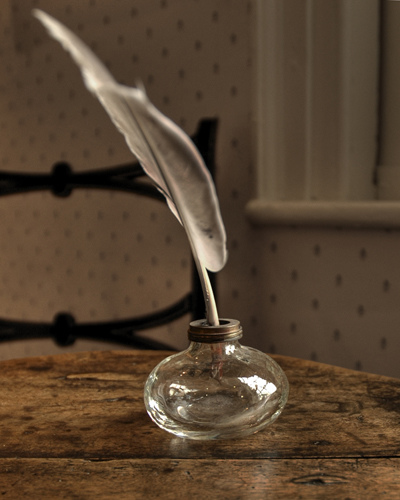
Austen's desk, Chawton. (Photo: Monster @ flickr.com)

Austen’s desk, Chawton. (Photo: Monster @ flickr.com)

For the past five years my Jane Austen group has been reading Jane Austen’s letters in a rather higgledy piggdledy manner*. We have nearly finished now. We have just done her first letters, and next year we will conclude, logically at last, on her final letters. What a fascinating time we’ve been having.

Jane Austen’s first published letter was written in January 1796, when she was just 20, and it is in this first letter that she mentions Tom Lefroy, the young man, also just 20, with whom she had a romantic attachment. Lefroy later became the Lord Chief Justice of Ireland. When asked many years after her death about his relationship with Austen, he admitted to a “boyish love”. Here is our first mention, in Letter 1:

… I am almost afraid to tell you how my Irish friend and I behaved. Imagine to yourself everything most profligate and shocking in the way of dancing and sitting down together. I can expose myself however, only once more, because he leaves the country soon after next Friday, on which day we are to have a dance at Ashe after all. He is a very gentlemanlike, good-looking, pleasant young man, I assure you. But as to our having ever met, except at the three last balls, I cannot say much; for he is so excessively laughed at about me at Ashe, that he is ashamed of coming to Steventon, and ran away when we called on Mrs. Lefroy [Tom’s aunt and a friend of the Austens] a few days ago.

In Letter 2, a few days later, she mentions a party to be held at the Lefroy home the next night:

I look forward with great impatience to it, as I rather expect to receive an offer from my friend in the course of the evening. I shall refuse him, however, unless he promises to give away his white Coat.

Is she expecting a proposal from Tom? The “great white Coat” is a tongue-in-cheek (and, perhaps, also self-preserving) reference to her comment in the previous letter about his morning coat being “a great deal too light”. Later in the letter, which she started on Thursday and finished on Friday, comes:

Friday. — At length the day is come on which I am to flirt my last with Tom Lefroy, and when you receive this it will be over. My tears flow as I write at the melancholy idea.

The only other reference to Tom Lefroy occurs well over a year later in November 1798, Letter 11:

Mrs. Lefroy did come last Wednesday, and the Harwoods came likewise, but very considerately paid their visit before Mrs. Lefroy’s arrival, with whom, in spite of interruptions both from my father and James, I was enough alone to hear all that was interesting, which you will easily credit when I tell you that of her nephew she said nothing at all, and of her friend very little. She did not once mention the name of the former to me, and I was too proud to make any enquiries [my stress]; but on my father’s afterwards asking where he was, I learnt that he was gone back to London in his way to Ireland, where he is called to the Bar and means to practise.

It’s all very tantalising – but at the very least it’s pretty clear that Jane Austen learnt something about love and loss from this experience. A brief description of the “affair” can be read here on the JASA website.

Austen, though, was not one to wallow. I loved her comment in a later letter (January 1799) that:

I had a very pleasant evening, however, though you will probably find out that there was no particular reason for it; but I do not think it worth while to wait for enjoyment until there is some real opportunity for it. (Letter 18)

A positive philosophy that she does seem to have lived by, if her letters are to be believed.

These letters, like those I’ve written about previously, provide much information about her life and times – about the dangers of childbirth, health and medical treatment, men’s careers, farming, housekeeping and fashion – often delivered in Austen’s witty, often also acerbic tongue. As before, I’ll share just a few here …

Fashion

Austen talks a lot about clothing in the letters, so much so that some readers find it boring. However, her fashion talk tells us more than simply what she and Cassandra are wearing. For example, we learn about the craze for Marmalouc caps, which reminds us of the Napoleonic Wars as the caps were inspired by Egyptian turbans after the Battle of the Nile in August 1798. We learn about Austen’s tight financial situation. Caps and gowns were re-trimmed to suit another Ball or season, items are shared (the Marmalouc cap itself was borrowed from sister-in-law Mary Austen). Best of all, though, we get her wit such as her description of the rage for wearing flowers and fruits (Letter 21) in Bath. In Letter 22, she responds to Cassandra’s request for some Bath fashion, but she’s having trouble deciding:

I cannot decide on the fruit until I hear from you again. – Besides, I cannot help thinking that it is more natural to have flowers grow out of the head than fruit. – What do you think on that subject?

Childbirth, Health and Medical Treatments

I could write a whole post just on her discussion of health-related matters. We hear of women dying in childbirth, of people taking or drinking the Waters in Bath for assorted health concerns, of her mother’s using laudanum for pain, of the use of electricity for pain relief … Again, though, there’s often a sting in the tail. It’s generally believed that Jane had a tricky relationship with her mother who was somewhat of a hypochondriac. In several of these early letters she reports on her mother’s health. Here is one (Letter 18):

She is tolerably well – better on the whole than she was some weeks ago. She would tell you herself that she has a very dreadful cold in her head at present; but I have not very much compassion for colds in the head without fever or sore throat.

In other letters, though, she does show more tenderness!

Writing and novels

Her own writing is rarely mentioned in these early letters, but the first version of Pride and prejudice, then titled First impressions, is referred to a couple of times. Here is a tongue-in-cheek reference to her friend and future sister-in-law Martha Lloyd reading it:

I would not let Martha read “First Impressions” again upon any account, and am very glad that I did not leave it in your power. She is very cunning, but I saw through her design; she means to publish it from memory, and one more perusal must enable her to do it.

But, my favourite comment on writing in this group of letters relates to her assessment of the novel, Fitz-Albini, that she and her father were reading (Letter 12):

We have got “Fitz-Albini;” my father has bought it against my private wishes, for it does not quite satisfy my feelings that we should purchase the only one of Egerton’s works of which his family are ashamed. That these scruples, however, do not at all interfere with my reading it, you will easily believe. We have neither of us yet finished the first volume. My father is disappointed – I am not, for I expected nothing better. Never did any book carry more internal evidence of its author. Every sentiment is completely Egerton’s. There is very little story, and what there is told in a strange, unconnected way. There are many characters introduced, apparently merely to be delineated. We have not been able to recognise any of them hitherto, except Dr. and Mrs. Hey and Mr. Oxenden, who is not very tenderly treated.

The novel was apparently highly autobiographical and in it, according to the Gentleman’s Magazine (1837), Egerton “depicted with the utmost freedom the foibles not only of his neighbours and acquaintances, but even [my stress] those of his own family and relations”.  What I most like about Austen’s comment though is the insight it gives into her views on what makes a good novel. It shouldn’t be so transparently the author’s opinions; it should have a clear storyline; and the characters should have some substance. Ah Jane, she knew how to write …

* Past posts discussing the letters: The first covered her letters from 1814 to 1816, the second from 1811 to 1813, the third from 1807 to 1809, and the fourth from 1801-1806.

Autumn and a favourite poem

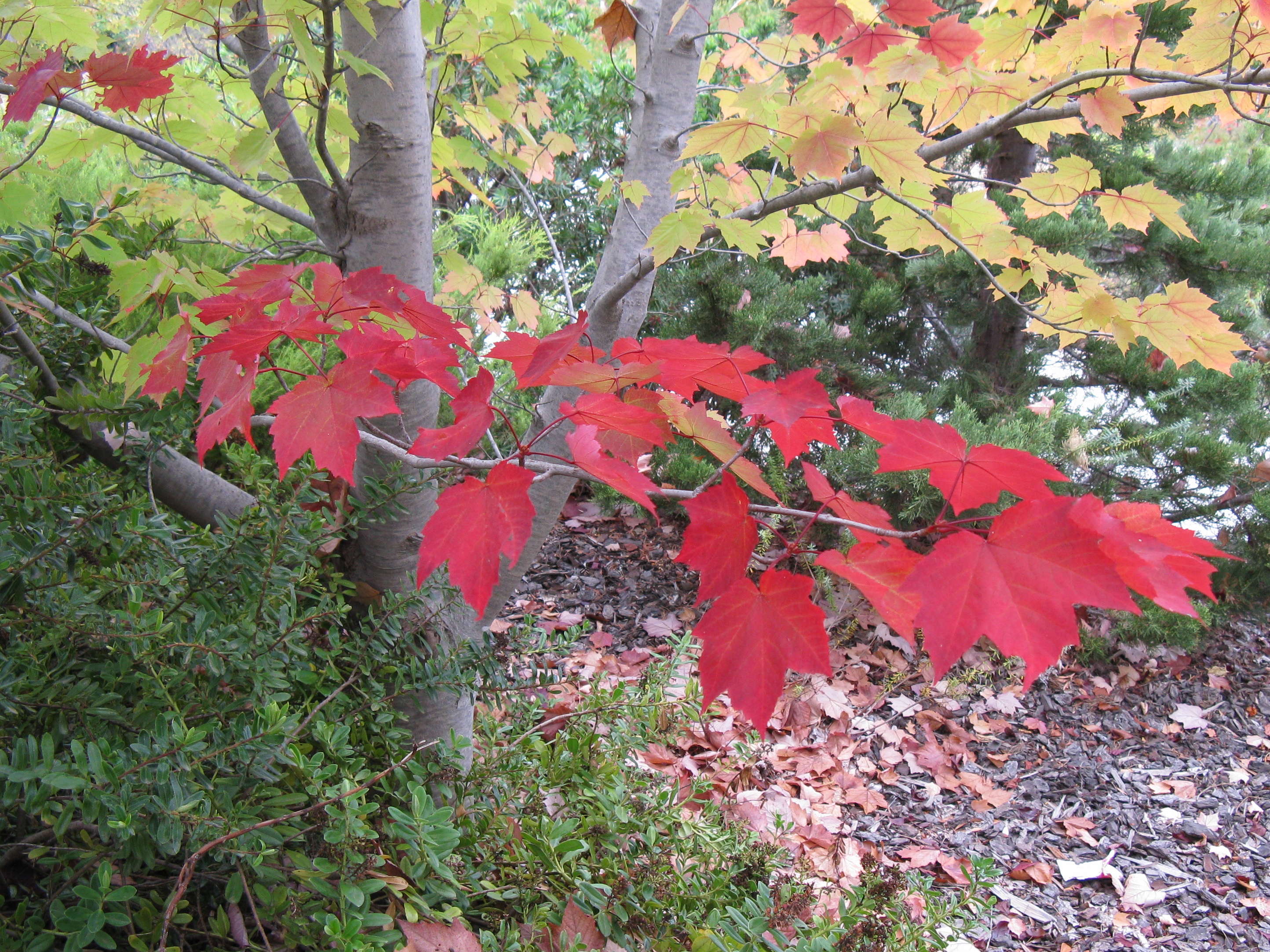
Autumn Leaves

Autumn leaves

I was lying in front of a sunny window reading my current novel this afternoon when an urge came upon me to write about one of my favourite poems. It’s one of the few I can recite from heart. The poem is “Spring and Fall” by Gerard Manley Hopkins, and it goes like this:

To a young child

Margaret, are you grieving
Over Goldengrove unleaving?
Leaves, like the things of man, you
With your fresh thoughts care for, can you?
Ah! as the heart grows older
It will come to such sights colder
By and by, nor spare a sigh
Though worlds of wanwood leafmeal lie;
And yet you will weep and know why.
Now no matter, child, the name:
Sorrow’s springs are the same.
Nor mouth had, no nor mind, expressed
What héart héard of, ghóst guéssed:
It is the blight man was born for,
It is Margaret you mourn for.

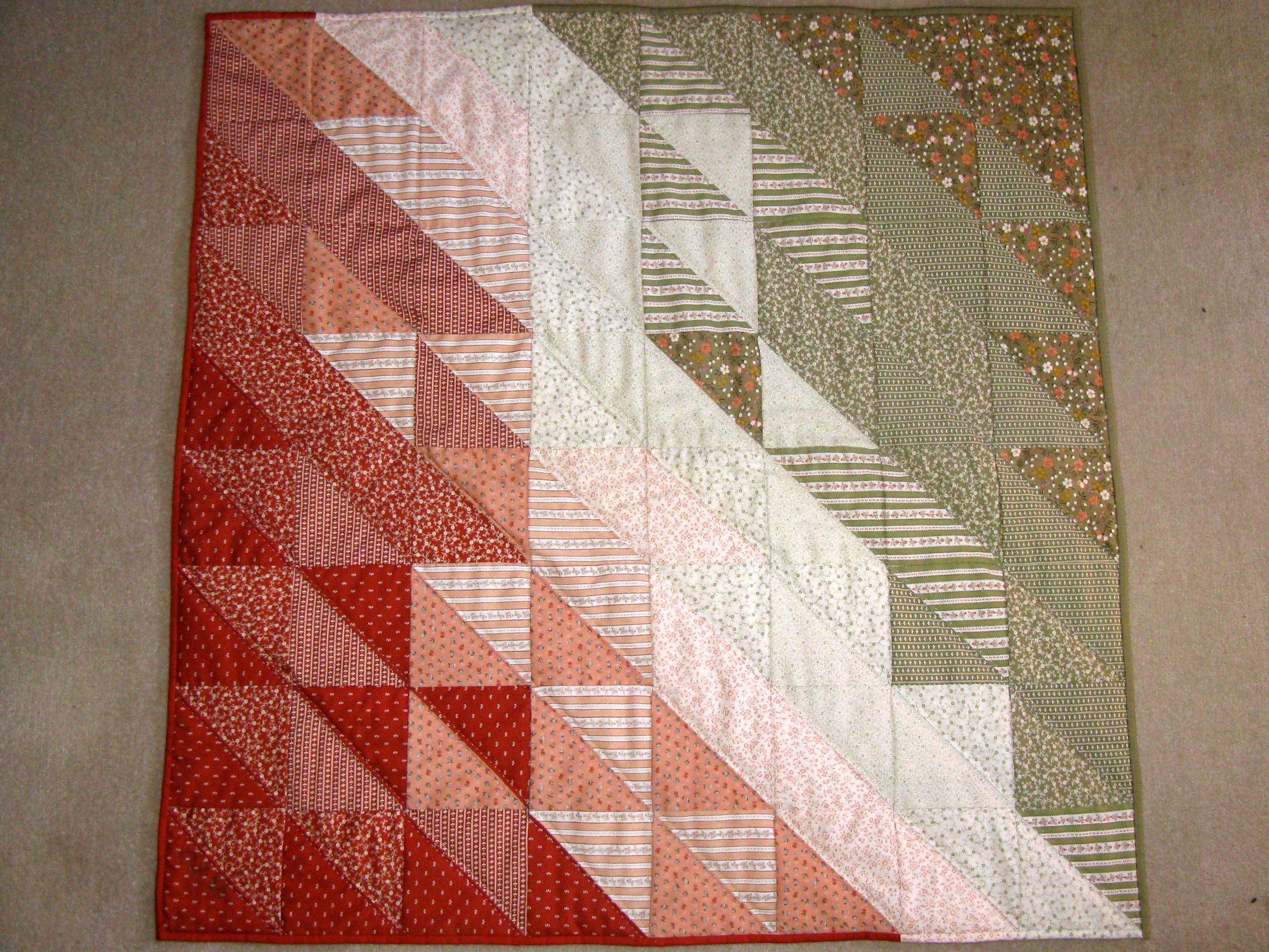
Spring and Fall Quilt, 1985

Spring and Fall Small Quilt, 1985

Now, I know you Northern Hemisphere people are enjoying spring and looking forward to the lazy, hazy, crazy days of summer, but down here in the south it is autumn which is, for me and I suspect many of us, a bittersweet time. Sweet because the weather is usually mild and stable, and the light soft and warm, but bitter because there’s a chill in the air, the days are shortening and the frosts are coming. It is for this paradox – and its implications, its recognition of our mortality – that I love Hopkins’ “Spring and Fall”.

What I love about this poem is what I love about Hopkins in general. Firstly there’s his heart that is so openly on show in all his poems, both the religious crisis poems and the ones about life and nature. Then there’s the tone, which is, in this poem, rather melancholic. After all, he is telling the child, Margaret, that what she’s really grieving for, though she’s unaware of it now, is her own mortality. I also love his rhythm (which he called “sprung rhythm“) and how in this poem there’s a jolt towards the end when he makes his main point.  And associated with this, the rhyme, which is appropriately simple here for a poem addressed to a child. But most of all, I love his language, particularly his imagery and the neologisms (like “wanwood leafmeal”). Or, perhaps, not quite most of all … I think most of all I love the way the language so perfectly matches the heart.

The older I get, the more I understand and love this poem!

Do you have poems that come back to you again and again at different points in your life?

Happy 200th birthday to Pride and prejudice

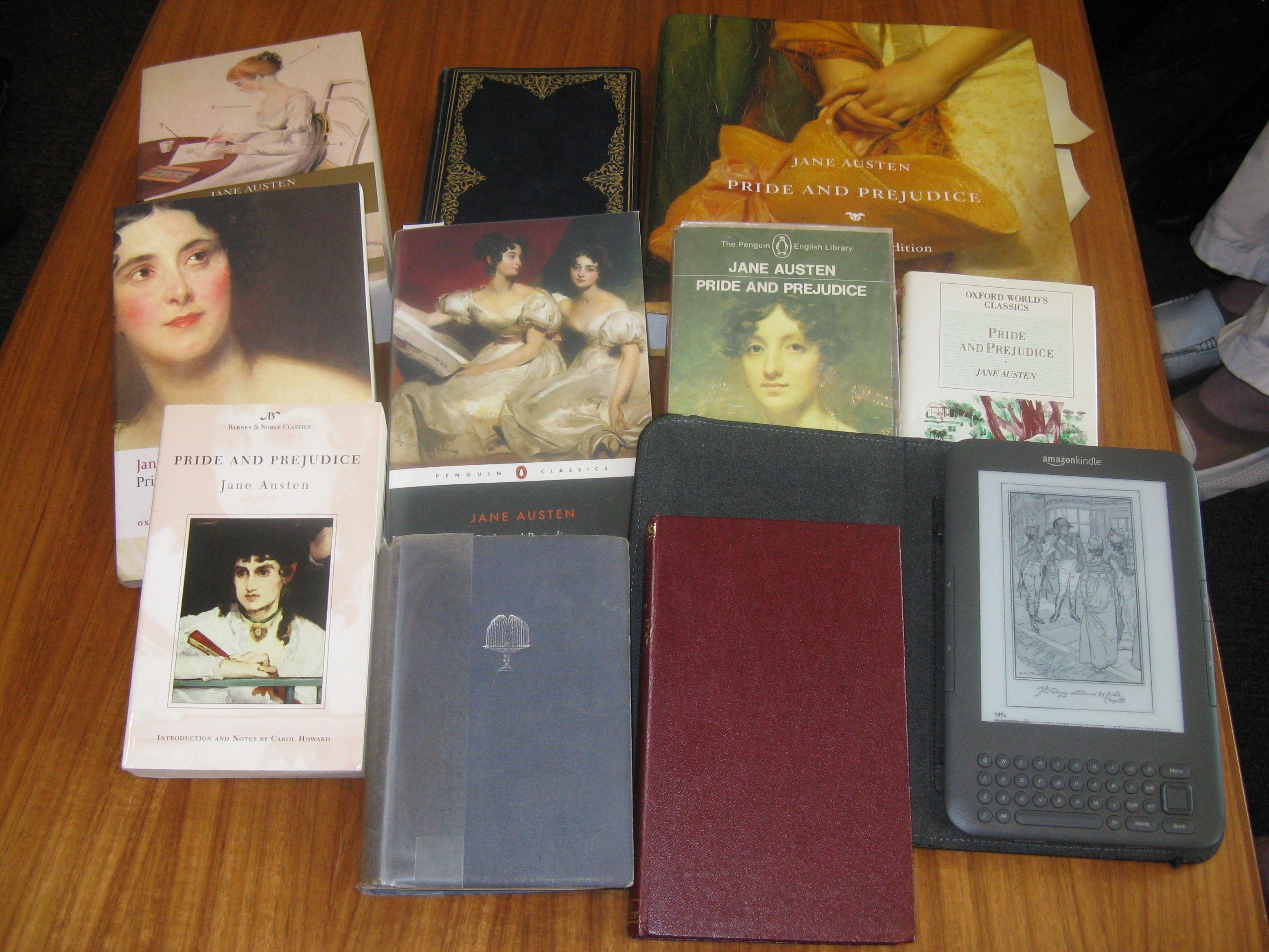
Pride and prejudice book covers

Just a few editions of Pride and Prejudice

It is a truth … no, I can’t go there but, just in case you haven’t caught up with the news, I’m here to tell you that today, January 28, is the 200th anniversary of Jane Austen’s most popular novel, Pride and prejudice.  And so I’ve decided to give Monday Musings a break this week and talk a little about this book. But where to start? What can I say that hasn’t already been said?

How about what the book means to me. It is the book that turned me from being a book reader to a literature lover. I hope that doesn’t sound snooty but what I mean is that Pride and prejudice is the first book to teach me that there can be more to reading books than quick page-turning to find out what happens in the story. There’s nothing wrong with page-turners – they serve a very important purpose in helping us to escape the daily grind – but books can offer a lot more if we want something else from the time we spend reading. They help us better understand the human condition, they can challenge our intellect, and they can appeal aesthetically.

Pride and prejudice, like all of Jane Austen’s novels, satisfies the first of these in spades. Through her characters, Austen demonstrates an in-depth knowledge of human nature. She shows us kindness, compassion, envy, selfishness, stupidity, thoughtlessness, integrity, anger, pride, prejudice and more, including, though Charlotte Bronte (who once wrote that “she ruffles her reader by nothing vehement”) would not agree, passion. Mr Darcy’s ghastly “in vain have I struggled” proposal is nothing if not passionate. I for one don’t need ripped bodices to feel the passion!

Regarding challenging our intellect, one of the delights of reading Austen is the mind games she plays with us – the irony, the wit, keep us on our toes, encouraging us to see the meanings beneath the surface. And, if you read for plot, try reading an Austen novel a second time and you will see how perfectly she plots. Rereading books like Pride and prejudice brings so many pleasures. It’s like meeting an old friend and learning new things about her that enrich your relationship and remind you why she became your friend in the first place.

The aesthetic pleasures are something else – and I fear I’m on thin ground here because I’m probably using the term quite differently to the way philosophers and literary theorists might use it, but it’s the best I can come up with. What I mean is appreciating the novel as a work of art, regardless of its content. Readers from the 20th and 21st centuries can, I think, find Austen’s “art” a little quaint, if not downright dated, but in fact she was innovative. Susannah Fullerton in her latest book, Happily ever after: Celebrating Jane Austen’s ‘Pride and prejudice’, spends a few pages on this. Austen’s main innovation lies in her use of “free indirect discourse” (FID) or “free indirect speech”. She was not the first writer to use it, but was, says Fullerton, “the first English novelist to use FID consistently and extensively”. It is used in third person narratives and involves “hearing” what a character feels or thinks without the use of dialog and not via authorial interaction or the omnipotent narrator. We feel, in other words, that we are in the character’s head rather than being “told” what s/he feels. Austen slips between third-person and this interior mode regularly in her novels. It allows us, in Pride and prejudice, for example, to feel right along with Elizabeth – but the advantage of this technique is that it can shift from character to character in between omnipotent third-person narration. These and the rest of Jane Austen’s grab bag of literary techniques are another reason why she’s such a pleasure to read – and why her books are just plain beautiful.

In other words, Pride and prejudice is the real deal – great story and characters, along with food for the mind, the intellect and the heart. No wonder it has never been out of print.

What did Jane Austen look for in a novel?

There are those who don’t get Jane Austen. Some think her novels are silly romances while others think that she writes stories about the well-to-do who, they feel, aren’t relevant or worthy subjects.

Nothing, really, could be further from the truth. Her novels may be romantic but they are more than simple romances. Jane Austen loved to satirise human foibles (as she did Mr Collins’ pomposity in Pride and prejudice). She cared deeply about the lot of women who had little financial support (such as Jane Fairfax in Emma). With the exception of Emma, in fact, her heroines are not rich, and some are in quite precarious financial situations. However, she wanted them to be able to choose partners they love and respect (as Elizabeth Bennet does in Pride and prejudice) … though she knew that this wasn’t easy or straightforward in Regency times.

But don’t take my word for it. Listen to the author herself – in a letter to her niece Fanny – written only months before she died:

He and I should not in the least agree, of course, in our ideas of novels and heroines. Pictures of perfection make me sick and wicked.

What better manifesto or clearer indication of her novelistic imperative could she have left for us? Life and people weren’t perfect, and nor would her novels be.

William Gilpin and travel photography

Yes, I know that William Gilpin, about whom I wrote in my last post, died before photography, though only just. He died in 1804 and, according to Wikipedia, the first permanent photograph produced by a camera was made in 1826. However, the notion of cameras – through the camera obscura – was already well known. This, however, is not really the subject of today’s post. The subject is the third essay in his Three essays, which is titled “On the art of sketching landscape”.

The thing is that this essay reminded me of travel photography because his main focus is “taking views from nature” the intention of which, he says

may either be to fix them in your own memory – or to convey, in some degree, your ideas to others.

Aren’t these our two main aims in taking travel photographs? That is, to help us remember our travel and/or to share out experiences with others?

He then goes on to give advice about how to sketch, some of which is specifically about the tools and implements of sketching, but some of which relates more broadly to composing pictures. For example, he writes of getting “the best point of view” for the scene you wish to sketch (or, for us, to photograph), stating that “a few paces to the right, or left, make a great difference”. He’s right there. There are times when I’ve been too lazy, or felt I didn’t have enough time, to walk about looking for the best aspect, only to be sorry later when I’ve seen someone’s better photograph of the same scene.

And he talks about “scale”, that is,

how to reduce it [the scene] properly withing the compass of your paper: for the scale of nature being so very different from your scale … If the landscape before you is extensive, take care you do not include too much: it may perhaps be divided more commodiously into two sketches …

Today of course we can take panoramic photos, and we can enlarge (or crop) to our heart’s content when we download our images onto our computers. Still, the better the original photo, the easier later editing is, eh?

His advice then starts to get more interesting, because he goes on to differentiate between making a sketch that “is intended merely to assist our own memory” and one “intended to convey, in some degree, our ideas to others“. These latter sketches, he says, “should be somewhat more adorned”. Now, part of this adornment is simply about the detail. A sketch to remind us of what we have seen may only require “a few rough strokes”, while one that is to convey something to others who have no idea of the place, needs “some composition … a degree of correctness and expression in the out-line – and some effect of light”.

But, he then goes further to suggest that “nature is most defective in composition; and must be a little assisted”. In other words, it is alright “to dispose the foreground as I please”. Yes, fair enough. We do this often, don’t we, in composing or enlarging/cropping photos? But, it is also alright, he says, to take further liberties:

I take up a tree, and plant it there. I pare a knoll, or make an addition to it. I move a piece of paling – a cottage – a wall – or any removable object, which I dislike.

He qualifies this, though, by saying that “liberties … with the truth must be taken with caution”. We should not, he says, introduce “what does not exist” but can make “those simple variations … which time itself is continually making”.

All this made me think of photography, digital in particular, and how easy it is to remove or modify or manipulate an image to make it look better … and made me realise that no matter what tools we have to hand, this is something we have always liked to do. And this is the point that Gilpin is making with his theory of “the picturesque” because, if you remember the definition I gave in my previous post, it is about “that peculiar kind of beauty, which is agreeable in a picture”.

What I take away from all this – ignoring Gilpin’s tendency to pomposity and prescription, for which he was, fairly I think, satirised – is that he is talking about the difference between “reality”, or what is actually there, and an aesthetic “truth” relating to the ideas (and even feelings*) conveyed by the scene. And that makes sense to me.

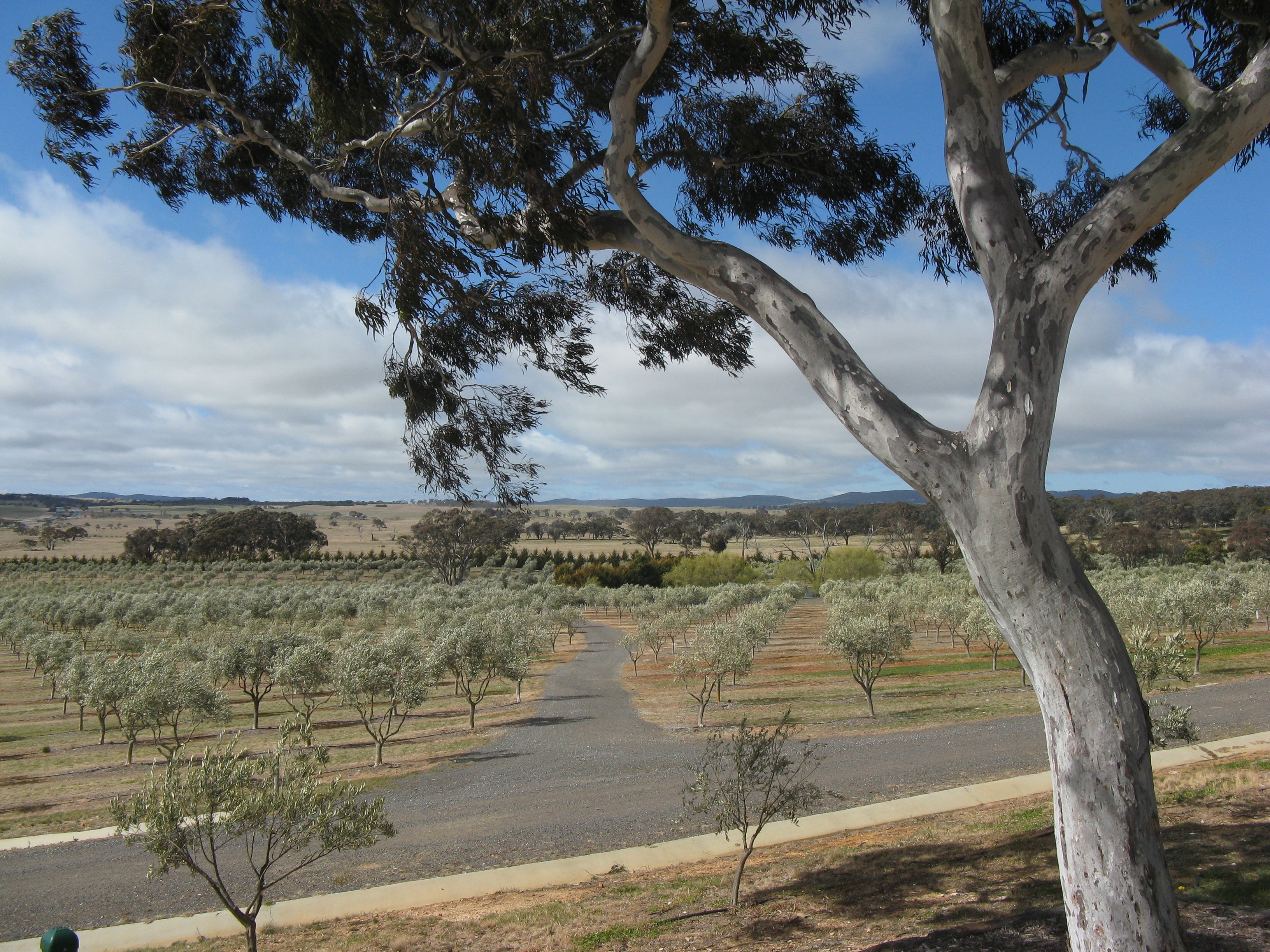
Fedra Olive Grove

Gilpin would not like the rows of olive trees here, but would probably like the irregular somewhat rough tree.

* There is, I believe, much academic debate about whether Romanticism rejected or extended the ideas of the Picturesque. I’m inclined to think it’s not a case of either/or but a more complex development.

William Gilpin, Jane Austen and the picturesque

I was introduced to William Gilpin by Jane Austen. Well, not by her so much as by her brother, Henry, who told us* that she was “enamoured of Gilpin on the Picturesque at a very early age”.

Engraving of Rev. William Gilpin.

William Gilpin (Harper’s New Monthly Magazine, No. 231, August, 1869.Public Domain, via Wikipedia)

This month my local Jane Austen group decided to look a little more deeply at Gilpin, his Picturesque, and what Jane Austen really thought. William Gilpin (1724-1804) was an English vicar, schoolteacher, prolific writer and amateur painter. He is remembered primarily for his theory of “the picturesque”. The “picturesque”, according to my Shorter Oxford English Dictionary, dates back to 1703 with the meaning, “in the manner of a picture; fit to be made into a picture”. In his Essay on Prints (1768), Gilpin defined it as “… a term expressive of that peculiar kind of beauty, which is agreeable in a picture”.

The blogger at Austenonly has written an excellent post on Jane Austen and Gilpin in which she proposes – and my group here agreed with her – that Austen was enamoured of him because he appealed to her sense of the ridiculous. He expresses his opinions so dogmatically, he is so opinionated, that she can’t help mocking him. How could she not satirise a man who seriously suggests (“Essay 1: On Picturesque Beauty”, Three Essays) that, when it comes to a portrait, “the highest form of picturesque beauty” is not “the lovely face of youth smiling with all its sweet dimpling charms” but “the patriarchal head” with its “lines of wisdom and experience … the rough edges of age”. Being a woman of a certain age, I rather like Mr Gilpin! But, seriously, is it really a matter of either/or?

Or someone who writes (in the same essay):

A piece of Palladian architecture may be elegant in the last degree. The proportion of its parts — the propriety of its ornaments — and the symmetry of the whole, may be highly pleasing. But if we introduce it in a picture, it immediately becomes a formal object, and ceases to please. Should we wish to give it picturesque beauty, we must, use the mallet, instead of the chisel : we must beat down one half of it, deface the other, and throw the mutilated members around in heaps. In short, from a smooth building we must turn it into a rough ruin. No painter, who had the choice of the two objects, would hesitate a moment.

We must presume that he is not speaking literally when he suggests taking a mallet to a pleasing building in order to make it picturesque! But Jane Austen is sure to have laughed and, as you’ll read in Austenonly’s post, there are many examples in Austen’s novels, particularly Pride and prejudice, Sense and sensibility and Northanger Abbey, in which she satirises the picturesque.

On the other hand, there are also places where she seems to exhibit an appreciation and understanding of Gilpin’s theory because, while Gilpin could be dogmatic, he also argued convincingly for a seeing nature with “a picturesque eye”. He writes in “Essay 2: On Picturesque Travel” about enjoying “the great works of nature, in her simplest and purest stile, open to inexhaustible springs of amusement”, and says

Nor is there in travelling a greater pleasure, than when a scene of grandeur bursts unexpectedly upon the eye, accompanied with some accidental circumstance of the atmosphere, which harmonises with it, and gives it double value.

I’ll illustrate this with two examples of travellers in Austen. First is her description of Fanny’s return to from Portsmouth in Mansfield Park:

Her eye fell everywhere on lawns and plantations of the freshest green; and the trees, though not fully clothed, were in that delightful state when farther beauty is known to be at hand, and when, while much is actually given to the sight, more yet remains for the imagination.

There is also a lovely, similarly genuine, description of the environs of Lyme in Persuasion in which she writes of a “sweet, retired bay, backed by dark cliffs, where fragments of low rocks among the sands make it the happiest spot for watching the flow of the tide …”

The question that comes to mind then is whether she is satrising the picturesque or slavish adherence to it or, even perhaps, its somewhat slippery nature. In fact, Jane Austen, landscape and the Regency is a pretty inexhaustible topic. And so, while I thoroughly enjoyed my brief introduction to Mr Gilpin, I’d love to find time to read more, particularly his travel writings about various parts of the British Isles. Meanwhile, I can’t resist leaving you with another Gilpin satirist, William Combe (1741-1823), who in 1809, as Dr Syntax, wrote the poem “The Tour of Dr Syntax in Search of the Picturesque”. It starts with

I’ll make a tour – and then I’ll write it.
You well know what my pen can do,
And I’ll employ my pencil too:-
I’ll ride and write, and sketch and print,
And thus create a real mint;
I’ll prose it here, I’ll verse it there,
And picturesque it everywhere.
I’ll do what all have done before;
I think I shall – and somewhat more.
At Doctor Pompous give a look;
He made his fortune by a book:
And if my volume does not beat it,
When I return, I’ll fry and eat it.

What a hoot …

* in his biographical note to the posthumously published first edition of Northanger Abbey and Persuasion