Elizabeth von Arnim, Expiation (#BookReview #1929 Club)

I cannot remember when I last laughed out loud – a lot – when reading a book. The book that broke the drought is Elizabeth von Arnim’s Expiation. Even in her darkest, grimmest novel, Vera (my review), Von Arnim managed to make me splutter several times, albeit ruefully. Expiation, though, caused no such qualms.

I have loved Elizabeth von Arnim since I read Elizabeth and her German Garden in the early 1990s when Virago started publishing her. I went on to read several more of her books over the next few years, but then had a big gap until this year, when I read Vera. It reminded me how much I enjoy her. So, when I saw she had one published in 1929, I selected it for Karen and Simon’s 1929 Club. I finished it more or less on time, but the last couple of weeks have been so busy that I didn’t get to post it until now.

The edition I found was published by Persephone. They describe publishing it as first for them, because “it’s a novel by a well-known writer that has been entirely overlooked”. While most of Von Arnim’s books are in print with other publishers, Expiation, which they were now publishing ninety years after its first appearance, had been ignored. Why, they ask? Good question. I admit that, not having seen it around, I did fear it might be lesser.

Persephone offers some reasons. Firstly, the title “is not very catchy”. True, it’s not. They also suggest that its adultery theme would have been “faintly shocking” in 1929, and further that, although we now read it as a satire, at the time “the characters and their milieu may have seemed rather tame”. Would the satire have been missed? Anyhow, they quote from the novel’s opening chapter, which describes the novel’s central family and the London suburb they live in:

That important south London suburb appreciated the Botts, so financially sound, so continuously increasing in prosperity. They were its backbone. They subscribed, presided, spoke, opened.

This last sentence, Persephone says, “was what deliciously and instantly convinced us that this was a book for us”. I am so glad they did because from the first few pages I could tell it was a book for me too. It truly is delicious.

So now, the book. As you’ve gathered, the plot centres around adultery, which is made clear in the opening chapter. Milly has just been widowed, and her wealthy husband, Ernest Bott, has only left her £1,000 of his £100,000. The rest he has left to a charity for fallen women, with the cryptic note that “My wife will know why”. She does, of course, but thought she had got away with it. What is remarkable about this book, which chronicles how both Milly and the Botts react to the situation, is that we remain sympathetic to Milly. She’s a sinner, she knows she’s a sinner, but she wants to expiate. How, is the question?

The Botts, meanwhile, don’t know what to do. They do not want scandal to ruin their good name, and, anyhow, the male Botts in general rather like round, plump Milly versus their “bony” wives. Moreover, they are not known for meanness: “The family had always behaved well and generously in regard to money, and it would never do for Titford to suspect them of meanness.” Hmmm, a bit of appearance-versus-reality going on here. So, having decided, Jane-Austen-Sense-and-sensibility-style, not to give Milly some of their money, they agree to take her into their homes, in turn, until it all dies down, after which she can go live with Old Mrs Bott, who is perfectly happy to have her. Old Mrs Bott is the voice of reason in the novel. Experience has taught her

that in the end it all wouldn’t have mattered a bit what Ernest had meant or what Milly had done, and that they might just as well have been kind and happy together on this particular afternoon, as indeed on all their few afternoons, and together comfortably eaten the nice soup and sandwiches.

However, a spanner is thrown in their works when the shocked and mortified Milly disappears the day after the funeral. To say more about the plot would give too much away – even though the plot is not the main thing about this book.

What Von Arnim does through this plot is take us on a journey through humanity. Milly’s attempts at expiation often fall flat, either because she doesn’t manage to do what she plans or because others don’t behave towards her as she expects, even wants, them to do. For example, on one occasion, she has “no doubt at all that here at last she was in the very arms of expiation” and yet it comes “to her so disconcertingly, with a smile on its face”. Can this really be expiation? Milly’s not sure. One of the book’s ironies – and points – is, in fact, that the greatest sinner, technically, is among the kindest in reality.

The thing I like about Von Arnim is her generosity. It is on display throughout this novel as Milly, seeking expiation (but also to survive) moves between people she knows, from her previously sinning sister and her obliviously self-centred lover to the various Botts who range from the puritanical and pompous to the warm and lively. Most of these characters, like Austen’s, may come from a narrow realm of society but they represent a much wider spectrum of human behaviour. Like Austen, too, Von Arnim’s targets are not just the personal – greed, selfishness, narrow-mindedness, silliness, pride, self-importance, ignorance, and so on – but the societal, particularly gender, marriage and money. “Too much worldly prosperity”, she writes for example, “deadens people’s souls”.

So, in Expiation, Von Arnim skewers human nature and her society much like Jane Austen does. Sometimes the situations may be a little dated as they can also be in Austen, but human nature itself doesn’t change much – and this is so knowingly, so inclusively, and so generously, on display. There are some less than stellar people here, of course, but as in Austen, they are treated with respect for their humanness by the author, while also being exposed for exactly who they are. I’m going to – with difficulty – choose just a couple for you, one touching on the theme of sinning and morality, and the other on money.

Here is the eldest Bott, Alec, trying to avoid hosting Milly first, because of his wife’s puritanical approach to life:

He stopped, an undefined idea possessing his mind that Milly might be purer after having passed through the sieve of other visits, and more fit to stay with his wife …

Von Arnim’s language – so fresh and funny. And here is another Bott, Fred, telling his sons they will be helping Milly:

“Do you mean financially?” inquired Percy, his eyes still on his paper.
“Kindness,” said Fred.
“Kindness! Well, that’s cheap, anyhow,” said Dick.
“And easy,” said Percy, turning the pages. “I always liked Aunt Milly.”

Finally, I will leave you with one more bon mot from Old Mrs Bott who reflects, at one point during the novel:

It seemed as if these poor children had no sense whatever of proportion. They wasted their short time in making much of what was little, and little of what was much.

With a wit and a sense of humanity that is a joy to read, Expiation encourages us to think about what is important to living both a good life, and a kind and fair one.

Elizabeth von Arnim
Expiation
London: Persephone Books, 2019 (orig. pub. 1929)
314pp.
ISBN: 9781906462536

Julian Barnes, Elizabeth Finch (#BookReview)

Julian Barnes’ Elizabeth Finch is a curious book. It’s my fourth Julian Barnes, and the third I’ve read with my reading group. In 1995 we read A history of the world in 10 1/2 chapters, and in 2012 it was his Booker Prize winning The sense of an ending (my review). (I have also read his curious but enjoyable Pedant in the kitchen.) All have intrigued me, for different reasons.

Elizabeth Finch tells the story of a man’s fascination with an inspirational teacher, the eponymous Elizabeth Finch, who taught an adult education class on Culture and Civilisation. This man is Neil, our first person narrator, and he maintains a friendship with EF (as he refers to her), through semi-regular lunches, until her death some two decades later. Through Neil’s memories of the class and his reading of EF’s papers that she’d bequeathed him, Barnes explores various ideas, including how we live our lives (particularly in terms of friendship and love), and the impact and thrust of history (primarily through considering the so-called last pagan emperor, Julian the Apostate). (Interestingly, the protagonist in The sense of an ending is also bequeathed personal writing.)

The novel, while told chronologically, is quirky in form. Part One comprises Neil’s introduction to EF, up to her death; Part Two contains Neil’s “essay” on Julian the Apostate (who was significant to EF’s ideas); and Part Three returns to Neil, now focusing on trying to understand EF with a view to possibly writing a memoir/biography. Here, he also catches up with old student friend, and ex-lover, Anna, who does enliven the book. In a sense, the novel reminded me a little of J.M. Coetzee’s tricksy books, like Elizabeth Costello and Diary of a bad year (my review), because they also tread this strange fiction/nonfiction, novel/philosophy ground.

At this point, I’m going to depart a little from my usual approach, and share some of my reading group’s discussion, because the book book engendered widely divergent reactions. They fell into three groups. One member loved it, describing it as a dense, compact novel which takes readers down interesting paths. She enjoyed thinking about Julian the Apostate, and what might have happened had he prevailed, and she enjoyed reading about the wide range of thinkers who have pondered Julian over time. A couple actively disliked it or were “very disappointed”. They felt the novel had some interesting threads but found it simplistic, repetitive, disjointed. They didn’t like the EF character, and one described the novel as “an ordinary study of a crush on an ordinary woman”. The rest of us, including me, had mixed feelings. Our reactions varied but we all found things to like (or be intrigued by) as well as dislike (or be mystified by). I won’t share all our ideas, but a couple of us felt that the book read like something that Barnes wanted to “get off his chest” at this stage in his life. (He’s 76). A couple of us particularly enjoyed the discussions of Epictetus and of history.

The book’s narrator, Neil, was problematic for some, but I rather liked his self-deprecatory tone, the sense of bumbling along as a middle-aged British male. Neil is not Barnes, but I wondered if he reflects Barnes’ self-assessment or, at least, a recognition of how he and his peers are viewed in the current age. It is tempting, actually, to see an autobiographical element to the novel, because EF was apparently inspired by the late British novelist Anita Brookner. She had beaten Barnes in the 1984 Booker Prize, but they had subsequently become friends and had lunched semi-regularly after that. I have read (and enjoyed) several of Brookner’s novels and can imagine her being somewhat like EF, who was “high-minded, self-sufficient, European” and “whose vocabulary was drawn from the same word-box she used for both writing and general conversation”. (Brookner’s books aways send me to the dictionary!)

What might Barnes have wanted to get off his chest? This is where I came unstuck a little. As I started reading the book, it felt like the elder Barnes wanting to work through long-pondered ideas, but what exactly were they? As the novel progressed, I felt less certain. Is Barnes – ironically perhaps – emulating EF, and throwing out seemingly random ideas for us all to consider. However, there are, actually, recurrent threads. One concerns whether the world might have been better had “history” fallen out differently. This is where Julian the Apostate comes in, because early in the novel EF poses the idea that Julian’s defeat in 363 was “the moment when European history and civilisation took a calamitous wrong turn” (p. 31), it being the moment when Christianity defeated paganism/Hellenism. I wondered if the novel was going to be an anti-Christianity treatise, but it’s not exactly. EF raises many questions – but she also draws some long bows. I think Barnes challenges us to think about this.

Anyhow, history is one of the book’s central concerns, which is not surprising, given Barnes’ age and the ideas that have underpinned his writing to date. I have only read three of his novels but from those, I’ve gathered that he likes to interrogate, often playfully, the slipperiness of life and relationships, culture and history. So, in this novel, he explores what we believe and who we rely on, when it comes to history (and that related field, biography). In his Julian essay, which some in my group found lifeless, Neil describes how perspectives on Julian’s role and significance varied over time. He’s been either completely ignored, or seen as the cause of all ills, or held up as a model for good thinking.

History, in other words, is “fallible”. It’s “for the long haul … not inert and comatose … [but] active, effervescent, at times volcanic”. This is not new, but worth repeating all the same.

EF also shares with the class an idea she attributes to Ernest Renan, which is that “getting its history wrong is part of being a nation” (p. 33). Renan, she points out, does not say part of “becoming” a nation. This point was appreciated by my reading group, given where Australian “history” is right now. I’m guessing it may also reflect Barnes’ own reflections on British history.

Another recurrent thread in the novel is EF’s interest in the Greek Stoic Epictetus‘ statement that

Some things are up to us and some are not up to us. Our opinions are up to us, and our impulses, desires aversions – in short, whatever is our own doing. Our bodies are not up to us, nor are our possessions, our reputations, or our public offices, or, that is, whatever is not our doing. (p. 21)

Epictetus’ point, as Anna clarifies with the often obtuse Neil in Part 3, is that learning to distinguish between the two, and understanding that we can’t do anything about what is not up to us, “leads to a proper philosophical understanding of life”. My reading group discussed this, with one member suggesting that “a proper philosophical understanding of life” means “not being neurotic”, that is, “not expending energy on the things you can’t influence”. Made sense to us!

The novel does meander a bit, but that’s not all bad if you find the ideas you are meandering through interesting. Ultimately, I’d say that Elizabeth Finch is part homage to the people who inspire us, part a discussion of the business of living, and part an exploration of the fallibility of history and biography. It is not Barnes’ most exciting book, but I found it compelling enough all the same.

Lisa (ANZLitLovers) also enjoyed this book, which in fact she generously sent me. Thanks so much Lisa. Her post commences with an interesting discussion of its cover.

Julian Barnes
Elizabeth Finch
London: Jonathan Cape, 2022
181 pp.
ISBN: 9781787333932

Jane Austen, Sense and sensibility (Vol. 3, redux)

Jane Austen, Sense and sensibility

I’ve called this post “Vol. 3, redux”, although it is my first post on volume 3. The reason is that for my Jane Austen group’s 2011 slow read of Sense and sensibility, I wrote posts on volumes 1 and 2, but not on volume 3 as I missed the meeting, and never did write up my own thoughts. This slow read, I have written up volume 1 (as “redux”), but I missed volume 2’s discussion, and again didn’t write up my thoughts. However, I did get to the volume 3 meeting and am naming my thoughts “redux” to match them up with the right re-read!

Now, a quick recap … In my recent volume 1 post, I discussed various ideas that had captured my attention, such as the novel’s autobiographical aspects, “fond” mothers, and appearance. Most of these had fallen away for me by the time I got to volume 3, but one idea that I mentioned – goodness, compassion and kindness – did not…

Triumph of kindness and generosity

From the novel’s beginning, the virtues of kindness, benevolence, generosity, charity are pitted against greed and self-interest. It starts with the sisters’ brother, John Dashwood, doing essentially nothing for his sisters while a distant cousin, Sir John Middleton, offers them a home at a good rental and supports them in any way he can. The theme continues through volumes 2 and into volume 3 where even characters who had been seen, initially, as somewhat silly if not vulgar, like Mrs Jennings and Charlotte Palmer, show kindness and compassion. They show up favourably against the greed and self-interest of Fanny and John Dashwood, Lucy Steele, and Willoughby.

Colonel Brandon is one of the characters whose kindness is evident from the start. Indeed, Elinor says to her mother near the end, that “his character does not rest … on one act of kindness”. A telling moment occurs when, in volume 3, he offers Edward Ferrars “a living”, after Edward’s own mother had disinherited him. The aforementioned John Dashwood finds this behaviour “improvident” and “astonishing” – and wonders why. Elinor responds, simply, that Colonel Brandon wanted “to be of use to Mr Ferrars”. That phrase, “to be of use”, conveys a sense of humility, of not wanting anything back, in his generosity.

It’s surely ironic when a page later, John Dashwood accuses sister Elinor of “ignorance of human nature”.

Mrs Jennings, too, who is described in the opening volume as “rather vulgar”, proves herself to be thoughtful and generous to Elinor and Marianne during their stay in her home in London. And when, in volume 3, Marianne falls seriously ill en-route home, Mrs Jennings

with a kindness of heart which made Elinor really love her, declared her resolution of not during from Cleveland as long as Marianne remained ill, and of endeavouring by her own attentive care, to supply to her the place of the mother she had taken her from.

Money is the root of …?

Money is another idea that threads through the novel from beginning to end: it is the death of Mr Dashwood which results in Mrs Dashwood and her daughters finding themselves homeless and impecunious. As the novel progresses, characters are defined by their attitude to money. There are well-off characters who are avaricious, like the aforementioned John Dashwoods and Mrs Ferrars, and well-off characters who are generous, like Sir John Middleton, Colonel Brandon and Mrs Jennings.

There are many in the novel, in fact, for whom money is so important they will sacrifice values like integrity and sincerity. Willoughby, in his confession to Elinor in Volume 3, admits

My affection for Marianne, my thorough conviction of her attachment to me–it was all insufficient to outweigh that dread of poverty, or get the better of those false ideas of the necessity of riches …

Of his rich fiancee, he says, “her money was necessary to me”.

Lucy Steele is, of course, the epitome of someone who schemes and manipulates for money, with little regard for the feelings of others. In the end, despite all her protestations of love, she is not willing to settle for the secure, if not rich, life that Elinor eventually has.

But what is it really all about?

As with all of Austen’s novels, what Sense and sensibility is about has been discussed and analysed and critiqued from literary, socioeconomic, feminist, historical, you-name-it perspectives. And, really, there is no one thing it is about. That is the joy and value of Austen. What she writes about, fundamentally, is people, and how we read her changes with our own experiences of life.

So here is where I am today. When I first read Sense and sensibility in my teens, I loved it. It was so romantic. Elinor gets her man, and is happy to live the life of an honest but not particularly well-off minister’s wife. Her sweet but overly romantic, emotional sister, gets the rich man. While that never seemed quite fair to me, as happily-ever-after stories go, I accepted it because it just showed what a person of integrity Elinor truly was. Love and esteem for an honest man were what made her happy.

And yet … what is Austen saying to us? Why do some of her heroines end up with less than dashing heroes? Well, I think it is partly because she was an early, if not the first, great novelist of realism. From this, her very first novel, she provides us with a microcosm of humanity. Like her later novels, Sense and sensibility is populated with flawed characters who represent complex humanity, unlike her Gothic and Sentimental novelist predecessors who tended to present the world in more morally absolutist, black-and-white terms. Not so Austen. Mrs Jennings might be “rather vulgar”, and a bit of an interfering gossip, but her heart is large and she’s generous. Mr Palmer, who seems cold and distant when first met away from home, shows himself to be kind and generous when a crisis occurs. And so on. Even Willoughby, despite his “selfish vanity”, is redeemed a little by his confession, and Austen allows him a reasonable life after all. I now see this confession as not being “clunky” as I’d once thought, but as important to Austen’s mission of portraying life.

But, back to Marianne. There was something that I noticed on this read that I’d never noticed before, and that concerned Marianne and her marriage to Colonel Brandon. One of the reasons I have always loved Sense and sensibility is for this quote:

Marianne Dashwood was born to an extraordinary fate. She was born to discover the falsehood of her own opinions, and to counteract, by her conduct, her most favourite maxims.

I so related to this – to the idea of proclaiming opinions before experience teaches us otherwise – that I hadn’t really seen the preceding paragraph, which concerns Marianne’s mother explicitly matchmaking Marianne with Colonel Brandon:

It was now her darling object. Precious as was the company of her daughter to her, she desired nothing so much as to give up its constant enjoyment to her valued friend; and to see Marianne settled at the mansion-house was equally the wish of Edward and Elinor. They each felt his sorrows, and their own obligations, and Marianne, by general consent, was to be the reward of all.

“The reward of all”. This sounds a bit suss! Austen continues …

With such a confederacy against her–with a knowledge so intimate of his goodness–with a conviction of his fond attachment to herself, which at last, though long after it was observable to everybody else–burst on her–what could she do?

And so, Marianne does come around to loving this good, kind man as Austen makes clearer a couple of paragraphs further on:

Marianne could never love by halves; and her whole heart became, in time, as much devoted to her husband, as it had once been to Willoughby.

The point, then, is that Sense and sensibility is not Romance with a capital-R, but a story about love – Elinor’s, from the start, and Marianne’s, eventually – that is based on genuine feeling combined with appreciation of the personal values that make a person worth loving.

There is so much more to this book but I’ll leave it here because I feel that, for now, I understand what it really is about!

Jane Austen, Sense and sensibility (Vol. 1, redux)

Jane Austen, Sense and sensibility

In 2011, my Jane Austen group started a slow read of her novels in chronological order of publication, which meant that we started with the 1811-published Sense and sensibility. By slow read, we meant that each month we’d read a volume of the chosen novel, given most novels in those times were published in three volumes, and discuss just that volume to see what new ideas or insights we might have. We finished the project in 2017. Having spent the last five years looking at other works by Austen (like her Juvenilia) and exploring other topics relevant to her, we decided last year that it was time to “do” the novels again. So, once again, we’ve started with the first one.

For some of you, this will seem very dry, but for those of us who love Austen, there is much to be gained from these slow reads. If you are interested in what I wrote last time on volume one, check out the post, but here I’m sharing what thoughts popped up for me this time.

First though, I’ll repeat the caveats from 2011. I’m assuming that most readers who come to this post will know the plot. (If you don’t, Wikipedia provides a good summary.) Also, this is not a formal review but simply a sharing of some of the ideas that struck me during this slow reading.

Slow reading of Volume 1

I have always liked Sense and sensibility, while my dear Mum thought it one of her weakest. (There’s no accounting for tastes! In my group there are many who will never forget that Mum loved Northanger Abbey, which some of them don’t like much at all.)

Anyhow, here goes. It’s fascinating how each read of an Austen book focuses the mind on something different. That’s the richness of Austen, and what makes her a true classic. In my last slow read, my first-volume thoughts focused particularly on the idea of judgement, and money and income. This time, other ideas came to the fore for me, some partly affected, I think, by current concerns.

Autobiographical first novel?

But first, an idea I hadn’t fully thought through before was that it could be seen as a “typical” first novel, by which I mean, it has strong autobiographical elements. Anyone who knows Austen always think of this novel’s basic set-up of in terms of her life: the fact that Austen, her mother and sister, lost their home on the death of their husband/father, and had to wait for the kindness of relations to come to their aid, just as happens to the Dashwoods. However, on this reading, I realised there were other autobiographical elements. Others in the group had come to the same conclusion, and yet none of us had discussed this last time. Curious.

So, for example, our two sisters, the younger musical Marianne and the older artistic Elinor mirror musical Jane and her artist sister Cassandra. Moreover, Jane, we believe, was lively, like Marianne, compared with her more sober older sister. If Austen did draw on herself for Marianne, however, she’s gorgeously self-deprecating – though she does present Marianne as over-enthusiastic and excitable but fundamentally sound. There are several other elements we could point to from Austen’s biography, including her flirtation with Tom Lefroy being reflected in Marianne’s with Willoughby. They are very different men, but both men are whisked away by relations from the attractive but unsuitable, ie not-rich-enough, girl.

Appearances deceive?

Perhaps partly because I’ve been listening to ABC RN’s Face Value series, I seemed to be particularly alert to the many references to appearance. Admittedly, Austen describes appearance in all her novels, but it felt pointed here in a way that I don’t recollect seeing in later novels.

So, Edward Ferrars and Colonel Brandon are both described as not handsome, but both are appealing for their good understanding and interested attention in others. Willoughby, on the other hand, is described differently. When he appears on the scene, having rescued Marianne from her fall in the rain, Austen says that Mrs Dashwood would have would have been grateful had he been ”old, ugly, and vulgar”, but his “youth, beauty, and elegance” gave him added interest.

As for the women, Sir John Middleton and Charlotte Palmer talk of Elinor and Marianne as being pretty and therefore marriageable, while Lucy Steele is seen by the perceptive Elinor to have “beauty” but to “want … real elegance and artlessness”. And then there’s Mr Palmer who, just like Pride and prejudice’s Mr Bennet, had chosen his wife Charlotte for her beauty not her sense. Beauty, Austen seems to be saying, is something we should not give undue credit to.

Fond mothers?

Another issue which caught my attention this time around concerned mothers and mothering. Mothering (poor or lack of) features in many of Austen’s novels. Lizzie Bennet’s mother (Pride and prejudice) is silly; Emma (Emma) and Anne (Persuasion) don’t have a mother; Fanny’s (Mansfield Park) is too busy; and Catherine’s (Northanger Abbey) is away from her at a critical time. By contrast, Sense and sensibility has several active and involved, though not necessarily great, mothers, from the loving, hands-off Mrs Dashwood to the ultimate controller in Mrs Ferrars.

Very early on Mrs Dashwood’s style of mothering is described and Mrs Ferrars’ is hinted at, in relation to the apparent growing attraction between Elinor and Edward.

Some mothers might have encouraged intimacy from motives of interest, for Edward Ferrars was the eldest son of a man who died very rich; and some might have repressed it from motives of prudence, for, except for a trifling sum, the whole of his fortune depended on the will of his mother. But Mrs. Dashwood was alike uninfluenced by either consideration. It was enough for her that he appeared to be amiable, that he loved her daughter, and that Elinor returned the partiality.

Mrs Dashwood, who is probably the most present mother in Austen, is loving but not always wise. When Marianne falls into excessive despair at Willoughby’s sudden, unexplained departure, Elinor suggests she ask Marianne directly about her relationship with Willoughby. Mrs Dashwood replies that she “would not ask such a question for the world … I should never deserve her confidence again … I would not attempt to force the confidence of any one”. Elinor disagrees, seeing “this generosity overstrained, considering her sister’s youth … [but] … common sense, common care, common prudence, were all sunk in Mrs Dashwood’s romantic delicacy”.

However, Mrs Dashwood does provide good “maternal” advice to Edward, suggesting that finding some useful employment would help him be “a happier man”. She then mentions his mother:

Your mother will secure to you, in time, that independence you are so anxious for; it is her duty, and it will, it must, ere long become her happiness to prevent your whole youth from being wasted in discontent.

We haven’t met Mrs Ferrars at this point in the novel, but earlier references to her have not suggested a particularly loving or even dutiful mother. If Mrs Ferrars is one matriarch in the the novel, Mrs Jennings is another. Austen tells us that “She had only two daughters, both of whom she had lived to see respectably married, and she had now therefore nothing to do but to marry all the rest of the world”. She comes across in Volume 1, as gossipy, “vulgar”, but good-natured. Without second-guessing the next volume, let’s say that I think she warms as a motherly character then!

Her younger daughter, Charlotte Palmer is pregnant, but the older one, Lady Middleton, is the mother of three young children. She is the “fond mother” who “will swallow anything”. Her very existence depends on her role – she only comes to life when her children are around – and the shrewd Steele girls take advantage of this.

For Austen readers, the issue of mothers in Austen’s novels is a loaded one. Why are there so few sensible mothers in her novels? There is much we don’t know about Austen’s life, and one of the mysteries concerns her relationship with her mother. Some Austen researchers believe it was prickly. We’ll never know, but great mothers are rare in her novels – which may or may not tell us something .

And …

Other issues that grabbed my attention included the many references to goodness, compassion and kindness, and, not surprisingly, to sense and sensibility (which I briefly discussed in my previous volume 1 post).

Goodness appears on page 1, when we are told that Mr and Mrs Dashwood had shown “goodness of heart” to the uncle from whom they had inherited Norland, the estate that Mrs Dashwood must leave after her husband dies. As the volume progresses, Marianne talks of Edward’s “goodness and sense”; Sir John Middleton is described as being of “good heart”; and Colonel Brandon as having a “good nature”. These are not just words. Sir John’s “good heart” translates into real and practical kindness to the Dashwoods, and Edward values the “kindness” of the Dashwood family “beyond anything”.

I won’t continue because we’ll have to see how or whether these issues remain to the fore as I read on, or whether others will raise their heads. Instead, I’ll close one one of those insights that I love reading Austen for. It’s on Mrs Dashwood not being prepared to consider the tough possibilities (in this case concerning Marianne and Willoughby):

But Mrs Dashwood could find explanations whenever she wanted them, which at least satisfied herself.

How often do we justify things to ourselves that we’d be better not to? Mrs Dashwood isn’t alone I think. (Or, do I speak only for myself?)

Roll on volume 2.

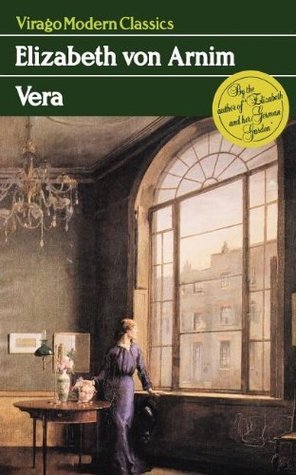
Elizabeth von Arnim, Vera (#BookReview)

After a run of tough reads in 2021, my reading group wanted something gentler, so I suggested that for our “classic” we do a novel by Elizabeth von Arnim, whose works I’ve loved for their pointed wit, delightful humour, and astute commentary on marriage and the relationship between men and women. As is my wont, I nominated one from my TBR shelves, Vera. To my delight, they agreed.

Then, before reading it, I decided to remind myself of von Arnim’s life, so I read Gabrielle Carey’s Only happiness here: In search of Elizabeth von Arnim (my review). Imagine my horror when, two-thirds through, Carey wrote that Vera was her “darkest” novel, “a haunting portrait of psychological tyranny”. What? Too late by then, but I did hope my reading group would, one, forgive me, and, two, not be turned off von Arnim. As it turned out, all those who attended the meeting liked the book and pronounced it “not too dark”. Was I pleased!

Nonetheless, Vera is a dark novel, one that reminded me of a book written four decades later by Elizabeth Harrower, The watch tower (my review). Both novels are about narcissism and coercive control, about older men who marry and tyrannise vulnerable and inexperienced much younger women.

Wuthering Heights by Jane Austen”

When Vera was published, readers and reviewers were, says Carey, confused. How did “playful, witty Elizabeth von Arnim, author of light social comedies” become “a gothic writer of macabre tragedy”? Von Arnim was distressed but cousin Katherine Mansfield’s husband, John Middleton Murry, is reported to have said to her, on the appearance of a negative review in The Times Literary Supplement, “Of course my dear, when the critics are faced with Wuthering Heights by Jane Austen, they don’t know what to say.”

This is an apposite comment for a few reasons – besides its intention to reassure. Firstly, von Arnim pointedly has Lucy, our young wife, read Wuthering Heights even though husband Everard calls it “morbid”. It’s an effective allusion, given the darkness of Brontë’s novel and its focus on obsessive love. However, Murry’s comment also conveys something about the experience of reading this novel, because, while it is dark and distressing, it still bears von Arnim’s Austen-like light touch, and that, I think, is what my reading group appreciated.

By now, if you haven’t read it yourself, you may be wondering why this novel is called Vera when the two protagonists I’ve named are Lucy and Everard? So, let me do a quick plot summary.

The novel begins with 22-year-old Lucy Entwhistle leaning on the front gate of the house in Cornwall that she and her father had taken for the late summer. Her father has just died suddenly and Lucy is in shock. Into view comes another – apparently – grieving person, the mid-forties Everard Wemyss, whose wife Vera had died a week or so ago. Things, though, are not quite as they seem. A shadow hangs over Vera’s death, with a suggestion that it may not have been accidental but a suicide. Lucy, unfortunately, is naive and vulnerable, and despite the best efforts of her wise Aunt Dot, she is swept into marriage, with socially unacceptable haste. After the honeymoon, Everard takes her to his county mansion, “The Willows”, where Vera had died. He makes no attempt to change anything – expecting Lucy to sleep in the same bed Vera did, to occupy Vera’s sitting room, to have breakfast overlooking the flagstones onto which Vera had fallen (or jumped). Kind, head-over-heels-in-love Lucy does her best to justify Everard’s increasingly controlling behaviour but it dawns all too quickly that he expects nothing less than utter servitude . 

And so, Lucy, whose usual state had been one “of affection and confidence”, learns that the “scenes” that she hated could not be avoided “for no care, no caution would for ever be able to watch what she said, or did, or look, or equally important, what she didn’t say, or didn’t do, or didn’t look”. It leaves her “afraid with the most dismal foreboding, that someday after one of them, or in the middle of one of them, her nerve would give out and she would collapse. Collapse deplorably; into just something that howled and whimpered.”

Lucy starts to think kindly of this Vera she’d never met.

“It’s wonderful, wonderful … what love will do” (The doctor)

It’s grim, certainly, but this is Elizabeth von Arnim, so there’s humour – black comedy – here too. There are some truly funny scenes, particularly involving the poor servants for whom Everard has not one ounce of humanity. These servants only stay at “The Willows” because he is in town all week. They can manage his cruelly imperious ways from Friday night to Monday morning, because the wages were higher than any they’d heard of. (They probably had to be!)

So, here is a scene in which Everard confronts the parlourmaid about a missing button on a piano leg cover:

“What do you see?” he asked.
The parlourmaid was reluctant to say. What she saw was piano legs, but she felt that wasn’t the right answer.
“What do you not see?” Wemyss asked, louder.
This was much more difficult, because there were so many things she didn’t see; her parents, for example.
“Are you deaf, woman?” he enquired.
She knew the answer to that, and said it quickly.
“No sir,” she said.

And so it continues, but you get the gist. The scene is indicative of Wemyss’ extreme bullying behaviour, but you can’t help laughing while feeling for the poor parlourmaid.

This black humour is one of the things that kept me reading. Another was von Arnim’s writing. She has wonderful turns of phrase, such as this of Lucy reining in some disturbing thoughts: “Lucy made a violent lunge after her thoughts, and strangled them”.

Von Arnim is also an excellent satirist and ironist. Just look at the doctor’s statement above. He’s surprised and unsure about the marriage to Lucy but, well, look what love can do! Already, however, we are aware that his initial uncertainty is more than valid. One of the points Carey makes in her book is von Arnim’s disappointment in love and marriage. In her experience – including the marriage to Francis Russell which inspired this novel – men change as soon as they are married or, as the heady days of love wane. Vera is at the extreme, but not unbelievable, end of this disappointment.

Finally, there’s Jane Austen. Elizabeth von Arnim – and I’m not the first to say this – owes much to Austen. From my first Von Arnim, Austen’s wit and astute observation of human nature shone through. She nails the way humans think and behave with, sometimes, excruciating accuracy. But von Arnim’s style in Vera is not Austen’s. We don’t have Austen’s omniscient third person voice. Vera is told third person, but von Arnim uses that technique more common to modernists, the interior monologue, with the narrative perspective shifting between the main characters – Lucy, Everard and Lucy’s wonderful Aunt Dot. In fact, a few of the last chapters are with Aunt Dot as she comes head-to-head with Everard and learns just how right she had been to be concerned – but, well, look “what love will do”.

There’s more to discuss in this book. There’s Wemyss’ deeply creepy infantalisation of his 22-year-old wife, calling her “a good little girl” and “my very own baby”. There’s also his insistence that everything can be simplified to one right answer. Initially, the overwhelmed, grieving Lucy finds this comforting but, having grown up in an atmosphere of intellectual enquiry, she starts to not only think that such an attitude might “cut one off from growth” and “shut one in an isolation”, but to doubt “whether it was true that there was only one way looking at a thing” or “that his way was invariably the right way”.

Too soon after her death, Elizabeth von Arnim was relegated to the realms of light romantic comedy, but that denies their value, even when you look at her lighter works. However, when you add Vera to her oeuvre, you have a writer whose work must be seen as relevant now as it ever was.

Elizabeth von Arnim
Vera
London: Virago, 1983 (orig. pub. 1921)
319pp.
ISBN: 9781844082810

George Orwell, How the poor die (#Review)

“It is a sound instinct that warns people to keep out of hospitals if possible, and especially out of the public wards.” George Orwell may have written this in 1946, in his essay, “How the poor die”, but I can’t help thinking that it is still a sound instinct, something only too vividly confirmed by the experience of COVID-19, world-wide. How many people have contracted COVID-19 in hospital, for a start? How many hospitals have been so over-run that they’ve had patients in corridors, in foyers, in ambulances on ramps, in quickly erected marquee wards, not to mention people on the streets waiting to get in. This isn’t the experience of all patients in all hospitals in all countries, but as far as I can tell one or more of these things has happened in every place that COVID-19 has taken hold. It’s not pretty.

But, I digress. Back to Orwell. The essay was inspired by an experience he had in a public ward of a hospital in Paris in 1929, but why leave it to 1946 to publish? According to Wikipedia, the editor of Orwell’s Collected Works, Peter Davison, suggests that it may have been first written between 1931 and 1936, when Orwell was writing about “the unemployed, tramps and beggars”, and that he reworked it over 1940 to 1941. It was submitted to a journal around then but was rejected, “possibly because readers would have been unwilling to read about ‘how the poor die’ at such a time”. In the end, a section [which section, I wonder?] was retyped and it was published in November 1946.

Orwell’s experiences were awful. He had pneumonia, he says, and was placed in a packed ward – “a long, rather low, ill-lit room … with three rows of beds surprisingly close together” – and treated with cupping and a very painful mustard poultice. This, however, was not the worst of it. He describes the impersonal, disrespectful way in which the patients were treated by the doctors, medical students and nurses, the lack of basic cleanliness and care (with patients, not nurses, for example, often getting bedpans for those who couldn’t do it themselves). That this was going to be the sort of story he’d tell is heralded in the second paragraph where he describes having a bath on admission as “a compulsory routine for all newcomers, apparently, just as in prison or the workhouse”.

Anyhow, Orwell then moves on to death. He suggests that the lonely, ignored death of patient numéro 57, would be seen as “an example of a ‘natural’ death, one of the things you pray for in the Litany”. He considers it might be “better to die violently and not too old”, because, for all the horrors of war, he writes, death via a man-made weapon nowhere near “approaches in cruelty some of the commoner diseases”.

At this point, I was wondering about what hospital experiences Orwell had had, but he goes on to mention a Spanish hospital and an English cottage hospital, both of which he experienced in the 1930s. So, when he argues that the English cottage hospital was superior, he is speaking from experience. I wonder, though, whether a French cottage hospital might have been similarly decent? I don’t know.

Orwell next gives a brief history of hospitals through the nineteenth century, describing how they were places where medical students practised on the poor. He focuses on surgery, which, at that time, was “believed to be no more than a peculiarly gruesome form of sadism”. This apparently inspired a nineteenth century genre (though he doesn’t use that term) of horror-literature “connected with doctors and hospitals”. All you horror lovers will be familiar with this, I’m sure. Doctors in these stories had names like Slasher, Carver and Fillgrave. He also mentions Tennyson’s poem “The Children’s Hospital” (1880) as being part of this anti-surgery literature.

I found all this interesting, but wondered what his point was. A page or so before the end, I thought I found a hint, when, after referencing the improvements brought by anaesthetics and disinfectants, he says

Moreover, national health insurance has partly done away with the idea that a working-class patient is a pauper who deserves little consideration.

And yet … he concludes by saying that, despite improvements, hospitals are still not the best place to die, and that “the dread of hospitals probably still survives among the very poor”. It takes a long time, he implies, for past experiences and history to die out in the collective imagination. Not necessarily a bad thing, I think.

Wikipedia tells us that in 1948, two years after this story was published, and one year before Orwell died, Britain’s National Health Service was established “as publicly-funded medical provision for all”. The person behind it was the Minister of Health, Aneurin Bevan, who had once been Orwell’s colleague at the Tribune.

Previous reviews from this book: “Books v. Cigarettes“, “Bookshop memories“, “Confessions of a book reviewer“, “The prevention of literature” and “My country right of left“?

George Orwell
“How the poor die” (orig. 1946, in Now)
in Books v. cigarettes (Great Ideas)
London: Penguin Books, 2008
pp. 50-64
ISBN: 9780141036618

Available online at the Orwell Foundation.

George Orwell, My country right or left (#Review)

Having recently posted on the fourth essay, “The prevention of literature“, in my book of George Orwell essays, I’ve decided to plough on and try to finish it. The next essay is the short, cleverly titled, “My country right or left”. It was first published in Autumn 1940 in Folios of new writing.

It’s a curious little essay. I’m going to introduce it by sharing the Orwell quote used by the Orwell Foundation under its banner: “What I have most wanted to do… is to make political writing into an art”. You can certainly tell from “The prevention of literature” that he sees literature as being necessarily political. That essay was written in 1946, just after World War 2 had ended. “My country right or left” was first published just one year into this war – and is politically-driven.

The essay starts with:

Contrary to popular belief, the past was not more eventful than the present. If it seems so it is because when you look backward things that happened years apart are telescoped together, and because very few of your memories come to you genuinely virgin. It is largely because of the books, films and reminiscences that have come between that the war of 1914-18 is now supposed to have had some tremendous, epic quality that the present one lacks.

I wasn’t sure at all, from this opening, where it was going. Soon, however, it’s clear that war is the driver for the essay which turns out to be about Orwell trying to rationalise, or work through, his socialist beliefs, his previously avowed pacifism, and his patriotism (and thus support for the war).

He writes about being a middle-class school boy during World War 1 and being oblivious to what was happening, particularly to “the true significance” of the big events. He writes:

The Russian Revolution, for instance, made no impression, except on the few whose parents happened to have money invested in Russia. 

I’m sure that’s not unusual! He talks about how pacifism

had set in long before the war ended. To be as slack as you dared on O.T.C. parades, and to take no interest in the war was considered a mark of enlightenment.

Interestingly, however, this pacifism, he says, gradually gave way to a certain nostalgia in those who had not experienced the war! He suggests that this was why his generation was so interested in the Spanish Civil War. He then moves onto World War 2, to the growing awareness in the mid-1930s that it was coming and – this is his main point – his realisation that he “was patriotic at heart” and “would support the war”.

Orwell’s sees this as a no-brainer. He says:

If I had to defend my reasons for supporting the war, I believe I could do so. There is no real alternative between resisting Hitler and surrendering to him, and from a Socialist point of view I should say that it is better to resist; in any case I can see no argument for surrender that does not make nonsense of the Republican resistance in Spain, the Chinese resistance to Japan, etc. etc. 

But, he admits that this support stemmed primarily from “the long drilling in patriotism which the middle classes go through”. The drilling had, he said, “done its work … once England was in a serious jam it would be impossible for me to sabotage”. This patriotism, however, in not incompatible, he argues, with his socialist view that “only revolution can save England”. That “has been obvious for years”. “To be loyal both to Chamberlain’s England and to the England of tomorrow might seem an impossibility”, he writes, but it is, in fact, a fact, because such dual loyalties were happening everyday. Revolution could not happen with Hitler in control, so, Hitler must be resisted.

His final point is to criticise the left-wing intellectuals who do not understand this, though his method is curious. He turns to the idea of “patriotism”, arguing that “patriotism” should not be equated with “conservatism”, because, unlike “conservatism”, “patriotism” can encompass change. Indeed, he proposes that “socialism” can grow out of the emotions that underpin “patriotism”, whether “the boiled rabbits of the Left” like it or not.

So, curiously argued perhaps, but I can imagine the socialist-leaning, middle-class raised, intellectually open Orwell wanting to nut out how to marry his socialist beliefs with the very real threats his imperfect Britain was facing – and coming up with something confronting, but true.

Wikipedia writes that “according to his notes to his literary executor in 1949”, this was one of three essays that he did not want reprinted after his death. I can sort of see why, and I don’t know why the executor didn’t respect this. However, I do like the insight this essay provides into how Orwell thought, and that it shows him to be an independent thinker, rather than a parroter of received truths.

Previous reviews of essays from this book: “Books v. Cigarettes“, “Bookshop memories“, “Confessions of a book reviewer“, and “The prevention of literature“.

George Orwell
“My country right or left” (orig. 1940)
in Books v. cigarettes (Great Ideas)
London: Penguin Books, 2008
pp. 21-41
ISBN: 9780141036618

Available online at the Orwell Foundation.

George Orwell, The prevention of literature (#Review)

One of the reasons a work becomes a classic is its timelessness, its continued relevance to each period in which it is read. This is certainly why many of George Orwell’s works are seen as classics. Scarily, there is nothing more relevant now than his writing on the impact of totalitarianism – of which his 1946 essay, “The prevention of literature”, is one example.

The essay starts by responding to a PEN meeting that was held on the tercentenary of Milton’s Areopagitica. Milton defends, Orwell writes, “the freedom of the press”, and he was concerned that not one of several hundred people present “could point out that the freedom of the press, if it means anything at all, means the freedom to criticise and oppose”.

Orwell continues to say that there are two main threats to “the idea of intellectual liberty”: the theoretical enemies, or proponents of totalitarianism; and, the immediate, practical enemies, bureaucracy and monopoly. He spends little time on this latter, but I’ll mention it because it is as valid now as it was then. He sumarises it as:

the concentration of the press in the hands of a few rich men, the grip of monopoly on radio and the films, and the unwillingness of the public to spend money on books.

I’m not sure how the last of these stands now, but I believe Australians are buying books, and particularly did so during the pandemic. However, his first two points are certainly still valid concerns, eight decades later.

Orwell’s prime focus, however, was the impact of totalitarianism on intellectual freedom, and thus on literature. He spends some time discussing attacks on freedom of thought and the press. He argues that

in the foreground the controversy over freedom of speech and the press is at bottom a controversy over the desirability or otherwise of telling lies. What is really at issue is the right to report contemporary events truthfully, or as truthfully as is consistent with the bias and self deception in which every observer necessarily suffers.

I love this qualification, but I think you can see where this is going in terms of my opening paragraph. I’m not going to write a treatise on this, but Russian-American Masha Gessen wrote a response to it in The New Yorker, in 2018, which is well worth reading for their historical understanding of where Orwell was coming from as well as for their commentary on its relevance to now. Gessen wrote that:

We live in a time when intentional, systematic, destabilizing lying—totalitarian lying for the sake of lying, lying as a way to assert or capture political power—has become the dominant factor in public life in Russia, the United States, Great Britain, and many other countries in the world. When we engage with the lies—and engaging with these lies is unavoidable and even necessary—we forfeit the imagination. But the imagination is where democracy lives. We imagine the present and the past, and then we imagine the future.

What Gessen is referring to here is, first, the point that Orwell makes about totalitarianism’s “disbelief in the very existence of objective truth” – its lack of interest in “truthfulness” – and, second, its quashing of the “imagination” which is fundamental to literature.

Orwell argues that totalitarianism engenders instability, that totalitarians alter their perspectives at a moment’s notice to suit the prevailing situation. Such a society, he writes, “can never permit either the truthful recoding of facts, or the emotional sincerity, that literary creation demands”. You don’t have to be in a totalitarian state for this to happen, he adds. This problem can also occur wherever there is “an enforced orthodoxy – or even two orthodoxies”, where you cannot write sincerely. This point, I think, is worth considering in terms of “rules” about who can write what. I am certainly sympathetic to the concern about people’s stories being appropriated and, more problematically, being over-ridden, but there are many stories and “truths”, and sincere (I like this word) writing about them should be welcomed and respected. We learn about ourselves through the give-and-take, the conversation, that the arts facilitates. It is truly positive that we are now hearing more voices – this is what we must encourage and protect – but it would be dangerous if all these voices were confined to boxes.

Related to this is Orwell’s understanding of literature. He writes that “above a quite low level, literature is an attempt to influence the viewpoint of one’s contemporaries by recording experience”. For him, essentially all literature – particularly “prose literature” – is political in some sense. He says “there is no such thing as a genuinely non-political literature, and least of all in an age like our own, when fears, hatreds, and loyalties of a directly political kind are near the surface of everyone’s consciousness”. It sounds very much like our time.

Finally, after some other fascinating discussions – some of which made sense, some less so to me, such as his discussion of verse – he concludes that “a bought mind is a spoilt mind” and that “the imagination, like certain wild animals, will not breed in captivity”.

“The prevention of literature”, although written at a very particular point in world history, turned out to be more relevant than I would have hoped possible. It raises many questions about the threats we are currently facing to intellectual liberty and freedom of expression, and thus, to “truthfully” reporting, to “sincerely” questioning, what we see happening.

Previous reviews of essays from this book: “Books v. Cigarettes“, “Bookshop memories“, and “Confessions of a book reviewer“.

George Orwell
“The prevention of literature” (orig. 1946)
in Books v. cigarettes (Great Ideas)
London: Penguin Books, 2008
pp. 21-41
ISBN: 9780141036618

Available online at the Orwell Foundation.

Jane Austen, Juvenilia, Volume the third (#Review)

This month my Jane Austen group completed our reading of Jane Austen’s Juvenilia. (Click the links for my thoughts on the first and second volumes.)

Volume the third is a little different to the other two, as it contains just two unfinished works:

  • Evelyn
  • Catharine, or The bower

Both were written in 1792, when she was 16 to 17 years old.

As with the other volumes, the pieces were later transcribed by her into three notebooks, but there is evidence in this volume of other handwriting. There is uncertainty about the provenance, but the thought is that they were transcribed by her nephew James Edward Austen-Leigh and his daughter Anna. Certainly, handwriting analysis suggests it is their hands, but probably not their words.

Evelyn

Evelyn is an absurd, preposterous story about the idyllic town of Evelyn. A young man comes to town and wants to live there, but every house is inhabited, due to “the sweetness of the Situation, & the purity of the Air” not to mention the fact that “neither Misery, Illhealth, or Vice are ever wafted”. Luckily for him, a family there has “a peculiar Generosity of Disposition” and, immediately on meeting him, agree to give him their house and their daughter in marriage. The laugh-out-loud ludicrousness continues from there.

This story has received very little attention, compared with most of the other juvenilia. Shawn Normandin suggests this is partly because it

seems relatively distant from feminist concerns: its protagonist is male, and its female characters lack the refreshing assertiveness that distinguishes many of the juvenilia’s heroines.

Normandin argues, however, that it is worth considering because it “attempts with extreme–and hilarious–rigour to imagine a true gift”. He discusses it in the light of Jacques Derrida’s work Given time. I’m afraid that I didn’t give this time. However, I do like the idea that Evelyn could be considered within the context of Austen’s questioning “the new Enlightenment capitalism”, as Doody suggests, because it is clear that Austen was engaged in the political ideas of her time. Anyhow, Normandin concludes that Evelyn “may be western literature’s keenest examination of the gift because, not in spite of, its absurd frivolity.”

It’s probably worth giving this article more time, but, meanwhile, one thing I did notice about Evelyn is that although the story is extreme, like the earlier juvenilia, the actual writing is a little more controlled, a little less breathless, and injected with a little more setting and description.

Catharine, or The Bower

Not only does Catharine continue – I’m assuming it was written after Evelyn – in this more controlled vein, but even more so, as it moves into the realism for which Austen’s published novels are known. Catharine, or The bower tells the story of a young woman, who, having been orphaned when very young, is being brought up lovingly but severely protectively by “a Maiden Aunt”, who fears the impact on her charge of “Young Men”. Of course, a Young Man appears!

Catharine is a little tricky to read because, while Austen had done some editing as late as 1810/11, there are confusing changes of names. Catharine is variously named Catherine and Kitty in the text, but, even trickier, is that her aunt is sometimes called Mrs Peterson and sometimes Mrs Percival!

Anyhow, for me, and for some others in our group, it contains clear hints of Northanger Abbey (which Austen first wrote around 1798/9) – of Catherine (note the name) Morland (her youthful naïveté tempered by some good sense), of Isabella Thorpe, and of the interest in young men and propriety.

Catharine also contains one of my favourite Austen quotes about reading. Catharine tells her friend Camilla:

but for my own part, if a book is well written, I always find it too short.

Some of the themes that we see in Austen’s later novels are here, including women’s education (the focus on the attainment of accomplishments versus “useful knowledge and Mental Improvement”), indulgent parenting, city versus country, the idea of women and daughters made destitute on the death of a husband/father (as happens to the Dashwoods in Sense and sensibility), thoughtless young men (like Frank Churchill in Emma). Margaret Anne Doody claims that these “early works were important companions to her during the rest of her writing career” which supports my suggestion that these works were used as sources for ideas, like writers use notebooks today.

The style, as I’ve already said, is calmer, and more formal. There is more of the sort of authorial commentary that we see in her later works. Here’s Catharine, having been easily convinced that the young man who had departed without a farewell, did really like her:

She went in high spirits to her Aunt’s apartment, without giving a Moment’s recollection on the vanity of Young Women or the unacountable conduct of Young Men.

Also, Catharine evinces, says Doody, Claudia Johnson’s argument for Austen’s engagement with politics. Certainly, our character Catharine is frustrated by Camilla’s ongoing chatter about fashion and her refusal to talk about anything else – “She found no variety in her conversation; She received no information from her but in fashions”. Catharine, on the other hand, wants to talk about books and politics.

Here is a good time to share some ideas from Doody’s Introduction to the World Classics edition of the juvenilia. She suggests that Austen, following the rejection in the 1800s of Susan (later Northanger Abbey) and First impressions (later Pride and prejudice), tamed her writing to meet the marketplace. Perhaps, but, I see Catharine as already showing some of this taming down.

Doody discusses the different ways the juvenilia can be approached, and the drawbacks to these. For example, she suggests that seeing them as pointers to later writings – which most of us do – results in our missing “their important effects”. I take her point, but only to a degree, because I’m convinced that we can see the later Austen in these early works.

However, I like that she sees the subversiveness of Austen’s early work, something that was not recognised, she says, by critics like David Cecil. GK Chesterton, on the other hand, praised the early works. In 1922, he said

she was original … naturally exuberant … she could have been a buffoon like the Wife of Bath if she chose. This is what gives an infallible force to her irony. This is what gives a stunning weight to her understatements.

Doody concludes that the mature Austen chose to write “the realistic novel of courtship”, because that was the way to publication. She “had to pretend that the world was better and its general fictions more reliable than she knew them to be”. That’s possibly true, but Austen was seen as formally innovative in her writing, which suggests that her published novels were not completely against the grain, even if they were toned down versions of what she privately felt?

References:

  • Doody, Margaret Anne. “Introduction” in Jane Austen’s Catharine and Other Writings, edited by Margaret Anne Doody and Douglas Murray. Oxford, Oxford University Press, 1998.
  • Normandin, Shawn. “Jane Austen’s “Evelyn” and the “Impossibility of the Gift”.” Criticism 60, no. 1 (2018): 27-46. (Accessed via JSTOR)

Jane Austen
“Juvenilia. Volume the third” (ed. R.W. Chapman & Brian Southam)
in The Oxford illustrated Jane Austen. Vol VI, Minor works
London: Oxford University Press, 1969 (rev. ed.)
pp. 179-242
ISBN: 19 254706 2

Jane Austen, Lesley Castle (#Review)

I mentioned in my post on the second volume of Jane Austen’s Juvenilia, that I might do a separate post on one of its longer pieces, Lesley Castle. It’s one of her three longer pieces in that volume, and is often published separately or in other compilations, so warrants some attention, methinks!

Lesley Castle

Lesley Castle is another of Austen’s epistolary pieces. According to Juliet McMaster, writing in Persuasions Online, it represented a “step forward” in epistolary novels because the writers correspond with each other, rather than to someone “off-stage”. In this piece, in fact, there are several correspondents, writing to each other, resulting in different perspectives being offered on some of the main “characters”.

Lesley Castle is essentially an unfinished collection of correspondence between various “friends” who talk mostly of marriage – and of each other. Like many of the Juvenilia pieces, it demonstrates Austen’s love of writing about wickedness. It starts with Margaret writing of her brother’s adulterous wife running off, leaving not only her husband but her 2-year-old child, and of her widowed father, “fluttering about the streets of London, gay, dissipated and thoughtless at the age of 57”. Her correspondent, Charlotte, reports back about her tragedy, the death of her sister’s fiancé from falling off his horse, but she is more interested in food than in her bereaved sister. Insensitively, she describes her distraught sister’s face being “as White as a Whipt syllabub“. Such-self-centredness is rife in Austen – and you can hear her cheeky teenage self laughing as she wrote it!

Interestingly, this story is set largely in Scotland, which Austen never visited, and rarely mentioned in her works. Why Scotland, then? One reason could be to mock the vogue at the time for things Scottish. Margaret claims that she and her sister are happy there:

But tho’ retired from almost all in the World, (for we visit no one but the M’Leods, the M’Kenzies, the M’Phersons, the M’Cartneys, the M’donalds, the M’Kinnons, the M’lellans, the M’Kays, the Macbeths and the Macduffs) we are neither dull not unhappy …

The inclusions of “the Macbeths and Macduffs” is an additional pointer to Austen’s love of nonsense. She used lists frequently in the Juvenilia, often ending them with something extra “silly” to make her point. As I said in my first Juvenilia post, subtlety was to come in her mature works!

The new Lady Lesley, the aforementioned dissipated father’s new wife, is not so taken. She is also a friend of Charlotte’s and writes to her about her new Scottish-based step-daughters:

I wish my dear Charlotte that you could but behold these Scotch giants; I am sure they would frighten you out of your wits. […] Those girls have no music, but Scotch airs, no drawings but Scotch mountains, and no books but Scotch poems–and I hate everything Scotch.

Charlotte, meanwhile, had written to Margaret about Lady Lesley whom she sees as favouring “haunts of Dissipation” (essentially, cities):

Perhaps however if she finds her health impaired by too much amusement, she may acquire fortitude sufficient to undertake a Journey to Scotland in the hope of finding it at least beneficial to her health, if not conducive to her happiness.

The piece continues in this sort of vein with the correspondents often writing at cross-purposes, and, it must be said, focusing more on self-interest than the needs of others.

Of course, Austen readers always look for hints not only of style and themes (here, self-centredness, snobbishness, sensibility, hypocrisy, country versus city, and marriage) but of characters to come. In Lesley Castle, Charlotte reminds us particularly of a few Emma characters: Mr Woodhouse and his focus on food (though his is of a very particular type), Mrs Elton and her self-centred obliviousness to the needs of others, and, even, says Heller (referenced below) of Miss Bates in her garrulousness.

Margaret is a good example of Austen’s deluded characters who see themselves one way, while showing themselves to be very different. Many of the letters open affectionately, but contain or end with cutting remarks. Margaret, for example, writes to Charlotte complaining about being admired by too “many amiable Young Men” and expressing her “Aversion to being so celebrated both in Public, in Private, in Papers, & in Printshops”. She continues:

How often have I wished that I possessed as little personal Beauty as you do; that my figure were as inelegant; my face as unlovely; and my Appearance as unpleasing as yours!

Lesley Castle is probably not for every-one. So, rather than try to convince you to read it, I’ll conclude with Zoë Heller in The Guardian. Writing about Austen’s youthful work, she says that “as always in Austen’s work, recklessness with facts and inattention to detail are the rhetorical clues to a deeper-seated, moral carelessness”. How perceptive.

Jane Austen
“Lesley Castle”
in
“Juvenilia. Volume the second” (ed. R.W. Chapman & Brian Southam)
in The Oxford illustrated Jane Austen. Vol VI, Minor works
London: Oxford University Press, 1969 (revision)
pp. 76-178
ISBN: 19 254706 2