Canberra Writers Festival 2025: 7, All things Austen: Jane Austen anniversary special

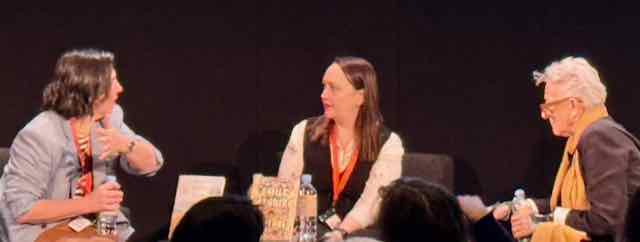
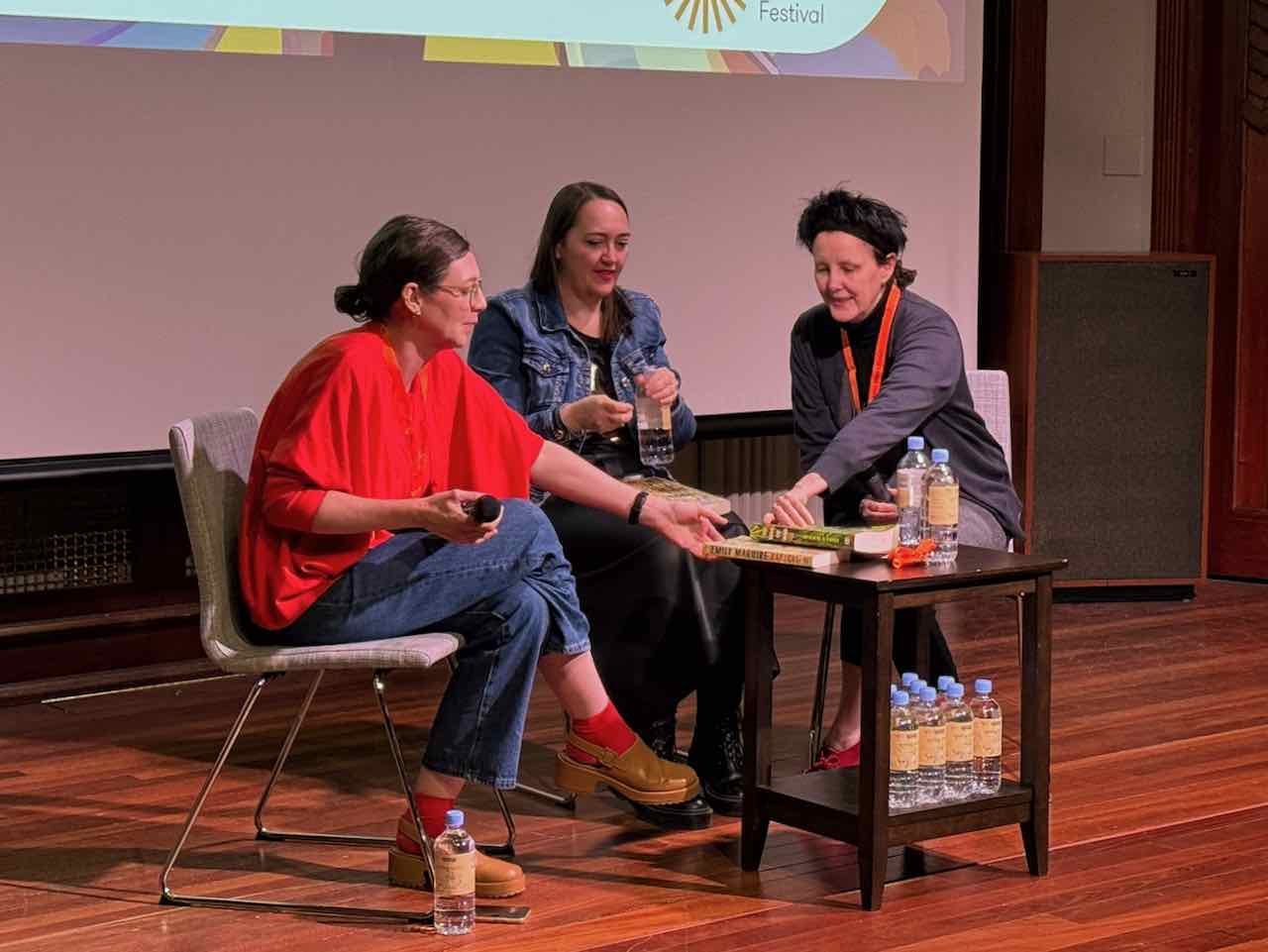
Susannah Fullerton, Devoney Looser and Emily Maguire with Jonty Claypole and Sophie Gee.
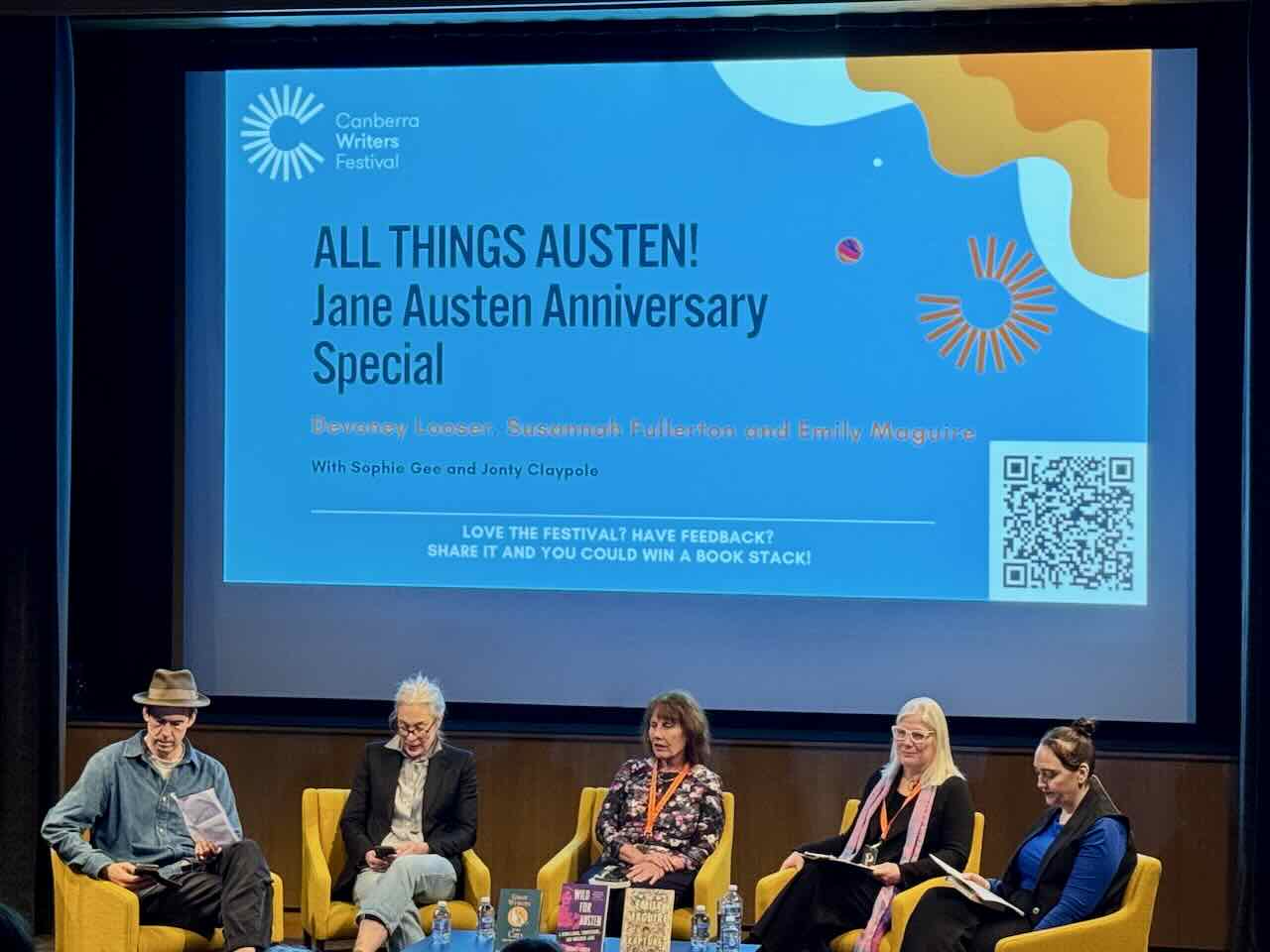
The program described the session as follows:

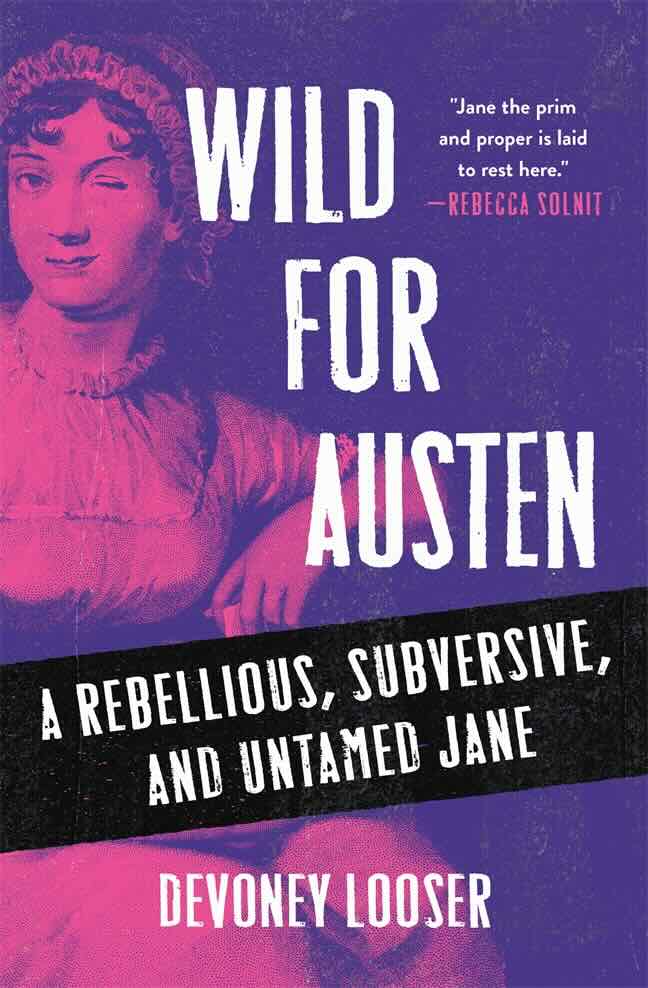
Celebrate all things Austen at this major event! Over 200 years after Jane Austen’s works first appeared, her insights on life, love, and society remain timeless. Join popular Secret Life of Books podcasters Sophie Gee and Jonty Claypole as they bring together an international panel featuring Wild for Austen author Devoney Looser (from the USA), Emily Maguire (Rapture), and Jane Austen Society of Australia president Susannah Fullerton. Join the community, and share your love – because, as Mr. Darcy says, “My feelings will not be repressed!”

Are you tiring of Jane Austen 250th anniversary events? Never fear, the year is nearly over, though her actual birthday is still to come. CWF could not, of course, let the anniversary pass without marking it in some way, and they did it with a five-person panel. The convenors’ aim was to steer away from the Austen of fluffy romances and never-ending rom-com (and other genre) adaptations to the disruptive, subversive, unorthodox Austen that we all believe she was.

The session was being recorded for Sophie and Jonty’s podcast, Secret Life of Books, so it had a particular flavour and style, and there was no Q&A. They started with an interactive game called “Never have I ever” in which the three panelists shared a statement that may or may not have happened to Austen or one of her characters and the audience had to vote true or false. That woke us all up, and then we settled down to the serious business!

The discussion was framed around three themes, in this order:

  • Disruptive Austen
  • Disruptive history
  • Disruptive readings

Disruptive Austen

Unfortunately, I had a technical malfunction with this first question, so I have to rely on memory. Essentially, the panelists were asked to share something they believe reflects disruptive (or subversive) Austen:

Emily chose Lydia from Pride and prejudice, noting that Austen never says the words, but we all know that the reason everyone was upset about Lydia was running off with Wickham was that they were having sex without being married. Once they were married, which of course was orchestrated, all was forgiven, and they went on to live acceptable lives. Lydia’s behaviour put her sister’s chances at risk. Austen shows, said Emily, the hypocrisy of her society.

Devoney and Susannah both read small sections from Austen’s Juvenilia (or teen writings), with Devoney reading the first four chapters of The beautifull Cassandra, and Susannah A letter from a young lady. These pieces exemplify the juvenilia overall. They are absurd, satirical parodies, and contain various scandalous acts, but are well worth reading for all sorts of reasons. (In my post on Volume the First, which includes Cassandra, I quote Looser a couple of times!)

The question put to the panel was, why did she leave this subversive writing? Unfortunately, I didn’t capture the full discussion, but one reason was that the Juvenilia was written to entertain the family, whereas the novels were written for a public audience. There was also discussion about Austen crafting her form. (You can wait for the podcast if you want to hear this and the whole event!)

Disruptive history

Susannah talked about Austen living during tumultuous times. Revolution and war in Europe, and England was unsettled, with changing laws. For example, duelling was illegal but still happening. There is a duel in Sense and sensibility. Austen mentions it briefly, with nothing like the detail a male author would use. But, there is a lot of female verbal duelling in the novel. Also, it is telling, she said, that the person who duels, who engages in illegal behaviour, is one of her most respectable characters, Colonel Brandon. Poaching is mentioned in Mansfield Park by Mr Rushworth, but he has no idea that Henry will poach his wife. In other words, illegal things happen in her novels.

Devoney also talked about the uncertain times. The French Revolution happened as she was coming of age, and then things shifted again in the 1800s. Critics often complain that Austen didn’t deal with war, but Persuasion is full of war, and Austen imagines a wonderful female character in Mrs Croft. However, Devoney said that during the 1800s society was clamping down, there was more censorship. Is that another reason why Austen damped down her Juvenilia? Devoney doesn’t think so. She thinks Austen blew up the form she toyed with in the Juvenilia and then put it together again. Devony saw both political and craft reasons for what Austen did.

Emily returned to her illicit sex argument, and that everyone knew it was happening. She shared the story of Lady Worsley (1758-1818), an Austen contemporary, who had a child that wasn’t her husband’s, was involved in a court case her husband brought against her lover, but ended up inheriting her husband’s estate. There was so much ambiguity in society during Austen’s time.

Jane eclipsed writers of her time, but Jonty and Sophie wanted know if the panel could recommend another writer.

Susannah suggested Fanny Burney. Her novels may not be books you go back to, but she was out there where the action was, unlike Austen, and she underwent (and survived) a mastectomy without anaesthetic. Her letters and diaries are worth reading. Devoney agreed with Susannah that no-one can match Austen, but if we widen our view there are women worth looking at, such as Maria Edgeworth (see my post on her Leonora), the Porter sisters (Jane and Anna Maria), and the Irish novelist Sydney Owenson.

Sophie suggested Mary Wollstonecraft, not only her A vindication of the rights of women but her Letters written in Sweden, Norway, and Denmark. She had child out of wedlock, and died giving birth to Mary Shelley. We don’t know whether Austen read Vindication, but it was in her brother Edward’s library.

The conversation turned to related issues. For example, the first French translator of Pride and prejudice thought Elizabeth was too bold and feisty, so they flattened her.

Disruptive reading

How can Austen be read disruptively? Can she be read against the grain? (Aside: I think my Austen group does this regularly.)

Devoney said she can be read on different levels. Her novels document illicit sex, crime and criminality. She references contemporary issues, such as slavery. There is not enough information about where she stood. Austen was related to people who made money out of slavery, but Mansfield Park was likely named for the man whose judgement played an important role in England’s abolition movement. Not long after Austen’s death, her three brothers were involved in abolitionism. There’s reason to believe that she supported or was moving to supporting that view. Devoney also thinks that Austen did not want to be pinned down, but preferred to leave questions for us to think about. (This feels a modern idea to me, but her novels can support this theory, I think.)

Emily works with teenagers, and loves hearing what they pick up in Austen. They see tiny social signals – a look, a touch of hands – that suggest relationships. Young girls are alert. Looking through the lens of their own culture, they identify, for example, Austen’s “Pick-me” girls, like Miss Bingley.

Susannah spoke to Austen’s feminism, using, for example, Elizabeth’s statement to Lady Catherine that Mr Darcy “is a gentleman, I am a gentleman’s daughter. So far we are equal”. She mentioned Austen’s last poem, “When Winchester races“, written three days before she died. There is a line in it, “But behold me immortal!” Susannah would like to think she knew her own greatness.
And here we ran out of time … so the panel ended with Sophie and Jonty thanking all, and formally ending their podcast.

Not all in my Austen group loved this session, partly because the session was spread rather thin and we didn’t get to hear specifically about Looser’s book. But Mr Gums, my Austen-loving friend Kate, and I enjoyed what was discussed. It was lively, covered some interesting ground, and suited, I think, a broad-based Festival audience.

There will be no Monday Musings this week.

Canberra Writers Festival, 2025
All things Austen
Sunday 26 October 2025, 3-4pm
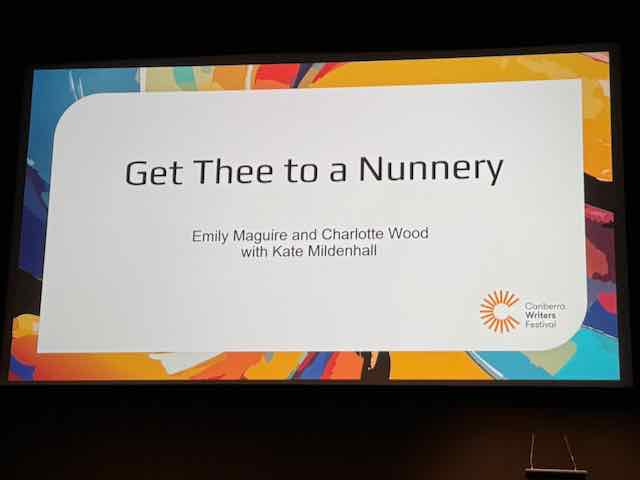
Canberra Writers Festival 2024: 3, Get thee to the nunnery

Emily Maguire and Charlotte Wood with Kate Mildenhall

I chose this session primarily because of Charlotte Wood, given I’d seen Emily Maguire the day before, but her presence was plus, as was having author Kate Mildenhall conduct the conversation. Here is the session’s description in the program:

Emily Maguire and Charlotte Wood have both written novels of cloisters – of monks and nuns and clerical power-broking. What is it about these reclusive places that makes for such potent and irresistible storytelling? In conversation with Kate Mildenhall.

Kate did a lovely acknowledgement of country, starting by saying we were honoured to be on this land. She thanked the Ngunnawal people for their care and recognised that the country always was and always will be theirs. 

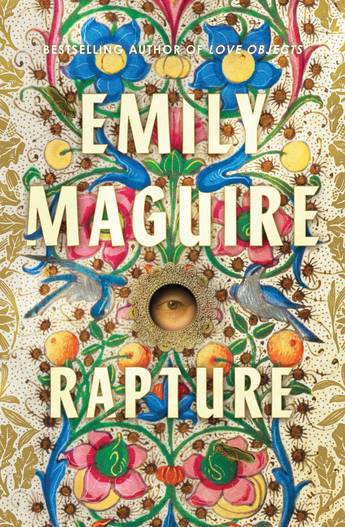
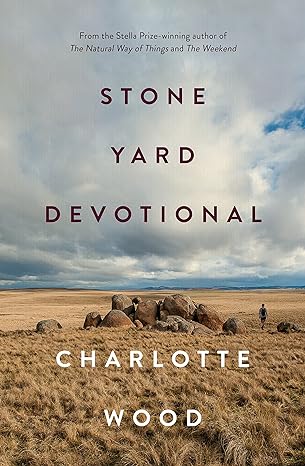
She then said that BeeJay Silcox deserved an A+ for the title of this session “Get thee to the Nunnery”, and did the usual introduction to the authors, Emily Maguire (and Rapture) and Charlotte Wood (and Stone Yard devotional), listing their books and achievements, which includes, of course, Charlotte being listed for this year’s Booker prize.

Kate introduced the conversation by saying that the two books were set more than 1000 years apart but both involved women – one young, one middle-aged – seeking monastic life albeit for different reasons, the former to live a life of the intellect and the latter to retreat from the world. 

On their characters

Emily explained that Agnes starts as child in Mainz, living with a widowed father who makes the shocking-for-the-time decision to keep his daughter. She consequently grows up listening to men. As a child of the era, she believes in God and constantly looks for signs of God.

Charlotte’s character, on the other hand, is unnamed and about Charlotte’s age. Charlotte liked a reader’s description that her character had “unsubscribed from her life”. She had hit an unspecified “wall of despair” so leaves her life as an environmental activist, and goes to a convent to rest. There is also a sort of “homing instinct” because she returns to the region where she had grown up. She initially finds the nuns’ lives embarrassing, all this singing and praying, until she realises that this is the work. After a narrative gap, we turn the page and find she’s been living there for a few years.

On “the heat” or seed for their books

Emily was inspired a decade ago by the legend of a female pope, which was believed through the high Middle Ages. The story thrilled her. It is a great trickster narrative, and she is personally interested in the early church and early Christianity. She started the novel 10 years ago but didn’t have the skills to write it then.

Charlotte can’t remember the beginning, but she was interested in why would a contemporary woman become a Catholic nun. She shared some of her personal background with Catholicism. She had skedaddled from it as a young woman, for all the obvious reasons, but has remained interested. As she thought about her question regarding modern women becoming nuns, she came across the idea of retreat and she got that, the idea of leaving a chaotic world for one of order. Then the pandemic happened. It pulled the rug from under her. The 2019 fires and the pandemic felt like a biblical wave of catastrophe and made her realise that our certainties about our lives were a complete delusion. She had driven through the Monaro – where she had grown up – during pandemic. “Old stuff came up” and “brought unlike things together”, so she invented a nunnery on the Monaro.

On wrestling about faith, religion, church when writing these books

Emily had to buy wholeheartedly into Agnes’ world in which God is the answer to everything, the good and bad. She also plugged into her childhood when Jesus was her best friend. It was easy, but also complicated, to sink into that. She boiled her thinking down to one idea: What does personal faith have to do with organised religion? As Agnes gets entrenched into the life, she starts to question what are her wants versus God’s?

Charlotte doesn’t believe in God but also doesn’t sneer at people who do. She can’t make the step to believe, but dislikes the fundamentalist atheist’s view. Also, as a young person, she loved spectacle of the Catholic Church, the language, rhythm, poetry, metaphor, the imaginative world of Bible, the stories of saints (horror fiction, and crime, interjected Emily!)

On the suffering of women (physical, spiritual, emotional)

Charlotte referred to the church’s idea of the mortification of the flesh. In our you-can-have-everything world, she understands the appeal of asceticism as conveyed in Emily’s novel.

Emily spoke of the saints’ stories involving harm to women’s bodies. But women can also feel that the body is what they have control over, and can accept (or do) harm to it, because it’s the “last site of resistance”. Religion can see women’s bodies as bad, dirty but there are also ideas about cleansing. It’s not either-or.

On deep reading, the idea of “lectio divina” in both works

Charlotte described its use in her book – read, think, read the same again, think, then say what comes up – and Sister Bonaventure’s advice that if you don’t understand something hand it over to God. This idea of handing one’s confusion to God is both disturbing and a relief to her narrator.

Emily said there’s been a long tradition of this practice, which is not Bible study but repetitive reading and thinking. It surprises Agnes. Does this “copying”, as she sees it, this not questioning, mean anything? She is shut down when she tries to argue, but if God made her mind one that could argue isn’t that what she’s supposed to do? Yet, sometimes sitting with ideas offers clarity.

Charlotte suggested that this idea of obedience (versus wanting to argue) is a challenge for the ego in our egotistical world. Emily added that she loved the lectio divina section in Charlotte’s book. She had turned hardline atheist, after her deeply believing youth, but now she is more “I don’t know”.

On research

Charlotte talked about being asked to speak at a conference in Melbourne on “communicating monasticism” run by nuns and priests. She was very nervous, because she didn’t research nuns, didn’t even interview any. It’s all imagined. But the conference attendees were very warm because they saw that she was respectful about their chosen life. And, they asked incredible questions.

Kate commented on the freedom writers of fiction have in this regard, but said there was evidence of extraordinary research in Emily’s book, though it’s held lightly. Emily explained that to make Agnes’ world and choices real she needed to do the research, including very basic levels, such as what is a chair, were there roads, and bigger questions like why didn’t Agnes choose a convent and would she have done this. She talked about how the modesty in monasteries – versus in ordinary Middle Ages life – was a gift to her plot of a woman presenting herself as a man.

On plotting, whether it comes naturally or has to be worked at

For Charlotte the plot alleviates the boredom, provides a change in the rhythm. She wanted quietude, stillness, but also needed an energy spike. She told us about asking a still-life artist friend about how she gets her very still pictures to shimmer. The answer was that she breaks up surface, the texture of paint, making it a bit unstable, though the image remains static. Charlotte said using the diary form gave some narrative movement to her story, but then she included the mouse plague, and the return of the wild-child nun with the bones.

Emily used the journey taken Agnes by Brother Randolph, but also, the legend has built into it the risk of being uncovered. She has learnt that propulsion is in the craft – the language, the sentences. Every sentence must do something. Charlotte added that the voice is likewise critical. If the voice is strong, the reader will follow along. It’s propulsive. That’s the key.

On “devotion” being part of the artistic life

Emily said that you lean into your writing, you just do it (like religion), and constantly check whether you are getting the answer you expected. There is devotion to the art, a communion with the page.

Charlotte agreed saying most writers feel a sense of sacredness when doing their work. For her it’s a vocation, a calling, not a job. (It doesn’t pay like a job!) It taps into something bigger than the self, connects with something outside self. At times you can feel it’s coming through you. Not from God for her, but the unconscious, perhaps. She said that when you leave Catholicism there’s a big hole, a yearning. Writing, for her, fills that.

Q & A

On Rapture not looking down on women, while the character in Stone Yard devotional does: Emily described Agnes as a “pick-me” girl, an imposter. It’s a power move to keep women separate, but Agnes, who separates herself, also feels a loss. Charlotte agreed that her character is an outsider and “judgey”, feels separate. She has ego, but respects Sister Simone, who has rigour, versus the other women whom she sees as embarrassing little girls. Simone picks her as someone who finds obedience hard. Charlotte realises she often writes about women who have disagreements. She’s interested in power dynamics.

On whether Charlotte has a name for her character in her mind: No, partly because the character is partly Charlotte herself. She wanted to risk showing part of her real self (her feelings about her mother, her memories of the town). Also the form of book. Starting as a diary means she’s not going to name herself. Charlotte likes the interiority of that.

On Emily’s relationship with Agnes: yes, she misses her!

There was also a question to Charlotte from a Cooma person whose family had connections with Charlotte’s. They had all read the book, including the men, and found it real. She wanted to know how men had responded. Charlotte said there’d been intense responses, though fewer in number than she’d had for The weekend. People, both men and women, had particularly shared their feelings of grief.

Kate concluded by asking what Charlotte and Emily do when the touring is done, what they retreat to for contemplation: Emily said writing is meditation, it stills the internal chatter, and Charlotte agreed, saying “writing time is home”.

This was another engaging session, topped off by my having a great chat afterwards with Karen Viggers (my posts), who was also in the audience, about our favourite reads of the year.

Canberra Writers Festival, 2024
Get thee to the nunnery
The Arc Theatre, NFSA
Saturday 26 October 2024, 10-11am

Canberra Writers Festival 2024: 2, History repeating

Another preamble

What I didn’t say in my first post on this year’s festival is that the venue where I attended the sessions today is a favourite of mine – and not only because it’s where I spent most of my working career. This year, some strands of the festival are being held at the National Film and Sound Archive, which has two beautiful theatres – the big Arc theatre and the gorgeous, cosy Theatrette. I love the Theatrette, which was carefully refurbished around a decade ago to meet modern needs but retain its heritage art deco style and fittings.

History repeating

I chose this session because it featured two authors I have read, and was about historical fiction which – I’m going to say it – in its more literary form, interests me greatly. The session was described in the program as:

Catherine McKinnon has woven her new book around Robert Oppenheimer and his wife Kitty – the ultimate nuclear family; Emily Maguire’s new novel is an audacious portrait of an audacious woman – a mystery from the Middle Ages. Rebecca Harkins-Cross joins these dauntless storytellers to discuss the narrative lure of historical legends, and what the past can tell us about our present.  

I have read Catherine McKinnon’s clever Storyland (my review) which took us from the early days of the Australian colony far into a dystopian future, and Emily Maguire’s not-quite crime fiction, An isolated incident (my review). (Interestingly, my 2022 post on an essay by Emily on Elizabeth Harrower’s short story, “The fun of the fair”, is among my most popular posts this year.)

Anyhow, Rebecca Harkins-Cross commenced by acknowledging the traditional owners of the land on which we were meeting, then shared a quote from McKinnon’s book:

When Robert [Oppenheimer] works, there is seemingly no intrusion from the past into the present. But this, he knows, is illusory. The past shapes the present, creates the future. If thoughts are a trinity of past, present and future, losing the past means obscuring the future. (p 21)*

On its own, this idea is not especially new or dramatic, but it nicely framed the discussion we were about to have.

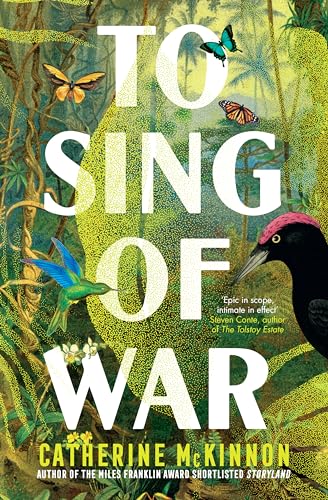
She then went on to briefly summarise Emily Maguire’s and Catherine McKinnon’s new books, Rapture and To sing of war. Rapture is set in the ninth century and tells the story of a young girl who, at the age of 18, to avoid the usual life for a woman as wife or nun, enlists the help of a lovesick Benedictine monk to disguise herself as a man and secure a place at a monastery. This story was inspired by Pope Joan.

To sing of war, on the other hand, is a polyphonic story set in December 1944 – in New Guinea, with a young Australian nurse who meets her first love, Virgil Nicholson; in Los Alamos, with two young physicists Mim Carver and Fred Johnson who join Robert Oppenheimer and his team “to build a weapon that will stop all war”; and in Miyajima, with Hiroko Narushima who helps her husband’s grandmother run a ryokan.

These two novels are set far apart in place and time but they have, said Rebecca, some unexpected parallels – plucky women confronting a patriarchal society, an interest in the natural world and the sustenance it can offer, and the lives of ordinary people.

She then asked her first question which concerned the idea that with every novel writers often say they have to start anew. Is this how Emily and Catherine felt?

Emily said yes, because her previous novels are contemporary, so while she wanted to write this story it was a challenge. Her method was to stop thinking about it as historical fiction but to focus on the main character and her experience – because she is living in her “now” – and then sort out the necessary details.

Catherine also said yes, that with every new project you feel like a baby again. She looked to Pat Barker’s Regeneration trilogy, not because it’s the same subject, but for how Barker made her era feel like now.

This led Rebecca to ask Emily whether any historical fiction writers were a guiding light for her? Hilary Mantel looms large, she said, and she loves her work, but she wanted to write something shorter, tighter, something pacy. She turned most to Angela Carter, not an historical fiction writer, for how she handles this and for the carnality of her language. She also looked to Danielle Dutton’s Margaret the First, not for her language but for her pacing.

On why their topics

Rebecca, who mixed her questions up for the different authors, then asked Catherine why she’d chosen her particular period and those series of events. Catherine was interested in understanding our governments and the decisions they make. Also in what happens to the land we are on. In World War II, a global war, who were we trusting to make decisions? (This reminded me of Rodney Hall in the morning session and his point about what was being hatched that would affect us later.) She was also interested in who became leaders, in the decisions being made by young people, in the bomb and its impact on the land – and more. Her interest is cultural.

Turning then to Emily, Rebecca wanted to know why she’d chosen the story of the female pope which is now accepted as apocryphal. Emily had come across the story due to her interest in early Christianity, and how it had grown from a small desert cult to a big power. She was interested in this story which most people believed from 1200 to 1600 until the Reformation protestants started questioning Roman Catholicism and its promotion of this story.

But, continued Rebecca, why this particular story? It’s a trickster story, said Emily, and she’s interested in Christianity and the idea of belief vs faith. Her Agnes is a genuine believer. Emily is interested in people’s own beliefs regardless of what the institution is telling them, and in Agnes being in a position where she had to either deny her faith or her femaleness.

At this point Emily did a reading, from early on when Agnes recognises the “bloody service [aka breeding] required of girls”. (This reminded me of Jane Austen who, centuries later, shows, in her letters, acute awareness of what motherhood means for women, including death. She was not impressed or keen!) Emily talked about how she got into Agnes’ character, which included trying to read what she would have been reading – things like the lives of saints. Many of these were violent, including that of her namesake, St Agnes, whose body and purity were deemed more important than her life.

On research

Back to Catherine, Rebecca about her research. She did the common thing – too much! And started by including too much in her book. She went to New Guinea, and spoke to people whose families experienced the war, and researched the botany. She went to Japan – to Hiroshima and the Peace Park and Museum, and to Nagasaki. She read and spoke to people there. She went to America, where she followed the Oppenheimers’ life, and then specifically to Los Alamos and Alamogordo, looking at the desert landscape. She wanted to connect the horror of war with the beauty of the landscape.

She then did a reading, from the opening of the novel.

Rebecca asked Emily how she’d approached research as a novelist, that is, how she balanced doing enough research while leaving space for the imagination.

Emily’s challenge was needing to balance the myth and history surrounding her origin story – Pope Joan. She managed it by keeping tightly focused on the character, on what kind of person is she. She also kept in her head Elie Weisel’s comment that there’s a difference between a book that is 200 pages at the beginning and one that starts at 800 pages and ends up at 200. She started with a much longer draft, which had a lot of scaffolding which she gradually tore down as it was no longer needed. When the novel was well along, she gave it to her first reader, and asked whether there were bits that didn’t make sense because she’d taken too much out, and, conversely, if there was information still in that wasn’t needed.

On their writing choices

Asked about finding Agnes’ voice, Emily said she’d started first person, but it felt right when she turned to “deep third person”. She tried to keep the language to words with Germanic and Latin origins, and she was careful about concepts, metaphors, similes. Something can’t feel “electric”, or can’t “evolve”, for example, in the ninth century!

One choosing her polyphonic structure, Catherine said that the polyphonic or braided novel has been around for a long time. Look at Chaucer’s Canterbury tales. Certain stories call for it, like her interest in small lives in a global world. She wanted a young woman in Los Alamos. She wanted to retrieve New Guinean history because at the time the people were not named. And so on. Her challenge was to find a way to keep the reader interested while jumping from story to story.

And, on history

This led to a question about history and revisionism. What had been written out of the history books that they wanted to return? Emily wanted to show that women could be intellectual forces, be present, be visible, that, just like the present, different women could have different interests and ideas. She wanted to imagine these women into being. I appreciated this response because readers often see such individuals is anachronistic, but I’m with Emily. Intellectual women, feminist women, and so on, don’t pop out of thin air. They have just been hidden.

Similarly, Catherine wanted to bring woman to the fore as thinkers, as scientists, etc, not only as nurses. She wanted to tell of ordinary people, to share queer stories. In other words, she likes finding the hidden stories, and searching out what is kept secret (in societies, and personally). What are the inner emotions, drivers, experiences that frame actions?

Q & A

On Catherine’s inspirations for her characters: Mim was based on a few women who were chemists and mathematicians; Fred was based on a real person called Ted Hall, who worried about America having a monopoly on bomb after war.

On negotiating telling one’s story against big presences like Hilary Mantel’s grand, involving historical novels, and Prometheus Unbound (which was adapted into the film Oppenheimer):

  • Catherine didn’t know the film was coming out, but she did use American Prometheus in her research. However, you look for the story you want to tell now – at what is it about now that you want to speak to, at what is it about humans that is interesting to us now. American Prometheus , she felt, was about how people could be picked up and then dropped, but she is interested, for example, in how decisionmaking can be petty. Writers have control over what they see, over their version of it.
  • Emily said that “anxiety of influence” is part of being an author, but she has a set of touchstones – such as Angela Carter for this book – of things you admire but that aren’t doing what you are doing. Other Pope Joan stories, for example, have “truth” agendas, but that wasn’t her interest/angle.

I enjoy hearing historical fiction writers talking about what they do because it’s a challenging but, worthwhile, endeavour. This thoughtful session was capped off by my having a delightful private chat with author Robyn Cadwallader (my posts), who had also been in the audience, about some of her historical fiction writing experiences.

* Thanks to Robyn for providing this quote.

Canberra Writers Festival, 2024
History repeating
Friday 25 October 2024, 12:30-1:30pm

Epiphany in Harrower’s “The fun of the fair”

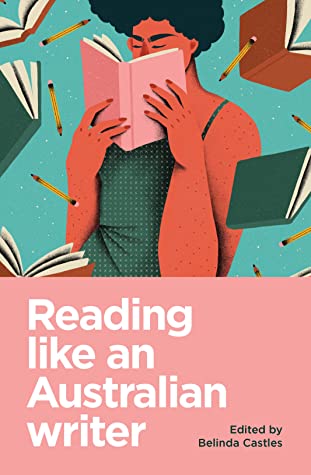
With Bill’s AWW Gen 4 Week still in play, I hoped I’d find something relevant to share from Reading like an Australian writer. And there was, a discussion by novelist Emily Maguire of a short story by Elizabeth Harrower. The short story, as you can probably guess, is titled “The fun of the fair” and it opens Harrower’s collection, A few days in the country, and other stories (my review).

Epiphany

I love short stories, so love that Maguire chose to explore one in Castles’ anthology. Moreover, I was thrilled to see that her angle was the “epiphany”. I have loved that word since I first came across it. It has such a great sound and look.

In her essay, Maguire briefly discusses its meaning. She starts with its religious origins as “a moment of spiritual or divine revelation”, and then says that, in a literary sense, it describes “a different kind of realisation”. She gives examples from To kill a mockingbird, and from Disney’s Frozen and Dumbo. She doesn’t, I was surprised to see, mention the writer though whom I was introduced to the concept, James Joyce – and his novel A portrait of a young man.

So, I did a browser search to see if my memory was correct, and yes, it was, at least according to Wikipedia:

Author James Joyce first borrowed the religious term “Epiphany” and adopted it into a profane literary context in Stephen Hero (1904-1906), an early version of A Portrait of the Artist as a Young Man. In that manuscript, Stephen Daedalus defines epiphany as “a sudden spiritual manifestation, whether in the vulgarity of speech or of gesture or in a memorable phase of the mind itself.” Stephen’s epiphanies are moments of heightened poetic perception in the trivial aspects of everyday Dublin life, non-religious and non-mystical in nature. 

Wikipedia says more, including that “Scholars used Joyce’s term to describe a common feature of the modernist novel, with authors as varied as Virginia Woolf, Marcel Proust, Ezra Pound, and Katherine Mansfield all featuring these sudden moments of vision as an aspect of the contemporary mind”. And then the penny dropped. I suddenly remembered that Bill had decided to pop Harrower, who straddles his Gen 3 and 4 eras, into Gen 3, which we did last year, because she was “a modernist”.

But now, given the origin of “epiphany” is less important to us than its use and relevance to our reading, let’s get back to Maguire and “The fun of the fair”. Maguire makes a couple of points about epiphanies: they are internal, that is, they come as “a shift within the character”, and “they are not the result of logic or conscious reasoning”.

Indeed, Maguire says they can come “seemingly out of the blue”. In the rest of her essay she provides a close reading to show just how our 10-year-old protagonist’s epiphany comes about. I checked my marginalia for the story, and found that I’d written that the fakeness in the sideshow Janet attended had “shocked her into her own truth”. This is essentially true, but Maguire describes the build-up so eloquently in her analysis. She says that young Janet, who, at the end, “ran, not crying now, but brilliant-eyed” is “experiencing an extreme surge of emotion, so she wouldn’t, and doesn’t, stop to articulate this”. But, she has had a feeling, an epiphany, that we readers see as hopeful, as something that will take her forward into the next stage of her life. I thoroughly enjoyed Maguire’s analysis.

Now, I’ll bring this back to our AWW Gen 3 and 4 discussions. Maguire comments near the beginning of her essay, that ‘sometimes the epiphanic moment is obvious because it’s announced outright with a phrase like “She suddenly realised that”…’ However, she continues,

What this kind of signposting gives us in clarity it may take away in verisimilitude. In real life, a person may experience a powerful feeling or thought that, looking back later, they might call an epiphany. But in the moment itself, the person is probably so busy experiencing the insights or revelation that they don’t pause to note its occurrence.

Elizabeth Harrower, being a realist writer, Maguire says, won’t have her characters exclaim they’ve had an epiphany, but will show us, the readers, that something has changed. She certainly does this with Janet. This made me think of Margaret Barbalet’s Blood in the rain (my review), and Jessie’s epiphany at the end. Jessie is older than Janet, and reflects consciously about life, so her epiphany is more signposted, but elegantly so. Near the end, she sees a garden and finds herself “clamped in the cruel snares of memory”. Memory jolted, she comes to a realisation that, like Janet’s, is a hopeful one. It’s not a guaranteed “happy-ever-after” but the novel closes with a vision of a more positive Jessie than she had been for some time. The power of the epiphany!

I am enjoying this anthology.

Emily Maguire
‘”Not crying now, but brilliant-eyed”: Epiphany in Harrower’s “The fun of the fair”‘
in Belinda Castles (ed), Reading like an Australian writer
Sydney: NewSouth, 2021
pp. 233-243
ISBN: 9781742236704

Elizabeth Harrower
“The fun of the fair”
in A few days in the country, and other stories
Melbourne: Text Publishing, 2015
pp. 1-14
ISBN: 9781925240566

Emily Maguire, An isolated incident (#BookReview)

Emily Maguire, An isolated incidentEmily Maguire’s novel, An isolated incident, reminded me of Charlotte Wood’s The natural way of things (my review). Sure, An isolated incident is a crime novel, albeit a genre-bending one, while The natural way of things is a dystopian novel, but both deal with the same fundamental issue, misogyny. Wood exposes the scapegoating of women for their sexuality, while Maguire tackles violence against women (and in doing so, also traverses some of the same ground regarding attitudes to women’s sexuality).

That Maguire is going to confront the issue head-on is implicit in the irony of her title. Twenty-five-year-old Bella’s murder may have happened in an isolated place, and such murders may be rare in her small country town, but as we all know in our media-fuelled times, violence against women is not isolated. Indeed, it happens with terrible frequency. Maguire makes sure that not only do we not forget this, but that we see it in its entirety.

I started by saying that An isolated incident is a genre-bending crime novel. Now, I’m no expert in crime fiction but I know enough to recognise that this book inverts our expectations. In a nod to the genre, the novel is told chronologically with the chapters named by the date, such as “Monday, 6 April”. However, it is not told from the point-of-view of the police or detectives, and it does not focus on the whodunnit aspect, though the investigation does provide an ongoing thread. Instead, the story is told through two voices – the first person voice of Chris, Bella’s grieving big sister, and the third person voice of journalist May who has come to town with her own demons regarding a married lover. This narrative approach enables Maguire to broaden her reach, to focus on things other than catching the criminal, because that is the least relevant – I almost said least important except of course we do want these perpetrators off our streets – part of the story. The most relevant is why does this violence happen, and how does it affect those involved.

Maguire does not, however, provide any answers to these questions. Who knows why it happens? But Maguire does show some of the ways misogyny plays out in everyday life, from the “all piss and wind … harmless” pest who follows women in his car, through men who won’t take no, the men in the pub who know about violent men but do nothing, the schoolboy who enacts his sexual attraction by creating ugly pictures, to actual domestic violence resulting in a wife’s death. It’s powerful because it’s all so real – and true. And, definitely not isolated.

In a telling exchange between May and Chris, May says:

‘… You don’t realise how much most men dislike women. And knowing that, most women can’t relax around men the way you do. Can’t let ourselves show that we like them even if we really do.’

‘Ah. That’s a different thing, though. I like ’em fine, but I’m never relaxed, not fully. It’s like with dogs. All the joy in the world, but once you’ve seen a labrador rip the face off a kid, you can’t ever forget what they’re capable of.’

Late in the novel, Chris ponders this whole issue of the things men do and don’t do, and, heartbreakingly, decides:

… and there are men … who are pure and good of heart and intent and who only want to be our friends and brothers and lovers but we have no way of telling those from the others until it’s too late, and that, perhaps, is the most unbearable thing of all.

Similarly powerful is the way Maguire captures bereaved sister Chris’ grief. Chris is a down-to-earth, small-town barmaid who’s not above taking the odd man home for a little necessary money on the side. Her grief, her loss, is overwhelming, threatening to upset her sanity, and Maguire captures it well, including showing the impact of requiring a relative to identify a body when that body has been horrifically disfigured. The memory of how Bella looked, and imagining how the disfigurement occurred, add significantly to Chris’s grief.

An intriguing thread in the novel concerns the role of writing. Through May being a writer, Maguire explores, initially, the exploitative behaviour of journalists. They sweep into town en masse, intrude on people’s lives, trot out their jargon-laden reports about “close-knit” communities, and when the excitement is over, breeze out again to the next drama. May is one of these, until something about this story, and about Chris, results in her quitting her job to stay.

She explains to her brother why. It’s because she wants her writing to help overcome “the fear, the injustice”, whether by helping to catch the killers or just writing about Bella in a real way rather than simply as a victim. A little later, she tries to convince Chris to talk to her, arguing that her writing may help bring justice. As she argues with Chris, we wonder how much of what she is saying is sincere and how much is desperation to get a story, now that she’s freelance. Maguire writes:

May had started speaking in desperation but as the words came she realised she had once believed all of this about the power of a well-written story. The quaver in her voice told her that maybe she still did.

Hmm, is this Maguire, too, arguing for the value of writing her novel – and for writing in general?

So, did I like the novel? I did enjoy reading it. Maguire’s writing is compelling: it was easy to engage with Chris particularly, and to be interested in journalist May. Maguire’s picture of Strathdee is convincing, and she successfully imbues the story with a complexity that offers no easy answers. If it has a failing, it’s that it’s spread a little thin across the issues – male violence, media intrusion, grief and closure – resulting in an ending that didn’t quite punch an emotional or intellectual point home.

Quite coincidentally, just as I finished this book, Mr Gums and I watched the 2008 miniseries of Sense and sensibility, whose script was written by Andrew Davies. Towards the end comes a line from Marianne, albeit not Austen’s. Having been “burnt” by the dastardly Willoughby, she asks Elinor,  “What do men want from us – perhaps they don’t see us as people but as playthings”. Fortunately, many (most, perhaps) men do see women as people, but these novels, together with books like Anna Krien’s Night games (my review), remind us that we still have a long way to go before there is true equality, true respect, between the sexes.

This book has been reviewed by several of my blogging friends, including Michelle (Adventures in Biography), Bill (The Australian Legend), Lisa (ANZLitLovers), Kate (booksaremyfavouriteandbest), and Kim (Reading Matters). Two didn’t like it much, the others were more positive!

aww2017 badgeEmily Maguire
An isolated incident
Sydney: Picador, 2016
343pp.
ISBN: 9781743538579