Monday musings on Australian literature: Elizabeth Webby (1941-2023)

This might be a first for me, an obituary-style post for an academic/literary scholar rather than for an author. However, this post seemed appropriate as, Elizabeth Webby, who died last month, is someone whom I’ve mentioned several times in my blog due to her having written in areas that are of interest to me. Specifically, these areas were colonial Australian literature and contemporary Australian writers, particularly women writers. I heard about her death from the Association of the Study of Australian Literature, for which she was a founding member and of which she was President from 1988 to 1990.

A significant legacy
Julieanne Lamond, current president of ASAL and co-editor of its online journal, Australian Literary Studies, has posted a tribute to her on ASAL’s website. It is well worth reading, because it outlines her major roles and achievements, which include her being Professor of Australian Literature at the University of Sydney from 1990 to 2007. This involved her “supporting works of scholarly infrastructure including the AustLit Database, numerous scholarly editions, and the online Australian Poetry Library”. I have often used AustLit (albeit much of the content is paywalled) and the Australian Poetry Library (which seems not to be currently available, perhaps due to lack of ongoing support?) Webby also edited the Southerly literary journal for over a decade.

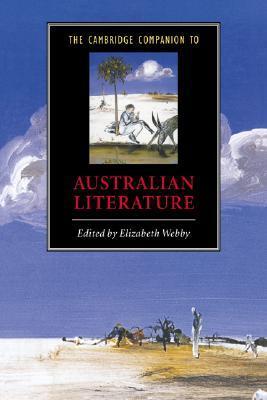
However, my “experience” of Webby has also been more specific. While I had come across her before, I became seriously aware of her through The Cambridge companion to Australian literature (1996), which she edited. This book is a little different from those “companion” style books which contain alphabetic encyclopaedic entries related to their chosen topic. Rather, it comprises essays which provide a partly chronological, partly thematic, survey of Australian literature starting with “Indigenous texts and narratives”. It works, in other words, more like a text book or history than a reference book. I often dip into it, when I am researching specific aspects of Australian literature, and find it sometimes useful sometimes not, depending on how well my particular interest has been covered.

However, I had came across Webby earlier via her essay on colonial poets in Debra Adelaide’s A bright and fiery troop (1988), which is another book of essays on Australian literature, but this one limited to 19th century women writers. It’s another book I often dip into when researching earlier writers.

Both these books, though, were in my ken before I started blogging. Skip a couple of decades to 2018 when I wrote a Monday Musings post titled Literary culture in colonial Australia drawing on Webby’s work. It was fascinating research, both for what she found and for the sorts of sources she used and their varying levels of completeness. Then in 2021, I wrote another Monday Musings on the Irish-Australian poet, Eliza Hamilton Dunlop (1796-1880), using research by Elizabeth Webby and another academic, Anna Johnston. These are just two examples of Webby’s work but, as Lamond of ASAL writes, her research interests spanned the breadth and depth of Australian literature, from early colonial literature, through early 20th century writers like Miles Franklin and Barbara Baynton, and mid-20th century ones like Patrick White, to those more contemporary to her own times like Frank Moorhouse, Elizabeth Harrower and Joan London. She was also, apparently, a loved and respected teacher, academic supervisor and mentor.

All this is important and significant, but another measure of who she was can be found in the funeral notice for her in the Sydney Morning Herald where can be found the following request, “In lieu of floral tributes, please consider a donation to the Indigenous Literary Foundation”. Presumably that was her own request – or from her family based on their knowledge of her passions. Either way, it’s the icing on the cake. Vale, indeed, Elizabeth Webby.

Monday musings on Australian literature: Reading aloud in colonial Australia

At the end of last week’s Monday Musings post on literary culture in colonial Australia, I commented that author Elizabeth Webby had also discussed the practice of reading aloud, and that I might do a future post on that. Well, not only might I, but I’ve decided to do it this week because I was fascinated. (Just to recap, last week’s post drew from Webby’s lecture titled “Reading in colonial Australia”, which is available online). And, would you believe, February 1 is World Read Aloud Day!

So, I’ll start briefly with Webby’s discussion and then move on to some of my own research, from Trove of course. She starts by saying that reading aloud remained popular throughout the nineteenth century alongside a rise in silent, individual reading. She writes:

Those worried about the excessive reading of fiction by women and young people were particularly keen to encourage the domestic practice of reading aloud. A father reading aloud to his family in the evening formed an ideal Victorian domestic scene: he could monitor what was being consumed by his wife, sons and daughters; they had the advantage of his company and attention.

(There’s that gender issue again!) She shares information gleaned from diaries. One mother, for example, would not allow Shakespeare while another was very happy to read from Dumas’ 8-volume Celebrated crimes (1839-1841). Webby says this “reminds us that individual readers have always been free to set their own rules about what should be read, ignoring the more restrictive norms of their times.” She also discusses the encouragement of reading aloud for women (“as an alternative to idle gossip as they sewed or carried out other more sedentary household jobs”) and bush-workers (“as a more profitable alternative to gambling and yarning”), and the ongoing concern about what was read (but I discussed some of that last week.)

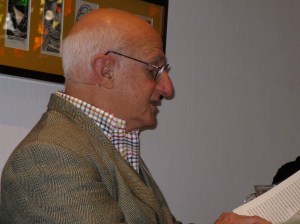
A modern author reading: Malouf reading from Ransom, NLA, 16/8/2009

Webby then describes the rise of “penny reading” in the second half of the nineteenth century. This is the practice of attending public readings for the cost of a penny. While Dickens never toured Australia, as he had Britain and the USA, readings from his books were popular at these penny readings, which were apparently popular in Victoria. There were also “philanthropic” souls who read, free-of-charge, to hospital patients and prison inmates. Webby suggests that regarding readings for prisoners, the authorities would have seen them as having value as “cheap entertainment combined with a controlled use of fiction as a means of moral reformation”. There was, she says, a strong continuing belief in “the humanising value of literature”.

What I found in Trove*

Having read Webby’s discussion, I was keen to see if the topic was discussed in newspapers of the time – and my, was it! It seemed particularly popular in papers of the later nineteenth century, with much of the commentary I found coming from the 1870s. It was generally earnest, and had two main threads: the importance of reading aloud well; and the value of reading aloud (along with a concern that people weren’t doing enough of it).

A long article by Sarah Ellis in the Sydney Morning Herald on 21 January 1870 starts with:

Amongst the accomplishments which belong to education of the highest order, reading aloud ought certainly to hold a prominent place – that is, the art of reading aloud so as to give the full meaning of what is read, and at the same time to charm the ear of those who listen.

She then discusses how reading aloud is so often unsatisfactory, how people adopt a voice that doesn’t change or adapt to the meaning of what they are reading. She suggests that one of the causes is the reduction of reading aloud in the home. Poor education is another cause but an article in the Mount Alexander Mail (25 October 1878) reports on a lecture by Mr T.P. Hill, a well-known elocutionist of the time, who discusses the finding of school inspectors “that this neglected, but important branch of elementary education was moving forward in the right direction”. Unfortunately, though, “in a few districts … complaints were made of the monotonous and sing-song manner in which the voice was allowed to degenerate”.

My final example regarding the issue of reading aloud well, raises again the gender issue. It comes from the Avoca Mail (26 June 1877):

It is much to be regretted that the charming accomplishment of reading aloud is not more cultivated by ladies. … To do this well, a certain amount of study is requisite. First of all, it is necessary to acquire a habit of sustaining the voice; then one must learn to modulate the tones, to attend to the punctuation, and, above all, the reader must have a fair appreciation of the author’s meaning. This involves a study of English literature, which is so sadly needed by most young ladies who are supposed to have a finished education.

Oh dear, those “young ladies”, eh? Gender also comes up in the aforementioned Sarah Ellis’s article, and here I shift into the issue of why people should read aloud. Reading aloud, she says, can “increase the number of our innocent enjoyments”, “make the social hours of life glide pleasantly along”, and “prevent them from becoming vapid or wearisome”. She then separately identifies the value for women and men:

Amongst women, this accomplishment might go far to help them in filling their homes with interest; amongst men, it would help them on all public occasions, when called upon to speak or read.

Oh well, that was then – a woman’s place was in the home. We wouldn’t expect anything different, would we? I should add that Ellis spends some time discussing the best book to read aloud, the Bible, which Webby says would have been the “most-read” book in colonial Australia.

So, reading aloud was seen as good for family togetherness, for entertainment, for education, and for usefulness in the outside world. Indeed, in terms of the latter, the writer in the Ovens and Murray Advertiser (13 October 1877), reporting on another lecture by Mr T.P. Hill, describes it as “an art which at the Bar might save lives, which in the Senate might save nations, and which in the Pulpit might save souls”. Meanwhile, in terms of the former more recreational value, Ellis overlays a moral value, describing it as a “counter charm of a social and intelligent nature to take the place of pleasures which are purely sensational”!

I will end, though, with another reason which you mightn’t have seen coming. It’s from the Queenslander (6 February 1897):

The late Sir Henry Holland says in his ‘”Medical Notes” that persons who have a tendency to pulmonary disease should methodically practice “those actions of the body through which the chest is in part filled or emptied of air.” He advises that those whose chests are weak should read aloud at stated intervals …

World Read Aloud Day 2018See, reading aloud really is good for you!

Do you have any experience of reading aloud as an adult, either reading or listening (besides, that is, reading to children), and if so, I’d love to hear about it? Audiobooks? Live reading?

* Note that when I say Trove, I mean its digitised newspapers subset, because Trove, in fact, currently covers over 560 million “Australian and online resources: books, images, historic newspapers, maps, music, archives and more”. Note, too, that many of the articles I found appeared in many newspapers around the country.

Monday musings on Australian literature: Literary culture in colonial Australia

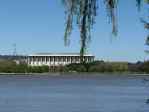
National Library of Australia
National Library of Australia, from the other side of Lake Burley Griffin

Bill of The Australian Legend’s AWW Gen 1 Week, which has just finished, focused on the authors and the books they wrote about colonial Australia. However, what about the readers? I’ve been planning to write a post on literary culture in colonial Australia for some time, and today seems to be just the right time! My post draws heavily on retired academic Elizabeth Webby’s 2011 John Alexander Ferguson Memorial Lecture titled “Reading in colonial Australia” which was published in the Journal of the Royal Australian Historical Society (vol. 97, pt. 2) in December 2011 (available online). Webby starts by recognising the work done by lawyer-book collector-bibliographer Ferguson whose much-researched collection is at the National Library of Australia and who is commemorated there by the Ferguson Room.

It’s a fascinating lecture, for the content and for the discussion of the information sources Webby used to discover who read what in colonial Australia (1788 to 1901). (I’m always interested in the research process.) There are letters, of course, from colonists back to home, asking for books. Then there are advertisements listing personal libraries for sale. Early explorer George Bass’s library for example contained mostly books on medicine, science, law, theology plus classical authors like Horace, Virgil and Homer. A library typical of “gentlemen’s libraries of the period”. It contained very little fiction.

Another explorer, a couple of decades later, was John Oxley. His library was sold in 1828, and, Webby writes, it

displayed a decidedly stronger taste for fiction, indicating the shift towards novels as the main form of recreational reading which began in this period, although still deplored by many. When John Oxley’s library was sold by auction in Sydney in August 1828 about half of the 330 or so lots listed in the catalogue were works of fiction. They included such recent publications as Sir Walter Scott’s Tales of the Crusaders (1825), the American novelist Fenimore Cooper’s The Prairie (1827), as well as Gothic thrillers like Anne Radcliffe’s Gaston de Blondeville (1826) and Mary Shelley’s early science fiction tale Last Man (1826). Oxley clearly was a regular purchaser of the latest English books.

Later in the article, discussing attitudes to women readers, she refers to the sale of “a lady’s library” in 1833. While she didn’t see a list, it was described as comprising ‘upwards of six hundred volumes, chiefly standard Works, by the most esteemed ancient and modern authors, forming altogether a collection of English Literature rarely to be met with out of Europe'”. She uses this to counter the belief that women only read fiction!

Another fascinating source of information about what people were reading are advertisements for missing books. Fascinating. Besides providing information about what people had in their libraries, they also tell us how precious books were. In some of the ads she found, people threatened legal action or offered rewards. So, of course, I went to Trove to see what I could find. I found some of those Webby describes, but I also found one from June 1830 that seemed to be about recalling books that had been lent out and were now needed back for an estate auction. The list is fairly long, and looks like one of those aforesaid typical “gentlemen’s collections”. It has classics, sermons, theological works, essays, dictionaries and so on, but very little fiction, except for Sir Walter Scott, who’ll appear again later! The list ends with the statement that “The Public are also informed, that this extensive and valuable Library will in a short time be sold by Public Auction, of which due notice will be given. As Mr. HOWE’S Library is well known, it would be useless to make further comments at this time.” Clearly they expected the books to be returned, but I wonder what sort of comments it was useless to make?

Webby also explores lending libraries. They varied greatly. Some were set up by churches, and focused on morality and religion, with “frivolous” or “pernicious” publications being excluded. Some were created for “the colonial elite”, such as the Hobart Town Book Society and Sydney’s Australian Subscription Library. And some were set up to provide reading matter for working people. These were the Mechanics’ Institutes and Schools of Arts whose buildings are still familiar sights in Australian country towns. The short-lived Hobart Town Mechanics Institute was founded in 1827, and Sydney had established its Sydney Mechanics’ School of Arts in 1833. By 1834, it had “upwards of five hundred volumes … consisting of works on science, history and general literature, chiefly contributed by the liberal donations and loans of members and friends.” Indeed, Webby makes several references to people being asked to donate books from their own libraries to, for example, make them available to “the enquiring mechanic, who can find time to dive into their contents.” In truth, though, mechanics did not comprise the main memberships of these organisations.

And here is a good point to discuss what Webby calls the fiction debate. Those of you interested in the history of reading will know that novels were disparaged for a long time. I’ve written before about Jane Austen’s famous defence of the novel in Northanger Abbey, in which she described them as works

in which the greatest powers of the mind are displayed, in which the most thorough knowledge of human nature, the happiest delineation of its varieties, the liveliest effusions of wit and humour, are conveyed to the world in the best–chosen language.

Northanger Abbey was published in 1817 so Austen’s defence is contemporaneous with the period we are discussing. Webby quotes James Ross, editor of the Hobart Town Courier, as supporting novel-reading in 1831. He defended the so-called “frivolous” reading tastes of members, arguing that recreational reading was valid after the “toil of a long day in some official, public or private arduous operation.” He also argued that reading English novels was, as Webby puts it, “almost a patriotic duty”, because these books

keep alive in no small degree that amor patriae, that attachment to our mother country and that familiarity with the manners and relish for the habits of our countrymen which is at all times so desirable.

Sir Walter Scott, Ivanhoe
Ivanhoe, first published 1819.

Webby identifies some of the fiction that was being read – including Jane Austen, Charles Dickens and Bulwer Lytton – but the author who pops up most frequently in her survey of the early to mid-nineteenth century is Sir Walter Scott. The first book order from the 1826-established Australian Subscription Library, for example, included only one novelist, Scott.

And the 1836 report of the Sydney Mechanics’ School of Arts defended the inclusion of novels in its library, with the argument, you’ll see, that is still used to defend, for example, the reading of comics. The report says:

… it ought to be remembered, that a taste for reading has to be formed before works of a more philosophical character will be relished or appreciated, and that if any book is likely to accomplish this more speedily than another, it is the works of Scott–containing, as they do, a vast fund of historical information, mixed up, in an agreeable shape, with the manners and customs of different periods.

Webby discusses much more, including the role of periodicals and newspapers in reading culture. She also writes about “reading aloud”, but I might save that for another post.

It’s clear from Webby’s lecture that the information available was scattered and incomplete. She praises Evandale Subscription Library in Tasmania which “stands out for the completeness of its records”. Please note this any of you who are currently involved in organisations, such as reading groups: keep your records! One day, some researcher will want them!