 First off, no, I didn’t attend this year’s GenreCon which took place this weekend past in Brisbane, Queensland. However, I did see many of the tweets that emanated from attendees (using hashtag #GCoz) and found many of them extending beyond the genre focus. So, I thought I’d pass some on.
Not all tweeters identified the sessions their tweet/s related to, so I’m going to “curate” them under issues that interest me! (I will name the tweeter in brackets after their tweet. Note that the quote marks are for the tweeters’ words, which mostly comprise their summary of what they heard rather than a verbatim quote.)
But, before we get started, I’ll share my favourite tweet. It quotes Garth Nix on being an introvert at conferences:
“I just pretend to be the kind of person who likes to talk to people”. (Aiki Flinthart)
For writers
GenreCon is clearly geared to writers more than readers. Consequently the program included sessions like Writing Through Fear with Anna Campbell and Top Ten Tricks and Traps of Publishing Contracts with Alex Adsett, and discussion panels like What Every Writer Ought to Know about their Book Cover.
Tweeters shared advice on how to work within a “genre”, on the need to “know” your genre and its practitioners, and on what to do when your book is published, but I’ll leave those. You can check the hashtag yourself if you are interested. For readers here I’ve chosen other topics …
Americanising text
This is a controversial issue I’ve discussed with Lisa (ANZLitLovers) recently on her blog when she reported on the AALITRA Symposium. I’m not sure who originated the comment, I’m sharing here, but it makes a point: “Nothing throws someone out of a story like a misplaced thong” (Lynette Haines). Or a rubber! I guess tolerance for “Americanisation” depends on the audience you want to attract.
Book covers
Now this is another issue that can get hackles raised, though this didn’t come through in the GenreCon tweets. However, the point made by Escape Publishing/Harlequin publisher, Kate Cuthbert, is interesting:
“Covers are not about the image, they’re about the emotions they evoke” (Jess Irwin).
Cuthbert also apparently said that “Big W accounts for about 40% of Australian book sales, so if they come back and say they won’t stock a book with that cover, you change the cover” (Josh Melican).
And, most worryingly, Cuthbert said that “Genre fiction has a representational problem which needs to be addressed. If you put a non-white character on the cover, it doesn’t sell as well. That’s a financial reality, but it’s shit. @katydidinoz [ie Kate Cuthbert] has refused to white-wash covers in the past” (Josh Melican).
Awards
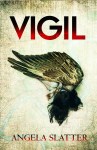 Author Angela Slatter discussed awards in her plenary address, which she has now posted on her blog. One tweeter wrote: “The talented @AngelaSlatter discusses the ‘award-effect’ (and reminds us that everyone’s trajectory is different and your journey will not be the same” (Tehani Croft). Croft shared Slatter’s slide:
- Winning an award does NOT make you a better writer
- Losing an award does NOT make you a worse writer
- Awards can be useful but your career will NOT die without them
And, just to make sure the point was clear, Slatter also said “Awards garner media attention … on slow news days” (Tansy Rayner Roberts).
The market
A few other points were tweeted about the market besides the Big W figure above. Most came from the literary agent Alex Adsett. She commented on “the energy put into international rights sales by smaller publishers like Text, particularly compared to less active and larger publishers” (PopFic Doctors). I’m certainly aware through overseas bloggers like Kim (Reading Matters) and Guy (His Futile Preoccupations) that Text is active in promoting their books in England and the USA. They are an inspiring publisher.
Adsett also discussed audiobooks, advising that “Authors retaining audiobook rights is becoming a dealbreaker for big publishers over the last 18 months because of how big audiobooks are becoming” (Claire Parnell). PopFic Doctors tweeted that “audiobooks now account for 1% of the market, which is BIG”. One per cent doesn’t sound big to me, but seems it is.
And finally, also from Adsett, is a comment about genre identification: “Many publishers won’t take horror so Alex will pitch as dark fantasy; can genre be spun as literary?” (Rivqa Rafael). Adsett apparently also said that in Australia, writers don’t need an agent, unlike in the USA, but I wonder if authors, on their own, would all know these finer nuances of pitching? As for Rafael’s question regarding whether “genre can be spun as literary”, I’d say yes, but therein hangs a tale for another day I think.
On writing
There were many sessions on the craft of writing, such as writing fight scenes (for women), developing characters, and writing sex and sexuality in the twenty-first century.
American author Delilah Dawson spoke about writing characters: “Delilah Dawson’s cheat sheet of quick ‘charisma points’ for characters: loyalty, wry humour, nice to kids, kind to animals, artistic in some way” (Jess Irwin) and “Delilah Dawson finds out what your characters most want and what they fear most and this feeds into the climax” (Leife Shallcross).
Fiji-born New Zealand writer Nalini Singh’s comment on how to handle hard times in writing was tweeted by many who loved her idea of “squirrels”: “I’m a big fan of having ‘play projects’ aka ‘squirrels’ (you’re working on a hard part in your main project & ‘ooh, squirrel!’) … having these side projects gets you off the treadmill … see where the squirrel leads you … keep it secret to avoid stress.” (Angela Meyer)
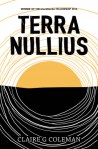 Another writer who was frequently tweeted was debut indigenous Australian author, Claire G Coleman (Terra nullius). She clearly had a fresh way of saying things, such as this on inspiration: “A lightning bolt of inspiration is when something in one part of your brain collides with something in another part of your brain and they have babies (Tehani Croft). And this on editing: “Nobody finishes editing. Someone just takes it off you one day” (Narrelle Harris). I can relate to that! I often fiddle with my blog posts long after they’ve been published. Author Emma Viskic also entertained with her comment on editing: “I did kill them, or as I like to say: sent them to the farm to play with other happy words” (Elizabeth McKewin). Love it!
And finally, I liked this one on rules, from the aforementioned Adsett:
“if you’re good enough you can break the rules … but you have to show you know what the rules are” (Tansy Rayner Roberts)
On diversity
Several tweets discussed the issue of diversity. It was clearly a big issue at the conference. There were discussions about Romance fiction, whose popularity is increasing, including more diverse characters. Romance writer Jodi McAlister said that “we’re seeing many more narratives for queer characters beyond the coming out narrative. Queer characters are getting love stories as well as stories about dragons and adventures where it’s not about the character being queer, it’s just who they are” (Claire Parnell). In other words, “You shouldn’t need a reason to include diverse characters…” (Daniel de Lorne)
McAlister also said very pointedly that “Those seen as worthy of love in our love stories tells a lot about what our culture values” (Kali Napier). That’s also worth its own post.
Finally, the issue of how to write these diverse characters came up – relating to that issue we’ve discussed here many times regarding white writers writing black characters. Adsett tweeted Claire G. Coleman’s advice: “Don’t write any diverse character you haven’t had a coffee with, aren’t friends with”.
Creative Native, not an attendee I think, didn’t much like this advice, tweeting: “Plenty of people have ‘had a coffee’ or were friends w[ith] Native, disabled, Bipolar, Autistic, Fat me yet still managed to spout harmful nonsense.” Fair enough. It takes more than one coffee, but I suspect Coleman wasn’t being quite that simple. However, Creative Native did give good advice to writers: “Get a Sensitivity Reader w[ith] the marginalised identity/identites you’re writing about – & deal honestly w[ith] criticism (!!!)”. Which is exactly the approach I’ve come to think best …
Phew, this ended up being way longer than I planned. Hopefully my headings and highlighting have enabled you to pick out what interests you without having to read it all!
Did anything interest you?




 Whispering Gums