Jan Wallace Dickinson, The sweet hills of Florence (#BookReview)

Jan Wallace Dickinson, The sweet hills of FlorenceThere are several reasons why I enjoyed Jan Wallace Dickinson’s historical novel The sweet hills of Florence, the first being Florence itself. I fell in love with Italy in Florence. Brunelleschi’s dome, Giotto’s belltower, the Uffizi and all the other gorgeous places of art and architecture, not to mention the food, combined to capture my heart. It was the first foreign place to do so, and so remains today a special memory. Dickinson, who has apparently lived and worked in Italy for many years, clearly loves Florence too, because it is described in this book with such love.

However, that’s not the only reason for liking this book. Another is the history. I’ve read many, many novels set during the second world war, but not many set in Italy, let alone in Florence. When I visited Florence way back in 1980, it was the art that drew me. I knew very little of its war history, and I don’t recollect its being much on display. Dickinson, though, tells a fascinating story, one that captures both the horror and chaos, the brutality and bravery of war, and particularly of Italy’s war, well.

In some ways, the book could be described as historical romance, except that it doesn’t fit the bodice-ripper formula that I, of admittedly limited experience, see as the definition of this historical fiction sub-genre. What I’m saying in other words, is that in this book, although the love story underpins the plot, it doesn’t drive it in a suspenseful way. This enables Dickinson to explore the main relationship in a more subtle, dare I say, more nuanced way – and to focus on other themes as well.

The story, then, concerns two cousins, Enrico and Annabelle, who are in their late teens to early twenties, during the period of war – 1941 to 1945 – covered by the book. It’s clear from the beginning that Annabelle loves Enrico, and it doesn’t take long before we realise her love is reciprocated. The story follows their lives as partisans, with the Giustizia e Libertà movement within the Italian resistance movement. It’s a story of love, loyalty and camaraderie, but also of courage, deprivation, brutality, and chaos. Dickinson writes this convincingly, though I must say that all the names and places sometimes made my head spin! Here are a couple of examples of her descriptions, describing the German occupation of Florence:

There was no shortage of good citizens ready to settle a score by denouncing someone to Major Charity. The war lifted a rock and from under it, unimaginable creatures emerged, creatures who could not survive in the sunlight, who could thrive only in the dank shady corners of a civil war.

AND

This was the real Florence, the Florence of sobbing and wailing and tearing of hair, not the painted and decorated Florence put on show by the authorities to distract the popular, like the dance of a painted harlot before an audience of terminally ill patients in a madhouse.

Another aspect of the book which made it interesting reading is its structure. The novel is divided into 6 parts, and flips between war-time and the 2000s (up to 2008). The main war action is told chronologically through the middle parts of the novel, while at the beginning and end, we alternate somewhat between past and present. Again, this structure forces us to focus on the characters and their development, on the ideas and themes, rather than the plot.

There’s also paralleling of Annabelle’s love for Enrico, with Clara Petacci’s love for Benito Mussolini. I enjoyed this too. Dickinson spends some time describing Clara and Ben’s relationship. In her Acknowledgements she describes them as “fictionalised characters constructed from my interpretation of diaries, reports and histories.” Clara and Ben’s story serves a few purposes in the novel besides being a focus for Annabelle’s thinking about love. It humanises the two characters, for a start; it encourages us to consider the complexities of their relationship; and it makes the manner of their deaths all the more shocking.

We have no choice, do we?

In the end though, the ideas and themes were what I most enjoyed about the book, particularly those regarding the brutality of war and the lessons learnt or, to be more precise, not learnt. Dickinson makes very clear several times through the novel that there are no saints in war – and that Enrico and Annabelle themselves were capable not only of “justifiable” killing but of more brutal acts:

We cross a line. We decide killing os justified. We have no choice, do we? After that, nothing is taboo. Nothing is unthinkable. We are Freedom Fighters. We are heroes. We have rights on our side. Then wars end. We sleep and try to forget. But beneath it all we are still killers. We stand on the other side of the line. (from Annabelle’s diary)

Dickinson’s main theme, though, concerns the lessons of war. Annabelle’s reaction on the brutal death of Mussolini and Clara, and the subsequent way the bodies were treated, was

I wept for what we have become. Have we learned nothing?

Then, late in the novel, she makes a similar comment, quoting a partisan colleague who’d said:

“Italians … do not learn from the past. They live in the continuous present.”

There were times when I wondered about the reason for the epic nature of this novel, for its spanning so many decades and for, something I haven’t mentioned before, also spanning two countries, Italy and Australia to which Enrico went after the war. Dickinson, through Annabelle and her beloved niece Delia, consider the differences between Italy and Australia, seeing, for example, the former as kinder and the latter as more free. I’m not sure I agreed with all their conclusions, and I’m not sure what these discussions added to the novel, but …

… what did add to the novel were the references to the leering Berlusconi’s re-election in 2008 despite his increasingly fascist tendencies. Seen by a horrified Delia and Annabelle as “a leap back into the past”, it leaves us with, indeed, the question, “have we learned nothing?” The sweet hills of Florence, then, is an engrossing read if you like a strong story about “real” characters, that asks the important questions.

Lisa (ANZLitLovers) also enjoyed this book – I promise I hadn’t read her review when I wrote my introduction, which is suspiciously similar!! I decided not to change it.

AWW Badge 2018Jan Wallace Dickinson
The sweet hills of Florence
Melbourne: Hybrid Publishers, 2018
401pp.
ISBN: 9781925272840

Review copy courtesy Hybrid Publishers.
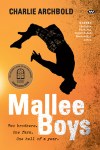
Charlie Archbold, Mallee boys (#BookReview)

Charlie Archbold, Mallee boysReading synchronicities strike again. Both my last read, John Clanchy’s Sisters, and this one, Charlie Archbold’s Mallee boys, are family stories with a guilt about the death of a family member at their centre. Both, too, are set in non-urban areas, Clanchy’s in coastal New South Wales and Archbold’s in the dry Mallee region of western Victoria. Here, though, the similarities end. Clanchy’s book chronicles a month in the lives of three late-middle-aged sisters, and the person who died was their four-year-old baby brother – a long time ago. Also, Clanchy is a male writer, writing about women, in third person voice. Archbold, on the other hand, is a female writer writing about men. Her subjects are farmer, Tom, and his two sons, Sandy and Red, 15 and 18 at the beginning. The death they are dealing with is their wife and mother, who died just a year before the book opens. This novel, which spans a year, is told in the alternating first person voices of the two brothers.

Mallee boys, however, also reminds me of another book about a farming father and two sons whose wife and mother had died, Stephen Orr’s The hands (my review), but while Orr’s book sits squarely in the literary adult fiction fold, Mallee boys is Young Adult fiction. Its concerns are, therefore, a little different, but it is worth looking at. It won the 2016 Adelaide Festival Unpublished Manuscript Award, and has now been shortlisted for the Children’s Book Council of Australia Book of the Year for Older Readers Award.

Now, that was a long intro – even for me – but I have managed, I think, to include in it a fair introduction to book and its main storyline. I’ll add that while the story is told in the alternating voices of Sandy and Red, the main protagonist is Sandy. He starts and ends the story, and he is presented as the more thoughtful, more reflective, of the two boys. Also, he is not the one carrying the guilt. This is his brother, who was with his mother when she, a pedestrian, was hit by a car.

Like Clanchy with his women characters, Archbold captures the voices of the boys and their father well, their tensions, their squabbles, and most of all the challenges they face in running their home without a mother’s touch! “Chops” for dinner again tonight says it all. Late in the novel, the father Tom admits to being lonely, but his pain is not the focus, this being a YA novel. Sandy is in Year 10, and as a rural boy, is at schooling cross-roads. Their farm can’t afford to send him to boarding school in the city, but can he get a scholarship? Red, on the other hand, is not the scholastic type. He has left school and works the farm with his father, with the usual father-son tensions. Added to this are the boys’ relationships with their friends – not all of whom are “suitable” but Red, in particular, can’t be told and needs to learn the hard way. And, of course, there are girls.

This is all told naturally, neither sensationalised nor sentimentalised, but with enough drama, and humour, to keep readers, particularly the intended audience, interested. I wouldn’t call this a crossover novel exactly, but I did enjoy the read despite its YA intent.

Underpinning the narrative, the plot, is the setting, and this also the London-born Archbold, who has lived and worked as a teacher in the area, evokes beautifully. The setting is the Mallee, which borders the riverland area in which Laguna’s The choke (my review) is set. It’s a dry area, known for sheep and dryland crops like wheat. Farming is tough here, but communities are close. This comes through too, with locals helping each other out, in the natural way people do, something which is surely good for young readers to see and relate to. I do love to see good – but realistic – role modelling in media!

In addition to this, there’s the language. I enjoyed the descriptions of the Mallee, such as Sandy’s of Lake Bonney:

When the river runs low, the water in the lake huddles to the middle, leaving it fringed with smelly sticky mud. It’s a strange place. Because of the drought a lot of the trees around the edge have died. Bony old river red gums stick in the ground like a perching cafe for pelicans and kookaburras.

Tom, the father, tells Red what’s kept him going, despite his loneliness:

“I know it’s the rhythms of nature that have kept me going. This isn’t a glamorous landscape, but it’s in my veins.”

And I enjoyed how the boys describe feelings. Here’s Sandy describing his brother Red:

He acts hard because it gives him control but I know he’s all mushed up inside. Like a beetle with soft guts crammed in under the shell.

And here’s Red, just after his girl has suddenly broken up with him without explaining why:

And so she’s left me hanging, like a daggy bit of wool caught on a fence. Knotted in with no way to break free.

As you’d expect in a coming-of-age story, lessons are learnt, wisdom gained. Sandy says near the end, and this is surely one of the novel’s themes:

… because time doesn’t heal all wounds, like Dad once told me, but it does scab over them.

It sure does. And every now and then those scabs break off and have to re-form, n’est-ce pas? An effective metaphor I think.

Mallee boys, then, is an engaging book about growing up, about facing some of the hardest challenges, and most of all about being male. It’s a book that has something to offer both rural and urban young Australians, and I hope it gets widely read.

AWW Badge 2018Charlie Archbold
Mallee boys 
Mile End: Wakefield Press, 2017
285pp.
ISBN: 9781743055007

(Review copy courtesy Wakefield Press)

Claire G. Coleman, Terra nullius (#BookReview)

Claire G Coleman, Terra nulliusClaire G. Coleman’s debut novel, Terra nullius, was my reading group’s third book for this year. The first two – An unnecessary woman (my review) and The sympathizer (my review) were well liked – but not so Coleman’s book. In fact that I was the only one who liked it. So, instead of my usual review, I’ve decided to tease out some of the issues my group had with the book, and see where I end up. I didn’t take notes at the meeting, so I’m relying on my memory. I may not have got all the issues down, or down correctly, but I’ll give it my best shot. In doing so, I’ll also draw on GoodReads because its users tend to be general readers, like you finding reading groups.

First though, a brief introduction for those who don’t know the book. Terra nullius starts off reading like an historical fiction novel about the colonial settlement of Australia and the concurrent dispossession of our indigenous people. Coleman’s world of Settlers and Natives, of Troopers and Trackers, of Missions to which stolen children are taken for education, of a Department for the Protection of Natives, and so on, mimics colonial Western Australia in particular, but it’s not long before hints start to appear that all is not as we’ve assumed. Before halfway, all is revealed, and we realise we are not reading historical fiction, but speculative fiction set in some near future. It is, as a result, not about indigenous Australians versus white colonists, but about colonised people of all races versus settler-colonists (“grey fellas”) from somewhere else. This realisation is unsettling, and clever, because it forces non-indigenous readers to switch identification from the colonisers to the colonised.

Now to my reading group’s response. The over-riding criticism was that it was repetitive and tedious. This is the criticism I could most understand, because partway through the novel’s second half I felt the momentum flag a little, which I put down to the structure. It’s multi-stranded, with the stories of different people or groups running parallel for a significant portion of the book. The strands include Native Jacky who is on the run; Settler Sister Bagra who runs a Mission; Settler Sergeant Rohan who leads the posse which is hunting Jacky; Esperance and her camp of free, renegade Natives; and deserter-Settler Johnny Star who is taken in by some rebel Natives. Fortunately, just as I wondered whether the separate groups – the separate strands – were ever going to come together, two things happened. A new character, Father Grark, appeared, and the strands did start to coalesce. These, along with other factors including the writing itself, were enough to prevent the book’s becoming tedious for me.

However, my reading group friends weren’t alone in their criticism. One GoodReads reviewer described it as “gratingly repetitive” and another overall positive reviewer had “some minor quibbles”, of which the main one was that “some elements of the story were repetitive”.

Another criticism made by some of my group was that they weren’t interested in any of the characters. Some GoodReads reviewers concurred. One didn’t “connect with any of the characters” and another said that “the characters, the individuals, are basic, with no complex motivations, no desires”. This surprised me, because I was interested in several of the characters, and I looked forward to their next appearance. One was Esperance, the young woman living with that renegade camp of Natives. Another was Jacky, who is the first character we meet and who, for over half the novel, struggles on alone, trying to survive and keep one step ahead of his pursuers. There are, though, a lot of characters, and I can see the argument that many of them have “no complex motivations”. However, I’m not sure that deep characterisation is always essential for speculative, dystopian fiction, such as this book is. Anyhow, regardless of this point, I can’t accept the argument that none have desires. Esperance and Jacky, for example, certainly have desires. Survival is one, and for Jacky, returning to his home, his country, is a major driving force.

One of the positive GoodReads writers said, and it reflects my response, that “importantly, Coleman’s more ‘extreme’ characters – such as Sister Bagra, in charge of a Native ‘orphanage’ – are frighteningly familiar, and it [is] these elements of the story that will linger.” She is not, in other words, a particularly complex character, but given what I know of colonial history, she is believable. I’d argue that that’s sufficient.

Then there were arguments that the book was too heavy-handed, too obvious, not nuanced enough. Again, there were GoodReads reviewers who agreed, one saying the “messaging was much too overt” and another that it could have been more subtle. However, I’m not sure that I’ve read much dystopian fiction that is subtle. On GoodReads I found a perfect example of how differently we “read” books. One criticised the chapter epigraphs, which come from various fictional “sources”, saying that “the book could have been done much more subtly without the chapter-starters explicitly comparing the colonisation to the colonisation of Australia”, while another said that Coleman’s “use of ‘archival documents’ at the beginning of each chapter gave the book rich perspective.” Again, I concur with the latter, and some in my group agreed that this feature of Coleman’s book was effective and worth exploring further.

It seems that those who are well-versed in speculative fiction’s colonisation stories – in my reading group and on GoodReads – felt that Coleman’s book didn’t offer anything new. A member in my group felt that it was so clearly Western Australia’s story that Coleman may as well have made it Western Australia. I agree that the “facts” aligned closely with the Western Australian experience, but I didn’t see that spoiling its speculative layer. In a way, it increased its effectiveness because, using the GoodReads quote above, it felt “frighteningly familiar”. There is an argument to be had, I suppose, about how “familiar” speculative fiction can be before it’s no longer speculative, but for me it worked.

Other concerns were raised in my group, but there were positives too, particularly regarding the quality of Coleman’s descriptive writing. She knows the landscape well and captures the heat and light, not to mention the weirdness of Australian desert vegetation beautifully:

He [Sergeant Rohan] did not relish another night under the alien trees, the twisted limbs, the hanging bark, the wrong colour: their waxy grey-green leaves too hard, almost glassy.

There’s more to like about the writing than this, however. From the first page when we meet Jacky on the run, I loved Coleman’s voice. It’s direct but evocative, it’s serious but peppered with a light, cheeky touch that uses throwaway lines and afterthoughts to great effect:

Dinner was a disappointment: sure the meat was fresh but it was tough and tasted like all the other Native meats – quite unappetising, only to be relished by the desperate. Good thing they were desperate then.

So, I was impressed by this book. My heart engaged with the characters who were struggling to survive their nightmarish world, while my mind was intrigued by what Coleman was doing, by her layering of historical experience within an imaginative framework, by her grounding us in a familiar story, and then overturning it to force us to see it from a different perspective. I’m not sure I followed all her intellectual twists and turns but I certainly got the point about invasion – and about the cruelty people inflict on each other in its name.

He [Johnny Star] had learned, through his friends, that the bent, broken drugged and drunk state of those surviving near the Settlements was not the habitual state of Natives. The truth was, it was a sort of depression brought on by what they had lost, brought on by being dominated and controlled by another people. Who could not be depressed, being treated like animals in a land that had once been theirs alone.

Without giving away the details, the ending is generally what you’d expect from a dystopian scenario, but it’s not without hope, without defiance too. A great read … at least, I thought so!

Lisa (Anzlitlovers) loved the book, as did Bill (The Australian Legend).

Note: I haven’t cited the individual GoodReads reviewers, but they can be found at the site’s page for the book.

AWW Badge 2018Claire G. Coleman
Terra nullius
Sydney: Hachette Australia, 2017
294pp.
ISBN: 9780733638312

Diana Blackwood, Chaconne (#BookReview)

Diana Blackwood, ChaconneDoes a book set in the early 1980s qualify as historical fiction? Does a book about a twenty-something woman’s romantic adventures, and search for direction, qualify as coming-of-age? The answer is probably yes to both. Certainly, it is within these parameters that it’s appropriate to discuss Diana Blackwood’s debut novel Chaconne.

Chaconne, as you can see, has a gorgeous cover. Rather than an image of a pretty young woman, promoting the idea of a “woman’s book”, it features a harpsichord – with an image of a Pershing (or similar) missile inside its open lid – sitting in a golden-lit rural landscape. This clues us into some important aspects of this novel, which are that music and war are involved. Of course, the title, Chaconne, also suggests a music theme. A chaconne, says Wikipedia, is “a type of musical composition popular in the baroque era when it was much used as a vehicle for variation on a repeated short harmonic progression, often involving a fairly short repetitive bass-line (ground bass) which offered a compositional outline for variation, decoration, figuration and melodic invention”. By this description, the “chaconne” works as a metaphor for Eleanor who is “sort of” progressing in her life, though with a deal of repetition, particularly in her way of choosing the wrong men and of  bumbling along, without goal, from job to job. And within this main storyline are several interesting people and events which intervene along the way to add variety and decoration to the whole!

The novel starts with 24-year-old Eleanor arriving in Paris in 1981 to meet her lover, the bourgeois communist Julien whom she’d met a couple of years earlier in Sydney while he was an exchange student in Australia. Eleanor, who has “a fuzzy sense of being shut out of her proper story as if she had failed youth, been found wanting by life itself”, seems to have little direction in her life, though we know from flashbacks that she’s interested in music. One of her complaints against her mother, Mavis, and there are many, is that she’d stopped Eleanor’s piano lessons, replacing them with something she deemed more important for Eleanor’s education, maths tutoring! Escaping to Paris, though, is a bit of out-of-the-frying-pan-into-the-fire, because Julien proves to be rather less than she thought. She finds herself spending much time alone in a tiny flat, relieved somewhat by her English teaching job at a lycée. Fortunately, her loneliness is assuaged a little by some lovely people, such as Rosa and the kind Monsieur Joubert who recognises her interest in music and starts, in a small way, her musical education.

As her relationship with Julien flounders, she meets Lawrence, an American who is flat-sitting for her next-door neighbour. It’s not long before she follows him to Germany, where he, a PhD student in deconstructive theory, is an English tutor on an American airforce base near a German village. The novel is set during the Cold War, when fear of nuclear destruction was high. Here Eleanor also obtains work teaching English. But, Lawrence – as we readers could have told her, just as we could have with Julien – doesn’t turn out to be the man she hoped.

Providing a background to Eleanor’s lacklustre romantic life is the unsettled political situation. Julien is engaged in communist politics, taking part in peace marches and the like, while Lawrence works on a military base where Eleanor keeps her Parisian life quiet and tries not to get too close to the base’s scary off-limit areas. Nonetheless she lives with “the unpalatable truth … that the nuclear umbrella was sheltering her by paying her rent.”

Not only does Lawrence draw her to this uncomfortable environment, but he is also not interested in music. What was she thinking in following him? Luckily, Eleanor finds a choir in the village, and her life gradually starts to change as she finally finds the thing that enlivens her.

And this is perhaps where the novel was a little problematical for me. While Eleanor’s journey to self-discovery was interesting, I never quite “felt” her sadness or her joy. I liked her, but I didn’t fully engage with her. This may be because she makes too many bad decisions that didn’t quite ring true for the intelligent young woman she clearly is. The coming-of-age felt a little late (particularly for the 1980s, which was before our 30-is-the-new-20 age?) But, this could just be sensible me speaking! Still, I would love to have seen more of her gutsy-but-also-life-challenged friend Ruth.

Nonetheless, there’s a lot to like about this book. I particularly enjoyed Blackwood’s obvious love of the English language. Eleanor and her Australian friend Ruth – not to mention her aforementioned mother – are grammar nazis (though that’s an unfortunate phrase given the post-war setting of this novel, a time when Germany was particularly uncertain about its past). The book delights in wordplay (including puns), alongside more serious discussions of grammar. Lawrence pegs Eleanor as “a proponent of prescriptive grammar” while she expects that “traditional grammar was another thing he would like to see tossed on the scrapheap”. The discussions Eleanor has about language are those we have here among the extended Gums’ family. We discuss language with each other, yell at the TV, argue about prescription versus description, ponder how and why language does or should or shouldn’t change. There are no answers but it’s fun exploring the issue.

Blackwood’s writing is also beautifully evocative, such as this description of Monsieur Joubert – “loneliness was close about him like a Parisian winter”. And this of the beginning of spring:

In the last few days spring has retreated. The quickening of the senses, the opening up to life and fate, had been dampened by chilling rain and the need to wear a jumper again.

This is exactly why I’m not a big fan of spring! It taunts with moments of warmth before plunging us all into cold again! Time and again Blackwood captured moments perfectly.

Chaconne, then, is an intelligent, well-written, well-structured book set in interesting times and places. I did like the cheeky metafictional reference to The catcher in the rye’s Holden Caulfield. Eleanor suggests that he needed “a firm but loving grandmother”. However, she also recognises that,

of course, the whole point of being a fictional character was to suffer misadventures and setbacks and humiliations without being bailed out by your grandmother, at least not until you’re sufficiently chastened.

Very true – and in the end our fictional character is – but no, I’ll not give it away.

Chaconne is book that should appeal to those who love Western Europe and baroque music, who remember the 1980s, and who like their romantic novels to be thoughtful and not neatly wrapped up. By the end, Eleanor has grown, but, as in life, we know she has yet more growing to do – and that’s the sort of ending I like.

Lisa (ANZLitLovers) loved this novel and includes two YouTube links to music referenced in the novel.

AWW Badge 2018Diana Blackwood
Chaconne
Melbourne: Hybrid Publishers, 2017
296pp.
ISBN: 9781925272611

(Review copy courtesy Hybrid Publishers)

Lynette Washington, Plane Tree Drive (#BookReview)

Lynette Washington, Plane Tree DriveLynette Washington’s debut collection of short stories, Plane Tree Drive, reminded me a little of Rebekah Clarkson’s Barking dogs (my review). Both are collections of stories revolving around a location, and in both the location is in the Adelaide region. There are differences though. Clarkson’s book is a little grittier with an overall theme of community undergoing social change, while Washington’s book is the portrait of a suburban street. There is change, of course, but the change is more broadly human – breakups, ageing and retirement, generation gaps, friendship and dementia, illness and death – although contemporary issues are also touched on.

Like Clarkson’s book too, Washington’s has some continuing storylines – such as Jennifer who is unhappily married to Dan while pining for her first love, Alexander – that are interspersed with the stories of other people. I liked this. Not only do these ongoing storylines provide a lovely sense of cohesion for the whole, but they also reflect a typical neighbourhood street. By this I mean that in any of our neighbourhoods there are people we know well, those we know a little, and others whom we only know passingly. And so, in Plane Tree Drive, there’s Jennifer who appears regularly; there are others like Maurice, Alice, Amily and Faraj who appear more than once, sometimes as a reference in another person’s story; and there are those who only appear in their own story.

To make all this work, Washington pays careful attention to structure. The overall order is chronological, driven primarily by Jennifer’s story, but the collection starts and ends with the other main continuing story, that of musician Maurice. His final section cleverly but light-handedly brings several of the characters together, but I won’t tell you how! The book is divided into sections – I think that’s the best way to describe it – which are named for the characters they cover, but some sections comprise small chapters. For example, a section titled Faraj, Coralie and Ruby, which focuses on Afghani asylum-seeker Faraj, has two short chapters, “Housing Needs Assessment” and “The Bay”. And this brings me to form …

Many of the stories are short, in fact very short, and most are told first person, but there’s some interesting variety, some experimenting with form, too. There’s a dialogue between Maurice and his wife Jacqui (“He said/She said”), some diary entries by the teenaged Poppy (“Dear diary”), several government employee reports on Faraj’s application for housing (“Housing Needs Assessment”), some social media commentary (in the cheeky “Scarlett’s shed”), and even a flow-chart from IT expert Sarah (“Oma’s fruit cake”). This playing with form – which brings with it changes in tone – break up what could, in other hands, become a tedious and melancholic parade of first person voices.

Oh dear, I’ve spent a lot of time describing the book and how it works but not much on whether I enjoyed it – so I’ll do that now. Of course I enjoyed it! How could any reader who is interested in the lives of people not enjoy a book which pokes into the nooks and crannies of all our lives? There are stories with a political bent, albeit told from personal not political perspectives. These include the aforementioned Faraj and his search for a home, a couple (Stella and Graham) who travel overseas to access euthanasia legally, and a woman (Coralie) watching the demolition of a loved theatre. I like that Washington doesn’t proselytise, but simply shows how people are affected by and react to these situations. There are lighter stories, such as Marg who talks to animals, particularly her neighbour’s badly behaved cat (“That cat”).

And there are, dare I use that cliché, “poignant” stories, such as, to give an example, Martha and Charles (“Gaps between boxes” and “So much sand and so much water”). They are a retired couple who have been together since childhood but who, at this point in their lives, suddenly find themselves at odds. She wants to adventure – to “seek out the gaps between the boxes” they’ve been ticking all their lives – but he just wants peace. He thinks “the boxes made a darn good life”. This story is gently and warmly told. No fireworks, just hope and acceptance on both sides.

There’s exploration in the writing – in form in particular – as I’ve already said, but the stories are accessible. This is the sort of short story collection that should have wide appeal. The use of recurring characters makes it appealing to those who prefer novels, while the playing with the short story form and structure provides interest for the short story lover.

Washington, who has appeared here before as editor of Breaking beauty (my review), precedes her book with an epigraph from F. Scott Fitzgerald’s The great Gatsby. The quote concludes with “I was within and without, simultaneously enchanted and repelled by the inexhaustible variety of life.” I wouldn’t say I was repelled, albeit some characters are more appealing than others, but Plane Tree Drive does contain a wide variety of life which makes it an engaging and yes, enchanting even, read. Like many books from smaller publishers, it deserves a wider audience than it will probably get.

AWW Badge 2018Lynette Washington
Plane Tree Drive
Rundle Mall, MidnightSun Publishing, 2017
245pp.
ISBN: 9781925227345

(Review copy courtesy MidnightSun Publishing)

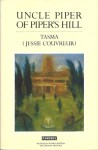
Tasma (Jessie Couvreur), Uncle Piper of Piper’s Hill (#BookReview)

Tasma, Uncle Piper of Piper's Hill

The first thing to say about Tasma’s debut novel Uncle Piper of Piper’s Hill is that it’s rather wordy, speaking to a literacy different from that of today’s readers. For this reason, Uncle Piper won’t appeal to readers who like short simple sentences, and a plot which moves along at a good clip with little reflection or commentary. Consider yourself warned, but know also that, according contemporary reports, this novel made Tasma famous in a week.

So, if you enjoy immersing yourself in the writing of different times, and are interested in late 19th century Australia, Uncle Piper has plenty to offer, starting with well-drawn characters who, in modern clothes, would be as real today as they were in 1888.

Take father, the Uncle Piper of the title, and his son George, for example. Uncle Piper is a self-made man. In his case this involved emigrating from England, where he was poor and with few prospects, to Melbourne, where, starting as a lowly butcher, he worked hard to establish himself as the wealthy, successful businessman he is at the novel’s opening. Now, what often happens when parents struggle to establish themselves and create for their children opportunities that they never had? Why, those children take their easy, comfortable lives for granted. That’s what! Not a new story, is it?

And so, about a third of the way through the novel, we have a wonderful scene between father and son over a girl of whom the father doesn’t approve. Feeding this scene is a two-decade history of growing frustration on Uncle Piper’s part and a learned, practised nonchalance on George’s. The scene is delicious and requires no suspension of disbelief to understand. Here’s a short excerpt of a confrontation in Uncle Piper’s beloved tower at Piper’s Hill:

So he [George] courted a personal attack … and sat caressing his moustache, as was his wont, with his eyes bent on the floor, while his father exposed his grievances in a crescendo key.

If there was anything humiliating in being rated as an “able-bodied young man who wasn’t worth his salt,” as a loafer who was hardly fit to “jackaroo” on a station, as a “lazy lubber” who would “go to the dogs if it weren’t for his father,” George never betrayed that he felt humiliated by so much as the twitching of an eyelid. Persistently stroking the ends of his moustache with an air of profound abstraction, he made it apparent, as soon as Mr. Piper stopped to take breath, that he was suppressing an inclination to yawn.

Can’t you just see it – the increasingly apoplectic father and his determinedly calmly indifferent son!

In basic plot, Uncle Piper of Piper’s Hill is a romance, a marriage story, set against the social backdrop of a meeting between these well-to-do parvenu Pipers, and the impoverished but upper crust Cavendishes. The lowly-born Mrs Cavendish is Uncle Piper’s sister. At the beginning of the novel, the Cavendishes are on a boat being brought out to Australia by Uncle Piper who has, in effect, been supporting them for years and who would now like them with him. He’s offered to find the reluctant Mr Cavendish a job “in the government”. The Cavendishes include two daughters, the kind, unassuming Margaret and her younger sister, the beautiful and imperious Sara. Sara follows her father’s mould of snobbish self-regard trumping any sense of human feeling or empathy, while Margaret is in her mother’s caring and hardworking mould.

Coming out on the same boat is the thirty-something Rev. Lydiat who, unbeknownst to them all, is also connected to the Pipers – this is a nineteenth century novel after all. His now-deceased mother had been Uncle Piper’s second wife. So, the afore-mentioned George is his step-brother, and Uncle Piper’s still-a-child daughter Louey, whom he’d had with the Rev’s mother, is of course his half-sister. But wait, there’s more. Also in Uncle Piper’s household is Laura, the Rev. Lydiat’s sister, whom Uncle Piper had promised his wife, on her deathbed, to care and provide for.

… a house divided against itself …

And now the plot gets complicated – though it’s easy to follow in the book. Rev. Lydiat falls (purely, of course) in love with Sara, while on the boat. And George and Laura, unrelated by blood, are in love. But, Uncle Piper wants George to marry his as-yet-unseen-to-any-of-them cousin Sara. And just to round all this off, Margaret is quietly, humbly, in love with Rev. Lydiat. Lest you give up at this point and think this all sounds a bit silly, let me say that despite its fairly traditional plot of love-triangles and interfering parents, the book has a lot more to offer.

So, where to go from here? There are many angles from which this book could be discussed. Issues like religion, money and class (as I’ve already mentioned), colonial life and the Australian landscape, and even the book’s relevance to Tasma’s biography, are all well worth exploring. I could also have fun teasing out comparisons between this book and Jane Austen’s Persuasion (my review). It’s not hard to see Sir Walter Elliot and his daughter Elizabeth in Mr Cavendish and Sara, or to see Anne Elliot in the capable Margaret. I could also talk about the style, and the influence on the style and tone of its being originally serialised in a newspaper.

However, given my previous reading of Aussie women writers at the time – of Ada Cambridge’s A woman’s friendship and Sisters, and Rosa Praed’s The bond of wedlock – I’d like to mention Tasma’s social commentary, particularly regarding women. Part of the commentary relates to the opportunities offered by Australian life. Uncle Piper’s generosity and capacity for hard work is offset against the snobbery of Mr Cavendish who is happy to take his brother-in-law’s money while continuing to hold himself “above” his host. He is snobbish, selfish and shallow, and by the end of the novel, has learnt nothing. Uncle Piper, on the other hand, along with his son George, learns some lessons and, by the end both have recognised and corrected some of their less tolerant behaviours.

For Uncle Piper much of this change relates to his step-daughter Laura Lydiat. For all his generosity, Uncle Piper has his faults. He can be autocratic, for a start. This does not sit well with the opinionated Laura. She has rejected religion, can be sarcastic, and has an “uncompromising disregard of feelings with which she does not agree”, albeit being very happy to eat at Uncle Piper’s table and wear the clothes he provides! She also does not approve of marriage:

though I abominate the system of marriage, though I think the yoking of two people together without a chance of release–as if the yoke mightn’t gall them any day–perfectly barbarous and absurd–still, in view of our ‘exceptional case’–there, don’t be demonstrative till you’ve heard me to the end–in view, as I said, of our ‘exceptional case,’ I’d have gone off with you to the registrar’s any morning–no, nothing would induce me to go to church–and have signed myself Laura Piper, instead of Laura Lydiat!

MISS THIS IF YOU DON’T WANT TO KNOW WHO MARRIES WHOM …

At the end of the novel, when the also-changed Laura does indeed marry, Tasma compares gentle, dutiful Margaret’s response to the marriage service with Laura’s:

She [Margaret] had followed the service in its most literal sense with all the earnestness of her nature, and would have had no sympathy with the half-perceptible gleam that might have been detected in Laura’s eyes at being called upon to obey George.

START READING HERE AGAIN …

The novel is not, as you can tell from this gentle hint, overtly didactic. There is some running authorial commentary, but the ideas and themes are well conveyed through the story and the characters, who are, for the most part, realistic though there are some saints and sinners among them.

Uncle Piper owes much to the Victorian novel tradition, but one adapted to an Australian setting. The plot overlays a New World made-good story over the more traditional romance narrative. The result is a novel which explores some new ideas about life within a familiar format, which makes it particularly special, I think, for Antipodean readers. Tasma should be read more.

Posted as a contribution to Bill (the Australian Legend)’s Australian Women Writers Gen 1 Week. See also my Monday Musings post this week on Tasma.

AWW Badge 2018

Tasma (Jessie Couvreur)
Uncle Piper of Piper’s Hill: An Australian novel
Project Gutenberg of Australia eBook, 2006
(Originally serialised in The Australasian, 1888; published as a volume, 1889)
Available online at Project Gutenberg of Australia

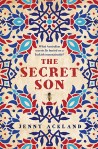
Jenny Ackland, The secret son (#BookReview)

Jenny Ackland, The secret sonMelbourne-based author Jenny Ackland has tried something rather audacious in her debut novel, The Secret Son. Instead of following the autobiographical route that many first novelists do, she has leapt right in and tackled, albeit from left field, one of Australia’s most controversial legends, Ned Kelly. But, here’s the rub: it’s not exactly about Ned Kelly. It’s far more complex than that.

The secret son spans more than a century, from the 1880s to 1990 and beyond. It is set in both Turkey and Australia, and it weaves two stories. One concerns the 19th-century-born James who ends up living in Turkey, having gone to fight at Gallipoli in 1915, and the other tells of Cem, a 23-year-old Turkish-Australian man who is related to the village where James had lived and who travels there in 1990, ostensibly to learn about his heritage and identity. These two men – James/Jim and Cem/”Jem” – work subtly as foils or parallels for each other. James is intelligent, gentle and hardworking, but somewhat passive. He imagines who his father might have been, what sort of man he was. Cem, on the other hand, is young, directionless, well-meaning but rather self-centred. Turkish taxi-driver, Ibrahim, pins his uncertainty immediately, telling him:

You must know who you are and what man you want to become.

What sort of man he wants to become is something Cem struggles with, making this, partly but by no means primarily, a coming-of-age novel.

This brings me to one of the delights in reading this book, which is Ackland’s depiction of life in the Turkish village she calls Hayat (Turkish, she says, for “heart”). It reminded me of some books I read years ago, such as Beverley Farmer’s stories set in a Greek village. Farmer had married a Greek man and lived for some time in Greece, which explained her convincing insight into village life and relationships. Ackland’s depictions were similarly convincing, so I wanted to know how she’d done it. I found the answer in an ABC Books and Arts interview with her. She too had travelled to Turkey, married a Turkish man, spent time there as a bride and young mother. With this knowledge and experience, and an ability to individuate characters, Ackland creates a world that engaged me.

But now you are probably wondering how Ned Kelly fits into all this. It has to do with a historian named Harry whom Cem meets on the plane. Harry has a theory that Ned Kelly had a secret son who fought at Gallipoli and ended up staying in Turkey. His quest is to prove this theory and, in one of those coincidences that all travellers know about, the village where he believes this son went to is the same one that Cem’s family was from. So the scene is set – but the story that unfolds has less to do with Ned Kelly than with families and secrets, paying debts, and growing up.

I started this post by saying that Ackland has been audacious in this, her debut novel, and I implied that it was because of the Ned Kelly plotline. However, her audaciousness extends beyond this. It’s in the novel’s complex structure, too, in the way she weaves the two men’s stories, to-ing and fro-ing in time. It’s in the recurring motifs like bees and honey, tea and sugar, and woven rugs, that she uses to help keep us grounded. And it’s particularly in the change of voice between the more traditional third person voice used for most of the story to first person for the perspective of Berna, who is the village’s wise woman-cum-fortune-teller. Berna also happens to be Cem’s grandmother and James’ daughter, which effectively connects the two story lines. (The family relationships in this book are, I must say, complicated, and require an attentive reader to keep track!)

Anyhow, Berna provides the main link in the novel’s second plot which is about the “debt” Cem discovers he is expected to pay for something his grandfather Ahmet had done long before he’d left the village for Australia. This plotline exposes dissension in the village, and through it Ackland explores ideas about love and loyalty, truth and lies, revenge and forgiveness, not to mention the application of wisdom versus tradition. As the novel progresses, more of the “truth” about what happened comes out, and the plot thickens as we wonder what will be asked of Cem and what he will do in response. Meanwhile, the Ned Kelly storyline weaves its own path between James, Harry, and the village with the help of a woman pilot called Linda. While complex, it’s sensitively done, with, in the end, enough resolution to be satisfying without being too neat and implausible.

There are many angles from which this book can be talked about, besides those I’ve mentioned. There’s a father-son theme, a cheeky metafictional theme about a book called The secret son, Cem’s family experience in Australia as a child of immigrants, and gender. There’s also the idea of debts due by later generations, which Berna argues is not valid, but which her brother Mehmet supports. It’s relevant, I think, that Berna has the last word in the novel.

Early on Berna tells us that “truth” is not the be-all, that sometimes “life is better with surprises in the recipe”. She’s a wise woman, and this, The secret son, is a wise book. It might be a debut novel, and it might push its readers to keep up at times, but the ideas it explores, and its tolerant, generous treatment of its flawed characters, are those of a humane writer.

Lisa (ANZLitLovers) was impressed by the book too.

AWW Badge 2018Jenny Ackland
The secret son
Sydney: Allen & Unwin, 2015
327pp.
ISBN: 9781925266160

Stephanie Buckle, Habits of silence (#BookReview)

Stephanie Buckle, Habits of silenceI have been champing at the bit to read local author Stephanie Buckle’s debut short story collection, Habits of silence, ever since I attended its launch in August by John Clanchy at the Canberra Writers Festival. The readings that both Clanchy and Buckle herself gave from the book grabbed my attention and convinced me that this would be a book I’d like. However, it had to wait its turn in my review copy pile. Finally its number came up – and I devoured it. I will never understand why some readers don’t like short stories. At least, I understand their reasons in my head, but I don’t in my readerly heart! (If that makes sense.)

John Clanchy, in launching this beautifully designed book, spoke about its title which is not, as commonly occurs, the title of one of the stories inside. When this happens, it’s logical to consider what the title means, and for Clanchy it reflects the book’s interest in communication, and particularly in the part played by silence. Silence, he said, can be positive or negative, and both of these are explored in Buckle’s stories. This is not to say that all the stories are specifically about, or even feature silence in a major way. But even in those that don’t, there’s usually some missed communication or miscommunication that might just as well be silence.

And now I come to that part that’s always a challenge with reviewing short story collections, which is whether to quickly survey all the stories or focus on a couple or try to do a bit of both. I usually opt for the last of these, and will probably do so again here. One day I’ll come up with an exciting new way to discuss short story collections, but I haven’t found it yet!

So, the survey part. There are fourteen stories, some of which have been published before, with a couple having won awards. There are both first-person and third-person stories – providing lovely variety – and the protagonists range in age, situation, and gender. It feels like a collection that could only be written by someone with a good few decades of life experience under her belt (but perhaps that’s denying what imagination can do). I’m certainly not saying that Buckle has experienced all she writes about, but the stories do feel imbued with a deep sense of knowingness.

One of the stories that is specifically about silence is titled, well, “the silence”. It’s about two brothers, Jim and his older brother George Clayton (love this cheeky last name), who live in a country town and have run the family furniture business for years, without speaking to each other. Each works alternate days and George communicates with Jim by letter, because, it seems

Silence is safe. Silence commits to nothing. Far easier to be silent than to speak.

Except, this silence is burning Jim up – that, and his brother’s complete inflexibility about changing anything in their increasingly anachronistic shop to bring it up to date. I liked this story, the beautiful realisation of the characters, and its tentative but by no means certain resolution.

Another story in which silence is central is “fifty years”. This is one of the stories read from at the launch, and it tantalised me. It concerns a woman who has been rendered mute by a stroke. She’s in hospital, attended by her husband of fifty years and her daughter, from whose point of view the story is told. Here’s part of the excerpt read at the launch. It comes after the husband has been prattling on with platitudes:

And that’s when I see it, the first time. It’s the expression you make when you think no one’s looking. The one you make to yourself, with your back turned. It’s the one that makes all the others look like masks, as if all the cups of tea, and all the ironed shirts, are just pretending. She turns from me and regards him quite steadily, but as if she sees him down the wrong end of a telescope, or as if he’s a fly buzzing still against the window, that she briefly thinks she might stir herself to deal with, but can’t be bothered. Are you still here? it says.

If that doesn’t make you want to read this book, then I’d say you’re a lost cause! Buckle’s insights into human relationships make you sit up and pay attention – and her honed spare writing is well-suited to her theme.

The second story in the collection, “sex and money”, is also about a lonely wife who feels unappreciated. Like the husband in “fifty years”, Frank appears to know little about the wife he lives with, and is more likely to help a neighbour than do something she’s asked. And yet, in his head, he loves – at least he desires – his wife. Rose meanwhile finds her own way of obtaining pleasure. It’s all to do with money, but not what you might be thinking. Buckle’s playing with ideas of lust, desire and money here is cheeky – and telling.

But not all marriages, not all relationships in the book, are poor. The woman in “the man on the path” has been grieving her beloved husband’s death for four years. She has come to the Lakes, a favourite holiday place of theirs, for a break, but feels out of place amongst all the happy holidaying couples. Then, out walking, she meets a man on the path, but a “failure of courage”, an inability to communicate appropriately, sees an opportunity to make a connection pass. She perseveres with her walking, however, and, well, you never know, there could be a second chance …

There’s nothing like mental illness to focus us on essential truths about humanity. Lillian, in the opening story “lillian and meredith”, is developing dementia – her “words scatter in all directions” – but, like many of the book’s characters, she’s lonely so when new patient Meredith appears she sees her opportunity. Meredith is welcoming, but when money goes missing, it all falls apart and poor Lillian is handled with less than kindness by the staff. This is just one of several stories which feature mental illness, with three of them – “us and them”, “frederick”, and “no change” – set in the same place, Cedar Grove Psychiatric Facility. There is no cross-over in characters, but there’s something nicely grounding in returning to a familiar place, even if when we get there we are confronted by questions about duty of care and our frequent failure, for whatever reasons, systemic or personal, to provide it.

Buckle’s stories, then, explore all sorts of relationships – between couples, siblings, parents and children, friends, teachers and students, and even staff and patients – showing that none are immune from communication challenges, from silences that hide true feelings to words which do the same, from convictions that relationships are true to realisations that they aren’t, from attempts to connect to refusals to do so. Although some stories impacted me more than others, I was engaged by them all, reminding me once again why I love short stories. It’s their little nuggety insights into human nature – and Buckle’s Habits of silence provides just that.

aww2017 badgeStephanie Buckle
Habits of silence
Braidwood: Finlay Lloyd, 2017
202pp.
ISBN: 9780994516534

(Review copy courtesy Finlay Lloyd)


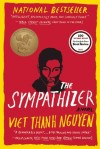
Viet Thanh Nguyen, The sympathizer (#BookReview)

Viet Thanh Nguyen, The sympathizerA cover blurb on my edition of Viet Thanh Nguyen’s Pulitzer Prize winning novel, The Sympathizer, captures the novel perfectly when it calls it “intelligent, relentlessly paced, and savagely funny” (Wall Street Journal). I loved reading it. It’s quite coincidental that I read this straight after Hoa Pham’s Lady of the realm (my review) but they make an interesting pairing because both deal with the Vietnam (or American) War and its aftermath, both are written in first person from a Vietnamese character’s point of view, and both question what happens when revolutions win. But, their approaches couldn’t be more different.

The sympathizer starts with an in-your-face statement by a never-named narrator: “I am a spy, a sleeper, a spook, a man of two faces.” It is April 1975 and the war has ended with the capture of Saigon by the North Vietnamese Army, but in the second paragraph we discover something else about our narrator. He is not talking to us but to a “Commandant”. So, where is he, and why is he talking to a Commandant? We don’t fully find out until near the end, although we soon discover that he is being held captive and is writing his “confession”. The story he tells, the story we read, is his confession. And what he confesses to is his life as a North Vietnamese mole in the close employ of a South Vietnamese General.

In this role, he leaves Saigon in the chaotic evacuation and ends up in Southern California, still working (now unpaid) for the General, while at the same time sending covert reports back to his “aunt” in Paris. In other words, in the USA, he maintains his life as a man of “two faces”, a man who is “able to see any issues from both sides”. He can do this, not only because of his role as a mole, but also because he is a bastard, the son of a Vietnamese woman and a French priest who had seduced her and had never acknowledged his son. With feet in both camps – the Orient and the Occident – he is well-placed to comment on their respective cultures and actions while, at the same time, symbolising their conflicts, confusions and misunderstandings. Near the end he says:

I was always ever divided, although it was only partially my fault. While I chose to live two lives and be a man of two minds, it was hard not to, given how people had always called me a bastard. Our country itself was cursed, bastardised, partitioned into north and south, and if it could be said of us that we chose division and death in our uncivil war, that was also only partially true. We had not chosen to be debased by the French, to be divided by them into an unholy trinity of north, centre and south, to be turned over to the great powers of capitalism and communism for further bisection …

What makes this book such a great read – besides its heart and themes – is its writing. Nguyen migrated to the USA with his parents when he was 4 years old. In the notes at the back of my edition, he describes growing up in a Vietnamese enclave in California, and how he’d decided that he couldn’t live life well with two languages, so decided to “master one and ignore the other. But in mastering that language and its culture, I learned too well how Americans viewed Vietnamese”. This seems to the main driver for this book – to tell a story about the Vietnam War from a Vietnamese perspective – but his aim is wider than that too. It is to comment on war, on its futility, and on the way American culture seems to thrive on it.

The first chapter introduces us to the central feature of Nguyen’s writing, satire, and my, it shows how well he mastered his adopted language. If the pace is relentless, as the Wall Street Journal says, so is the satire. Its targets are broad, and non-discriminatory, though, admittedly, American life and culture bear the major brunt. In Chapter 3, he discusses prostitution:

I am merely noting that the creation of native prostitutes to service foreign privates is an inevitable outcome of a war of occupation, one of those nasty little side effects of defending freedom that all the wives, sisters, girlfriends, mothers, pastors, and politicians in Smallville, USA, pretend to ignore behind waxed and buffed wall of teeth as they welcome their soldiers home, ready to treat any unmentionable afflictions with the penicillin of American goodness.

The language is sly and wry, as our narrator of the divided-soul teases us – provokes us – again and again with dualities and paradoxes. Literally, he is a communist sympathiser, but his true sympathies are broader. “Although it’s not correct, politically speaking”, he says, he feels “sympathy” for the South Vietnamese poor who were attacked by their own soldiers. “No one asks poor people if they want war”, he writes.

And so the book continues. There are comic set-pieces such as his role as a Vietnamese expert on the making of a film that reads very much like Apocalypse Now. The experience teaches him that not controlling the way you are represented results in “a kind of death”. There are also awful scenes of torture and violence, including those where he is ordered by the General, even in the USA, to eliminate apparent opponents. He says of the General’s plans:

The General’s men, by preparing themselves to invade our communist homeland, were in fact turning themselves into new Americans. After all, nothing was more American than wielding a gun and committing oneself to die for freedom and independence, unless it was wielding that gun to take away someone else’s freedom and independence.

This idea of “freedom and independence” is the complex conundrum that underpins the fundamental irony of the book, from its opening chapters when Ho Chi Minh is quoted as saying “Nothing is more important than independence and freedom”. What these mean, what people do in their name, and why so often they are taken away by the very people who called for them, are scrutinised by Nguyen via his narrator.

The sympathizer is, in many ways, a bitter novel, because it sees clearly into the human heart, and its messy, divided nature, its “moth-eaten moral covers” – but the bitterness is offset by a sense of resilience and a belief that it need not be like this. A big thanks to my Californian friend Carolyn for sending me this.

Lisa (ANZLitLovers) was also impressed by this novel.

Viet Thanh Nguyen,
The sympathizer
New York: Grove Press, 2015
382pp.
ISBN: 9780802124944

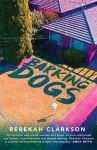
Rebekah Clarkson, Barking dogs (#BookReview)

Rebekah Clarkson, Barking dogsThe best way to describe Rebekah Clarkson’s debut book, Barking dogs, is that it’s a portrait of a community undergoing social change. This community is Mount Barker on the outskirts of Adelaide. Once a farming community, it is now, says Wikipedia, “one of the fastest growing areas in the state”, the province of developers, the aspirational and the upwardly mobile, rich pickings in other words for an observant novelist. But, did you notice that I said “debut book” not “novel”? This is because, superficially, this book presents as a collection of short stories. However …

What’s in a name? It reminded me of the recent discussion about Junot Díaz’s debut book, Drown, on the ABC’s First Tuesday Bookclub. Drown is also a collection of short stories, but panel members argued that it could be defined as a novel because “the stories are too interlinked for us not to see it as a narrative whole”. Drown, though, does have the same narrator throughout, which Clarkson’s book doesn’t. Her book is probably closer to Tim Winton’s The turning. Like Barking dogs, its stories are set in the same place, and it has some recurring characters, though, from memory, I’d say recurring characters are a stronger feature of Clarkson’s book.

The question is, of course, does any of this matter? Not really, except that calling it a novel might attract more readers – you know, those who say they don’t like short stories. And, it is always relevant to consider form, even if, in the end, the actual label is irrelevant.

The form, style and structure of Barking dogs, do, in fact, give us much to consider. There are, for example, 13 stories. Are we meant to consider the “negative” implications of the number 13 in terms of this community’s future? Why does Clarkson start the collection with a troubling story (“Here we lie”) set at a later time in the book’s chronology, and end with a story set at the earliest time (“If it wasn’t this”)? The fact that this last story, although set in the seemingly idyllic rural days, ends rather bleakly on the image of a tree “alone, stark and bare” suggests that Clarkson recognises the complexity in all communities. Again, I was reminded of Pulitzer prize-winning author Paul Beatty on the First Tuesday panel talking about how he sometimes plays around with the order of the stories in Drown, and how this changes its impact.

Regardless of the overall intention, though, the stories make great reading. Whether they are told 1st, 2nd or 3rd person, and whether the narrator is male or female, young, middling or older, or struggling financially or more well-off, Clarkson is able to get inside her characters’ heads. She captures, and explores, the feelings, values and thoughts, the confusions, uncertainties, and pretensions, of her town’s inhabitants. We can “see” it all: the struggle to pay mortgages, to maintain meaningful marriages, to raise their children (or to conceive them in the first place), to get on with their neighbours, to achieve the lives to which they aspire.

A number of motifs run through the book, including the murdered girl Sophie Barlow (whose family appears in the second story, “Something special, something rare”, but whose story is never fully told), the Wheeler family which forms the main connecting thread in the collection, and of course the barking dogs of the title. These, together with the setting, contribute to the coherence of the whole.

Some stories stood out more than others. This may say more about my particular interests, rather than the quality of the stories, but it may also be that the stories that are more connected by characters are more engaging because of the story development they entail. It’s a book that would bear multiple readings, because even skimming it for this review revealed further links and connections that I missed on my first pass.

The overall theme, that of a community going through change, is beautifully encapsulated in the story “Hold me close”, in which the recently widowed Edna, a long-term resident of the town’s now rural outskirts, struggles to understand the aspirations and lifestyle of her daughter, Andrea, who has moved back to the area. Andrea lives in a “ex-display home village” and, Edna thinks, is more interested in appearance than substance. This tension between striving for success and being, hmm, more real is played out in various ways in the other stories.

The Wheelers

But, perhaps the best way to illuminate the book is to look briefly at how the Wheeler family is woven through the book. The Wheelers are 49-year-old Malcolm, a successful management professional, his confident teacher wife, Theresa, their 11-year-old son Martin who’s been diagnosed with Asperger’s, and Jasper, their barking dog. They epitomise the new families in the area – their aspirations, their values, and their problems – and at least one of them appears, or is referred to, in seven of the stories. The first references are in passing. In “Something special, something rare”, Martin has been physically bullied by Liam Barlow, but we don’t meet him specifically, and in the following story “World peace” he is again referred to, this time by one of his classmates. We gather he’s a little different, and doesn’t fit in well with the normal schoolyard cut-and-thrust.

The next four stories (4th, 7th, 9th and 11th) in which they appear are told from their perspectives, the first two from Malcolm’s, then one from Martin’s, and finally Theresa’s. I don’t want to give too much away, but we get the picture of a fairly kind, laissez-faire husband married to a more go-ahead, shall we say, proactive, wife. In the fourth story, “Raising boys”, we also meet their barking dog who is bothering his neighbour, and in the seventh, which is, structurally, the central story, Malcolm receives some terrible news which provides the book’s emotional heart. The penultimate story, “Jasper”, is shocking. It exposes the cracks in “society today”, such as unrealistic aspirations, lack of neighbourly communication, fractured marital relationships.

Interestingly, while the stories are not presented chronologically, the Wheelers’ “story” is, giving the book a clear narrative arc. The overall order, perhaps, provides its thematic one, one that warns against rose-coloured glasses about the past.

Unfortunately, I am using an uncorrected proof copy from which quotes are forbidden (though I have “quoted” one or two phrases which I hope is okay!). However, I do want to briefly mention the writing, which maintains an effective satirical tone while also conveying a level of tenderness for the characters. There’s some lovely irony too. We know for example, that poor Graham Barlow’s vision for his business, Winners, is unlikely to be realised (“Something special, something rare”), and that Gladeview Park, where many of our characters live, does not provide the “Serene and fun-filled living” environment promised on the estate’s sign (“Jasper”).

Barking dogs offers a thoughtful, intelligent look at contemporary suburban life. It explores what a pristine, homogenous white middle-class enclave might look like. Unfortunately, it looks more like a bunch of isolated individuals than a healthy community, partly because the pressures that drive them seem to prevent real engagement with each other. It doesn’t need to be this way.aww2017 badge

Rebekah Clarkson
Barking dogs (Uncorrected bound proof)
South Melbourne: Affirm Press, 2017
240pp.
ISBN: 9781925475494

(Review copy courtesy Affirm Press)