Anna Goldsworthy, Melting moments (#BookReview)

Book cover

Melting moments is Australian writer and concert pianist Anna Goldsworthy’s debut novel, following her highly successful memoir of a decade ago, Piano lessons (my review).

Melting moments – for those not familiar with this Antipodean classic – are little shortbread-based biscuits (cookies) sandwiched together with buttercream. In titling her book by these little treats, with the added intimation of moments that melt our heart, Goldsworthy flags the tone and subject matter of her book. The tone is going to be gentle, and the subject matter domestic. The question is: does this make for an interesting book, or just a sweet one?

Overall, I’d say interesting. As a member of my reading group suggested, there is another connotation of the title, that of moments that melt away, of moments that don’t last. So, Goldsworthy’s Melting moments captures the life of a woman from the so-called “greatest generation”. Born between 1901 and 1927 (so my mother just misses it), they went though the Great Depression and World War 2. Sociologist Glen Elder suggests they came out of these experiences “with an ability to know how to survive and make do and solve problems”. This could describe Goldsworthy’s protagonist, Ruby, who marries Arthur, after a short courtship, on the eve of his heading off to the War. She might as well have the “war widow pension” he says, an idea that was, I think, behind a few marriages at the time. This social history aspect is one of the reasons for reading this book which takes us through the decades of marriage, children, empty nest, ageing parents, retirement village life, leaving us when Ruby reaches her early eighties.

This, I know, makes it sound like one of those big family sagas, but in fact it’s not, on two counts. First, it’s short, at just 230 pages, and second, it has no big dramas – just the little trials and tribulations of life.

“misplaced life”

However, this doesn’t mean the book is boring. Ruby lived in the pre-feminist world when women had few rights but many gender-prescribed responsibilities – stay-at-home, cook and house-keep, bring up the children, and keep the husband happy. Like many of her generation, she doesn’t rock boats, but knuckles down to it (using her consciously developed “resourcefulness” to help her along the way). But, she’s not blind to what all this means and, sometimes, she feels

the emptiness rush in at her, as if she were living on a road from nowhere to nowhere …

Or, occasionally wonders

whether life should be something more than a series of daily tasks, successfully dispatched.

Indeed, later in the novel, she considers a path not taken – one involving throwing it all in for the exciting man. But that way led to “briars … social condemnation; impecuniousness; the heartbreak of children”, and, anyhow, the man had removed himself. Nonetheless, she sometimes feels

as if she had missed a summons. As if she had somehow missed her life.

This situation, of course, is not unique to her generation, but it is true that making such a break in her era would have been more difficult. And, anyhow, Arthur, as Ruby recognises herself, was not a bad husband – just a “stolid” one – and their marriage was “more or less” successful.

The novel is written third person, but its focus is Ruby, meaning that the other characters are not significantly fleshed out. Most are nonetheless more than just simple stereotypes. The “stolid” but kind Arthur, for example, is more willing to accept daughter Eva’s grasping the freedom of the 1960s and 1970s than Ruby. And Eva, though frustrated with her mother’s conservatism and inability to understand the changing world, is a loving daughter who finds a balance between living her life her way and loving and supporting her mother.

Ruby’s parents have some individualised flesh on their bones too, but Arthur’s mother, Granny Jenkins who lives with them much of their married life, is rather more the stereotypical unsupportive, demanding mother-in-law. However, Ruby just gets on with that too – as most women did – organising things as much as she can to minimise the imposition .

Now, early in this post, I mentioned that this book, despite its chronological sweep, is not a saga. This begs the question of how Goldsworthy tells the story of such a long life in such few words. She does it by using an episodic structure, skilfully paced so that you always know where you are in Ruby’s life. The gaps are obvious, of course, but it’s also clear that we are getting the critical “moments” in Ruby’s life.

The end effect of all this is a quietly observed book, one unsatisfying for some, and perfectly satisfying for others, as my reading group discovered. Some of us wanted the gaps filled in. Why was Arthur released early from active service, for example. Others of us accepted that the focus was Ruby and what she thought and cared about. When the opportunity finally comes when Arthur might share his war story, she turns away and makes a cup of tea! “What’s done is done”, she says.

There is some humour in the book, and I did smile many times, but, while it felt like an Austen-ish story, it doesn’t have the sharpness of her wit. I must say that in a nicely observed story like this, I did miss that bit of bite.

Melting moments, then, did not exactly wow me, but neither did I find it trivial. Without being consciously political, it works as a reminder of those women who didn’t always identify what it was that caused their feelings of “emptiness”, but who just got on with it, and somehow managed at the same time to bring up the Evas who went on to grab the opportunities available. Goldsworthy has paid credit to them, in a warm-hearted and enjoyable book.
Challenge logo

Anna Goldsworthy
Melting moments
Carlton: Black Inc, 2020
230pp.
ISBN: 9781863959988
Shokoofeh Azar, The enlightenment of the greengage tree (#BookReview)

Book coverI bought Shokoofeh Azar’s novel The enlightenment of the greengage tree when it was longlisted for the 2018 Stella Prize, for which it was also shortlisted. However, it was its shortlisting this year for the International Booker Prize that prompted me to finally take it off the TBR pile.
Born in Iran, artist and writer Azar was still a child when the Islamic Revolution started in 1979. She grew up there, and, as an adult, obtained work as an independent journalist. However, after being imprisoned three times, she fled Iran by boat, ending up on Australia’s Christmas Island, and was eventually accepted as a political refugee by the Australian government. She has written a children’s book and two short story collections, but The enlightenment of the Greengage tree is her first novel. Like many first novels, it feels autobiographical, though given the narrator is a ghost and Azar is clearly still with us, it is not exactly autobiography!

The story chronicles the lives, experiences, and reactions of a family caught up in the chaos and brutality of post-revolutionary Iran. This family comprises father Hushang, mother Roza, son Sohrab, daughter Beeta, and another daughter, the above-mentioned ghost narrator, Bahar. Following the 1979 Revolution, they flee Tehran for the remote village of Razan, which was untouched for years by the revolution, until it came there too during the Executions of 1988.

While the story is roughly linear, it does slide around a bit, so you need to keep your wits about you. It starts in Razan with Roza’s attainment of enlightenment “at exactly 2:35pm. on August 1988, atop the grove’s tallest greengage plum tree”, the same moment at which her son Sohrab is executed amongst hundreds of other political prisoners in Tehran. This, of course, is told to us by thirteen-year-old Bahar who, we don’t discover until chapter 5, had died in a fire set in her father’s library in 1979 by Revolutionary Guards.

Now, the book is described on its back cover as magical realist, but this is term I have been uncomfortable about ever since hearing Alexis Wright question it. I fear that with our rationalist Western minds, the description “magical” can carry a hint of condescension. Alexis Wright said that “Some people call the book magic realism but really in a way it’s an Aboriginal realism which carries all sorts of things.” Toni Morrison has spoken similarly. Azar, on the other hand, embraces the term, describing it like this: “People of old or ancient cultures sometimes seek the metaphysical solution for realistic problems”. That makes sense. I also rather like this description in Wikipedia by Mexican critic Luis Leal. He says “to me, magical realism is an attitude on the part of the characters in the novel toward the world” or, to be more specific, toward what happens to them. I guess it’s really a matter of a rose by any other name, and that the issue is less the term, than how we readers understand or approach what we read?

So, when I tell you that Roza finds enlightenment at the very top of a greengage tree, that the ghosts of 5000 executed people confront the Grand Ayatollah Khomeini in his bedroom, that Beeta becomes a mermaid and joins the merpeople to escape the sorrows of the world, that forest jinns place curses, or, even, that the novel is narrated by a ghost, I am accepting that this is how the characters experience their world.

The enlightenment of the greengage tree is, then, the story of people in extremis. The background is the repressive regime, but the book’s ambit is much bigger. It’s about life and death, love and loss, and how those play out in brutal, politically-charged times. While “most people”, says Hushang, “wanted to get used to everything”, his family heads to the jungle town of Razan, where they think, foolishly as it turns out, they will be safe. When the revolution does reach them, the people are unprepared, and are left

wondering how they’d ended up in a game whose rules they hadn’t written. The game of aggressor and victim. A game in which it didn’t take long for the victims to become the aggressors; become victim aggressors… it wasn’t long before they forgot their myths and dreams, their history and balance …

With Sohrab soon arrested, our family soldiers on, each reacting to the brutality they confront in their very different, beautifully differentiated, ways.

Roza leaves home early in the novel because:

… she wanted to lose herself.  She didn’t want to sit in her newly rebuilt house and look at the freshly-painted walls, and the new furniture and carpet, and imagine how Sohrab was killed or how I suffered as I burned.  She didn’t want to think about the future and what other calamities might befall Beeta and Hushang.  She wanted to run away from herself, from her fate.  She didn’t want to be wherever she was.

Beeta, on the other hand, who had stayed and struggled, eventually transforms into an aquatic creature, “so as to experience and live life with a freedom that had been impossible as a human”. Meanwhile, Hushang, who also stayed, reads. He had “a thirst for reading”, a desire to be “connected with the world’s thinkers”, to distance himself “from the contemporary world of intellectual midgets that had overrun his country.” Eventually though, his reading brings him to “contemporary Iranian history; the place where all his questions turned to bottomless chasms”.

History is, in fact, a constant thread in the novel, one that is pored over from every angle – including an attempt by the people of Razan to discard it altogether. Azar shows, graphically, the damage done by those regimes which try to quash people’s past, their heritage.

Late in the novel, there’s a confrontation between Hushang and his brother Khosro who had taken a mystical path. Hushang is furious, arguing that “this mysticism game” had done nothing against the various atrocities and traumas, and criticising “smart people” like Khosro for hiding “in the safety of temples instead of doing something to fight the corruption and injustice.” Khosro, though, believes, probably realistically, that nothing can be done to avert the ongoing destruction of Iranian culture. He argues that “all I can do is not become tainted by something I don’t believe in.”

The enlightenment of the greengage tree is a wonderful read if you like books which pose these sorts of fundamental questions about how to live in difficult times. It could be a grim read, given the brutality contained within, but it’s not. It’s tragic, of course, but it has a sort of unsentimental, slightly melancholic tone that doesn’t weigh you down. Two-thirds of the way through the novel, Beeta tells Bahar that “imagination is at the heart of reality”. A perfect description of what Azar has done in this book.

In the front matter, Azar expresses gratitude to the Australian people for accepting her “into this safe and democratic country” where she can “have the freedom to write” such a book. We, however, should be grateful, in return, to have such a creator in our midst.

Lisa (ANZLitLovers) also liked this book.

Challenge logoShokoofeh Azar
The enlightenment of the greengage tree
Translated by Adrien Kijek*
Melbourne: Wild Dingo Press, 2017
268pp.
ISBN: 9780987381309

* Translator’s name is a pseudonym; the European edition was published with translator as anonymous.

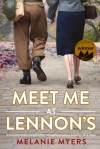
Melanie Myers, Meet me at Lennon’s (#BookReview)

Book coverI was keen to read Melanie Myers’ debut novel, Meet me at Lennon’s, because it is set during the Brisbane of my mother’s early teens, that is, wartime Brisbane when her school, Somerville House, was commandeered in 1942 by the Australian Military Forces and served as a US Army Headquarters for the rest of the war. I grew up knowing this story, so was keen to see what Myers made of it, particularly since not many literary fiction novels, as far as I know, have tackled Brisbane during those times. Ariella van Luyn spends some time there in Treading air (my review) and David Malouf’s semi-autobiographical novel Johnno, which I read a long time ago, covers those years. However, being five years younger than my mum, Malouf was only 11 when the war ended, so his perspective is necessarily different.
Myers’ focus is the lives of women during those strange, heady days when women experienced new freedoms through filling the jobs left by men. Added to this was the excitement and glamour of the American GIs in town resulting in increased socialising at bars, like the titular Lennon’s Hotel, and dance venues, like the Trocadero.

It’s something isn’t it? It’s hard not to get caught up in the fever of having a common purpose. Uniforms everywhere and everyone feeling what they’re doing is important and useful. And the Americans, let’s not forget them. For all their braggadocio, they’ve certainly brought a touch of glamour to our little colonial outpost. (April 1943. p. 233/4)

But it was a dark time too. It was a time of austerity and rationing. There was tension between the Australian men and the Americans whose cashed-up glamour, with their gifts of “nylons” and fur coats, attracted the women. There was racism towards black American soldiers. And there was sexual violence against women. This is the complex world that Myers explores in her historical novel, Meet me at Lennon’s.

However, this novel is not straight historical fiction because Myers has taken the increasingly-common dual narrative approach, alternating between the 1940s and the present, when protagonist Olivia Wells is struggling, not only with her PhD on the life of a now-forgotten feminist author Gloria Graham, but also with her abusive (as it turns out) boyfriend, Sam, and the reappearance of her estranged father. Just like her 1940s counterparts, Olivia meets an American man. The stage is set in chapter 1 …

You might be getting a glimmer now of why Myers chose the dual narrative approach? It serves to compare the lives of women in the 1940s with those of women now, asking us to consider what, if anything, has changed? Myers undertook extensive research into wartime Brisbane, looking particularly at police and newspaper reports of crimes against women, as well as the infamous Battle of Brisbane. She uses this research to create stories of several young women in the 1940s, stories she winds around a plot based on an unsolved crime – the River Girl murder. Through these women we learn, for example, that crimes by Americans were mostly passed to their Military Police and quietly handled, with justice rarely being obtained for the victim. Such was the River Girl’s fate. Can Olivia and her friends solve it now? There is, then, also a mystery at the heart of this novel.

Myers does a lovely job of recreating the times. Her characters not only engaged me, but they felt authentic. There’s sturdy sensible Alice, who, having worked pre-war as a house-maid for rich people, sees the opportunity, now that she’s in a well-paid job, to buy a fur coat, just like her former employer had owned. To her horror, however, she soon realises that fur coats were “the gift of choice for women whom American servicemen ‘favoured'”. There’s Gwendolyn, engaged to the uninspiring Robert, but now having fun, as the much more exciting Dolly, with the “energetic” Corporal Charles Feely. There are several more, including those in the present time. One of the book’s challenges is keeping track of the characters and clocking the clues that might connect them.

Myers plays about a bit with her dual chronologies. Chapter 4, for example, is divided into three sections, September 1942, July 1942, then August 1942. The aim, I assume, is to reduce the focus on plot tensions, by preparing us for characters’ actions and feelings. In September 1942, Alice burns the above-mentioned fur coat she buys in July 1942. She also remembers a violent act by her brother when they are children, which prepares us for meeting him in August. And Chapter 12 is set in 1993, when we meet again, as an older woman, Alice’s friend Val from 1942. It works fine – and indeed meeting the lively Val again in 1993 provides some light relief, while also moving the more serious issues on.

The writing is generally sure and expressive. Myers writes some evocative descriptions, such as “a confident early sun fixed on warming the rest of the day ahead” and “the vaulted plaster ceiling of Reckitt’s blue was badly deteriorated and hadn’t felt the caress of a paintbrush in decades”. However, for me at least, she does overdo the similes. While, individually, most are fresh, they often felt irrelevant and distracting, such as “like a starlet’s eyelids, the brownout covers …”, “unfolding like a crumpled flamingo, Clio …”, and “the details landed like clumps of pelted sand.” Too much, I’m afraid.

Meet me at Lennon’s, which won the Queensland Literary Awards’ Glendower Award for an Emerging Writer in 2018, is a good and meaningful read about a significant and little covered period in Australia’s and Brisbane’s history. Early in the novel, Olivia’s American acquaintance Tobias refers to the racist segregation of black American soldiers during the war years, and sees a wider relevance:

“A place has got to come to terms with its ugly history, is what I think. Otherwise it metastasises like a cancer cell. And from what I understand, ugly history goes back a lot further here than just the war.” (p. 10)

In the end though, it’s the lives of women which are the central concern of this novel. The final chapter commences with a letter written by Rhia (Gloria Graham) in 1975. She admits that she had hoped to “undo” what had been done to Olive, the River Girl. However, she comes to realise that “there are some evils that no art form can make better, fix or even soothe”. Perhaps she’s right, but novels like this can keep the important issues front and centre – and there’s value in that.

Theresa Smith also appreciated this novel.

AWW Challenge 2019 BadgeMelanie Myers
Meet me at Lennon’s
St Lucia: UQP, 2019
265pp.
ISBN: 9780702262616

(Review copy courtesy UQP)

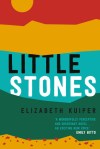
Elizabeth Kuiper, Little stones (#BookReview)

Book coverAnnouncing their 2019 longlist back in February (see my post), the Stella Prize judges said that they “wished for more representations of otherness and diversity from publishers: narratives from outside Australia, from and featuring women of colour, LGBTQIA stories, Indigenous stories, more subversion, more difference”. Elizabeth Kuiper’s debut novel, Little stones, may not exactly fulfil this wish for subversion and difference, but it is set in Zimbabwe, and that’s certainly a start.
The main story concerns 11-year-old Hannah’s life as the daughter of divorced parents – and what ensues when her mother decides to leave Zimbabwe, wanting to take her daughter with her. Her father’s up till then somewhat controlled anger against her mother intensifies, and he does all he can to prevent this happening, despite the fact that he has shown little commitment to the real business of loving and rearing a child.

It’s not a particularly new story, but this one has an added layer; it’s the early 2000s and Hannah and her parents are middle-class white Zimbabweans living under Robert Mugabe’s increasingly violent regime. Life is not easy for her family, which includes her tobacco-farmer grandparents, with African nationalism ramping up against what Hannah comes to recognise as “crushing colonisation”.

The story is told first person by Hannah, and this is both its strength and weakness. Strength because Hannah, though intelligent and observant for her age, is a naive narrator. She can only see through an 11-year-old’s eyes, while we, of course, know or can guess what is really happening, whether this is the political violence and corruption happening in the background (and sometimes even closer) or the more personal conflict happening between her parents. So, for example, early in the novel she hears her mother and grandparents talking, yet again, about the Warvets, whom she understands to be “a big family who wanted to steal farms from everyone in Zimbabwe”. Finally, she insists on being heard:

Mum,’ I insisted. ‘I don’t want us to give our farm away to another family.’
‘Another family?’ Mum sought clarification.
‘The Warvets.”
Mum looked around the room, first at Nana, then Grandpa, and let out a sigh. She explained to me that the War Vets were not an extended family. They are a large group of people called the ‘War Veterans’ who mobilised to take back what they saw as their land.

The naive narrator voice achieves a few things. It conveys how unsettling it is for children to be living under stresses that they don’t fully understand, but it can also keep the tension down a little because the full horrors are not made explicit to us (albeit we can guess them.) Hannah is a lovely character, whose special and sustaining relationships with her best friend Diana Chigumba and the family’s Shona housekeeper (not “maid” says her mother) Gogo, are delightfully conveyed. She can, being 11, be naughty, but she’s at heart a sensitive, loving, well-adjusted child.

However, this voice can be a weakness too. It’s difficult to sustain the voice of a child – and unfortunately, perhaps, I’ve just read Tim Winton’s The shepherd’s hut which does it extremely well. Here, I felt that at times Kuiper’s Hannah used language and concepts that an 11-year-old would not use. We are told she’s intelligent, and good with language, but still I wasn’t always convinced. Here, for example, she talks about the guardianship court case her mother is fighting:

In the past, I would have tried to offer whatever morsel of advice I could manage, but as the court case progressed I came to realise that most of the time she was talking about herself, and so I absorbed her rhetorical questions as a necessary and cathartic part of the process for her.

This, and examples like it, seem rather sophisticated to me in both expression and idea. The question is, are we supposed to believe that this is 11-year-old Hannah telling the story as it happened or older Hannah telling the story? I’m not sure it’s always completely clear, but I felt it was intended to be the former.

All this brings me to the question of whether Kuiper’s story would have been better told as a memoir, because I understand that the novel is, like most debut novels, autobiographical. Of course, I don’t know where the facts of her life end and the fiction begins, but it’s a question that I pondered as I read. And, also of course, memoir would bring its own challenges for Kuiper that she may not have wanted to confront. I don’t blame her for that.

Anyhow, this is a minor quibble if you are prepared to go with the flow, which I decided to do. Kuiper handles well the challenge of conveying the difficulty of the situation for Hannah’s family as white Zimbabweans in an increasingly tense and dangerous atmosphere. She shows that it’s not all about race, or simply about race. There’s the issue of different races – Shona versus Matabele – and there’s class. Hannah’s best friend Diana, for example, comes from a well-to-do black family. Kuiper also handles convincingly the parallel, and perhaps most significant for Hannah, issue of separated parents wrangling over their daughter. The descriptions of Hannah’s father’s increasing manipulation of the system to get his way are infuriating if not chilling – but oh so real. Hannah, in fact, has to grow up fast if she is to survive this dual personal and political unrest she finds herself in.

Little stones is, then, essentially, a coming-of-age story, which also works as a Young Adult-Adult crossover novel. It offers something special to readers in both these areas because its perspective is a rare one for us to read here; because it is told with a lovely vitality and attention to the details of a life lived under complex political and personal circumstances; and because it manages to tread that fine line that shows rather than judges. And that, I think, is impressive.

Lisa (ANZLitLovers) also enjoyed this book.

AWW Challenge 2019 BadgeElizabeth Kuiper
Little stones
St Lucia: UQP, 2019
264pp.
ISBN: 9780702262548

(Review copy courtesy UQP)

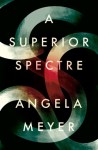
Angela Meyer, A superior spectre (#BookReview)

Angela Meyer, A superior spectreA superior spectre may be Angela Meyer’s first novel, but her already significant writing credentials, including being the author of the short/flash style fiction collection Captives (my review), and the editor of the anthology The great unknown (my review), ensure this is a confident debut. And it needed to be, because Meyer took big risks in this book – structurally, genre-wise, and with her characters.

Let’s start, however, with the title. It hints at genre, doesn’t it? And yes, this book does owe much to genre, but more to genre-bending than to simple genre. It has two storylines – which is part of the risky structure – one set in mid 19th-century Scotland, drawing on historical fiction, and the other also set in Scotland, but in 2024, making it more speculative fiction. There is also a touch of the Gothic here, with visitations, hidden rooms and madhouses, with dark thoughts and hints of perversion. But, the novel is more complex, more sophisticated than that suggested by this idea of two interwoven storylines from the past and the future. The two epigraphs that introduce the novel clue us into this complexity. The first epigraph is from Emily Dickinson and suggests that the “superior spectre” is not “external”, or “material”, but something “interior”, or “more near”, while the second, from Kafka, hints at the dark side of love and human nature.

These ideas are explored through the two main characters: Leonora, a young farm girl from the Scottish Highlands, and Jeff, a dying man who has “escaped” Australia (something that is difficult to do in his chip-controlled futuristic world) to die alone in Scotland. Leonora is poor, but well-read and resourceful; she’s a hard-worker and loves her father; she’s sensual, sexual, but not afraid to express it; and she has a mind of her own, but is independent rather than wilful. She is, in other words, easy to like and wish well for. Jeff, on the other hand, is more ambiguous, and thus a challenge for us readers. Not only does he admit to some questionable sexual proclivities, but his behaviour in Scotland, particularly towards Leonora, becomes increasingly selfish. He knows it, but in the end puts his needs and desires ahead of hers. How, though, given their different eras?

Well, let’s now turn to the structure. Meyer sets us up at the beginning with a comfortable, predictable structure in which third-person Leonora’s story alternates with first-person Jeff’s. There’s nothing particularly remarkable in this, but it doesn’t last. In Part 2 (of this four-part novel), Leonora’s story also becomes first-person. It happens because, as the back cover blurb has told us, Jeff is using some experimental technology (a “tab”) that enables him to inhabit Leonora’s mind, and at the end of Part 1 he decides to change how he brings her to us. His aim, he says, is to enable us to “partly inhabit her as well” though in so doing, he warns us, our thoughts too, like Leonora’s, may be “infected” by him. I like books in which the structure itself underpins the meaning of the work. In this case, the structure unsettles us – as in, where are we now, who are we with – and mirrors the discord being experienced by Leonora, who wonders

about how powerful our thoughts can be. We might think we are sick when we truly have no ailment. But if we present the symptoms, and believe them, are we not sick anyway? . . . I wonder if a person could learn to be aware of when the mind is influencing a bodily reaction, and also when an instinct is overruling the mind.

So, in A superior spectre, we have a destabilising structure, a slippery character in Jeff who knows he doesn’t deserve our sympathy but wants to justify himself nonetheless, and a creative intertwining of genres – but to what purpose? There are several, I think, some personal, some sociopolitical. The latter is obvious. For Leonora there are the gender expectations which limit what a young girl of her class and background can do: she cannot study at university as some young women she meets are doing; she cannot marry the Laird for whom she falls; and she cannot protect herself from being deemed mad when she admits to strange visions of flying machines and horseless carriages. For Jeff, whether we like him or not, there is the lack of personal freedom that comes with living in a so-called technologically-advanced (dystopian) society. It’s not completely coincidental that Meyer wrote her final draft of this book on Jura, where George Orwell finished 1984.

But, it’s the personal – particularly the grappling with one’s inner demons or “spectres” – that gives the book its greatest power. Jeff’s selfishness, his poor self-control and yet desire to explain himself to us, recall characters like Nabokov’s Humbert Humbert. It’s hard to completely hate a character who is so open about his self-disgust even while he does nothing about it, and who engenders at least some sympathy from his Scottish landlady. She doesn’t approve, but she doesn’t reject either. In the end, Jeff is more pathetic than hateful, partly because his “spectres” are plain to see.

Leonora’s “spectres” come from her challenge in matching her sensual nature with the life she finds herself in, from her desire to find that freedom espoused by John Stuart Mill:

It is difficult for me to read about freedom and tyranny without relating these words to my own situation. Mill’s number one basic liberty is a freedom of thought and emotion. The individual being sovereign over his own body and mind. But what if your thoughts are being suppressed not just from the outside, but from some inner tyrant also?

She knows her aunt wants the best for her, a “good” marriage, but fears this would mean

suppressing the thoughts and emotions I have? It is the opposite of liberty; it is to put myself potentially in the hands of another tyrant. I feel I am pressing at walls all around.

Jeff’s “infection” of her (his tyranny), then, can have multiple readings: not only is it a manifestation of his selfish disregard of others, but it represents her own inner spectres, and symbolises the male control she rejects.

A suitable spectre is not an easy book to pin down, but this just makes it more enjoyable. And if that’s not a good enough reason for you, how about that it offers an intelligent interrogation of past and future, of inner conflicts and outer challenges, through two vividly drawn, not-easy-to-forget characters?

Lisa (ANZLitLovers) also liked this book.

AWW Challenge 2019 BadgeAngela Meyer
A superior spectre
Edgecliff: Ventura Press, 2018
270pp.
ISBN: 9781925183917

(Review copy courtesy Ventura Press)

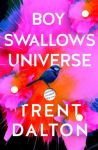
Trent Dalton, Boy swallows universe (#BookReview)

Trent Dalton, Boy swallows universe

Two books came to mind as I was reading Trent Dalton’s debut novel Boy swallows universe. One was Steve Toltz’s out-there book about fathers and sons, A fraction of the whole (my review), and the other was Tim Winton’s Breath (my post), which explores what it is to be a good man, but more on these anon.

I had three reasons for wanting to read the book. Firstly, it was my reading group’s first book of the year, and secondly, it was recommended by two people whose literary tastes often match mine, my brother and an ex-reading group friend. Finally, there was its Brisbane setting. I spent six special years of my childhood in the Sandgate area of Brisbane, where, I’d read, Dalton had also lived while growing up. Fortunately, all these reasons were justified as this novel is an excellent read – engrossing in content and intriguing in style.

Boy swallows universe covers around six years of its protagonist Eli Bell’s life, starting in 1985 when he is 12 years old and living with his mother, Frankie Bell, and stepfather Lyle. He and his mute older brother August are regularly babysat by Slim (based on the real criminal, convicted murderer Arthur Ernest Halliday) while Frankie and Lyle are out dealing drugs. Slim, for all his apparent criminality, turns out to be one of the most important wise people in Eli’s life – and, while he isn’t always around as Eli grows older, it is to Slim that Eli often speaks, consciously or subconsciously, drawing on his ideas and advice, as he faces life’s challenges. Eli’s relationship with Slim is just one of the threads and refrains that hold this big book together.

a genre-bending coming-of-age crime novel with a touch of magic

Terrible things happen in the book – and Eli and August are pushed around, buffeted by the things that happen in the adult world and over which they have little or no control. Part way through the book, having lived most of their lives with Frankie and Lyle in Darra (Brisbane’s southwest), they find themselves dumped with their damaged alcoholic father Robert Bell, whom they don’t know, and who lives in Bracken Ridge (Brisbane’s north in the Sandgate electorate). While Frankie and Lyle, for all their illegal doings, provide a generally stable home-life, the one provided by Robert is erratic, affected by his alcoholic binges. And yet, here too, the two resourceful boys find love – and more, support.

All this probably suggests to you a straightforward book about dysfunctional families, of which there are many these days. But, you would be wrong, because wrapped around the domestic is a story of drug dealing, drug double-dealing and violence, that takes this book into a whole other realm. In fact, the best way to describe it is as a genre-bending coming-of-age crime novel with a touch of magic. You with me?

Now, I’m going to shift gear a bit and return to those two books I mentioned in my opening paragraph. The book’s opening line is “Your end is a dead blue wren”, and we soon discover that these words have been written in air by August, who is sitting on their brown brick fence while Eli is being taught to drive by Slim. There’s a bizarre edge to all this which, in addition to the fact that the book is mostly about men and boys, fathers and sons, made me think of Toltz’s A fraction of the whole. However, while Toltz’s “bizarre” lies more in the absurd area, Dalton’s is more magical. There’s a red telephone in a secret room, for example, that always seems to ring when Eli is around. Who is at the other end? August at one point says it is he, but is it really? It doesn’t really matter, in fact, because the phone seems to be more about deflecting or, perhaps, relocating fear and trauma than about reality. It works because Eli’s voice and the sort of jaunty in-the-moment tone make it work.

More interesting to me, though, is the link with Winton’s Breath. They are very different books. For a start, Breath is more novella, while Boy swallows universe verges on the big, baggy monster. But, both books are fundamentally about what makes a good man – and, in neither case is the answer simple. In fact, it comes more often than not from flawed, if not sometimes bad, men. From early on in Dalton’s novel, Eli asks various men – family, friends, criminals, strangers – “are you a good man?” Many are surprised and know not what to answer. Gradually though Eli puts together his own picture from their answers and bevaviours, until, near the end, he says (addressing Slim in his mind):

This is what a good man does, Slim. Good men are brash and brave and fly by the seat of their pants that are held up by suspenders made of choice. This is my choice, Slim. Do what is right, not what is easy … Do what is human.

Now, before I get onto the writing, a bit about this genre-bending novel’s plot. As I mentioned above, the novel’s plot-line relates to drug double-dealing. This results, at the end, in quite a suspenseful, page-turning adventure that was much enjoyed by many in my reading group. But, not so much by me who finds reading action pretty boring. Indeed, if I have one question about the book, it’s whether it really needs the final chase. I think the point would have been made had the novel concluded just before it – but that final adventure will help the novel adapt well to film, and to a film that many will want to see, so I won’t be too churlish about it.

And, anyhow, it’s a small criticism because I greatly enjoyed the book. It is so well constructed. Little details dropped in one place are picked up in another; little verbal refrains recur adding both poetry and meaning without being heavy-handed. Even the curious, often cryptic, three-word chapter headings, like “Boy writes words”, “Boy steals ocean”, and “Boy masters time”, are explained late in the book when the Courier Mail editor asks Eli to tell his life in three words.

There’s also lovely descriptive, sometimes lightly satirical writing, such as this from the Vietnamese restaurant scene:

There’s two more tanks dedicated to the crayfish and mud crabs who always seem to resigned to the fact they’ll form tonight’s signature dish. They sit beneath their tank rocks and their cheap stone underwater novelty castle decorations, so breezy bayou casual all they’re missing is a harmonica and a piece of straw to chew on. They’re so unaware of their importance, so oblivious to the fact they are the reason people drive from as far away as the Sunshine Coast to come taste their insides baked in salt and pepper and chill paste.

Then, of course there’s the characterisation, and the first person voice. Eli is such a kind and likeable character. His coming-of-age is a tough one, but he’s positive, loving, open-minded and willing to learn. He’s also courageous. It could almost be schmaltzy except that you see the grit and know that he has been tested. More cynical readers might think Eli is too good to be true, but the book’s light tone and touch of magic remind us that this is not social realism. It’s “true” to the heart of what Eli (and I believe Dalton) experienced, but it’s not fact. It’s about surviving trauma. Dalton has, I’d say, found a perfect recipe for conveying dysfunction and accompanying trauma while also showing how it can be mentally and spiritually survived.

A good read, and a meaningful book that got my reading group off to a rip-roaring start for 2019.

Trent Dalton
Boy swallows universe
Sydney: Fourth Estate, 2018
474pp.
ISBN: 9781460753897

Jamie Marina Lau, Pink Mountain on Locust Island (Guest post by Amanda) (#BookReview)

Late last year I hosted a review of Maria Tumarkin’s Axiomatic by Amanda who had responded to my call on the Australian Women Writers Challenge for reviews of it and Jamie Marina Lau’s Pink Mountain on Locust Island, which won the 2018 Melbourne Prize for Literature’s Readings Residency Award, and was shortlisted for the Readings Prize for New Australian Fiction.  Amanda offered to write reviews of both, and so, as with Axiomatic, I am hosting Amanda’s review, so that it can then be added to the AWW database. Thanks very much – again – Amanda!

Synopsis of Pink Mountain on Lotus Island

From publisher The Lifted Brow’s website:

“Monk lives in Chinatown with her washed-up painter father. When Santa Coy—possible boyfriend, potential accomplice—enters their lives, an intoxicating hunger consumes their home. So begins a heady descent into art, casino resorts, drugs, vacant swimming pools, religion, pixelated tutorial videos, and senseless violence.”

Amanda’s review

Jamie Marina Lau, Pink Mountain on Lotus IslandTwenty-year-old Lau’s debut novel is simultaneously innovative, surreal, disjointed and funny. At her best she writes like a stand-up routine; at her worst, though, she veers into the bizarre and nonsensical: “cardigan metropolis and a hushed voice millennia”; “he was in a creme brulee mood”. I don’t get it either. The chapters are divided into numerous short vignettes and sequences, some only a sentence long and follow a linear timeline. It’s a book for the social media and internet age – perhaps written for those just getting used to reading serious prose after the word limits on Twitter.

Its protagonist Monk is 15, and living with her Xanax-addicted former Art lecturer Dad after the departure of her Mum. It could be set in any urban metropolis with a bustling Chinatown. Along comes the love interest Santa Coy (also a developing artist) and then things get complicated.

There is a narrative though that can be followed, and it is cinematic so you can visually follow her discussions around what makes Art and what people will sacrifice for it, the difficulties of human relationships, and cross cultural complexities.

Food is another obsession – its preparation, consumption, description of, e.g. Yum Cha – and some bizarre discussions. What is the difference physically and philosophically between turnips and yams? Turnips are lively and yams are brooding. Obviously, if you didn’t know this you have to visit the same supermarkets as Monk does. [Haha, love this Amanda.]

Some plot twists are unbelievable and her non-traditional use of metaphors and language often fall flat. Lau (who also makes music under the pseudonym ZK King, hence the musical references in the novel) stated in an interview that she often has several browsers open while writing – reading articles, listening to music etc – and this multimedia multi-tasking is what comes across in her writing and original use of language.

Lau described Monk as the most sincere female character she had created – and that is the strength of this novel, Lau’s authentic portrayal of her teenage Monk as a composite of angst, joy, confusion, curiosity and strength. You just need to get through some bizarre distractions to discover this.

AWW Challenge 2019 BadgeJamie Marina Lau
Pink Mountain on Locust Island
Brow Books, 2018
244pp.
ISBN: 9780994606884

Jarrah Dundler, Hey Brother (#BookReview)

Jarrah Dundler, Hey BrotherIs she ever going to write another actual review you’ve been probably wondering but yes, I am – and it’s for the young protagonist book I mentioned in my recent Reading Highlights post. The book is Jarrah Dundler’s debut novel, Hey Brother, which was shortlisted for the The Australian/Vogel Upublished Manuscript Award in 2017 under the title Tryst. Tryst is quite a clever title: it’s the nickname of the 14-year-old protagonist Trysten, and suggests actual and hoped for trysts between the teen couples, but maybe it also has overtones of something more genre-like so was rejected? As it is, the published title conveys both the familial and broader meanings of brotherhood, which are played out nicely in the novel.

Publisher Allen & Unwin categorises Hey Brother as Popular Fiction, and describes it as “a genuine and compellingly portrayed family drama of a tough kid from rural Australia”. I would describe it, however, as a coming-of-age novel, and it reads to me as more Young Adult than Adult. There’s nothing wrong with this, but it explains my uncertainty about how to read it – or, to be more specific, how to write about it.

So, the book. Hey Brother has a first person narrator, the aforementioned Trysten who lives on a property in northern New South Wales with his mother, Kirsty, and his big brother Shaun. His father, Old Greggy, is there too, but prior to the novel’s start he’d been exiled by Kirsty to a caravan down by the river. So, it’s a somewhat fractured family, but not devastatingly so, because it becomes quickly clear that there’s an underlying love and respect between them all. The novel starts with big brother Shaun going off to fight “the Taliban in Afghanistan”, where he’d “been keen to head from the get-go, back when the dust from the Twin Towers was still settling”.

Into this mix comes uncle Trev who turns up to support his sister, Tryst’s mother who is worrying about her son off at war. Her form of “worrying” includes self-medicating with alcohol and letting her other responsibilities fall by the wayside. Unfortunately, Trev, who has some lovely moments of wisdom, also self-medicates his own demons the same way. It’s not a lethal mix, but it creates its challenges, and in fact offers Trev some insights. There is also Tryst’s best friend Ricky, and, as the book progresses, their girlfriends, Jessica and Jade. It’s a tight little community, and Dundler handles the relationships well. They feel real, with the tensions authentic, understandable, and not over-dramatised. In fact, Dundler’s characterisation is a strong point. His people live and breathe from the moment they appear on the page.

Hey Brother, then, features the typical YA narrative – a young teen meets his first love and is desperate to spend more time with her. But this particular story is complicated by the teen’s relationship with his brother whom he hero-worships but who returns from war psychologically damaged, suffering from PTSD. The novel’s crisis is, in fact, triggered by Shaun’s mental distress, and complicated by the conflict confronting Tryst between his love for Jessica and for his brother.

The novel is told first person by Tryst, in the vernacular of a rural, teenage boy. It’s fresh, direct, immediate, full of the profanity and colloquialisms that are appropriate to the context – but, here’s the thing, it is also more descriptive than reflective. Tryst comes across as a loving, heart-of-gold young man, but he is about the moment. To some extent we can see the deeper issues at play here – the PTSD, the complexity in the adult characters’ lives and relationships – but these are not the novel’s focus. The focus is Trysten, his life and, ultimately, his growth. This, to me, makes the novel Young Adult – and makes it quite different from, say, Laguna’s The choke (my review) where, although the story is young Justine’s, the themes focus on the impoverished environment – economically, socially, spiritually – that makes her life the way it is.

Did, then, I enjoy the novel? Yes, in that its protagonist and setting are foreign to my experience and I like to read about lives different to mine, and because the writing was engaging, lively, and appropriate in language and imagery. Here, for example, Tryst describes Trev confessing to past troubles:

It was like he wanted the words to go straight down the plughole after he’d uttered them.

And Trev, late in the novel, gives Tryst some advice:

‘Decisions, mate. That’s what defines you in the end. Some advice for ya–before you make one, try and give it a little thought beforehand, would ya? ‘Cause, believe me, regret’s a f****n c**t of a thing to live with.’

I also liked that late in the novel, we learn, in passing, that Ricky, Tryst’s friend, is indigenous. The reference is somewhat didactically done, but Dundler clearly wanted to do what we need more of, that is, to include indigenous characters without their indigeneity being an issue in the story. How you do this is the challenge.

However, Young Adult Fiction is not really my interest. Young Adult concerns belong to a long-ago part of my life. I appreciated Dundler’s skills in plotting and characterisation, not to mention his heart and desire to give life and air to some big issues, but I did tire at times of Tryst’s concerns, perspective and voice. Not his fault, mine. I would unhestitatingly recommend this book to YA readers – and would willingly check out Dundler’s next work. A good debut.

For a beautiful post on this book, check out Theresa Smith’s (Theresa Smith Writes).

Jarrah Dundler
Hey brother
Sydney: Allen & Unwin, 2018
281pp.
ISBN: 9781760631123

(Review copy courtesy Allen & Unwin)

Note: The asterisked words in the quote are to defect the wrong sort of hits coming my way.

Emily O’Grady, The yellow house (#BookReview)

Emily O'Grady, The yellow house

Although Emily O’Grady’s debut novel The yellow house won this year’s prestigious The Australian/Vogel’s Literary Award for unpublished manuscripts by authors under 35, I wasn’t sure at first that I was going to like it. I think this was because I was feeling I’d read a surfeit of books this year about young people living challenging lives in rural settings – Charlie Archbold’s Mallee boys (my review), Jenny Ackland’s Little gods (my review) and Sofie Laguna’s The choke (my review). I wasn’t sure this was going to have anything new to offer.

However, it wasn’t long before ten-year-old Cub’s voice got me in and I realised that this book had a different spin again, which is that it explores how families of violent or sociopathic criminals, like serial killers, cope in the long years after it all comes to light. It’s a coming-of-age story, in a way, but a very different one. Cub, then, is our narrator. She lives on a “lonely property bordering an abandoned cattle farm and knackery” (back blurb) with her twin bother Wally, her 17-year-old brother Cassie whom she adores, and her parents, Colin and Christine. Within sight of their home is “the yellow house” in which her maternal grandfather, Les, had lived. He had died two years before the Cub and Wally were born – and in the prologue we learn that he had been a serial murderer of young women. The prologue closes with a now wiser Cub telling us:

Now, I know everything he did trickled down and created us all, because it turned out he was the god of all our lives.

So we know at the beginning something that Cub doesn’t know when the narrative “really” starts. Why does O’Grady take this approach? I’m guessing it’s to focus us less on that plot. We know what Cub doesn’t know – or at least enough of it. We can therefore focus on how a family lives with this knowledge rather than on trying to work out, as Cub has to do, what the secret is. It makes Cub a perfect naive narrator: she has the curiosity and loyalty of a child but lacks the wisdom necessary to make the right calls. There’s an added complexity to Cub’s situation which increases her isolation: everyone else in the family knows, including her twin brother. Cub wasn’t told because she’s a girl. It’s no coincidence that she, Coralie, has a baby-ish nickname, while her twin brother doesn’t.

The novel proper starts when Cub is approaching 11 years old, and her aunt, Helena, and 11-and-a-half-year-old cousin, Tilly, move into the yellow house. Tilly’s father, Dermott, we’ve already been told, had driven his car into the dam some time ago and died. It is Helena and Tilly’s appearance which sparks the events that play out in the rest of the novel, events that are “driven” by that violent forbear whose “rotten blood” is in their veins, whose legacy they struggle to shake off.

It’s a horrifying novel. We realise early on that the family is ostracised by the community in which they live, and is struggling emotionally. Cub’s Dad does his best to keep them together but is ill-equipped for the challenge he faces, while her Mum also does her best in her own way, but regularly takes to her bed, with various malaises, many depression-based presumably. Cub and Wally have no other friends at school, something Cub doesn’t fully cotton on to, but we do:

The kids at school were strange; Wally and I played by ourselves at lunchtime, always paired up when we did partner work.

Cub is consequently desperate to make Tilly, so close in age, her friend:

I tried to think of something else to say. I knew we had one chance to make a good impression and I didn’t want to waste it. But the silence felt as deep as the dam, impossible to swim out of. I was annoyed at myself for not practising with the girls at school. I should’ve been prepared.

But, it never quite works. Tilly, dangerously – she’s too much like her mother, Cub’s Mum hints at one stage – is more interested in boys. And, there are boys – besides Wally. There’s Cassie, and his creepy friend Ian. Tilly, like Cub, doesn’t know the story of the “yellow house” and her mother is determined to keep it that way.

The story develops slowly, chillingly, and, it feels, inevitably, as the secrets, parental inadequacy, community prejudice and cold opportunism combine to result in … I’d like to say more, but perhaps should not spoil the plot.

This is not a novel in which everything is explained – as can be typical of naive narrator stories – but there seems to be a specific intention here. At least, I’d say that O’Grady’s aim is not to tease out all the possibilities and permutations of the situation, nor to follow the more usual crime fiction path of restoring order out of chaos. Instead, it’s to encourages us, at each point, to consider what might be happening, why it might be happening, and what might make (or have made) it happen differently. That gives the book a power that those more traditional crime novels don’t have.

Besides this open-endedness which kept me engaged and pondering throughout, there’s O’Grady’s writing. It’s not tricky. There’s quite a bit of dialogue and simple description of what’s going on, as you’d expect, rather than a lot of reflection, but O’Grady has some lovely turns of phrase. At one point Cub is near Cassie’s friend Ian:

Now that I was right up close to him I didn’t know what to do; it was like my brain was wrapped in sticky tape and I couldn’t think properly.

The language and imagery, as this example shows, are appropriate for Cub’s age. And there’s the “yellow house” itself. Yellow has so many connotations. It can suggest something warm, bright, cheery, hopeful, but is also the colour of cowardice and deceit, and can convey sickness. The contrast between these positive and negative meanings of the title underpin the novel’s horror.

Why read this novel? There’s the obvious reason that it explores a subject that many of us must wonder about when we hear of violent crimes – how does the wider family cope, what happens to them? And there’s the associated reason that in so doing it might encourage us to think more empathetically if we found such a family in our midst. But, besides that, it’s an engaging debut novel by a new young writer from whom we will hopefully hear more. It’s always exciting to be in there at the start.

Lisa (ANZLitLovers) also liked this book.

AWW Badge 2018

Emily O’Grady
The yellow house
Crows Nest: Allen & Unwin, 2018
314pp.
ISBN: 9781760632854

(Review copy courtesy Allen & Unwin)

Laurie Steed, You belong here (#BookReview)

Laurie Steed, You belong hereMy first reaction as I started reading Laurie Steed’s debut novel, You belong here, was, “oh dear, another novel about a dysfunctional family”, but I was quickly disabused of that prejudice because while that is indeed the book’s “genre”, Steed writes it in such a fresh and engaging way, albeit seriously so, that I was soon engrossed in his Slater Family.

You belong here is an ambitious novel, spanning over four decades from 1972, when Jen and Steven are 16 years old, to 2015 when their grandchild turns 13. This is the span you’d normally find in a family saga of 400 pages or so, but Steed does it in under 250 pages. How does he do it?

First, though, the basic plot. It concerns the marriage and its subsequent breakdown, of the above-named Jen and Steven, and the impact on their three children, Alex, Emily and Jay. Australian author Melanie Cheng, whom I’m yet to read, says on the back cover that the family has “all the dysfunction of an Anne Tyler novel, but with a distinctly Australian feel.” Having read and loved Tyler’s novels (before my blogging days), I’d say this is a good call. Steed, like Tyler, deals with a very particular family – its idiosyncrasies, and shifting individual relationships – while also speaking to universals like love and loyalty, betrayal and breakdown, closeness and distance.

Now, back to the time span. The book is organised by chronological parts: 1972-1984; 1985-1995; 1996-1999; 2000-2002; and, 2015. To cover this ground it is, necessarily, episodic*. Each part comprises short, evocatively titled chapters, which contain scenes from a life, switching the point-of-view between the five main characters. These time-shifts (which aren’t all clearly signposted within the parts) and changing perspectives demand a level of concentration from us readers, but I didn’t find they slowed me down significantly. On the contrary, they kept me engaged and focused on the matter at hand – that is, on whose story I was reading now, what was happening to them and why.

A hairline crack. Small, but spreading.

So, the early parts of the book focus on Jen and Steven’s relationship, their falling in love and the subsequent stresses – three children in quick succession for Jen, and failure at work for Steven – which drive a wedge between them. Steed’s writing is evocative and tight – it has to be really – and I enjoyed it immensely. Take this description of Steven’s commute to his job at the airport:

Steven had lost track of time. Moments, hours, left scattered along the Great Eastern Highway while driving to and from work. Seconds entered in the till by an underpaid, overworked cashier. A day maybe two, left hanging in the change room at the airport. (Before a fall)

Or this of Jen, in the bedroom with Steven, after we discover she’s been having an affair:

She stared past him at the wall, beneath the windowsill. She’d seen it before, maybe weeks, months earlier. A hairline crack. Small, but spreading. (Wallpaper)

The staccato rhythm here is perfect. And Jen’s sadness is palpable.

As the novel progresses, the children grow up and we shift to their lives, with Jen and Steven receding somewhat from the narrative focus. Each child struggles in his or her own way to navigate the family and their place in the world. We are frequently devastated for them, while also applauding their will to survive. There are some lovely vignettes, such as a cricket innings played by Alex and his friend Walker. The whole is underpinned by pop-culture references to music and video games that were only vaguely familiar to me as a baby-boomer parent of late Gen-X early Gen-Y children. Knowing these better might have added to my appreciation of the novel, but I didn’t feel my lack greatly. That is, the novel seemed to work well for me anyhow.

The jerky, episodic structure may have grown out of the original short story concept, and for some it could result in frustration at not “knowing” the characters as fully as they’d like. But I thought it effectively mirrored both the family’s fractured relationships and the way they stick together despite it all. Over time, allegiances switch as particular stresses develop for one person or another, but the love between them, while it falters at times, comes through.

But then, Alex couldn’t make head or tail of any of it. He felt sad and sorry for his sister, his brother, and the fraught, familiar way that the family closed ranks when one began to sink. It felt tender if he touched upon it, like he’d picked up a peach and felt the bruise. (Skin I’m in)

Lest this sound a bit corny, let me say that this is a serious book. The impact on the children of their parents’ separation is unflinchingly exposed, particularly through mental health issues and the difficulties they face in forming long-lasting relationships. It isn’t a pretty picture, but the end, without giving too much away, suggests that with love, perseverance and loyalty, families can and do muddle through.

And so, a book that I thought at the beginning was just another novel about a dysfunctional family surprised me with its insights, warmth, relevance to us all, and above all, its writing pizzazz. Well-worth reading.

* WA writer-blogger Nathan Hobby’s review tells me that the book started as a short story collection, which makes sense. Lisa (ANZLitlovers) featured Laurie Steed in her occasional series on Debut authors.

Laurie Steed
You belong here
Margaret River Press, 2018
250pp.
ISBN: 9780648203902

(Review copy courtesy Margaret River Press)