I was unsure about whether to make this post part of my Trove Treasures or Forgotten Writers series, but Wikipedia tells me that in 2006, the historian John Hirst, writing in The Monthly, included this author’s book, The colonial Australians, in a brief list of the best Australian history books of all-time. That probably means he’s not quite forgotten, wouldn’t you think? So, a “Trove Treasure” it is. The author is David Forrest, which is the name used by historian David Denholm for his fiction.
David Denholm was born in Maryborough, Queensland, in 1924 – the place where I, also, was born but, more significantly, it was the birthplace of P.L. Travers, the creator of Mary Poppins. Denholm died in Wagga Wagga, just 3-hours drive from where I live now, in 1997. He has an entry in Wikipedia and in AustLit. From these I gleaned that he served in the Australian army, in New Guinea, during World War 2 and worked in the banking industry until 1964. (I can’t resist adding here that Pamela Travers’ father was a banker, as was my own.) He was a mature age student when he went to university, first to the University of Queensland and then the Australian National University, where he gained a Ph.D in history. He ended his career as an academic in history at the Riverina College of Advanced Education.
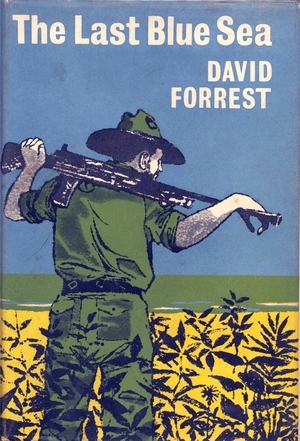
He wrote two novels. His debut novel, published in 1959, was The last blue sea. It is set in New Guinea during World War 2. It focuses, in particular, on the difficulty the Australians faced in fighting in the heat and rain of New Guinea. Wikipedia shares that it has been called “the classic short novel of the New Guinea campaign.” It apparently won the first Mary Gilmore Prize. I wrote last year about his winning this award, but it wasn’t clear in my research that he was the first winner. Now I know.
However, the book which inspired this post, was …
His humorous novel
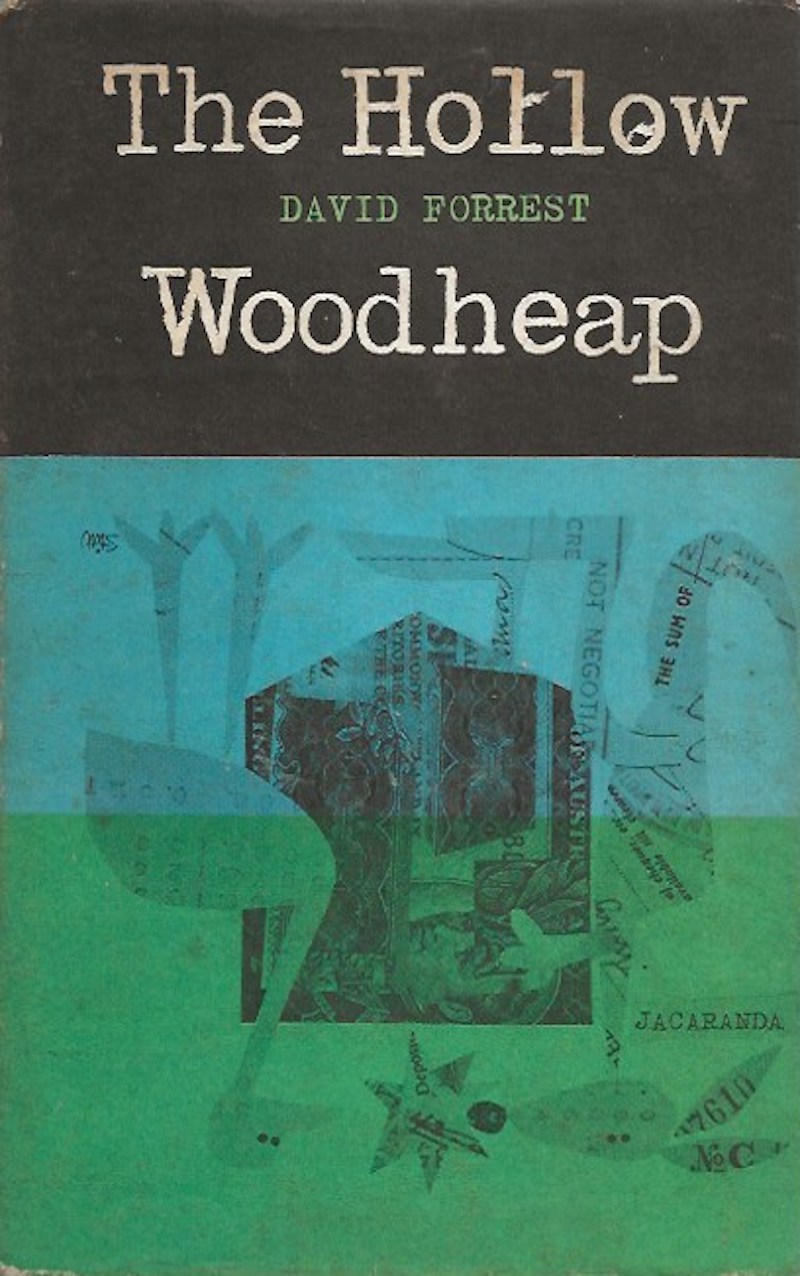
The Trove Treasure I found was in Sydney’s Tribune on 12 September 1962 and was written by someone signing as R.W. S/he started with:
Humorous novels are not particularly common in Australian literature, or for that matter in any other. This is all the more reason why we should be grateful for such a deliciously humorous work as David Forrest’s new novel, “The Hollow Woodheap”. Not since Lower’s famous “Here’s Luck” has the Australian reader’s sense of humour been so titillated.
It seems that Forrest took to heart the advice to “write what you know”, because his first novel was set during World War 2 in New Guinea, where he had served, and this novel, says R.W., “deals with life in the branch office of a bank in Brisbane” which is where he was working at the time. Critiquing the book, R.W. says that the “the plot is rather flimsy” with the humour deriving “mainly from the personalities and behaviour of the characters in their office environment”. Forrest “reveals a sense of the ridiculous and a capacity for irony, of which there is not the slightest trace in his war novel”. My question is, does the humour have a point? R.W. continues,
The new novel is not a work of profound social criticism, but in his lightly humorous way, the author makes many a sharp jibe at the snobbery and red tape of banking institutions, and at the soulless careerism which corrupts those who cannot resist the lure of money, power and status.
I found little else about the book, but I did find a review-rebuff in a Letter to the Editor in The Canberra Times (14 August 1962). Unfortunately, I could not find the actual review, but Maria Reah did not agree with some criticisms the reviewer had made. I’ll just share one paragraph from her letter:
It is true that most of the characters—the bank manager (The Keg), the bank inspector (The Drummer), the savings bank officer (St. Joseph the Bloody Worker), and the three models of managerial material (Mark One, Mark Two and Mark Three)—are caricatures, but Forrest is not the first creative artist to use caricature to good purpose. If these characters were developed more fully they would lose their value as symbols. For The Hollow Woodheap is more than an attempt to poke fun at “the establishment,” though it does this very successfully. It presents a novelist’s impression of Australian society. The sociology is impeccable, but unobtrusive. The young man who wrote the book is not angry enough to lose sight of either the patterning of social life or the lighter aspects of this patterning. His humour is never plodding, as it appears to your reviewer.
Finally, I’ll return to R.W. He hopes that Forrest will write more humorous novels. As it turns out, while he lived another thirty or so years, Forrest wrote no more novels, humorous or otherwise. Wikipedia , however, does say that he wrote a notable and humorous short story, “The Barambah mob” (1963), which has been often anthologised.
I could say more about Denholm/Forrest, but my point for this post is simply this little “treasure”. I agree with R.W. that good humorous novels are hard to find, but they add so much to our literary environment.
Do you have a favourite humorous novel, and would you share it with us?
 Whispering Gums