Sue Williams, Live and let fry (#BookReview)

Sue Williams, Live and let fryWell, 2018 is clearly “the year of the Mallee” here at Whispering Gums, with Sue Williams’ Rusty Bore Mystery, Live and let fry, being my third Mallee-set book so far this year. The others are Jenny Ackland’s Little gods (my review) and Charlie Archbold’s Mallee boys (my review). By the time I visit the Mallee – next year I hope – I should know it well, though I might stay away from Rusty Bore. Fortunately, that won’t be hard as Rusty Bore is fictional. I say fortunately, because who wants to visit a place known for murders? It would be like choosing to visit Midsomer!

Seriously though, on with the book, starting with the fact that it’s the third in the Rusty Bore Mystery series. I haven’t read the first two, but I’d say this one stands alone well. There’s enough recap for the new reader to quickly pick up the main characters and their relationship with the protagonist, Cass Tuplin, who’s an unlicensed private investigator as well as the owner-operator of the Rusty Bore Takeaway. I’m not a big reader of crime fiction, but I do watch a bit on TV, and I can say that Cass fits the mould of many TV detectives – private or not, licensed or not – in that she has a messy personal life. She’s clearly had a fling with Vern, the owner of the town’s only other shop, but is now with Leo, who’s doing good works in Bolivia but is staying away significantly longer than he’d told her he would. Cass also has two sons – Dean, a not-very-successful policeman in Mildura (a real place), and the-not-very-sensible Brad who’s waiting his court case for “disseminating false information to the market.” There’s affection between mother and sons, but it’s not without tensions – either because Dean is fussing over his mother’s safety, not to mention her unlicensed detecting, or because Cass is too focused on this detecting to listen to Brad well enough to hear what’s happening in his life.

None of this need be taken too seriously, though. As the back cover blurb says, Williams is “Australia’s answer to New Jersey’s Janet Evanovich.” I haven’t, I admit, read Evanovich – shock! horror! – but Daughter Gums has, so I know enough to realise that her crime novels are bright, breezy affairs. And so, certainly, is Live and let fry.

Now, what to say? This is rural crime, and it starts with the disappearance of the aforesaid Vern’s new lady friend, Joanne, from the neighbouring town of Sheep Dip. (There’s nothing subtle in the town names here – Rusty Bore, Sheep Dip, Muddy Soak, Hustle.) Cass, like any self-respecting unlicensed private detective, is reluctant to become involved but, of course, you know she will – and she does. Pretty soon, a murder occurs – not Joanne’s though – and the plot rapidly thickens as we move into the murky world of developers and environmental protection. This has our intrepid Cass driving backwards and forwards across the Mallee in her “little Corolla”, getting into more and more serious scrapes, worrying her sons, irritating the police, and not always making the right calls – as you’d expect.

All this gives Williams the opportunity to provide us with a picture of the Mallee and its inhabitants, which she does in language somewhat different from that we’ve seen in those other Mallee books I’ve read. Here is the Mallee, for example:

As I got closer to Mildura the eucalypt-and-orange desolation gave way to irrigation green, the dark green of orange groves, the brighter, flamboyant green of grapevines, the camouflage khaki of olive trees. I drink it in – green’s not a colour we get that much of in Rusty Bore.

And here is one of its inhabitants:

Nola’s eighty-two and usually quite mentally robust, with opinions carefully cryo-preserved since 1953.

The writing is peppered with gentle, affectionate mocking like this, along with broad satire of various contemporary issues and preoccupations, such as “coffee condescension” from city-siders, and Cass’s own “artisanal” food. We’re also told that

Leo’s import-export business in Muddy Soak folded after the African knick-knack trade fell victim to the decluttering trend.

And there are digs at politics and politicians, such as:

I stood at the desk and waited. A TV flickering behind Taylah showed a surging crowd of middle-aged people in suits. Mostly men, looked like politicians. Another leadership spill? A new Royal Commission? There’d been a lot of debate lately about whether air exists. “If you can’t see it, can’t smell it, it can’t be there.” The slogan of one of the newer political parties.

It’s not subtle, but then Williams’ goal is less social or political commentary than maintaining a light breezy tone and conveying character.

Now, though, back to Cass. Does she get her man (or, not to be sexist, woman)? Well, this is what I’d call “cheery crime”, so yes, one way or another, she does. In other words, without spoiling anything, it all comes out right(ish) in the end and Cass lives to fight (or not, as she chooses) another day. I’m not sure I’ll read another Rusty Bore mystery as I feel I’ve got its measure now, but for those who love light-hearted crime, particularly with an Australian flavour, then Rusty Bore could be just the ticket.

AWW Badge 2018Sue Williams
Live and let fry
Melbourne: Text Publishing, 2018
295pp.
ISBN: 9781925603514

(Review copy courtesy Text Publishing)

John Lang, The forger’s wife (#BookReview)

John Lang, The forgers wifeWhen new publisher Grattan Street Press offered me a review copy of John Lang’s The forger’s wife last November, I couldn’t resist, even though it is from their Colonial Australian Popular Fiction series. I say “even though” because, had it been written now, it would probably not have come under my radar. It’s very much in the popular vein. However, as a piece of work first published (in serial version) in 1853, it has much to offer modern readers.

It raises the question, in fact, of why read historical fiction when you can read from the time itself. I’m being a bit flippant here, I know. There is reason – there’s value in looking back, in revisiting the past with eyes from the present – but the question is worth asking, if only to focus our minds on context when we read.

Enough pontificating though, let’s get to the book – or, first, to the author. According to Grattan Street Press, John Lang was Australia’s first locally born novelist. I have in fact written about him briefly before, in a Monday Musings post, but I hadn’t had a chance to read him, until now. I mentioned in that post Victor Crittenden’s biography, because its title says a lot – John Lang: Australia’s larrikin writer: barrister, novelist, journalist and gentleman. Ken Gelder and Rachel Weaver’s Introduction to The forger’s wife provides interesting background to his life, some from Crittenden’s work. Lang, it seems, lived quite a peripatetic life, and had had a few books published by the time The forger’s wife was serialised.

Gelder and Weaver write that it’s generally accepted that The forger’s wife is “the first novel by an Australian-born novelist to feature an Australian detective.” They go on to suggest that it is “the first detective novel in the Anglophone world” arguing that it predates by around ten years The Notting Hill Mystery by Charles Felix which has been seen as the first detective novel in English. The rest of their introduction – naturally, because the series is about popular fiction – focuses on the book as a detective novel. However, I’d like to discuss other things.

The novel is essentially a melodrama which, say Gelder and Weaver, follows “the fairly familiar pattern of a female emigrant’s tale.” It tells the story of Emily Orford, the rather spoilt only child of a well-to-do British army officer. Eschewing more suitable suitors, she falls for a man whom she believes to be Captain Reginald Harcourt, but who is, in fact, the forger Charles Robert. Immediately after their elopement, he is arrested and convicted of forgery, and transported to Australia. Emily, believing that Reginald is innocent, follows him to Sydney. Here, she luckily finds a few friends amongst the colony’s rough and tumble, one being the convict turned policemen-and-thief-taker (our detective), George Flower. She also reconnects with the scurrilous Reginald/Charles, who, despite getting into increasingly outrageous scrapes, manages to keep Emily believing in him. This is a 19th century melodrama so it all turns out alright in the end, though not necessarily exactly as readers might expect.

What I want to talk about now, though, is why this novel is worth reading – besides its credentials as a pioneering detective novel, that is. My reasons have to do with the insight it provides into colonial life. Think how much we learn about life in mid-nineteenth century England from Charles Dickens’ novels. So …

“this uncouth and cruel land” (Emily)

We learn a few things about early to mid-nineteenth century colonial Australia, starting with some vivid descriptions of town and country. We learn about the roughness, the struggle to survive which results in various combinations of theft, corruption, bribery. The novel’s themes include the survival of the wiliest, and the challenge of identifying who you can trust. The naive, trusting Emily would not have survived a minute without the initial help of Captain Dent from Lady Jane Grey, the boat she arrived on, and then George Flower who looks out for her.

We learn about how women make a living – some via the oldest profession. Emily, though, gives piano lessons. However, when she becomes persona non grata because of Reginald, she’s “compelled to do needlework, to knit socks and comforters”. We learn about convicts who become policemen versus those who become bushrangers. We learn about settlers taking the law into their own hands. George Flower, on the hunt for Reginald now turned bushranger, tells a well-to-do settler that settlers need to learn to protect themselves:

The Gov’ment’s a fool for paying for mounted police. You ought to learn the value of combination, and how to protect yourselves.

Later on the same page he says:

I wish to teach you settlers, and the Gov’ment, and bushrangers, a great moral lesson. I want to make you more independent and secure – bushrangers less numerous and daring – and Gov’ment more economic and sensible.

And, of particular interest to me, we learn about attitudes to the original inhabitants. In between the above two comments, Flower says:

You can club up to get rid of the blacks, when they spear your cattle or kill your sheep. Why can’t you capture your own bushrangers?

So, the settlers clearly have no compunction about getting rid of “the blacks” themselves. Presumably they are “easier pickings” and don’t warrant the respect of a lawful process? You don’t always need to read history, then, to know what went on. Sometimes fiction contains useful truths.

There are other references – or not – to Indigenous people. A little earlier than the above scene, Flower is enjoying a lovely moment in a remote spot, where:

he discoursed for some time with [bushranger] Millighan on the grandeur of the scene, and the sweets of liberty. It was a beautiful warm day, and not a cloud in the sky. The foot of man had never before trod the ground on which Flower and Millighan were then standing.

I don’t think Lang was being ironic here!

Later, Flower returns to the same spot, where Millighan’s skeleton now lies. He treats the skeleton of this “brave” adversary with respect, leaving a note to ensure that when, in the future, the remains might be “stumbled across”, the finders will “not suppose he was some black fellow”!

And yet, a page later, there’s recognition of learning from these same “black fellows” when he makes a fire “as the Aborigines do, by rubbing two pieces of dry stick together until they ignite.”

The final reference to Indigenous people also refers to cultural learning. We are told that Flower, now back in England, had become very “‘colonial'” not only in “outward appearance”, but also in “parlance”. “He had mixed a good deal with the blacks” and, while the Aboriginal language was not “thoroughly understood by the Europeans”, it had contributed “sundry worlds and phrases” which Flower used, to the incomprehension of his listeners.

So, while I found the story itself entertaining – indeed a thoroughly enjoyable read – it’s these unconscious insights into the times by a writer of the times that has made this book memorable. I would love to read more in this series.

John Lang
The forger’s wife
Parkville: Grattan Street Press, 2017 (Orig. serialised in 1853)
224pp.
ISBN: 978098762304

(Review copy courtesy Grattan Street Press)

PS: I apologise for overwhelming your inboxes/reader feeds this week. There’s been a lot on. I’ll return to situation normal next week.

Tony Park, The cull (#MiniBookReview based on a Guest Read)

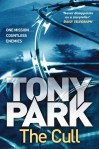
Tony Park, The cullWhen Tony Park’s The cull was sent to me for review last September, I knew it wasn’t really within my normal ambit but every now and then I try something new, so thought I might give it a go. However, as time passed and more books came, I realised that I had to let it go. But, it occurred to me that Mr Gums, whose reading preferences are a little different to mine, might like to read it during our annual Snowy Mountains getaway. He thought he might so, leaving aside his German translation of Pride and prejudice (which he was reading for the second time), he took it away with him – and enjoyed it, overall.

Some of you may know who Tony Park is, but I have to admit that I didn’t – beyond recognising his name from bookshop shelves – even though The cull is his fourteenth novel! He was born in Sydney, and has worked, according to the media release, “as a reporter, a press secretary, a PR consultant and a freelance writer”. He is a major in the Australian Army Reserve and in 2002 served as a public relations officer in Afghanistan. And, here’s the most relevant bit to this book, he and his wife split their time between Australia and southern Africa where they own a home on the edge of Kruger National Park. He is also, the Media Release says, a volunteer with Veterans for Wildlife, which “pairs military veterans with anti-poaching units and conservation programs in Africa.”

And this is where I should finally talk about the book. It concerns former mercenary Sonja Kurtz, who has apparently appeared in other books by Park. She is hired by a (female, in fact) business tycoon to head a squad whose ostensible task is to gain intelligence about poachers but she ultimately finds herself involved in a full-scale assault against the “poaching kingpins”. In other words, it’s a novel which marries his military experience with his involvement in supporting African wildlife. The Media Release says that Park describes “the job of protecting wildlife” as “a high-risk, high stakes business”. Rhino horn is now worth more than “gold, diamonds or cocaine”.

So what did Mr Gums think? “Pretty good fun”, he says. Like me, he’s not an expert in the crime-action-thriller genres, but he’s read the odd one over the years, including, last year, Tony Jones’ The twentieth man. He thought the characters were well drawn for the genre, and that the writing was engaging and kept him interested. It was full of “gadgets and guns” which entertained him, but had perhaps “unnecessarily detailed descriptions of the sex”. However, that’s part of these sorts of genre books today isn’t it? You find it in movies of these genres too.

Overall, though, it was the theme of protecting African wildlife and environment that made it particularly interesting for him – just as Jones’ exploration of Australia’s first terrorist bombing kept him engaged in that novel. This is what would have drawn me to the book too, if I’d been able to prioritise the read.

And so, that’s about it – except there’s one interesting little thing to add, and it concerns naming rights. I’ll quote from the Acknowledgements at the end:

As with previous books, I’ve surrendered the difficult (for me at least), the task of thinking up names for my characters to a number of worthy charities who have sold or auctioned off rights for generous people to have their names assigned to the cast of The cull and raised money for many good causes in the process.

Those good causes are named, and they are a varied lot, including the HEAL Africa Hospital, the Juvenile Diabetes Foundation, the Australian Rhino Project and the Limpopo Rhino Security Group. I, and probably you, have heard about this phenomenon before, but if you haven’t, here is a 2005 article from the Guardian about authors auctioning off names. It starts by asking “Fancy having your name on a gravestone in Neil Gaiman’s next novel? Or meeting your end at the hands of a zombie in Stephen King’s latest?” Hmm, would you want to be immortalised in some of these ways? There is that thin-end-of-the-wedge issue here – as I touched on in my review of Anna Funder’s Paspaley sponsored story Everything precious – but I don’t think we should let this colour actions like Cull’s which result in money for good causes?

And here endeth this mini-review – with a big thanks to Mr Gums for his contribution.

Tony Park
The cull
Sydney: Pan Macmillan Australia, 2017
411pp.
ISBN: 9781743548455

(Review copy courtesy Pan Macmillan Australia)

Emily Maguire, An isolated incident (#BookReview)

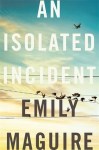
Emily Maguire, An isolated incidentEmily Maguire’s novel, An isolated incident, reminded me of Charlotte Wood’s The natural way of things (my review). Sure, An isolated incident is a crime novel, albeit a genre-bending one, while The natural way of things is a dystopian novel, but both deal with the same fundamental issue, misogyny. Wood exposes the scapegoating of women for their sexuality, while Maguire tackles violence against women (and in doing so, also traverses some of the same ground regarding attitudes to women’s sexuality).

That Maguire is going to confront the issue head-on is implicit in the irony of her title. Twenty-five-year-old Bella’s murder may have happened in an isolated place, and such murders may be rare in her small country town, but as we all know in our media-fuelled times, violence against women is not isolated. Indeed, it happens with terrible frequency. Maguire makes sure that not only do we not forget this, but that we see it in its entirety.

I started by saying that An isolated incident is a genre-bending crime novel. Now, I’m no expert in crime fiction but I know enough to recognise that this book inverts our expectations. In a nod to the genre, the novel is told chronologically with the chapters named by the date, such as “Monday, 6 April”. However, it is not told from the point-of-view of the police or detectives, and it does not focus on the whodunnit aspect, though the investigation does provide an ongoing thread. Instead, the story is told through two voices – the first person voice of Chris, Bella’s grieving big sister, and the third person voice of journalist May who has come to town with her own demons regarding a married lover. This narrative approach enables Maguire to broaden her reach, to focus on things other than catching the criminal, because that is the least relevant – I almost said least important except of course we do want these perpetrators off our streets – part of the story. The most relevant is why does this violence happen, and how does it affect those involved.

Maguire does not, however, provide any answers to these questions. Who knows why it happens? But Maguire does show some of the ways misogyny plays out in everyday life, from the “all piss and wind … harmless” pest who follows women in his car, through men who won’t take no, the men in the pub who know about violent men but do nothing, the schoolboy who enacts his sexual attraction by creating ugly pictures, to actual domestic violence resulting in a wife’s death. It’s powerful because it’s all so real – and true. And, definitely not isolated.

In a telling exchange between May and Chris, May says:

‘… You don’t realise how much most men dislike women. And knowing that, most women can’t relax around men the way you do. Can’t let ourselves show that we like them even if we really do.’

‘Ah. That’s a different thing, though. I like ’em fine, but I’m never relaxed, not fully. It’s like with dogs. All the joy in the world, but once you’ve seen a labrador rip the face off a kid, you can’t ever forget what they’re capable of.’

Late in the novel, Chris ponders this whole issue of the things men do and don’t do, and, heartbreakingly, decides:

… and there are men … who are pure and good of heart and intent and who only want to be our friends and brothers and lovers but we have no way of telling those from the others until it’s too late, and that, perhaps, is the most unbearable thing of all.

Similarly powerful is the way Maguire captures bereaved sister Chris’ grief. Chris is a down-to-earth, small-town barmaid who’s not above taking the odd man home for a little necessary money on the side. Her grief, her loss, is overwhelming, threatening to upset her sanity, and Maguire captures it well, including showing the impact of requiring a relative to identify a body when that body has been horrifically disfigured. The memory of how Bella looked, and imagining how the disfigurement occurred, add significantly to Chris’s grief.

An intriguing thread in the novel concerns the role of writing. Through May being a writer, Maguire explores, initially, the exploitative behaviour of journalists. They sweep into town en masse, intrude on people’s lives, trot out their jargon-laden reports about “close-knit” communities, and when the excitement is over, breeze out again to the next drama. May is one of these, until something about this story, and about Chris, results in her quitting her job to stay.

She explains to her brother why. It’s because she wants her writing to help overcome “the fear, the injustice”, whether by helping to catch the killers or just writing about Bella in a real way rather than simply as a victim. A little later, she tries to convince Chris to talk to her, arguing that her writing may help bring justice. As she argues with Chris, we wonder how much of what she is saying is sincere and how much is desperation to get a story, now that she’s freelance. Maguire writes:

May had started speaking in desperation but as the words came she realised she had once believed all of this about the power of a well-written story. The quaver in her voice told her that maybe she still did.

Hmm, is this Maguire, too, arguing for the value of writing her novel – and for writing in general?

So, did I like the novel? I did enjoy reading it. Maguire’s writing is compelling: it was easy to engage with Chris particularly, and to be interested in journalist May. Maguire’s picture of Strathdee is convincing, and she successfully imbues the story with a complexity that offers no easy answers. If it has a failing, it’s that it’s spread a little thin across the issues – male violence, media intrusion, grief and closure – resulting in an ending that didn’t quite punch an emotional or intellectual point home.

Quite coincidentally, just as I finished this book, Mr Gums and I watched the 2008 miniseries of Sense and sensibility, whose script was written by Andrew Davies. Towards the end comes a line from Marianne, albeit not Austen’s. Having been “burnt” by the dastardly Willoughby, she asks Elinor,  “What do men want from us – perhaps they don’t see us as people but as playthings”. Fortunately, many (most, perhaps) men do see women as people, but these novels, together with books like Anna Krien’s Night games (my review), remind us that we still have a long way to go before there is true equality, true respect, between the sexes.

This book has been reviewed by several of my blogging friends, including Michelle (Adventures in Biography), Bill (The Australian Legend), Lisa (ANZLitLovers), Kate (booksaremyfavouriteandbest), and Kim (Reading Matters). Two didn’t like it much, the others were more positive!

aww2017 badgeEmily Maguire
An isolated incident
Sydney: Picador, 2016
343pp.
ISBN: 9781743538579

Pierre Lemaitre, The great swindle (Review)

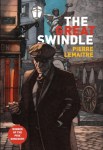
Pierre Lemaitre, The great swindleAs I was reading Pierre Lemaitre’s literary page-turner, The great swindle, I started to wonder about the endings of books, what I look for, what I most appreciate. What I don’t look for is neat, happy conclusions. There are exceptions to this of course. Jane Austen, for example, but she was writing at a different time when the novel was in an earlier stage of development. In contemporary novels, I look for something a little challenging, something that suggests that life isn’t neatly wrapped up. Fiction isn’t life, I know, but its role, for me anyhow, is to reflect on, and thus make me think about, life. So, Lemaitre’s The great swindle? How does it end? I’m not going to tell you – it’s not the done thing in reviews – but I will say that it’s satisfying, even though it does have one of those many-years-later wrap-ups that I’m not convinced is needed.

There, that’s an unusual opening for me, isn’t it, to start with the end? Where do I go now? Back to the beginning I think. The novel is divided into sections: 1918, November 1919, March 1920, and Epilogue. It starts in the trenches on 2 November 1918, just days before the First World War ends. One of our two main characters Albert Maillard is there, wanting a quiet, safe time until the war ends, but his commanding officer, Lieutenant Henri d’Aulnay-Pradelle, has other ideas, setting off a series of events that reverberates through all their years.

This is, in fact, quite a plot-driven novel, despite having many strings to its bow. And you all probably know how much I hate describing plots, so I’m going to keep it simple. After a devastating opening which leaves soldier Édouard Péricourt with a severely damaged face and Albert, for good reasons, taking responsibility for his care, the novel focuses on life in Paris in the immediate aftermath of war. While our two soldiers struggle to survive, Pradelle has been demobbed a Captain, as he’d orchestrated, married a wealthy young woman, Madeleine, who happens to be Édouard’s sister, and is engaged in the business of providing coffins and burying soldiers in cemeteries around France – focusing more on the money he can make than on whether, say, the right soldier ends up in the right coffin. You getting the picture of this Pradelle by now?

There are several other characters – this is a big story that owes much to the 19th century novel – but I’ll just mention a couple more: Monsieur Péricourt, Madeleine and Édouard’s father, a tough businessman who had never had time for his artisitic, effeminate son, and Merlin, the dogged, bottom-rung, about-to-retire civil servant who is given the job of reporting on the cemetery project.

Finally, just two more things you should know before I leave the plot. One is that Édouard did not want to return home after the war, so in the military hospital Albert manages to swap his identity – in a swindle, you might say – with a dead soldier, resulting in Édouard Péricourt becoming Eugene Lariviere. His father and sister, therefore, do not know he is alive. The other is the war memorial swindle concocted by Édouard (Eugene), which he finally manages to convince the “even when well-intentioned, lying was not in his nature” Albert to support.

The novel, then, has a complex plot with a rather large cast of characters, but Lemaitre, who is apparently known for his crime novels, handles it all very well so you never feel lost. One of the ways he does this is through vivid characterisation. Every character, from the main “cast” (it’s to be filmed I hear) to the supporting characters, is so strikingly portrayed that you feel you are there in postwar France – there in the streets where poor, injured returned soldiers struggle to make a living, there in the houses of the well-to-do where money is king, there in the cemeteries where Pradelle’s exploited Arab, Chinese and Senegalese workers do what they can to survive.

Another is through the clever set pieces which illuminate the characters, such as Edouard/Eugene’s increasingly bizarre masks – from horse-head to budgerigar – which he creates and wears to cover his horrendously disfigured face. Or the more gruesome scenes in which the taciturn, not very agreeable, but diligent public servant Merlin tramps around cemeteries investigating coffins. Using these set pieces, many of which border on farce, alongside controlled doses of satire and irony, Lemaitre creates a tragicomic tone – but to what end?

“will this war never be over?”

Early postwar, concerning Pradelle’s cemetery plans, the (mostly omniscient) narrator says:

To an entrepreneur, war represents significant business opportunities, even after it is over.

War, then, is the over-riding theme – but war is a big canvas. Lemaitre’s focus is war’s aftermath. What does it mean for those who went and those who stayed, and for the new world they must forge, preferably together. At one point Albert, worn down by his cares and responsibilities, and facing yet another hurdle, wonders, “will this war never be over”. But, as ordinary citizens get back to life, the needs of the returned are forgotten:

ex-soldiers were all the same, forever banging about their war, forever giving little homilies, people had had just about enough of heroes. The true heroes were dead!

A ripe environment, in other words, for cemetery and war memorial scandals, for profiteering – particularly when you add that it was a time of great social change in France, one where the nouveau riche (represented by M. Péricourt) were getting the upper hand over the often money-short aristocracy (represented by Pradelle).

Opposing this almost obsessive focus on money is a sense of resignation. It can be seen in Madeleine who marries the execrable Pradelle. “We each settle down as best we can”, comments our narrator. For many, there is a sense of “emptiness”, this word appearing several times in the novel. They were tough times – the time of “the lost generation” or what the French called “the génération au feu” – for which society was not equipped to cope. So, in the end, what Lemaitre has painted is a picture of a society under stress, a picture which is conveyed most directly through our “everyman”, our struggling returned solider Albert who just wants to make a life for himself but who is also loyal to those who need him:

War had been a lonely business, but it was nothing compared to the period since demobilisation that was beginning to seem a veritable descent into hell …

The novel, as you will have gathered, is replete with swindles, but the greatest of all, Lemaitre is saying, was the abominable treatment, upon their return, of the ordinary soldier.

This is one of those novels which uses a light touch to tell a heavy story. No wonder it won France’s main literary prize, the Prix Goncourt.

Lisa at ANZLitLovers also enjoyed this book.

Pierre Lemaitre
The great swindle
(trans. by Frank Wynne)
London: MacLehose Press, 2015
ISBN (eBook): 9781848665804

Dorothy Johnston, Through a camel’s eye (Review)

When should I give up saying that I don’t read crime? In the last seven years, I’ve posted nine reviews tagged crime fiction (of which one was a guest post). Perhaps just over one a year still qualifies as not reading crime? Then again, what’s the point of saying it, if every now and then I do read crime? I think there is a point – it advises that I’m not a crime fiction expert, so my posts need to be read from that point-of-view, and it also tells readers not to come here looking for posts on crime.

So now, with that off my chest, I’ll get to Dorothy Johnston’s crime novel, Through a camel’s eye. It’s the first novel in her new crime series, Sea-change mysteries. I decided to read it for two reasons. One is that I’ve read and posted on two other works by her and was interested to see how a Miles Franklin shortlisted author might approach crime fiction. The other is that she was going to be in town last weekend and we’d agreed to meet for a quick cuppa, so I thought this would be the time to read her latest book (though I didn’t finish it in time). I didn’t plan to quiz her about the book, but I did want to show some support for a hardworking author. As with most of the crime novels I’ve read while blogging, I wasn’t sorry about my decision to expand my horizons a little.

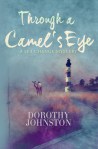
Dorothy Johnston, Through a camel's eyeBefore I write about the book, though, I do want to mention the cover. It features a soft-edged image of a camel, lighthouse, and boardwalk. It’s gentle, atmospheric and, woo-hoo, it doesn’t have an image of a tiny man or a woman’s back as has been popular in recent times. The murder victim is, however, a woman, which, given women do not comprise the majority of homicide victims, is another issue that crops up in commentaries. The point here, though, is that Johnston does not delight in gruesome detail. We gradually discover during the course of the novel how the murder took place but the details, the victim’s emotions, the appearance and/or treatment of the body are not focused on. This is because Johnston’s interest lies elsewhere.

And now, I should get to the story. It’s a police procedural set in a small coastal community in Victoria. The police station is run by a local, Constable Chris Blackie, who returned to the town when his mother was unwell and stayed on after she died. The novel starts, though, with Anthea, a young, recently graduated constable who has been sent to be Chris’ assistant. Her country-town placement has precipitated a break with her architect lover, and she’s pining. Actually, the novel doesn’t quite start with her, either – she’s just the first police officer we meet. The novel starts with one of the town’s “characters”, the recently mute Camilla Renfrew, watching a young woman, Julie, train a young camel. As Camilla walks away, she remembers that on a previous visit she’d heard a woman’s scream. And so there we have it, we think, the crime – and yes, one of the book’s two crimes is a murdered woman, but it’s not, in fact, the first crime we are confronted with. That honour goes to the aforementioned camel, Riza. He goes missing.

From these two crimes, Johnston spins an intriguing tale that keeps us wondering whether the crimes are connected or not – but you’ll have to read it yourself to answer that question. I want to talk instead about what I enjoyed most about the novel – characters and language.

… looking for drama

Most crime novels, I think, draw on archetypes. In this case, there’s the idea of a “sea-change” – particularly for Anthea – and the basic character set-up, the reserved, loner boss, and the fresh, unsettled, somewhat disengaged offsider. Anthea is “disappointed” to have been sent to Queenscliff, and thinks she has her boss pinned:

She would like to dismiss Chris Blackie as an old fuddy-duddy, or a closet-gay; but found she couldn’t, quite.

She’s attracted to “forceful men with definite ideas” but Chris is not that sort of man. He’s barely conscious of his “maleness”, and she doesn’t quite know how to respond to such a person. For his part, Chris would have been happy to run the station solo. Nonetheless, he’d been open to the idea of a woman, but

Anthea had come looking for drama. He’d seen it in her eyes the minute she walked in. Both the anticipation and the almost instantaneous disappointment …

He wasn’t to know of course that her first sight of him, bum-up tending the police station’s lavender and rose garden, hadn’t exactly inspired her.

So, we have an archetypal “misfit” situation – two people working together, neither of whom are completely comfortable in their skins. It is the development of these two characters and their relationship, rather than in solving the crime, that I enjoyed most in the novel. Anthea may have come “looking for drama” but Johnston develops her story quietly, tenderly, rather than dramatically. She achieves this by taking us into the heads of these two unsure people, showing us their thoughts, feelings and reactions.

Why are they unsure? Well, I’ve already described some of it, but there’s more – and this could be where those of you who don’t like coincidences may come a little unstuck, because there are several missing parents here. Anthea’s parents had died in an accident when she was three, while Chris’ father had drowned when he was ten. Camilla’s “cold, punitive” husband had died of a heart attack when her now adult son, Simon, was ten, something for which he seems to still blame her. And young Julie, the camel owner? Her parents had died in a car-crash when she was in her teens. Johnston doesn’t labour all this, but these losses provide background to the characters and help explain their lack of mooring. Coping with loss and resolving the past could also be seen as themes of the novel. Anthea, for example, needs to let go of her lover, while Chris needs to resolve the fears that are stunting him.

Besides these characters, there’s Johnston’s description of place and small town life. We meet the town’s denizens – farmers, teenagers, caravan park owners, retired solicitor. They are typical – they have to be for us to believe the town – but, overall, they work as individuals too. We see the pros and cons of small town living, the everyone-knows-everyone-else’s-business aspect alongside the looking-out-for-each-other part. Chris’ old cottage and Anthea’s flat, the paddocks and seascape, are all clearly, but succinctly, described, as are the characters. Here is a minor character:

His big frame relaxed as though someone pulled a peg that was holding complicated scaffolding in place.

And here is the physical environment, seen through the eyes of another minor character:

Camilla was fascinated by the thick white stalk of the lighthouse, appearing and disappearing through the fog. Behind her, the pier squatted as a vague horizontal line, a grey denser than the sky. Its verticals were lines of shadow legs, a giant centipede.

The crimes are solved, and Chris and Anthea progress in self-understanding, but enough openings are left for us to wonder where Johnston might take these characters next. Through a camel’s eye relies more on the little details of lived lives than on the big dramas to provide interest, which is exactly why I enjoyed it.

awwchallenge2016Dorothy Johnston
Through a camel’s eye
For Pity’s Sake Publishing, 2016
216pp.
ISBN: 9780994448521

Monday musings on Australian literature: June Wright, Crime novelist

Regular readers here may be surprised to see this subject for a Monday Musings given I’m not known as a crime aficionado, but never let it be said that I’m not open-minded. I came across June Wright last year in my role as convener of the Literary and Classics area of the Australian Women Writers Challenge, and was reminded of her again when I wrote my 2015 wrap-up for the challenge. It occurred to me then that she was worth introducing to you!

Dorothy June Wright, née Healy, was born in 1919, and died only recently in 2012. She wrote six crime novels in the middle of the twentieth century. According to the Sydney Morning Herald‘s obituary, she was born in Melbourne, and went to school at Kildara Brigidine and Vaucluse convents, Loreto (in Adelaide), and Mandeville Hall (in Toorak). She worked from 1939 to 1941 as a telephonist at Melbourne’s central exchange – a significant fact as you will soon see – before marrying Stewart Wright in 1942. They had six children.

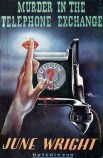
WrightTelephoneExchangeHutchinsonNow, here comes the significance of her job: her first novel, published in 1948, was Murder in the telephone exchange. Wright told a reporter at Melbourne’s Advocate that one of her co-telephonists at the Exchange had once said to her “‘You know you could write a book about this place!” The Advocate goes on to tell her publication story:

June Wright wrote her novel in the midst of busy household duties and a toddling, growing family. When the English publishers, Hutchinsons, announced a £1000 detective story competition Mrs. Wright sent along her manuscript, with a sceptical and open mind on its chances. The competition closed on June 30, 1944, but no manuscript, of the thousands submitted, was awarded the prize. Several, however, were recommended for publication by the judges … Among them was June Wright’s “Murder in the Telephone Exchange”. The publishers are evidently so impressed with her gifts as a story-teller that they have not only signed a contract with her for the immediate publication of the competition manuscript, but have also signed options on her next two novels.

Hmmm … not good enough for a prize but they chose to publish? Still, I’m sure the authors were happy to be published. The next two novels were So bad a death and The devil’s caress. Wright went on to be, apparently, more popular in Australia than Agatha Christie – and yet died pretty much unknown.

Reissued in 2015

The reason Wright has come to our attention now is that her novels are being reissued by US publisher Verse Chorus Press under their Dark Passage imprint, with three published in 2015. That’s not how I learnt about them, though, as I don’t have my ear to the crime genre ground. I heard about Wright through Karen Chisholm’s article on her in The Newton Review of Books.

However, before I tell you about Chisholm’s article, I want to share an excerpt from an article in Perth’s The Daily News. It describes an address June Wright made to the Housewives’ Association:

‘Yes, I have four small children, do my own house-work, and am now writing my third book,’ she told association members. ‘I began my telephone exchange murder story when my first child was a year old, entered the novel for an English competition and was delighted when it was selected for publication.’ Mrs. Wright thinks that housewives are well qualified for writing. They are naturally practical, disciplined and used to monotony — three excellent attributes for the budding writer.

Haha, love it!

I shared this first because it provides a good lead-in to Chisholm’s article. Chisholm, unlike fraudulent me, has read the three reissued novels, and she makes some interesting comments. She says, for example, of Murder in the telephone exchange that the protagonist, Maggie Byrnes “is the first of Wright’s strong female protagonists and we can’t help but assume that there is much of the author herself in Byrnes”. Nagaisayonara, writing at the Crime Fiction Lover website, argues that “it’s a complex, dark novel with a female detective who was far ahead of her time”, and believes that Wright is more like Dorothy L Sayers than Christie. Moving on to So bad a death, Chisholm tells us that Maggie is now married and looking for housing. She writes:

Wright’s family of six children is often remarked upon in interviews when she talks about the workload of writing she maintained, as are the connections between the life of her first character, Maggie, and her own life. Certainly that search for housing during the post-war shortage, and the slightly desperate search for distraction from the day-to-day sameness of childraising and housekeeping, is informed by experience.

Chisholm adds that the new Foreword for So bad a death states that Wright “would joke with interviewers how writing bloody murders was a good way to avoid infanticide”! She sounds like a woman with confidence and presence, doesn’t she?

Adelaide’s The Mail reviewer writing in 1952 about her third novel, The devil’s caress, says that

Mrs. Wright’s new and third work, which concerns odd doings on a Victorian peninsula, is outstanding in one respect. It has a powerful character study of a woman doctor — a commanding, aloof, and in some ways completely misunderstood person, who is married to a surgeon, the antithesis of herself. …  Mrs. Wright’s reportage is as ever brisk and competent. But I eagerly await the day when she concentrates more upon genuine, plausible detection and less upon melodramatic situations.

I wonder if this is why this book was not the third to be re-released last year, although I understand all will be eventually?

Meanwhile, Chisholm writes that in all the three books released so far, the third being the previously unpublished Duck season death, “there has been an underlying sense of fun being poked” and “hints at a wicked, very Australian sense of humour”. She concludes that June Wright was “one of the writers who forged the way for an Australian crime fiction scene that’s vibrant, varied and extremely engaging” and argues that she deserves to be “better remembered and more accessible”.

I must say I’m tempted … are you?

Caroline de Costa, Double madness (Review)

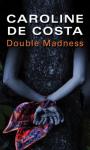
De Costa, Double madnessI’m not a crime reader as most of you know, and in fact most of the crime novels I’ve read here have been review copies sent to me. Caroline de Costa’s Double madness is one of these. I accepted it for a couple of reasons. It’s a debut novel by a doctor, indeed a professor of Medicine at the James Cook University in Cairns, who has been shortlisted for a nonfiction work in the Queensland Premier’s Literary Awards. And it is set in beautiful far north Queensland, my home state.

Not being an expert in crime writing, I can’t really compare it with other novels, but I’d say it’s in the sub-genre known as police procedural. According to Wikipedia, in police procedurals the detective is a police officer and the story depicts the activities of the police investigating the crime. Tick. However, Wikipedia also says that in police procedurals the perpetrator is often known to the reader, but this is not the case here, and that the novel will often deal with a number of unrelated crimes, which is also not the case here, though several references are made to one other crime. None of this matters, really thought, does it? Categories can be helpful in analysis, but in the end what counts is the work itself. I was just intrigued.

Double madness opens with the victim’s body being found, by accident, in a secluded part of the north Queensland rainforest, by a doctor and his wife who are driving home the scenic way. Finding the body is, I presume, a pretty traditional opening for a crime novel of this sort. The dating, like the setting, is also precise – 27 February 2011, which is three weeks after the category-5 Cyclone Yasi hit northern Queensland, causing significant destruction. The novel is told in almost straight chronology, with each chapter titled by a date, the last being 17 March 2011. Early in the novel, though, there are a few flashback chapters – mostly to 2009 – which flesh out a few characters for us.

Our main detective is the 30-something now-single mother, Cass Diamond. She’s of indigenous Australian background. Ah, so we have a non-indigenous writer, as far as I know anyhow, writing an indigenous character. You may remember discussions we’ve had here on this topic. I’ve quoted writer Margaret Merrilees, “To write about Australia, particularly rural Australia, without mentioning the Aboriginal presence (current or historical) is to distort reality, to perpetuate the terra nullius lie”. De Costa is writing about Far North Queensland, a place with a significant indigenous population, where it would indeed be poor form to ignore indigenous characters. My assessment is that de Costa has done it well. Cass makes some references to her indigeneity, and to some of the challenges she faces, but this is not her defining characteristic in the novel. She is “just” another police officer, and is defined as much, if not more, by being a single mother whose “fridge was a temple consecrated to convenience foods”. In other words, she’s in that band of job-jolly detectives who struggle to keep their personal life going, though Cass does a better job than most (that I’ve seen on TV anyhow). She does, for a start, seem to have a good relationship with her teenage son. Moreover, she’s not drunk, middle-aged or unduly cynical – yet, anyhow!

Back now, to the plot. Tucked into the copy sent to me was a slip of paper containing a short interview with the writer by reviewer Fiona Hardy. De Costa tells Hardy that she had “for some time been interested in the concept of folie-à-deux [share psychosis]”. Folie-à-deux translates as double madness – hence the book’s title. De Costa also tells Hardy, when describing the sort of detective she has created, that she has to write what she knows. And she knows medicine. Consequently, not only does the investigation and resolution of the crime involve some medical knowledge, but the story is set largely amongst the community’s medical fraternity. In other words, the good doctors of Cairns have been getting up to a bit of mischief with our victim, so when the murder is committed they find themselves in the frame. They are not, however, the only ones. There be a husband, and sons, and sundry other possibilities. All I’ll say is this is a tricky plot with a goodly dose of red herrings. For more, you’ll have to read the book.

I wouldn’t call Double madness a ground-breaking or particularly innovative detective novel, but it’s an enjoyable read. The writing is clear and straightforward, keeping to the point and moving along at a fair pace. There’s no unnecessary description, but where it is needed, such as to describe the bush or, say, a doctor’s experience of working through a cyclone, it feels real and authentic. Hardy, in her interview, notes that the cyclone Yasi makes an effective metaphor for the havoc wrought by the victim, Odile Janvier, on those around her. She’s right, it does.

When I read fiction, as I’ve said before, I look for some underlying messages or themes or issues being explored because I like my reading to further my understanding of humanity. Double madness is not, in this sense, a deep or enquiring book, but it is quietly subversive in the way it handles race and gender. Its indigenous characters are not defined by their indigeneity, and women detectives and medicos play important, but accepted and unremarked, roles in the investigation and resolution of the crime. Moreover, while the murder victim is a woman, she is far from the norm of murdered women victimhood. Good on de Costa.

So, if you are looking for a new crime author for your crime fan friends this Christmas – because yes, it’s that time of year again – then Double madness is well worth putting on your list.

awwchallenge2015Caroline de Costa
Double madness
Witchcliffe: Margaret River Press, 2015
359pp.
ISBN: 9780987561565

(Review copy courtesy Margaret River Press)

Angela Savage, The dying beach (Review)

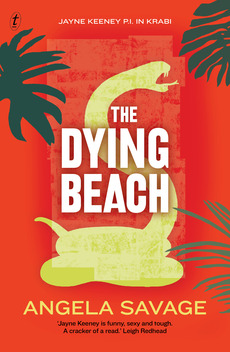
Angela Savage, The dying beach

Courtesy: Text Publishing

When I received Angela Savage’s novel The dying beach out of the blue last year as a review copy, I didn’t put it high in my list of reading priorities. I had – and still have – a pile of books waiting patiently, and I rarely (never say never) read crime novels. However, two things changed my mind. One is that Christos Tsiolkas dedicated Barracuda to Savage, and the other is that this year, for the first time, I will visit Thailand, which is the novel’s setting. So, I read it!

The dying beach is apparently Savage’s third Jayne Keeney novel. Jayne is a Private Investigator, an expat Australian living in Bangkok. Like many female PIs, she’s gutsy, hard-living, resourceful, somewhat of an outsider, and rather inclined to bristle if her independence is questioned. (Perhaps this latter is not confined to female PIs, but can be said of many women working for a living in a male dominated environment.) In this, her third outing, she’s holidaying in Krabi with her new (I believe) business and romantic partner, Rajiv, an expat Indian. They are a bit of an odd couple, but we all know about opposites attracting:

Jayne had never imagined she could find love with a man five years her junior, whose background was so different from her own. But Rajiv gave her a whole new way of viewing the world. As if he’d walked into her life and drawn back the curtain, revealing a window she hadn’t even known was there.

I love that image of “revealing a window she hadn’t even known was there”. Savage’s writing is pretty direct, keeping a good pace appropriate to its genre, but that doesn’t mean that it lacks lovely descriptions and turns of phrase. Indeed, the language is one of the delights of the book. Without disturbing her pacing, Savage regularly surprises with telling descriptions. This, for example, gives you a perfect picture of Jayne in full flight:

She was like an appliance without an off switch that kept accelerating under pressure until it threatened to short circuit.

The novel opens with a sort of prologue in which Sigrid, who doesn’t play an ongoing role in the novel, finds a body floating in the water at Princess Beach. Sigrid is surprised to discover that it’s the tour guide Pla whom she’d spoken to only that week. She notices some bruises around the neck suggesting Pla “did not die gently”. The novel proper then starts at Chapter 1 with Rajiv and Jayne in bed. It’s here (in the chapter not the bed!) that Savage provides us with the necessary background to their relationship, to where it stands at this point, and implies tensions that may play out in the future – as indeed they do. There is, in other words, a love story to this crime novel. At the end of this chapter they front up to the counter at Barracuda (surely a little homage to Christos Tsiolkas) Tours planning to book a tour with the “exceptional guide” they’d had a couple of days previously – the unlucky Pla, of course. And so the scene is set for their holiday to become another job, albeit unpaid, something that bothers the practical Rajiv but not our justice-seeking heroine.

I’m not going to write a lot more about the story, because it’s the sort of book people read for plot and surprises, and I don’t want to give them away. I will say though that it offers lovely insights into Thai character and culture. It is also unashamedly political with its plot revolving around the conflict between economic development and environmental degradation. The title itself refers to the fact that mass shrimp-farming results in the destruction of mangrove forests which in turn causes the beaches to “die”.

Savage also presents a critique of Australia, when she has Jayne contemplate why she is living in Thailand:

Truth was Jayne had long felt an outsider among her peers. Since her final year of high school, in fact, when she spent six tantalising months on a student exchange in France. When she returned home, her passion for the outside world met with a lack of interest, if not downright hostility – as though it was disloyal to find anywhere as attractive as Australia. […] For all that Australians like to boast about the national larrikin spirit, in reality only irreverence was tolerated. Unconventionality was not.

It’s a little didactic, but ouch! There is, unfortunately, some truth in this.

The final point I’d like to make relates to its narrative style. Having read several complex novels recently, that is, books with shifting points of view and intricate chronologies, I rather enjoyed reading something more straightforward. I say this, however, comparatively speaking, because The dying beach does not have a simple, linear chronology. Not only are there a few flashback chapters interspersed strategically through the book, but occasionally the narrative focus shifts from Jayne and her cohort to a couple of characters who appear to be implicated in at least some of the murders. The voice is essentially third person omniscient, though sometimes we seem to shift inside a character’s head. Savage does it well, and I enjoyed the change after the intensity of my recent reads.

The dying beach is a compelling page-turner that also makes some points about cultural difference and tolerance, the challenge of tourism, and the complexity of environmental management in developing countries. It achieves this without, to the best of my admittedly limited knowledge, deviating dramatically from the conventions of its genre. And that is a good thing, because the result is the sort of novel that could appeal to a cross-over audience. The challenge, though, is how to get readers, like me for example, to cross over.

awwchallenge2014Angela Savage
The dying beach
Melbourne: Text Publishing, 2013
339pp.
Cover design: WH Chong
ISBN: 9781921922497

(Review copy supplied by Text Publishing)

Diego Marani, The last of the Vostyachs (Review)

Italian writer Diego Marani‘s The last of the Vostyachs was originally published in 2002, but the English translation was not published until 10 years later in 2012. How lucky we are that it was, because this book is unlikely to have been written by an English-language writer. Its focus on the relationship between language, culture and place and on darker issues like ethnic nationalism comes from a different – and particularly European – sensibility. We speakers of the world’s dominant language can, I think, be a bit oblivious to the linguistic issues faced by speakers of other languages, particularly in Europe where multiple languages live cheek by jowl. The challenge of communication is an important issue for Marani who works in Brussels for the European Union. His roles have included interpreter, translator, and policy adviser on multilingualism. Marani knows as well as anyone that language is both a cultural and political issue – and this is what he explores in this, his second novel.

However, The last of the Vostyachs is no dry tome explicating the role and value of language. Instead it is a surprising and often funny novel that weaves myth and saga, melodrama and irony through the warp of a crime thriller. It incorporates a number of literary traditions and archetypes: the wild (innocent) man set loose in the city, the spurned wife, the spirit guide, the corrupt obsessive, and the remote cottage in the woods where dastardly things happen. On the night the crimes (murders, in fact) take place, nature runs amok. Zoo animals roam the city and the temperature drops to its coldest in fifty years.

The plot centres on Ivan, who is the last of the Vostyachs, an ancient Siberian shamanic tribe. He is the only one who can speak the language, though at the novel’s opening he had not spoken it (or anything else) for twenty years, not since, as a young boy in the gulag, he’d seen his father killed. When the gulag is suddenly freed, he returns to the Byrranga Mountains but all he finds are wolves. He believes them to be his people who, to flee the soldiers, had hidden deep in caves and turned into wolves. He cannot bring them back to human form but they shadow and protect him.

Every single language is necessary to keep the universe alive

Into this mix appears the plain, ethical, Russian linguist Olga who is excited to find a speaker of a language thought to have been extinct and who sees in this language an exciting connection between Europeans and the native Americans. Her old colleague, the womanising, unethical, Finnish linguist Jarmo Aurtova is not so pleased with this threat to his theory of Finnish as the “Latin of the Baltic”, as, in effect, the master language of Europe. Jarmo sounds scarily like Hitler in his desire to prove the supremacy of a pure Finnish language:

In ancient times we were the civilised ones and they were the barbarians. We were the masters, they were the slaves. Not for nothing is the word aryan so similar to the Finnic orja, which means slave.

and

But now ‘someone’ was trying to throw Finland into the dustbin of history, together with the other conquered peoples who have no future. Aurtova was not having that …

Jarmo cares not if a language or two disappears and dies in the service of his theory. He believes that the fewer the languages the more “we’re moving towards the truth, towards the pure language”, while for Olga “with each one that dies, a little truth dies with it”. Marani, the creator of the flexible inclusive language Europanto, is on Olga’s side, on the side of plurality. She says

The true meaning of things is hidden from us; it lies beyond the bounds of any one language, and everyone tries to arrive at it with their own imperfect words. But no language can do this on its own. Every single language is necessary to keep the universe alive.

Cherish ignorance

The last of the Vostyachs is a ripping yarn that takes us from the tundra to Helsinki, through city streets, down country roads, across ice and onto the sea, as the various characters pursue their passions. But it’s the irony that conveys its main messages – and much of this irony revolves around our arch-villain and misogynst, Jarmo. His guilt as a murderer is revealed through a clue that is gorgeously ironic. In his final speech to the linguistic congress he, an academic for heaven’s sake, exhorts people to “cherish ignorance”, to not learn other people’s languages but “force” them to learn yours. And, most ironic of all, not only is the Vostyach language not destroyed, but by the end of the book, without giving too much away, “it could truly be said to be alive and flourishing” – albeit in a rather odd place.

Partway through the novel, Olga says to Jarmo of Finns that “to communicate with the rest of the world you have to learn another one, you have to venture out among words which are not your own, which you have borrowed from others”. In The last of the Vostyachs, Marani has ventured out and written something wild and rather risky. In doing so, he has produced a novel that’s not only fun to read but also gives the mind much to think about.

Lisa at ANZLitLovers read and enjoyed this book earlier this year.

Diego Marani
The last of the Vostyachs
(Trans. by Judith Landry)
Melbourne: Text Publishing, 2012
176pp.
ISBN: 978192196885 (Kindle ed.)