Canberra Writers Festival 2025: 3, Reckoning

Kate Grenville and Paul Daley with Craig Cormick

The program described the session as follows:
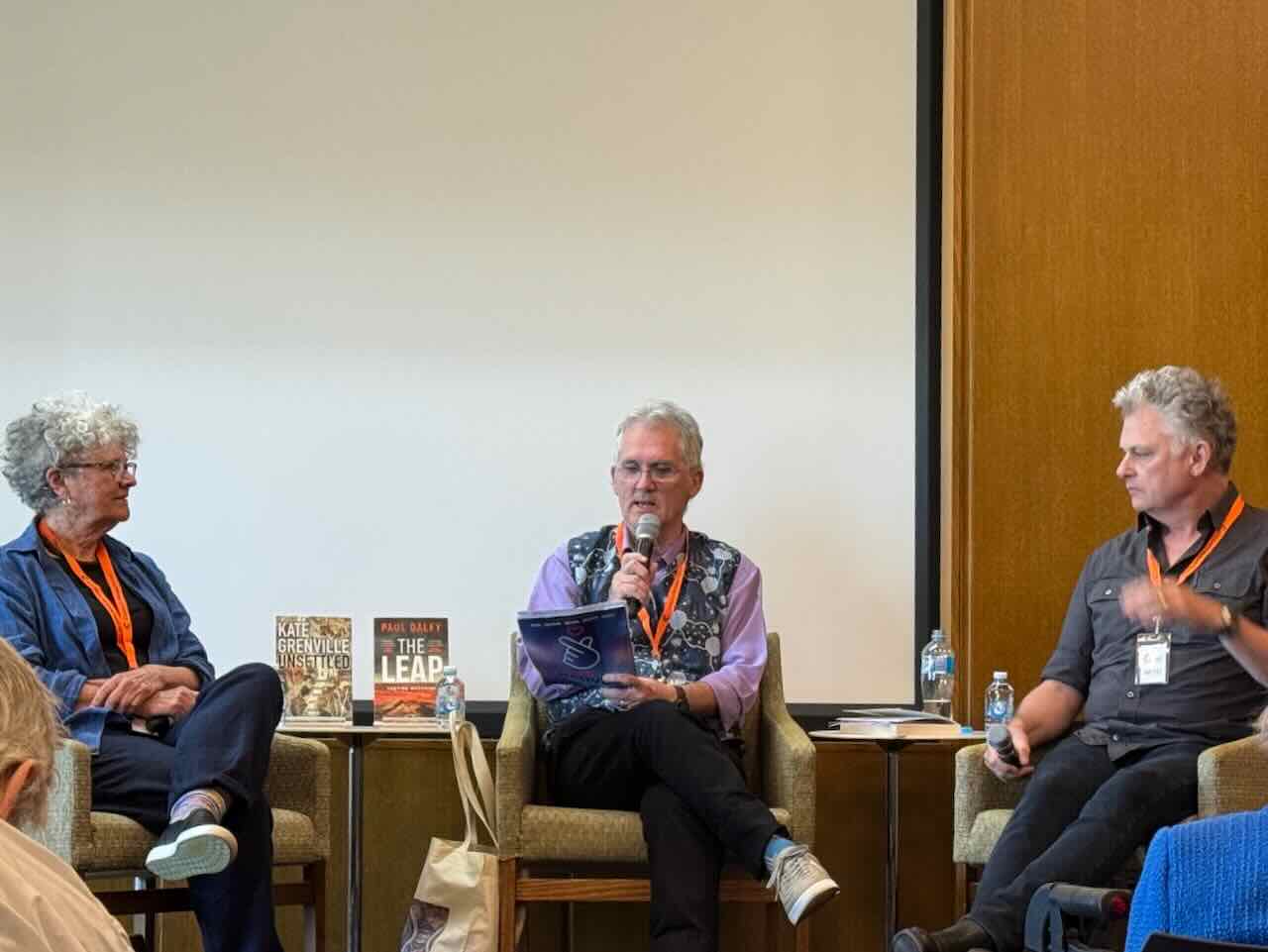
Kate Grenville’s ancestors were ‘the sharp edge of the moving blade’ of colonisation through the Hawkesbury region – the subject of her bestseller The Secret River. Now in Unsettled: A Journey Through Time and Place, she reflects on the reckoning that comes with truly confronting the past and her family story. She’s joined by Paul Daley, whose novel The Leap examines fear and violence in a frontier town. Two years after the Voice referendum, this timely conversation is about non-Indigenous Australians doing the work and personally reckoning with the past. This conversation, moderated by author Craig Cormick (Warra Warra Wai) will reflect on the role of non-Indigenous authors in contemporary writing exploring Indigenous issues.

You know you are not with the zeigeist when the session you choose is not in the big venue. This was the case for me with my last two sessions of the day, and to be honest, I was unsure about whether I wanted to attend this session. Did I want to hear more of us white peole talking about our guilt. It’s not about us. And yet I’m a white person so I decided there might be something new for me to think about, or another way of thinking about the issue. As it turns out, there was … read on …

Craig Cormick started the usual way – by acknowledging the traditional owners but also asking us to say hello – Yuma – in the local language. He then introduced the writers, noting in particular that Kate Grenville’s The secret river was ranked 20 in the ABC’s Top 100 books of the 21st Century. He then explained that we would be talking about white fellas writing black stories, black history.
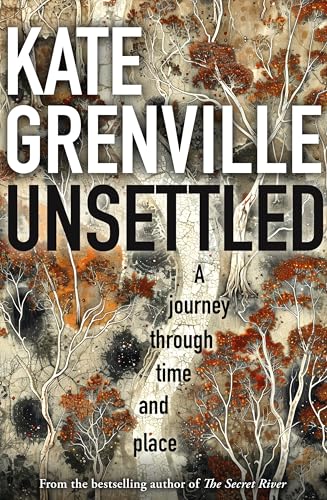
On how a white writer writes respectfully about black issues (to Kate)

There is no simple answer, but it involves a big cloud of context requiring awareness – of truthful knowledge of a dark history, of what might be the effect of what you write on First Nations people (which can include grief, insult, rage), and of how non-Indigenous readers will read what you write. The respectful way might be not going there, or engaging in consultation, or …
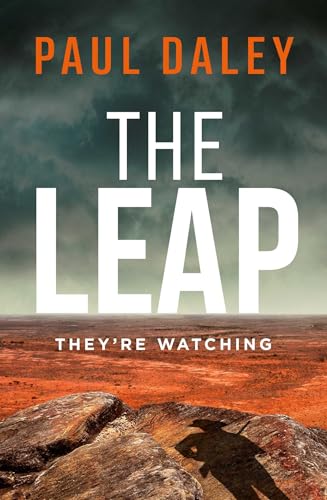
Do we need more than good intentions (to Paul)

Paul thinks of the journalists and anthropologists who wanted to save, hoard stories and culture – the equivalent of what literary writers want to do – so he asks himself the question “why am I going there?” He turned to fiction after years of journalism, as medium to tell about an Australia that is not seen enough. He said that both fiction and nonfiction requires respect, but fiction can be more “arbitrary”. Who do you consult when you are writing a character. It can be laborious. You need to forget deadlines.

On writing from an Aboriginal perspective (to Kate)

She never has – except very briefly in her novel Joan makes history. She wouldn’t do that now. She wrote 25 drafts of The secret river. The consciousness of the book was based on her white ancestor, but is about his relationship with local indigenous people. She started by giving them some dialogue, but felt she was othering or diminishing them, so she tried to individuate them without stepping into their world. Her latest book is nonfiction involving a road trip, which sort of mirrors Craig’s (in Warra warra wai). It was about private soul-searching, which she feels must be done before we talk to First Nations people.

On writers not including First Nations people in rural noir (to Paul)

The three main reasons writers give are: they don’t want to locate their book, or, they don’t want to upset their conservative readers, or, it’s just too hard! But, said Paul, many books are about white people’s crimes against white people on lands owned by others who are never mentioned. The leap is like an update of Wake in fright, which was reflective of the white male Australia of the time.

Is it too hard to go there (to include First Nations people) (to Kate)

She looked at Eleanor Dark’s 1941 The timeless land, in which Dark entered the consciousness of an Aboriginal character. It would be wrong now, but at the time Dark was “writing into a profound silence”. She was, in fact, revolutionary.

But, as long as white writers are aware of boundaries, they can “go there”.

Are there boundaries writers shouldn’t cross (to Paul)

Yes, he wouldn’t write in a First Nations first person voice, would not get into secret sacred areas/places/topics, and would not embed a story in a First Nations community.

The conversation then further explored this idea of boundaries, and issues like consultation.

Craig shared a comment made by Harold Ludwick (with whom he collaborated on the novel On a barbarous coast, my review) that “we earnt your way of thinking more than you learnt ours”.

Kate said that with her road trip, she did not speak to First Nations people. She believes that we want to jump too quickly to reconciliation, to forgiveness, but she believes we need to do soul-searching (a bit like you do in “time-out”) about what it means to be a non-indigenous person in Australia. She didn’t want to ask for things from First Nations people, like asking them to explain their feelings to us or to forgive us. She talked about the first time she asked Melissa Lucashenko to read a book (as a sensitivity reader I presume). Lucashenko said, “Sure, but pay me”. Another time, she said, “Yes, but first read White privilege“. In other words, she asked for something in return.

Paul picked up this idea of “wanting” things from First Nations people. He said he will ask friends to read his manuscript. He realises it is burden, and he explains that the end product is his, not their responsibility. If, after consultation, they say they don’t want him to do it, he wouldn’t.

Paul drew an analogy between Australian writers’ current concern about AI ripping off their work, and how First Nations’ people’s stories have been ripped off for so long.

The discussion turned to some examples of “ripping” off, such as last year’s controversy over Jamie Oliver’s children’s book, and its egregious depictions of First Nations people and their practices.

Overall, consultation is a difficult thing. Who you consult, can be a fraught issue. It is often, for example, not the Land Council. They do not necessarily represent the elders. Consultation can exacerbate divisions. (Some of this issue about who speaks for whom was covered in Wayne Bergman and Madelaine Dickie’s Some people want to shoot me, my review.)

There was a Q&A, but most of it revisited ground already covered. For example, one audience member spoke of writing a story inspired by a First Nations person. He had consulted the relevant elders and descendants, and they were comfortable. He had checked his motivation. But AIATSIS had said it wasn’t his story to write. The panel agreed this was difficult. There are no answers. Sometimes, said Kate, you just have to take a risk. Paul agreed, but gave the example of Jesus Town. He had a misgiving on the eve of publication, so pulled back, reworked and published later.

There was agreement that it was great to see First Nations people now telling their own stories, and about experienced writers doing all they can to help them.

The discussion ended on two points that encapsulated the discussion perfectly and validated my decision to choose this session:

  • that writing in the voice of a person in which you don’t have lived experience [however you define that] would not be adding to the sum of human knowledge
  • that in relation to our history, there is no atonement. We have to live with that.

Canberra Writers Festival, 2025
Reckoning
Saturday 25 October 2025, 12-1pm
Canberra Writers Festival 2025: 1, ACT Book of the Year

A preamble

The Canberra Writers Festival is back in 2025, with a new Artistic Director, author Andra Putnis whose biography-memoir, Stories my grandmothers didn’t tell me I reviewed earlier this year. The Festival’s theme continues to be “Power Politics Passion”, albeit not as dominating in promotion as it used to be.

The ACT Book of the Year

The ACT Book of the Year is broad-based award, meaning that it encompasses fiction, nonfiction, plays, and poetry. It is presented by the ACT Government, and was first made in 1993. I have written on this award in a Monday Musings, so won’t say more here!

The winner announcement has been made in various ways over the years. In 2023, for example, I attended the presentation at Woden Public Library. This year it was announced during the first full day of the Canberra Writers Festival, which feels fitting.

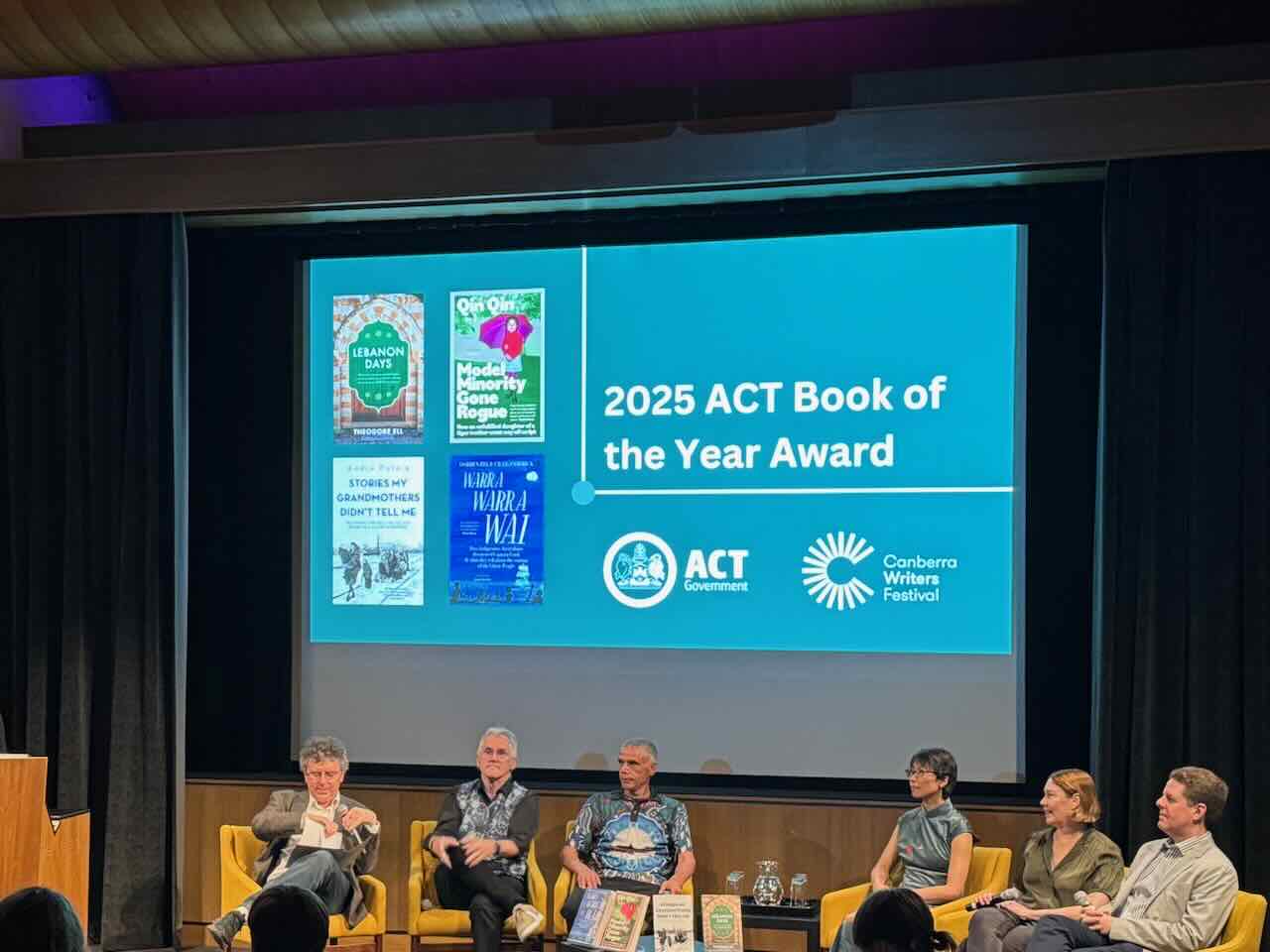
But first, there was the shortlist, which was announced on 7 September:

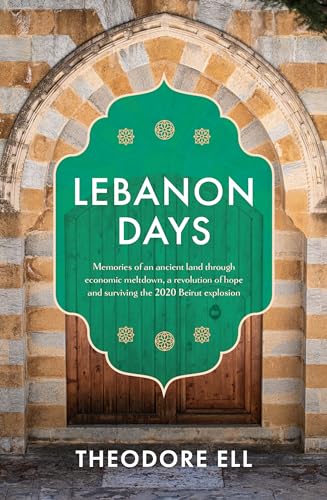
  • Theodore Ell, Lebanon days: memoir, based on Ell’s experience when he accompanied his wife on her diplomatic posting to Lebanon and witnessed a country on the brink of collapse
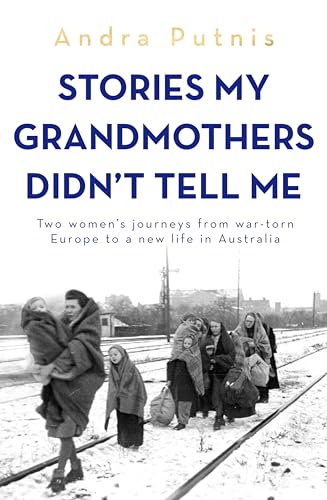
  • Andra Putnis, Stories my grandmothers didn’t tell me (my review): biography/memoir about the author’s two Latvian grandmothers, their experiences during the war, their subsequent emigration to Australia and the family they built here.
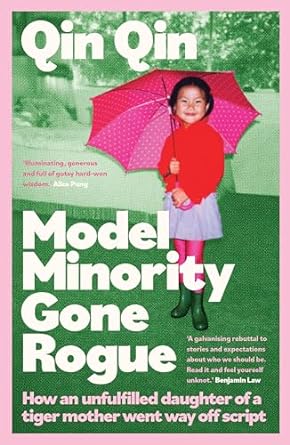
  • Qin Qin, Model minority gone rogue: memoir, by a young high-achieving Asian-Australian woman and her break from suffocating expectations to find the life she wants to lead.
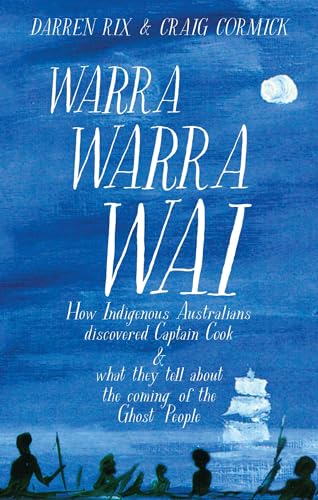
  • Darren Rix & Craig Cormick, Warra warra wai: history, focusing on First Nations people’s experience of James Cook’s exploration of the east coast of Australia in 1770, in order to ensure the complete story is told.

All shortlisted books this year, are nonfiction, three being memoirs.

The panel

The event comprised two parts – a panel discussion featuring the shortlisted authors followed by the winner announcement.

Cover

So, the panel. It was moderated delightfully by science fiction writer, Daniel O’Malley. His questions were perfect for the shortlisted books, and generated some enlightening responses. Unfortunately – or fortunately, for those of you who know how longwinded I can be – I had some technological challenges so didn’t capture some of the thoughtful ideas and experiences shared with us. Hmm, this has still ended up being long!

On their 30-second pitch for their books

Darren said it all when said he would tell people Warra Warra Wai was “a great read”. This is true, I think, for each of the books.

On whether the book they produced was the book they started out writing

Darren and Craig started travelling up the east coast of Australia gathering stories, wanting to contribute to truthtelling, to expose the history of dispossession and share the story of rebirth, to “record history in the right manner”, but it ended up being a much bigger story. Qin Qin said she always wanted to be a writer, but that her story started to take form and gel during COVID when Chinese people were being demonised. Andra was in Darwin and can pinpoint the time when she decided to write her story, when she realised that what she wanted to write was how her family came to Australia and become the people they were (are). Theodore probably had the most circuitous route. His book started as an essay that was more successful than he expected. (In fact, my friend, the writer Sarah St Vincent Welch, told me, that this essay, “Façades of Lebanon”, won the 2021 Calibre Essay Prize). He realised he had more to tell. He could have writte more essays, choosing a theme at a time, but he realised that Australians know little about Lebanon – its history and its beauty – so a book it was.

On what they did and didn’t include

Theodore provided the most intriguing answer. His book is written in five parts, and he wrote it backwards, that is, he started with part 5 which covered the most recent memories. Then he worked on part 4, and he knew what was needed to set up part 5! Ingenious. Andra knew she wanted to include the arc of her grandmothers’ lives. What she cut was a lot about herself! She realised she only needed enough about herself to sustain interest in the grandmothers. Qin Qin spoke like the Type A person she admits to being. She kept a diary as a child, and this provided some content, but her publisher and editor helped a lot. When she submitted her draft, hoping it was pretty much done, she was told she could write good dialogue and that it read like something written to get an HD! That brought a laugh from the audience. However, with editorial guidance, she eventually produced something that broke open her heart. Darren and Craig talked about their process, which included Craig doing the archival research, and both interviewing First Nations people up the coast. Darren said they interviewed young people as well as elders, to get a full picture.

On major challenges or any resistance they experienced

Qin Qin described her writing as “one continuous showdown” involving her constantly deprogramming herself from the limiting pressures and expectations she felt as the eldest daughter. She said anyone writing about race will get pushback, and at one stage she contacted the police about emails she was getting. Andra said she had been very afraid about how her story would be perceived, by the family and the Latvian community. The fear was so great she nearly gave up. But the response has been good, and the family has responded with such grace. Theodore did not face any real opposition or obstacles but there were ethical challenges. He’s not Lebanese, no one in his family is Lebanese, so he has no true stake in what happens to Lebanon. He wanted to avoid ventriloquising Lebanese points of view. The ethical core of the book is what people told him, in their words, but to protect their privacy he gave them pseudonyms. Also, as his wife is a diplomat – the reason he was there – he had to be careful about doing anything “unbecoming”. Even the simplest thing can be spun the wrong way, so he had a delicate path to tread. Fortunately DFAT was happy with the manuscript. Craig said the commonality between all the shortlisted books is that they are open to pushback, but books threaded with a respectful element of truth are protected. He and Darren said that some communities rejected their approach, but that with many, once they sat down and explained what they were doing – that they weren’t from “the government” or “a university” – they were accepted. This was then passed on, like traditional message sticks, to other communities. They explained they wanted to produce a woven black and white history. Also, many communities had not been asked these sorts of questions by an Aboriginal man.

On where they write and how (a writer’s question)

Andra can’t write just anywhere, but needs a place to base herself. She started with vignettes, like squares in a patchwork, which she then assembled. She was helped by the fact that Nana Aline had already started reflecting on her life. As for Qin Qin, it’s a lovely thing when, as you sit through panels like this, authors reveal themselves as the real – and individual – people they are. So, her response was not surprising. She said the writing process was an ongoing journey of becoming more aware of herself, but she finds it easier to let herself, rather than others, down. So, she needs deadlines, which her publisher gave her regularly. She then wrote anywhere, anytime, to meet those deadlines. She works best when there’s accountability. Darren and Craig spent lots of time together in planes and cars, during which they talked about what they were doing, their structure, the way they would incorporate different timelines (like dreamtime and white time). Once they got the structure, the writing was easy. Makes sense to me. Theodore said he must have a room. He has a room at home and one at the ANU. The latter is where he does the hard yards, the welding of the words.

On what was most satisfying

For Darren it was travelling country, particularly those he hadn’t been to before. Craig added that communities wanted their own stories in a form they could read, and their book has provided this. Qin Qin said that with each rewrite she felt she shed layers, she felt weight lifting. Her book is a spiritual memoir, one about deprogramming herself from living up to expectation. She was glad to find she had her own voice. Andra said getting to the end was satisfying, but she also related to the idea of shedding layers. What moved her most, however, was when Nana Aline told her that she had felt “seen” by her granddaughter. Theodore had two. One was that while much of his story is dark it also contains fun, because Lebanese people are witty and satirical. These scenes and those of real friendship mean a lot to him. Also, he liked, during revision, how much spontaneously came back in memory, enabling him to relive the many stunningly beautiful places.

On their next project

Craig and Darren are working on two books, which they call “batmen” (about the Aboriginal cricket tour of England in 1868) and “Batman” (about Treaty, involving Victoria, Tasmania and New South Wales)! Qin Qin’s sole (deprogramming) journey is to have no goals, so she will see what comes up. Andra can’t wait to write something else but didn’t say whether she had a project, while Theodore’s main longterm project is a biography of Les Murray.

The announcement

Michael Petterson, ACT Government’s Minister for Business, Arts and Creative Industries, made the announcement, including sharing comments from the judges, but this is long enough. He did say, however, that there was a record number of 56 books entered for this year’s award.

The winning book was Darren Rix and Craig Cormick’s Warra Warra Wai, which the judges praised for providing a “unique lens on history, land and identity”. Theodore Ell’s Lebanese days was highly commended. I hope the ACT Government will share the judges comments on their website.

At the end of the announcement Craig said that he and Darren had decided that, should they win, they would pronounce it a four-way tie, which they did, and handed each author a medal to document it! The audience loved this spirit.

The session ended with afternoon tea served in the National Library foyer. A lovely treat for us who attended this free event!

Canberra Writers Festival, 2025
The ACT Book of the Year
Friday 24 October 2025, 2:30-4:30pm

Monday musings on Australian literature: Secrets from the Green Room

I have planned to write about the Secrets from the Green Room podcast series pretty much since it started in late 2020, but for one reason or another time has got away from me and here we are, some four years later … and I’m finally there. The good thing is that it is still going so, you know, better late than never.

Book cover

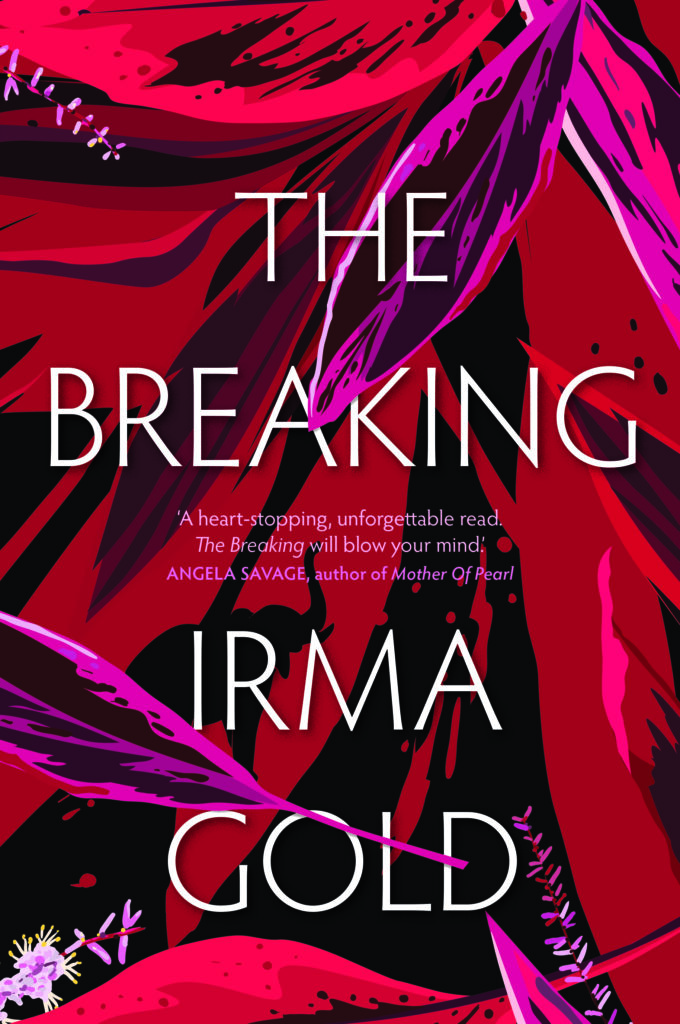
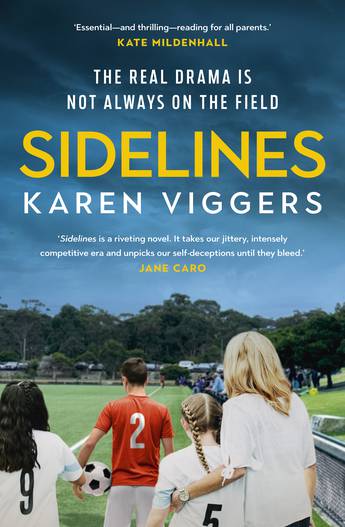
This podcast series was created by two (then) Canberra-based writers, Irma Gold and Craig Cormick (links on their names go to my posts featuring them), and first went to air, mid-pandemic, in November 2020. The latest episode, no. 40, went live just a week ago, on 30 January. During this time, Irma Gold moved to Melbourne, and Craig Cormick handed over his baton to another Canberra author, Karen Viggers, but, the show went on …

As I’m sure you all know, there are thousands of literary podcasts out there. I don’t listen to many because, despite my enthusiasm for literary matters, when I get a spare moment I tend to go for quiet. You just can’t do everything. But, for podcast lovers, it can be hard to track down what to listen to. Early this year The Conversation shared “15 literary podcasts to make you laugh, learn and join conversations about books”. The article’s writer, Amber Gwynne, quotes another writer Tom McCallister who claims that ‘while traditional reviews may be in decline, literary podcasts are not just “filling the void”. They’re “fracturing and reshaping” the “world of book discussion”’.

Gwynne adds that

like community reviews and the more recent surge of #BookTok and #Bookstagram content on social media, literary podcasts feed the rich social networks that form around books. They transform what’s often a solitary activity – reading – into a widely (but intimately) shared experience.

These networks are what keep most of us bloggers involved in social media, aren’t they? But, back to Gwynne. She explains that the format’s mainstays are author interviews and criticism that ranges from comprehensive reviews to casual banter, with the end result being that they “invite audiences to engage with books and writing in all kinds of ways”.

Some podcasts work primarily for readers. They introduce us to loved authors or to new authors; they show us other ways of finding out about the literary landscape; and they offer us options to focus narrowly on specific genres or to cast our nets more widely. Whatever your reading interest, there is likely to be a podcast out there. Many of these podcasts have a side-benefit for authors. By providing opportunities for writers to do readings and/or engage in conversations, podcasts can help promote authors. Indeed, as Gwynne says, podcasts “can be a valuable platform for emerging authors, providing exposure and amplifying diverse voices.”

Other podcasts, though, focus specifically on the writers. Their aim is to support writers and help them develop their craft. This latter is where Secrets from the Green Room primarily slots. The title, in fact, gives that away. Promotion for the series explains that in each episode the hosts

chat with a writer about their experience of the writing and publishing process in honest green room-style, uncovering some of the plain and simple truths, as well as some of the secrets — whether they be mundane or salubrious — and having a lot of fun in the process.

The episodes usually start with the hosts chatting about their own practices and experiences – such as whether they find writers’ retreats useful, or how much (or whether) they plot out their stories in advance, or whether they take notes and if so how, and so on. Then they move onto, mostly, a conversation with a single author, who is drawn from across the spectrum (literary, crime, cli-fi, to name a few). The conversation focuses on the craft aspect – how do they write, how did they get published, how did they find the editing process, and so on. But, there are also episodes devoted to other aspects of the trade that could be useful to writers, such as conversations with booksellers, a sales rep and a festival director. Again, the focus is on what writers need to know about these activities and functions. Should writers, for example, turn up at a bookshop offering to promote their book? Are there right and wrong ways to go about approaching a bookshop? This must surely be gold (excuse the pun) for writers, but for readers like me who are interested in – nay fascinated by – the wider literary landscape, this “stuff” is just wonderful to hear.

Book cover

Gwynne’s The Conversation article starts with Australian podcasts, and has Secrets from the Green Room second in the list. Her description is that Irma and Karen “invite guests to candidly share their own experiences navigating the world of publication, landing on topics as varied as ghostwriting [Aaron Faaso and Michell Scott Tucker], the “creep” of imposter syndrome [Nikki Gemmell], and the challenges of teaching writing at university [Tony Birch]”.

Secrets from the Green Room is available, free of charge and from multiple platforms, like most podcasts that I know, but here is the Spotify entry with list of episodes.

Do you listen to literary podcasts, and, if so, care to make a recommendation or two?

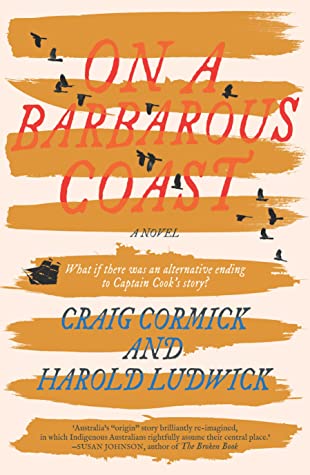
Craig Cormick and Harold Ludwick, On a barbarous coast (“BookReview)

Craig Cormick is a Canberra-based writer whom I’ve seen at various literary events around town, but not read until now, so I was especially glad when Allen & Unwin sent me this book to review. Titled On a barbarous coast, it was written collaboratively with Harold Ludwick, “a Bulgun Warra man whose traditional lands lie west of Cooktown”.

On a barbarous coast offers something a bit different for reviewers. Besides its collaborative nature, there’s its form or genre, which is that sub-genre of historical fiction called alternate (or alternative) history. In this case, it involves looking at a period of Australian history and asking “what if things had happened differently?” Those things, for Cormick and Ludwick, relate to Captain Cook’s exploration of Australia.

The story springs, then, from Captain Cook’s 1768-1771 voyage to Australia to observe the Transit of Venus. During that expedition, in late 1770, the Endeavour was seriously damaged around the Great Barrier Reef, but managed to limp on to Batavia. However, Cormick and Ludwick posit a different scenario, suggesting that the Endeavour was shipwrecked and that only a small number of the crew survived – including Cook, though he remains comatose though much of the story. The survivors make their way to land, and … the question is, as the cover states, “What if there was an alternative ending to Captain Cook’s story?” Would Australia’s history have been different, and how?

While I’ve not read many, I do quite like alternative histories. They encourage us to look at the past from different angles, which can illuminate the implications of decisions made and actions taken.

So, this is how it goes …

The story is told in two alternating first-person voices, Cormick’s being that of American Midshipman James Magra, and Ludwick’s being the young Indigenous boy, Garrgiil.

Magra chronicles the actions and fates of the shipwreck survivors, who very quickly break into two antagonistic camps, while Ludwick shares the thoughts and actions of the local Guugu Yimidhirr people. For the bulk of the narrative, the two cultures remain apart. There is quite a bit of humour in watching Garrgiil’s people trying to decide whether these strange “spirit things” are ancestors or just men. Initially, they feel they must be ancestors, but the way they stumble around, starving while “walking past food every day”, not to mention behaving incorrectly in sacred or special areas, suggests that this may not be the case.

… their presence gives our people great stories of their stupidity and clumsiness to tell around the fire at night. Like the one who stood in the river and let Gandhaar [crocodile] eat him …

Meanwhile, we watch Magra and his co-survivors bickering amongst themselves, trying to plan a solution to their predicament, and sensing the “natives” are out there but not seeing them. The stage is set for a meeting. The question is: how will it go? You will have to read the book for yourselves to find out.

So, how does it all come together?

Magra gets the lion’s share of the story, which could be seen as giving the invaders the upper-hand (yet again) in story-telling. However, I’m going to assume that this was all discussed and agreed between the two authors. Also, I think we could argue that the unequal number of physical pages doesn’t necessarily mean that the emotional impact of the two narratives is similarly unequal. Garrgiil’s voice is strong enough, and compelling enough, to be in our minds, even when he’s not centre-stage.

In the Authors’ Note at the end, Cormick says they “tried to stay as close to known history as possible, both within the known and imagined paths of the story”, which requires a bit of mind-bending but I get what they mean. They drew upon “many existing knowledges” including several journals, such as those of James Cook, Joseph Banks, Sydney Parkinson, and an anonymous journal believed to have been written by James Mario Magra, whom Cormick uses as his narrator. They also looked at the work of Indigenous and non-Indigenous historians, journalists and academics, and at historical accounts of several shipwrecked individuals who had lived with Indigenous people. Cormick notes that while their story divides easily into the two narratives, “it is not so easy to unpick how each of us influenced each other’s work”.

Ludwick adds that his aim was to pull readers into “the world of Guugu Yimidhirr language (which was first recorded in 1770 by Sydney Parkinson and Joseph Banks)”. He says that many of the practices and knowledge he describes in the book are still used by his people. He also says that he wove Dreamtime stories into his narrative to help readers understand his people’s traditional explanations of how the land became what we see today.

The end result is the sort of book I like to read, one that entertains me with its story, while also engaging my mind as I consider what the authors (plural, in this case) were trying to do, how they were trying to do it, and whether they pulled it off. It is an earnest book. Sometimes this comes a bit close to the surface when we are “told” things to make sure we get it (such as “I know the Captain controlled how the stories of our journey would be told”). This – and the strange though interesting little “magical realism” interludes where Magra talks to Gandhaar, the crocodile – creates a little unevenness in the narrative. Also, the use of parenthesis to translate the local language used by Garrgiil felt clunky. Yet, I applaud the book’s extensive use of this language. We need more of it in contemporary Australian literature. As Gandhaar tells Magra:

You create the landscape in your own words. If you don’t know the right words, you will never know the land properly.

But these are minor “picky” things. Cormick and Ludwick have attempted something significant in terms of story, intent, and process, and they pulled it off in a way that engaged me, right through to their considered ending which suggests possibilities, while being realistic about probabilities. Without irony, we could call this book “a grand endeavour”. It is certainly exciting to see such Indigenous-non-Indigenous collaborations happening in our literary sphere.

Lisa (ANZLitLovers) also found this book intriguing.

Craig Cormick and Harold Ludwick
On a barbarous coast
Crows Nest: Allen & Unwin, 2020
309pp.
ISBN: 9781760877347

(Review copy courtesy Allen & Unwin)