Today I saw an Instagram post promoting the latest interview on Irma Gold and Karen Viggers’ podcast, Secrets From the Green Room. The interview was with Emily Maguire, and the promo shared this:
Other people of my age who’ve been working at something for as long as I’ve been working at writing – they have a better lifestyle than me. They’re able to live in a way that I can’t, even though I feel successful. (Emily Maguire)
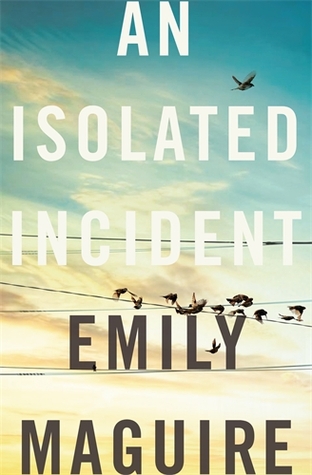
Emily Maguire should indeed feel successful. She has written seven novels, and three works of nonfiction. In 2013 she was named one of The Sydney Morning Herald Best Young Australian Novelists. Her fifth novel, An isolated incident (my review) was shortlisted for several significant literary awards including the Stella Prize and the Miles Franklin Literary Award. Her latest novel, Rapture, won the Queensland Literary Award for Fiction and was listed for other awards.
And yet, she doesn’t have the same lifestyle as her peers. This brings me to the issue which is currently causing concern among writers internationally, including those in Australia. I’m talking of course about the AI industry’s use of copyrighted material to “train AI models”. This issue has been bubbling along for some time now and I’m not going to track it all here. The Conversation published an article in September summarising the current state of play in Australia, including these points:
- The Productivity Commission’s interim report (published in August) “proposed a text and data mining exception to the Australian Copyright Act, which would allow AI training on copyrighted Australian work”.
- The Minister for the Arts, Tony Burke, said in that same month that the government had “no plans, no intention, no appetite to be weakening” our copyright laws.
- Both the Australian Society of Authors (ASA) and the Australian Publishers Association oppose the the Productivity Commission’s proposal. The publishing industry is not entirely opposed to AI, but recognises significant legal and ethical challenges. The Australian Publishers Association wants government policies on AI to prioritise “a clear ethical framework, transparency, appropriate incentives and protections for creators”. They want a balanced policy which enables both AI development and cultural industries to flourish.
The concerns make sense to me. I am a librarian by profession, which means that freedom of information is one of my founding principles. It also means that I love the Internet and all that it offers us in terms of being able to find (discover) the things we want to know. However, this doesn’t mean that I believe these things should come at a cost to others.
So, what do librarians think about this? In February this year, the National Library of Australia published its Artificial Intelligence Framework. It recognises that “AI technologies present opportunities for developing new ways to collect, understand and share the collection” (p. 3) but also that:
Responsible AI governance includes recognition of legal rights holders and their valid commercial interests. Where legal frameworks for AI are evolving or unclear, any development will proceed with caution and consent from relevant stakeholders and copyright owners will be sought. This includes engaging with external stakeholders such as the NED Steering Group, publishers and independent publishing communities. We will not on-sell or share in-copyright data under any circumstances. As discussed below, we recognise the rights of Indigenous peoples to control their own cultural and intellectual property.
And, under their principles, they include that “We will always respect Australian copyright law and protect valid commercial interests”.
Meanwhile, Australian authors and musicians spoke last week at a Senate committee hearing on the Productivity Commission proposal to introduce the exception to the Copyright Act to allow AI training. Anna Funder, Thomas Keneally and other authors spoke powerfully on the importance of copyright to sustaining writers’ careers. I loved that Keneally invoked Frank Moorhouse, the author who was significant in the development of Copyright law in Australia, but he also made his own points:
It’s not copy-charity. It’s not copy-privilege. It’s not copy-indulgence. It’s copyright.
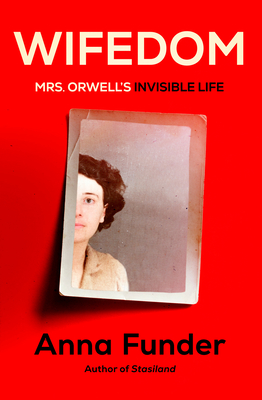
Anna Funder concluded her comments with:
If Australia would like books to delight itself, to know itself, to be itself, and not a source of raw materials for American or Australian computer companies, we will need books. But without copyright, no one will write them.’
(I saw these on Instagram, but you can read a summary on the ASA’s page.)
AMPAL, the Australia Music Publishers Association Limited, posted on Instagram that:
If AI needs our songs to learn … then our songwriters deserve to earn.
Life is tough for creatives, and yet what they create for us is, as one person told me many years ago, what makes life worth living! (Besides our family and friends of course.) So, I stand with Australian creatives in their fight to retain the right to say who can use their material, and how, and to be recompensed for that.


 Whispering Gums