Winnie Dunn, Dirt poor Islanders (#BookReview)

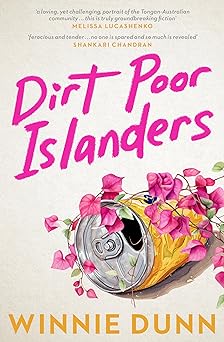
Book cover

When my reading group chose our books for the second half of the year, the shortlist for the Miles Franklin Award had not yet been announced. However, wonderfully, the three books we chose from the longlist, all ended up on the shortlist. One of those was Winnie Dunn’s debut novel, Dirt poor Islanders. It is the first novel published by a Tongan Australian, and adds a welcome strand to the body of Australia’s second and third generation migrant literature.

Dirt poor Islanders spans around a year when its protagonist Meadow is approaching 12 years old. It can, therefore, also be read as a coming-of-age novel. It is a raw, earthy, honest and sometimes confronting read that exposes the challenges faced by Australian-born migrant generations, who are caught between two worlds.

This is not a new story. However, what is impressive here is that Dunn, in her first novel, has found her own strong and clear voice. It’s there in the way she gets right into the head of her protagonist Meadow, who is, admittedly, modelled on herself. It’s there in the way she interweaves English and Tongan language, capturing the vitality in her migrant community. It’s also there in her use of repetition, some of it onomatopoeic, to give her writing rhythm and create a tone that’s sometimes melancholic, sometimes humorous. Dunn also doesn’t spoon-feed her readers. She expects us to go with the flow and make the necessary connections. It’s not hard reading, but it does require attention.

“this way of seeing myself as half … and never enough” (Meadow)

So, who is Meadow? She’s a young girl who lost her birth mother at the age of 4. At the novel’s opening she is the eldest of six children in a blended family comprising three children from her birth mother, one from her step-mother, and two from this second marriage. Another is on the way. Her father is 30 years old. Meadow is grappling with what it means to grow up Tongan, particularly one who is hafekasi (half-Tongan half-White) and feeling caught between two worlds, neither of which fully accept her. She is desperate for a mother, and feels closest to her namesake, aunt Meadow, who lives in Mount Druitt with our Meadow’s paternal grandmother and another four aunts.

We follow Meadow through a tumultuous year. Early on, she spends most weekends at her Nana’s house surrounded by the five aunts, but when her father buys a new house in Plumpton, he wants Meadow, her sister Nettie and brother Jared, to call that home. With her birth mother gone, however, Meadow feels “stuck” and insecure. Aunt Meadow, also known as Lahi, is her “mother-aunt” and her rock. The narrative is built around the wedding of this Lahi, who, Meadow believes, is more interested in women. She fears for her boyish aunt, but she also fears for herself, that she will lose this mother figure to whom she clings with all her being.

Now, Meadow wants to be a writer, so she’s an observant girl, well able to express her feelings. She sees the messiness – literal and figurative – of Tongan lives, and she shares the lessons she is learning about being Tongan, not all of which are pretty. For example, “Tongan meant dirty” (p. 37), “being a joke” (p. 73) and “second best” (p. 102). But, there are positives too. “Togetherness was what it meant to be Tongan” (p. 40) and “being Tongan meant eating together and being grateful to eat together” (p. 118).

Dirt poor Islanders, then, depicts a migrant family living under stress. Big families and low-paying jobs with long hours mean a chaotic home. Meadow’s scalp is nit-infested, and her home, decorated with second-hand goods, much picked off roadsides, is cockroach-infested. Her parents work hard to keep the family sheltered and fed, but the mess overwhelms. Flipping between maturity and immaturity, Meadow sees all this – the hard work, the exhaustion, the love – but she struggles to find her place, to accept her Tongan heritage.

It all finally comes to a head, and her father organises for her to go to Tonga, because, he says, “it’s time for youse to know what being a Tongan truly means” (p. 239).

Migrant literature encompasses both memoir and fiction, with the latter mostly being autobiographical or autofiction. Dunn confirmed in her Conversations interview that much of the novel’s family background comes from her life, but the novel diverges from real life in its narrative arc and the resolution of Meadow’s inner turmoil. This answered the question I had as I was reading, which was why Dunn had chosen fiction, like Melina Marchetta did in Looking for Alibrandi, over memoir, like Alice Pung did in Unpolished gem. It’s a choice. What matters are the truths conveyed, not the facts, and Dirt poor Islanders feels truthful.

This truth is not all raw and confronting as I may have implied at the beginning. It is also warm and humorous. Meadow, who doesn’t like rich, fatty Tongan food tells us:

If it came out of a can covered in sugar and sodium, Tongans were eating it. But back then, all I wanted was food that came out of a window. (p. 37)

Preferably at Maccas! There are also funny scenes, many relating to the wedding which occupies the novel’s centre, and which is another nod – besides the title and epigraph – to the book that clearly inspired Dunn, Kevin Kwan’s Crazy rich Asians.

“no one could live as half of themselves” (Meadow)

However, Dunn’s book is fundamentally different from Kwan’s, whose aim, he said, was, to “introduce a contemporary Asia to a North American audience”. Dunn did want to introduce Tongan Australian culture – and counteract the image presented by Chris Lilley in Summer Heights High – but through Meadow, she also explores the excruciating difficulties children caught between cultures face. By the end of the novel Meadow comes to understand a little more the “messy truth” of being an Islander, and that:

No one could live as half of themselves. To live, I needed to embrace Brown, pālangi, noble, peasant, Tonga, Australia – Islander. (p. 275)

Dirt poor Islanders is both shocking and exciting to read, which is probably just what Dunn intended. I feel richer for it!

Winnie Dunn
Dirt poor Islanders
Sydney: Hachette Australia, 2024
293pp.
ISBN: 9780733649264

Rebecca Burton, Ravenous girls (#BookReview)

When I announced the two winners of Finlay Lloyd’s inaugural 20/40 Publishing Prize, a few days ago, I said I planned to read them for the Novellas in November challenge/meme/reading month. (What do we call these things?) So here, now, is my post on the first I’ve read, Rebecca Burton’s Ravenous girls.

Rebecca Burton, as I’ve said in previous posts on the prize, is an editor, and author of two young adult novels, Leaving Jetty Road and Beyond Evie, both published by HarperCollins Australia. This book, I’d say, is a cross-over. It could be read by YA readers, but its subtle perspective of looking back from some years later, means that it is particularly geared to adult readers.

Finlay Lloyd writes on their website that

Stories of family dysfunction often expose us to relentless failure. And while Ravenous Girls is about the tensions and growing distance between two sisters—the elder burdened by anorexia, the younger by self-doubt—it is distinguished by its lithe and tender understanding of the complexities of growing up.

It is, I suppose, a story of family dysfunction, but in the sense that most families, dare I say, can be dysfunctional to a point. By this I mean that many families face trauma and challenges that can affect how well they function. Which is the chicken, which is the egg? It’s probably not worth much going there – and this book doesn’t. Nonetheless, there is a bit of backstory to why things may be the way they are.

So, Ravenous girls. It’s told first person from the point of view of 14-year-old Frankie, which puts her slap-bang in the coming-of-age category, and like most her age she is unsure about who she is. She feels “the wrongness of me”, which includes sometimes being “too much me”. She is challenged by her friend “racing away” from her, as can often happen at this time of life, with neither the racer-ahead nor the left-behind having the tools – the experience – to manage it gracefully. Frankie feels the loss deeply, just when friendship is most needed.

Meanwhile, Frankie’s family life is challenged by the fact that Justine, her seventeen-year-old sister, is, as the book opens, about to enter an Eating Disorders Unit as a live-in patient. The third person in this family is Iris, their mother. She – and all of them – still suffer from the premature death of husband and father some eleven years earlier. I have seen this happen – a mother’s grief over the early death of her husband derailing family relationships. That seems to be part of the situation here.

The story primarily covers the months over the summer holidays when Justine is in hospital. Frankie, at loose ends because friend Narelle has secured a holiday job, visits Justine every day. She observes Justine, and thinks about what is happening to her and why. She and her mother attend, with Justine, a poorly-handled family therapy session, and she also attends a family support group. Neither of these provide much help or support. She doesn’t see either Justine or her family in these, so she continues to try to work it out for herself. She sees her mother’s tiredness and pain, and she sees there is no space for her own concerns when Justine’s needs are so great, which is something Justine, bound up in her own growing-up challenges, doesn’t appreciate.

What elevates this reading from what could have been a “woe is me” tale are the occasional foreshadowings or hints from later Frankie, telling us what she now knows, or in some cases, still doesn’t know. These references play several roles, from recognising their naiveté at the time (“It astonishes me now that this is the way we thought”) or her own self-absorbed inattention (“maybe if I’d listened more carefully”) to sharing lessons learnt or hinting that character development had occurred (“But now I think that I may have been a monster too”). Burton handles these later reflections adroitly – they add richness and depth without spoiling the conclusion or losing the tension or reducing our care for the characters.

The novella is set in 1985/1986 Adelaide, and Burton captures the era well – the political happenings from Queensland’s Joh Bjelke-Peterson to America’s Unabomber, the technology (cordless phones appearing, but certainly no mobiles!), the films and music. I could ask why the novel is set then, which is my usual question for novels set in the past, but, for a start, an earlier time-period is necessary to enable the inclusion of that perspective, I’ve mentioned, of the much older Frankie.

There are references during the novella to Frankie and her mum reading books about anorexia and other recovery memoirs – as readers will do when confronted by difficult situations. I liked this comment – or warning – about such memoirs:

It didn’t occur to me that what was truth for one person might not be true for another – or that the truth as people wrote about it wasn’t always the truth as they’d experienced it.

Fortunately, Ravenous girls isn’t a memoir!

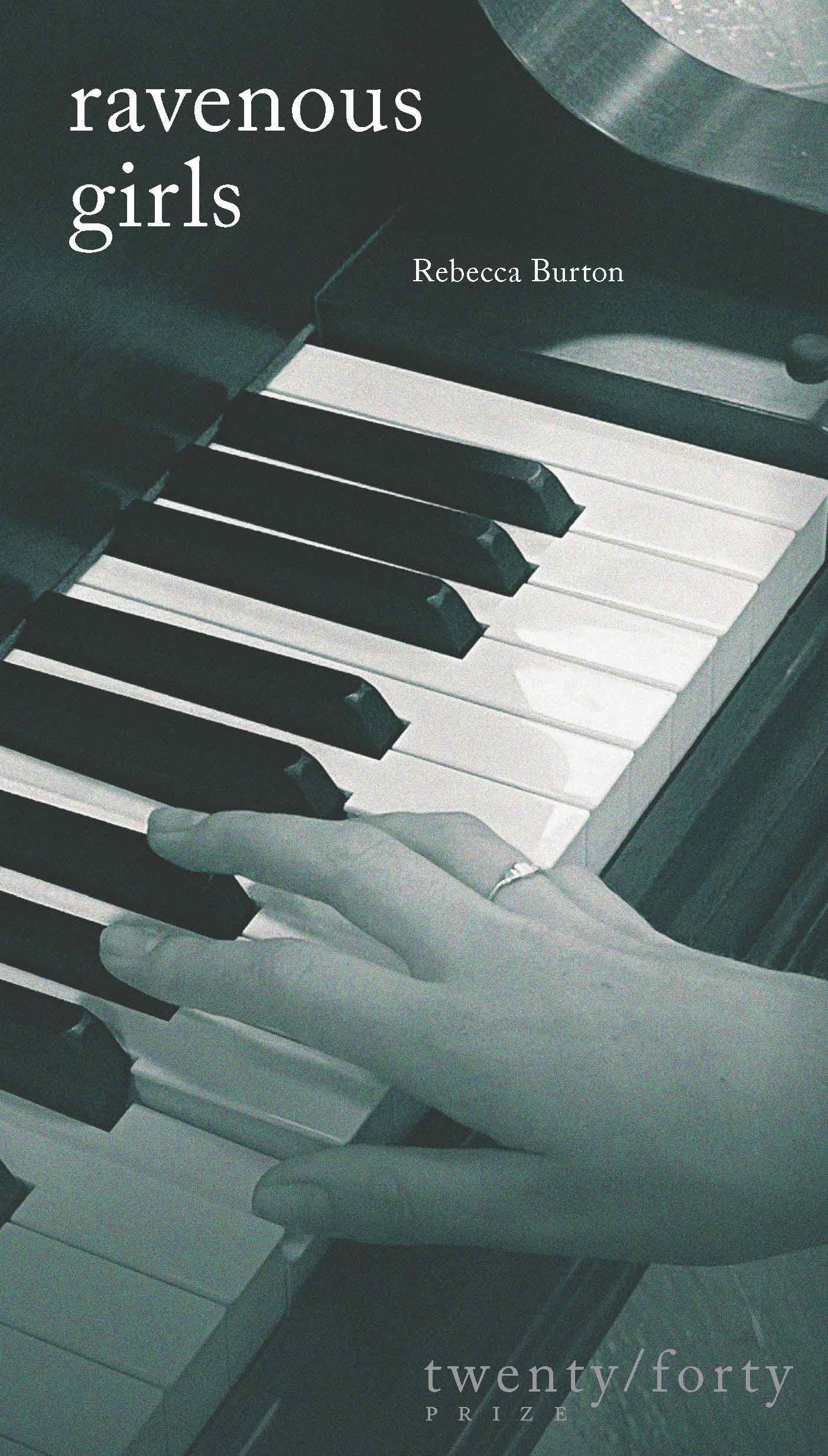
As with all Finlay Lloyd books, the design is gorgeous. It has their unique shape, a dust jacket despite being a paperback, and a stylish but minimalist overall design aesthetic with elements that carry through to the other winner.

Before I close I must mention the title, Ravenous girls, which relates to anorexia and the hunger its sufferers experience. In anorexia, as we know, the hunger, and hence the title, is not purely literal. For Justine, as she articulates to Frankie, it’s about “wants”: “I don’t want to want the things I want, you know?” “Ravenous” perfectly encapsulates the intensity of need explored here.

Ravenous girls is a compassionate book that sensitively charts the emotional ups and downs that are part of the anorexia landscape, and explores the helplessness about understanding what is such an individual and complex mental condition. It also conveys something more generally relatable about family relationships – sisterhood and daughterhood, in particular – and about how darned hard it is to grow up. But, grow up we do.

Read for Novellas in November. Lisa (ANZ Litlovers) and Theresa (Theresa Smith Writes) have reviewed both winners in one post, but I am doing them separately. Watch this space.

Rebecca Burton
Ravenous girls
Braidwood: Finlay Lloyd, 2023
103pp.
ISBN: 9780645927009

Eleanor Limprecht, The Coast (#BookReview)

I love to read Author’s Notes, Afterwords, or whatever they are called, at the end of novels, and particularly so when the novel is historical fiction. This is because these notes will often explain the author’s thought process, the line they have drawn between fiction and fact, the sources used, the level and type of research undertaken, and so on. It helps me understand “how” to read the book, if that makes sense. I was consequently pleased that Eleanor Limprecht had provided such information at the end of her fourth novel, The Coast, which is set in the former Coast Hospital lazaret in Little Bay, Sydney. This hospital was established in the 1880s for the treatment of infectious diseases, including small pox, tuberculosis, and the subject of this novel, leprosy (or Hansen’s Disease).

The Coast is set primarily in the first three decades of the twentieth century, and focuses on the story of Hilda/Alice who is nine when she is brought to the lazaret. However, while she provides the novel’s narrative and emotional centre, hers is not the only story told. We hear about other members of her family, including her mother Nellie/Clea who is at the Coast when she arrives. We also hear about one of the Hospital’s doctors, Will Stenger, who takes special interest in his lazaret patients. And, we have a story that somewhat parallels Alice’s, that of Jack/Guy, a Yuwaalaraay man, who also ends up at the lazaret, though not until he is an adult. I should explain here the dual names: leprosy patients would be given (or choose) a new name when they entered the hospital because, as Alice’s mother tells her, it’s better for their family if they disappear, “it’s better that no-one can find us”. Leprosy, at the time, was a reviled disease and sufferers were secluded under the Leprosy Act of 1890.

What author afterwords tell us

So, Limprecht’s words. I wanted them because I wanted to know whether she would address her First Nations character and, of course, being the thorough historical fiction writer she is, she does indeed discuss the issue. She had advice and feedback from Yuwaalaraay reader Nardi Simpson (whose Song of the crocodile I’ve reviewed) and Gamilaraay and Yuwaalaraay reader Frances Peters. She visited Angledool, Jack’s home, with the help of local First Nations people, and was shown around the Goondee Keeping Place at Lightning Ridge by First Nations people there. Her manuscript was also read by First Nations people associated with the La Perouse Aboriginal Land Council. All this supports my sense that she has rightly and respectfully included First Nations experience in her story.

Limprecht’s words provide other insights too, but I’ll mention just two of them. One is that she acknowledges various grants, including the Neilma Sydney Literary Travel Grant (see my post), which helped her visit another lazaret location, Peel Island. The other is that she acknowledges the History of Medicine Library at the Royal Australasian College of Physicians where she “found the records that inspired this story”. This interested me because the story contains many details about the lives of the patients at the lazaret, details that were so specific that I felt (and hoped) they were based on documented records – on reports, letters, and so on. This suggests that they were.

“nothing to look forward to” (Alice)

Limprecht also tells us in her words that she got the idea for this novel while researching her second novel, Long Bay (my review), making it before 2015. However, she also tells us that she finished writing it during the pandemic, which helped her “consider the continuing repercussions of stigmatising illness and the long-term effects of isolation”.

So now, the novel itself. The story is told in first person and third person voices – Alice’s in her voice, with the stories of the other three in third person. These four stories are interspersed with each other, and are told chronologically, but each starts at a different point in time, beginning with Jack (1905), then Alice (1910), Nellie (1892) and Will (1910), until they coalesce in 1926. Jack’s story encompasses his experiences as a stolen child and a soldier in the Middle East in World War 1. Through him, Limprecht ensures that First Nations’ lives are part of the life of the time she’s chronicling, something that many of our majority-culture-written histories and historical fiction have consistently omitted.

Jack’s story – of being taken from his family, returning to it, going to war and returning as an amputee who soon after ends up at Peel Island – conveys not just these facts, but the emotional impact of being stolen, of displacement, of racism (albeit his injured returned soldier status sometimes earned him begrudging recognition.) By sending him to Peel Island, Limprecht also documents the differential treatment at that lazaret between “white” and “others” (or, the “coloured camp”). This is a difference that he does not experience at The Coast under the more humane Dr Will.

Alice’s story follows, presumably, a typical trajectory of those who were isolated at a young age and spent the rest of their lives that way. (It’s a coming-of-age story as moving and as tragic as that of Anne Frank’s real one). As quarantine places go, The Coast lazarets – men’s and women’s – are humane. The patients live in cottages, they have access to a beach where they can swim and fish, and they can socialise with each other (though the women’s lazaret does not have a communal cottage like the men’s has!) But, “it’s no place to grow up”. Alice is an intelligent young woman, who quickly engages us with her warmth and honesty, but she also articulates the physical and emotional experience of this disease. Told first person, her story of resilience and resignation carries the novel.

Nellie’s and Will’s stories add additional depth and breadth to the lazaret community and thus the history. Both appear in the epilogue dated 1967. It didn’t feel narratively necessary to me, but historically it rounds out how leprosy treatment progressed and what happened to the Coast lazaret.

The coast is the sort of historical fiction I like, a well-researched, expressively-written story about an historical time and place I know little about, one that is worth knowing. It reminds us how far we have, or haven’t, come in our management of feared diseases, like AIDS, like COVID-19. It evokes with warmth and clarity the costs of ostracism and isolation. And, it puts First Nations people into the historical frame – naturally. A good read.

Lisa (ANZLitLovers) also liked this novel.

Eleanor Limprecht
The Coast
Sydney: Allen & Unwin, 2022
319pp.
ISBN: 9781760879402

(Review copy courtesy Allen & Unwin)

Nell Pierce, A place near Eden (#BookReview)

Nell Pierce’s debut novel, A place near Eden, won the 2022 The Australian/Vogel Literary Award. It was my reading group’s last book of the year, and it engendered a lively discussion, partly because our response was mixed and partly because its setting on the south coast of New South Wales is well-known to us.

Part coming-of-age novel, part mystery, part family drama, A place near Eden is told first person in the voice of Tilly who is around 20 years old when she is telling her story to a mysterious “you” – at least, “you” is not revealed to the reader until around half-way through the novel, so I won’t reveal it now. I can reveal however, that Tilly is trying to tell her side of a story to this “you”, and slowly, what this story is comes out of the murky recesses of her memory.

My reading group’s practice is to start with each of us briefly sharing our first impressions before we settle into deeper discussion. My first impressions for A place near Eden were that I loved its exploration of how truth can be manipulated or twisted, of different versions and perspectives of the same experience, and of the difference between facts and truths, in personal lives, in law, in art, but that I found the tone a bit heavy-handed, with little respite. Respite in tone – as Shakespeare knew – is good. A place near Eden is a reflective novel in which Tilly reviews the events that had happened to her, trying to make sense of them, so its tone is peppered throughout with “perhaps”, “maybe”, “looking back”, “in retrospect”, “now”, “still” and so on. It was a little unremitting. However, A place near Eden is a first novel so can be forgiven some flaws.

As you will have guessed, the title has both literal and metaphorical meanings: it is set near Eden in southern New South Wales, and the characters may be “near” but they don’t achieve being “in” Eden (paradise). Their own flaws prevent it.

The story starts with a prologue which looks back to halcyon days in the life of Tilly, then 13 years old, and her foster brother Sem and friend Celeste who were 14, almost 15 years old. The dynamic is set between them, one in which the younger Tilly is seen by the other two as “just a kid”. There is a bit of an experience gap between them – as can happen at the time of early puberty. An incident happens at the local pool that sets us up for the tone of the book, though it’s not “the” incident on which the book centres. In this incident, a small child falls – or is knocked – and hurts his head. Who did it? Tilly blames Celeste, though she herself “might” have done it. Writing later, she says:

The more I think on things, one way or the other, the more real they seem. That I was afraid of getting in trouble. Or that I wanted to punish Celeste. That it was her fault, or mine. I can believe it either way.

Throughout the novel, which primarily takes place when Tilly and Celeste are around 19 to 21 years old, the story is told in this maybe-this-maybe-that sort of tone. It is, essentially, a story about finding one’s self, one’s identity. In this case, it’s Tilly’s, so we see it all through her eyes, as she struggles to keep up with the just-a-bit-older, just-a-bit more experienced, just-a-bit more confident Celeste. This sort of uneven friendship is difficult to maintain.

“it could play either way” (Tilly)

So we come to the critical incident. Tilly and Celeste have been living at a holiday shack near Eden, while Sem – who is in a relationship with Celeste – comes and goes at will. One night, however, he disappears, and Tilly, who was drunk at the time, is blamed for it. Did she cause it or didn’t she? This is what she is trying to comprehend and explain to “you”.

Tilly is a character who likes facts – her preferred reading is the encyclopaedia – but she is aware that there is often a gap between facts and the truth (which she describes as “something that hissed out”). She is aware that “even when people try to tell the truth about something as mundane as a tomato, they couldn’t help but betray other things about themselves”. So, what are we to believe from this self-consciously unreliable narrator, from this narrator who says to us “saying something with confidence … can make a story real” and that “maybe we all embroider the truth sometimes”? Late in the novel, when she writes about telling her story to her lawyer, she says “I could feel stories emerging in my mind, ways of presenting things that I knew would please her”. She admits to lying to both the police and the lawyer, but that doesn’t, in fact, mean she is guilty of what she is accused of.

Alongside Tilly telling her story is her description of the documentary film being made about the case by her erstwhile boyfriend, Peter, who tells the story from three angles – the lost, troubled boy (Sem); a revenge story (Tilly); the manipulator (Celeste). In each version, different pieces of information are omitted to construct a specific viewpoint about what happened. It’s a clever portrayal of the “art” of the documentary. Tilly sees how “controlled” it is, and admits that she had “thought in art there might be truth”. Not here … though she had seen “truth” in Celeste’s portraits.

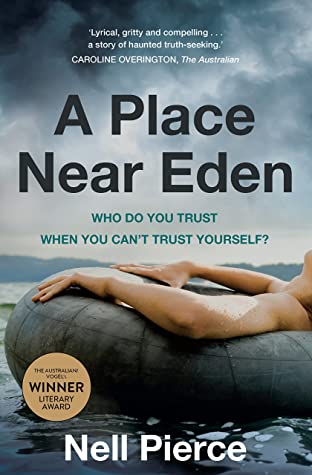
The book’s tagline on the cover is, “who do you trust when you can’t trust yourself?” This personal story is part of it, and reminds me of the recent conversation I attended with Heather Rose. She commented that “life is a process of forgiveness for the choices we make in order to be ourselves”. This could easily describe Tilly’s situation, as she struggles to come to terms with what she did – or what she may have done – in that tortuous process of becoming herself.

However, Nell Pierce also has a bigger story to tell, I believe. Late in the novel, Tilly comes to realise that, like her Mum, she is “sceptical of these neat stories we tell about people”. By concluding her book without a neat resolution, Pierce suggests to us that we too should beware of “neat stories”, that we should take nothing at face value. Question everything, just as Tilly seems to do.

Lisa also found this an intriguing book.

Nell Pierce
A place near Eden
Crows Nest: Allen & Unwin, 2022
296pp.
ISBN: 9781761066177

Jane Austen, Sense and sensibility (Vol. 3, redux)

Jane Austen, Sense and sensibility

I’ve called this post “Vol. 3, redux”, although it is my first post on volume 3. The reason is that for my Jane Austen group’s 2011 slow read of Sense and sensibility, I wrote posts on volumes 1 and 2, but not on volume 3 as I missed the meeting, and never did write up my own thoughts. This slow read, I have written up volume 1 (as “redux”), but I missed volume 2’s discussion, and again didn’t write up my thoughts. However, I did get to the volume 3 meeting and am naming my thoughts “redux” to match them up with the right re-read!

Now, a quick recap … In my recent volume 1 post, I discussed various ideas that had captured my attention, such as the novel’s autobiographical aspects, “fond” mothers, and appearance. Most of these had fallen away for me by the time I got to volume 3, but one idea that I mentioned – goodness, compassion and kindness – did not…

Triumph of kindness and generosity

From the novel’s beginning, the virtues of kindness, benevolence, generosity, charity are pitted against greed and self-interest. It starts with the sisters’ brother, John Dashwood, doing essentially nothing for his sisters while a distant cousin, Sir John Middleton, offers them a home at a good rental and supports them in any way he can. The theme continues through volumes 2 and into volume 3 where even characters who had been seen, initially, as somewhat silly if not vulgar, like Mrs Jennings and Charlotte Palmer, show kindness and compassion. They show up favourably against the greed and self-interest of Fanny and John Dashwood, Lucy Steele, and Willoughby.

Colonel Brandon is one of the characters whose kindness is evident from the start. Indeed, Elinor says to her mother near the end, that “his character does not rest … on one act of kindness”. A telling moment occurs when, in volume 3, he offers Edward Ferrars “a living”, after Edward’s own mother had disinherited him. The aforementioned John Dashwood finds this behaviour “improvident” and “astonishing” – and wonders why. Elinor responds, simply, that Colonel Brandon wanted “to be of use to Mr Ferrars”. That phrase, “to be of use”, conveys a sense of humility, of not wanting anything back, in his generosity.

It’s surely ironic when a page later, John Dashwood accuses sister Elinor of “ignorance of human nature”.

Mrs Jennings, too, who is described in the opening volume as “rather vulgar”, proves herself to be thoughtful and generous to Elinor and Marianne during their stay in her home in London. And when, in volume 3, Marianne falls seriously ill en-route home, Mrs Jennings

with a kindness of heart which made Elinor really love her, declared her resolution of not during from Cleveland as long as Marianne remained ill, and of endeavouring by her own attentive care, to supply to her the place of the mother she had taken her from.

Money is the root of …?

Money is another idea that threads through the novel from beginning to end: it is the death of Mr Dashwood which results in Mrs Dashwood and her daughters finding themselves homeless and impecunious. As the novel progresses, characters are defined by their attitude to money. There are well-off characters who are avaricious, like the aforementioned John Dashwoods and Mrs Ferrars, and well-off characters who are generous, like Sir John Middleton, Colonel Brandon and Mrs Jennings.

There are many in the novel, in fact, for whom money is so important they will sacrifice values like integrity and sincerity. Willoughby, in his confession to Elinor in Volume 3, admits

My affection for Marianne, my thorough conviction of her attachment to me–it was all insufficient to outweigh that dread of poverty, or get the better of those false ideas of the necessity of riches …

Of his rich fiancee, he says, “her money was necessary to me”.

Lucy Steele is, of course, the epitome of someone who schemes and manipulates for money, with little regard for the feelings of others. In the end, despite all her protestations of love, she is not willing to settle for the secure, if not rich, life that Elinor eventually has.

But what is it really all about?

As with all of Austen’s novels, what Sense and sensibility is about has been discussed and analysed and critiqued from literary, socioeconomic, feminist, historical, you-name-it perspectives. And, really, there is no one thing it is about. That is the joy and value of Austen. What she writes about, fundamentally, is people, and how we read her changes with our own experiences of life.

So here is where I am today. When I first read Sense and sensibility in my teens, I loved it. It was so romantic. Elinor gets her man, and is happy to live the life of an honest but not particularly well-off minister’s wife. Her sweet but overly romantic, emotional sister, gets the rich man. While that never seemed quite fair to me, as happily-ever-after stories go, I accepted it because it just showed what a person of integrity Elinor truly was. Love and esteem for an honest man were what made her happy.

And yet … what is Austen saying to us? Why do some of her heroines end up with less than dashing heroes? Well, I think it is partly because she was an early, if not the first, great novelist of realism. From this, her very first novel, she provides us with a microcosm of humanity. Like her later novels, Sense and sensibility is populated with flawed characters who represent complex humanity, unlike her Gothic and Sentimental novelist predecessors who tended to present the world in more morally absolutist, black-and-white terms. Not so Austen. Mrs Jennings might be “rather vulgar”, and a bit of an interfering gossip, but her heart is large and she’s generous. Mr Palmer, who seems cold and distant when first met away from home, shows himself to be kind and generous when a crisis occurs. And so on. Even Willoughby, despite his “selfish vanity”, is redeemed a little by his confession, and Austen allows him a reasonable life after all. I now see this confession as not being “clunky” as I’d once thought, but as important to Austen’s mission of portraying life.

But, back to Marianne. There was something that I noticed on this read that I’d never noticed before, and that concerned Marianne and her marriage to Colonel Brandon. One of the reasons I have always loved Sense and sensibility is for this quote:

Marianne Dashwood was born to an extraordinary fate. She was born to discover the falsehood of her own opinions, and to counteract, by her conduct, her most favourite maxims.

I so related to this – to the idea of proclaiming opinions before experience teaches us otherwise – that I hadn’t really seen the preceding paragraph, which concerns Marianne’s mother explicitly matchmaking Marianne with Colonel Brandon:

It was now her darling object. Precious as was the company of her daughter to her, she desired nothing so much as to give up its constant enjoyment to her valued friend; and to see Marianne settled at the mansion-house was equally the wish of Edward and Elinor. They each felt his sorrows, and their own obligations, and Marianne, by general consent, was to be the reward of all.

“The reward of all”. This sounds a bit suss! Austen continues …

With such a confederacy against her–with a knowledge so intimate of his goodness–with a conviction of his fond attachment to herself, which at last, though long after it was observable to everybody else–burst on her–what could she do?

And so, Marianne does come around to loving this good, kind man as Austen makes clearer a couple of paragraphs further on:

Marianne could never love by halves; and her whole heart became, in time, as much devoted to her husband, as it had once been to Willoughby.

The point, then, is that Sense and sensibility is not Romance with a capital-R, but a story about love – Elinor’s, from the start, and Marianne’s, eventually – that is based on genuine feeling combined with appreciation of the personal values that make a person worth loving.

There is so much more to this book but I’ll leave it here because I feel that, for now, I understand what it really is about!

Jane Austen, Sense and sensibility (Vol. 1, redux)

Jane Austen, Sense and sensibility

In 2011, my Jane Austen group started a slow read of her novels in chronological order of publication, which meant that we started with the 1811-published Sense and sensibility. By slow read, we meant that each month we’d read a volume of the chosen novel, given most novels in those times were published in three volumes, and discuss just that volume to see what new ideas or insights we might have. We finished the project in 2017. Having spent the last five years looking at other works by Austen (like her Juvenilia) and exploring other topics relevant to her, we decided last year that it was time to “do” the novels again. So, once again, we’ve started with the first one.

For some of you, this will seem very dry, but for those of us who love Austen, there is much to be gained from these slow reads. If you are interested in what I wrote last time on volume one, check out the post, but here I’m sharing what thoughts popped up for me this time.

First though, I’ll repeat the caveats from 2011. I’m assuming that most readers who come to this post will know the plot. (If you don’t, Wikipedia provides a good summary.) Also, this is not a formal review but simply a sharing of some of the ideas that struck me during this slow reading.

Slow reading of Volume 1

I have always liked Sense and sensibility, while my dear Mum thought it one of her weakest. (There’s no accounting for tastes! In my group there are many who will never forget that Mum loved Northanger Abbey, which some of them don’t like much at all.)

Anyhow, here goes. It’s fascinating how each read of an Austen book focuses the mind on something different. That’s the richness of Austen, and what makes her a true classic. In my last slow read, my first-volume thoughts focused particularly on the idea of judgement, and money and income. This time, other ideas came to the fore for me, some partly affected, I think, by current concerns.

Autobiographical first novel?

But first, an idea I hadn’t fully thought through before was that it could be seen as a “typical” first novel, by which I mean, it has strong autobiographical elements. Anyone who knows Austen always think of this novel’s basic set-up of in terms of her life: the fact that Austen, her mother and sister, lost their home on the death of their husband/father, and had to wait for the kindness of relations to come to their aid, just as happens to the Dashwoods. However, on this reading, I realised there were other autobiographical elements. Others in the group had come to the same conclusion, and yet none of us had discussed this last time. Curious.

So, for example, our two sisters, the younger musical Marianne and the older artistic Elinor mirror musical Jane and her artist sister Cassandra. Moreover, Jane, we believe, was lively, like Marianne, compared with her more sober older sister. If Austen did draw on herself for Marianne, however, she’s gorgeously self-deprecating – though she does present Marianne as over-enthusiastic and excitable but fundamentally sound. There are several other elements we could point to from Austen’s biography, including her flirtation with Tom Lefroy being reflected in Marianne’s with Willoughby. They are very different men, but both men are whisked away by relations from the attractive but unsuitable, ie not-rich-enough, girl.

Appearances deceive?

Perhaps partly because I’ve been listening to ABC RN’s Face Value series, I seemed to be particularly alert to the many references to appearance. Admittedly, Austen describes appearance in all her novels, but it felt pointed here in a way that I don’t recollect seeing in later novels.

So, Edward Ferrars and Colonel Brandon are both described as not handsome, but both are appealing for their good understanding and interested attention in others. Willoughby, on the other hand, is described differently. When he appears on the scene, having rescued Marianne from her fall in the rain, Austen says that Mrs Dashwood would have would have been grateful had he been ”old, ugly, and vulgar”, but his “youth, beauty, and elegance” gave him added interest.

As for the women, Sir John Middleton and Charlotte Palmer talk of Elinor and Marianne as being pretty and therefore marriageable, while Lucy Steele is seen by the perceptive Elinor to have “beauty” but to “want … real elegance and artlessness”. And then there’s Mr Palmer who, just like Pride and prejudice’s Mr Bennet, had chosen his wife Charlotte for her beauty not her sense. Beauty, Austen seems to be saying, is something we should not give undue credit to.

Fond mothers?

Another issue which caught my attention this time around concerned mothers and mothering. Mothering (poor or lack of) features in many of Austen’s novels. Lizzie Bennet’s mother (Pride and prejudice) is silly; Emma (Emma) and Anne (Persuasion) don’t have a mother; Fanny’s (Mansfield Park) is too busy; and Catherine’s (Northanger Abbey) is away from her at a critical time. By contrast, Sense and sensibility has several active and involved, though not necessarily great, mothers, from the loving, hands-off Mrs Dashwood to the ultimate controller in Mrs Ferrars.

Very early on Mrs Dashwood’s style of mothering is described and Mrs Ferrars’ is hinted at, in relation to the apparent growing attraction between Elinor and Edward.

Some mothers might have encouraged intimacy from motives of interest, for Edward Ferrars was the eldest son of a man who died very rich; and some might have repressed it from motives of prudence, for, except for a trifling sum, the whole of his fortune depended on the will of his mother. But Mrs. Dashwood was alike uninfluenced by either consideration. It was enough for her that he appeared to be amiable, that he loved her daughter, and that Elinor returned the partiality.

Mrs Dashwood, who is probably the most present mother in Austen, is loving but not always wise. When Marianne falls into excessive despair at Willoughby’s sudden, unexplained departure, Elinor suggests she ask Marianne directly about her relationship with Willoughby. Mrs Dashwood replies that she “would not ask such a question for the world … I should never deserve her confidence again … I would not attempt to force the confidence of any one”. Elinor disagrees, seeing “this generosity overstrained, considering her sister’s youth … [but] … common sense, common care, common prudence, were all sunk in Mrs Dashwood’s romantic delicacy”.

However, Mrs Dashwood does provide good “maternal” advice to Edward, suggesting that finding some useful employment would help him be “a happier man”. She then mentions his mother:

Your mother will secure to you, in time, that independence you are so anxious for; it is her duty, and it will, it must, ere long become her happiness to prevent your whole youth from being wasted in discontent.

We haven’t met Mrs Ferrars at this point in the novel, but earlier references to her have not suggested a particularly loving or even dutiful mother. If Mrs Ferrars is one matriarch in the the novel, Mrs Jennings is another. Austen tells us that “She had only two daughters, both of whom she had lived to see respectably married, and she had now therefore nothing to do but to marry all the rest of the world”. She comes across in Volume 1, as gossipy, “vulgar”, but good-natured. Without second-guessing the next volume, let’s say that I think she warms as a motherly character then!

Her younger daughter, Charlotte Palmer is pregnant, but the older one, Lady Middleton, is the mother of three young children. She is the “fond mother” who “will swallow anything”. Her very existence depends on her role – she only comes to life when her children are around – and the shrewd Steele girls take advantage of this.

For Austen readers, the issue of mothers in Austen’s novels is a loaded one. Why are there so few sensible mothers in her novels? There is much we don’t know about Austen’s life, and one of the mysteries concerns her relationship with her mother. Some Austen researchers believe it was prickly. We’ll never know, but great mothers are rare in her novels – which may or may not tell us something .

And …

Other issues that grabbed my attention included the many references to goodness, compassion and kindness, and, not surprisingly, to sense and sensibility (which I briefly discussed in my previous volume 1 post).

Goodness appears on page 1, when we are told that Mr and Mrs Dashwood had shown “goodness of heart” to the uncle from whom they had inherited Norland, the estate that Mrs Dashwood must leave after her husband dies. As the volume progresses, Marianne talks of Edward’s “goodness and sense”; Sir John Middleton is described as being of “good heart”; and Colonel Brandon as having a “good nature”. These are not just words. Sir John’s “good heart” translates into real and practical kindness to the Dashwoods, and Edward values the “kindness” of the Dashwood family “beyond anything”.

I won’t continue because we’ll have to see how or whether these issues remain to the fore as I read on, or whether others will raise their heads. Instead, I’ll close one one of those insights that I love reading Austen for. It’s on Mrs Dashwood not being prepared to consider the tough possibilities (in this case concerning Marianne and Willoughby):

But Mrs Dashwood could find explanations whenever she wanted them, which at least satisfied herself.

How often do we justify things to ourselves that we’d be better not to? Mrs Dashwood isn’t alone I think. (Or, do I speak only for myself?)

Roll on volume 2.

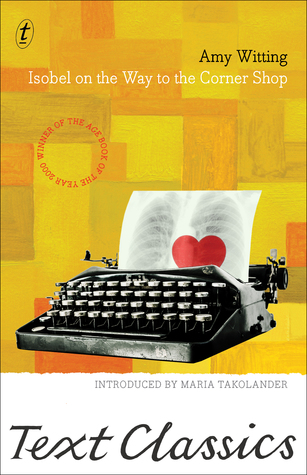
Amy Witting, Isobel on the way to the corner shop (#BookReview)

My first reading group book of the year, Amy Witting’s Isobel on the way to the corner shop, nicely doubles as a (late) contribution to Bill’s AWW Gen 4 week. Winner of the 1993 Patrick White Award, Amy Witting is one of those much-admired Australian writers who had not then and still has not received the full recognition she deserves. In her lifetime (1918-2001), she was admired by Patrick White, himself, and Thea Astley. Australian poet Kenneth Slessor is recorded as having said “tell that women I’ll publish any word she writes”.

Another admirer, Australia critic Peter Craven, argued that her form of realism wasn’t really accepted by the reading public until Helen Garner appeared on the scene, but for him “Witting was a great master of realism, a naturalist who could render a nuance in a line that might take a lesser writer a page”. Take for example this two sentence paragraph from our socially unconfident protagonist early in the novel:

The prison of other people’s eyes. No prison narrower.

So now, the book. Isobel on the way to the corner shop (1999) picks up the story of Isobel Callaghan that Witting had started in I for Isobel ten years earlier. You don’t need to have read the earlier book to enjoy and appreciate this one, because enough of Isobel’s past is given for us to have a sense of why she is the person we meet here.

“I have to step out into space”

The person we meet is a 21-year-old woman who, having received some encouragement from an editor, is struggling to establish herself as a writer. She’s poor, starving and isolated, having left her job after screaming at a colleague in “a rage”. She fears she’s going mad. I was engaged from the start by her strong sense of self, her vulnerability, and her determination to be independent, and I enjoyed every moment I spent with her. I felt anxious, as anxious as she did when she felt she was going mad, and just as relieved as she was when her illness was given a name – tuberculosis.

The first third of the novel introduces Isobel and takes us to the moment of her admission into Mornington Sanatorium in the Blue Mountains. In this section, some of the novel’s themes become apparent – one being the artist’s struggle to survive. Another concerns love. The novel starts with Isobel stalled over writing a love scene, because she doesn’t “know the first thing about it”. Not about parental, family love; not about romantic love. This, and her sense of herself as awkward and unlovable, cause her to make a big – and hurtful – mistake when a young man makes a gesture of real affection towards her.

Over the rest of this section of the novel, Isobel meets some people who show genuine kindness – love – towards her. Although the hospital makes her feel like a “parcel”, the section closes with a comforting touch from hospital volunteer Mrs Delaney, “the first time anyone had touched her in kindness”. Through the remainder of the novel, Isobel observes and experiences all sorts of expressions of love (and its opposite), including through a delightful little poetry discussion group at the sanatorium, which starts when Doctor Wang asks Isobel to explain Gerard Manley Hopkins to him.

In the final two-thirds of the novel, another theme that was nascent at the beginning, comes to the fore, and it’s to do with “being oneself”. Isobel’s sense of self is challenged at the sanatorium. It’s an inspired setting because it encompasses a microcosm of society: patients of a disease that doesn’t discriminate between rich and poor, their visitors, and the doctors, nurses and other staff with whom the patients come in contact. Finding your place in such a world, where you can be stuck for months, is not easy.

Isobel is particularly tested by her room-mate Val, a peevish, inflexible, and, she thinks, illiterate woman. Val is unhappy, and like many unhappy people, is self-absorbed. She “felt for no-one”. Try as she might, Isobel cannot get their relationship onto a comfortable footing:

Is it possible to cause so much misery to another human being, simply by being oneself? she wondered, feeling a reflection of that misery. No help for it; she must continue to be herself.

Maintaining your self is difficult, though, when you are “different”, as our funny, resourceful, and compassionate Isobel clearly is. At one point, when her recovery is threatened, she realises that she must be tougher, and so creates a new mantra for herself, “bastards get better”.

There is, surely, a hint of autobiography here, for Amy Witting’s name is a pseudonym, chosen to remind herself to “never give up on consciousness’, not be unwitting, but to always remain ‘witting'”.

Gradually Isobel does get better, physically and emotionally. She discovers, for example, that people from her old workplace cared deeply about her:

I have to live as if…I have to assume that I have some importance to other people. I have to live accordingly. I have to step out into space.

With this comes debts and responsibilities, something new for her to accommodate.

Peter Craven described Witting’s work as “a form of realism”, and “realism” sounds valid to me. The novel contains minimal drama of the narrative-arc kind. Instead, there’s astute, warm and sometimes wry, observation of ordinary people living their lives. Witting looks into the hearts and minds of human beings to understand who we are, and how we get on together with all our differences. She also offers some subtle social commentary about gender, race, poverty, class. These are not the main game, but they inform the realism inherent in the setting.

Ultimately, Isobel on the way to the corner shop is about how a young artist learns to maintain her integrity, her authenticity, while also behaving responsibly and compassionately. It is, in a way, about growing up, but it encompasses far more too.

Amy Witting
Isobel on the way to the corner shop
Melbourne: Text Classics, 2015 (orig. pub. 1999)
311 pp.
ISBN: 9781922182715

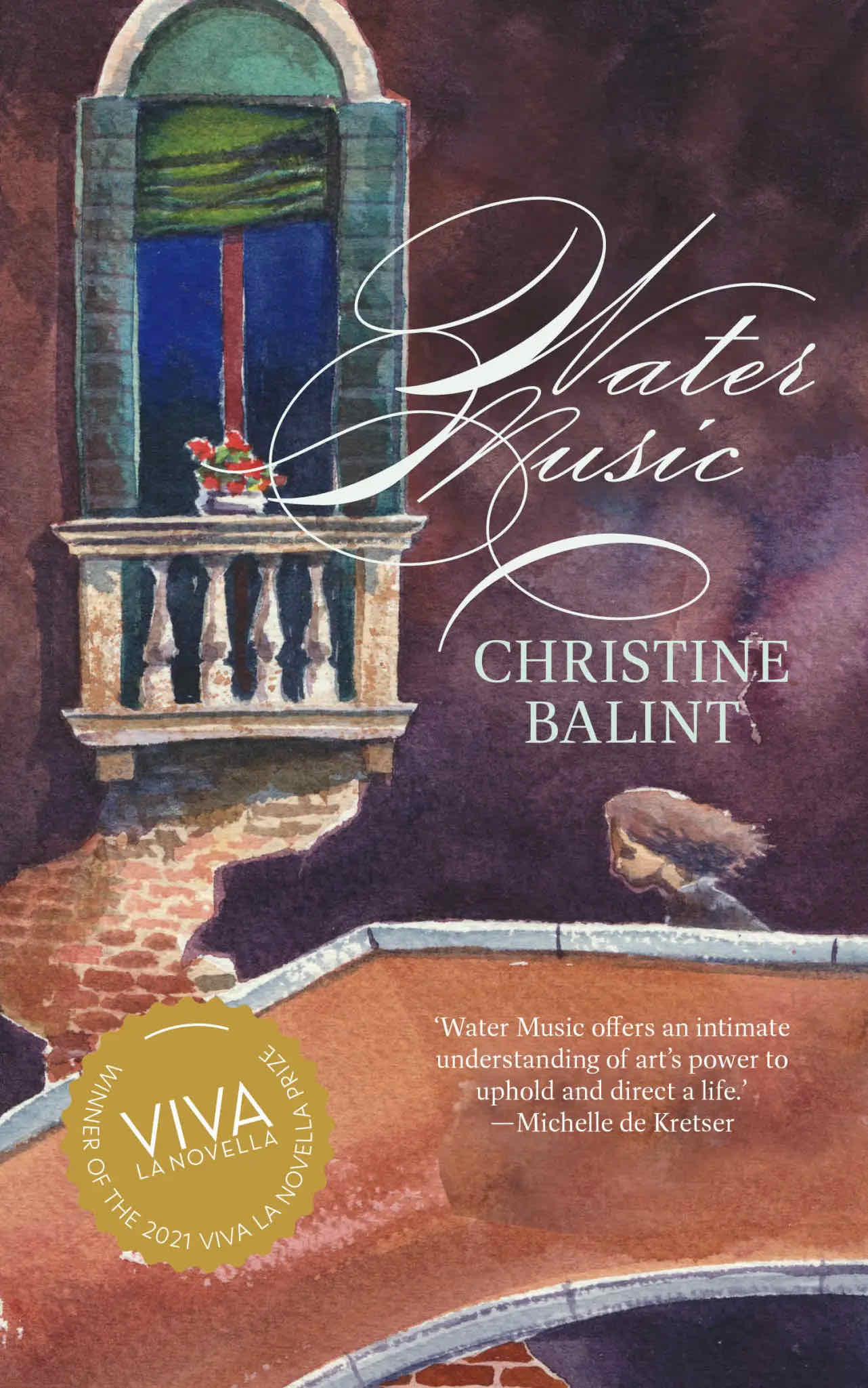
Christine Balint, Water music (#BookReview)

Christine Balint’s Water music was a joint winner of the 2021 Viva La Novella Prize with Helen Meany’s Every day is Gertie Day (my review), but they are very different books. Meany’s is contemporary, perhaps even near-future, and tackles some up-to-the-minute issues regarding fact, truth and authenticity, while Balint’s is historical fiction, a coming-of-age story, albeit a very specific one.

Set in 18th century Venice, Water music tells the story of a young orphan, Lucietta, who is raised by a fisherman’s family until she’s 16 years old when she leaves to live in Derelitti Convent, one of Venice’s many musical orphanages for girls. This interested me, because when my children were young we loved listening to an audiocassette telling the story of Vivaldi teaching in a Venetian orphanage for girls, but I’d never researched it further.

Balint explains her inspiration in the Acknowledgements and on her website. The book, she says, draws on “the unique history of the musical orphanages” in Venice, which existed from around 1400 to 1797, and were run by and for women. They took in girls of any class or background, if they passed an audition, and provided them with an opportunity to pursue a professional career when this “was rarely possible elsewhere in the world”. In particular, they gave impoverished girls an opportunity “to earn an income and establish a career or save for a dowry—enabling them to forge a fruitful life”.

The obvious question is, how could impoverished girls learn enough music to pass the audition? There must have been a way, but in our Lucietta’s case, she was born illegitimately and placed in a “foundling home”. From here she was given to a wet-nurse, the woman who became her mother, but her “real” father had left instructions and money for her musical education. This sets her on the course that leads her to auditioning for and being accepted at Derelitti.

From the beginning, it’s clear that Lucietta, who has learnt the violin, is musically talented and that her parents have been conscientious about fulfilling these instructions. Her mother, Lucietta tells us, “believed that if she followed these instructions, my musical and marital future would be assured”. Notwithstanding this, the question the novella poses is, what is her future to be? A few options are available to, or possible for, Lucietta, ranging from the future her mother doesn’t want for her, being a fisherman’s wife, to one dreamed of by the orphanage girls of being married to a nobleman from the “Golden Book“.

The story is told first person by Lucietta, so we see it all through her eyes. She’s a sensitive, intelligent young woman who has loved her fishing family, which includes a brother Lionello, so it’s not surprising that she is initially disconcerted when she leaves her family to live in the convent. However, this seems to be a kind place were the nuns and music teachers are supportive and the other girls are friendly. There’s not a lot of drama here, which is counter to your typical historical fiction. Instead, we travel along with Lucietta as she absorbs the influences, ideas and life around her, as she grows and changes, and as she meets, under the eyes of her mentors Maestra Francesca and the Convent’s priora, her suitor and potential husband, Don Leonardi.

Lucietta has decisions to make … and the good thing is that she is supported in those decisions without pressure. Well, there is a little pressure, including from one of her Convent friends, the sweet but one-armed and therefore in those times unmarriageable Regina. She had been sent to the Convent by her father who didn’t want to waste money on her. This is a world, after all, where “a girl is only as worthwhile as her marriage prospects”. Through Regina, Lucietta sees all the

Unwanted, unmarriageable girls through centuries. Here in this vast echoing building. Creating sublime music, their souls lost to time. Their music remaining.

There is a little political barb here regarding all those women who created and produced in the past – but anonymously. These convent girls may have had more opportunities than many, but they were not individually remembered. Some may see it as anachronistic when Lucietta sees value in “restoring the music, in finding the music, trying to recover their stories”, but then again, why wouldn’t someone back then have thought of doing this?

Balint’s writing is lovely. She brings the settings Lucietta experiences – her fishing home and then her convent one – to life, and creates in Lucietta an engaging, believable character.

Water music didn’t excite me quite so much as Helen Meany’s book did, perhaps because it’s a gentle book that explores a familiar story, albeit in a different and thoroughly interesting historical setting. However, because of that setting, because of its feminist underpinning, and because the writing is sure, I’d recommend it to anyone interested in a good – and not bleak – story.

Theresa also enjoyed this book.

Christine Balint
Water music
Lidcombe, NSW: Brio Books, 2021
119pp.
ISBN: 9781922267610

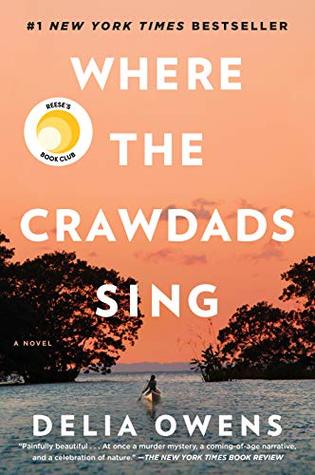
Delia Owens, Where the crawdads sing (#BookReview)

Delia Owens’ bestselling debut novel, Where the crawdads sing, is a problematical novel, as my reading group discovered – and yet, I couldn’t help being emotionally engaged. It reminded me a little of a childhood favourite, Gene Stratton Porter’s A girl of the Limberlost. My heart went out to Owen’s protagonist, Kya, the maligned, ignored, Marsh Girl, and I loved the writing about the North Carolina marshland. But, intellectually, I had to work to defend my enjoyment, which I’ll aim to share here.

“in the end, that is all you have, the connections”

I’ll start with the obvious, a summary of the plot. The main narrative runs from 1952 to 1970, and is told in two chronologies that eventually meet. The novel tells the story of Kya, who, in 1952, is six when her Mum and, soon after, her siblings leave home. Four years later, when she’s ten, her father also departs, leaving her alone, in their North Carolina marsh shack. She can’t read, has no money, and few skills. But, she’s an intelligent, resourceful little girl, and, with the help of a few kind people, she makes a life – albeit a lonely one – for herself. The novel commences, however, in 1969 with the discovery of the body of a young man, Chase Andrews, who is a local football hero. Was it an accident or was he murdered? The second chronology, then, is a crime story, following the investigation of this death through to the court case. You can probably guess where the two chronologies meet.

Owens manages this structure skilfully, drawing us into Kya’s life, and how and why she develops into the person she is in 1970, while, simultaneously, slowly building suspense by recounting the details of the investigation. The writing is lush and evocative, ensuring that we engage with Kya and her struggle to survive, her increasing loneliness and her desperation to connect with others. We see her turn to nature and wildlife to learn about life, as well as to provide herself with sustenance and give her a minimal income (by selling fish and mussels, for example).

This is nature writing at its best, with stunning descriptions of the marsh, and the birds, fish and insects that inhabit it, but it is also eco-fiction, with occasional allusions to development. Tate, a young man who befriends Kya (and provides her with a much-needed connection) tells her:

They think it’s wasteland that should be drained and developed. People don’t understand that most sea creatures—including the very ones they eat—need the marsh.”

The marsh is Kya’s family; it is what, in the absence of family, forms her:

She knew the years of isolation had altered her behavior until she was different from others, but it wasn’t her fault she’d been alone. Most of what she knew, she’d learned from the wild. Nature had nurtured, tutored, and protected her when no one else would. If consequences resulted from her behaving differently, then they too were functions of life’s fundamental core.

It is hard, as a reader, not to care about Kya. Will she find the connections she so badly wants – “Being completely alone was a feeling so vast it echoed” – and will they stick?

“it’s usually the trap that gets foxed”

However, it’s easy to pick holes in the book. Kya’s survival (given her youth) and her development into an educated young woman (given she only spent one day at school) can stretch credulity. Many of the characters feel stereotyped, from the good “colored” people, who put themselves out to help Kya, to the prejudiced townspeople, who reject and exclude her (as they do all marsh people). “Barkley Cove”, writes Owens, “served its religion hard-boiled and deep-fried”. And, if you don’t like your heartstrings being obviously pulled, you may not engage with Kya at all.

All this makes it problematical, because it’s one of those books that whether you love or hate depends largely on what sort of reader you are, what you like to read, and/or how you read this particular book. There are many ways to read Where the crawdads sing – a crime story, a romance, a coming-of-age story, historical fiction, a modern fairy-story or allegory, even, to name a few. Some of these ways demand more realism than others, and expose holes which are irrelevant to other ways. It is one of these other ways that appeals to me.

This way is to read it more like a fairy story or allegory, as a story about the triumph of the maligned, a comeuppance for the underdog. If you read it this way, the stereotyping of the minor characters, and the improbability of Kya’s survival and achievements, serve to emphasise the challenges faced by the underdog. It is hard to explain what I mean without giving away the ending, but I’ll try.

Throughout the novel, we are not only reminded of the prejudice and mistreatment of Kya (as representative of the marsh people) but are also aware of the ostracism of “colored people” as they were called then. Kya turns to nature to learn about life. Early in the novel, when the “colored” Jumpin’ warns her about Social Services looking for her, friend Tate tells her to “hide way out where the crawdads sing”:

Kya remembered Ma always encouraging her to explore the marsh: “Go as far as you can—way out yonder where the crawdads sing.”

“Just means far in the bush where critters are wild, still behaving like critters.”

One of Kya’s main challenges is to work out the differences between what she observes in nature and in human behaviour:

“In nature—out yonder where the crawdads sing—these ruthless-seeming behaviors actually increase the mother’s number of young over her lifetime, and thus her genes for abandoning offspring in times of stress are passed on to the next generation. And on and on. It happens in humans, too. Some behaviors that seem harsh to us now ensured the survival of early man in whatever swamp he was in at the time. Without them, we wouldn’t be here. We still store those instincts in our genes, and they express themselves when certain circumstances prevail. Some parts of us will always be what we were, what we had to be to survive—way back yonder.”

These two quotes – among others – hint at the novel’s underlying idea, which is that it’s not only “critters” who are “wild”, that human beings will be ruthless too. Exploring this ruthlessness in its natural and human manifestations, and how Kya navigates it, is a major theme of this book – and explains why Owens has written it the way she has. The resolution is deeply satisfying (albeit I didn’t love the device used to achieve it).

Where the crawdads sing is a thoughtful read for those who feel passionate about the maligned of this world. It is also a glorious lovesong to the marshland. I’m glad my reading group scheduled it.

Delia Owens
Where the crawdads sing
London: Corsair, 2018
379pp.
ISBN: 9781472154637 (Kindle ed.)

Steven Carroll, The lost life (#BookReview)

Audiobook coverLast year, Mr Gums and I bought a new car to replace our loved but aging 15-year-old Subaru Forester. We’ve been keen to move into the hybrid world but wanted to stay with the SUV-style for various practical reasons, so, as soon as a reasonably-priced hybrid SUV appeared on the market here – the Toyota RAV4 – we were in, and so far so good. However, the real reason I’m sharing this is because another impetus for buying a new car was all the new technology, including the audio systems that enable you to play music – and books – via your phones. And so it was that I borrowed my first ever e-audiobook from our local library, Steven Carroll’s The lost life. The technology worked a treat.

Long-term readers here know that I’m not a huge fan of audiobooks, for reasons I’ve explained before. Fortunately, the reader here, Deirdre Rubenstein, did an excellent job. She was expressive, appropriately English-sounding, but read more than played the characters. That helps a lot.

So now, the book. I chose it for two reasons – it was short, making it a good test case, and it was by Aussie author Steven Carroll, whom I haven’t read yet, and whose Eliot Quartet series I’ve been wanting to read. The lost life, the first book in this series, is inspired by the poem “Burnt Norton”, the first of Eliot’s Four Quartets. Makes sense, huh! “Burnt Norton” was published in 1935, and most of Carroll’s novel is set in September 1934. The novel is framed by the story of Eliot and Emily Hale*, who did, in fact, visit Burnt Norton manor in 1934, but their love is paralleled by that of a young couple, 18-year-old Catherine and 22-year-old Daniel. Eliot, himself, is a fairly shadowy figure in the story, with the focus here being on Miss Hale and Catherine.

The story starts at Burnt Norton, a country estate to which Catherine and Daniel have gone for a romantic picnic and maybe a swim. It’s summer, and Carroll beautifully evokes the passion beating in the “ardent” young Catherine’s breast as she looks forward to further development of their physical relationship, which has not yet been consummated. But, they are interrupted by the appearance of two older people, who turn out to be, of course, Eliot and Miss Hale, and they scurry away because they are trespassing. However, they do observe, from behind the shrubs, a little lovers’ ceremony between the older couple, one that Daniel later violates, fortunately unbeknownst to Eliot and Miss Hale, but distressing to Catherine.

Here, I might pause and refer to the poem which inspired this novel. It starts:

Time present and time past
Are both perhaps present in time future,
And time future contained in time past.

A little later come the lines that I remember so well from my university days:

At the still point of the turning world. Neither flesh nor fleshless;
Neither from nor towards; at the still point, there the dance is,
But neither arrest nor movement.

I don’t know what it is about Eliot’s lines that move me so, but I think it’s their almost confounding spareness and mesmerising rhythm. Putting that aside though, it’s this sense of timelessness, of past, present and future being tied to the here and now, of both stillness and movement, of almost suspended animation too, that pervades Carroll’s novel as the protagonists work through their ideas about love and life.

“a felt experience”

Now, Catherine and Miss Hale know each other, as Catherine’s summer job is cleaning the house in which Miss Hale is staying. The plot is, to a degree, predictable. However, it is not the point. The point is how the characters react and feel about what happens. This is an introspective novel in which the two women reflect on love, their own attitudes to it, and what they see, or think they see, in each other. Miss Hale sees her young self in Catherine, her eighteen-year-old self whose disappointment she does not what to see repeated, while Catherine sees wisdom but also sadness in Miss Hale. She comes to realise, in fact, that Miss Hale, who describes her love with Eliot as “a different kind of love”, is a virgin. It is this experience of love, this mystery that endows a special knowledge, that drives the plot.

There is, though, so much to this novel. The tone is gorgeously melancholic, mirroring the poem that inspired it. Carroll also uses images from the poem – sunlight, roses, light – to suffuse his book with a sense of lost time. Repetitions like “young man of whom great things were expected”, “ardent ways”, and “the woman who won’t let go long after she has any right” add to the melancholic tone, while also anchoring our understanding of the characters.

There is also a link drawn between performance and reality. Catherine sometimes feels she is in a play or story, and this contributes to the theme of “the lost life”. Literally, it is the life Miss Hale lost by waiting all those years for Eliot rather grabbing life herself, but more broadly it can encompass all those lives we never have. Even if we, as Miss Hale realises we should, “grasp our moments as they arrive”, there will always be other lives not taken or lived. As Eliot writes in “Burnt Norton”:

Footfalls echo in the memory
Down the passage which we did not take
Towards the door we never opened.

Ironically, Catherine, who delivers “a felt experience” for Miss Hale, becomes an actor who can “deliver a felt experience on cue”, offering up other lives to her audiences, while living her own moments as they arrive. It’s an inspired conclusion to a book about love, living, and the biggest of them all, time.

Lisa (ANZLitLovers) loved this book.

Steven Smith
The lost life (Audio)
(Read by Deirdre Rubenstein)
Bolinda Audio, 2010 (Orig. pub. 2009)
5:57 e-audiobook (Unabridged)
ISBN: 9781742333830

* Check Wikipedia for more on the relationship between Eliot and Hale.