It’s disappointing to say the least that the new Australian film, Satellite Boy, is in very limited distribution. It was released 10 days ago, and in my city, with 6 cinema complexes, it is screening in only one. Why? It’s rather an indictment of Australian audiences that such a film is not receiving wider distribution.
Off the soapbox, now, and onto the film. Satellite Boy tells the story of Pete (Cameron Wallaby), who’s around 11 years old and who lives in an abandoned, derelict drive-in cinema on the edge of town with his grandfather, Old Jagamarra (David Gulpilil). His mother has left, but Pete is expecting her back to carry out their plan of turning the cinema into a restaurant. Meanwhile, Old Jagamarra and Pete learn that the land is to be taken over by a mining company, so Pete sets off, on bike, with his friend Kalmain (Joseph Pedley), to change the mining company’s mind. Shortly into what is supposed to be a 2-day ride, they end up on foot, walking through some pretty forbidding country. Pete confidently says to Kalmain:
If you walk country, country will look after you.
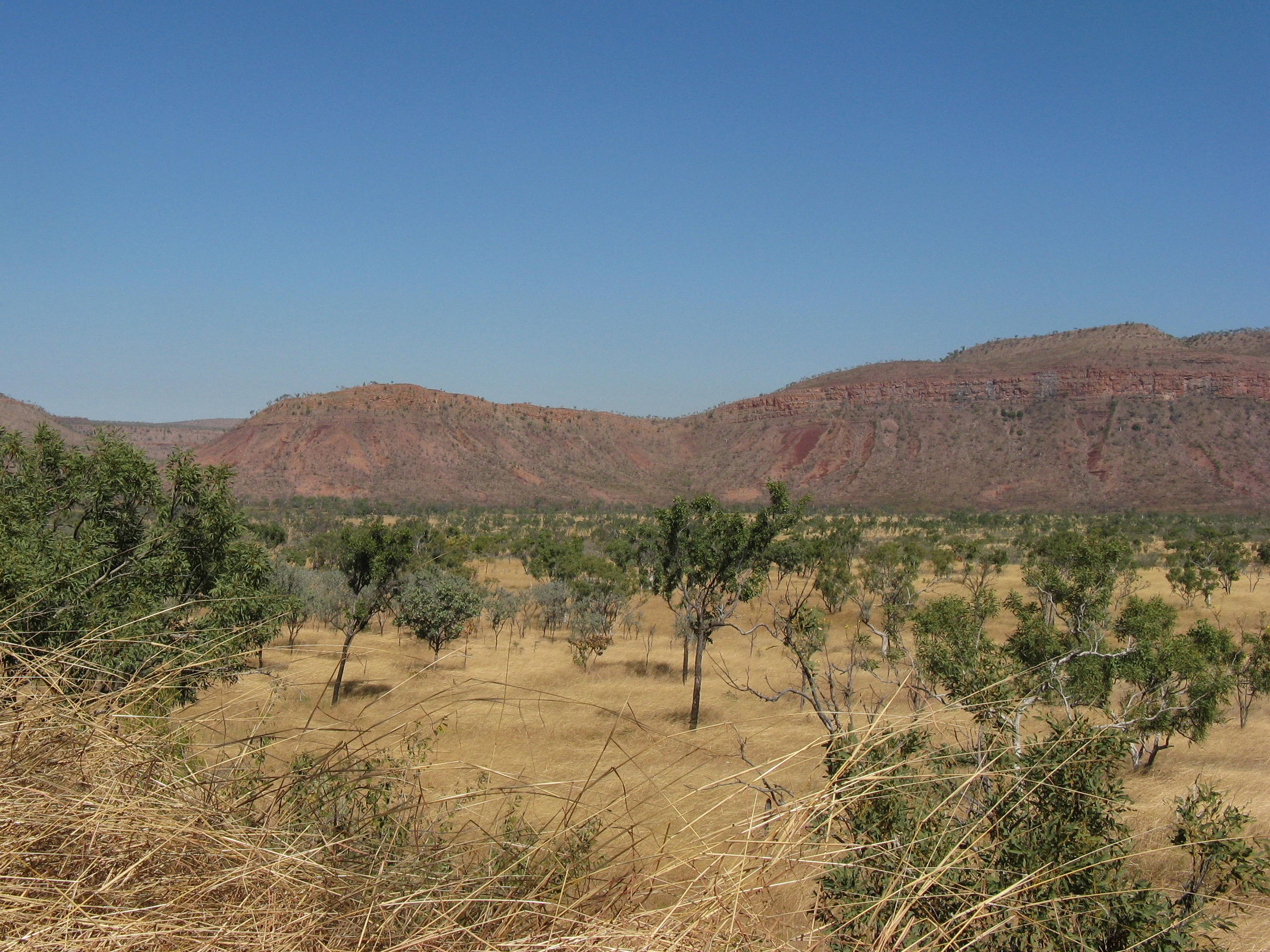
Between Wyndham and Kununurra
Of course, it’s not that simple. The Australian outback is a harsh place, and while indigenous Australians have traditionally lived in it, we know that Pete has not yet learnt enough to survive. “I’m sick of your stories” he mutters at the beginning of the film as his grandfather tries to pass on knowledge. However, as indigenous director Catriona Mackenzie has said in interviews, Satellite Boy is not a realistic film.
This is an important point because, from a realism point of view, the film has holes. Firstly, for those who like accuracy in fiction, the story’s geography is out of whack. You don’t for example, travel to Kununurra from Wyndham via Purnululu (the Bungle Bungles) National Park. But then the destination is never named, so the geography only fails if you know the region. Not naming places helps McKenzie, who also wrote the script, give the film a mythic or fabular tone – and enables her to focus on country rather than place. The other “hole” is that the film does not confront, with any depth, the conflict between old and new, or the likely ramifications of Pete’s choice. Despite some hints of cultural conflict and dysfunction, particularly in Kalmain’s family, it’s not a gritty film, like, say, Samson and Delilah (my review).
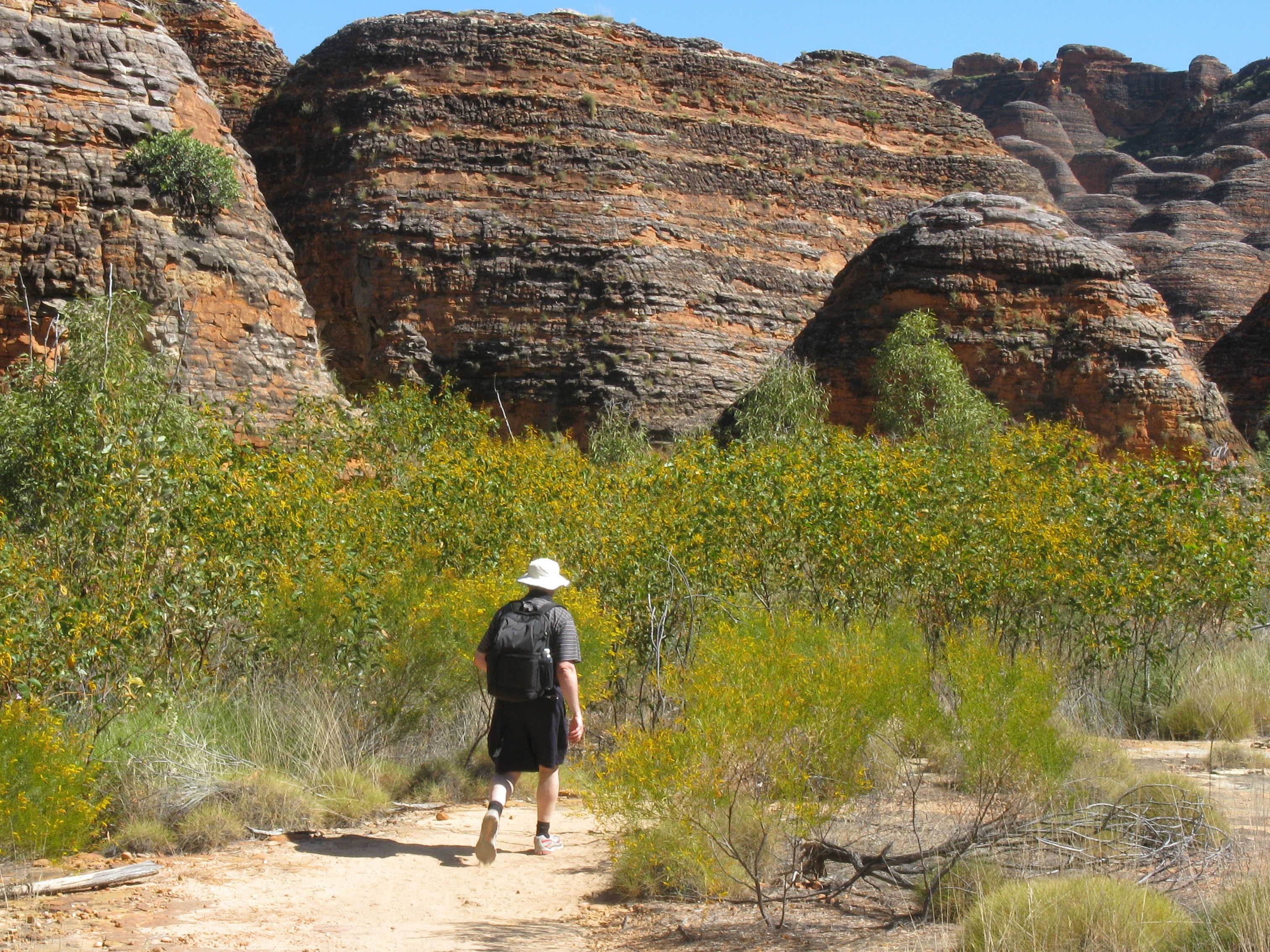
Walking in Purnululu (aka The Bungle Bungles)
And so, of course, Pete and Kalmain do make it through, albeit with some scary moments, particularly for Kalmain who doesn’t quite have Pete’s faith or knowledge (or the guiding spirit of a grandfather). Most of the film concerns their journey, which buys into both the picaresque tradition, and the “lost child” motif I’ve written about before. As the boys start to lose their way, moving deeper and deeper into forbidding landscape without food or water, the camera cuts between Pete trying to put into practice his grandfather’s lessons and Old Jagamarra, worrying, and willing them on.
At its heart, the film is a coming-of-age story, indigenous-style. It is about a young man learning about country and having to decide what it means for him. Catriona McKenzie said that
the notion of country from an Aboriginal perspective is that it supports your spirit. It sustains you on a spiritual level, as well as a physical one if you have that understanding. That’s what I was going for.
And is, I think, what she achieved.
I loved David Bridie’s music. It’s evocative and engaging, sometimes playfully toe-tapping as when the boys set off on their journey, other times moodily spiritual as when Old Jagamarra appeals to the sky spirits/ancestors to bring the boys home. That the sky and the Milky Way are important to indigenous Australians’ belief system is made clear in the film’s opening when Old Jagamara sings “Twinkle Twinkle Little Star” in language. This significance is reinforced when, a little later, the camera looks up from Pete’s bed to show us the ceiling decorated with star stickers – and again when, during their journey, the boys sleep in a satellite dish cradled between land and sky.
It’s a beautiful film, though also a slow one, which may be one reason why distribution is limited. Mr Gums felt the landscape photography was self-indulgent at times but, given the theme, I felt it was (mostly, anyhow) justified. The performances from the three main characters are excellent – Gulpilil is luminous, and newcomers Wallaby and Pedley are convincing.
The film was shown last year at Toronto International Film Festival. I wonder what that audience made of it. For me, it adds another perspective to the indigenous films that we are starting to see – not as tough as Samson and Delilah, not as joyful as Bran Nue Dae, but nonetheless thoughtful and relevant.
Satellite Boy
Dir: Catriona McKenzie
Prod: Satellite Films, 2012
 Whispering Gums