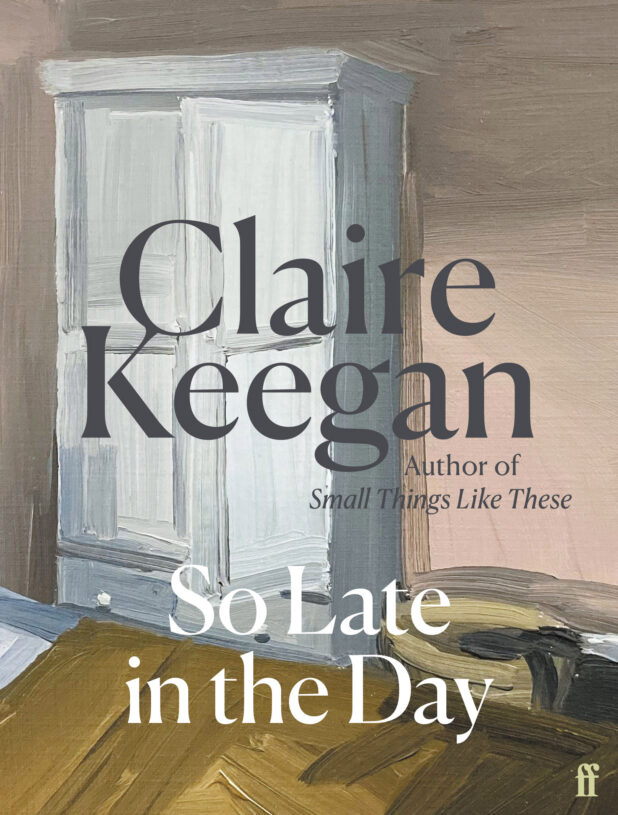
In her final Novellas in November post, Cathy (746 Books) wrote about Claire Keegan’s short story “So late in the day”, and included an online link to the story. Having not read any of Keegan’s writing, to that point, and feeling the lack, I pounced – and was not disappointed.
“So late in the day” is a beautifully observed story told through the eyes of a man named Cathal. In it, he reflects on his relationship with a woman, Sabine, whom we come to realise is no longer around. Why? The story starts by encouraging us to empathise with him. His work colleagues seem worried about him, and his boss encourages him to go home early. The opening paragraph contains hints of things being a little awry or disturbed. It’s gloriously subtle. Every word carries weight, which makes the reading pure pleasure as you ponder just what the straightforward-sounding words and sentences are really signifying.
Life is clearly discombobulated for Cathal. For example, as he makes his way home, we are told:
For no particular reason, a part of him doubted whether the bus would come that day, but it soon came up Westland Row and pulled in, as usual.
The “for no particular reason” is telling, because there is a reason he feels uncertain, albeit we don’t know it yet, and his unawareness of why he feels this way is part of the issue.
So, the bus comes, and he finds himself sitting next to a woman who seems to want to talk. Hmm… he’s not happy. Soon, however, she turns to her book, The woman who walked into doors. Now, it’s a rare writer who inserts books into their stories randomly, but I didn’t know this book, so off I went to the internet and very quickly found that it is by Roddy Doyle. The Guardian quotes him on why he wrote this book which features a pre-existing character of his: “I had to give Paula a chance to explain why: why she married this man in the first place, and why she stayed with him.”
Gradually, then, the penny drops, but oh so slowly, because Keegan’s story is told from a man’s point of view, and this man is so woebegone, so clueless.
This is the sort of writing I like, writing that challenges the reader to work a bit, to read between the lines and not jump to simplistic responses. Cathal is an unreliable narrator. He does not see the whole truth, but Keegan draws out, from his own mouth, exactly what has happened, so that it all becomes clear to us, the reader, while he remains locked in his cluelessness.
There’s another challenge for the reader, though, besides sussing out what has happened, and it’s to do with how we feel. We start by feeling sympathy for him. He’s sad and lonely. But, as he talks about Sabine, a picture builds up. He is the more passive one in the relationship, but more than that, he is the taker. She organises the outings. She cooks, though he does grudgingly clean up, resenting the mess she makes. She’s generous, doesn’t “mind the cost” of nice food, spending “freely” at the markets, while he either tots up costs or, when he’s paying, makes mean choices. When he proposes to her, it’s devoid of romance. Is he emotionally repressed, and should we continue to feel for him, or is something else going on?
Quite late in the story, in a telling flashback, he remembers an occasion from his childhood. His brother had played a nasty trick at the dinner table on their nearly sixty-year-old mother, and instead of remonstrating with him the father joins the laughter. In this anecdote, and his reaction to it, we see the depth of his disconnect in how to relate to a woman, which adds to our growing awareness of an ungenerous, self-centredness in him. He doesn’t know how to give. There are occasional glimmers of awareness, but by the end, when we know exactly why he is so sad, why this day is so hard for him, we are left wondering what to think about him. Can he change? Or, more to the point, does he realise he needs to change? Does he fully comprehend the depth of his failure?
The French-translated title for this story is Misogynie, which makes no bones about its over-riding theme, but I like the subtlety, the multi-layered meanings behind “So late in the day”. To tease that out here, however, really would spoil the story for any of you wanting to read it.
Meanwhile, I’ll share this from early in the story. As Cathal is leaving work, we are told
He would ordinarily have taken out his mobile then, to check his messages, but found that he wasn’t ready—then wondered if anyone ever was ready for what was difficult.
Good question, but it doesn’t augur well for our narrator’s development does it?
An absolute gem of a story.
Claire (Word By Word) also liked it.
Claire Keegan
“So late in the day”
in The New Yorker, 28/2/2022
Available online at The New Yorker.
 Whispering Gums