Feng Shui, as most westerners probably know by now, is an important consideration in Chinese life. The correct placement of objects is critical to the well-being of those who live or come within the orbit of that object (which could be a bed in a bedroom, the house itself or, as in the case I raise today, a statue).
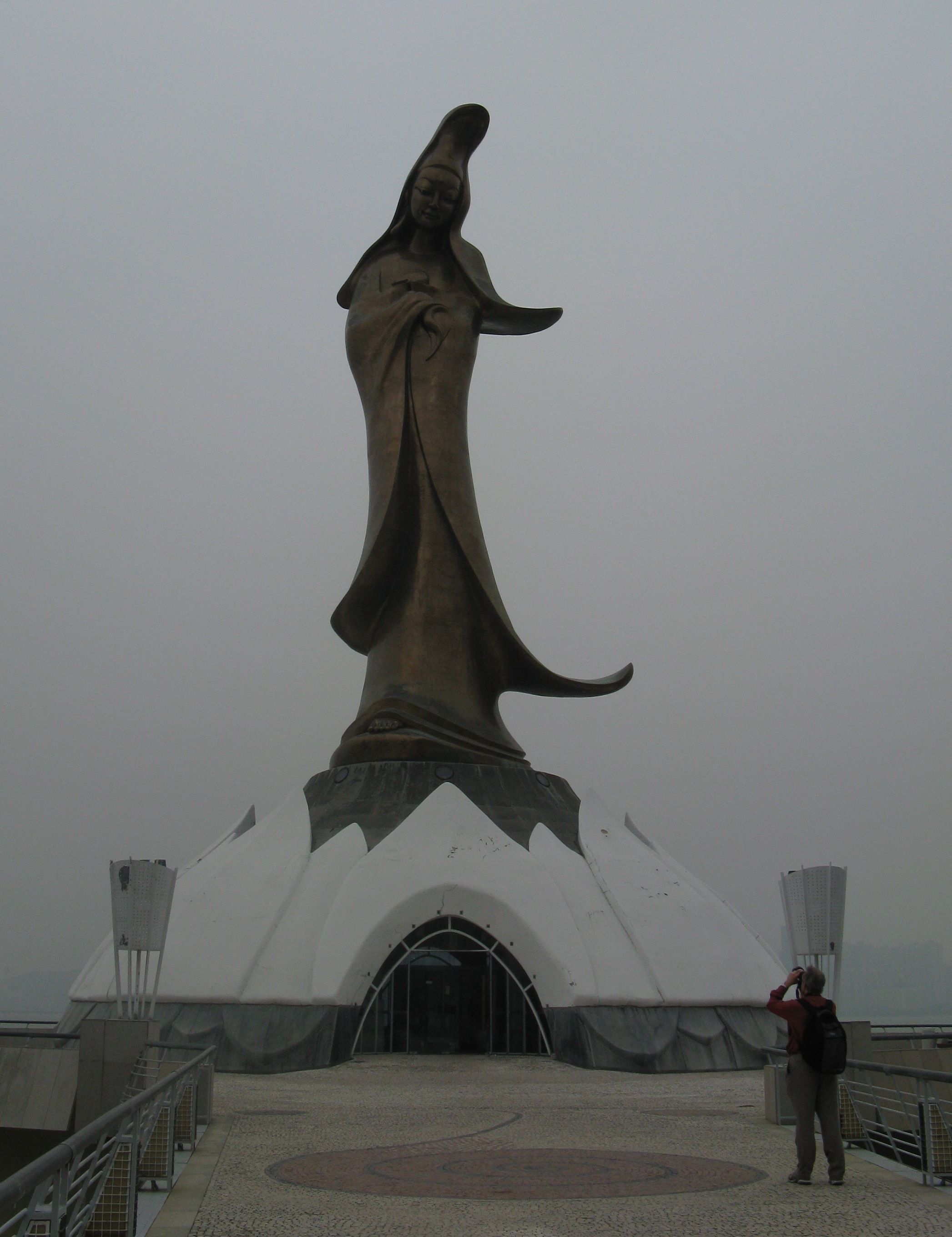
Guan Yin, Macau
Macau is the former Portuguese colony which was returned to China in 1999. It therefore has a fascinating blend of Chinese and European culture. I’m not going to go into long details about that now but thought I could convey some sense of it all through the example of the Guan Yin Chinese Goddess statue which stands by the Macau Harbour. She is, we were told, rather disliked by the Chinese of Macau. The reasons are:
- she faces the mountain with her back to the sea, which is the exact reverse of good feng shui (and where else would you need good feng shui but in the world’s gambling capital, eh?);
- she stands on a closed lotus flower but buddhas, bodhisattvas and other gods/goddesses are traditionally set on an open flower, which symbolises abundance and prosperity;
-

Chinese goddess? Or, Mary?
she looks more like Mary (that, is the Mother of Jesus) than a Chinese goddess; and, to add insult to injury,
-
she was created and built off-shore resulting in the megamillion dollars paid for her going off-shore.
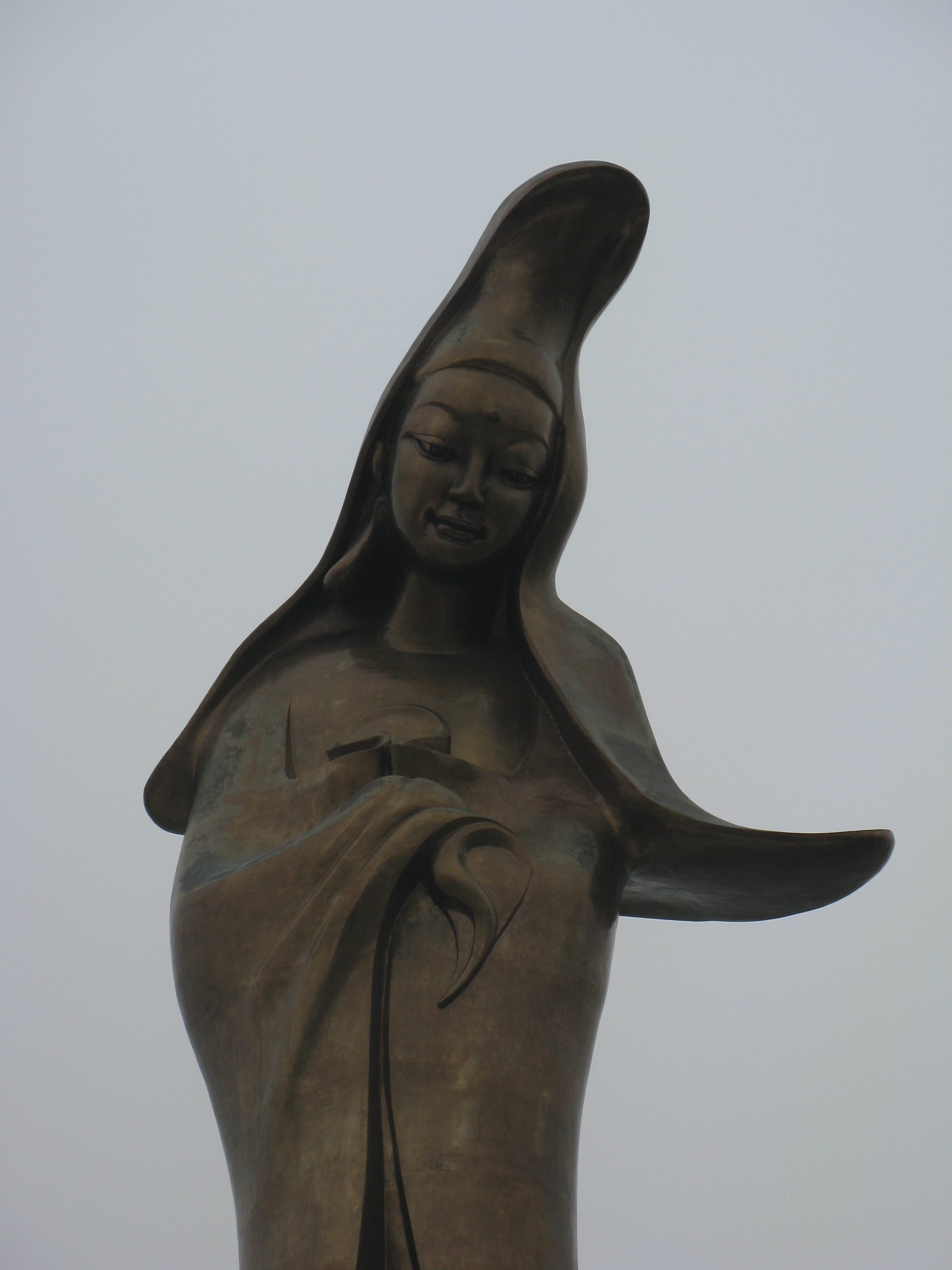
The things you learn when you travel. I have chosen this as my post to represent our week in Hong Kong/Macau because it reminded me of just how complex culture is and how important cultural knowledge is to our enjoyment and appreciation of the arts. It also demonstrates how easy it is to not quite get it right!
(Oh, and please excuse the photos. It was a grey old day in Macau so her gorgeous “bronzeness” was not well on display the day we saw her.)
 Whispering Gums