 If you are an Australian, you will be aware of our recent Royal Commission into Institutional Responses to Child Sexual Abuse. That Commission only looked into one aspect of child sexual abuse in Australia. Arguably the bigger issue lies in the sexual abuse of children outside institutions – abuse of children by family members, by so-called family “friends” and others known to the child, and by, far less common, strangers. The bigger issue also encompasses child abuse that’s not sexual – physical abuse, emotional abuse, neglect, abandonment. This week, September 2 to 8, is National Child Protection Week. Co-ordinated by NAPCAN, it aims to encourage all Australians “to play their part to promote the safety and wellbeing of children and young people” in all ways.
What has this to do with Monday Musings? Well, as I was listening to a discussion about the week on ABC Radio National this morning, I was reminded of all the books I’ve read since blogging, which refer in some way to child abuse. Some are memoirs, and others are fiction. Some may function partly as therapy for the writer. However, because I believe that literature has an educational, awareness-raising, empathy-developing function, I thought I’d share a selected few books here. I appreciate that reading this material can be unpleasant – and I know that it can be triggering for some. If you are among these people, please stop reading now. Otherwise, I offer these wide-ranging books as my contribution to the week …
Links on the titles are to my reviews.
Memoirs and biographies
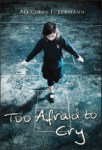 Ali Cobby Eckermann, Too afraid to cry: indigenous poet, memoirist and novelist, Eckermann beautifully (if you can use the work “beautiful” in this situation) captures the impact on her of being sexually abused from a young age by an uncle. Not knowing having the words to describe what was happening to her, she can only describe her feelings: it felt like an “icy wind”. This becomes a metaphor for the abuse, for her memory of it, and for its impact on her psyche until she can no longer cry – “the ice block had turned to stone, and now there was no moisture left inside me”.
Jelena Dokic, Unbreakable: I haven’t read this memoir but it chronicles the emotional and physical abuse she, a gifted young tennis athlete, experience at the hands of her father. The terrible thing is that much of this happened under public gaze, but nothing was done. (I attended a conversation with her about this book.)
Sarah Krasnostein, The trauma cleaner: Sandra Pankhurst, the transgender woman who is the subject of this biography, was physically and emotionally abused and neglected by her adoptive parents, after naturally born children appeared. It’s an unbelievable story of inhuman behaviour by people trusted to care for the young boy she was at the time.
Betty McLellan, Ann Hannah, my (un)remarkable grandmother: A psychological biography: A biography about McLellan’s grandmother who was born in 1881, and whose second husband was violent to and sexual abused his step-daughter, as well as Ann Hannah, herself, and one of their daughters. McLellan describes the lack of recourse women had during the time Ann Hannah lived, and concludes that her grandmother’s only choice, really, was to “accept her lot”. She reports that Ann Hannah said it was “the ‘appiest day of my life when ‘e died”!
Marie Munkara, Of ashes and rivers that run to the sea: Like Eckermann and Pankhurst, Munkara (who also happens to be a member of the Stolen Generations), grew up with adoptive parents, neither of whom gave her the love due to a child they offered to care for. Her mother was hard, unaffectionate, but her father was a pedophile who sexually molested her from a young age.
Fiction
Anne Buist, This I would kill for: a crime novel in which Buist’s ongoing character, the forensic psychiatrist Natalie King, investigates whether eight-year-old Chelsea is being abused, and if so, by whom. Chelsea is, apparently, being abused by someone she knows. As Buist, a perinatal psychiatrist who is expert in this area, says, those who abuse children are “very, very rarely a stranger.” You can read more about this book at the ABC website.
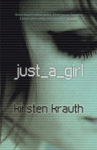 Kirsten Krauth, just_a_girl: a modern novel about a 15-year-old girl who thinks she’s more sophisticated than she is, with a mother who is struggling with her own problems. The result is a sexualised young girl at risk.
Sofie Laguna, The choke: first-person novel about a young girl who lives in a physically and emotionally impoverished situation – albeit she is loved – and who is violently assaulted in an act of revenge. You can see it coming – and you know exactly why she’s at the risk she is, and who might be the one to help her out of it.
Mirandi Riwoe, The fish girl: a retelling of Somerset Maugham’s short story “The four Dutchmen”, which explores young women’s lack of agency, at the hands of colonial masters but also within their own traditional communities.
Lest you are unsure about the value of this post, I should tell you that there are several similar lists out there, including at the New York Public Library (2014); Wikipedia; GoodReads; and ParentBooks (Canadian organisation offering resources to use with children).
 Whispering Gums