My literary week (13), it’s (mostly) all about Aussies

This last week or so we’ve been on the road again, severely cutting into my reading time, but literary things have been happening, nonetheless.

National Bookshop Day, 2018

Readings Kids, Carlton

Readings Kids, Carlton

Yesterday, August 10th, was, as many of you know, National Bookshop Day and I did, in fact, visit a bookshop, Readings in Carlton, Melbourne. I bought Gerald Murnane’s Border districts, which brings me one step closer to reading this Miles Franklin shortlisted book. Daughter Gums and I also visited, next door, the Readings Kids bookshop, where she bought Alison Lester’s Rosie sips Spiders for a baby shower she was attending this weekend.

It was so hard not to buy more, but you all know how behind I am in my reading so you’ll understand my abstemiousness!

I’d love to hear what you did – if you are an Aussie – to support the day?

Alison Lester Gallery

A couple of days before National Bookshop Day we were driving to Melbourne from Canberra via one of the long routes, in this case via Cann River. It was an interesting drive that took us through some quite dramatic landscapes – from the shimmering yellow-white colours of the Monaro in drought to the lush green of south-east Victoria which is not!
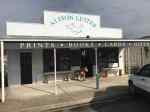
Alison Lester GalleryOn Day Two we overnighted at Foster, in order to visit Wilson’s Promontory, before driving on to Melbourne the next day via Fish Creek. Now, Fish Creek is a very pretty little town that also happens to be the home of the Alison Lester Gallery – yes, the Alison Lester who wrote (and illustrated) the book Rosie sips spiders mentioned above. Fish Creek is a lovely little town, and is in the region where Lester was born, grew up and still lives. We bought books here for our new Grandson Gums. The Gallery sells Lester’s books plus numbered prints of her beautiful book illustrations. It also has a little library nook where you can read her books before you decide to buy them. Unfortunately Lester wasn’t there, but you can organise to have your books signed if you want to (and don’t mind waiting for your books!)

BTW Alison Lester was one of Australia’s Inaugural Children’s Laureate from 2011 to 2013, which I wrote about back then.

The Wife and RBG

One of our Melbourne traditions is to have a meal and see a movie with Daughter Gums. We usually go to Cinema Nova (across the road from Readings Bookshop.) It’s a big complex, but not at all like those big impersonal suburban multiplexes. The cinemas are mostly small, and many have rather idiosyncratic layouts, but the movie selection is wonderful. We decided to see The wife, starring Glenn Close and Jonathan Pryce, and adapted from Meg Wolitzer’s novel, that I haven’t read. It focuses on the responses and feelings of the wife of an author who is told he has won the Novel Prize for Literature. If you don’t know the story, I don’t want to spoil it, but it is a great film for booklovers, and, particularly, for women booklovers! I enjoyed seeing Glenn Close again in a meaty role. The story is full of issues to chew over about gender, morality, pride, vocation, relationships over the long haul, and about how a door chosen can have unexpected ramifications down the line.

Ruth Bader Ginsburg

Ruth Bader Ginsburg, by Supreme Court of the United States (Supreme Court of the United States (Source 2)) [Public domain], via Wikimedia Commons

Then, suddenly finding ourselves with some extra free time, Mr Gums and I took the opportunity to also see the documentary RBG about the US Supreme Court justice, Ruth Bader Ginsburg. As documentaries go, this takes a pretty standard form – a combination of archival footage, contemporary footage, interviews with Ginsburg and with friends, family and colleagues. Wikipedia quotes film reviewer Leslie Felperin who says:

…there is something deeply soothing about RBG, a documentary that, like its subject, Supreme Court Justice Ruth Bader Ginsburg, is eminently sober, well-mannered, highly intelligent, scrupulous and just a teeny-weeny bit reassuringly dull.

As I said, traditional in form, but the subject is so intelligent and her contributions to thinking about women’s rights so relevant beyond the USA, that the film kept us engaged from beginning to end. She is a fascinating woman with an inspiring capacity for clarifying the complex.

Bangarra Dance Theatre’s Dark Emu
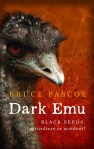
Bruce Pasco, Dark emuNow, we didn’t quite see Bangarra Dance Theatre’s performance of Dark Emu this week but we did see it very recently so I’m sneaking it in here. This is Bangarra’s interpretation of Bruce Pascoe’s book Dark emu (my review) in which he argues that indigenous Australians were not hunter-gatherers but had an agricultural practice, a practice that better proves, in legal terms apparently, their sovereignty or ownership of the land.

I wondered how they would balance the abstraction of dance with the literalness of the theory Pascoe presents (a theory that requires evidence of all sorts of agricultural practices) without, somehow, being prosaic. The dance, the props (which helped convey activities such a corralling animals, damming water, storing food), the lighting, and the music (which mixed traditional sounds with more suggestive modern ones) kept the audience on track with the story being told, although I understand Canberra reviewer Michelle Potter’s point that we didn’t always comprehend the “meaning” of what we were seeing in terms of the theoretical argument. For Mr Gums and me, though, these concerns were not strong enough to spoil the spectacle of Bangarra’s dancing. The moves, the shapes, the energy – we can never get enough of them and we did “get” the main threads of the narrative. (And, I suspect a second viewing would make a big difference. It is sometimes tricky to separate out spectacle from meaning first time around.)
Bruce Pascoe, Dark emu, black seeds: Agriculture or accident? (Review)

Bruce Pasco, Dark emu

Indigenous author Bruce Pascoe’s Dark emu, black seeds: Agriculture or accident? was my reading group’s October book, and a very interesting read and discussion it turned out to be. It’s not a simple book to discuss and really got us thinking, eliciting a variety of responses, though we all agreed with Pascoe’s basic premise that we Australians need to revise our understanding of, and beliefs about, Australia’s history. How could we not?

Publisher Magabala’s website says Dark emu

argues for a reconsideration of the ‘hunter-gatherer’ tag for pre-colonial Aboriginal Australians and attempts to rebut the colonial myths that have worked to justify dispossession.

Pascoe, they continue, contends that indigenous “systems of food production and land management have been blatantly understated in modern retellings of early Aboriginal history”.

A case to be argued

Dark emu is, then, a book that is determined to argue a case – and herein lies its challenge. In his Introduction, Pascoe sets out his main thesis which is that Aboriginal economy was “much more complicated … than the primitive hunter-gatherer lifestyle we had been told was the simple lot of Australia’s First People”. He asks:

Could it be that the accepted view of Indigenous Australians simply wandering from plant to plant, kangaroo to kangaroo in hapless opportunism was incorrect? (p.12)

Now, there are a couple of things here that disconcerted me. Firstly, emotive language like “hapless” doesn’t help when you want to present a logically argued case. And, anyhow, “hapless” is not a word I would ever apply to hunter-gatherer societies. Being hunter-gatherers doesn’t, to my mind, mean they don’t know their environment and don’t use this sense and knowledge in their hunting and gathering. But secondly, I didn’t comprehend his argument that the early settlers had no legitimate right to seize the land because Aboriginal Australians were practising agriculture:

In denying the existence of the economy they were denying the right of the people their land and fabricating the excuse that is at the heart of Australia’s claim to legitimacy today. (p.17)

Arguing this seemed to me to imply the corollary that if indigenous Australians did not have this economy, if they were indeed simply hunter-gatherers, then taking the land would be legitimate? But surely the fundamental truth is that, regardless of how indigenous people were living and using the land, it was their home and they had a right to be treated as the owners? Being on the path to sedentism, practising agriculture and aquaculture, didn’t, in my mind, make their ownership of the land more legitimate. Did it? I needed to understand this a bit more so, unusually for me, I set off looking for discussions of the book before completing my review, and I found the answer.

It was in a discussion of the book by Amy McQuire at NewMatilda.com. McQuire wanted to know why Australia had “so readily embraced” Dark emu, and whether it meant Australians must now “embrace the issue of sovereignty and treaty”. She quotes Professor of Law Megan Davis (from It’s our country: Indigenous arguments for meaningful constitutional recognition and reform):

“It mattered whether claiming a territory was done by settlement or whether by conquest and cession, because each had differing implications for the reception or not of British law.

“Settlement occurs when the land is desert and uncultivated and it is inhabited by backward people.

“Conquest means that it is a forcible invasion of occupied land and cession means that there is a treaty over occupied land. In the case of conquest, the laws of people conquered apply until the Crown or other foreign power laws apply, and in regard to cession, a treaty is entered into but the Crown or foreign power abrogates it.”

She writes “When lands are cultivated, then they are gained through conquest or they are ceded by a treaty”. And when lands are conquered or ceded, it still has laws of its own.

“Until the Crown asserts sovereignty and actually changes them ‘the ancient laws of the country remain’.”

Ah, so now the penny dropped. It’s all about the “law” (European law, that is), not about “reason” or “logic”. Pascoe makes reference to “Australia’s claim to legitimacy”. He discusses the way colonisers can fabricate history and be reluctant to credit colonised peoples (e.g.. p.61) for their achievements, and in so doing underrate sovereignty. But it didn’t properly click with me. I consequently didn’t see why he was arguing so forcefully for this “new” vision of pre-colonial Aboriginal Australian life. I was reading it more as an interesting, and yes very important, contribution to our understanding of Australian history, and I was seeing it as a way of correcting the historical record, and therefore of restoring the “truth” and, critically, “Aboriginal pride in the past”. But I didn’t fully grasp the import of the distinction he was making (and why, accordingly, the odd emotive word or long bow crept in.)

Convincing the doubters

However, this little niggle didn’t stop my being thoroughly engaged by the book. I loved the way Pascoe interrogates records from the past, particularly the journals of explorers such as Charles Sturt and Thomas Mitchell, to prove that Aboriginal Australians* were developing a sedentary culture based on intensification of agriculture and aquaculture. They managed the land, “manipulating the landscape” to produce crops for harvesting, corral animals for hunting, and trap fish for capturing and spearing. They irrigated, they built wells and dams, they stored food for future use. They built dwellings and lived in village groups. And they had been doing so for thousands, if not tens of thousands, of years making them among the world’s earliest, if not the first, agriculturalists (depending on whose “dating” you believe).

Pascoe, however, doesn’t stop at his argument that they practised agriculture. He also contends that they practised it sustainably, using a variety of techniques, including what archaeologist Rhys Jones called “firestick farming”. He argues that there’s much about Aboriginal practices that we could learn and use today, and that modern Australian agriculture could be more sustainable, particularly in our environmentally-uncertain-climate-changing world, if we focused our efforts on Australian plants and animals.

The depth of Pascoe’s research is mind-boggling, and is perhaps partly explained by his comment in that NewMatilda.com article that academics had criticised his previous writing, which apparently used his own words. He decided “to use an authority that they respected … the explorers and the settlers… you know the ‘heroic’ first settlers.” (Oh dear!) But he also draws on a wealth of other research from anthropologists (like WEH Stanner), archaeologists (like Rhys Jones), historians (like Gill Gammage and Rupert Gerritsen), and others. The book is heavily but not intrusively footnoted (I do like a footnote!), and contains an extensive bibliography.

While I would never have called myself a doubter needing to be convinced, it is true that, for all my interest in the subject, my knowledge of indigenous history and culture was rather out of date. Dark emu should, really, be read by all Australians, and at 156 pages of text, it is not a big ask.

Several of my blogger friends have reviewed this book, including historians Janine (Resident Judge of Port Phillip) and Yvonne (Stumbling Through the Past), as well as teacher-librarian Lisa (ANZLitLovers) and biographer Michelle (Adventures in Biography).

* Terminology, terminology! I note that Pascoe mostly uses the term Aboriginals.

Bruce Pascoe
Dark emu, black seeds: Agriculture or accident?
Broome: Magabala Books, 2014
175pp.
ISBN: 9781922142436